

OBD-II Code C1103: ABS/Traction Control System Fault
What C1103 means, why it triggers, and how to fix it
- Always use an ABS-capable OBD-II scanner to read the manufacturer-specific definition, as C1103 means entirely different things across brands.
- On Nissan and Infiniti vehicles, C1103 almost exclusively points to a failed front-right wheel speed sensor or a broken wire in its harness.
- For Volkswagen and Audi models, C1103 indicates a misaligned Adaptive Cruise Control (ACC) radar sensor requiring a software reset or a $250-$600 professional calibration.
- Hyundai and Kia owners must test their battery and alternator first, as C1103 on these makes flags an ignition voltage drop below 12.6V rather than a sensor failure.
What Does C1103 Mean?

When your car's computer stores a C1103 code, it indicates a fault in the Anti-lock Braking System (ABS) or traction control. The exact meaning depends heavily on your vehicle's make. It frequently points to a specific wheel speed sensor circuit, but also indicates a voltage drop, a brake pressure sensor fault, or a misaligned Adaptive Cruise Control (ACC) radar depending on the manufacturer.
Technical definition: The SAE/ISO definition for C1103 is a generic 'ABS Hydraulic Brake Switch Circuit Failure.' However, manufacturers override this with specific definitions, ranging from 'Front Right ABS Sensor Circuit Fault' (Nissan/Infiniti) to 'Ignition Voltage Fault' (Hyundai), 'Adaptive Cruise Control Sensor Misadjusted' (Volkswagen/Audi), or 'Brake Pressure Sensor Fault' (Ford).
Can I Drive With C1103?
Yes, But With Caution. Yes, but your Anti-lock Braking System (ABS) and traction/stability control are disabled. Your regular hydraulic brakes still work, but you face an increased risk of skidding under hard braking and longer stopping distances on wet or icy surfaces. Have the vehicle serviced immediately to restore these critical safety features.
Common Causes

- Faulty wheel speed sensor or damaged wiring (Very Common) — The sensor or its wiring harness fails due to road debris, corrosion, or chafing against suspension components. This is the definitive cause on Nissan and Infiniti vehicles, where C1103 specifically flags the front-right sensor circuit. 🎬 Watch: Diagnosing and repairing a Nissan C1103 wheel sensor fault.
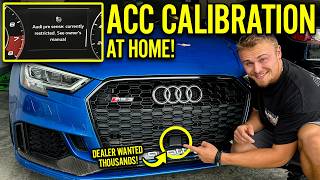
- Misadjusted Adaptive Cruise Control (ACC) sensor (Common) — On VW and Audi vehicles, this code indicates the front radar sensor is misaligned. This happens after a minor front-end impact, bumper removal, a wheel alignment, or hitting a large pothole.
- Damaged tone ring or worn wheel bearing (Common) — The toothed ring or magnetic encoder that the sensor reads becomes cracked or covered in rust. Alternatively, a worn wheel bearing creates excessive play, altering the distance between the sensor and the ring and causing an erratic signal.
- Low or unstable battery voltage (Less Common) — On Hyundai and Kia models, the ABS or power steering control module triggers C1103 when it detects battery voltage dropping below 12V or an issue with the ignition power supply.
- Faulty Brake Pressure Sensor (Less Common) — On Ford models, a generic C1103 triggers when the brake pressure transducer fails. This sensor is often integrated into the ABS hydraulic control unit (HCU).
- Faulty ABS/TCS control module (Rare) — The ABS control module itself fails internally. This is the final diagnostic conclusion after ruling out all sensor, wiring, and power supply issues.
Symptoms

- ABS and Traction Control warning lights are on — The dashboard lights for the Anti-lock Braking System and Traction Control (TCS/VDC/ESP) illuminate simultaneously, as a fault in one disables the other.
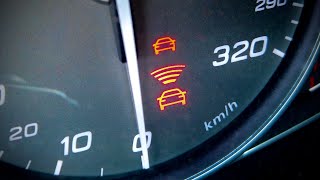
- Adaptive Cruise Control (ACC) is unavailable — Vehicles equipped with ACC or Front Assist disable the feature entirely, displaying a warning message on the instrument cluster.
- Wheels lock up during hard braking — During an emergency stop, the wheels skid because the anti-lock function is disabled.
- Brake pedal pulsates at low speeds — An erratic signal from a failing wheel speed sensor causes the ABS module to activate unnecessarily at low speeds, resulting in a grinding sensation in the brake pedal.
Diagnostic Flowchart

Tap your situation to follow the diagnostic path that matches what you're seeing on this code.
Common Fixes & Costs
- Replacing a faulty ABS wheel speed sensor
— Parts: $50-$150, Labor: $100-$200, ~1.0 hr book time
(DIY)
Nissan Pathfinder (2005-2012, Front Right): OEM 47910-EA025 (Alt: Standard Motor Products ALS1815, Bosch 0265008903) - Repairing damaged wheel speed sensor wiring
— Parts: $10-$30, Labor: $120-$250, ~1.5 hr book time
(Intermediate)
: OEM - Calibrating the Adaptive Cruise Control (ACC) sensor — Parts: $0, Labor: $250-$600, ~2.5 hr book time (Professional)
- Replacing a wheel hub/bearing assembly
— Parts: $150-$400, Labor: $200-$400, ~2.0 hr book time
(Intermediate)
Ford F-150 (2011-2014, 4WD): OEM CL3Z-1104-K (Alt: Timken SP550219, Moog 515142) - Replacing the ABS Control Module
— Parts: $800-$1,500, Labor: $150-$300, ~2.5 hr book time
(Professional)
Nissan 350Z (2006): OEM 47660-CF41B (Alt: Remanufactured units available. Programming required.)
DIY vs Professional
- Replacing a faulty ABS wheel speed sensor — Beginner:
Tools: Jack, jack stands, socket set, torque wrench, penetrating oil. - Repairing damaged wheel speed sensor wiring — Beginner:
Tools: Multimeter, wire strippers, soldering iron, heat shrink tubing, automotive-grade wiring. - Replacing a wheel hub/bearing assembly — Beginner:
Tools: Large axle nut socket, high-torque impact gun, torque wrench, slide hammer or hub puller. - Calibrating the Adaptive Cruise Control (ACC) sensor — Beginner:
Tools: Manufacturer-specific diagnostic tool (e.g., VCDS) and specialized alignment reflector rig. - Replacing the ABS Control Module — Beginner:
Tools: Flare nut wrenches, scan tool with ABS bleeding and VIN programming functions.
Used vs. New Parts: Buying Guide
When a used part is worth it: Never buy used wheel speed sensors or hub bearings. These are wear items that fail prematurely. Used ABS control modules are acceptable for high-mileage vehicles if the part numbers match exactly.
Donor-vehicle mileage cap: roughly under 40000 miles for the part to have meaningful remaining life.
Donor quality checklist:
- Verify the used ABS module does not require dealer VIN programming, or secure a shop willing to program a used unit.
Decision logic:
- If The faulty part is a wheel speed sensor or wheel hub assembly. → Buy a new OEM or premium aftermarket part. Savings on used parts are negated by repeated labor costs.
- If The faulty part is a $1,000+ ABS control module on an older vehicle. → Purchase a used module from a non-accident donor vehicle or use a module remanufacturing service.
Warranty tradeoff: Used parts carry a 30-day warranty. New aftermarket sensors carry 1-year to lifetime warranties, providing necessary peace of mind for electrical components.
Worst-case if a used part fails: $400-$800 if a used wheel hub fails, requiring a new part and repeated labor.
What Happens If You Wait — Timeline
- 0-1 month: ABS and Traction Control lights illuminate. Safety systems are disabled, but normal braking functions perfectly. (MPG impact: 0-1%% · Added cost: $0)
- 1-6 months: If caused by a failing wheel bearing, a humming noise begins. Wheel wobble causes uneven tire wear. (MPG impact: 1-5%% · Added cost: $50-$250 for premature tire replacement.)
- 6-12 months: Excess bearing play damages the wheel hub and spindle. The risk of an accident from disabled ABS increases significantly. (MPG impact: 3-7%% · Added cost: $500-$1500 for replacing a damaged hub and spindle.)
- 12+ months: Catastrophic failure of a neglected wheel bearing causes the wheel to seize or separate from the vehicle. (MPG impact: N/A% · Added cost: $5,000+ for accident repairs and liability.)
Cost of Not Fixing It
- Immediate: ABS and Traction Control are disabled. Increased risk of skidding and loss of steering control during emergency braking. (Added cost: Potential for an accident costing thousands in repairs and insurance claims.)
- 1-6 months: If the root cause is a bad wheel bearing, continued driving worsens the bearing damage and causes uneven tire wear due to wheel wobble. (Added cost: $200-$500 for premature tire replacement.)
- 6+ months: Catastrophic failure of a neglected wheel bearing causes the wheel to separate from the vehicle, leading to a total loss of control. (Added cost: $5,000+ for accident repairs, hub/spindle replacement, and liability.)
Diagnosis Steps
- Read the Full Manufacturer Code Definition
Use an advanced OBD-II scanner capable of reading manufacturer-specific ABS codes. Note the exact definition provided (e.g., 'Front Right Sensor 1' or 'Ignition Voltage Fault'). This dictates the entire diagnostic path.
Tools: OBD-II Scanner (with ABS capability) (Beginner) - Visually Inspect the Suspect Area
Raise and safely support the vehicle. Inspect the specific wheel speed sensor, its wiring harness, and the tone ring for cut wires, heavy corrosion, or physical damage. For an ACC code, inspect the front grille radar sensor for physical obstructions or loose mounting.
Tools: Jack, Jack Stands, Flashlight (Beginner) - Check Battery and Charging System Voltage
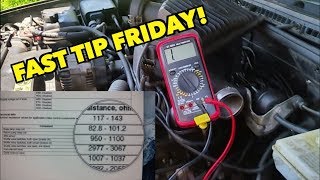
If diagnosing a Hyundai or Kia, use a multimeter to check battery voltage. It must read ~12.6V with the engine off and ~13.7V-14.7V with the engine running. Replace a weak battery before proceeding.
Tools: Multimeter (Beginner) - Test Reference Voltage and Ground (Active Sensors)
Unplug the suspect wheel speed sensor with the ignition on (engine off). Test the harness-side connector with a multimeter. One pin must show a reference voltage (typically 5V or 12V) and the other must show near 0 Ohms resistance to ground. Missing voltage indicates a wiring or module fault.
Tools: Multimeter, Back-probe pins (Intermediate) - Test the Wheel Speed Sensor Circuit for Continuity
Disconnect the sensor and the ABS module connectors. Use a multimeter to check for continuity between both ends of the wiring harness to locate breaks. Test continuity between each wire and the chassis to rule out a short to ground.
Tools: Multimeter (Intermediate) - Swap Sensor Locations
Swap the suspect sensor with the identical sensor from the opposite side of the vehicle. Clear the codes and drive. If the code moves to the other side, the sensor is bad. If the code stays, the wiring or module is faulty.
Tools: Basic Hand Tools (Intermediate) - Check ACC Sensor Alignment Data
For VW/Audi ACC faults, use an advanced scan tool to view live data for the sensor's misalignment angle. It must read close to 0.00 degrees. An angle outside +/- 0.8 degrees requires calibration.
Tools: Advanced Scan Tool (VCDS, OBDeleven) (Advanced) - Test Passive Wheel Speed Sensors
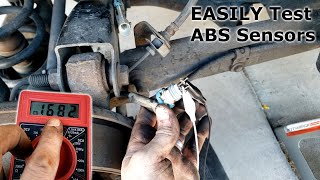
For older passive sensors, disconnect the sensor and measure resistance; it should read 800-2000 Ohms. Switch to AC Volts (mV) and spin the wheel by hand. The reading must increase (50-700mV) with speed. No reading means a dead sensor.
Tools: Multimeter (Intermediate) - Analyze Sensor Waveform
Connect an oscilloscope to the sensor's signal wire. Spin the wheel to verify a clean, consistent square wave (active) or sine wave (passive). Dropouts or noise indicate a damaged tone ring or failing sensor.
Tools: Oscilloscope, Back-probe pins (Advanced)
When This Code Triggers (Freeze-Frame Conditions)
- Vehicle Speed: 35-55 mph (Sets during steady-state driving when the ABS module detects an inconsistent signal from one wheel compared to the other three.)
- Brake Pedal: Not Applied (The fault logs during normal driving, as the module continuously monitors sensor plausibility regardless of braking.)
- Engine RPM: 1500-2500 RPM (Typical engine speed during highway cruise conditions when the fault is detected.)
- System Voltage: 13.5-14.5 V (Normal operating voltage. On Hyundai/Kia, a value dropping below 12V is the direct cause of the code.)
Related Codes
- C1101, C1102, C1104 — Manufacturer-specific codes for the remaining wheel speed sensors (Front Left, Rear Right, Rear Left). If C1103 is 'Front Right', these cover the rest.
- C1145 — The specific Ford code for 'Right Front Wheel Speed Sensor Input Circuit Failure'. It appears alongside the generic C1103 and is the primary diagnostic target.
- U1000 — A CAN communication code. If the ABS module cannot communicate with the ECU, it triggers U1000 and a secondary C1103. Always diagnose U1000 first.
- C1108 — On VW/Audi, this means 'Restricted View' of the ACC sensor (e.g., blocked by snow). A prolonged C1108 physical blockage leads to a C1103 'Misadjusted' electronic fault.
Climate & Environmental Factors
- Corrosion (Salt Belt Regions): Road salt accelerates rust on tone rings. The rust swells, physically contacting and destroying the wheel speed sensor, or distorts the magnetic signal.
- Cold Weather: Extreme cold makes plastic wiring insulation brittle. Normal suspension movement cracks the aged wires, creating an open circuit.
- Water Intrusion: High-pressure washing or deep puddles force moisture into unsealed wiring connectors, causing immediate short circuits.
How to Talk to a Mechanic About This Code
Say this: "I have an ABS light on and my scanner shows code C1103. I know this code is manufacturer-specific, so I'd like to authorize a one-hour diagnostic to get the exact definition for my vehicle and test the related circuit or voltage supply before replacing any parts."
Demonstrates you understand the code's complexity. It forces the technician to test wiring and voltage rather than immediately upselling a sensor or module.
Avoid saying:
- 'My ABS light is on, can you look at it?'
- 'Just fix whatever is wrong.'
- 'I think I need a new ABS sensor.'
Questions to ask before authorizing the repair:
- What is the specific definition of C1103 for my vehicle?
- Did you test the wiring for continuity, power, and ground before condemning the sensor?
- If it's a VW/Audi ACC fault, can it be fixed with a software reset before attempting a full physical calibration?
- What is the warranty on this specific repair, covering both parts and labor?
Where to Take It: Dealer vs Independent vs Chain
- Dealer:
Required for complex ACC calibration. Overpriced for common sensor or wiring issues.
Best for: Vehicles under warranty., VW/Audi Adaptive Cruise Control (ACC) physical calibration requiring specialized alignment rigs.
Downsides: Labor rates are 50% to 100% higher than independent shops., Tendency to replace entire wiring harnesses instead of splicing a single broken wire. (Typical cost: +50% vs. baseline) - Independent Shop:
The best choice for 90% of C1103 repairs, offering the right balance of diagnostic capability and value.
Best for: Out-of-warranty vehicles with common sensor, wiring, or voltage issues., Cost-effective wiring harness repairs.
Downsides: Must verify they own an advanced scan tool capable of reading manufacturer-specific ABS codes. (Typical cost: +0% vs. baseline) - Chain Shop:
Avoid entirely for diagnosis, wiring repairs, or ACC calibration.
Best for: Simple battery replacements if a Hyundai/Kia voltage drop is confirmed.
Downsides: Lack the advanced diagnostic tools and electrical expertise required for wiring or module faults. (Typical cost: -10% vs. baseline)
When to Walk Away From the Repair
If the estimated repair cost exceeds 50% of the car's private-party value, consider selling the vehicle.
- Car worth $4000, fix is $2000: Borderline. A $2,000 repair for an ABS module is 50% of the car's value. Get a second opinion.
- Car worth $12000, fix is $350: Fix it. The repair cost is minimal and restores a critical safety feature.
- Car worth $2500, fix is $1500: Walk away. The repair cost is 60% of the car's value.
What Scan Tool You Need for This Code
Minimum: A scanner capable of reading and clearing Anti-lock Braking System (ABS) codes. Basic $20 engine readers will show 'No Codes Found'.
C1103 is stored in the ABS control module, not the Engine Control Unit (ECU). Basic readers cannot communicate with the ABS module.
Budget: Foxwell NT604 Elite / TopDon TopScan (~$99) — Reads and clears codes from the ABS module, providing the crucial manufacturer-specific definition.
Mid-range: OBDeleven Pro (VAG-specific) / BlueDriver Pro (~$120) — Streams live wheel speed sensor data. OBDeleven specifically performs the software reset for VW/Audi ACC 'misadjusted' faults.
Professional: Autel MaxiCOM MK808BT Pro (~$550) — Offers bi-directional control to activate the ABS pump for brake bleeding and accesses advanced ACC calibration settings.
Rent vs buy: Auto parts stores loan ABS-capable scanners for free with a deposit. Renting is the most cost-effective option for a one-time diagnosis.
How to Clear the Code After You Fix It
- Use an ABS-capable OBD-II scan tool to clear the fault code from the ABS module.
- Perform a 15-minute drive cycle to verify the repair.
Drive cycle (~15 minutes): Drive the vehicle for 15 minutes, including steady driving above 25 mph and several gentle stops. This allows the ABS module to confirm all wheel speed sensors provide plausible signals. For ACC faults, this confirms the sensor alignment is within specification.
Readiness monitors affected: Not applicable to emissions readiness monitors.
Watch out for:
- Using a basic engine code reader that cannot access or clear ABS codes.
- Disconnecting the battery, which does not clear hard codes from the ABS module memory.
- Clearing the code without fixing the broken wire; the light returns immediately upon driving.
Will This Fail Emissions / State Inspection?
No — by itself this code doesn't fail OBD inspection (but it can keep readiness monitors from setting, which causes a separate fail).
- California: An ABS light does not fail a smog check, but technicians note it as a safety defect.
- New York: An illuminated ABS warning light is an automatic failure for the state's annual safety inspection.
- Texas: In counties requiring safety inspections, an active ABS warning light results in an immediate failure.
Most Commonly Affected Vehicles
- Nissan Pathfinder, 350Z, Maxima, Altima, Frontier (2003-2012) — C1103 almost exclusively indicates a fault with the front-right wheel speed sensor. The wiring harness frequently breaks inside the loom where it flexes.
- Infiniti FX35/FX45, G-series (2003-2008) — Shares platforms with Nissan and experiences identical front-right wheel speed sensor and wiring harness failures.
- Volkswagen/Audi Golf, GTI, A3, S3, S6 (2015-2021) — Triggers C1103 when the front Adaptive Cruise Control (ACC) radar sensor is misadjusted. This occurs after wheel alignments, bumper removal, or minor impacts.
- Hyundai Elantra, Sonata, Veloster (2004-2013) — C1103 points to an 'Ignition Voltage Fault' related to the power supply for the ABS module, usually caused by a weak battery or failing alternator.
- Kia Ceed, Sorento (2009-2015) — Logs C1103 for voltage issues identical to Hyundai. It also appears as a secondary code when engine management issues disrupt data to the ABS module.
- Ford F-150, Explorer, Super Duty (2009-2018) — C1103 is a generic code requiring secondary codes for diagnosis. C1145 indicates a right-front wheel speed sensor failure; C1440 indicates a brake pressure transducer fault.
- Mercedes-Benz M-Class (W163) (1998-2005) — Specifically points to a fault in the right-rear axle speed sensor circuit.
- BMW 3-Series (E90), 5-Series (E60) (2005-2013) — Relates to the yaw rate or lateral acceleration sensor within the Dynamic Stability Control (DSC) system, rather than a wheel speed sensor.
Manufacturer-Specific Notes
- Nissan / Infiniti: C1103 definitively means 'FR RH Sensor-1', pointing to the front-right wheel speed sensor circuit. The root cause is usually a broken wire inside the harness.
- Volkswagen / Audi: C1103 means 'Adaptive Cruise Control Sensor - Misadjusted'. It requires a software reset or physical calibration after any front-end work or wheel alignment.
- Hyundai / Kia: C1103 is defined as 'Ignition Voltage Fault'. The problem is the vehicle's charging system or a weak battery, not a wheel speed sensor.
- Ford: C1103 is a generic ABS fault. Technicians must scan for secondary codes like C1145 (wheel speed sensor) or C1440 (brake pressure sensor) to find the true cause.
- General Motors (Chevrolet): C1103 is defined as 'ABS Hydraulic Brake Switch Circuit Failure', pointing to the switch on the master cylinder rather than a wheel speed sensor.
- All: No specific recalls exist for C1103. However, manufacturers frequently issue Technical Service Bulletins (TSBs) for wiring harness rerouting. Check your VIN with a dealer.
Real Owner Stories
2008 Nissan Pathfinder at 130K miles
ABS, VDC, and SLIP lights illuminated. Scanner showed C1103 'FR RH Sensor-1'.
What they tried:
- Replaced the front right ABS wheel speed sensor. The lights returned within one mile.
Outcome: Performed a continuity test on the wiring harness. Found a broken wire inside the protective loom six inches from the sensor connector. Spliced and heat-shrunk the wire, permanently clearing the code.
Lesson: On Nissans, always test the wiring harness for continuity before assuming a new sensor is defective.
2018 VW GTI at 50K miles
'Front Assist Unavailable' message appeared. No physical impacts occurred.
What they tried:
- Dealership quoted $500 for mandatory ACC radar calibration.
- Owner purchased an OBDeleven diagnostic tool for $100.
Outcome: Used the OBDeleven to access the ACC module and found C1103 'misadjusted'. Executed the 'Reset adjustment values' basic setting. The fault cleared and systems restored without physical calibration.
Lesson: VW/Audi C1103 faults often resolve with a software reset using an advanced DIY scan tool, saving hundreds in dealer calibration fees.
2011 Hyundai Elantra at 95K miles
ABS and power steering lights illuminated. Scanner showed C1103 'Ignition Voltage Fault'.
What they tried:
- Local shop recommended a $1,200 ABS module replacement.
Outcome: A second mechanic load-tested the two-year-old battery and found it failing. Replacing the $180 battery and clearing the codes permanently resolved the C1103.
Lesson: On Hyundai/Kia, C1103 is a power supply code. Always test the battery and alternator before replacing expensive modules.
How to Prevent This Code From Triggering
- Clean wheel speed sensors and tone rings (Every 2 years or during brake service) — Removes metallic brake dust and road grime that disrupt the magnetic signal and cause false readings.
- Apply dielectric grease to sensor connectors (Whenever a sensor is disconnected) — Seals the electrical connector from moisture and road salt, preventing the corrosion that causes open circuits.
- Flush brake fluid (Every 2-3 years) — Removes moisture from the hydraulic system, preventing internal corrosion and failure of the ABS control module.
Frequently Asked Questions
What are the most common misdiagnosis mistakes for C1103?
On Hyundai/Kia, mechanics needlessly replace wheel speed sensors when the code actually indicates a low battery voltage fault. On Nissans, DIYers replace the sensor when the actual fault is a broken wire hidden inside the harness.
I replaced the wheel speed sensor, but the C1103 code came back. What now?
The issue is in the wiring harness between the sensor and the ABS module, or a rusted tone ring. Perform a continuity test on the wiring to find the break, and visually inspect the tone ring for damage.
Can a wheel alignment or new tires cause a C1103 code?
Yes. On VW and Audi models with Adaptive Cruise Control (ACC), changing the vehicle's alignment misaligns the ACC radar sensor, triggering a C1103 'Misadjusted' fault.
What does C1103 mean on a Ford F-150?
On a Ford F-150, C1103 is a generic ABS code requiring a scan for secondary codes. A C1145 points to the right front wheel speed sensor circuit. A C1440 indicates a brake pressure sensor failure inside the hydraulic control unit.
Why did my ABS, Slip, and TCS lights all come on at once?
These systems share the same wheel speed sensors. When one sensor fails and triggers C1103, the computer disables all related safety systems to prevent erratic braking, illuminating all warning lights.
How much does it cost to diagnose a C1103 code?
Repair shops charge a standard diagnostic fee of $150 to $200 to read the manufacturer-specific codes and pinpoint the electrical or mechanical cause.
Is it safe to drive with a C1103 code?
Your normal brakes function, but anti-lock and traction control safety features are disabled. This increases the risk of losing control during emergency braking or on slippery roads. Repair the issue immediately.
Why can't I test my wheel speed sensor by measuring resistance?
Modern vehicles use 'active' wheel speed sensors that produce a digital signal and require power to operate. Testing them for resistance yields no reading, leading to a false conclusion that the sensor is dead.
Key Takeaways
- Always use an ABS-capable OBD-II scanner to read the manufacturer-specific definition, as C1103 means entirely different things across brands.
- On Nissan and Infiniti vehicles, C1103 almost exclusively points to a failed front-right wheel speed sensor or a broken wire in its harness.
- For Volkswagen and Audi models, C1103 indicates a misaligned Adaptive Cruise Control (ACC) radar sensor requiring a software reset or a $250-$600 professional calibration.
- Hyundai and Kia owners must test their battery and alternator first, as C1103 on these makes flags an ignition voltage drop below 12.6V rather than a sensor failure.
Helpful Videos




The information in this article is provided for general reference and educational purposes only. Vehicle specifications, procedures, and part compatibility can vary by production date, trim level, and region. Always consult your vehicle's factory service manual and verify part numbers before purchasing or performing repairs. Safety-critical components such as airbags, seat belts, and braking systems should be installed by a qualified professional.
- 🎬 Helpful Videos
- What Does C1103 Mean?
- Can I Drive With C1103?
- Common Causes
- Symptoms
- Diagnostic Flowchart
- Common Fixes & Costs
- DIY vs Professional
- Used vs. New Parts: Buying Guide
- What Happens If You Wait — Timeline
- Cost of Not Fixing It
- Diagnosis Steps
- When This Code Triggers (Freeze-Frame Conditions)
- Related Codes
- Climate & Environmental Factors
- How to Talk to a Mechanic About This Code
- Where to Take It: Dealer vs Independent vs Chain
- When to Walk Away From the Repair
- What Scan Tool You Need for This Code
- How to Clear the Code After You Fix It
- Will This Fail Emissions / State Inspection?
- Most Commonly Affected Vehicles
- Manufacturer-Specific Notes
- Real Owner Stories
- 2008 Nissan Pathfinder at 130K miles
- 2018 VW GTI at 50K miles
- 2011 Hyundai Elantra at 95K miles
- How to Prevent This Code From Triggering
- Frequently Asked Questions
- What are the most common misdiagnosis mistakes for C1103?
- I replaced the wheel speed sensor, but the C1103 code came back. What now?
- Can a wheel alignment or new tires cause a C1103 code?
- What does C1103 mean on a Ford F-150?
- Why did my ABS, Slip, and TCS lights all come on at once?
- How much does it cost to diagnose a C1103 code?
- Is it safe to drive with a C1103 code?
- Why can't I test my wheel speed sensor by measuring resistance?
- Key Takeaways
- 🎟️ Get 5% Off