

C1093 on 2018-2022 Dodge Durango: ABS Module Fault, Causes, and Fixes
On 2018-2022 Dodge Durangos, code C1093 almost always points to an internal failure of the ABS module and Hydraulic Control Unit (HCU). This is a known issue covered by a manufacturer TSB and a significant safety recall. The fix requires replacing the ABS module/HCU, which is a critical safety repair best left to professionals due to programming and specialized brake bleeding requirements.
- Code C1093 on a 2018-2022 Durango is a critical safety issue, almost always caused by a failed ABS module.
- Key symptoms include illuminated ABS/ESC lights and brake lights that will not turn off.
- A major safety risk is the ability to shift the vehicle out of 'Park' without pressing the brake, which can lead to a rollaway.
- Check for open recalls on your vehicle's VIN (NHTSA #24V838000), as the repair may be covered by the manufacturer.
- This is not a DIY-friendly repair. It requires specialized tools for diagnostics (SGW Bypass), programming (Proxy Alignment), and brake bleeding and should be handled by a qualified technician.
What's Unique About the 2018-2022 Dodge DURANGO

This issue is particularly well-documented for the 2018-2019 Dodge Durango and its sibling, the Jeep Grand Cherokee (WK2 platform). Chrysler (now Stellantis) issued a Technical Service Bulletin (TSB #9004548RevB) and a major safety recall (NHTSA Campaign 22V426000, later superseded by 24V838000 / FCA #94B) specifically for this problem. The failure mode is consistent: the HCU/ABS module can falsely detect brake pressure, leading to the brake lights staying on, disabling ABS and Electronic Stability Control (ESC), and most dangerously, allowing the vehicle to be shifted out of 'Park' without the brake pedal being pressed.
Diagnostic Flowchart

Tap your situation to follow the diagnostic path that matches what you're seeing on this vehicle.
Symptoms You May Notice

- Brake lights stay on even when the pedal is not pressed, sometimes only at low speeds (under 4.5 mph) or after the vehicle is parked.
- ABS warning light is illuminated on the dashboard.
- Electronic Stability Control (ESC) or traction control warning light is on.
- Ability to start the engine and shift out of 'Park' without depressing the brake pedal.
- A 'Service Electronic Stability Control' message may appear on the instrument cluster.
- Multiple communication-related fault codes from other modules (e.g., U0415) that can no longer receive valid data from the ABS module.
- Replacing the brake light switch. While a faulty brake light switch can cause brake light issues, it will not typically set the C1093 code or disable the ABS/ESC systems.
- Replacing individual wheel speed sensors. A faulty wheel speed sensor will set a different code specific to that sensor and would not cause the vehicle to shift out of park without the brake applied.
Most Likely Causes

- Internal Failure of the ABS Module / Hydraulic Control Unit (HCU) 🔴 High Probability This is a known defect acknowledged by the manufacturer through TSB 9004548RevB and safety recalls 22V426000/24V838000. The module can develop an internal fault that causes it to falsely read pressure in the primary circuit.
How to confirm: A professional scan tool will read the C1093-62 code. A technician can also monitor live data from the brake pressure sensors to confirm the implausible readings. TSB 9004548RevB specifically instructs technicians to record the 'Primary Pressure Sensor value ($2002)' and 'Primary Pressure Sensor offset ($2007)' to confirm the failure.
Typical fix: The entire ABS module and HCU assembly (often called the Integrated Control Unit) must be replaced. The new module will require programming ('Proxy Alignment') to the vehicle's VIN. The remedy for recall 24V838000 involves replacing the integrated pressure transducer and updating the ABS module software as necessary.
Est. part cost: $592-$726
Rare But Worth Checking
- Wiring Harness Damage: While the module itself is the most likely culprit, damage to the wiring or connectors leading to the ABS module could theoretically cause communication or signal errors. This should be inspected before condemning the expensive module, though it is uncommon for this specific code.
- Low or Contaminated Brake Fluid: In some less common scenarios for similar codes, extremely low or contaminated brake fluid, or air in the brake lines, could cause pressure-related plausibility faults. However, for the C1093-62 on this specific Durango, this is much less likely than the known module failure.
Diagnosis Steps
- Confirm the code with a professional-grade OBD-II scanner capable of reading Chassis (C) codes. Note if the specific failure type is '-62'. For 2018+ models, a Security Gateway (SGW) bypass module or cable is required for a standard scan tool to perform diagnostics.
- Check for active recalls. Enter your vehicle's VIN on the NHTSA website (nhtsa.gov) to see if it is covered under recall 22V426000 or the superseding recall 24V838000 (FCA #94B). If it is, the repair should be performed by a Dodge dealer free of charge. Note that vehicles repaired under 22V-426 will need the new remedy from 24V-838 completed.
- If using an advanced scan tool, check live data PIDs for 'Primary Pressure Sensor value ($2002)' and 'Primary Pressure Sensor offset ($2007)' as per TSB 9004548RevB to confirm an internal fault.
- Visually inspect the ABS module and its electrical connector for any signs of physical damage, corrosion, or loose connections.
- Inspect the brake fluid level and condition.
- If not covered by a recall, and the wiring and fluid are okay, the diagnosis confirms a failed ABS module/HCU.
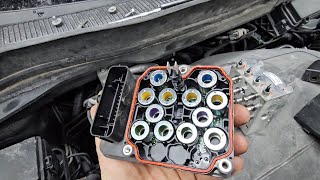
- Replace the ABS module/HCU assembly. Some technicians may replace only the electronic module portion to avoid opening the hydraulic system, but this is an advanced technique. 🎬 See how a pro replaces the module without bleeding brakes.
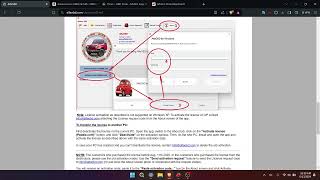
- Perform a 'Proxy Alignment' procedure with a compatible scan tool (like wiTECH or AlfaOBD) to program the new module to the vehicle. 🎬 Watch this guide on how to perform a Proxy Alignment.
- Bleed the entire brake system, including the ABS hydraulic unit, following the manufacturer's specific procedure, which often requires a scan tool to cycle the internal valves and pump.
- Clear all DTCs and perform a test drive to ensure the warning lights are off and the brake system is functioning correctly.
Parts You'll Likely Need
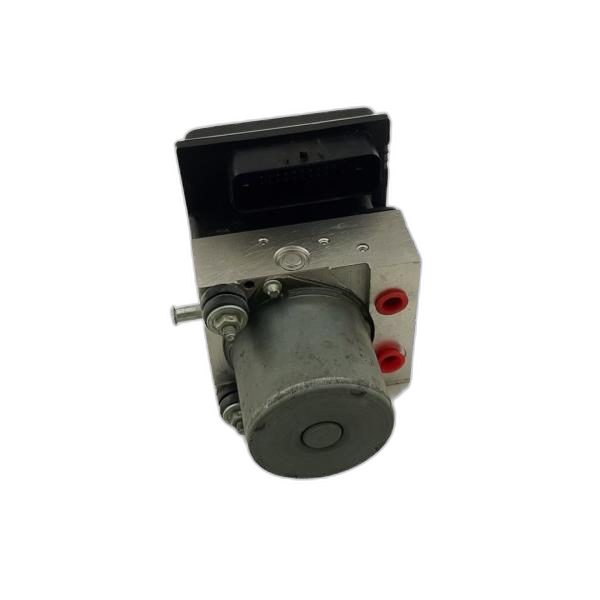
- ABS Control Module and Hydraulic Control Unit Assembly
(OEM #68442477A$, 68442478A$, 68404410A$, 68382348A$, 68262200A$ (Note: Part numbers are frequently superseded; always verify with a dealer using VIN. For example, 68442477AD is a known updated part number.))— This is the component that fails internally, causing the C1093-62 code and associated symptoms, as documented in manufacturer TSBs and recalls.
Trusted brands: Mopar (OEM)
OEM price range: $600-$1050
Aftermarket price range: $300-$600 (Remanufactured)
Related Codes That Often Appear With This One
- C2200 — This code means 'Anti-Lock Brake Module Internal' and directly points to the same root cause: a failed ABS module.
- U0415 — This code means 'Invalid Data Received From ABS Module'. Other modules on the vehicle's network, like the power steering or trailer brake module, set this code when the ABS module is broadcasting faulty information due to its internal failure.
Technical Service Bulletins (TSBs) & Recalls
- 9004548RevB: Addresses DTC C1093-62 on 2018-19 models where brake lights stay on due to an internal failure in the HCU/ABS Module. It instructs technicians on specific data PIDs to check ($2002 and $2007) to confirm the failure.
Platform-Specific Known Issues
- A major safety recall (NHTSA #24V838000, FCA #94B) supersedes the previous recall #22V426000 for 2018-2019 Dodge Durango models. It affects over 200,000 vehicles (including the Jeep Grand Cherokee). The defect can cause the brake lights to stay on, disable ABS and ESC, and allow the vehicle to shift out of park without the brake pedal being pressed, creating a rollaway risk.
- The official remedy for recall 24V838000 is to replace the integrated pressure transducer and update the ABS module software. Owner notification letters were expected around December 5, 2024, with the final remedy anticipated in September 2025.
- A separate software-related recall was issued for some 2022 Dodge Durango models that could prevent the ESC warning light from illuminating during a malfunction. The fix is a software update.
Mechanic-Grade Diagnostic Values
- Primary Pressure Sensor value (PID $2002) — expected: Should be near 0 bar with no brake application.. Failure: A non-zero pressure reading when the brake pedal is not being pressed indicates a false pressure reading, confirming the internal fault.
- Primary Pressure Sensor offset (PID $2007) — expected: Should be near 0 bar.. Failure: A significant offset value indicates the sensor's baseline is incorrect, pointing to an internal module fault.
- Battery Voltage during module flashing/programming — expected: Must be maintained between 13.2 and 13.5 volts.. Failure: Voltage dropping below 13.2V or exceeding 13.5V can cause the programming procedure to fail or corrupt the module.
Scan Tool Commands That Help
- wiTECH (OEM) or AlfaOBD (Aftermarket): Proxy Configuration Alignment — This is a mandatory procedure after replacing the ABS module. It synchronizes the new module with the vehicle's other electronic control units (ECUs) on the CAN bus network. Failure to perform this will result in communication errors and a persistent 'vehicle configuration mismatch' fault.
- wiTECH (OEM) or AlfaOBD (Aftermarket): ABS Service Bleed / Hydraulic Control Unit Bleed — Required after the hydraulic control unit (HCU) has been replaced or if air has entered the ABS module. This function cycles the internal ABS pump and valves to purge trapped air that cannot be removed by a manual brake bleed alone.
- wiTECH (OEM): ABS Initialization — This routine should be performed after installing a new ABS module to initialize it to the vehicle. It may be required before the Proxy Alignment.
- wiTECH (OEM): Restore BCM Proxi Configuration — This may be required before performing the Proxy Configuration Alignment to ensure the Body Control Module (BCM) has a clean configuration to align with.
Wiring & Ground Locations
- ABS Module Main Connector — The ABS module/HCU assembly is located in the engine bay, typically on the driver's side, below and to the side of the master cylinder, with multiple brake lines running into it.. While the fault is almost always internal to the module, a visual inspection of the main electrical connector for corrosion, damage, or moisture is a crucial first step before ordering a replacement part.
- ECM Ground / Main Chassis Grounds — A key ground point is often located on the front rail near the Engine Control Module (ECM) or on the body near the battery. Specific ground locations can be found in official Mopar service manuals or wiring diagrams from sources like AutoZone.. A poor ground connection to the ABS module can cause a variety of unpredictable electronic faults, including internal communication errors. While less common for this specific DTC, checking major grounds is good practice in any electronic diagnosis.
Real Owner Repair Stories
- YouTube - 'Pine Hollow Auto Diagnostics' (2018 Jeep Grand Cherokee (same platform/ABS module)) — ABS light on, 'Service Antilock Brake System' message, active code C1093-62 (Vehicle Configuration Mismatch).
❌ Tried (didn't work) Clearing the code (it immediately returned as active).
✅ What actually fixed it The technician used a wiTECH scan tool to perform the 'ABS Initialization' routine under 'Miscellaneous Functions'. After initialization, the code could be cleared and did not return. This indicates a software/configuration corruption rather than a hard hardware failure in this specific case, though it still points to a fault within the module's logic.
OEM Part Supersession History
Multiple, including 68442478AA→Part numbers are frequently updated by Mopar. For example, 68442477AD is a known service part.— Revisions are often made to correct internal design flaws, such as the one causing the C1093 fault. The recall remedy involves replacing an internal component (pressure transducer) and updating software, indicating a hardware and software revision.
Heads up: It is critical to use the correct part number for the vehicle's specific configuration (e.g., with or without adaptive cruise control). Always verify the correct, most current part number with a dealer using the vehicle's VIN.
Model Year Variations Within This Range
- 2018-2019: These model years are the primary focus of NHTSA recall 24V838000 (superseding 22V426000) for the C1093 fault. The failure is a well-documented hardware/software defect in the HCU/ABS module.
- 2020-2022: While the C1093 code can still occur, it is not part of the major recall campaign. The ABS module part numbers may differ from the earlier years. Diagnosis should still follow a similar path, but the cause is less likely to be the specific widespread defect seen in 2018-2019 models.
Helpful Videos
We Have This Part in Stock



The information in this article is provided for general reference and educational purposes only. Vehicle specifications, procedures, and part compatibility can vary by production date, trim level, and region. Always consult your vehicle's factory service manual and verify part numbers before purchasing or performing repairs. Safety-critical components such as airbags, seat belts, and braking systems should be installed by a qualified professional.
- Dodge DURANGO:
- 🎬 Helpful Videos
- 🛍️ Shop This Part
- What's Unique About the 2018-2022 Dodge DURANGO
- Diagnostic Flowchart
- Symptoms You May Notice
- Most Likely Causes
- Rare But Worth Checking
- Diagnosis Steps
- Parts You'll Likely Need
- Related Codes That Often Appear With This One
- Technical Service Bulletins (TSBs) & Recalls
- Platform-Specific Known Issues
- Mechanic-Grade Diagnostic Values
- Scan Tool Commands That Help
- Wiring & Ground Locations
- Real Owner Repair Stories
- OEM Part Supersession History
- Model Year Variations Within This Range
- 🎟️ Get 5% Off