

Ultimate Guide to OBD-II Code C1046: ABS, Air Suspension, or Transmission Fault
The definitive, expert-driven guide to C1046. Understand its multiple meanings, diagnose it like a pro, and learn the exact fixes for your vehicle.
- Identify your vehicle's specific C1046 definition first: it means a Front Left ABS sensor fault on Dodge/Mitsubishi, an air suspension leak on Audi/VW, or a transmission sensor failure on Suzuki.
- For Dodge and Ram vehicles, do not buy a new ABS sensor until you remove the old one and wire-brush the rust off the mounting hub, which fixes the code for under $15 in parts.
- On Audi and VW models, a C1046 'Plausibility Error' almost always indicates a physical air leak; spray soapy water on the air struts to find the leak before the overworked compressor burns out and adds $1,000 to the repair bill.
- If you drive a 2011-2017 Ford Super Duty, stop diagnosing C1046 as a trouble code; it is actually the name of a physical wiring harness connector under the PCM that corrodes and causes electrical faults.
What Does C1046 Mean?

C1046 has entirely different meanings depending on your vehicle manufacturer. For Dodge, Ram, and Mitsubishi, it indicates a fault in the front left wheel speed sensor circuit. For Audi and Volkswagen, it flags a 'Plausibility Error' in the air suspension, usually caused by a leak. For Suzuki, it signals a failed Hall sensor in the gear selector. For Ford trucks, 'C1046' is a physical wiring connector name, not a diagnostic code.
Technical definition: The SAE/ISO definition of C1046 is manufacturer-specific. Common definitions include: 'Front Left Wheel Speed Sensor Control Phase Time Exceeded' (Mitsubishi), 'Left Front Wheel Pressure Phase Monitoring' (Dodge/Ram), 'Ride-Height System Plausibility Error' (Audi/VW), and 'Hall Sensor In The Gear Selector' (Suzuki). In ABS systems, the module sets this code when brake fluid pressure decreases for an unexpectedly long time during an ABS event, interpreting the front left sensor signal as implausible.
Can I Drive With C1046?
Yes, But With Caution. You can drive, but with significant caution. Critical safety systems are disabled. Your Anti-Lock Brakes (ABS) and Traction/Stability Control will not function, increasing stopping distances and skidding risk in rain or snow. If the red 'BRAKE' warning light is also on, do not drive; this indicates a primary hydraulic failure requiring an immediate tow.
Common Causes
- Rust or Debris Buildup Under Sensor Mount (ABS) (Very Common) — Rust and scale build up on the hub underneath the ABS sensor mount. This physically pushes the sensor away from the tone ring, increasing the air gap and causing a weak signal. This is the most frequently overlooked root cause.
- Faulty Front Left Wheel Speed Sensor (ABS) (Very Common) — The sensor fails internally from heat, moisture, or age, losing the ability to accurately report wheel speed to the ABS computer.
- Leaking Air Strut or Air Line (Suspension) (Common) — On Audi or VW vehicles, an air leak in a strut or connecting line causes the vehicle to sag. The module flags a 'plausibility error' because the commanded ride height does not match the actual height.
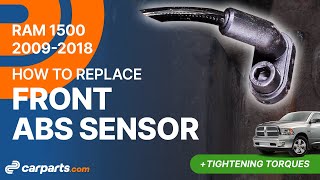
- Damaged or Corroded Wiring/Connectors (ABS) (Common) — Exposed wiring leading to the wheel speed sensor becomes frayed or corroded, interrupting the signal. This is a known failure point on Dodge Chargers. 🎬 Watch: How to replace the front ABS sensor on a RAM.
- Damaged ABS Tone Ring or Wheel Bearing (ABS) (Common) — The toothed tone ring cracks or fills with debris. A failing wheel bearing also increases the gap between the sensor and the ring, destroying the signal.
- Failing Air Suspension Compressor (Suspension) (Less Common) — The compressor wears out and fails to maintain correct ride height. This is almost always a secondary failure caused by an unaddressed air leak.
- External Noise or CAN Bus Interference (ABS) (Rare) — Electrical noise or a CAN bus communication fault causes the ABS module to set a false C1046 code, particularly on Mitsubishi vehicles.
- Faulty Transmission Range Sensor (Suzuki) (Rare) — On specific Suzuki models, this code points to an internal fault in the gear selector sensor, which fails to report the correct gear to the TCM.
Symptoms

- ABS and Traction Control Lights Illuminated — The ABS and Traction Control warning lights illuminate simultaneously because both systems rely on accurate wheel speed sensor data to function.
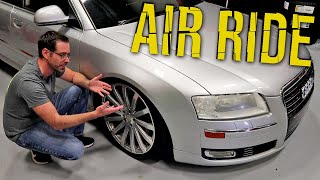
- Suspension Warning Light On / Vehicle Sagging — For Audi and VW, a suspension warning appears, and one corner (or the entire front/rear) sits visibly lower than normal. 🎬 See this breakdown of how Audi and VW air suspension fails.
- Brakes Pulsate at Low Speeds — A weak sensor signal tricks the ABS into activating unnecessarily during slow, normal braking, causing the pedal to pulse or grind just before a complete stop.
- Transmission Gear Indicator Incorrect (Suzuki) — The dashboard fails to show the correct gear, accompanied by an illuminated Check Engine Light.
Diagnostic Flowchart
Tap your situation to follow the diagnostic path that matches what you're seeing on this code.
Common Fixes & Costs
- Clean ABS Sensor Mounting Surface — Parts: $5-$15, Labor: $75-$150, ~0.8 hr book time (DIY)
- Replace Front Left ABS Wheel Speed Sensor
— Parts: $30-$80, Labor: $90-$150, ~1.1 hr book time
(DIY)
: OEM
: OEM - Replace Air Suspension Compressor (Audi/VW)
— Parts: $300-$1200, Labor: $150-$400, ~2.2 hr book time
(Intermediate)
: OEM
: OEM - Replace Front Air Strut / Air Spring (Audi/VW)
— Parts: $250-$900, Labor: $200-$400, ~1.8 hr book time
(Intermediate)
: OEM - Replace Front Wheel Bearing Hub Assembly — Parts: $100-$350, Labor: $200-$450, ~2.5 hr book time (Advanced)
- Replace Transmission Range Sensor (Suzuki) — Parts: $110-$160, Labor: $95-$150, ~1.2 hr book time (Intermediate)
Used vs. New Parts: Buying Guide
When a used part is worth it: Never buy used ABS sensors; the labor outweighs the low cost of a new part. For expensive Audi/VW air struts or compressors on older vehicles, a tested, warrantied part from an auto recycler saves thousands.
Donor-vehicle mileage cap: roughly under 60000 miles for the part to have meaningful remaining life.
Donor quality checklist:
- Verify exact part number match.
- Choose air suspension donors from non-Salt Belt regions to avoid corrosion.
- Ensure a minimum 30-day warranty.
Decision logic:
- If The part is an ABS sensor → Buy new. Aftermarket sensors are cheap and reliable.
- If The part is an OEM air strut and the vehicle is over 10 years old → Buy a tested used OEM part or a new aftermarket unit from Arnott.
Warranty tradeoff: Used parts offer 30-90 days. New aftermarket offers 1-year to lifetime. Labor is never covered if the part fails.
Worst-case if a used part fails: $300-$600
What Happens If You Wait — Timeline
- 0-4 weeks: ABS: Warning light appears, ABS/Traction control disabled. Air Suspension: Car sags slightly overnight but rises upon startup. (MPG impact: 0%% · Added cost: $0)
- 1-3 months: ABS: Increased skidding risk in bad weather. Air Suspension: Compressor runs noticeably longer after startup to correct sag. (MPG impact: 0-1%% · Added cost: $0-$50)
- 3-6 months: ABS: No mechanical change. Air Suspension: Leak worsens. Compressor runs constantly, overheats, and internal piston ring fails. (MPG impact: 1-3%% · Added cost: $500 - $1200)
- 6+ months: ABS: No change. Air Suspension: Compressor fails completely. The vehicle drops onto the bump stops, creating an undrivable, bouncy ride. (MPG impact: N/A% · Added cost: $2000 - $4000)
Cost of Not Fixing It
- Immediate: ABS and Traction Control are disabled. Increased risk of skidding and longer stopping distances in emergencies. (Added cost: N/A (Safety Risk))
- 1-6 Months (Air Suspension): The air compressor runs continuously to compensate for a leak, leading to overheating and premature motor failure. (Added cost: $500-$1200)
- 6+ Months (Air Suspension): Total compressor failure. The vehicle lowers onto its bump stops, becoming undrivable and damaging other suspension components. (Added cost: $2000-$4000)
Diagnosis Steps
- Identify Your Vehicle's System
Determine your system based on the manufacturer. Dodge/Ram/Mitsubishi = ABS problem. Audi/VW = Air suspension problem. Suzuki = Transmission range sensor. Ford = Wiring connector name. Proceed to the relevant steps below.
Tools: Vehicle Owner's Manual, OBD-II Scanner (Beginner) - ABS: Clean Sensor Mounting Surface (High Yield)
Safely jack up the front left wheel and remove it. Remove the single bolt holding the ABS sensor and pull it out. Vigorously clean the mounting hole and the flat surface on the hub with a wire brush and brake cleaner. Rust here causes 80% of false sensor failures.
Tools: Jack, Jack Stands, Lug Wrench, Socket Set, Wire Brush, Brake Cleaner (Beginner) - ABS: Scan Tool Live Data Analysis
Connect an ABS-capable scanner and view the live data stream for all four wheel speed sensors. Drive slowly in a straight line. The front left sensor will read 0 mph or show an erratic speed compared to the other three.
Tools: ABS-Capable OBD-II Scanner (Beginner) - ABS: Inspect Tone Ring and Wiring
Inspect the toothed or magnetic tone ring on the axle shaft or wheel bearing. Look for cracked teeth, heavy rust, or metallic debris. Trace the sensor wiring back to the chassis harness, checking for frayed insulation or corroded connector pins.
Tools: Flashlight, Rag (Intermediate) - ABS: Test Sensor with Multimeter
Disconnect the sensor. For a 2-wire passive sensor, measure resistance (Ohms) between the pins; expect 800-1700 ohms. An open circuit (OL) means the sensor is dead. For a 3-wire active sensor, verify 5V or 12V power and ground with the key on.
Tools: Multimeter, Backprobe Pins (Intermediate) - Air Suspension (Audi/VW): Soapy Water Leak Test
With the engine running, listen for hissing near the wheels. Spray soapy water heavily on the air struts (especially the rubber folds) and the plastic air line fittings. Bubbles indicate the leak causing the plausibility error.
Tools: Spray Bottle with Soapy Water (Beginner) - Air Suspension (Audi/VW): Scan Tool Live Data
Use VCDS to read measuring blocks for the level control module (Address 34). Monitor the voltage of each ride height sensor. A healthy sensor provides a stable voltage (e.g., 2.4V) when stationary. Erratic jumping indicates a bad level sensor.
Tools: Advanced OBD-II Scanner (e.g., VCDS) (Advanced) - Air Suspension (Audi/VW): System Calibration
After replacing any suspension component, you must recalibrate the system. Park on level ground, use VCDS to enter the adaptation menu, and input the precise millimeter measurements from the wheel center to the fender lip for all four corners.
Tools: Advanced OBD-II Scanner (e.g., VCDS), Measuring Tape (Advanced)
When This Code Triggers (Freeze-Frame Conditions)
- Vehicle Speed: 5-20 mph (Sets at low speeds during braking or turning, when the signal difference between the faulty sensor and the others becomes obvious to the ABS module.)
- Brake Pedal Status: Applied (Triggers during a braking event where the ABS module expects a plausible signal from all wheels but receives an erratic one from the front left.)
- Steering Angle: > 5 degrees (During turns, the inside and outside wheels rotate at different speeds. An incorrect reading from one sensor during this differential triggers the fault.)
- System Voltage: 11-14.5V (Logs under normal operating voltage. Low system voltage causes multiple, unrelated codes.)
Related Codes
- C1047, C1048, C1049 — Identical ABS faults pointing to different wheels: C1047 (Front Right), C1048 (Rear Left), and C1049 (Rear Right).
- C100A — Mitsubishi code for 'Wheel Speed Sensor Open/Short.' If present with C1046, it proves the implausible signal is caused by a hard electrical failure in the wiring.
- C10C8, C1044 — Audi/VW consequential codes. C10C8 ('Function Shut-Off Active') triggers because C1046 ('Plausibility Error') prevents the system from operating safely. Fix C1046 first.
Climate & Environmental Factors
- High Humidity & Road Salt (Salt Belt): Salt accelerates corrosion on the ABS sensor mounting pad. The resulting rust physically pushes the sensor away from the tone ring, weakening the signal and causing C1046.
- Cold Weather / Freezing Temperatures: Cold makes rubber air springs brittle and prone to cracking. Moisture in air lines freezes, causing blockages that destroy the air compressor.
How to Talk to a Mechanic About This Code
Say this: "I have a C1046 code on my [Make/Model]. For my ABS issue, please check live data and inspect the front left sensor's mounting surface for rust before quoting a new sensor. For my air suspension issue, please perform a leak test before recommending major parts."
This directs the mechanic to diagnose the most common and cheapest-to-fix causes first, rather than immediately replacing expensive components. It establishes you as an informed customer.
Avoid saying:
- 'Just fix whatever's wrong'
- 'My ABS light is on, can you look at it?'
- 'Whatever you recommend'
Questions to ask before authorizing the repair:
- Did the live data confirm a bad signal from the front left sensor, and did you clean the mounting hub first?
- Can you show me exactly where the air suspension leak is?
- Does the repair estimate include the necessary electronic recalibration?
- What is the warranty on the parts and labor?
Where to Take It: Dealer vs Independent vs Chain
- Dealer:
Best for: Vehicles under warranty, Complex air suspension diagnostics and calibration on Audi/VW models
Downsides: Significantly higher labor and parts costs., Will replace entire assemblies rather than cleaning or repairing small components. (Typical cost: +50% vs. baseline) - Independent Shop:
Best overall fit. For Audi/VW, choose a shop specializing in German cars equipped with VCDS diagnostic tools.
Best for: Out-of-warranty Dodge/Ram/Mitsubishi ABS faults., Cost-effective repairs on older vehicles.
Downsides: Quality varies. Vet shops for specific experience with German vehicles if you have an Audi/VW. (Typical cost: +0% vs. baseline) - Chain Shop:
Acceptable for a straightforward ABS sensor replacement on a Dodge/Ram. AVOID for any diagnostic work or Audi/VW air suspension repairs.
Best for: Simple parts replacement if you have already diagnosed the issue yourself.
Downsides: Technician skill varies widely., Unlikely to perform nuanced diagnostics like cleaning a hub surface., Not equipped for air suspension calibration. (Typical cost: -10% vs. baseline)
When to Walk Away From the Repair
If the estimated repair cost exceeds 50% of the car's private-party value, seriously consider selling the vehicle. For older, high-mileage luxury cars, lower this threshold to 40%.
- Car worth $5000, fix is $3500: Walk away. A full air suspension rebuild on an old Audi A8 is 70% of the car's value.
- Car worth $15000, fix is $250: Fix it. A new ABS sensor on a Ram 1500 is well below the threshold.
What Scan Tool You Need for This Code

Minimum: A scanner that reads and clears codes from the ABS/Chassis (C-prefix) module and views live data for wheel speed sensors.
A standard $20 engine code reader cannot communicate with ABS or suspension modules and will not see the C1046 code.
Budget: Ancel VD700 / Foxwell NT630 Plus (~$80) — Reads/clears ABS codes and displays live wheel speed sensor data, sufficient for diagnosing Dodge/Ram faults.
Mid-range: Xtool D7 / Autel MaxiPRO MP808 (~$350) — Provides bidirectional control to command the air compressor and valves, and performs system calibrations.
Professional: VCDS (VAG-COM) by Ross-Tech (~$200-700) — The gold standard for VW/Audi. Provides dealer-level access to the air suspension module for testing and mandatory adaptation.
Rent vs buy: Auto parts store loaner tools are usually basic engine readers. For Audi/VW air suspension, a capable tool like VCDS is a mandatory purchase for DIY repair.
How to Clear the Code After You Fix It
- Perform the physical repair.
- Use an ABS/Chassis-capable OBD-II scanner to clear the C1046 code from the specific module.
- For Dodge/Ram, drive the vehicle in a straight line above 7.5 mph to allow the module to verify the repair.
- For Audi/VW, perform a system calibration adaptation via scan tool.
Drive cycle (~10 minutes): Dodge/Ram ABS modules require the vehicle to exceed 7.5 mph (12 km/h) to verify the new sensor signal before extinguishing the dashboard light.
Readiness monitors affected: None. This is a chassis code and does not affect powertrain emissions monitors.
Watch out for:
- Using a basic $20 engine code reader, which cannot communicate with ABS or suspension modules to clear the code.
- Assuming a Dodge/Ram repair failed because the light stayed on, without performing the required 7.5 mph drive cycle.
- Replacing an Audi/VW air strut without recalibrating the system, leaving the car uneven.
Will This Fail Emissions / State Inspection?
No — by itself this code doesn't fail OBD inspection (but it can keep readiness monitors from setting, which causes a separate fail).
- General: C1046 is a chassis code and will not fail an OBD-II emissions plug-in test. However, an illuminated ABS light fails the safety inspection in states that require one.
- New York: NY performs an annual safety inspection alongside emissions. An illuminated ABS warning light is an automatic safety failure.
- Texas: During the 'One Sticker' inspection, an illuminated ABS light results in a failure of the safety portion.
Most Commonly Affected Vehicles
- Dodge Ram 1500 (2006-2018) — Highly prone to rust buildup under the front left wheel speed sensor. Requires driving over 7.5 mph to clear the light after repair.
- Dodge Charger (2007-2014) — Frequently experiences C1046 due to faulty wheel speed sensors and brittle wiring harnesses.
- Mitsubishi Lancer (2007-2015) — Prone to CAN bus communication errors that trigger false C1046 codes. Diagnose U-prefix codes first.
- Mitsubishi Outlander (2006-2016) — Shares the Lancer's ABS module and identical CAN bus vulnerabilities.
- Audi A8 / Q7 (2004-2017) — C1046 is a 'Plausibility Error' caused by air leaks from aged air springs or a failing compressor.
- Volkswagen Touareg (2004-2017) — Shares the Audi Q7 air suspension system and is equally prone to leaks and compressor failures.
- Suzuki Various (AW55-50/51SN) (2000-2009) — C1046 points to an internal fault in the Hall sensor within the gear selector module, not an ABS issue.
- Ford F-Series Super Duty (2011-2017) — C1046 is NOT a trouble code. It is the name of a wiring harness connector below the PCM that corrodes and causes electrical faults.
Manufacturer-Specific Notes

- Mitsubishi: A fault on the CAN bus communication lines causes the ABS module to incorrectly store code C1046. Always clear CAN bus DTCs before replacing ABS parts.
- Dodge / Ram: The ABS module must sense all four wheels spinning above 7.5 mph (12 km/h) before it extinguishes the warning light after a repair.
- Audi / Volkswagen: The code is defined as a 'Plausibility Error,' meaning the module receives nonsensical data (e.g., commanding lift, but height sensor shows no movement). This is almost always a physical air leak.
- Ford: C1046 is a wiring harness connector designation in service manuals, not a DTC. Searching for this 'code' leads to massive diagnostic confusion.
Real Owner Stories
2013 Ram 1500 with low-speed ABS activation
ABS and Traction Control lights illuminated. At speeds under 5 mph, the ABS pump activated and made a grinding noise with pedal pulsation.
Outcome: Using a wire brush, the owner cleaned the rust off the mounting surface so the sensor sat flush. After reinstalling the original sensor and driving past 7.5 mph, the C1046 code cleared permanently.
Lesson: Always clean the sensor mounting surface before replacing the sensor. Rust buildup increases the air gap, causing a weak signal that perfectly mimics a dead sensor.
2012 Audi A8L with persistent suspension warnings
The car displayed a 'Suspension Failure' warning and the front passenger side dropped overnight. The owner found a tear in the front right air bag.
Outcome: The owner realized the original leak forced the air compressor to run constantly, burning out its internal piston ring. The weakened compressor could not generate pressure fast enough for the adaptation sequence. Replacing the compressor fixed the plausibility error.
Lesson: Air suspension leaks destroy compressors. If you fix a leak but still have a C1046 plausibility code, your overworked compressor is likely too weak to meet system demands.
2004 Ford F-250 with electrical confusion
The owner diagnosed A/C and charging system problems and was told by a forum to check for code C1046. Their scanner showed no codes.
Outcome: A wiring diagram revealed that 'C1046' on this truck is the physical designation for a wiring harness connector under the PCM. Corrosion inside this specific connector caused the electrical faults. The fix was cleaning the connector pins.
Lesson: Confirm the code's meaning for your specific make. On Ford trucks, alphanumeric identifiers like C1046 are often component names in a service manual, not diagnostic trouble codes.
How to Prevent This Code From Triggering
- Clean sensor mounting surfaces during brake service (Whenever brakes are replaced) — Removing rust buildup from the hub prevents the air gap from increasing, eliminating the most common cause of false C1046 codes on Dodge and Ram trucks.
- Apply dielectric grease to sensor connectors (When replacing a sensor) — Seals out moisture and prevents corrosion on the connector pins, ensuring a reliable electrical connection in harsh winter environments.
- Wash vehicle undercarriage (Monthly in winter (Salt Belt regions)) — Washing away road salt reduces corrosion on wiring harnesses and cleans abrasive debris off rubber air spring surfaces.
- Address small air suspension leaks immediately (As needed) — Ignoring a small leak forces the compressor to run continuously. This burns out a $1,000 compressor, turning a minor repair into a major financial loss.
Frequently Asked Questions
What are common misdiagnosis pitfalls for C1046?
Confusing the code's meaning between manufacturers is the biggest pitfall. For example, C1046 is a connector name on Ford trucks, not a DTC. Another mistake is replacing an ABS sensor when simply cleaning rust off its mounting hub would fix the issue.
Can I swap ABS sensors from side to side to diagnose the problem?
Yes, on many vehicles, the front left and right ABS sensors are identical. Swap them, clear the codes, and drive; if the code changes to C1047 (Front Right), the sensor itself is definitively faulty.
Can I just clean the ABS sensor to fix code C1046?
Cleaning metallic dust off the sensor tip helps, but cleaning the mounting hole on the hub is mandatory. Rust buildup pushes the sensor away from the tone ring, increasing the air gap and causing this exact fault.
What is an ABS tone ring?
The tone ring is a toothed or magnetic wheel on the axle that the ABS sensor reads to determine wheel speed. If it cracks or loses a tooth, the sensor sends an erratic signal, triggering C1046.
Why did my ABS and Traction Control lights come on at the same time?
Both systems require accurate wheel speed data to function. When the front left sensor fails, the computer disables both ABS and Traction Control to prevent unpredictable braking, illuminating both lights.
For an Audi, does a C1046 code mean I need a new, expensive air strut?
Not necessarily. A 'plausibility error' often stems from a cheap, simple air leak in a plastic line or fitting. Perform a thorough soapy water leak test before assuming the expensive air strut is destroyed.
Can a bad wheel alignment cause code C1046?
A careless technician can stretch or damage the wheel speed sensor wiring during an alignment. Additionally, failing to reset the steering angle sensor after adjusting the suspension geometry causes data conflicts that trigger ABS codes.
How do I reset the Audi air suspension after a repair?
After replacing a component, use a diagnostic tool like VCDS to clear the codes. You must then perform a 'Basic Settings' adaptation on level ground, measuring and inputting the ride height for each wheel to recalibrate the system.
Key Takeaways
- Identify your vehicle's specific C1046 definition first: it means a Front Left ABS sensor fault on Dodge/Mitsubishi, an air suspension leak on Audi/VW, or a transmission sensor failure on Suzuki.
- For Dodge and Ram vehicles, do not buy a new ABS sensor until you remove the old one and wire-brush the rust off the mounting hub, which fixes the code for under $15 in parts.
- On Audi and VW models, a C1046 'Plausibility Error' almost always indicates a physical air leak; spray soapy water on the air struts to find the leak before the overworked compressor burns out and adds $1,000 to the repair bill.
- If you drive a 2011-2017 Ford Super Duty, stop diagnosing C1046 as a trouble code; it is actually the name of a physical wiring harness connector under the PCM that corrodes and causes electrical faults.
Helpful Videos

The information in this article is provided for general reference and educational purposes only. Vehicle specifications, procedures, and part compatibility can vary by production date, trim level, and region. Always consult your vehicle's factory service manual and verify part numbers before purchasing or performing repairs. Safety-critical components such as airbags, seat belts, and braking systems should be installed by a qualified professional.
- 🎬 Helpful Videos
- What Does C1046 Mean?
- Can I Drive With C1046?
- Common Causes
- Symptoms
- Diagnostic Flowchart
- Common Fixes & Costs
- Used vs. New Parts: Buying Guide
- What Happens If You Wait — Timeline
- Cost of Not Fixing It
- Diagnosis Steps
- When This Code Triggers (Freeze-Frame Conditions)
- Related Codes
- Climate & Environmental Factors
- How to Talk to a Mechanic About This Code
- Where to Take It: Dealer vs Independent vs Chain
- When to Walk Away From the Repair
- What Scan Tool You Need for This Code
- How to Clear the Code After You Fix It
- Will This Fail Emissions / State Inspection?
- Most Commonly Affected Vehicles
- Manufacturer-Specific Notes
- Real Owner Stories
- 2013 Ram 1500 with low-speed ABS activation
- 2012 Audi A8L with persistent suspension warnings
- 2004 Ford F-250 with electrical confusion
- How to Prevent This Code From Triggering
- Frequently Asked Questions
- What are common misdiagnosis pitfalls for C1046?
- Can I swap ABS sensors from side to side to diagnose the problem?
- Can I just clean the ABS sensor to fix code C1046?
- What is an ABS tone ring?
- Why did my ABS and Traction Control lights come on at the same time?
- For an Audi, does a C1046 code mean I need a new, expensive air strut?
- Can a bad wheel alignment cause code C1046?
- How do I reset the Audi air suspension after a repair?
- Key Takeaways
- 🎟️ Get 5% Off