

OBD-II Code C1031: Right Rear Wheel Speed Sensor Circuit Fault
What C1031 means, why it triggers, and how to fix it for good
- Code C1031 flags a complete electrical failure in the right rear wheel speed sensor circuit, instantly disabling your ABS and Traction Control.
- Wiring damage causes over 60% of C1031 codes; visually inspect the harness for chafing or rodent damage before spending $50-$150 on a new sensor.
- On 2014 and newer Mazdas, C1031 actually indicates a TPMS calibration error; fix this by inflating all tires to the door jamb spec and holding the 'SET' button.
- Diagnose this circuit fault by using a multimeter to verify a 5V or 12V reference voltage at the sensor connector; 0V confirms a broken wire.
- Avoid the most common DIY mistake: replacing the $100 sensor when the actual culprit is a $5 corroded reluctor ring or a broken wire.
What Does C1031 Mean?

The code C1031 signifies that the vehicle's Anti-lock Brake System (ABS) control module has detected a complete failure or malfunction in the electrical circuit for the right rear wheel speed sensor. This sensor constantly reports the rotational speed of the right rear wheel to the computer. When this signal is lost or illogical, the computer disables the ABS and traction control systems as a precaution and illuminates the ABS warning light.
Technical definition: The SAE/ISO definition for C1031 is 'Right Rear Wheel Speed Sensor Circuit Malfunction/Failure.' The ABS control module continuously monitors the wheel speed sensor circuits. It sets C1031 when it detects an open circuit, a short to ground, a short to power, or a complete loss of signal from the right rear sensor. Notably, Mazda uses C1031 to indicate faults within the indirect Tire Pressure Monitoring System (TPMS), which relies on wheel speed data.
Can I Drive With C1031?
Yes, But With Caution. Yes, but your Anti-lock Braking System (ABS), Traction Control (TCS), and Stability Control (ESC) are disabled. Your standard hydraulic brakes function normally, but you must exercise extreme caution. Without ABS, wheels lock up during hard braking, increasing stopping distances and causing steering loss. Avoid tailgating and drive carefully in wet conditions. Repair the issue immediately to restore these critical safety features.
Common Causes

- Damaged or Chewed Wiring Harness (Very Common) — The wiring harness leading to the sensor is exposed to road debris, moisture, and suspension movement. A broken, shorted, or rodent-chewed wire is the most frequent cause of a C1031 fault, completely cutting off the sensor's signal to the ABS module. Rodent damage is especially prevalent on Maruti Suzuki models. 🎬 Watch: Diagnosing C1031 wiring issues on a Suzuki
- Damaged or Corroded Electrical Connector (Common) — The connector where the harness plugs into the sensor is a frequent failure point. Pins corrode, become bent, or the connector body cracks, allowing water and dirt to destroy the electrical connection.
- Faulty Right Rear Wheel Speed Sensor (Common) — Sensors fail internally from age, heat cycles, and moisture intrusion. Over time, the internal electronics short out or the magnetic properties weaken, producing a signal too weak for the ABS module to read.
- Damaged or Debris-Covered ABS Tone Ring (Less Common) — The tone ring (or reluctor ring) features teeth that the sensor reads. It can crack, rust heavily, or get covered in metallic brake dust. This prevents the sensor from generating a clean signal, which the module interprets as a circuit fault.
- Worn or Improperly Installed Wheel Bearing (Rare) — A worn wheel bearing introduces excessive play in the hub, changing the critical air gap between the sensor and the tone ring. Alternatively, if a bearing was recently replaced, improper installation can damage the integrated tone ring or create an incorrect air gap.
- Faulty ABS Control Module (Very Rare) — The ABS control module itself rarely fails. Consider this only after exhaustively testing and ruling out the sensor, wiring, and tone ring. This failure is usually accompanied by communication (U-codes) or multiple wheel speed sensor codes.
Symptoms

- ABS Warning Light On — The primary and most certain symptom. The ABS light on your instrument cluster illuminates and stays on.
- Traction Control (TCS) or Stability Control (ESC) Light On — These systems rely on the same wheel speed sensor data, so their warning lights almost always illuminate alongside the ABS light.
- ABS System is Inoperative — During hard braking on a loose or wet surface, the right rear wheel locks up and skids. You will not feel the familiar pulsing of the ABS pump in the brake pedal.
- Erratic Speedometer or Cruise Control Failure — In vehicles that use rear wheel speed sensor data to calculate vehicle speed, a C1031 code causes the speedometer to read incorrectly or disables the cruise control.
- Right Rear Wheel Reads Zero (scan-tool only — no driver-felt sign) — When viewing live data on an ABS-capable scan tool, the parameter for the right rear wheel speed shows 0 MPH even when the vehicle is moving.
Diagnostic Flowchart
Tap your situation to follow the diagnostic path that matches what you're seeing on this code.
Common Fixes & Costs
- Repair Damaged Wiring Section — Parts: $10-$30, Labor: $125-$250, ~1.5 hr book time (Intermediate)
- Replace Right Rear Wheel Speed Sensor — Parts: $30-$150, Labor: $100-$175, ~1 hr book time (DIY)
- Clean or Replace Damaged Connector — Parts: $15-$50, Labor: $75-$150, ~0.8 hr book time (DIY)
- Clean Debris from Sensor and Tone Ring — Parts: $5-$15, Labor: $60-$120, ~0.7 hr book time (DIY)
- Replace Wheel Hub Assembly — Parts: $120-$450, Labor: $200-$400, ~2.5 hr book time (Professional)
DIY vs Professional
- Replace Right Rear Wheel Speed Sensor — Beginner:
Tools: Jack, jack stands, wheel chocks, lug wrench, socket/wrench set, torque wrench, penetrating oil. - Repair Damaged Wiring Section — Beginner:
Tools: Multimeter, wire cutters/strippers, soldering iron or quality crimp tool, heat gun, heat-shrink tubing, electrical tape, replacement wire. - Clean Debris from Sensor and Tone Ring — Beginner:
Tools: Jack, jack stands, wheel chocks, lug wrench, basic socket/wrench set, brake cleaner, wire brush, rags. - Replace Wheel Hub Assembly — Beginner:
Tools: All tools for sensor replacement plus a large axle nut socket, breaker bar, potentially a slide hammer or hub puller, and a high-torque wrench for the axle nut.
Used vs. New Parts: Buying Guide
When a used part is worth it: Buying a used wheel speed sensor is generally not recommended. The cost savings are minimal compared to a new aftermarket part, and the sensor is a wear-and-tear electronic component exposed to harsh conditions. A used sensor carries an unknown history and high risk of premature failure.
Donor-vehicle mileage cap: roughly under 30000 miles for the part to have meaningful remaining life.
Donor quality checklist:
- If buying used is unavoidable, source from a low-mileage, accident-damaged vehicle from a dry climate to minimize corrosion.
- Match the part number exactly.
- Inspect the wiring pigtail for any brittleness or cracking and check the connector pins for corrosion.
Decision logic:
- If New aftermarket sensor is available for under $75 → Always buy new. The warranty and reliability are worth the small price difference.
- If The part is a complete hub assembly with an integrated sensor → Strongly favor a new assembly. A used hub comes with a used bearing, which is a major safety and reliability gamble.
- If The vehicle is very old and a new part is unavailable or prohibitively expensive → A used sensor is a last resort, but accept the risk of it failing soon after installation.
Warranty tradeoff: Used parts typically have a 30-90 day warranty at best. New aftermarket parts often come with a 1-year to limited lifetime warranty. OEM parts have a 1-year warranty.
Worst-case if a used part fails: $100-200 if a used sensor fails after install, requiring repeat labor costs for diagnosis and replacement.
What Happens If You Wait — Timeline
- Immediate: Code C1031 is set. ABS, Traction Control (TCS), and Stability Control (ESC) warning lights illuminate. All three systems are disabled. (MPG impact: 0%% · Added cost: $0)
- 0-6 months: Driving continues without ABS/TCS/ESC. The primary consequence is a significantly increased risk of an accident, especially during emergency braking or in adverse weather. Your base hydraulic brakes function normally. (MPG impact: 0%% · Added cost: $0)
- Ongoing: In some vehicles, other systems that rely on wheel speed data are affected, such as the speedometer, cruise control, or AWD system. There is no direct mechanical damage to other components. (MPG impact: 0-1% (if speedometer is affected)% · Added cost: $0)
- Long-term: The escalating cost is the cumulative risk of an at-fault accident that could have been mitigated by functional ABS/ESC. In some jurisdictions, an illuminated ABS light causes a failed annual safety inspection. (MPG impact: 0%% · Added cost: Potential cost of an at-fault accident or a failed state safety inspection.)
Cost of Not Fixing It
- Immediate: Loss of Anti-lock Brakes (ABS), Traction Control (TCS), and Electronic Stability Control (ESC). This creates a significant safety risk, increasing the chance of wheel lock-up and loss of control during emergency braking or on slippery surfaces. (Added cost: Negligible)
- 1-6 months: No direct mechanical damage is caused by ignoring the code itself. However, the safety risk persists. In some vehicles that use wheel speed data for other systems, you experience erratic speedometer behavior or transmission shifting issues. (Added cost: $0)
- 6+ months: Continued driving without ABS functionality increases the likelihood of an accident, especially in adverse weather. The cost of an accident is the primary financial risk. (Added cost: Potential cost of an at-fault accident.)
Diagnosis Steps

- Confirm the Fault Code
Use an OBD-II scanner that reads Chassis ('C') codes to verify C1031 is active. Basic scanners only read Powertrain ('P') codes. Note if the code is 'Current' or 'History' and check for related codes.
Tools: OBD-II Scanner (with ABS/Chassis capability) (Beginner) - Perform a Detailed Visual Inspection
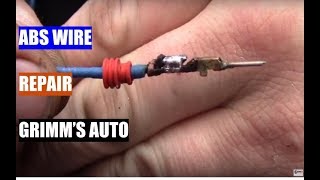
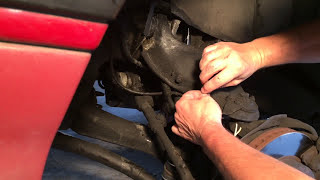
Safely raise and support the vehicle. Start at the right rear wheel and locate the sensor. Follow its wiring harness, looking for cuts, chafing, melting, or chewed wires. Inspect the connector for corrosion or bent pins.
Tools: Jack, Jack Stands, Flashlight (Beginner) - Analyze Live Data & Perform 'Wiggle Test'
Access the live data stream for the ABS module on your scanner. Monitor the speeds of all four wheels while a helper spins the right rear wheel by hand. If it reads zero, carefully wiggle the sensor's wiring harness at various points. If the speed reading suddenly flickers, you have pinpointed an internal break in the wiring.
Tools: OBD-II Scanner (with ABS capability), Assistant (Intermediate) - Inspect the ABS Tone Ring
Carefully inspect the tone ring on the axle or hub assembly. Look for cracked teeth, heavy rust scale, or metallic debris buildup. Ensure the gap between the sensor tip and the tone ring is clean and consistent.
Tools: Flashlight, Brake Cleaner, Wire Brush (Intermediate) - Test the Circuit for Power and Ground
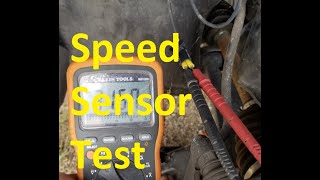
Disconnect the sensor connector. Turn the ignition to 'ON'. Set your multimeter to DC Volts. Probe the two terminals in the harness-side connector. Modern 'active' sensors receive a 5V or 12V reference voltage. If you see 0V, there is an open or short in the wiring between the ABS module and the sensor.
Tools: Multimeter, Jack, Jack Stands (Intermediate) - Test Sensor Internal Resistance (Passive Sensors Only)
For older, 2-wire 'passive' sensors, switch your multimeter to Ohms (Ω). Measure the resistance across the two pins on the sensor itself. A good sensor reads between 800 and 2,000 Ohms. An infinite reading (OL) indicates an open circuit. Do NOT perform this test on a modern 'active' sensor, as it causes damage.
Tools: Multimeter (Advanced) - Test AC Voltage Output (Passive Sensors Only)
With a passive sensor unplugged, switch your multimeter to AC Volts (mV AC). Connect the probes to the sensor's pins. Have a helper spin the wheel by hand. You should see a small AC voltage reading (above 100mV) that increases with wheel speed. No voltage means the sensor is dead.
Tools: Multimeter, Assistant (Advanced) - Analyze the Waveform with an Oscilloscope
For definitive diagnosis, connect an oscilloscope to the sensor's signal and ground wires. As you spin the wheel, you should see a clean, repeating waveform. A flat line, distorted pattern, or missing sections confirms a problem with the sensor or tone ring.
Tools: Oscilloscope, Jack, Jack Stands (Professional)
When This Code Triggers (Freeze-Frame Conditions)
- Vehicle Speed: > 5 mph (The ABS module runs a self-test upon startup and continuously monitors the sensors while driving. The code sets once the vehicle begins moving and the module detects a lack of signal from the right rear sensor.)
- System Voltage: 11-14V (Normal operating voltage. A very low system voltage triggers multiple, erroneous ABS codes, but C1031 is specific to one sensor circuit.)
- ABS/TCS/ESC Status: Disabled/Off (The moment the C1031 fault is logged as 'current', the ABS control module disables the anti-lock, traction, and stability control systems as a safety precaution.)
- Time Since Code Set: 0 seconds (This is a 'hard fault', meaning it is detected immediately upon the ABS module's self-test if the circuit is open or shorted.)
Related Codes
- C1032 — Indicates a 'Right Rear Wheel Speed Sensor Signal Performance/Erratic' issue. While C1031 points to a total electrical failure, C1032 suggests the module receives a signal, but it's illogical. This is often caused by a damaged tone ring or excessive wheel bearing play.
- C1035 — The identical fault but for the 'Left Rear Wheel Speed Sensor Circuit.' If you have both C1031 and C1035 simultaneously, suspect a problem common to both sides, such as a chewed wiring harness where the left and right side looms run together.
- C003A or C0040 — Generic SAE codes for 'Right Rear Wheel Speed Sensor Circuit Malfunction.' They are functionally identical to C1031 and are used by various manufacturers (like Ford and GM). The diagnostic process is the same.
- U0415 — Means 'Invalid Data Received From Anti-Lock Brake System Control Module.' It indicates another module on the vehicle's network is not receiving a valid signal from the ABS module. This is a secondary code triggered by an underlying fault like C1031.
Climate & Environmental Factors
- Cold/Freezing Temperatures: In cold climates, moisture that seeps into wiring harness connectors or cracks in the wire insulation freezes. This ice expansion severs weak electrical connections, causing an open circuit fault. Wires also become brittle in the cold and break from suspension movement.
- High Humidity / Road Salt: In regions where road salt is used in winter, corrosion is a primary cause of failure. Saltwater wicks into connectors, causing terminal pins to corrode and lose contact. It also aggressively rusts the ABS tone ring, causing it to swell, crack, or delaminate.
How to Talk to a Mechanic About This Code
Say this: "I have an ABS light on and my scanner shows a C1031 code for the right rear wheel speed sensor circuit. I'd like to schedule a diagnostic. Since this is a circuit code, please test the wiring harness for continuity and check for voltage at the sensor connector before recommending a sensor replacement."
This signals that you understand the difference between a sensor failure and a circuit failure. It directs the technician to perform a proper electrical diagnosis, which is the correct procedure for a C1031 code, and helps prevent them from simply replacing the sensor without confirming it's the root cause.
Avoid saying:
- 'My ABS light is on, can you fix it?'
- 'I think I need a new ABS sensor.'
- 'Just replace the right rear sensor.'
Questions to ask before authorizing the repair:
- What were the results of the wiring harness 'wiggle test' while watching live data?
- Did you find proper voltage and ground at the sensor connector?
- Did you visually inspect the wiring harness for damage and the tone ring for debris or cracks?
- Can you show me the failed part and explain why it needs to be replaced?
Where to Take It: Dealer vs Independent vs Chain
- Dealer:
A good but expensive option. Best if you suspect a known manufacturer issue or if an independent shop is unable to diagnose a complex wiring fault.
Best for: Vehicles still under warranty, Diagnosing known manufacturer-specific quirks (e.g., Mazda TPMS issue, BMW reluctor rings), Complex electrical issues that require factory-specific diagnostic tools or information.
Downsides: Significantly higher labor rates and parts costs., May recommend replacing a larger assembly when a smaller component repair is possible. (Typical cost: +50% vs. baseline) - Independent Shop:
Best fit for most situations. A competent independent shop handles the vast majority of C1031 causes (wiring, sensor, hub) at a much lower cost than a dealer.
Best for: Out-of-warranty vehicles where cost is a major factor., Diagnosing and repairing common faults like wiring damage, sensor replacement, and tone ring issues., Building a long-term relationship with a trusted mechanic.
Downsides: Quality and expertise vary widely; look for ASE certification and good reviews., May not have access to the very latest manufacturer-specific bulletins or tools. (Typical cost: +0% vs. baseline) - Chain Shop:
Use with caution. Acceptable if you are 100% certain the sensor itself is the only problem. Avoid for initial diagnosis, as they are less likely to trace a wiring fault or identify a mechanical issue like a bad tone ring.
Best for: Simple, straightforward part replacements if the diagnosis is already certain.
Downsides: Technician skill varies dramatically., Often lack the advanced diagnostic capabilities for tricky electrical or mechanical ABS issues., May default to replacing the sensor without proper circuit testing, leading to repeat repairs. (Typical cost: -10% vs. baseline)
When to Walk Away From the Repair
If the estimated repair cost for the ABS system exceeds 40-50% of your car's private-party value, and the car has other pending issues, you should seriously consider selling it as-is or trading it in.
- Car worth $3000, fix is $750: Borderline. The repair is 25% of the car's value. If the rest of the car is in good shape, fix it. If it needs other expensive repairs, it's time to walk away.
- Car worth $10000, fix is $400: Fix it. This is a relatively minor cost to restore a critical safety feature and maintain the vehicle's value.
- Car worth $2000, fix is $1100: Walk away. The repair cost is over 50% of the car's value. This is not an economical repair.
What Scan Tool You Need for This Code
Minimum: A scanner that can read and clear Anti-lock Braking System (ABS) codes and display live data for all four wheel speed sensors.
A basic, engine-only code reader (under $30) cannot communicate with the ABS module. It shows 'No Codes Found' even with the ABS light on, making it useless for diagnosing C1031. You need to see the specific 'C' code and watch the live wheel speed data to confirm the fault.
Budget: TopDon TopScan / MUCAR BT200 (~$70) — These Bluetooth dongles pair with your smartphone and offer full system scanning, including ABS. You can read the C1031 code, clear it, and view live data to see if the right rear wheel is reporting 0 MPH, which is essential for diagnosis.
Mid-range: BlueDriver Pro / Foxwell NT510 Elite (~$120) — BlueDriver provides excellent repair reports that suggest common fixes based on your specific vehicle and code. The Foxwell NT510 Elite offers deep, manufacturer-specific diagnostics and some bi-directional controls, which is helpful for more advanced troubleshooting.
Professional: Autel MaxiCOM MK808 / MK906BT (~$450-1200) — These are professional-grade tools that offer full bidirectional control, comprehensive service functions like ABS brake bleeding, and detailed data graphing. They provide the most in-depth diagnostic capabilities short of a factory tool.
Rent vs buy: If this is a one-time fix, many auto parts stores like O'Reilly Auto Parts and AutoZone offer a free loaner tool program. Their scanners are typically capable of reading ABS codes and save you the cost of buying a tool. Buy a scanner only if you plan to do your own diagnostics regularly.
How to Clear the Code After You Fix It
- Use an ABS-capable OBD-II scan tool to erase the fault code.
- Perform a test drive that includes speeds above 15 mph to allow the ABS module to confirm the sensor is reading correctly.
- Some vehicles require a specific steering angle sensor calibration or ABS system initialization after repairs.
Drive cycle (~10 minutes): After clearing the code, start the vehicle and drive for 5-10 minutes, ensuring vehicle speed exceeds 15 mph. The ABS light should remain off. If the repair was successful, the code will not return. The ABS system does not require a complex, multi-day drive cycle.
Readiness monitors affected: No emissions-related readiness monitors are affected by an ABS fault.
Watch out for:
- Using a basic OBD-II scanner that cannot access the ABS module to clear the code. The light will remain on.
- Simply disconnecting the battery does not clear the code from the ABS module's memory.
- The code returning immediately indicates the root cause (usually wiring) was not fixed, or the replacement sensor is defective.
Will This Fail Emissions / State Inspection?
No — by itself this code doesn't fail OBD inspection (but it can keep readiness monitors from setting, which causes a separate fail).
- California: An illuminated ABS light will not cause a failure of the California Smog Check, which is primarily concerned with emissions systems. However, a separate safety inspection, if required, flags the issue.
- New York: An illuminated ABS warning light is grounds for failing the annual safety inspection.
- Texas: An illuminated ABS light is explicitly listed as not being a cause for rejection in the Texas safety inspection. The vehicle will pass.
Most Commonly Affected Vehicles
- Maruti Suzuki Swift (2011-2021) — Extremely common issue. Almost always caused by rodent damage or corrosion to the wiring harness where it passes through the chassis near the rear seat or along the rear axle.
- Maruti Suzuki Dzire (2012-2022) — Shares the same platform and wiring vulnerabilities as the Swift. The wiring harness is frequently chewed by rodents under the rear seat area or near the fuel tank.
- Maruti Suzuki Ignis (2017-2022) — The wiring harness for the rear speed sensor is a known weak point. The break often occurs where the harness passes through a rubber grommet into the cabin.
- Maruti Suzuki Baleno (2015-2021) — Frequently experiences this fault due to wiring circuit failures. The harness is susceptible to damage near the rear suspension components.
- Mazda 3, CX-5 (2014-2019) — For these model years, which use an indirect TPMS, C1031 often points to a TPMS issue, not a primary ABS fault. It is triggered by incorrect tire pressures or if the TPMS system hasn't been initialized after a tire rotation.
- Hyundai Sonata, Ioniq (2015-2020) — Often caused by an internal failure of the sensor itself. On these models, the sensor is typically a separate component from the wheel hub.
- BMW 1 Series, 3 Series (E8x, E9x) (2005-2013) — A very common issue is the reluctor ring on the rear driveshaft becoming heavily corroded and swelling or cracking. This damages the tip of the ABS sensor, requiring replacement of both the ring and the sensor.
- Subaru Forester, Crosstrek, Impreza (2009-2018) — This fault is common and usually points to a failed sensor or corrosion in the electrical connector, which is located behind the plastic wheel well liner.
- Nissan Pathfinder, Qashqai, X-Trail, Rogue (2007-2015) — Prone to wiring harness failures, particularly corrosion inside the main connector or breaks in the wire near the sensor grommet.
Manufacturer-Specific Notes
- Suzuki: The vast majority of C1031 codes on Suzuki cars are caused by damaged wiring, frequently from rodents chewing the harness under the rear seat or along the axle beam. Always perform an exhaustive wiring inspection before condemning the sensor.
- Mazda: On 2014+ models with indirect TPMS, C1031 is a TPMS code, not an ABS code. It means the system detected a rotational difference, possibly due to a non-standard spare tire or incorrect pressures. Check all tire pressures and perform the TPMS initialization procedure via the 'SET' button.
- Nissan: Nissan issued Technical Service Bulletins stressing the importance of a full circuit diagnosis. Technicians often replace the sensor unnecessarily when the actual fault is a hairline crack in the wire or corrosion in a connector several feet away.
- BMW: On rear-wheel-drive models from the mid-2000s to early-2010s, the exposed metal reluctor ring on the driveshaft is a major failure point. It rusts, expands, and makes contact with the sensor. A visual inspection of this ring is critical.
Real Owner Stories
2018 Maruti Suzuki Ignis with C1031
The ABS light was continuously on after starting the vehicle. A scan revealed a current fault code C1031 for the 'Right Rear Wheel Speed Sensor Circuit Failure'.
Outcome: The technician discovered rodents chewed through the sensor wires under the rear seat where the harness passes through the body. After repairing the two broken wires and clearing the code, the ABS light went out.
Lesson: On Suzuki models, always suspect rodent damage. Before replacing the sensor, trace the wiring harness to common chew points, like under the rear seat, to check for breaks.
2009 BMW E90 318d with ABS/DSC lights
The ABS and DSC warning lights flickered intermittently while driving, mimicking traction control activating on a slippery surface. The sensor itself was physically worn down.
Outcome: The root cause was a corroded ABS reluctor ring on the driveshaft. Rust built up underneath the metal ring, causing it to expand, warp, and rub against the tip of the ABS sensor. The owner replaced the $5 reluctor ring, solving the problem.
Lesson: If a new sensor fails or shows physical damage, the problem is mechanical. On many RWD BMWs, a corroded and swollen reluctor ring is a common cause that destroys new sensors until the ring is replaced.
2016 Mazda 3 with C1031 and TPMS light
The TPMS warning light came on, and a scan tool showed code C1031. The owner recently had a tire replaced after a puncture.
Outcome: Because 2014+ Mazdas use an indirect TPMS relying on ABS wheel speed sensors, the C1031 code indicated a TPMS calibration issue, not a true ABS fault. The owner performed the TPMS initialization procedure by holding the 'SET' button, recalibrating the system and clearing the code.
Lesson: On modern Mazdas, C1031 is often a TPMS code. Before starting ABS circuit diagnosis, check tire pressures and perform the TPMS reset procedure, especially after tire replacement.
How to Prevent This Code From Triggering
- Apply Dielectric Grease to Connectors (During any brake, suspension, or tire work) — Filling the ABS sensor connector with a small amount of dielectric grease seals out moisture and oxygen, preventing pin corrosion.
- Install Rodent-Deterrent Tape or Conduit (Once, especially if parking outdoors or on affected models (Suzuki, Toyota)) — Many modern cars use soy-based wire insulation that attracts rodents. Wrapping vulnerable sections of the ABS harness with capsaicin-laced tape (e.g., Honda Part # 4019-2317) makes the wiring unpalatable.
- Perform Annual Underbody Inspection and Cleaning (Once per year, especially in 'Salt Belt' regions) — Hosing down the underbody removes salt and grime that accelerate corrosion of the sensor, connectors, and tone ring. A visual inspection spots wiring harnesses that are rubbing or hanging loose.
- Clean Tone Rings During Brake Service (Every time brake pads/rotors are replaced) — Using brake cleaner and a wire brush to remove metallic dust and rust scale from the ABS tone ring ensures the sensor has a clean, strong signal.
Frequently Asked Questions
Can I just clean the ABS sensor to fix code C1031?
Sometimes, if the sensor tip is covered in metallic debris from brake wear, cleaning restores the signal. However, C1031 is a circuit fault, which usually indicates an electrical problem like a broken wire or internal sensor failure. Cleaning will not fix an electrical open or short.
Is it safe to drive with the ABS light on from a C1031 code?
Your standard brakes still work, but you lose anti-lock braking, traction control, and stability control. You must drive cautiously, increase following distance, and avoid sudden braking on wet or icy roads until repaired.
Why did the light come back on after I replaced the sensor?
This almost always means the sensor was not the root cause. The most likely culprit is an intermittent open or short in the wiring harness that was overlooked. Re-inspect the entire harness, perform a wiggle test, or check the tone ring for damage.
Do I need a special tool to diagnose this code?
Yes, you need an OBD-II scanner capable of reading ABS/Chassis ('C') codes. Basic engine-only code readers will report 'no codes found' even with the ABS light on. A digital multimeter is also essential for testing the circuit's voltage and resistance.
What's the difference between a 'circuit' fault and a 'signal' fault?
A circuit fault (C1031) points to a fundamental electrical problem like a broken wire, a short to ground, or a dead sensor. A signal fault (C1032) means the electrical circuit is intact, but the data is erratic, usually pointing to a mechanical issue like a cracked tone ring or loose wheel bearing.
Why did my ABS light turn on after hitting a pothole?
A sharp impact can momentarily sever a weak connection in the wiring or bend the sensor's mounting bracket, changing the air gap. In severe cases, it can crack the ABS tone ring. The impact simply exposed a pre-existing weak point in the system.
Can I just reset the code and see if it comes back?
You can clear the code, but C1031 indicates a hard electrical fault that returns as soon as the ABS module runs its self-test. Clearing the code will not fix the underlying broken wire or failed sensor.
Key Takeaways
- Code C1031 flags a complete electrical failure in the right rear wheel speed sensor circuit, instantly disabling your ABS and Traction Control.
- Wiring damage causes over 60% of C1031 codes; visually inspect the harness for chafing or rodent damage before spending $50-$150 on a new sensor.
- On 2014 and newer Mazdas, C1031 actually indicates a TPMS calibration error; fix this by inflating all tires to the door jamb spec and holding the 'SET' button.
- Diagnose this circuit fault by using a multimeter to verify a 5V or 12V reference voltage at the sensor connector; 0V confirms a broken wire.
- Avoid the most common DIY mistake: replacing the $100 sensor when the actual culprit is a $5 corroded reluctor ring or a broken wire.
Helpful Videos
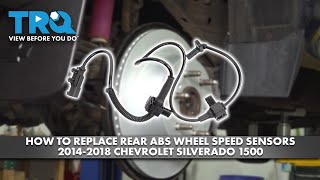
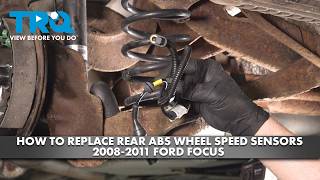
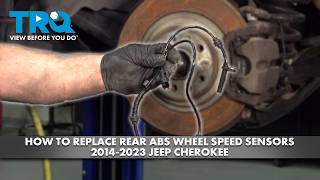
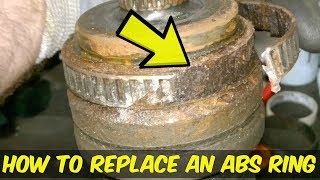
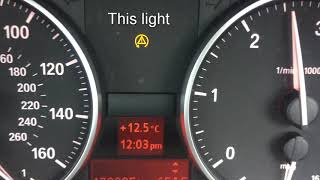
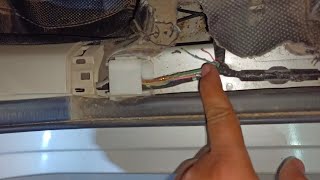
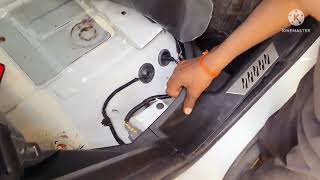
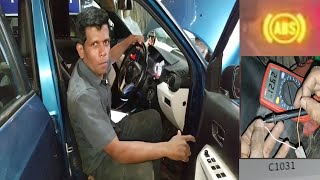

The information in this article is provided for general reference and educational purposes only. Vehicle specifications, procedures, and part compatibility can vary by production date, trim level, and region. Always consult your vehicle's factory service manual and verify part numbers before purchasing or performing repairs. Safety-critical components such as airbags, seat belts, and braking systems should be installed by a qualified professional.
- 🎬 Helpful Videos
- What Does C1031 Mean?
- Can I Drive With C1031?
- Common Causes
- Symptoms
- Diagnostic Flowchart
- Common Fixes & Costs
- DIY vs Professional
- Used vs. New Parts: Buying Guide
- What Happens If You Wait — Timeline
- Cost of Not Fixing It
- Diagnosis Steps
- When This Code Triggers (Freeze-Frame Conditions)
- Related Codes
- Climate & Environmental Factors
- How to Talk to a Mechanic About This Code
- Where to Take It: Dealer vs Independent vs Chain
- When to Walk Away From the Repair
- What Scan Tool You Need for This Code
- How to Clear the Code After You Fix It
- Will This Fail Emissions / State Inspection?
- Most Commonly Affected Vehicles
- Manufacturer-Specific Notes
- Real Owner Stories
- 2018 Maruti Suzuki Ignis with C1031
- 2009 BMW E90 318d with ABS/DSC lights
- 2016 Mazda 3 with C1031 and TPMS light
- How to Prevent This Code From Triggering
- Frequently Asked Questions
- Can I just clean the ABS sensor to fix code C1031?
- Is it safe to drive with the ABS light on from a C1031 code?
- Why did the light come back on after I replaced the sensor?
- Do I need a special tool to diagnose this code?
- What's the difference between a 'circuit' fault and a 'signal' fault?
- Why did my ABS light turn on after hitting a pothole?
- Can I just reset the code and see if it comes back?
- Key Takeaways
- 🎟️ Get 5% Off