

OBD-II Code C1020: Left Rear Wheel Speed Sensor Circuit Malfunction
What C1020 means, why it triggers, and how to fix it
- Code C1020 indicates a circuit failure in the left rear wheel speed sensor, immediately disabling your ABS and traction control systems.
- Before buying a $30-$100 replacement sensor, visually inspect the wiring harness for breaks and check the wheel bearing for excessive play.
- On Honda and rust-belt vehicles, removing the sensor and wire-brushing rust off the mounting surface often fixes the code for $0.
- You can safely drive with this code, but your vehicle requires up to 20% more stopping distance in wet or icy conditions due to locked wheels.
What Does C1020 Mean?

Code C1020 means the ABS control module detects an electrical circuit problem with the left rear wheel speed sensor. This sensor reports how fast the left rear wheel turns. Without a reliable signal, the computer triggers warning lights and disables ABS and traction control.
Technical definition: The SAE/OBD-II definition is "Left Rear Wheel Speed Sensor Circuit Malfunction." The ABS control module detects the signal from the left rear wheel speed sensor is missing, erratic, or outside the expected range. This points to an open circuit, a short circuit, or a failed sensor. On Chrysler/Dodge vehicles, this sets 🎬 Watch: Diagnosing a C1020 circuit fault on a Dodge. if sensor feedback voltage drops below 0.304 volts or exceeds 1.39 volts for 100 milliseconds.
Can I Drive With C1020?
Yes, But With Caution. Yes, but your Anti-lock Braking System (ABS) and traction/stability control are disabled. Your brakes function like those on an older car without ABS, meaning the wheels lock up during hard braking, increasing stopping distances. Repair this promptly to restore emergency braking safety.
Common Causes

- Damaged Wiring Harness (Very Common) — Exposed to elements and suspension movement, the wiring harness frequently suffers broken wires, chafing, or rodent damage.
- Failed Left Rear Wheel Speed Sensor (Common) — The sensor fails internally due to age, heat cycles, or moisture intrusion.
- Corroded Electrical Connector (Common) — The connector at the sensor or ABS module loosens or fills with water, interrupting the signal.
- Failing Wheel Hub/Bearing Assembly (Less Common) — A worn wheel bearing creates excessive hub play, changing the distance between the sensor and tone ring and destroying signal reliability.
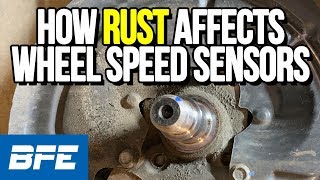
- Rust Buildup Under Sensor (Less Common) — Common on Hondas, rust builds up on the steering knuckle under the sensor mount, physically pushing the sensor away 🎬 Watch: How rust buildup affects wheel speed sensor signals. from the tone ring.
- Damaged ABS Tone Ring (Less Common) — The toothed ring cracks, rusts, or detaches from the axle, causing an erratic signal.
- Incorrectly Installed Wheel Bearing (Rare) — If a bearing with an integrated magnetic encoder is pressed in backward during a repair, the sensor reads nothing.
- Failed ABS Control Module (Very Rare) — The ABS computer itself fails, requiring replacement after ruling out all wiring and sensor faults.
Symptoms

- ABS warning light is on — The light stays illuminated as long as the fault is present.
- Traction/Stability Control light is on — These systems rely on wheel speed data and are disabled alongside the ABS.
- Cruise control disabled — Vehicles disable cruise control when an ABS fault is active to prevent unsafe acceleration.
- Blind Spot Monitoring disabled — Advanced driver-assistance systems (ADAS) require wheel speed data and become unavailable.
- Brakes lock up during hard stops — Without ABS, hard braking causes the wheels to skid. A faulty signal also triggers unnecessary ABS activation at low speeds, creating a pulsating pedal.
- Erratic speedometer behavior — If the rear wheel speed sensors calculate vehicle speed, a faulty sensor causes the speedometer to fluctuate or drop to zero.
Diagnostic Flowchart
Tap your situation to follow the diagnostic path that matches what you're seeing on this code.
Common Fixes & Costs
- Replace Left Rear Wheel Speed Sensor
— Parts: $30-$100, Labor: $80-$150, ~0.8 hr book time
(DIY)
Jeep Wrangler (JK 2007-2018): OEM 52125003AB (Alt: Dorman 970-052, Standard Motor Products ALS1984)
Dodge Grand Caravan (2012-2020): OEM 68127990AD (Alt: Dorman 970-066, NTK (NGK) AB1986) - Repair Damaged Wiring — Parts: $10-$30, Labor: $130-$260, ~1.5 hr book time (Intermediate)
- Replace Wheel Hub Assembly
— Parts: $150-$400, Labor: $150-$350, ~1.5 hr book time
(Intermediate)
Jeep Wrangler (JK 2007-2018): OEM 52060398AC (Alt: MOOG 512352, Timken HA590246)
Dodge Grand Caravan (2012-2020): OEM 4721992AA (Alt: MOOG 512493, TRQ BHA53852) - Clean Rust/Debris from Sensor Mount — Parts: $0-$10, Labor: $50-$120, ~0.7 hr book time (DIY)
- Replace ABS Tone Ring — Parts: $20-$80, Labor: $150-$300, ~2 hr book time (Professional)
DIY vs Professional
- Replace Left Rear Wheel Speed Sensor — Beginner: Yes
- Clean Rust/Debris from Sensor Mount — Beginner: Yes
- Repair Damaged Wiring — Beginner: No
- Replace Wheel Hub Assembly — Beginner: No
Used vs. New Parts: Buying Guide
When a used part is worth it: Buying a used wheel speed sensor is not recommended due to low aftermarket costs. A used wheel hub assembly from a low-mileage donor vehicle is a cost-effective option for tight budgets.
Donor-vehicle mileage cap: roughly under 60000 miles for the part to have meaningful remaining life.
Donor quality checklist:
- Verify donor vehicle was not in a major collision.
- Avoid parts from the 'Rust Belt'.
- Match the part number exactly.
Decision logic:
- If The part is a wheel speed sensor → Buy a new aftermarket or OEM part. Used sensors are a poor value.
- If The part is a complete wheel hub assembly and the vehicle is over 100k miles → A new aftermarket assembly is strongly recommended.
- If Budget is the primary concern and a low-mileage donor is available → A used hub assembly is acceptable, acknowledging the risk of a shorter lifespan.
Warranty tradeoff: Used parts have a 30-90 day warranty. New aftermarket parts offer 1-year to limited lifetime warranties.
Worst-case if a used part fails: $200-$500 if a used hub fails shortly after installation.
What Happens If You Wait — Timeline
- Immediate: ABS, Traction Control, and Stability Control warning lights illuminate. Safety systems and cruise control are disabled. (MPG impact: 0%% · Added cost: $0 (Safety Risk))
- Weeks to Months: If caused by a worn wheel bearing, continued driving leads to increased humming/grinding noise and uneven tire wear. (MPG impact: 0-2%% · Added cost: $50-$300 (Premature tire wear))
- 2-6 Months: A severely worn wheel bearing damages the hub or steering knuckle. A corroded wiring connector fails entirely, requiring a new pigtail. (MPG impact: 1-3%% · Added cost: $300-$800 (Progressive mechanical damage))
- 6+ Months: Catastrophic wheel bearing failure causes the wheel to wobble excessively or seize, leading to a loss of vehicle control. (MPG impact: 2-5%% · Added cost: $1000-$2500+ (Major suspension repair, accident risk))
Cost of Not Fixing It
- Immediate: Loss of ABS and Traction Control. Increased risk of skidding during emergency braking. (Added cost: N/A (Safety Risk))
- Short-Term (Weeks to Months): Abnormal tire wear if the fault is caused by a bad wheel bearing changing the wheel's alignment. (Added cost: $50-$300 (Tire Wear))
- Long-Term (6+ months): A corroded connector worsens, requiring a new wiring harness instead of a simple sensor fix. (Added cost: $300-$1500+ (Progressive damage))
Diagnosis Steps

- Read Trouble Codes
Use an OBD-II scanner capable of reading ABS codes to confirm C1020 is active. Note any other codes, as they provide additional diagnostic clues.
Tools: OBD-II Scanner (with ABS capability) (Beginner) - Visual Inspection
Safely raise the rear of the vehicle. Inspect the entire wiring harness from the left rear wheel into the vehicle body. Look for breaks, chafing, or rodent damage. Inspect the electrical connector for corrosion or a loose fit.
Tools: Jack, Jack Stands, Flashlight (Beginner) - Check for Wheel Bearing Play
With the wheel off the ground, grab the tire at the 12 and 6 o'clock positions and wiggle it. Significant play or a clunking noise confirms a worn wheel bearing is the root cause.
Tools: Jack, Jack Stands (Intermediate) - Inspect Sensor and Tone Ring
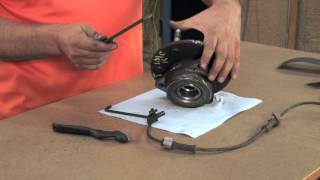
Remove the wheel. Verify the sensor is securely mounted. Inspect the tone ring for missing teeth or heavy rust. Remove the sensor and clean any rust from the mounting surface to ensure the correct air gap.
Tools: Lug Wrench, Brake Cleaner, Wire Brush (Intermediate) - Monitor Live Data
View the live data stream for all four wheel speed sensors. Spin the left rear wheel by hand. If the Left Rear Wheel Speed reads 0 or is erratic while others read correctly, it confirms a fault in the sensor, wiring, or tone ring.
Tools: Advanced OBD-II Scanner (Intermediate) - Test Passive Sensor Resistance
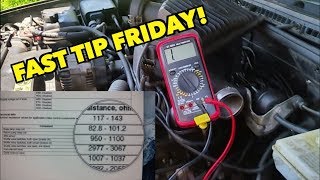
For a 2-wire passive sensor, disconnect it and measure resistance across the pins. A typical reading is 800-2,500 Ω (check service manual). Infinite resistance (OL) indicates an internal open circuit, requiring sensor replacement.
Tools: Multimeter, Service Manual (Advanced) - Test Active Sensor Voltage Supply
For an active sensor, turn the ignition ON. Disconnect the sensor and probe the harness connector. You must find a reference voltage (5V or 12V) and a ground. Missing voltage isolates the problem to the wiring or ABS module.
Tools: Multimeter, Service Manual (Advanced) - Analyze Waveform
Connect an oscilloscope to the sensor's signal wire. Gaps, noise, or a flat line in the waveform instantly confirms a fault in the sensor, tone ring, or air gap.
Tools: Oscilloscope (Professional)
When This Code Triggers (Freeze-Frame Conditions)
- Vehicle Speed: 15-40 mph (The fault is detected when the ABS module compares wheel speeds as the vehicle starts moving.)
- System Voltage: 12.0-14.5V (Normal operating voltage; the code is not caused by low battery voltage.)
- ABS/Traction Control Status: On / Active (The code sets during the ABS module's self-test at startup or low speeds.)
Related Codes
- C102B — Identical fault for the Right Rear Wheel. Diagnostic steps are the same, performed on the passenger side.
- C102A — Indicates the signal is present but illogical compared to other wheels. Points to a mechanical issue like a damaged tone ring or excessive wheel bearing play. Diagnose C1020 first.
- U0415 — A communication code set by other modules because the ABS module is sending faulty data. Fixing C1020 clears U0415.
- P0501 — Set by the PCM when it receives irrational vehicle speed data from the ABS module. C1020 is the root cause.
Climate & Environmental Factors
- Road Salt (Rust Belt Regions): Road salt accelerates corrosion of the wiring harness, connectors, and sensor mounting points, drastically increasing C1020 failures.
- High Humidity / Heavy Rain: Moisture penetrates failing seals on the sensor or connector, causing a temporary short circuit after a car wash or rainstorm.
- Cold Weather / Snow and Ice: Ice and slush build up in the wheel wells, physically damaging exposed wiring or blocking the sensor's view of the tone ring.
How to Talk to a Mechanic About This Code
Say this: "I have an ABS light on and my scanner shows code C1020 for the left rear wheel speed sensor circuit. Please start by inspecting the wiring harness and testing the sensor before quoting a full hub replacement."
This directs the technician to perform a proper diagnosis rather than jumping to the most expensive repair, saving you money on diagnostic time.
Avoid saying:
- 'My ABS light is on, can you look at it?' (Invites a broad, expensive diagnosis).
- 'Just fix whatever is wrong.'
- 'My friend said it's probably the sensor, can you just replace it?' (Authorizes a repair without a diagnosis).
Questions to ask before authorizing the repair:
- Did you find the failure in the sensor, the wiring, or a mechanical issue?
- Can you show me the damaged wire or the failed test result?
- If the wiring is bad, is a spot repair possible?
- What is the warranty on the parts and labor?
Where to Take It: Dealer vs Independent vs Chain
- Dealer:
Recommended only if the vehicle is under warranty or has a known manufacturer-specific fault.
Best for: Vehicles still under warranty., Complex electrical issues or manufacturer-specific quirks.
Downsides: Highest labor rates., More likely to replace a whole assembly rather than perform a wiring repair. (Typical cost: +65% vs. baseline) - Independent Shop:
Best fit for this code. A reputable independent shop has the tools to diagnose and fix C1020 efficiently.
Best for: Most out-of-warranty vehicles., Diagnosing common faults like wiring breaks or bad sensors.
Downsides: Quality varies; find a shop with ASE-certified technicians. (Typical cost: +0% vs. baseline) - Chain Shop:
Use with caution. Acceptable for a simple sensor replacement, but avoid for initial diagnosis.
Best for: Simple part replacements if you have already diagnosed the issue yourself.
Downsides: High pressure to upsell services., Often not equipped for in-depth electrical diagnosis. (Typical cost: -10% vs. baseline)
When to Walk Away From the Repair
If the estimated repair cost exceeds 40-50% of your car's private-party value, consider selling or trading it in.
- Car worth $4000, fix is $450: Fix it. This repair cost is well below the threshold and restores a critical safety feature.
- Car worth $3000, fix is $1200: Borderline. Get a second opinion. If the cost is firm, consider selling the car 'as-is'.
- Car worth $2500, fix is $1500: Walk away. The repair cost is over half the car's value.
What Scan Tool You Need for This Code

Minimum: A scanner that reads and clears ABS codes and displays live data for wheel speed sensors.
A standard $20 engine code reader cannot communicate with the ABS module. You MUST have a scanner with ABS capabilities to view live speed data.
Budget: Autel AutoLink AL619 / AP200 (~$75) — Reads and clears ABS codes. Displays live data, allowing you to spin the wheels and verify sensor speed.
Mid-range: FOXWELL NT604 Elite / Innova 5210 (~$150) — Offers graphing of live data, making it easier to spot erratic signals from a failing sensor or bad wiring.
Professional: Autel MaxiCOM MK808 / Launch CRP919E (~$500-700) — Professional-level tablets offering advanced live data graphing and bidirectional controls for ABS auto-bleeding.
Rent vs buy: AutoZone's free 'Fix Finder' service reads ABS codes in-store. Parts stores also loan ABS scanners for a refundable deposit. Buy a scanner if you plan to do repairs more than once a year.
How to Clear the Code After You Fix It
- Perform the repair.
- Use an OBD-II scan tool with ABS capability to clear the fault code.
- Turn the ignition off, then back on.
- Drive the vehicle above 15 mph to allow the ABS module to perform a self-test.
Drive cycle (~10 minutes): Drive the vehicle for 5-10 minutes, including turns and reaching a speed over 25 mph. The ABS light remains off if the repair is successful.
Readiness monitors affected: None. ABS faults do not affect engine emissions readiness monitors.
Watch out for:
- Using a basic code reader that cannot clear ABS-specific codes.
- Not test driving the vehicle after clearing the code.
- The code returning immediately indicates the root cause was not fixed.
Will This Fail Emissions / State Inspection?
No — by itself this code doesn't fail OBD inspection (but it can keep readiness monitors from setting, which causes a separate fail).
- California: An ABS light does NOT cause a smog check failure, but fails a 'Brake and Lamp' inspection.
- New York: An illuminated ABS warning light is a cause for rejection during the annual safety inspection.
- Texas: An illuminated ABS light does NOT cause a failure during the safety inspection.
Most Commonly Affected Vehicles
- Jeep Wrangler (JK) (2007-2018) — Very common issue due to off-road use damaging the exposed wiring or sensor.
- Dodge Grand Caravan / Chrysler Town & Country (2008-2020) — Prone to wiring harness chafing near the sensor connector.
- Chrysler 300 / Dodge Charger/Magnum (2005-2010) — Wiring and sensor circuit faults are frequently reported. Diagnostics focus on checking for shorts to ground.
- Dodge Journey (2009-2020) — Experiences broken wires in the harness near the sensor connector due to suspension movement.
- Jeep Patriot / Compass (2007-2017) — Sensor failure is a well-documented common repair.
- Kia / Hyundai Sorento, Santa Fe (2010-2018) — Water intrudes into the rear wheel hub assembly, causing a short. TSB CHA 059 recommends replacing the entire hub assembly.
- Volkswagen Golf, Jetta, Tiguan (2010-2018) — Experiences C1020 due to sensor failure. The sensor is a simple plug-and-play replacement.
- Honda Civic, Accord, CR-V (2006-2015) — Frequently caused by rust buildup on the knuckle underneath the sensor's mounting point.
Manufacturer-Specific Notes
- Dodge/Chrysler/Jeep: The code points specifically to a circuit failure. Service manuals provide specific resistance ranges, such as 1600-2300 ohms for the sensor circuit on trucks.
- Ford: On some Ford vehicles, C1020 means "Brake System Fill Not Complete," relating to hydraulic bleeding, not a wheel speed sensor. Use a Ford-specific scanner.
- Mitsubishi: CAN bus line problems incorrectly cause a C1020 code. TSB MSB-22M35-502 recommends checking the CAN system before diagnosing the sensor circuit.
- Mercedes-Benz: On older models, C1020 refers to a 'CAN Communication Fault,' requiring CAN bus resistance checks (~60Ω).
- Kia/Hyundai: TSB CHA 059 addresses water intrusion into the rear hub assembly causing sensor codes. The fix requires replacing the rear wheel hub assembly.
Real Owner Stories
2012 Jeep Wrangler JK at 57K miles
ABS and Traction Control lights illuminated intermittently after off-road driving.
What they tried:
- Read code C1020.
- Replaced the left rear wheel speed sensor, but the code remained.
- Verified voltage at the sensor harness connector.
Outcome: The issue was a failing wheel bearing in the rear axle. Bearing wear caused play in the axle, leading to an erratic sensor signal. Replacing the axle bearing resolved the codes.
Lesson: Check for wheel play before assuming an electrical-only issue, especially on vehicles with modified suspensions or large tires.
2010 Honda CR-V at 110K miles
ABS light came on steadily in a rust-belt state.
What they tried:
- A shop quoted $250 to replace the sensor.
- Owner removed the sensor and found a large rust flake under the mounting flange.
Outcome: The owner wire-brushed the rust from the knuckle, reinstalled the original sensor, and cleared the code. The rust had pushed the sensor away from the tone ring, increasing the air gap. Total cost: $0.
Lesson: Always clean the mounting surface before replacing the sensor, particularly on Hondas in rust-prone areas.
2013 Dodge Grand Caravan at 95K miles
ABS and traction control lights on with code C1020.
What they tried:
- Replaced the sensor. Code returned.
- Replaced the wheel hub assembly. Code returned.
- Visually inspected the wiring harness.
Outcome: A thorough inspection revealed an internal break inside the wire insulation 8 inches from the connector. Splicing the wire with a butt connector and heat shrink fixed the problem permanently.
Lesson: Do not replace expensive parts without testing the circuit. Test for continuity through the harness to find hidden breaks.
How to Prevent This Code From Triggering
- Apply Dielectric Grease to Connectors (Whenever connectors are disconnected) — Dielectric grease seals out moisture and oxygen, preventing corrosion on the connector pins.
- Regular Undercarriage Washes (Monthly, especially in the 'Rust Belt') — Washing away road salt prevents corrosion of the wiring and sensor mounting points.
- Inspect Wiring During Tire Rotations (Every 5,000-7,500 miles) — Visually inspect the sensor wire for chafing or improper routing to catch problems before they cause a failure.
- Secure the Harness (As needed) — Ensure the wiring harness is secured in its factory clips. A loose harness rubs against suspension components, leading to a broken wire.
Frequently Asked Questions
What are the most common misdiagnosis mistakes for C1020?
The biggest mistake is immediately replacing the wheel speed sensor without testing the wiring. Another common error is overlooking mechanical issues like rust buildup under the sensor mount or a loose wheel bearing. Always inspect the full circuit first.
I replaced the sensor and hub, but the code came back. What now?
The problem lies in the wiring harness or the ABS module. Re-inspect the wiring for internal breaks, especially near the connector. Perform a continuity test from the sensor plug back to the ABS module to pinpoint the open circuit.
Can I just clear the C1020 code to turn the light off?
You can clear it with a scanner, but the code returns immediately if the electrical fault persists. The ABS module runs a self-test as soon as the vehicle moves, instantly re-triggering the light.
Can a bad alignment cause a C1020 code?
No, a bad alignment itself does not cause a C1020 circuit code. However, severely worn suspension components that ruin alignment also cause excessive hub movement, potentially damaging the sensor wire or bearing.
My blind spot monitoring also stopped working. Is that related?
Yes. Modern driver-assistance systems rely on wheel speed data from the ABS module. When C1020 disables the ABS module, it cascades and disables blind spot monitoring and cruise control.
Is it safe to drive with the ABS and traction control lights on?
Your standard hydraulic brakes still function normally. However, you lose anti-lock braking and traction control, increasing the risk of skidding during emergency stops. Repair the issue promptly to restore these critical safety systems.
Why did the C1020 code appear after I replaced my wheel bearing?
The new wheel bearing was likely installed backward, hiding the magnetic encoder ring from the sensor. Alternatively, the sensor or wiring was damaged during the repair process. Verify the bearing orientation and check the connector.
Key Takeaways
- Code C1020 indicates a circuit failure in the left rear wheel speed sensor, immediately disabling your ABS and traction control systems.
- Before buying a $30-$100 replacement sensor, visually inspect the wiring harness for breaks and check the wheel bearing for excessive play.
- On Honda and rust-belt vehicles, removing the sensor and wire-brushing rust off the mounting surface often fixes the code for $0.
- You can safely drive with this code, but your vehicle requires up to 20% more stopping distance in wet or icy conditions due to locked wheels.
Helpful Videos
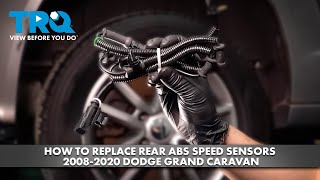
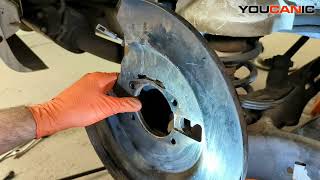

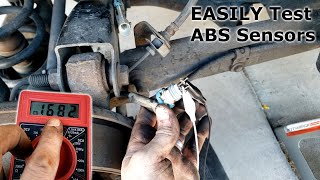

The information in this article is provided for general reference and educational purposes only. Vehicle specifications, procedures, and part compatibility can vary by production date, trim level, and region. Always consult your vehicle's factory service manual and verify part numbers before purchasing or performing repairs. Safety-critical components such as airbags, seat belts, and braking systems should be installed by a qualified professional.
- 🎬 Helpful Videos
- What Does C1020 Mean?
- Can I Drive With C1020?
- Common Causes
- Symptoms
- Diagnostic Flowchart
- Common Fixes & Costs
- DIY vs Professional
- Used vs. New Parts: Buying Guide
- What Happens If You Wait — Timeline
- Cost of Not Fixing It
- Diagnosis Steps
- When This Code Triggers (Freeze-Frame Conditions)
- Related Codes
- Climate & Environmental Factors
- How to Talk to a Mechanic About This Code
- Where to Take It: Dealer vs Independent vs Chain
- When to Walk Away From the Repair
- What Scan Tool You Need for This Code
- How to Clear the Code After You Fix It
- Will This Fail Emissions / State Inspection?
- Most Commonly Affected Vehicles
- Manufacturer-Specific Notes
- Real Owner Stories
- 2012 Jeep Wrangler JK at 57K miles
- 2010 Honda CR-V at 110K miles
- 2013 Dodge Grand Caravan at 95K miles
- How to Prevent This Code From Triggering
- Frequently Asked Questions
- What are the most common misdiagnosis mistakes for C1020?
- I replaced the sensor and hub, but the code came back. What now?
- Can I just clear the C1020 code to turn the light off?
- Can a bad alignment cause a C1020 code?
- My blind spot monitoring also stopped working. Is that related?
- Is it safe to drive with the ABS and traction control lights on?
- Why did the C1020 code appear after I replaced my wheel bearing?
- Key Takeaways
- 🎟️ Get 5% Off