

C1001 on 2024-2025 Mazda CX-5: Forward Camera Visibility Fault Causes and Fixes
Code C1001 on a 2024-2025 Mazda CX-5 indicates the Forward Sensing Camera (FSC) has a poor field of view. This is almost always caused by a simple obstruction like dirt, fog, or snow on the windshield. The first and most common fix is to thoroughly clean the windshield area in front of the camera. Do not immediately suspect a faulty camera, as Mazda TSBs confirm this code is usually temporary.
- C1001 on your CX-5 almost always means the front camera's view is blocked. Start with the free fix: clean your windshield thoroughly.
- This warning is common in bad weather (heavy rain, fog) or with difficult lighting (low sun) and is usually temporary.
- Do not replace the Forward Sensing Camera unless a professional has ruled out all other causes; it is rarely the actual problem and is very expensive.
- If the warning light stays on in clear conditions with a clean windshield, the next step is to ask a dealer about software updates or a camera recalibration, not a replacement.
- If you get your windshield replaced, insist on OEM-quality glass and ensure the shop performs a full static and dynamic ADAS calibration to prevent this code.
What's Unique About the 2024-2025 Mazda CX-5
Mazda has a well-documented history of this specific code across its lineup, including the CX-5, CX-30, Mazda3, and others using the i-Activsense system. The manufacturer has issued numerous service bulletins (like SA-043-25, SA-066-22, and earlier versions like SA-037-20) advising technicians *not* to immediately replace the camera. The issue is often that the system's software is highly sensitive to environmental conditions. In many cases, a software update at the dealership can make the system more tolerant of minor visibility issues, like internal windshield fogging or driving into glare. Some owners on Mazda forums have also noted the issue can be triggered by extreme heat, where the camera seemingly overheats after being parked in direct sun, a condition that resolves after the cabin cools down.
Diagnostic Flowchart
Tap your situation to follow the diagnostic path that matches what you're seeing on this vehicle.
Symptoms You May Notice
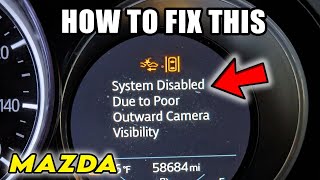
- "Front Camera Blocked" or "Safety and Driver Support Systems Temporarily Disabled" message on the multi-information display.
- "Windshield Defog Necessary" message may appear.
- Warning lights for the i-Activsense system, Lane Departure Warning System (LDWS), or High Beam Control (HBC) are illuminated.
- Automatic High Beams do not function correctly.
- Lane-keep Assist and Lane Departure Warning are inoperative.
- Smart Brake Support (automatic emergency braking) is disabled.
- Replacing the Forward Sensing Camera without first cleaning the windshield, checking for software updates, or verifying proper calibration. This is an expensive and often unnecessary repair, explicitly discouraged by Mazda TSBs.
Most Likely Causes
- Obstructed Windshield 🔴 High Probability The FSC system is extremely sensitive to any obstruction in its line of sight, a characteristic Mazda has repeatedly confirmed in service bulletins.
How to confirm: Visually inspect the windshield area in front of the rearview mirror, both inside and out. Look for dirt, grime, snow, ice, fogging, stickers, aftermarket dash cams, or toll passes. Ensure no accessories are mounted in the camera's field of view.
Typical fix: Thoroughly clean the windshield with a quality glass cleaner and a microfiber cloth. Use the vehicle's defroster to clear any interior fogging. The code often clears on its own after the obstruction is removed.
Est. part cost: $0 - Environmental Conditions 🟡 Medium Probability The camera's logic can be triggered by non-ideal lighting and weather, which Mazda acknowledges in service bulletins. This includes heavy rain, dense fog, snow, or driving directly into a low sun (sunrise/sunset).
How to confirm: Note if the warning appeared while driving in adverse weather or with strong sun glare. The code may set and then clear on its own once conditions improve. This is considered normal operation by Mazda.
Typical fix: No fix is required; the system is operating as designed by temporarily disabling itself in conditions where it cannot be reliable. The code is often stored as a history code and may not indicate a current problem.
Est. part cost: $0 - Outdated FSC Software 🟡 Medium Probability Mazda has released software updates to make the camera system less sensitive to temporary visibility issues that are not true faults. Early TSBs for other models confirm this was a known issue corrected via reprogramming.
How to confirm: A Mazda dealership can check for and apply any relevant Technical Service Bulletins (TSBs), such as SA-043-25, by connecting the vehicle to their diagnostic system (MDARS).
Typical fix: Dealer performs a software update on the Forward Sensing Camera module using the Mazda Diagnostic System. This typically takes less than an hour of labor.
Est. part cost: $0 (if covered by warranty) or ~$100-$200 for labor - Improper Windshield Replacement ⚪ Low Probability Aftermarket windshields may have optical distortion or incorrect mounting brackets for the camera, preventing proper calibration and function. The camera requires a precise angle to work correctly.
How to confirm: Check vehicle history for a recent windshield replacement. If the issue started immediately after, the glass may be the problem. A dealer or glass specialist can verify if OEM-equivalent glass was used. Some dealers may refuse to calibrate a camera on a vehicle with aftermarket glass.
Typical fix: Replace the windshield with one that meets OEM specifications and perform a static and dynamic camera recalibration. This 'dual method' calibration is critical for Mazda vehicles.
Est. part cost: $500-$1500+
Rare But Worth Checking
- Faulty Forward Sensing Camera (FSC): This is the least likely cause. Mazda TSBs repeatedly advise against replacing the camera for this code unless all other possibilities (obstruction, software, calibration) have been exhausted. Overheating in direct sunlight has been reported by owners as a temporary cause of malfunction warnings.
- Weak 12V Battery: A weak or aging battery can cause numerous, seemingly unrelated electrical issues in modern cars due to voltage drops during startup. Owners on forums report that a battery with low resting voltage (e.g., below 12.4V) can trigger random electronic module errors, including for the i-Activsense systems. If you have other electrical gremlins or slow engine cranking, test the battery.
- Damaged Wiring Harness: In one documented case on a Mazda CX-30 forum, a user discovered the i-Activsense malfunction was caused by rodents chewing through the camera's wiring harness in the engine bay. This is rare but possible, especially if the vehicle is parked outdoors.
Diagnosis Steps
- Thoroughly clean the windshield, both inside and out, in the area of the camera (behind the rearview mirror).
- Use the defroster to eliminate any fogging on the inside of the windshield, as condensation can trigger the error.
- Check for any obstructions like stickers, phone mounts, aftermarket dash cams, or dark tint strips in the camera's view.
- If the light persists in clear weather, consider the battery's health. Test the battery voltage; a resting voltage below 12.4V may indicate a weak battery causing electrical issues.
- If the light persists, have the vehicle scanned with a professional tool to confirm C1001:92 is the active code.
- Consult with a Mazda dealer to check if any TSBs or software updates apply to your vehicle's VIN.
- If the windshield has been replaced recently, verify that it is OEM-equivalent glass and that a static and dynamic ADAS calibration was performed.
- As a final step, if all else fails, have a professional technician diagnose the camera and its wiring for a potential hardware fault or damage.
Parts You'll Likely Need
- Forward Sensing Camera
(OEM #KSE1-67-RC0A)— This part is only needed in the rare event of a confirmed hardware failure after all other diagnostic steps have been completed. This part number is for 2022-2025 CX-5 models and supersedes KSE1-67-RC0.
Trusted brands: Mazda (OEM)
OEM price range: $450-$600
Aftermarket price range: $125-$300 (Used/eBay) - ADAS Camera Calibration Service — This service is required after replacing the camera or windshield to ensure the safety systems are aimed correctly. The cost can vary significantly by location and whether it's done at a dealer or an independent shop.
OEM price range: $300-$700
Aftermarket price range: $250-$450
Related Codes That Often Appear With This One
- B14F0:92 — This code for 'General temporary failure in forward sensing camera' is also mentioned in the same TSBs (SA-043-25, SA-066-22) and relates to the same temporary visibility issues, often on 'Gen 7' vehicles while C1001:92 is for 'Gen 6'.
Technical Service Bulletins (TSBs) & Recalls
- SA-043-25: Mentions C1001:92 for Forward sensing camera (FSC) poor field of view.
- SA-066-22: Also cites C1001:92 for the same FSC poor field of view issue on 2022 models, showing the issue's persistence.
- SA-037-20: An earlier TSB explaining that C1001:92 is often a stored code from temporary conditions and explicitly states not to replace the camera for this code alone.
Platform-Specific Known Issues
- Mazda has issued multiple Technical Service Bulletins (TSBs) for this code, including SA-043-25, SA-066-22, and SA-037-20. These bulletins consistently state that C1001:92 is often a temporary condition due to weather or obstructions and does not indicate a faulty part.
Hidden / Shadow Codes Worth Checking
- B115E:54 or B14F0:76: Indicates that the Forward Sensing Camera (FSC) aiming/calibration has not been completed. This code is expected to be present after replacing the FSC or the windshield and will persist until a successful calibration is performed. (see via A dealer-level scan tool like the Mazda M-MDS or MDARS is required to view this code.)
- U3000:04: Indicates an internal failure of the Forward Sensing Camera (FSC) module itself. If this code is present along with C1001, it strongly suggests a hardware fault, and the camera module likely needs to be replaced. (see via A professional OBD-II scanner with manufacturer-specific capabilities or a dealer-level tool.)
- C1001:97: Indicates the Forward Sensing Camera system is obstructed or blocked. This is a more specific version of the :92 code, stored when the camera detects a blockage for a set period. (see via A professional OBD-II scanner with manufacturer-specific capabilities or a dealer-level tool.)
Scan Tool Commands That Help
- Mazda M-MDS / MDARS: FSC Aiming (Static) — This function is required after windshield replacement or camera replacement. It uses physical targets placed at precise distances in front of the vehicle to calibrate the camera's angle. It should be used when dynamic aiming is not possible or fails.
- Mazda M-MDS / MDARS: FSC Aiming (Dynamic) — An alternative to static aiming, this function allows the camera to self-calibrate while driving on a well-marked road. It is simpler but can fail if road markings are unclear (due to snow, wear) or if the road is too winding. The process must complete within about 20 minutes.
- Mazda IDS / MDARS: FSC Reprogramming — This is used to install updated software/firmware onto the FSC module. TSBs have been issued to make the camera's logic less sensitive to environmental conditions, and this function applies that fix.
Wiring & Ground Locations
- FSC Coaxial Cable — The wiring harness runs from the camera module at the top of the windshield, is tucked into the front edge of the headliner, runs down the passenger-side A-pillar, and connects to the main body harness.. Damage to this harness, either from rodent activity, a prior repair, or a chafe point, can cause a loss of signal and trigger various FSC-related codes. A TSB for a similar Ford system highlights this coaxial cable as a potential point of failure.
- FSC Pigtail Connector — This is the electrical connector that plugs directly into the Forward Sensing Camera module behind the plastic cover near the rearview mirror.. A loose connection or corrosion at this point can cause intermittent or total failure of the camera. The connector part number is listed as Z99A0 for service.
Real Owner Repair Stories
- Mazda Forum (mazdaforum.com) (2017 Mazda CX-5) — Blind spot and lane change systems would not calibrate after a windshield replacement.
❌ Tried (didn't work) Windshield replacement by Safelite., Safelite attempting to calibrate the system and checking fuses.
✅ What actually fixed it The owner took the vehicle to a Mazda dealer. The dealer technician found that the Forward Sensing Camera was not installed properly in its bracket by the glass company. The dealer charged $120 for labor to correctly reinstall the camera, which resolved the issue.
When the Usual Fixes Don't Work
- While cleaning the windshield is the most common fix, a notable counter-example exists for vehicles that have recently had a windshield replaced. In a documented case, a national glass chain replaced the windshield but failed to properly seat the camera in its physical bracket. The system repeatedly failed to calibrate, and the warning lights remained on. The fix was not new glass or a new camera, but a trip to the Mazda dealer where a technician identified the improper installation and correctly seated the camera, after which it calibrated successfully. This highlights that post-replacement issues can be mechanical (improper seating) and not just electronic (calibration).
OEM Part Supersession History
KSE1-67-RC0→KSE1-67-RC0A— Standard part revision by the manufacturer. Often includes hardware or internal logic improvements.
Heads up: KSE1-67-RC0A is specified for 2022-2025 CX-5 models with 'Mazda connect 7G. Type b'. Using an older or incorrect part number may lead to incompatibility or failure to calibrate.
Helpful Videos

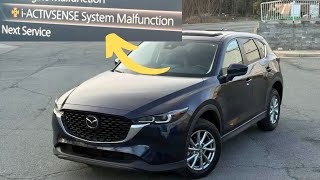
We Have This Part in Stock

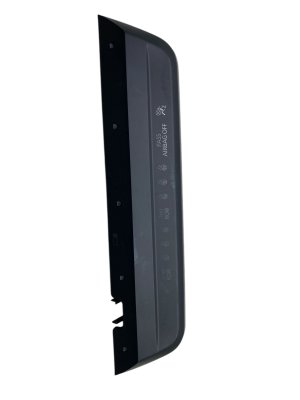
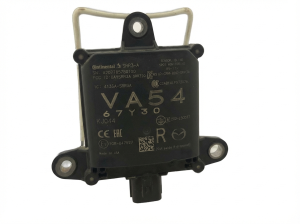
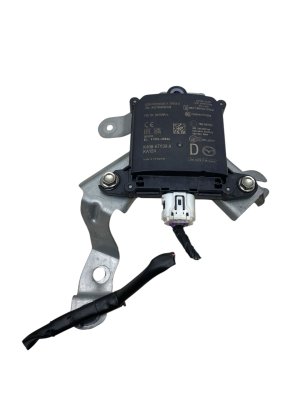

The information in this article is provided for general reference and educational purposes only. Vehicle specifications, procedures, and part compatibility can vary by production date, trim level, and region. Always consult your vehicle's factory service manual and verify part numbers before purchasing or performing repairs. Safety-critical components such as airbags, seat belts, and braking systems should be installed by a qualified professional.
- Mazda CX-5:
- 🎬 Helpful Videos
- 🛍️ Shop This Part
- What's Unique About the 2024-2025 Mazda CX-5
- Diagnostic Flowchart
- Symptoms You May Notice
- Most Likely Causes
- Rare But Worth Checking
- Diagnosis Steps
- Parts You'll Likely Need
- Related Codes That Often Appear With This One
- Technical Service Bulletins (TSBs) & Recalls
- Platform-Specific Known Issues
- Hidden / Shadow Codes Worth Checking
- Scan Tool Commands That Help
- Wiring & Ground Locations
- Real Owner Repair Stories
- When the Usual Fixes Don't Work
- OEM Part Supersession History
- 🎟️ Get 5% Off