

C1001 on 2022 Ford Expedition: Driver Assist Camera Fault Causes and Fixes
On a 2022 Ford Expedition, code C1001 indicates a fault with the forward-facing driver-assist camera (IPMA). The most common cause for subtypes :54 (missing calibration) and :78 (alignment issue) is a software glitch fixed by a dealer reprogramming, as outlined in Ford TSB 23-2040. The subtype :31 (no signal) often points to a poor connection or damaged coaxial cable between the camera and the module, a known issue on related Ford platforms.
- Code C1001 on a 2022 Expedition points to a problem with the forward-facing camera used for driver assistance systems.
- Before replacing any parts, check for TSB 23-2040. A simple software update at the dealer is the most common fix for C1001:54 and C1001:78.
- If you have code C1001:31, the problem is more likely a loose or damaged wire connecting to the camera.
- This is not a DIY-friendly repair. Programming and calibrating the camera requires specialized tools and procedures.
- You can still drive the vehicle, but be aware that important safety features like Pre-Collision Assist will be inactive.
What's Unique About the 2022-2022 Ford Expedition
For the 2022 Expedition and its platform-mate the Lincoln Navigator, Ford has specifically identified a software issue as a primary cause for certain C1001 codes. Unlike older vehicles where this code might point directly to a failed camera, on this platform the first step for C1001:54 and C1001:78 is often a software update. Ford issued Technical Service Bulletin (TSB) 23-2040 for this exact problem, indicating that a simple reprogramming by a dealer can resolve faults that might otherwise lead to an expensive and unnecessary hardware replacement. This TSB also applies to 2021-2022 F-150s and Mustang Mach-E vehicles.
Symptoms You May Notice
- "Front Camera Fault Service Required" message on the dashboard
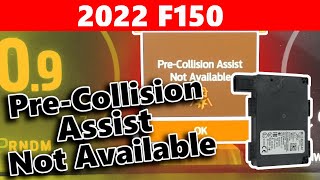
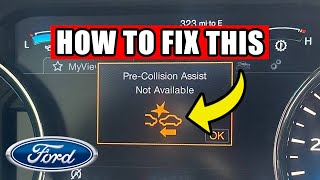
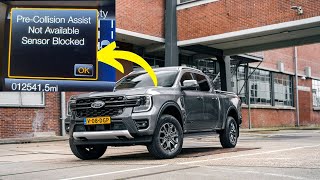
- "Pre-Collision Assist Not Available" wa 🎬 Watch this guide on fixing the Pre-Collision Assist unavailable warningrning
- Lane-Keeping System is inoperative
- Adaptive Cruise Control is disabled
- Auto high-beams do not work
- Reverse Brake Assist is unavailable
- BlueCruise hands-free driving becomes unavailable
- Blind Spot System Fault message
- Replacing the IPMA camera module before performing the software update specified in TSB 23-2040. The TSB was issued because the problem is often software-related, not a hardware failure.
- Assuming a C1001:31 'No Signal' code is a software issue when it is almost always a physical wiring problem per TSB 23-2146.
Most Likely Causes
- IPMA Module Software Needs Update 🔴 High Probability Ford issued TSB 23-2040 specifically for 2022 Expedition/Navigator models (built on or before 13-May-2022) where a software bug causes C1001:54 and C1001:78. This TSB supersedes a previous version, TSB 22-2295.
How to confirm: A Ford dealer or a shop with an OEM scan tool (FDRS) can check the current software version of the IPMA and confirm if it's covered by TSB 23-2040. The TSB applies if codes C1001:54, C1001:78, U3000:49, U3000:89, or U2107:68 are present.
Typical fix: Reprogram the Image Processing Module A (IPMA) and potentially other related modules (PSCM, CCM) to the latest software version. This must be done by a professional using FDRS and is followed by a mandatory camera alignment procedure.
Est. part cost: $0 - Poor Connection or Damaged Coaxial Cable 🟡 Medium Probability This is a known issue on related Ford platforms like the F-150 and Mustang Mach-E, as noted in TSB 23-2146 for code C1001:31. The coaxial cable connecting the camera to the module is fragile and can develop a poor connection, sometimes triggered by humidity or temperature changes.
How to confirm: Visually inspect the coaxial cable and its connectors at the IPMA module (behind the rearview mirror) and at the A-pillar. A "wiggle test" on the connectors while monitoring for the fault can help identify an intermittent connection. TSB 23-2146 provides a detailed diagnostic procedure for this 'no signal' fault.
Typical fix: Reseat the coaxial cable connectors securely. If the connection remains faulty, the cable must be replaced by overlaying a new one. The TSB for the F-150 suggests replacing the cable section from the camera to the A-pillar first. The repair involves lowering the headliner and removing trim panels.
Est. part cost: $50-$150 - Incorrect Camera Alignment or Installation ⚪ Low Probability This can occur after a windshield replacement if the camera bracket is not transferred correctly, or if the module itself is not seated properly. It can also be triggered by changes in vehicle ride height (e.g., a lift kit) or even by using FORScan to alter vehicle parameters, which can trigger a C1001:54 (Missing Calibration) code.
How to confirm: This is typically diagnosed after a software update fails to resolve a C1001:78 code. Check that the IPMA module is securely clipped into its mount on the windshield. The alignment procedure itself requires the FDRS tool.
Typical fix: Ensure the module is correctly installed. Perform the IPMA camera alignment procedure using a diagnostic tool like the dealer's FDRS system. This is a mandatory step after IPMA reprogramming per TSB 23-2040. 🎬 Watch how a technician performs a Ford windshield camera ADAS calibration
Est. part cost: $0
Rare But Worth Checking
- Failed Image Processing Module A (IPMA): If reprogramming and wiring checks do not resolve the issue, the module itself may have an internal hardware failure. This is less common than software or wiring faults. A recent recall on other Ford/Lincoln models noted that computational overload could cause repeated module resets and eventual failure.
- Obstructed or Damaged Windshield: A crack, rock chip, or even a poorly placed sticker in the camera's line of sight can cause alignment or obstruction faults (C1001:78, C1001:97).
Diagnosis Steps
- Read the full Diagnostic Trouble Code, including the two-digit subtype (e.g., C1001:54).
- If the code is C1001:54 or C1001:78, consult Ford TSB 23-2040. The recommended first step is to have a Ford dealer reprogram the IPMA module, which also requires a subsequent camera alignment.
- If the code is C1001:31, the issue is likely a 'no signal' fault due to wiring. Inspect the coaxial cable and connectors between the camera and the IPMA module for damage or looseness, as detailed in TSB 23-2146 for the F-150.
- Check the windshield in front of the camera for any obstructions, cracks, or significant pitting that could block the camera's view, which can cause a C1001:97 code.
- If a software update was performed but the code returns, or if wiring is confirmed to be good, an IPMA camera alignment procedure should be performed using Ford's FDRS tool.
- If all other steps fail, the IPMA module itself may require replacement, followed by programming and calibration.
Parts You'll Likely Need
- Image Processing Module A (IPMA) Software Update — This is not a physical part, but a dealer service. TSB 23-2040 identifies a software bug as the primary cause for C1001:54 and C1001:78 codes on the 2022 Expedition. The service includes reprogramming and recalibration.
Trusted brands: Ford (Dealer Service)
OEM price range: $150-$350
Aftermarket price range: N/A - IPMA Camera to A-Pillar Coaxial Cable
(OEM #ML3Z-10E929-ABA or ML3Z-10E929-ACA (Varies by feature code))— This cable is a known failure point that can cause a C1001:31 code due to a poor connection or internal damage. TSB 23-2146 for the F-150 lists specific part numbers based on vehicle features.
Trusted brands: Motorcraft
OEM price range: $50-$150
Aftermarket price range: $30-$80
Related Codes That Often Appear With This One
- U3000:49 — This code for 'Internal Electronic Failure' is frequently stored alongside C1001 in the IPMA and is specifically mentioned in TSB 23-2040 as being related to the same software issue.
- U3000:89 — This code indicates 'Component or System Fails to Operate' and is also cited in TSB 23-2040 and TSB 23-2146, pointing to the IPMA failing to function correctly due to either software or a connection issue.
- U2107:68 — A 'Collision Mitigation System' fault code that is also listed in TSB 23-2040, directly related to the IPMA software problem.
- C1001:31 — This 'No Signal' subtype was reported by an owner and is the subject of TSB 23-2146 on related platforms, often pointing to a wiring connection issue rather than the software bug that causes the :54 and :78 subtypes.
Technical Service Bulletins (TSBs) & Recalls
- TSB 23-2040: Addresses C1001:54 and C1001:78 on 2022 Expeditions, recommending an IPMA software update to correct the condition.
- TSB 23-2146: While officially for the 2021-2023 F-150, this TSB details the diagnosis and repair for code C1001:31 (No Signal), which involves inspecting and replacing the IPMA coaxial cable. This is highly relevant given the shared architecture.
Platform-Specific Known Issues
- TSB 23-2040: Ford identified that on 2022 Expeditions built on or before May 13, 2022, various driver assistance warnings and DTCs including C1001:54 and C1001:78 can be caused by an IPMA software issue, requiring a reprogram to fix.
- A user on the Ford Expedition Forum with a 2022 model experienced the exact cluster of camera-related error messages and confirmed the dealer resolved it by escalating to Ford, citing an issue with 'over the air' updates causing module problems.
Mechanic-Grade Diagnostic Values
- 12V Battery State of Charge (SOC) before programming — expected: 50% or higher (TSB 23-2170), 80% or higher (FSA 21B10). Failure: SOC below the required threshold can cause programming to fail.
Scan Tool Commands That Help
- Ford Diagnosis and Repair System (FDRS): IPMA - Reset the Image Processing Module A (IPMA) Learned Values — This is used to clear certain DTCs like U3000:49 after a repair or before alignment, as specified in TSB 23-2040 and TSB 23-2146.
- Ford Diagnosis and Repair System (FDRS): IPMA - Image Processing Module A (IPMA) Alignment — This is a mandatory procedure after reprogramming the IPMA or replacing the windshield/camera. It involves driving the vehicle on well-marked roads for the camera to learn its position.
- Ford Diagnosis and Repair System (FDRS): Programmable Module Installation (PMI) — When replacing the IPMA module, this function must be used. It reads the configuration data from the old module ('inhale'), which is then written to the new module ('exhale') after installation. Failing to do this will result in a C1001:54 'Missing Calibration' code.
- Ford Diagnosis and Repair System (FDRS): SW Updates Tab — Before attempting an IPMA PMI or update, other related modules like the PSCM, CCM, and CMR may need to be updated first. FDRS may fail the IPMA procedure if these dependencies are not met.
Wiring & Ground Locations
- C900 and C9128 — These are the coaxial cable connectors between the IPMA camera (behind the rearview mirror) and the IPMA module.. TSB 23-2146 for code C1001:31 specifically calls for performing a 'wiggle test' on these connectors to check for looseness, which is a common cause of the 'No Signal' fault.
- C242F — A connector at the IPMA.. For some vehicle configurations, a replacement coaxial cable includes a jumper that runs from this connector to the APIM connector (C2563) in the driver's footwell.
- Coaxial Cable Routing — The cable runs from the camera, across the headliner, down the driver's side A-pillar, and to the main IPMA module.. The cable is fragile and cannot be bent sharply (greater than 90 degrees over 1.2 inches). Damage often occurs during windshield replacement or if the cable is under tension from the factory.
Real Owner Repair Stories
- MachEforum user '360alaska' (2021 Ford Mustang Mach-E (shared platform/issue)) — Front camera fault messages, likely including C1001:31.
❌ Tried (didn't work) Initially ordered the wrong part number for the coaxial cable.
✅ What actually fixed it The user performed a DIY replacement of the IPMA coaxial cable (camera to A-pillar section). They noted the original cable was under tension and had sharp bends. After replacing the cable with the correct part (LJ8Z-14D202-U), the issue was resolved. - Ford F150 Forum user (2018 Ford F-150 (similar IPMA replacement process)) — C1001:54 (Missing Calibration) and C1001:78 (Alignment Incorrect) after installing a new IPMA module.
❌ Tried (didn't work) Simply installing the new IPMA and trying to run the calibration procedure in FORScan failed at 60%. The calibration would seem to complete but the lane-keeping lines never turned green and the fault would reappear.
✅ What actually fixed it The user had to use the Programmable Module Installation (PMI) function in Ford's diagnostic software (FJDS/FDRS). They performed an 'inhale/exhale' to copy the As-Built data from the original IPMA to the new one. After the PMI process, the calibration procedure could be completed successfully.
OEM Part Supersession History
ML3Z-19H406-A→ML3Z-19H406-B, ML3Z-19H406-D— Part revision and update by manufacturer.
Heads up: Part numbers are specific to vehicle features like 360-degree camera vs. standard camera. Always verify the correct part number with the vehicle's VIN. Using the wrong module will prevent successful programming and calibration.
Model Year Variations Within This Range
- 2022 (built on or before 13-May-2022): Vehicles built on or before this date are specifically called out in TSB 23-2040 as being prone to the software issue causing C1001:54 and C1001:78. Vehicles built after this date likely have the updated software from the factory.
Diagnostic Flowchart
Other Known Issues on This Vehicle
Issues unrelated to this code that are worth knowing about as an owner of this generation:
- 10R80 Transmission Harsh Shifting & Failure 🔴 High — Widespread reports of clunky shifting, hesitation, and occasional catastrophic failure, particularly in pre-2023 models due to a CDF drum issue. A revised part was introduced in late 2022. (Ref: Multiple class-action lawsuits filed. No specific recall for Expeditions, but the issue is well-documented across platforms using the 10R80.)
- 3.5L EcoBoost Cam Phaser Rattle on Cold Start 🟠 Medium — A very common issue on 2018-2020+ models where a rattle occurs on startup due to a failed locking pin in the cam phasers. If left unaddressed, it can lead to engine damage. (Ref: Customer Satisfaction Program 21N03 provided extended warranty coverage for this repair on 2018-2020 models. Updated phaser parts are available.)
- BlueCruise/Driver-Assist System Limitations 🟡 Low — Owners report frustration with the limited availability of hands-free BlueCruise on mapped roads and frequent, sometimes sensitive, disengagements requiring driver takeover. This is more of a system limitation than a failure. (Ref: Ford issues over-the-air (OTA) and dealer-installed software updates to improve functionality and expand the mapped road network.)
- Engine Stalling from Fuel Pump Failure 🔴 High — Some 2022 models are included in a recall for a failing low-pressure fuel pump that can result in an engine stall while driving. (Ref: Recall no. 24V393000)
Used vs. New Parts: Buying Guide for This Vehicle
When a used part is the smart pick: A used coaxial cable from a junkyard can be a cost-effective fix for code C1001:31, provided it is inspected carefully.
Donor-vehicle mileage cap: roughly under 80000 miles for the part to have meaningful remaining life.
What to inspect on the donor part:
- For a coaxial cable, ensure there are no kinks, sharp bends, or crushed sections in the sheathing.
- Inspect the connectors at both ends to ensure the pins are not bent or corroded and the locking tabs are intact.
- Avoid cables from vehicles with obvious signs of major collision damage, especially near the windshield or A-pillar.
OEM-only on this vehicle (don't cheap out):
- Image Processing Module A (IPMA): It is strongly recommended to use a new, genuine Ford part. A used module may have the same internal software fault, could be VIN-locked, or may not be compatible. Replacing the module requires dealer-level programming (PMI) that can fail with a used part, leading to more labor costs.
Brands owners have reported issues with on this vehicle:
- Generic Coaxial Cables: While a universal coax cable could be spliced in, the connectors are specific and the cable has specific impedance properties. Using a non-OEM cable is not recommended and may not resolve the issue.
Real Owner Stories
Aggregated from forums and TSBs cited above. Mileages and costs reflect what owners reported in those sources.
2022 Ford Expedition
Symptoms: The driver experienced a cluster of camera-related error messages on the instrument panel. The owner noted that 'over the air' (OTA) updates appeared to be causing module problems.
What fixed it: The dealer resolved the issue by escalating to Ford technical support and addressing the module faults caused by the software updates.
Source hint: Ford Expedition Forum
Related OBD-II Codes
Frequently Asked Questions
Does TSB 23-2040 apply to my 2022 Ford Expedition?
My dashboard says 'Front Camera Fault Service Required' and 'Pre-Collision Assist Not Available.' What is the likely cause?
Can I fix the C1001:31 'No Signal' fault myself?
Will a software update fix my BlueCruise and Lane-Keeping system being disabled?
Is there a recall for the engine stalling issue on the 2022 Expedition?
Why did my Expedition throw a C1001:54 code after I used FORScan?
Helpful Videos

We Have This Part in Stock



The information in this article is provided for general reference and educational purposes only. Vehicle specifications, procedures, and part compatibility can vary by production date, trim level, and region. Always consult your vehicle's factory service manual and verify part numbers before purchasing or performing repairs. Safety-critical components such as airbags, seat belts, and braking systems should be installed by a qualified professional.
- Ford Expedition:
- 🎬 Helpful Videos
- 🛍️ Shop This Part
- What's Unique About the 2022-2022 Ford Expedition
- Symptoms You May Notice
- Most Likely Causes
- Rare But Worth Checking
- Diagnosis Steps
- Parts You'll Likely Need
- Related Codes That Often Appear With This One
- Technical Service Bulletins (TSBs) & Recalls
- Platform-Specific Known Issues
- Mechanic-Grade Diagnostic Values
- Scan Tool Commands That Help
- Wiring & Ground Locations
- Real Owner Repair Stories
- OEM Part Supersession History
- Model Year Variations Within This Range
- Diagnostic Flowchart
- Other Known Issues on This Vehicle
- Used vs. New Parts: Buying Guide for This Vehicle
- Real Owner Stories
- 2022 Ford Expedition
- Related OBD-II Codes
- Frequently Asked Questions
- 🎟️ Get 5% Off