

C1001 on 2021-2025 Ford Bronco: Front Camera Fault Causes and Fixes
This code usually means a 'Front Camera Fault' due to a loose connection at the windshield camera or a software glitch. Check for warning messages like 'Pre-Collision Assist Not Available.' A dealer visit is often needed for diagnosis and potential recalibration using Ford's FDRS tool.
- C1001 on your Bronco means there's a problem with the front camera system, which disables safety features like Pre-Collision Assist.
- The most likely cause is a simple loose wire at the camera behind your rearview mirror.
- If you recently had your windshield replaced or a lift kit installed, the camera almost certainly needs professional recalibration.
- This is a safety-critical system. While you can check the connector yourself, calibration and complex diagnostics should be left to a professional with the right tools.
What's Unique About the 2021-2025 Ford Bronco

The sixth-generation Bronco is equipped with Ford's Co-Pilot360 suite of Advanced Driver-Assistance Systems (ADAS), which heavily relies on the front-facing camera mounted on the windshield. Unlike older vehicles, this camera is not just for lane-keeping; it's integral to Pre-Collision Assist with Automatic Emergency Braking. Owner forums and TSBs for similar Ford platforms show these systems are particularly sensitive to loose electrical connections at the C9449 connector and require precise calibration with dealer-level software, making C1001 a relatively common fault.
Symptoms You May Notice

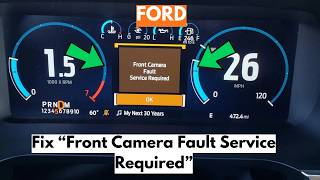
- "Front Camera Fault Service Required" message on the instrument cluster.
- "Pre-Collision Assist Not Available" warning light or message.
- Adaptive Cruise Control is inoperative.
- Lane-Keeping System is disabled.
- In some cases, steering wheel control buttons and turn signals may stop working while the fault is active. A thread on the Bronco6G forum documents this exact scenario, which was resolved by the dealer fixing a software glitch related to a separate TSB.
- Replacing the IPMA module. The module itself is expensive and rarely the root cause compared to the camera, its wiring, or its calibration. TSBs often list IPMA replacement as the very last diagnostic step.
Most Likely Causes

- Loose Coaxial Cable Connection 🔴 High Probability Multiple Ford TSBs (SSM 54233 for Explorer, TSB 23-2155 for Mach-E) point to connection issues at the IPMA camera. Vibrations or previous work (like a windshield replacement) can dislodge the C9449 connector.
How to confirm: Visually inspect the electrical connector at the front camera, located behind the rearview mirror trim. 🎬 Watch this guide on fixing the front camera fault warning A wiggle test on the connector while monitoring live data can sometimes confirm an intermittent connection. The presence of code C1001:31 strongly suggests a connection or signal issue.
Typical fix: Securely reseat the coaxial cable connector (C9449). In some cases, TSBs for other models involve overlaying or replacing the cable section if the connector itself is damaged.
Est. part cost: $0-$100 - Incorrect Camera Alignment / Missing Calibration 🟡 Medium Probability This is very common after a windshield replacement or changes to the vehicle's ride height (suspension lift, different tires), which alters the camera's viewing angle. It can also occur after a related component, like the rear camera, is replaced under recall.
How to confirm: This is confirmed by the presence of DTC C1001:78 ('Alignment or Adjustment Incorrect') or C1001:54 ('Missing Calibration'). The alignment status must be checked with a diagnostic tool like Ford's FDRS or a high-end aftermarket tool like FORScan.
Typical fix: Perform the IPMA Camera Alignment procedure using the Ford Diagnostic and Repair System (FDRS). This is not a DIY procedure as it requires specific software and a dynamic (driving) calibration process. 🎬 See how a Ford system scan and camera calibration is performed
Est. part cost: $0 - IPMA Software Fault 🟡 Medium Probability Ford has issued software updates for the IPMA on various models to address camera-related faults. TSB 23-2040 and SSM 52246 specifically address various camera faults, including C1001:78, that can be resolved by reprogramming the IPMA.
How to confirm: A Ford dealer or a shop with access to Ford's service information can check for applicable TSBs or software updates for your vehicle's VIN using FDRS.
Typical fix: Reprogram the Image Processing Module A (IPMA) with the latest software version. This must be done by a professional with the correct tools.
Est. part cost: $0 - Failed Front Camera Module ⚪ Low Probability While less common than connection or software issues, the camera is an electronic component that can fail internally. A Maverick owner on a forum reported having the camera module replaced under warranty after the fault became persistent.
How to confirm: After ruling out connections, software, and alignment, the camera itself is the likely culprit. This is typically the last step in the diagnostic process.
Typical fix: Replace the front camera module (Part No. ML3Z-19G490-C) and perform the mandatory calibration procedure.
Est. part cost: $250-$500
Diagnosis Steps
- Verify the active symptoms, such as warning messages on the dash.
- Scan for Diagnostic Trouble Codes (DTCs) using a high-quality scanner that can read manufacturer-specific 'C' codes and their suffixes (e.g., FORScan, FDRS). Note the exact code, like C1001:31, C1001:78, or C1001:54.
- Carefully remove the plastic trim 🎬 Watch an ADAS windshield camera calibration walkthrough behind the rearview mirror to access the front camera.
- Inspect the coaxial cable connector (C9449) at the camera. Disconnect it, check for any damage or corrosion on the pins, and reconnect it firmly until it clicks.
- If the code is C1001:78 or C1001:54, or if the windshield/suspension has been recently modified, do not proceed with part replacement. The vehicle requires a professional camera alignment/calibration.
- Check for any applicable Technical Service Bulletins (TSBs) for your Bronco's VIN related to front camera faults. A dealer can do this, or you can search online for TSBs like 23-2040 or SSM 52246.
- If connections are secure and no alignment is needed, the issue may be the camera itself or a software fault. Professional diagnosis with FDRS is recommended to differentiate between a failed part and a software update need.
- If the camera is replaced, calibration is mandatory for the system to function correctly and safely.
Parts You'll Likely Need

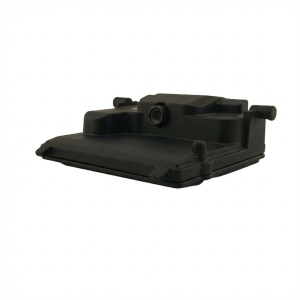
- Front View Camera (IPMA Camera)
(OEM #ML3Z-19G490-C)— If connections and software are good, the camera module itself may have failed, causing a 'No Signal' fault (C1001:31).
Trusted brands: Motorcraft
OEM price range: $250-$480 - IPMA to Camera Coaxial Cable — This cable is a known failure point for causing intermittent signal loss, as documented in TSBs for other Ford models like the Mustang Mach-E (TSB 23-2155).
Trusted brands: Motorcraft
OEM price range: $50-$100
Related Codes That Often Appear With This One
- U3000:49 — This code for an internal electronic failure in a control unit is often seen with C1001 on other Ford models, as noted in TSB 23-2155 and TSB 23-2040, pointing to a related issue within the IPMA system.
- U3000:89 — This code indicates the component is not operating as expected and frequently accompanies C1001:31, suggesting a signal or communication failure, as cited in TSB 23-2155.
- U2107:68 — This code for a communication fault is mentioned alongside C1001:78 in TSB 23-2040, indicating a software-related event in the IPMA.
Technical Service Bulletins (TSBs) & Recalls

- TSB 23-2040 (F-150, Mach-E, Expedition): Addresses various ADAS faults including C1001:54 and C1001:78, attributing them to IPMA software and prescribing a module reprogram.
- TSB 23-2146 (F-150): Cites C1001:31 due to a connection issue between the IPMA Camera and the IPMA.
- TSB 23-2155 (Mustang Mach-E): Also points to C1001:31 caused by a coaxial cable connection issue. A user on MachEforum.com confirmed this TSB fixed their persistent camera fault.
- SSM 54233 (Explorer): Mentions C1001:31 from a loose connection at the front windshield camera connector C9449.
- SSM 52246 (Escape): Cites C1001:78 due to a software issue in the IPMA, often triggered by driving on uneven roads.
Platform-Specific Known Issues
- A documented case on the Bronco6G forum (thread: 'Complete loss of steering wheel controls') showed that a software update intended to fix a wiper issue inadvertently caused a front camera fault and disabled all steering wheel buttons and stalks. The dealer had to re-apply the software correctly to fix it.
Mechanic-Grade Diagnostic Values
- LIN Bus Voltage (Recessive State) — expected: > 80% of battery voltage (approx. 12V+). Failure: Voltage significantly lower than battery voltage when the bus is at rest.
- LIN Bus Voltage (Dominant State) — expected: < 20% of battery voltage (approx. 1V). Failure: Voltage does not pull down close to 1V during communication, indicating a potential short or faulty module.
- Wheel Arch Height Measurement — expected: Measured in millimeters from the ground to the center of the wheel arch lip.. Failure: This value must be entered accurately into FDRS or FORScan before starting a dynamic calibration; incorrect values will cause calibration to fail.
Scan Tool Commands That Help

- Ford FDRS / FORScan: IPMA - Camera Alignment — Required after a windshield replacement, ride height change, or when DTC C1001:78 (Alignment Incorrect) or C1001:54 (Missing Calibration) is present. This is a dynamic procedure requiring the vehicle to be driven on well-marked roads.
- Ford FDRS: IPMA - Programmable Module Installation (PMI) — This is mandatory when replacing the IPMA module itself. The procedure reads the configuration data from the old module, saves it, and then writes it to the new module after installation to ensure all vehicle-specific features work correctly.
- Ford FDRS / FORScan: IPMA - Reset the Image Processing Module A (IPMA) Learned Values — Used to clear learned data and reset the module, often as a final step after a repair or to resolve certain software-related faults, as mentioned in TSB 23-2155.
- Ford FDRS: IPMA - 360 Degree View Camera Alignment — Used to correct stitching issues between the front, rear, and side cameras in the 360-degree view. This is a separate, low-speed procedure typically done in a parking lot with clear lines.
Wiring & Ground Locations

- C9449 — The coaxial connector directly on the front-facing IPMA camera, located behind the plastic trim of the rearview mirror mount on the windshield.. This is the most common point of failure for C1001:31 'No Signal' faults. TSBs frequently cite checking this connection first.
- G102 / Firewall Grounds — Body ground points are located in the engine compartment along the seam between the cowl and the firewall, on both the driver and passenger sides.. A poor ground for the IPMA or related modules can cause intermittent communication issues and various DTCs. While not a primary cause, it's a key check for persistent electronic faults.
- C2563 / C263 — These are downstream coaxial cable connectors. On vehicles with a 12-inch screen, C2563 is located in the left footwell.. TSB SSM 49556 for the F-150 identifies these connectors as potential failure points for C1001:01, indicating a break in the signal path between the camera and the APIM/IPMA.
- IPMA Module Connector — The main electrical connector on the IPMA module itself, which is separate from the camera and typically located deeper within the rearview mirror housing or headliner area.. A loose connection here can cause a total loss of communication with the module, leading to multiple DTCs including C1001.
Real Owner Repair Stories
- Bronco6G Forum thread 128361 (Ford Bronco (year not specified, but 2021+)) — DTC C1001:78:0B (Vision system calibration required) appeared after a dealer performed a rear camera replacement recall.
❌ Tried (didn't work) Attempting to run the 360° vision system calibration with FORScan; the procedure aborted with an error., Performing a hardware change detection for the IPMB and BDYCM modules using FORScan., The dealer was also unable to calibrate the cameras after the replacement.
✅ What actually fixed it The consensus from other forum members was that this specific calibration issue requires the dealer's Ford Diagnostic and Repair System (FDRS) tool, as FORScan procedures are not always successful for this task. The owner was advised to find a more experienced dealer. - F-150 Forum thread 'New IPMA calibration issue' (2018 Ford F-150 Lariat (similar ADAS architecture)) — After installing a new IPMA to add Adaptive Cruise Control, codes C1001:54 (Missing Calibration) and C1001:78 (Alignment Incorrect) were present and would not clear. Calibration attempts would fail.
❌ Tried (didn't work) Running the IPMA calibration in FORScan, which failed at 60%., Running the calibration multiple times after successfully performing a PMI procedure; the process would complete to 100% on the laptop, but the system would not become active and the fault would reappear.
✅ What actually fixed it The final resolution was discovering the camera module itself was not fully clicked into its physical mount on the windshield. After removing the trim and firmly seating the camera in its bracket, the calibration procedure completed successfully and the codes were resolved. - MachEforum.com user post in TSB 23-2155 thread (2021-2023 Mustang Mach-E) — Persistent front camera fault messages and DTC C1001:31.
❌ Tried (didn't work) Multiple dealer visits without a permanent fix.
✅ What actually fixed it The dealer finally performed the steps in TSB 23-2155, which involves repairing the coaxial cable connection between the IPMA camera and the IPMA module. The user reported the issue was completely fixed after this TSB was applied.
OEM Part Supersession History
H1BZ-9E731-AE→H1BZ-9E731-F— Revision update for the distance sensor (radar) used in conjunction with the IPMA for Adaptive Cruise Control on some Ford models.
Heads up: While not the camera itself, this shows that ADAS components are frequently superseded. Always verify the correct part number for the specific vehicle VIN, as using a part from a different model year can cause issues.
Model Year Variations Within This Range

- 2021-2025: While the base Co-Pilot360 system and the C1001 fault are consistent, the standard and optional features within the package have changed. For example, the 12-inch center screen became standard on more trims in later years (e.g., 2024 Big Bend), which can affect which modules (APIM vs. IPMA) are the primary processors for camera data. However, the fundamental causes of C1001 (connections, calibration, camera hardware) remain the same across the generation.
Diagnostic Flowchart
Other Known Issues on This Vehicle
Issues unrelated to this code that are worth knowing about as an owner of this generation:
- 2.7L EcoBoost Engine Valve Failure 🔴 High — Primarily affects a "bad batch" of engines built between May and October 2021. NHTSA opened an investigation affecting over 25,000 vehicles. (Ref: NHTSA Investigation PE22-005, Ford Customer Satisfaction Program 21B27)
- Molded-in-Color (MIC) Hardtop Delamination/Cracking 🟠 Medium — Widespread issue on 2021-2022 models, leading to a recall. Quality issues persist on later models, though less frequent. (Ref: Recall 22S44 / NHTSA 22V-432)
- Steering Rack Failure 🟠 Medium — Reported by owners, particularly after installing suspension lifts or larger tires, but can occur on stock vehicles. Failures range from noise and vibration to complete loss of steering assist.
- Software Glitches Causing Loss of Steering Wheel Controls 🟡 Low — Multiple owners on forums report intermittent or total loss of steering wheel buttons (blinkers, wipers, cruise control) after dealer software updates (like for a wiper motor TSB), often requiring a subsequent software fix or a hard battery reset.
Used vs. New Parts: Buying Guide for This Vehicle
When a used part is the smart pick: A used part is generally not recommended for the IPMA camera itself due to software and calibration complexities. However, a used wiring harness pigtail from a junkyard can be a cost-effective solution if your issue is a damaged connector, provided you are skilled at splicing wires correctly.
Donor-vehicle mileage cap: roughly under 50000 miles for the part to have meaningful remaining life.
What to inspect on the donor part:
- For a wiring pigtail, ensure there is no visible corrosion (green crust) on the pins.
- Check that the connector's locking tab is intact and not brittle.
- Ensure at least 4-6 inches of wire is available for splicing.
OEM-only on this vehicle (don't cheap out):
- Front Camera Module (IPMA Camera): Due to the tight integration with safety systems (Pre-Collision Assist) and the absolute requirement for precise software calibration with FDRS, using a non-OEM part is highly discouraged. An incorrect or incompatible camera can lead to system failure.
- IPMA Module: If the main processing module needs replacement, it must be an OEM part and requires a 'Programmable Module Installation' (PMI) procedure with dealer tools to copy the vehicle's original configuration.
Aftermarket brands forum-validated for this vehicle:
- There are no widely recognized or forum-validated aftermarket brands for the IPMA camera itself. Stick to OEM (Motorcraft).
Brands owners have reported issues with on this vehicle:
- Avoid generic, unbranded cameras sold on marketplace sites. These are unlikely to be compatible with Ford's Co-Pilot360 system and will not calibrate.
Real Owner Stories
Aggregated from forums and TSBs cited above. Mileages and costs reflect what owners reported in those sources.
2021 Ford Bronco
Symptoms: Complete loss of steering wheel controls, turn signals stopped working, and a front camera fault message appeared on the dash.
What fixed it: The dealer had to correctly re-apply a software update after a previous update for a wiper issue caused a glitch in the IPMA system.
Source hint: Bronco6G Forum (bronco6g.com) thread 'Complete loss of steering wheel controls...'
2021 Ford Bronco
Symptoms: DTC C1001:78 appeared immediately after the vehicle was returned from a recall repair.
What fixed it: The fault was triggered by a rear camera replacement under recall; the system required a professional alignment/calibration using the dealer's FDRS tool which is more reliable than FORScan for this procedure.
Source hint: Bronco6G Forum (bronco6g.com) thread 'Rear view camera replaced due to recall, DTC appeared...'
2021 Ford F-150
Symptoms: Code C1001:78 and calibration issues after attempting to service the IPMA.
What fixed it: The owner discovered the camera module was not physically seated correctly in its windshield mount; reinstalling it properly so it was flush resolved the alignment code.
Source hint: F-150 Forum (f150forum.com) thread 'New IPMA calibration issue'
2022 Ford Maverick
Symptoms: Persistent 'Front Camera Fault' messages on the instrument cluster.
What fixed it: The front camera module (Part No. ML3Z-19G490-C) was replaced under warranty and calibrated.
Source hint: Maverick owner report cited in article context
2021 Ford Mustang Mach-E
Symptoms: Intermittent front camera faults and 'Pre-Collision Assist Not Available' messages.
What fixed it: The dealer performed TSB 23-2155, which involved addressing a coaxial cable connection issue at the IPMA camera.
Source hint: MachEforum.com discussion on TSB 23-2155
Related OBD-II Codes
Frequently Asked Questions
Can I fix the C1001:78 or C1001:54 code on my Bronco using FORScan?
Why did my steering wheel buttons stop working along with the 'Front Camera Fault' message?
I just lifted my Bronco and now I have a C1001 code. What happened?
Does TSB 23-2040 apply to the C1001 code on my Ford vehicle?
Could a recent windshield replacement be the cause of my Front Camera Fault?
Helpful Videos
![TEXA USA: All System Scan & Camera Calibration (Tutorial) [on Ford F-150]](https://img.youtube.com/vi/2FhH2kBMq6Q/mqdefault.jpg)

We Have This Part in Stock



The information in this article is provided for general reference and educational purposes only. Vehicle specifications, procedures, and part compatibility can vary by production date, trim level, and region. Always consult your vehicle's factory service manual and verify part numbers before purchasing or performing repairs. Safety-critical components such as airbags, seat belts, and braking systems should be installed by a qualified professional.
- Ford Bronco:
- 🎬 Helpful Videos
- 🛍️ Shop This Part
- What's Unique About the 2021-2025 Ford Bronco
- Symptoms You May Notice
- Most Likely Causes
- Diagnosis Steps
- Parts You'll Likely Need
- Related Codes That Often Appear With This One
- Technical Service Bulletins (TSBs) & Recalls
- Platform-Specific Known Issues
- Mechanic-Grade Diagnostic Values
- Scan Tool Commands That Help
- Wiring & Ground Locations
- Real Owner Repair Stories
- OEM Part Supersession History
- Model Year Variations Within This Range
- Diagnostic Flowchart
- Other Known Issues on This Vehicle
- Used vs. New Parts: Buying Guide for This Vehicle
- Real Owner Stories
- 2021 Ford Bronco
- 2021 Ford Bronco
- 2021 Ford F-150
- 2022 Ford Maverick
- 2021 Ford Mustang Mach-E
- Related OBD-II Codes
- Frequently Asked Questions
- 🎟️ Get 5% Off