

C0800 on 2015-2017 GMC Sierra: Electrical Faults, Causes, and Fixes
Code C0800 on a 2015-2017 GMC Sierra almost always points to a poor Body Control Module (BCM) ground at location G218 under the driver's side dash. This is a known factory issue where dash insulation gets trapped under the ground, causing widespread electrical problems. The fix is often low-cost, requiring only basic tools to access and clean the ground connection.
- Code C0800 on a 2015-2017 Sierra means 'low voltage' at a control module, not a bad module.
- The most probable cause is a poor BCM ground (G218) under the driver's side dash, a known factory defect.
- Symptoms are widespread and severe, including loss of power steering, blank instrument displays, and engine stalling.
- Diagnosis should start with the simple, free checks: battery health and terminal tightness, before moving to the G218 ground inspection.
- Do not replace expensive modules like the BCM or power steering rack before thoroughly inspecting and verifying all power and ground connections.
What's Unique About the 2015-2017 Gmc SIERRA

The K2XX platform, which includes the 2014-2018 Sierra/Silverado and 2015-2020 Tahoe/Suburban/Yukon/Escalade, is uniquely prone to this code due to a specific assembly line flaw. The dash insulator mat was often incorrectly installed, getting trapped under the main BCM ground stud (G218). This creates a high-resistance ground connection that worsens over time, leading to a cascade of bizarre electrical symptoms, especially when the electric power steering system places a high load on the electrical system during low-speed turns. This exact issue is well-documented by General Motors in Technical Service Bulletin PIT5405C and its successor, 18-NA-161.
Diagnostic Flowchart

Tap your situation to follow the diagnostic path that matches what you're seeing on this vehicle.
Symptoms You May Notice

- "Service Stabilitrak" message on the instrument panel.
- Reduced or complete loss of power steering assist, making the wheel hard to turn.
- Steering wheel jerks or kicks back, especially during low-speed maneuvers.
- Instrument panel cluster, radio, or HVAC displays going blank or flickering.
- Engine stalling, especially at low speeds.
- No-start or slow crank condition.
- Alarm sounding randomly or door locks cycling unexpectedly.
- Dome lights flashing when shifting into reverse.
- Wipers continue to run for a short time after being turned off, then park in the wrong position.
- Replacing the Body Control Module (BCM)
- Replacing the Power Steering Control Module (PSCM) or the entire electric power steering rack
- Replacing the alternator without proper testing
- Replacing wheel speed sensors for the Stabilitrak message without checking for low voltage codes first.
Most Likely Causes

- Poor Body Control Module (BCM) Ground at G218 🔴 High Probability A well-documented manufacturing defect where the dash insulation mat gets trapped under the ground eyelet, preventing a solid connection. This is the primary cause cited in GM TSB PIT5405C and 18-NA-161.
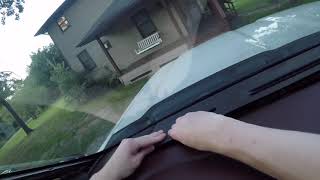
How to confirm: Visually inspect the G218 ground stud, located under the driver's side dashboard behind the A-pillar trim and to the left of the speaker. 🎬 Watch: Step-by-step guide to fixing the G218 ground issue. Check for a loose 10mm nut or for the black, fibrous dash insulator material being pinched between the metal ground terminal and the vehicle body.
Typical fix: Disconnect the negative battery terminal. Remove the driver's side A-pillar and kick panel trim. Remove the 10mm nut and the ground terminal(s). Use a utility knife to cut away a square of the insulation mat around the stud. Scrape the contact surfaces to ensure bare metal contact, then securely reinstall the ground terminal and nut. The nut should be tightened securely (typical torque for a small ground nut like this is around 7-10 Nm, though no official spec is published for G218 itself).
Est. part cost: $0-$5 - Loose or Corroded Battery Cables/Terminals 🟡 Medium Probability Vibration and time can loosen any vehicle's battery connections. The complex electronics on modern trucks are highly sensitive to voltage drops from poor connections. TSB 18-NA-161 provides specific torque values for these connections.
How to confirm: Attempt to twist the battery cable clamps by hand; they should not move. Check for tightness on all connections at the battery fuse block (15 Nm / 11 ft-lb) and the main negative-to-engine-block ground (45 Nm / 33 ft-lb). Look for white or greenish corrosion on the battery posts and clamps.
Typical fix: Disconnect the battery (negative first). Thoroughly clean the battery posts and cable terminals with a wire brush. Reconnect securely, ensuring the post protrudes 1-2mm above the clamp, and tighten the clamp nuts to 7 Nm (62 lb-in).
Est. part cost: $0-$10 - High Resistance in Negative Battery Cable ⚪ Low Probability Internal corrosion can build up within the cable over time, creating resistance that isn't visible externally. TSB 18-NA-161 specifically calls out testing and replacing this cable as a key diagnostic step after checking G218.
How to confirm: Perform a loaded voltage drop test on the negative battery cable while an assistant cranks the engine. Place one multimeter lead on the negative battery post (not the clamp) and the other on a clean metal point on the engine block. A reading above 200 mV indicates a faulty cable that needs replacement.
Typical fix: Replace the entire negative battery cable assembly.
Est. part cost: $50-$100 - Failing or Discharged Battery ⚪ Low Probability
How to confirm: Perform a battery load test using a professional battery tester (like a GR8 tester mentioned in the TSB). A simple voltage check is insufficient, as a battery can show 12V but fail under load.
Typical fix: Replace the vehicle's battery if it fails the load test.
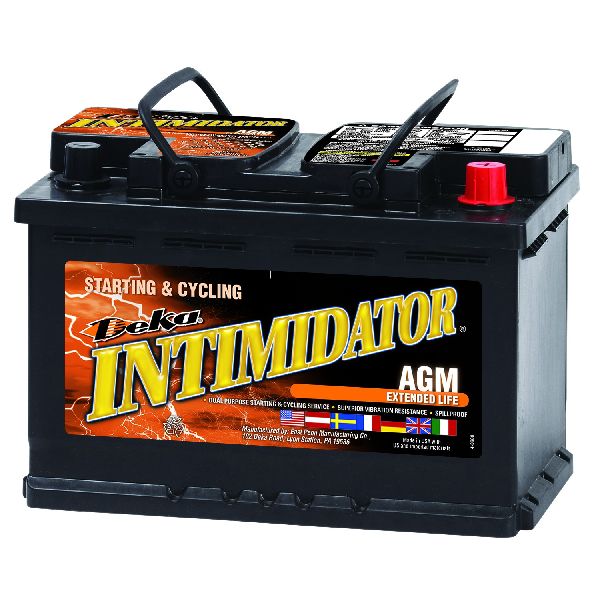
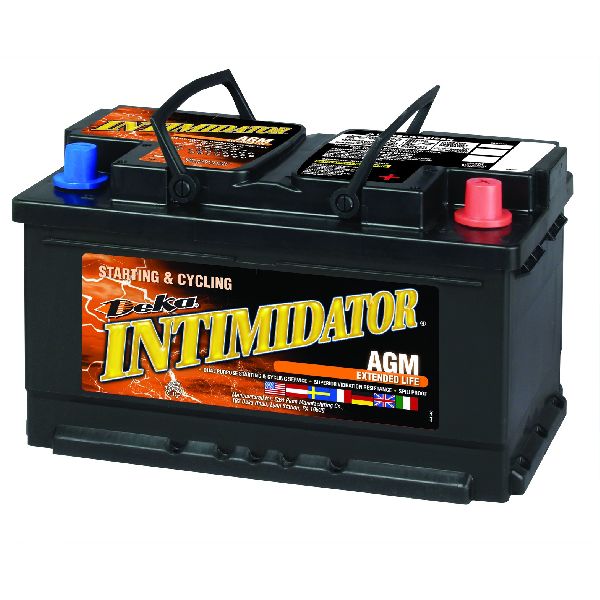
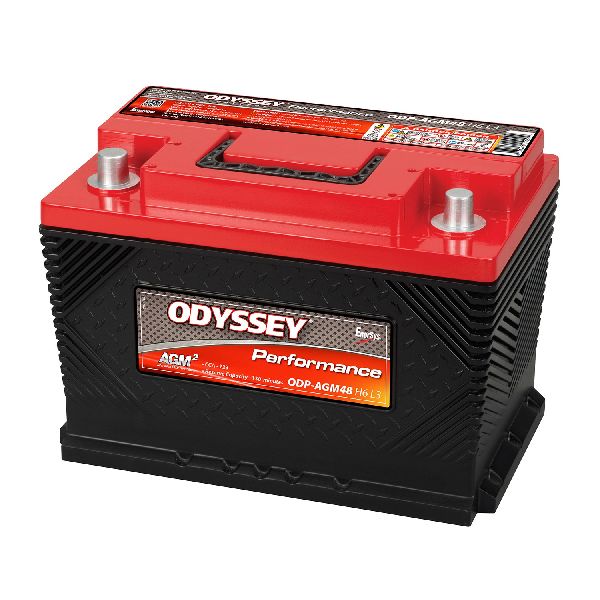
Est. part cost: $150-$300
Rare But Worth Checking
- Starter Solenoid B+ Cable Shorting to Heat Shield: TSB PIT5405C and 18-NA-161 mention this as a possible cause. A loose starter heat shield or a mis-rotated cable terminal can cause an intermittent short to ground, creating a massive voltage drop across the entire electrical system, especially during cranking. The fix involves replacing the damaged B+ cable and the starter heat shield, ensuring proper clearance.
Diagnosis Steps
- Scan for all DTCs in all modules to see the full scope of the electrical issue. Note all codes present, paying special attention to U-codes and any C0800 symptom bytes (-03, -0F).
- Inspect the battery. Ensure terminals are clean and tight (7 Nm / 62 lb-in). Perform a professional load test on the battery.
- Inspect the main BCM ground at G218. Disconnect the battery, then remove the driver's side A-pillar and kick panel trim to access the stud left of the speaker. Look for the trapped insulator mat or a loose 10mm nut. This is the most likely cause.
- If the G218 ground is good, perform a loaded voltage drop test on the main negative battery cable as described in TSB 18-NA-161. With a helper cranking the engine, measure between the negative battery post and the engine block. Replace the cable if the drop exceeds 200 mV.
- Perform a voltage drop test on the positive battery cable. Measure between the positive battery post and the main terminal on the underhood fuse block. A drop over 100mV indicates a problem.
- Inspect the starter motor area. Check that the B+ cable is not making contact with the starter heat shield. Ensure the heat shield is secure.
- Check for tightness on all major power and ground connections, including at the underhood fuse block (15 Nm) and where the negative cable bolts to the engine block (45 Nm).
Parts You'll Likely Need
- Negative Battery Cable
(OEM #84634114 (for 4.3L V6), 84319729 (for 5.3L/6.2L V8))— If a voltage drop test confirms high internal resistance, the entire cable assembly 🎬 See this walkthrough on replacing the negative battery cable. must be replaced to restore proper grounding for the vehicle's systems. This is the second most common fix after the G218 ground.
Trusted brands: ACDelco (OEM), Standard Motor Products
OEM price range: $70-$120
Aftermarket price range: $40-$80
Related Codes That Often Appear With This One
- U0140 — Lost Communication With Body Control Module. This is a direct result of the BCM losing power or ground due to the underlying electrical fault.
- U0415 — Invalid Data Received From Anti-Lock Brake System Control Module. The ABS/Stabilitrak system is highly dependent on stable voltage and BCM communication.
- C0544 — Steering Wheel Angle Sensor. This code often sets when the power steering module loses power or receives erratic data, which is a direct symptom of the C0800 fault.
- Multiple U-codes (U0073, U0100, U0101, U0121, etc.) — These are all communication codes. When the BCM has an unstable ground, it can disrupt the entire vehicle communication network (CAN bus), causing many modules to report lost communication.
- C0800-03 — A symptom byte for 'Control Module Power Circuit - Low Voltage', which is a more specific version of the main code.
- C0800-0F — A symptom byte for 'Control Module Power Circuit - Signal Erratic', strongly pointing to a loose connection like the G218 ground.
Technical Service Bulletins (TSBs) & Recalls
- PIT5405C: This is the key TSB that first identified the poor BCM ground at G218 as the root cause for a wide array of electrical issues.
- 18-NA-161: This bulletin supersedes PIT5405C and provides more detailed diagnostic procedures, including the specific 200mV voltage drop test for the negative battery cable.
Platform-Specific Known Issues
- The primary vehicle-specific issue is the manufacturing flaw where the dash insulator mat is trapped under the G218 ground stud, as detailed in GM TSB PIT5405C. This is so common that it should be the first check for any related electrical symptom, even before scanning for codes.
- The location of G218 requires removing the driver's side A-pillar grab handle (two 10mm bolts), the side dash panel, and the lower kick panel to gain adequate access.
Mechanic-Grade Diagnostic Values
- BCM Operating Voltage — expected: 9.5V - 17V. Failure: Voltage reading below 9.0V for approximately 5 seconds will set the C0800-03 code.
- Negative Battery Cable Voltage Drop (while cranking) — expected: < 200 mV. Failure: A reading greater than 200 mV between the negative battery post and the engine block indicates high internal resistance in the cable.
- Positive Battery Cable Voltage Drop (while cranking) — expected: < 100 mV. Failure: A reading greater than 100 mV between the positive battery post and the underhood fuse block main terminal indicates high resistance.
- Parasitic Battery Drain (after modules sleep for ~45 mins) — expected: < 50 milliamps (0.05A). Failure: A sustained draw higher than 50mA indicates a component is not shutting down correctly, contributing to low voltage conditions.
- Battery Cable Clamp Nut Torque — expected: 7 Nm (62 lb-in). Failure: Clamps that are loose or can be twisted by hand after tightening.
- Negative Battery Cable to Engine Block Bolt Torque — expected: 45 Nm (33 ft-lb). Failure: A loose connection at the engine block, a critical ground path.
- Battery Fuse Block Cable Nut Torque — expected: 15 Nm (11 ft-lb). Failure: Loose connections at the main power distribution point.
Hidden / Shadow Codes Worth Checking
- C0800-03: Device Power 1 Circuit Voltage Below Threshold. This is the most common variant, specifically indicating a sustained low voltage condition. (see via A professional scan tool like the GM GDS2 is required to see the two-digit symptom byte.)
- C0800-0F: Control Module Power Circuit - Signal Erratic. This suggests the module's power supply is fluctuating rapidly or is unstable, strongly pointing to a loose connection like the G218 ground or a failing cable. (see via A professional scan tool like the GM GDS2 is required to see the two-digit symptom byte.)
- C0800-07: Device Power 1 Circuit Voltage Above Threshold. This is a less common variant that indicates an over-voltage condition (e.g., > 17V), which could point to a failing alternator. (see via A professional scan tool like the GM GDS2 is required to see the two-digit symptom byte.)
Wiring & Ground Locations

- G218 — Under the driver's side dash, to the left of the speaker, near the A-pillar. It is a metal stud on the body with one or more ground ring terminals secured by a 10mm nut.. This is the primary ground for the Body Control Module (BCM). A manufacturing flaw where the dash insulator mat gets trapped under the terminal is the number one cause of code C0800 on this platform.
- BCM Connector X1, Pin 14 — On the Body Control Module under the driver's side dash.. This pin with a Pink wire is an Ignition 1 Voltage feed. Testing for stable voltage here helps verify power is reaching the BCM.
- BCM Connector X2, Pin 4 — On the Body Control Module under the driver's side dash.. This pin with a Red/Violet wire is a primary Battery Positive Voltage feed. Testing voltage here is a key step in diagnosing power supply issues to the BCM.
- X183 / X133 — The main 2-way power and ground connector for the electric power steering rack.. TSB PIT5405C notes that a loose connection at this specific connector can cause loss of power steering and related codes.
Real Owner Repair Stories
- YouTube User Comment / JustAnswer Video (2017 Chevy Silverado) — Engine cranks over slow, C0800 code stored.
❌ Tried (didn't work) Replacing the battery
✅ What actually fixed it The confirmed fix, based on GM bulletin 18-NA-161, was replacing the negative battery cable due to high internal resistance found during a voltage drop test. - YouTube Video 'Hunter Wilson' (2014-2018 Sierra/Silverado) — Flickering dash and headlights, park assist disabled message, truck shutting off completely at low speeds while turning.
❌ Tried (didn't work) Having the battery and alternator tested (they passed).
✅ What actually fixed it The owner found the dash sound deadening material was trapped under the G218 ground stud. After trimming the material away and cleaning/re-securing the ground connection, all symptoms were resolved. - Reddit user in r/Chevy (2016 Silverado 1500) — Unspecified symptoms that occurred after a recall was performed.
✅ What actually fixed it A responding technician stated the symptoms are usually caused by a bad negative battery cable and that they have replaced many for this concern. They advised performing a voltage drop test on the cable while cranking, stating anything over 200mV indicates a bad cable, and referenced TSB 18-NA-161.
"I Checked Everything" — The Actual Cause
- In the context of code C0800, the equivalent of a 'smoke test clean' scenario is when the battery and alternator both test as 'good' at an auto parts store. Many owners replace a perfectly good battery only to have the problem persist. The actual cause is often high resistance that isn't detected by a simple voltage or load test, such as the poor G218 ground or internal corrosion in the negative battery cable, which requires a specific loaded voltage drop test to identify.
OEM Part Supersession History
84319729 (Negative Battery Cable, 5.3L/6.2L)→84634113— This part has been superseded multiple times, indicating revisions to the design. The full history includes 22994470, 23138970, 23179343, 23235509, and 84109455.
Heads up: The multiple revisions strongly suggest an improvement in later parts to combat the internal resistance issue. Using the latest part number is highly recommended.Various (Body Control Module)→13594764 (and others)— BCM part numbers are frequently updated for software and hardware revisions.
Heads up: A mid-year change in 2015 (related to RPO code 'AVF') affects which BCM is correct. The vehicle's RPO code from the service parts label (in the glove box) must be checked before ordering a replacement BCM to ensure compatibility.
Model Year Variations Within This Range
- 2015: GM issued recall 18289 (NHTSA #18V586000) for over a million 2015 model year trucks and SUVs for temporary loss of electric power steering that can be caused by the voltage drops associated with the C0800 fault.
- 2015: There was a mid-year change to the Body Control Module (BCM). Vehicles with RPO code 'AVF' use a different BCM than earlier models. This is critical if the BCM needs replacement.
Helpful Videos

Used OEM Parts in Stock

New Aftermarket Parts Available


The information in this article is provided for general reference and educational purposes only. Vehicle specifications, procedures, and part compatibility can vary by production date, trim level, and region. Always consult your vehicle's factory service manual and verify part numbers before purchasing or performing repairs. Safety-critical components such as airbags, seat belts, and braking systems should be installed by a qualified professional.
- Gmc SIERRA:
- 🎬 Helpful Videos
- 🛍️ Shop This Part
- What's Unique About the 2015-2017 Gmc SIERRA
- Diagnostic Flowchart
- Symptoms You May Notice
- Most Likely Causes
- Rare But Worth Checking
- Diagnosis Steps
- Parts You'll Likely Need
- Related Codes That Often Appear With This One
- Technical Service Bulletins (TSBs) & Recalls
- Platform-Specific Known Issues
- Mechanic-Grade Diagnostic Values
- Hidden / Shadow Codes Worth Checking
- Wiring & Ground Locations
- Real Owner Repair Stories
- "I Checked Everything" — The Actual Cause
- OEM Part Supersession History
- Model Year Variations Within This Range
- 🎟️ Get 5% Off