

C0800 on 2015-2017 Chevrolet Tahoe: Power Steering & Electrical Fault Guide
On a 2015-2017 Tahoe, code C0800 almost always points to a poor ground connection at the Body Control Module (BCM), specifically at ground G218 under the driver's side dash. This is a known manufacturing flaw detailed in TSB PIT5405C. Fixing it is often free, only requiring you to trim away an interfering insulation mat.
- Before buying any parts, inspect the G218 ground under the driver's side dash. This is the most likely cause and is a free fix.
- C0800 is a voltage problem. If the ground is good, your next steps are to test the battery and inspect all main power and ground cable connections.
- Do not immediately assume an expensive control module (BCM, PSCM) has failed. These modules are robust; the problem is almost always in the wiring that supplies their power.
- This code indicates a serious safety issue due to the potential for sudden loss of power steering. Address it promptly.
What's Unique About the 2015-2017 Chevrolet TAHOE

For this specific generation of Tahoe and its sister GM K2XX platform trucks/SUVs, there is a well-documented design and manufacturing issue that directly causes code C0800. Manufacturer Technical Service Bulletin #PIT5405C identifies that the front dash insulator mat is often improperly installed at the factory and gets trapped between the BCM's main ground point (G218) and the chassis. This creates a poor ground, leading to a host of electrical gremlins, especially when electrical load increases, such as when turning the power steering at low speeds.
Diagnostic Flowchart

Tap your situation to follow the diagnostic path that matches what you're seeing on this vehicle.
Symptoms You May Notice
- "Service Power Steering" message appears on the driver information center
- "Service Stabilitrak" message appears
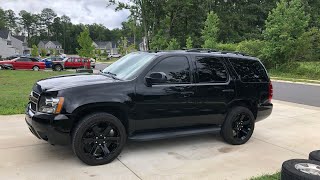
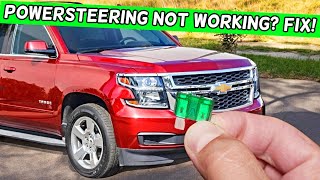
- Sudden loss of, or intermittent, power steering assist, making the wheel very heavy 🎬 Watch: Why your power steering fails on these Tahoe models
- Steering wheel jerks or kicks back when turning
- Instrument panel cluster, radio, or HVAC controls go blank or reset randomly
- Engine may stall when slowing down or turning the steering wheel
- Headlights may dim or flicker
- Warning lights for ABS and Traction Control may illuminate
- Erratic behavior like door locks cycling or dome lights flashing
- Alarm sounds when locking doors
- Replacing the Body Control Module (BCM)
- Replacing the Power Steering Control Module (PSCM) or the entire steering rack
- Replacing the Alternator without proper testing
Most Likely Causes

- Poor Body Control Module (BCM) Ground at G218 🔴 High Probability A known manufacturing defect where the dash insulation mat gets trapped under the ground stud is the primary cause, as documented in GM TSB #PIT5405C and its successor, 18-NA-161.
How to confirm: Visually inspect the G218 ground stud, located under the driver's side dashboard, typically behind the kick panel near the emergency brake pedal and A-pillar. Peel back the carpet and insulation to see if the black foam mat is pinched between the ground wire's eyelet and the vehicle body.
Typical fix: Disconnect the negative battery terminal. Remove the 10mm nut on the G218 stud. Use a utility knife to cut away the section of insulation mat around the stud. Scuff the chassis contact point with sandpaper to ensure a clean surface. Securely reinstall the ground wire eyelet directly against the metal body and tighten the nut.
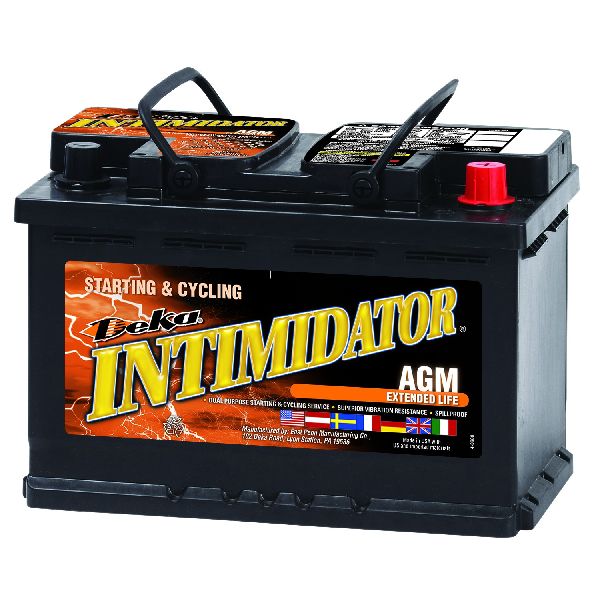
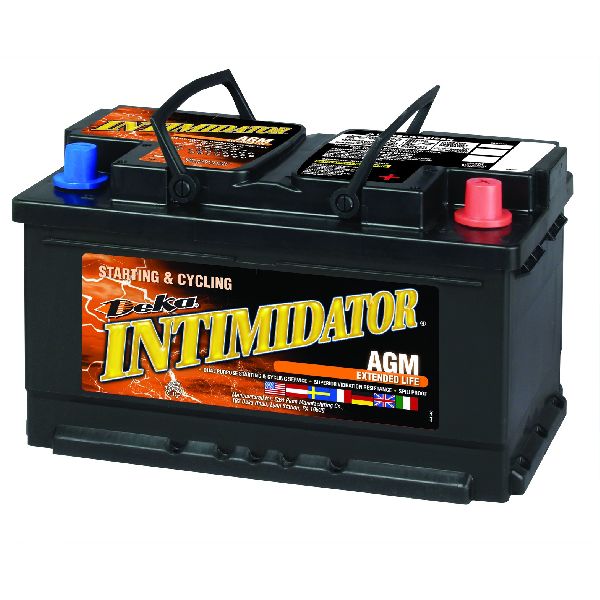
Est. part cost: $0 - Weak or Failing Battery 🟡 Medium Probability Modern trucks with numerous electronic modules are highly sensitive to battery voltage. An aging battery that can't supply consistent voltage under load will trigger this code. The original battery may be insufficient, and many owners upgrade to a higher-quality AGM battery.
How to confirm: Have the battery professionally load-tested at an auto parts store using a GR8 tester or equivalent. A simple voltage check is not sufficient. The test must simulate the load of starting the engine. A 5-year-old battery, even if it looks good, is a prime suspect.
Typical fix: Replace the vehicle's battery. An AGM (Absorbent Glass Mat) battery is recommended for better performance in vehicles with high electronic loads.
Est. part cost: $175-$350 - Loose or Corroded Battery Terminals/Cables 🟡 Medium Probability Over time, terminal connections can loosen or develop corrosion, creating resistance and causing voltage drops. The negative battery cable itself is a known failure point.
How to confirm: Attempt to twist the battery cable terminals by hand. If they move, they are too loose. Visually inspect for white or greenish corrosion. Perform a voltage drop test on the positive and negative cables. TSB PIT5405C provides detailed instructions for this test.
Typical fix: Disconnect the terminals, clean them and the battery posts with a wire brush until shiny, and re-tighten securely. TSB #PIT5405C specifies a torque of 62 lb-in (7 Nm) and notes the post should protrude 1-2mm above the clamp. If the negative cable is suspect, replace it.
Est. part cost: $5-$100
Rare But Worth Checking
- Failing Alternator: While less common than ground or battery issues, a failing alternator can cause system-wide low voltage. If the battery and grounds are good, have the charging system tested while the vehicle is running. A healthy alternator should produce 13.5-14.5 volts at the terminals.
- Loose Power Steering Rack Connector: TSB #PIT5405C also mentions checking the main power and ground connector for the electric power steering rack (X183 or X133). A loose connection here can cause similar symptoms.
- Shorted B+ Cable at Starter Solenoid: TSB 18-NA-161 and PIT5405C mention that the starter heat shield can come loose and short against the B+ battery cable terminal on the starter, causing a massive electrical draw and numerous codes, including C0800. This has been confirmed by owners who found a loose, sparking heat shield was the root cause.
- Parasitic Draw from Seat Memory Control Module (SMCM): A GM preliminary information bulletin (PIC6143B) notes that in cold weather (below 40°F), the SMCM can fail to enter sleep mode, causing a parasitic draw that drains the battery and can lead to low voltage codes like C0800.
Diagnosis Steps
- Scan for all DTCs. Note that C0800 is often accompanied by a long list of communication (U-prefix) codes. This strongly points to a systemic power/ground issue.
- Inspect the BCM ground G218. This is the most likely cause. Pull back the driver-side carpet and remove the plastic kick panel/trim near the firewall/A-pillar. 🎬 Watch: How to locate and repair common GM ground issues Locate the ground stud with multiple wires and check if the foam insulation mat is trapped underneath the ground wire's eyelet.
- If the mat is trapped, disconnect the negative battery terminal. Remove the 10mm nut on the G218 stud, trim the insulation away, clean the contact surface, and reinstall the ground wire, ensuring clean metal-to-metal contact. Reconnect the battery.
- If the G218 ground is clean, proceed to the battery. Have it professionally load-tested, even if it's relatively new.
- Thoroughly inspect and clean the battery terminals and cable ends. Ensure they are tightened to the proper specification (62 lb-in / 7 Nm).
- Inspect the negative battery cable connection to the engine block and the main body ground straps for tightness and corrosion. Consider replacing the negative battery cable as a preventative measure, as it's a known failure point.
- If the issue persists, have the alternator's output tested under load.
- As a final step, inspect the main electrical connector at the power steering rack (X183 or X133) for a secure connection and check for a possible short at the starter solenoid B+ cable.
Parts You'll Likely Need
- Battery
(OEM #ACDelco Gold AGM Battery (e.g., Group H7/94R))— An aging or weak battery that cannot provide stable voltage is a common cause of low-voltage codes. Upgrading to an AGM battery is a popular and effective fix.
Trusted brands: ACDelco, DieHard, Interstate, Optima
OEM price range: $220-$350
Aftermarket price range: $175-$300 - Negative Battery Cable
(OEM #GM 84634109 (supersedes 23235511, 84354711, etc.))— On many GM K2XX trucks, the negative battery cable itself can fail internally or have poor crimps, causing intermittent ground issues. It's a known fix on the related Silverado platform and a confirmed solution for many Tahoe owners.
Trusted brands: ACDelco (GM Genuine), Standard Motor Products
OEM price range: $70-$100
Aftermarket price range: $40-$80
Related Codes That Often Appear With This One
- U0073 — Control Module Communication Bus 'A' Off
- U0100 — Lost Communication With ECM/PCM 'A'
- U0121 — Lost Communication With Anti-Lock Brake System (ABS) Control Module
- U0140 — Lost Communication With Body Control Module
- C0710 — Steering Position Signal
- C0544 — Steering Wheel Angle Sensor
- P0513 — Incorrect Immobilizer Key
Technical Service Bulletins (TSBs) & Recalls
- PIT5405C: Directly links C0800 to a poor BCM ground at G218 due to a trapped dash insulator mat, and also suggests checking battery connections and the power steering rack connector.
- 18-NA-161: A later, more comprehensive bulletin that supersedes PIT5405C and covers the same ground/voltage issues.
Platform-Specific Known Issues
- The most significant issue is the dash insulator mat interfering with the G218 ground, as detailed in TSB #PIT5405C. This single issue is responsible for the vast majority of C0800 complaints on this platform.
- A secondary, but still common, issue is internal failure or poor connections within the factory negative battery cable assembly, leading owners to replace it even if it looks fine externally.
Mechanic-Grade Diagnostic Values
- Control Module Voltage (PSCM, BCM) — expected: 12.6V - 15.0V with engine running.. Failure: Voltage below ~9.0V (sets C0800-03) or above ~17.0V (sets C0800-07) for several seconds.
- Ground Circuit Resistance (at module connector to chassis ground) — expected: Less than 5 ohms.. Failure: Resistance reading greater than 5 ohms, indicating an open or high resistance in the ground path.
- Battery Cable Clamp Torque — expected: 7 Nm (62 lb-in). Failure: Terminals that can be moved by hand are too loose.
- Negative Battery Cable to Engine Block Torque — expected: 45 Nm (33 ft lb). Failure: Cable eyelet can be rotated by hand, indicating a loose connection.
Hidden / Shadow Codes Worth Checking
- C0800-03: Device Power 1 Circuit Voltage Below Threshold. This is the most common variant, indicating low voltage at the module. (see via A professional-grade scan tool capable of reading GM-specific symptom bytes.)
- C0800-07: Device Power Circuit Voltage Above Threshold. Indicates the module received excessive voltage, possibly from a faulty alternator or improper jump-starting. (see via A professional-grade scan tool capable of reading GM-specific symptom bytes.)
- C0800-12: Device Power Circuit Voltage Below Minimum Threshold. Indicates a severe voltage drop, below 7.5 volts. (see via A professional-grade scan tool capable of reading GM-specific symptom bytes.)
- C0800-0F: Control Module Power Circuit - Signal Erratic. Indicates an unstable or fluctuating power signal to the module. (see via A professional-grade scan tool. Seen on related GM trucks.)
Wiring & Ground Locations

- G218 — Under the driver's side dashboard, behind the plastic kick panel near the A-pillar and parking brake.. This is the main ground for the Body Control Module (BCM). A known manufacturing flaw often leaves dash insulation trapped between the ground eyelet and the chassis, causing high resistance and triggering C0800.
- Starter Solenoid B+ Terminal — On the starter motor, typically on the engine's lower side.. The starter's sheet metal heat shield can loosen and contact the main battery (B+) cable terminal on the solenoid, causing a direct short to ground. This creates a massive voltage drop across the entire vehicle, triggering C0800 and many other codes.
- X183 / X133 — The main 2-way electrical connector at the electric power steering rack.. This connector supplies power and ground to the Power Steering Control Module. A loose or corroded connection here can directly cause low voltage at the module, triggering C0800 and loss of power assist.
- Negative Battery Cable Grounds — The main negative cable connects from the battery to the engine block and to the vehicle's chassis/frame.. These are the primary return paths for all electrical current. A loose connection at the engine block (spec: 45 Nm) or a corroded frame ground can cause system-wide voltage issues. The cable itself can also fail internally.
Real Owner Repair Stories
- Tahoe Yukon Forum user 'jerwilso' (2015-2020 GM Truck/SUV) — Power loss, multiple warning lights.
❌ Tried (didn't work) Initial diagnosis was unclear.
✅ What actually fixed it Found the starter heat shield was loose with no screw holding it in place. It was touching the solenoid B+ battery cable, causing a short. The user removed the heat shield to resolve the issue. - Reddit user 'Then_Parking4819's husband' (2016 Tahoe) — Stalling when stopping at stop signs and lights, multiple electrical issues.
❌ Tried (didn't work) Took it to a dealership, who quoted several thousand dollars for a new wiring harness.
✅ What actually fixed it The user's husband inspected and cleaned the ground connections under the truck, which completely fixed the problem. - YouTube Commenter on G218 Fix Video (2014-2018 GM Truck) — Unspecified electrical issues related to the G218 ground problem.
❌ Tried (didn't work) Spent hours searching online for a solution.
✅ What actually fixed it After watching a video on the G218 ground location, the user located the ground, found the insulation interference, and corrected it in 30 minutes, which 'totally fixed my truck'.
When the Usual Fixes Don't Work
- While the G218 ground is the most common cause, some owners have had dealers check all grounds and still not resolve the issue. One Reddit user reported a dealer checked all grounds and replaced the fuse box and a sensor for $2,000, but the problem persisted. This highlights that in rare cases, the fault can be extremely elusive, potentially involving a failing module that only malfunctions intermittently or a wiring harness issue that is difficult to locate.
OEM Part Supersession History
23235511, 23286906, 23421539, 23438331, 84109461, 84354711→84634109— Standard part evolution and consolidation. The high number of superseded parts for a simple cable suggests potential revisions to address the known issues with internal resistance or terminal crimps.
Helpful Videos
We Have This Part in Stock


The information in this article is provided for general reference and educational purposes only. Vehicle specifications, procedures, and part compatibility can vary by production date, trim level, and region. Always consult your vehicle's factory service manual and verify part numbers before purchasing or performing repairs. Safety-critical components such as airbags, seat belts, and braking systems should be installed by a qualified professional.
- Chevrolet TAHOE:
- 🎬 Helpful Videos
- 🛍️ Shop This Part
- What's Unique About the 2015-2017 Chevrolet TAHOE
- Diagnostic Flowchart
- Symptoms You May Notice
- Most Likely Causes
- Rare But Worth Checking
- Diagnosis Steps
- Parts You'll Likely Need
- Related Codes That Often Appear With This One
- Technical Service Bulletins (TSBs) & Recalls
- Platform-Specific Known Issues
- Mechanic-Grade Diagnostic Values
- Hidden / Shadow Codes Worth Checking
- Wiring & Ground Locations
- Real Owner Repair Stories
- When the Usual Fixes Don't Work
- OEM Part Supersession History
- 🎟️ Get 5% Off