

C0800 on 2015-2017 Chevrolet Silverado: Device Power Circuit Fault Causes and Fixes
On a 2015-2017 Silverado, code C0800 almost always indicates a poor ground connection at the G218 location under the driver's side dash. A trapped dash insulator mat is the usual culprit; trimming it and cleaning the ground is a very common, low-cost DIY fix that resolves a host of electrical issues.
- C0800 on a 2015-2017 Silverado almost always points to a bad ground, not a bad module.
- Before buying any parts, inspect the G218 ground stud under the driver's side dash for a trapped piece of insulation.
- Fixing the G218 ground is a simple, low-cost DIY repair that involves trimming the insulation and cleaning the contact points.
- This code is a safety concern as it can lead to sudden loss of power steering; it should be addressed promptly.
What's Unique About the 2015-2017 Chevrolet SILVERADO

The 2015-2017 Silverado, built on the K2XX platform, is uniquely susceptible to this code due to a specific manufacturing flaw. General Motors issued Technical Service Bulletin #PIT5405C because the front dash insulator mat was frequently installed incorrectly at the factory. This mat gets pinched under the main ground lug for the Body Control Module (G218), creating a high-resistance connection that leads to intermittent low voltage and a cascade of electrical problems, with C0800 being a primary symptom. This issue is common across the entire K2XX platform.
Diagnostic Flowchart
Tap your situation to follow the diagnostic path that matches what you're seeing on this vehicle.
Symptoms You May Notice
- Intermittent loss of electric power steering
- "StabiliTrak" warning light on the dash
- Radio or infotainment screen goes blank or resets
- Gauges sweeping or behaving erratically
- Engine stalling, especially at low speeds
- Multiple other trouble codes appearing at the same time, especially 'U' (communication) codes
- Steering wheel jerks or kicks back when turning.
- Alarm sounds when locking doors or door locks cycle randomly.
- Wipers continue to run for a short time after being turned off.
- Replacing the Body Control Module (BCM) without checking the G218 ground first.
- Replacing the Power Steering Control Module (PSCM) when power steering fails, as the fault is usually the power supply to the module.
- Replacing the battery without performing a proper load test or checking ground connections first.
- Replacing the alternator without confirming a charging system fault.
Most Likely Causes

- Poor Body Control Module (BCM) Ground at G218 🔴 High Probability As documented in TSB #PIT5405C, the dash insulator mat was often trapped under the G218 ground eyelet from the factory, preventing a solid connection and causing high resistance. This is the most common cause by a wide margin.
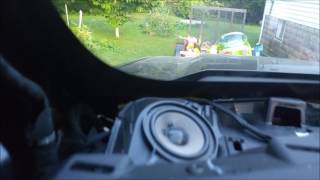
How to confirm: Visually inspect the G218 ground stud, located under the driver's side dash to the left of the steering column, near the A-pillar and dash speaker. 🎬 Watch: How to find and fix the G218 ground issue. It may be necessary to remove the A-pillar trim and side dash panel for access. Check if the black foam dash insulation material is underneath the ground wire's eyelet and 10mm nut.
Typical fix: Disconnect the negative battery terminal. Remove the 10mm nut, pull the ground wire(s) back, and use a utility knife to trim away the interfering insulation mat. Use a wire brush or sandpaper to clean the metal contact surfaces of the stud and eyelet to bare metal. Securely re-fasten the ground wire and tighten the nut. Torque specs for similar grounds are ~7 Nm (62 lb-in).
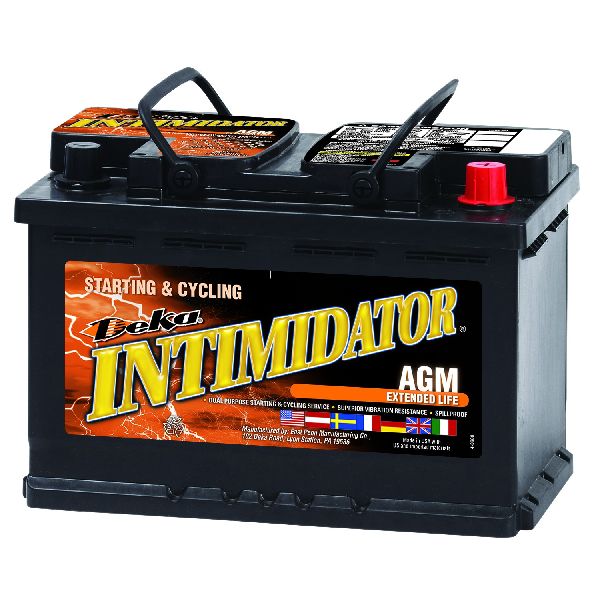
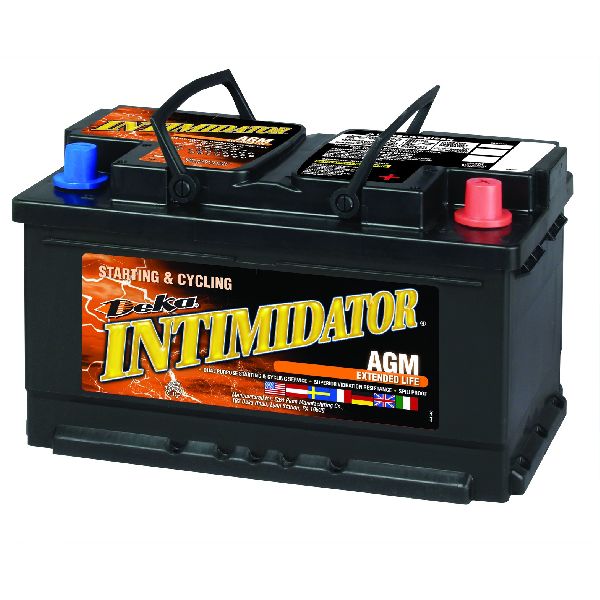
Est. part cost: $0 - Failing or Weak Battery 🟡 Medium Probability Modern trucks have a high electrical demand. An aging or weak AGM battery may not provide stable voltage, especially during startup or when under load from accessories like power steering, triggering the C0800 code.
How to confirm: Perform a load test on the battery using a digital battery analyzer, not just a voltage check. Many auto parts stores offer this service for free. A resting voltage below 12.4V is a sign of a weak charge, but the load test is required to confirm battery health.
Typical fix: Replace the vehicle's 12V AGM battery. Ensure the new battery is fully charged before installation. 🎬 Watch: Step-by-step guide to replacing your truck's battery.
Est. part cost: $150-$350 - Corroded or Loose Negative Battery Cable 🟡 Medium Probability The main ground cable from the battery to the chassis/engine can corrode internally or have loose connections, creating high resistance for the entire vehicle's electrical system. TSB 18-NA-161 (which supersedes PIT5405C) specifically calls out checking this cable.
How to confirm: Inspect both ends of the negative battery cable for corrosion, swelling, or looseness. Check that the terminal does not rotate on the battery post after being tightened to 7 Nm (62 lb-in). Perform a voltage drop test between the battery negative post and a clean chassis ground point with the engine cranking; it should be less than 200mV (0.2V) per TSB 18-NA-161.
Typical fix: Clean the connection points thoroughly or replace the negative battery cable assembly. The OEM part is ACDelco 84634113 or a superseding number. 🎬 See this walkthrough for replacing the negative battery cable.
Est. part cost: $50-$150
Rare But Worth Checking
- Starter Solenoid B+ Cable Shorting to Heat Shield:
Diagnosis Steps
- Scan for all trouble codes. Note any 'U' (communication) codes that are present alongside C0800, as a large number of codes points to a systemic power/ground issue.
- Perform a full battery and charging system test. The battery must be load-tested, not just checked for voltage.
- Inspect battery terminals for cleanliness and tightness. Per TSBs, they should be torqued to 7 Nm (62 lb-in) and not rotate on the posts.
- Locate the G218 ground stud under the driver's side dashboard, to the left of the steering column near the A-pillar. This may require removing the side dash panel and A-pillar trim.
- Inspect the G218 ground for a trapped dash insulator mat under the ground wire's eyelet, as described in TSB #PIT5405C.
- If insulation is present, disconnect the negative battery terminal. Remove the 10mm nut, pull the wire aside, and use a utility knife to trim the insulation away from the stud area.
- Use a wire brush or sandpaper to clean the chassis surface, the ground stud, and the wire eyelet to ensure a clean metal-to-metal contact.
- Reinstall the ground wire and tighten the 10mm nut securely. Reconnect the battery.
- If the ground is clean and the problem persists, perform a voltage drop test on the main battery cables as described in TSB 18-NA-161. The negative cable is a common point of failure.
- Clear all trouble codes and perform a test drive, paying attention to low-speed turns to load the power steering system, to see if the code returns.
Parts You'll Likely Need

- Battery
(OEM #e.g., ACDelco 48AGM)— If the G218 ground is not the cause, an old or failing battery is the next most likely source of the unstable voltage that triggers code C0800.
Trusted brands: ACDelco, DieHard, Interstate
OEM price range: $200-$350
Aftermarket price range: $150-$250 - Negative Battery Cable
(OEM #84634113 (Supersedes: 23235509, 84109455, 23138970, 23179343, 84319729))— TSB 18-NA-161 identifies high internal resistance in the negative battery cable as a common secondary cause for these electrical issues after the G218 ground has been ruled out.
Trusted brands: ACDelco (GM Genuine)
OEM price range: $70-$125
Aftermarket price range: $40-$80
Related Codes That Often Appear With This One
- U0140 — This code means "Lost Communication With Body Control Module." It appears with C0800 because the poor G218 ground causes the BCM to lose power and drop off the vehicle's communication network.
- U0073 — This code means "Control Module Communication Bus 'A' Off." Like U0140, it indicates a network-wide communication failure often caused by the BCM losing its power or ground.
- C0544 — This code relates to the Steering Wheel Torque Sensor. It often sets alongside C0800 because the Electric Power Steering module is very sensitive to the voltage instability caused by the underlying electrical fault.
- C0710 — This code points to the Steering Wheel Angle Sensor. It is another module that can be affected by the unstable voltage and communication disruptions originating from the BCM's poor ground.
- U0100 — Lost Communication with ECM/PCM. The widespread voltage drop can cause multiple critical modules to stop communicating simultaneously.
- U0121 — Lost Communication With Anti-Lock Brake System (ABS) Control Module. The ABS module is another key component on the network that can drop out due to the unstable power supply.
Technical Service Bulletins (TSBs) & Recalls
- PIT5405C: 'Steering Jerks Or Kicks Back / Reduced Power Steering Assist / Engine Stall / No Start / Service Stabilitrak / IPC / Radio / HVAC Goes Blank Various DTCs'. This TSB is the key document for this issue. It lists C0800 among a large group of codes that can be caused by a poor ground at the G218 location due to a trapped dash insulator mat.
- 18-NA-161: This TSB supersedes PIT5405C, expanding the model years and reinforcing the diagnostic steps. It adds specific voltage drop test procedures for the battery cables, highlighting them as another significant cause of these symptoms.
Platform-Specific Known Issues
- TSB #PIT5405C directly addresses the cause of C0800 and many other electrical codes. The primary issue is the front dash insulator mat being trapped under the Body Control Module ground at G218, causing a poor connection.
- TSB #18-NA-161 supersedes PIT5405C and reinforces the diagnostic procedure, adding emphasis on checking for high resistance in the battery
Mechanic-Grade Diagnostic Values
- Negative Battery Cable Voltage Drop (while cranking) — expected: < 200 mV (0.2V). Failure: A reading above 200 mV indicates excessive resistance in the cable, requiring replacement.
- Positive Battery Cable Voltage Drop (while cranking) — expected: < 100 mV (0.1V). Failure: A reading above 100 mV indicates excessive resistance in the cable, requiring replacement.
- Battery Cable Clamp Nut Torque — expected: 7 Nm (62 lb-in). Failure: Loose clamps can cause intermittent connections and voltage drops. The terminal should not rotate on the post after tightening.
- Module Voltage (C0800-03 Set Condition) — expected: > 9.0V. Failure: Voltage dropping below 9V for several seconds will trigger the C0800-03 code.
- Module Voltage (C0800-07 Set Condition) — expected: < 18.0V. Failure: Voltage exceeding 18V will trigger the C0800-07 code, often pointing to a charging system issue.
Hidden / Shadow Codes Worth Checking
- C0800-03: Device Power 1 Circuit Voltage Below Threshold. This is the most common variant, specifically indicating a low voltage condition. (see via A professional scan tool like GM GDS2 will display the full DTC with its two-digit symptom byte.)
- C0800-07: Device Power 1 Circuit Voltage Above Threshold. This indicates an over-voltage condition, likely from a failing alternator. (see via A professional scan tool like GM GDS2 will display the full DTC with its two-digit symptom byte.)
- C0800-0F: Control Module Power Circuit - Signal Erratic. This suggests the module's power supply is fluctuating rapidly, pointing to a loose connection. (see via A professional scan tool like GM GDS2 is required to see the symptom byte.)
Wiring & Ground Locations

- G218 — Under the driver's side dash, to the left of the steering column, near the A-pillar and speaker. It is a stud with a 10mm nut.. This is the primary ground for the Body Control Module (BCM). As documented in TSB PIT5405C, a poor connection here due to trapped insulation is the number one cause of code C0800 and related electrical issues.
- Passenger Side Frame/Engine Block Ground — On the passenger side of the engine bay, attached to the frame or engine block. Often low and subject to corrosion.. In cases where G218 and the main battery cables are confirmed good, owners have found this secondary ground loose or corroded, causing identical symptoms. It is a less common but confirmed fix.
- BCM Connector X1, Pin 1 — At the Body Control Module under the driver's side dash.. This pin is a primary Battery Positive Voltage input for the BCM. A voltage drop test at this pin compared to battery positive can isolate wiring faults between the fuse block and the module.
- BCM Connector X5, Pin 12 — At the Body Control Module under the driver's side dash.. This is a primary ground circuit for the BCM. A continuity or voltage drop test between this pin and a known good chassis ground (like the G218 stud) can verify the integrity of the ground wiring within the harness.
- X183 or X133 — Main power and ground 2-way connector for the electric power steering rack.. TSB PIT5405C notes that a loose connection at this specific connector can cause power steering failure and related codes. While not the primary cause for C0800, it's a relevant check if power steering symptoms are dominant.
Real Owner Repair Stories
- Reddit user r/Chevy (2016 Chevrolet Silverado 1500) — Dash goes black, steering locks up, 'Stabilitrak' message appears for a second, then everything returns to normal. Almost caused a crash.
❌ Tried (didn't work) Initial confusion, as the issue started after a dealer visit for an unrelated recall.
✅ What actually fixed it A technician on the forum identified the symptoms as a classic case of a bad negative battery cable, referencing TSB 18-NA-161. The fix was to replace the negative battery cable after confirming excessive voltage drop (over 200mV). - YouTube user comment (2014-2018 Chevrolet Silverado (K2XX Platform)) — Flickering lights, power steering disabled message, park assist disabled message, truck shutting off completely when turning at low speeds.
❌ Tried (didn't work) Intermittent nature of the problem made initial diagnosis difficult.
✅ What actually fixed it The owner found the dash sound deadening material was trapped under the G218 ground. After trimming the material away and cleaning/re-securing the ground connection, all electrical issues were resolved. - YouTube video by 'electrical junky' (2017 Chevy Silverado) — Slow crank/no start, battery drain overnight, code C0800-03 stored.
❌ Tried (didn't work) Having the battery and alternator load tested (both passed).
✅ What actually fixed it The confirmed fix, based on TSB 18-NA-161, was the replacement of the negative battery cable due to high internal resistance.
Helpful Videos


Used OEM Parts in Stock

New Aftermarket Parts Available


The information in this article is provided for general reference and educational purposes only. Vehicle specifications, procedures, and part compatibility can vary by production date, trim level, and region. Always consult your vehicle's factory service manual and verify part numbers before purchasing or performing repairs. Safety-critical components such as airbags, seat belts, and braking systems should be installed by a qualified professional.
- Chevrolet SILVERADO:
- 🎬 Helpful Videos
- 🛍️ Shop This Part
- What's Unique About the 2015-2017 Chevrolet SILVERADO
- Diagnostic Flowchart
- Symptoms You May Notice
- Most Likely Causes
- Rare But Worth Checking
- Diagnosis Steps
- Parts You'll Likely Need
- Related Codes That Often Appear With This One
- Technical Service Bulletins (TSBs) & Recalls
- Platform-Specific Known Issues
- Mechanic-Grade Diagnostic Values
- Hidden / Shadow Codes Worth Checking
- Wiring & Ground Locations
- Real Owner Repair Stories
- 🎟️ Get 5% Off