

C0775 on 2010-2017 GMC Terrain: Service Tire Monitor System Explained
Code C0775 on a GMC Terrain means the Tire Pressure Monitoring System (TPMS) sensors have not been learned by the vehicle's computer. This is most often fixed by performing a TPMS relearn procedure, which can sometimes be done without tools. If sensors are old, they may need replacement.
- C0775 means your Terrain's computer has lost track of the TPMS sensor locations, usually after a tire service.
- The most common fix is to perform a TPMS relearn procedure, which you can initiate from the driver's information center.
- You may need a simple, inexpensive TPMS activation tool (like an EL-50448) to complete the relearn, though a method involving deflating tires can also work.
- If a sensor won't learn, its battery is likely dead (a common issue on these aging vehicles), and the sensor needs to be replaced.
What's Unique About the 2010-2017 Gmc TERRAIN
The first-generation GMC Terrain (2010-2017) and its platform-mate, the Chevrolet Equinox, use a direct TPMS system that is common across many GM vehicles from this era. The system is generally reliable but very sensitive to procedure. Code C0775 is almost exclusively a procedural or maintenance issue rather than a sign of a complex electronic failure. It frequently appears after tire rotations, new tire installations, or BCM/RCDLR replacement if the mandatory sensor relearn procedure is skipped or fails. If the relearn mode is started but canceled after the first sensor is learned, all stored sensor IDs will be invalidated in the RCDLR's memory, and DTC C0775 will be set.
Diagnostic Flowchart
Tap your situation to follow the diagnostic path that matches what you're seeing on this vehicle.
Symptoms You May Notice
- "Service Tire Monitor System" message on the Driver Information Center (DIC).
- TPMS warning light flashes for approximately one minute at startup, then remains solid.
- Tire pressure readings on the DIC show dashes (--) or incorrect values instead of pressure values.
- Inability to complete the TPMS relearn procedure; the horn may not chirp when attempting to learn a specific sensor.
- Replacing the Body Control Module (BCM) when only a relearn is needed.
- Assuming a tire is low on pressure when the 'Service Tire Monitor System' message is displayed, which indicates a system fault, not necessarily a pressure issue.
- Replacing a good TPMS sensor when the relearn procedure was simply not performed correctly.
Most Likely Causes
- TPMS Relearn Procedure Not Performed 🔴 High Probability This is required after any tire rotation, new sensor installation, or if the relearn process is interrupted. It's a common oversight at tire shops or during DIY tire rotations.
How to confirm: If the code appeared immediately after a tire rotation, new tires, or sensor replacement, this is the most likely cause.
Typical fix: Perform the TPMS sensor relearn procedure. This can be done using the vehicle's DIC menus and either a special TPMS activation tool or by letting air out of the tires in sequence.
Est. part cost: $0-$20 (for a basic relearn tool) - Dead or Failing TPMS Sensor Battery 🟡 Medium Probability TPMS sensor batteries are not replaceable and have a finite lifespan, typically 5-10 years. Vehicles in this year range are at or beyond the typical end of that lifespan. Battery failure is a very common reason for a sensor to fail to 'learn' during the procedure, which then triggers C0775.
How to confirm: A professional TPMS diagnostic tool can read the battery status of each sensor. If a sensor fails to respond during the relearn procedure (no horn chirp), its battery is the most likely culprit.
Typical fix: Replace the failed TPMS sensor and perform the relearn procedure. It is often recommended to replace all four sensors if they are original and over 7 years old to avoid repeat repairs.
Est. part cost: $30-$80 per sensor - Body Control Module (BCM) or Remote Control Door Lock Receiver (RCDLR) Replaced or Reprogrammed ⚪ Low Probability The BCM and RCDLR store the sensor ID information. If either module is replaced or reprogrammed, this memory is wiped, and the relearn procedure becomes mandatory.
How to confirm: This will be known if service was recently performed on these specific modules.
Typical fix: Perform the TPMS sensor relearn procedure.
Est. part cost: $0 - Aftermarket Device Interference ⚪ Low Probability Some aftermarket devices that plug into the vehicle, like phone chargers or dash cams, can cause Radio Frequency Interference (RFI) that jams the 315MHz signal from the TPMS sensors to the RCDLR.
How to confirm: This is mentioned in GM TSB PIC5650C. If the issue is intermittent and hard to trace, try unplugging all aftermarket electronic devices and attempting the relearn procedure again.
Typical fix: Remove or replace the interfering aftermarket device.
Est. part cost: $0
Rare But Worth Checking
- Interrupted Relearn Procedure: If the relearn mode is started but not completed within the allowed time (usually 2 minutes for the first tire and 5 minutes total), the BCM will invalidate all stored sensor IDs and set code C0775.
- Faulty RCDLR Module: In rare cases, if none of the sensors will learn and there is no known RFI, the Remote Control Door Lock Receiver itself may be faulty. This is often accompanied by poor key fob range. GM issued a preliminary bulletin (PI0795A) for some 2012-2013 models related to this.
Diagnosis Steps
- Verify the 'Service Tire Monitor System' message is displayed and code C0775 is present using an OBD-II scanner.
- Check the vehicle's service history. Did the light appear after a tire rotation, new tire installation, or other service?
- Attempt the TPMS relearn procedure. Turn the ignition to ON (engine off). Use the DIC menu buttons to navigate to the tire pressure screen. Press and hold the SET/CLR button until the horn chirps twice, indicating learn mode is active.
- The driver's side front turn signal will illuminate, indicating which tire to start with.
- Use a TPMS activation tool (like an EL-50448 or equivalent) held against the tire sidewall near the valve stem. Press the button. The vehicle's horn will chirp once to confirm the sensor is learned.
- Alternatively, without a tool, rapidly let air out of the tire for 5-10 seconds until the horn chirps. This method is less reliable.
- Proceed in a clockwise order: Left Front, Right Front, Right Rear, Left Rear, following the illuminated turn signal lamps.
- If one or more sensors fail to trigger a horn chirp, that sensor is likely faulty (dead battery or damaged) and needs to be replaced.
- After replacing any faulty sensors, repeat the entire relearn procedure from step 3.
- Once the fourth sensor (Left Rear) is learned, the horn will chirp twice, signaling the process is complete.
- Turn the ignition off to exit learn mode. Reinflate all tires to the pressure listed on the driver's door jamb sticker. Start the vehicle to confirm the warning light is off and pressures are displayed.
Parts You'll Likely Need
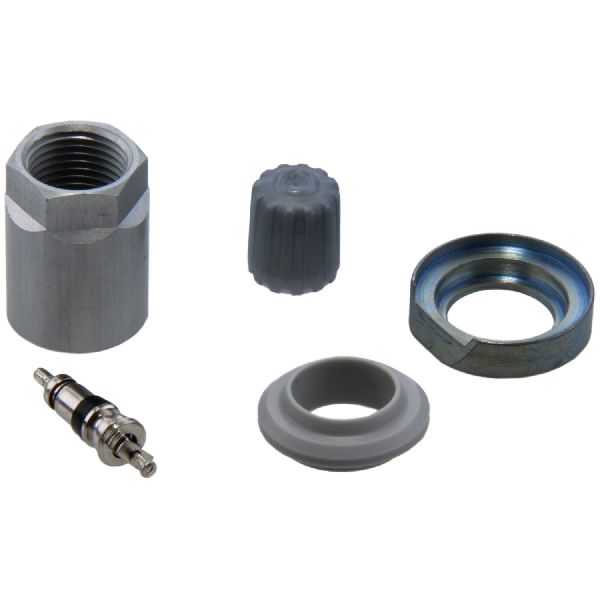
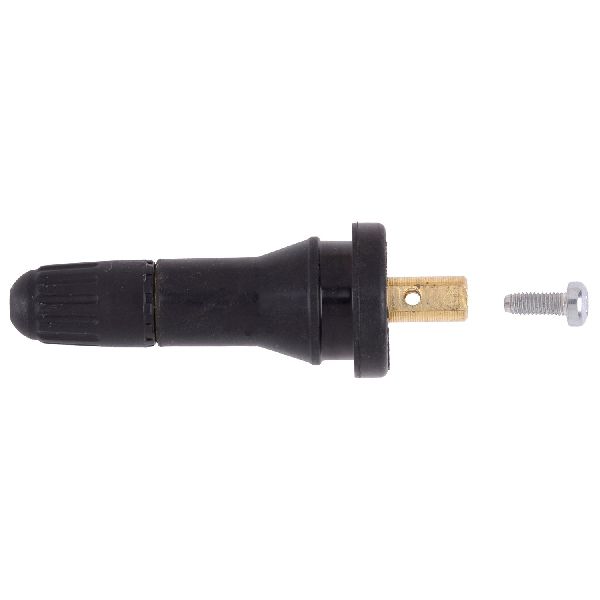
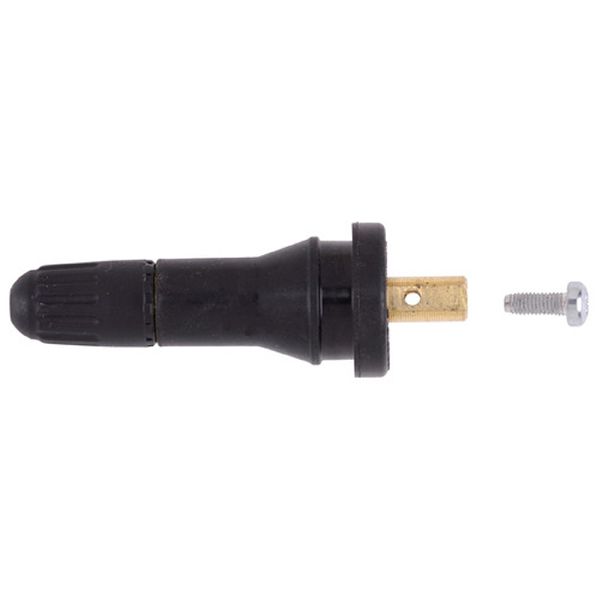
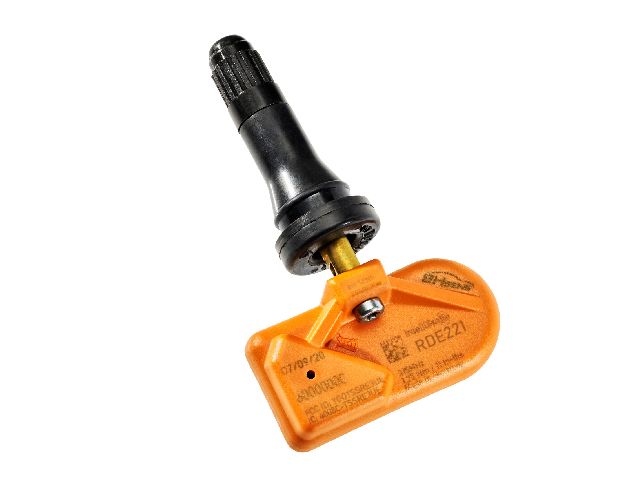
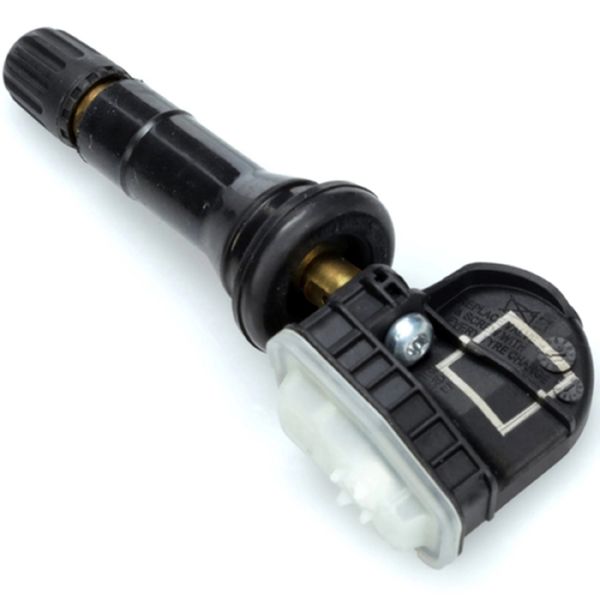
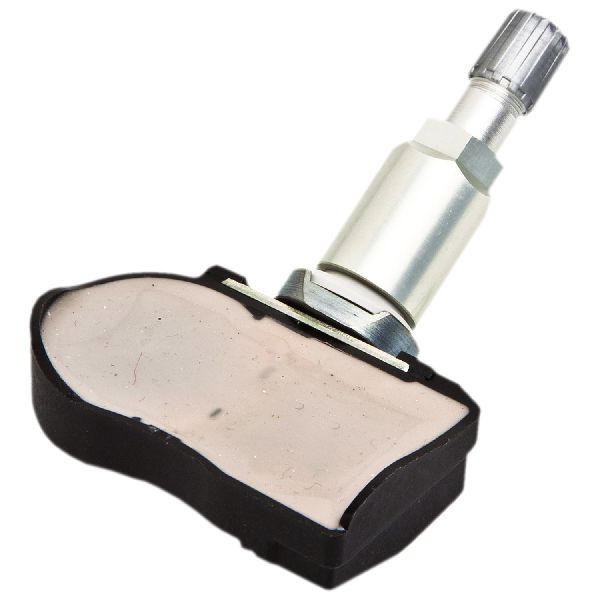
- Tire Pressure Monitoring System (TPMS) Sensor
(OEM #13598771)— The internal, non-replaceable batteries in the original sensors fail with age. When one fails, it cannot be learned by the BCM, triggering the C0775 code after a failed relearn attempt. The original part 13598771 may be superseded by other numbers like 13540600 or cross-referenced to many others.
Trusted brands: ACDelco (OEM), Schrader (often the OEM supplier), VDO, Autel
OEM price range: $50-$90
Aftermarket price range: $30-$60 - TPMS Relearn Tool
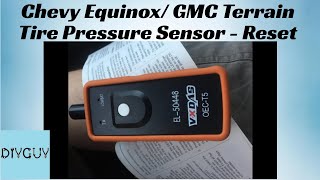
(OEM #EL-50448)— This tool activates the 315MHz sensors, allowing the vehicle's computer to learn their position quickly and reliably without having to deflate the tires. Many inexpensive clones are available online.
Trusted brands: ATEQ, Autel, VXDAS
OEM price range: $70-$100
Aftermarket price range: $15-$50
Related Codes That Often Appear With This One
- C0750 — Relates to the Left Front TPMS sensor. May appear if that specific sensor has failed or is having trouble communicating.
- C0755 — Relates to the Right Front TPMS sensor.
- C0760 — Relates to the Left Rear TPMS sensor.
- C0765 — Relates to the Right Rear TPMS sensor.
Technical Service Bulletins (TSBs) & Recalls
- PIC5650M: Mentions C0775 in conjunction with security system and stall concerns, pointing to Radio Frequency Interference as a possible cause for both issues.
- PI0795A: A preliminary bulletin for some 2012-2013 models that suggests replacing the RCDLR module if poor key fob range and TPMS issues (including C0775) are present.
Platform-Specific Known Issues
- The NHTSA-cited Technical Service Bulletin PIC5650M mentions C0775 in a list of codes related to a potential stall or no-start concern with the security light on. This TSB suggests that Radio Frequency Interference (RFI) from aftermarket devices (like phone chargers) can disrupt the RCDLR, causing both TPMS and security system issues simultaneously.
- Some owners report that disconnecting the vehicle battery for an extended period can sometimes cause the BCM to lose sensor IDs, necessitating a relearn procedure upon reconnection.
Scan Tool Commands That Help
- GDS2/Tech2: Module Diagnostics > Remote Control Door Lock Receiver > Configuration/Reset Functions — This path is used to access functions like adding/replacing key fobs and performing module setup for a new RCDLR. After replacing the RCDLR, a module setup must be performed, followed by the theft deterrent system learn and the TPMS sensor learn procedure.
- GDS2/Tech2: RCDLR Setup — This specific function is required after installing a new Remote Control Door Lock Receiver (RCDLR) to integrate it with the vehicle's other systems before learning keys or TPMS sensors.
Wiring & Ground Locations
- RCDLR (Remote Control Door Lock Receiver) — The RCDLR is typically located behind the trim on the left rear of the vehicle, often near the B-pillar or in the rear quarter panel area. It shares functions with the keyless entry system.. The RCDLR is the module that receives the 315MHz signals from all TPMS sensors. A bad ground connection to this module or a faulty module itself can prevent any or all sensors from being learned, directly causing a C0775 code.
- G303 — On the left side B-pillar, behind the trim panel.. This is a primary body ground point in the vicinity of the RCDLR. A loose or corroded G303 could cause intermittent or total failure of the RCDLR, leading to TPMS communication issues.
- G103 — Located at the left rear of the engine compartment on the cowl, above the brake booster.. This ground serves multiple modules, including the Body Control Module (BCM) and the Remote Door Lock Receiver (an older name for the RCDLR). A fault at this location can cause widespread communication issues, including those related to the TPMS.
- Data Link Connector (DLC) Fuse — In the passenger cabin fuse box, located next to the passenger's left leg. Fuse #36 (7.5 amp) powers the OBD-II port.. While not a direct cause of C0775, a blown DLC fuse will prevent a scan tool from communicating with the vehicle, making it impossible to read or clear codes, or use advanced functions like an OBD relearn.
Real Owner Repair Stories
- YouTube user comment on a TPMS repair video (2015 GMC Terrain) — The 'Service Tire Monitor System' light was on, and the relearn procedure would not complete.
❌ Tried (didn't work) Attempting the relearn procedure multiple times using both the air-release method and a relearn tool., Replacing only one suspected bad sensor.
✅ What actually fixed it The owner finally resolved the issue by replacing all four original TPMS sensors, as their batteries had likely reached the end of their service life. After replacing all four, the standard relearn procedure worked on the first try.
OEM Part Supersession History
13598771→13540600, and many other cross-references like 13586335, 22853741, 23445327.— Standard part evolution and consolidation by the manufacturer.
Heads up: These part numbers are generally interchangeable for the 2010-2017 Terrain. However, it is critical to ensure you are purchasing a sensor that operates on the correct 315MHz frequency for North American models.
Model Year Variations Within This Range
- 2010-2017: The manual relearn procedure using the DIC buttons is consistent across this generation. However, some advanced TPMS tools offer an 'OBD Relearn' option, which writes the sensor IDs directly via the OBD-II port. This feature is noted to be available for years after 2012 on some tools.
Helpful Videos
We Have This Part in Stock

The information in this article is provided for general reference and educational purposes only. Vehicle specifications, procedures, and part compatibility can vary by production date, trim level, and region. Always consult your vehicle's factory service manual and verify part numbers before purchasing or performing repairs. Safety-critical components such as airbags, seat belts, and braking systems should be installed by a qualified professional.
- Gmc TERRAIN:
- 🎬 Helpful Videos
- 🛍️ Shop This Part
- What's Unique About the 2010-2017 Gmc TERRAIN
- Diagnostic Flowchart
- Symptoms You May Notice
- Most Likely Causes
- Rare But Worth Checking
- Diagnosis Steps
- Parts You'll Likely Need
- Related Codes That Often Appear With This One
- Technical Service Bulletins (TSBs) & Recalls
- Platform-Specific Known Issues
- Scan Tool Commands That Help
- Wiring & Ground Locations
- Real Owner Repair Stories
- OEM Part Supersession History
- Model Year Variations Within This Range
- 🎟️ Get 5% Off