

C0775 on 2009-2016 Chevrolet Traverse: More Than Just a Tire Pressure Issue
On a 2009-2016 Traverse, code C0775 means 'Low Tire Pressure Sensors Not Learned.' While it can be a simple TPMS issue, if it appears with a security light and stalling, it's a major red flag for a security system problem caused by radio frequency interference, as noted in GM TSB PIC5650M. Before replacing any parts for a stalling concern, remove all aftermarket phone chargers and electronics.
- Code C0775 means the TPMS sensors need to be relearned by the vehicle's computer.
- **Crucially**, if you also have a security light on or the engine is stalling, the problem is likely NOT your tires. It is almost certainly Radio Frequency Interference (RFI).
- Before buying any parts, remove all phone chargers, USB devices, and extra fobs from your car and keychain to see if the problem disappears.
- If the only symptom is the TPMS light, the sensors may need a simple relearn procedure, or the sensors themselves may have failed due to age.
What's Unique About the 2009-2016 Chevrolet TRAVERSE
On this generation of Traverse and other GM Lambda platform vehicles, the anti-theft system (Passkey), keyless entry (RKE), and TPMS all operate using radio frequency (RF) signals in the 315 MHz range. A critical GM Technical Service Bulletin (the PIC5650 series) reveals that stalling, no-start conditions, and security lights, when accompanied by TPMS codes like C0775, are often caused by Radio Frequency Interference (RFI). This interference can come from aftermarket electronics like phone chargers, LED lights, dash cams, or even other key fobs and access cards on the same keychain, jamming the signals the vehicle needs to validate the key and run properly.
Diagnostic Flowchart
Tap your situation to follow the diagnostic path that matches what you're seeing on this vehicle.
Symptoms You May Notice
- "Service Tire Monitor System" message on the Driver Information Center (DIC)
- TPMS warning light is on or flashing
- Engine stalls intermittently or immediately after starting
- No-crank or no-start condition
- Security light is illuminated on the dashboard
- Tire pressure readings show dashes (--) on the DIC
- Poor or no range from the keyless entry (RKE) fob.
- Replacing TPMS sensors when the actual problem is Radio Frequency Interference causing a stall and security light.
- Replacing the BCM or other expensive electronic modules before thoroughly checking for and eliminating all sources of RFI as per TSB PIC5650.
Most Likely Causes
- Radio Frequency Interference (RFI) from Aftermarket Devices 🔴 High Probability As documented in TSB PIC5650, the vehicle's security and TPMS modules are sensitive to RFI from devices like USB chargers, aftermarket LED lights, and even non-GM keys or access cards on the keychain. These devices can 'jam' the 315 MHz or 125 kHz frequencies used by the car's internal systems.
How to confirm: Remove all aftermarket electronic devices (phone chargers, dash cams, etc.) and any non-essential items from the key ring. See if the stalling/security issue resolves. This is the first step a dealer technician is instructed to take.
Typical fix: Identify and remove the source of the RFI. No parts are typically replaced. In forum discussions, cheap, unbranded USB chargers are the most frequent culprits.
Est. part cost: $0 - Failed or Incomplete TPMS Relearn Procedure 🟡 Medium Probability The system will set code C0775 if the learn mode is started but not finished within the allotted time (typically 2 minutes for the first sensor, 5 minutes total). This can easily happen after a tire rotation or if a sensor fails to respond.
How to confirm: Use a TPMS tool (like the GM-recommended EL-50448) to attempt the relearn procedure. If it fails repeatedly on one or more wheels, it may indicate a bad sensor. The procedure can also be done without a tool by letting air out of each tire in sequence until the horn beeps, but this is less reliable.
Typical fix: Perform the TPMS relearn procedure correctly. This requires a basic TPMS activation tool. The process is typically initiated by holding the lock and unlock buttons on the key fob with the key in the 'ON' position.
Est. part cost: $15-$50 for a DIY relearn tool - Failed TPMS Sensor(s) 🟡 Medium Probability The batteries in the original TPMS sensors have a lifespan of 7-10 years. For the 2009-2016 Traverse, these sensors are at or beyond their expected life, making battery failure a very common maintenance item.
How to confirm: A professional scan tool or advanced TPMS tool can read sensor data directly, including battery status. A lack of signal or a 'low battery' status confirms a failed sensor. A flashing TPMS light that then stays solid is a key indicator of a sensor fault, rather than low pressure.
Typical fix: Replace the failed TPMS sensor and perform the relearn procedure. It is highly recommended to replace all four at once to avoid repeat repairs, as the others are likely to fail soon.
Est. part cost: $30-$80 per sensor - Faulty Ignition Switch or Passkey System Component ⚪ Low Probability When C0775 is paired with security codes like B3055, and RFI has been ruled out, it can indicate a fault in the Passkey anti-theft system, such as a worn ignition lock cylinder or a bad transponder key that is not communicating with the BCM.
How to confirm: Scan for B-codes (Body codes). The presence of B3055, B3060, or B3935 strongly points to the anti-theft system as the root cause of the stalling, with C0775 being a secondary symptom.
Typical fix: Replace the faulty component, which could be the ignition lock cylinder or the key itself, followed by a key relearn procedure. This is a more complex repair.
Est. part cost: $100-$300
Diagnosis Steps
- Scan for all DTCs in all modules. Pay close attention to any B-codes (Body) or U-codes (Network) in addition to the C0775 code.
- Analyze the symptoms. If the primary complaint is stalling, a no-start condition, or an illuminated security light, proceed to the next step. If the only symptom is the TPMS light, skip to step 4.
- Follow TSB PIC5650 guidance: Inspect the vehicle for any aftermarket electronics (USB chargers, LED lights, dash cams, etc.) and remove them. Remove all other keys, fobs, and access cards from the key ring. Attempt to start and drive the vehicle to see if the problem is resolved.
- If the only symptom is the TPMS light, first check and adjust the pressure in all four tires to the specification on the driver's door jamb sticker.
- Attempt the TPMS relearn procedure. For the Traverse, this typically involves putting the vehicle in learn mode by holding the lock/unlock buttons on the key fob with the key ON, then using a TPMS activation tool (like an EL-50448) to trigger each sensor in sequence (LF, RF, RR, LR).
- If the relearn procedure fails, use a TPMS diagnostic tool to check the battery status and signal output of each individual sensor to identify any that have failed. A flashing TPMS light usually points to a failed sensor.
- If security codes like B3055 are present and RFI has been ruled out, diagnose the Passkey anti-theft system. This involves checking the ignition switch, wiring, and key transponder signal, which may require a professional.
- If RFI is suspected but the source is not obvious, a technician may use an RFI meter (sniffer) to detect stray signals in the 125 kHz, 315 MHz, or 433 MHz ranges.
Parts You'll Likely Need
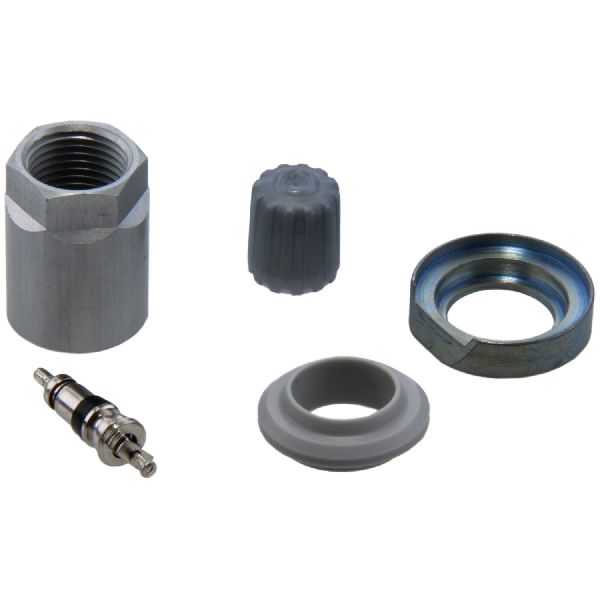
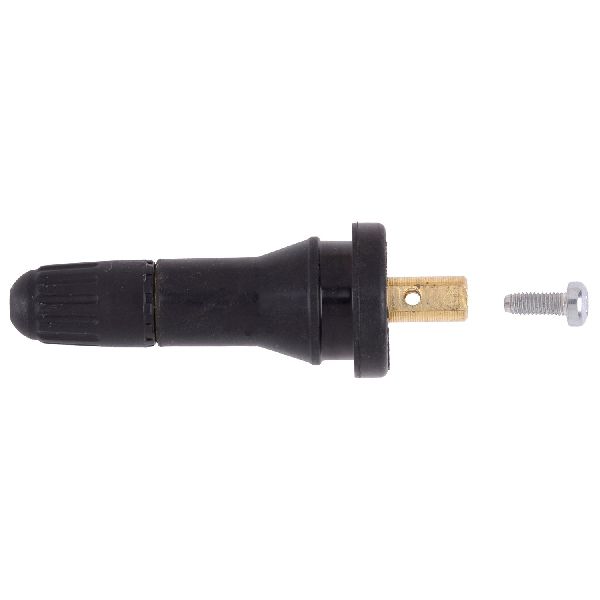
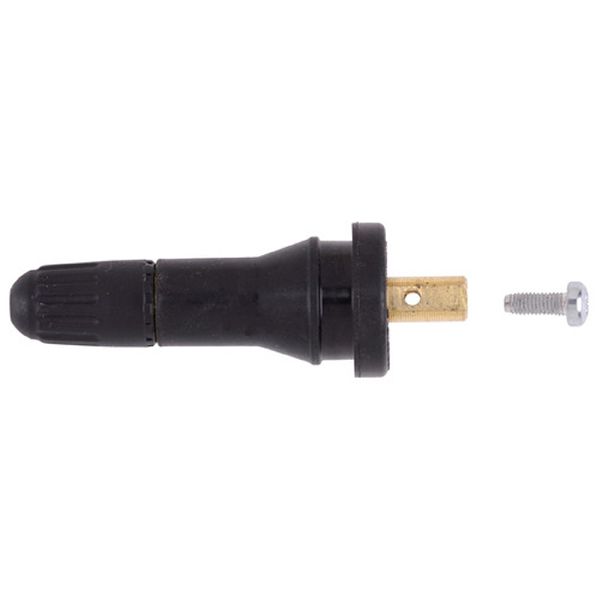
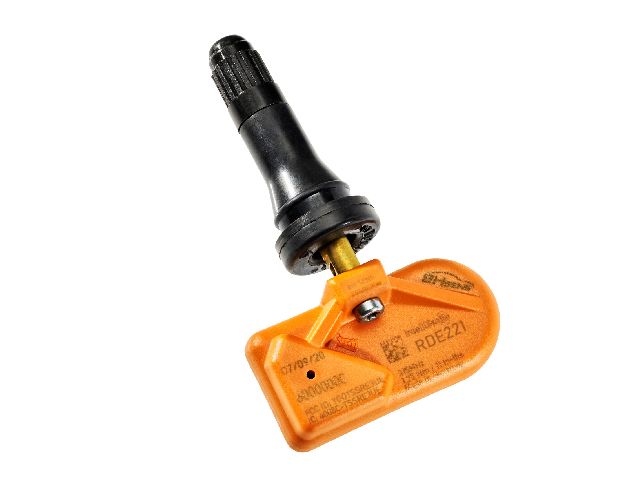
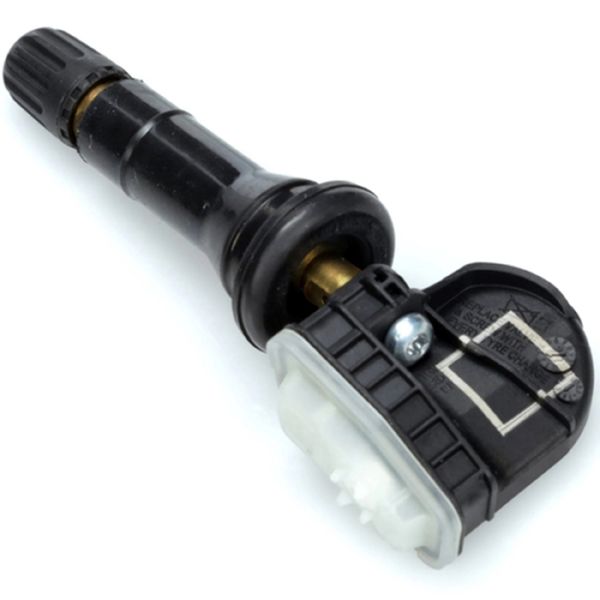
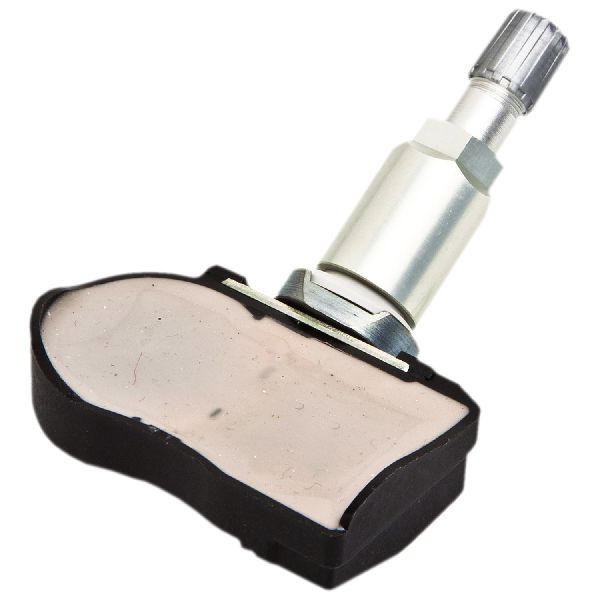
- TPMS Sensor
(OEM #13598771)— The sensor batteries fail after 7-10 years, a common issue for this vehicle generation. This is the likely cause if the only symptom is a TPMS light. This part number may be superseded by 13540600 or others.
Trusted brands: ACDelco, Schrader, Continental, Huf
OEM price range: $40-$70
Aftermarket price range: $25-$50 - TPMS Relearn Tool
(OEM #EL-50448)— Required to make the vehicle recognize new TPMS sensors or relearn their positions after a tire rotation. This is the specific tool often recommended for GM vehicles.
Trusted brands: ATEQ, Autel, VXDAS
OEM price range: $60-$90
Aftermarket price range: $15-$50
Related Codes That Often Appear With This One
- B3055 — Indicates the BCM did not receive a valid signal from the key's transponder chip, often seen with stalling/no-start issues. This is a primary code when RFI is the cause.
- B3060 — Relates to an unprogrammed transponder key, appearing with B3055.
- C0750, C0755, C0760, C0765 — These are specific codes for the Left Front, Right Front, Left Rear, and Right Rear TPMS sensors, respectively. They often appear with C0775 when there is a system-wide issue or a failed relearn attempt.
- B3935 — Another transponder key-related code that can be triggered by RFI.
Technical Service Bulletins (TSBs) & Recalls
- PIC5650M: '...stall concern with the security light coming on. Technician may find Diagnostic Trouble Codes B3055, B3060, B3935, C0750, C0755, C0760, C0765, and/or C0775.' This TSB series advises checking for RFI from aftermarket devices as a primary diagnostic step before any parts are replaced.
Platform-Specific Known Issues
- GM Technical Service Bulletin PIC5650 (in various revisions like M, K, J, C, B) explicitly links intermittent no-start, stalling, and security lights with TPMS codes like C0775, identifying Radio Frequency Interference as a primary cause to investigate before replacing any parts.
- Owner forums are filled with experiences confirming that cheap, aftermarket 12V USB phone chargers are the number one cause of the stalling/security light/C0775 combination. The problem often disappears the moment the charger is unplugged.
Scan Tool Commands That Help
- GDS2 (GM Global Diagnostic System 2): Module Diagnostics > RCDLR > Data Display — To view live data from the Remote Control Door Lock Receiver (RCDLR), such as the last known signal strength of TPMS sensors and key fob button presses. This helps verify if the module is receiving any signal at all.
- GDS2 (GM Global Diagnostic System 2): Module Diagnostics > RCDLR > Configuration/Reset Functions > Program Key Fobs — This function is used to program new or existing key fobs to the vehicle. The scan tool must remain connected during the entire process. It's a necessary step after replacing the RCDLR or when adding/replacing keys.
- GDS2 (GM Global Diagnostic System 2): Module Diagnostics > BCM > Special Functions > Tire Pressure Monitor Learn — To initiate the TPMS relearn procedure via the scan tool. This is an alternative to the key fob method and is required after replacing sensors or the BCM.
- Aftermarket RFI Meter (e.g., from RF-Explorer): Scan for signals in 125 kHz, 315 MHz, and 433 MHz ranges — As recommended by GM TSB PIC5650, this tool is used to 'sniff' for radio frequency interference inside the cabin when RFI is suspected but the source (like a phone charger) is not obvious.
Wiring & Ground Locations
- Remote Control Door Lock Receiver (RCDLR) — Typically located behind the trim on the left side B-pillar, near the floor. On some GM SUVs, it may be under the rear portion of the center console.. This is the central module that receives signals from both the TPMS sensors and the key fobs. All related codes (C0775, B3055, etc.) are processed by this module. A fault with the module, its power, or its ground can cause these issues.
- G103 — Located on the cowl at the left rear of the engine compartment, typically above the brake booster.. This is a critical ground point that serves the Body Control Module (BCM), Instrument Panel Cluster (IPC), and the Remote Control Door Lock Receiver (RCDLR). A poor connection here can cause a wide range of bizarre electrical issues, including communication loss with these modules.
- G303 — Located near the base of the left (driver's side) B-pillar, behind the interior trim panel.. This ground is physically close to the typical mounting location of the RCDLR module and may be its primary ground point. Corrosion or a loose connection here can directly impact RCDLR function.
- G110 — Located on the right rear of the engine, mounted to the back of the cylinder head.. This ground is shared by the TCM (Transmission Control Module) and ECM (Engine Control Module). A loose G110 bolt, sometimes occurring after major engine or transmission work, has been reported to cause intermittent no-crank/no-start and loss of communication between modules, mimicking the symptoms seen with RFI.
- Data Link Connector (DLC / OBD-II Port) — Under the driver's side dashboard, to the left of the steering column, just above the brake pedal.. This is the connection point for the scan tool to communicate with all vehicle modules, including the BCM and RCDLR, to read codes and live data.
Real Owner Repair Stories
- YouTube channel 'Wires 2 Wrenches' (2008 Chevrolet Silverado (similar GM electrical architecture)) — Intermittent no-start, DIC (Driver Information Center) going haywire, Service TPMS message.
❌ Tried (didn't work) Replacing an aftermarket Android radio, thinking it was the source of CAN bus interference.
✅ What actually fixed it The owner isolated the faulty circuit to the DSM (TPMS) fuse. Upon removing the RCDLR module, he found significant corrosion on the circuit board around a resistor, capacitor, and transistor. Cleaning the corrosion off the board with electronic cleaner restored normal function to the vehicle. - Reddit user comment in r/MechanicAdvice (2011 Chevrolet Traverse) — Multiple DTCs for communication loss between modules, intermittent no-crank no-start.
❌ Tried (didn't work) Initial diagnosis pointed towards a module failure.
✅ What actually fixed it The root cause was a cross-threaded bolt for the G110 ground on the back of the cylinder head, which had been improperly installed during a previous transmission replacement. The bolt was not fully tight, causing an intermittent loss of ground for the ECM and TCM. Tightening the ground bolt resolved all issues.
OEM Part Supersession History
13598771→13540600— Standard part evolution and update by the manufacturer.Unknown (for RCDLR)→20863945— Replacement part specified in TSB PI1085 to fix poor RKE range and TPMS issues on 2012-2013 models.
Heads up: Using an older or incorrect RCDLR module may not resolve the specific internal failure addressed by this updated part number.
Model Year Variations Within This Range
- 2012-2013: Vehicles built between April 1, 2012, and May 1, 2013, may have a faulty Remote Control Door Lock Receiver (RCDLR) from the factory. GM issued Preliminary Information bulletin PI1085, which instructs technicians to replace the RCDLR (P/N 20863945) if the vehicle presents with poor key fob range and/or TPMS codes, after verifying the complaint.
Helpful Videos
We Have This Part in Stock

The information in this article is provided for general reference and educational purposes only. Vehicle specifications, procedures, and part compatibility can vary by production date, trim level, and region. Always consult your vehicle's factory service manual and verify part numbers before purchasing or performing repairs. Safety-critical components such as airbags, seat belts, and braking systems should be installed by a qualified professional.
- Chevrolet TRAVERSE:
- 🎬 Helpful Videos
- 🛍️ Shop This Part
- What's Unique About the 2009-2016 Chevrolet TRAVERSE
- Diagnostic Flowchart
- Symptoms You May Notice
- Most Likely Causes
- Diagnosis Steps
- Parts You'll Likely Need
- Related Codes That Often Appear With This One
- Technical Service Bulletins (TSBs) & Recalls
- Platform-Specific Known Issues
- Scan Tool Commands That Help
- Wiring & Ground Locations
- Real Owner Repair Stories
- OEM Part Supersession History
- Model Year Variations Within This Range
- 🎟️ Get 5% Off