

C0775 on 2016-2022 Chevrolet Spark: Causes and Fixes for Low Tire Pressure
Code C0775 on a Chevy Spark almost always means one or more tires are low on air. The fix is usually just inflating your tires to the pressure listed on the driver's door jamb sticker. If the code persists, you may have a puncture, a leaking valve stem, or the sensors may need to be relearned, especially after a tire rotation.
- C0775 means 'Low Tire Pressure'. Your first and most important step is to check and inflate all four tires to the pressure listed on the driver's door sticker.
- A solid TPMS light indicates low pressure, while a flashing light typically indicates a sensor fault, often a dead battery.
- If you've inflated all tires but the light persists, the sensor positions likely need to be relearned after a tire rotation. A cheap relearn tool is a common and effective fix.
- If C0775 appears with no-start/stall issues and security codes like B3055, the problem is not your tires. It's an electrical interference issue described in TSB PIC5650. Unplug all aftermarket chargers and accessories first.
What's Unique About the 2016-2022 Chevrolet SPARK
While C0775 is a straightforward low tire pressure code, its appearance on a 2016 Spark can have a more complex meaning. A GM Technical Service Bulletin (TSB #PIC5650M and its subsequent revisions like PIC5650K) documents that C0775 can appear alongside serious security and anti-theft codes (like B3055 and B3060) when the vehicle is experiencing a stall or no-start condition. In this specific context, the C0775 code is likely a secondary symptom of a deeper electrical problem, such as a failing Body Control Module (BCM) or a wiring harness issue, rather than a simple tire problem. The root cause is often Radio Frequency Interference (RFI) from aftermarket devices like phone chargers, LED lights, or even toll passes, which can disrupt communication between the BCM, key fob, and TPMS sensors.
Diagnostic Flowchart
Tap your situation to follow the diagnostic path that matches what you're seeing on this vehicle.
Symptoms You May Notice
- Solid (non-flashing) TPMS warning light on the dashboard.
- Message on the driver information center (DIC) indicating low tire pressure or requiring service.
- Visibly low or flat tire.
- Vehicle pulling to one side or poor handling.
- TPMS light flashes for about a minute upon startup, then stays solid, indicating a system malfunction or a sensor that has not been learned.
- DIC shows dashes (---) instead of pressure readings for one or more tires.
- Immediately replacing the TPMS sensor. The C0775 code indicates low pressure, not a faulty sensor. A faulty sensor typically sets a different code (e.g., C0750, C0755, etc.) and may cause the TPMS light to flash.
- Assuming the tire location shown on the DIC is correct. After a tire rotation, the sensor locations are often not relearned, leading a driver to repeatedly fill a perfectly fine tire while another one remains low.
Most Likely Causes
- Natural Air Pressure Loss 🔴 High Probability Universal to all vehicles. Tire pressure naturally decreases over time and with drops in temperature (about 1 PSI for every 10°F drop).
How to confirm: Check the pressure in all tires with a reliable gauge when the tires are cold.
Typical fix: Inflate the tires to the pressure specified on the sticker inside the driver's door jamb.
Est. part cost: $0-$2 - Tire Puncture 🔴 High Probability
How to confirm: Visually inspect the tire tread and sidewalls for nails, screws, or other objects. Spraying the tire with soapy water will create bubbles at the leak site.
Typical fix: Repair the puncture with a plug or patch, or replace the tire if the damage is in the sidewall or is too large.
Est. part cost: $20-$150 - Failed TPMS Relearn After Tire Rotation 🟡 Medium Probability The TPMS is position-sensitive. If tires are rotated and the sensor positions are not relearned by the BCM, the system can report low pressure for the wrong tire location, causing confusion. For example, the DIC may report the front-left tire is low when it's actually the rear-right.
How to confirm: After inflating all tires to the correct pressure, if the light remains on and the DIC indicates a low tire, the sensor positions are likely mixed up. This is very common after a tire rotation service.
Typical fix: Perform the TPMS relearn procedure. This can be done with a sub-$15 TPMS relearn tool (like the EL-50448) or sometimes by letting air out of each tire in sequence until the horn beeps.
Est. part cost: $0-$15 (if a relearn tool is needed) - Leaking Valve Stem or TPMS Sensor Seal 🟡 Medium Probability The rubber seals and aluminum stems can corrode and degrade over time, especially in regions that use road salt.
How to confirm: Spray soapy water around the base of the valve stem where it meets the wheel. Look for bubbles forming.
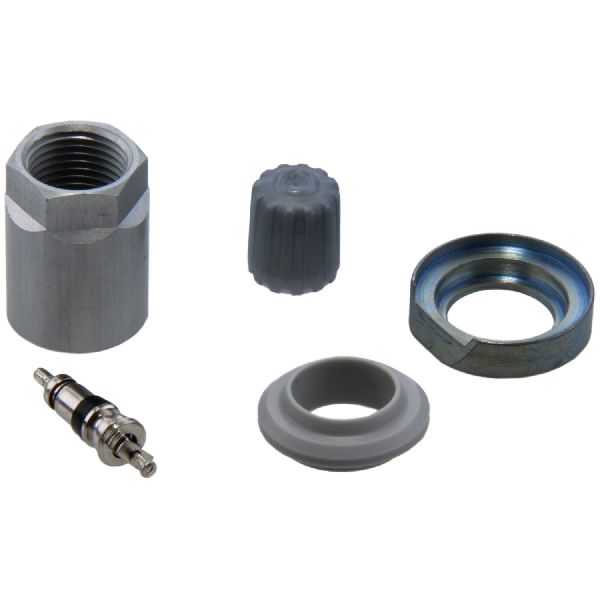
Typical fix: Replace the TPMS sensor service kit, which includes a new seal, valve core, and nut.
Est. part cost: $5-$25 - Failed TPMS Relearn Procedure ⚪ Low Probability
How to confirm: This code will set if a TPMS relearn process is started but not completed correctly, invalidating the stored sensor IDs in the BCM.
Typical fix: Perform the TPMS relearn procedure again from the beginning, following the steps for the specific vehicle.
Est. part cost: $0-$15 (if a relearn tool is needed)
Rare But Worth Checking
- Body Control Module (BCM) or Electrical Fault due to RFI: As per TSB #PIC5650M, if C0775 appears with security codes (B3055, B3060) and the engine is stalling, the root cause is not the tire. It is likely a complex electrical issue with the BCM or wiring that requires professional diagnosis. The primary suspect is Radio Frequency Interference (RFI) from aftermarket phone chargers, dash cams, or LED lights disrupting the BCM's ability to communicate.
- Dead TPMS Sensor Battery: The batteries inside the TPMS sensors have a finite lifespan, typically 6-8 years. As a 2016+ model, these vehicles are now at an age where sensor batteries are beginning to fail. A dead sensor will cause the TPMS light to flash and then stay on, and may log C0775 along with a sensor-specific code.
Diagnosis Steps
- Verify the code with an OBD-II scanner capable of reading Chassis (C) codes.
- Visually inspect all four tires for obvious deflation.
- Using a quality tire pressure gauge, check the pressure of all four tires. Compare the readings to the manufacturer's specification on the driver's door jamb sticker. Note that the DIC may be showing the wrong tire location if a relearn hasn't been done.
- If any tire is low, inflate it to the correct pressure.
- Inspect the low tire for punctures or leaks from the valve stem using soapy water.
- If a leak is found, repair it as needed (plug, patch, or valve stem service kit).
- Clear the trouble code. Drive the vehicle for a few minutes above 20 mph to allow the TPMS system to update and the light to turn off.
- If the light returns and no leak is found, a TPMS relearn procedure is the next logical step, especially if the tires have been recently rotated. This can be done easily with an inexpensive tool.
- If the light flashes on startup then stays solid, suspect a dead battery in one of the TPMS sensors. A tire shop can scan each sensor to check its battery status.
- CRITICAL: Check for any other stored codes. If security codes like B3055 are present and the car is stalling, the diagnosis must shift to the BCM and related wiring per TSB #PIC5650M. Disconnect all aftermarket accessories (phone chargers, dash cams, LED lights) and see if the problem disappears.
Parts You'll Likely Need
- TPMS Relearn Tool
(OEM #EL-50448 (or equivalent))— Essential for correctly resetting sensor locations after a tire rotation, a very common cause of persistent TPMS warnings on these vehicles. Many owners buy a cheap clone online for future use.
Trusted brands: VXDAS, Augocom, JDIAG
OEM price range: $70-$100
Aftermarket price range: $10-$20 - TPMS Sensor
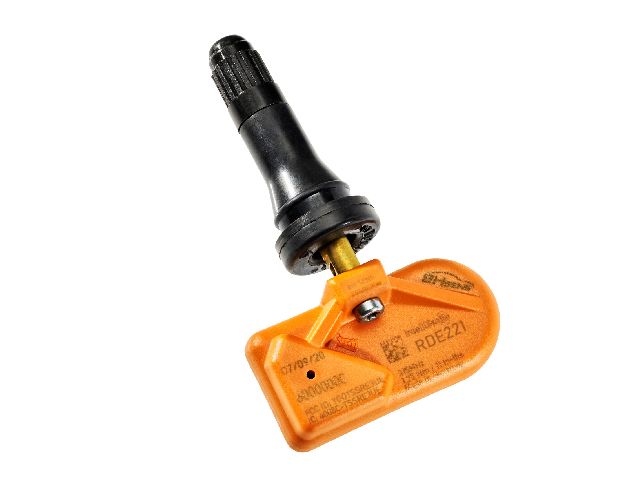
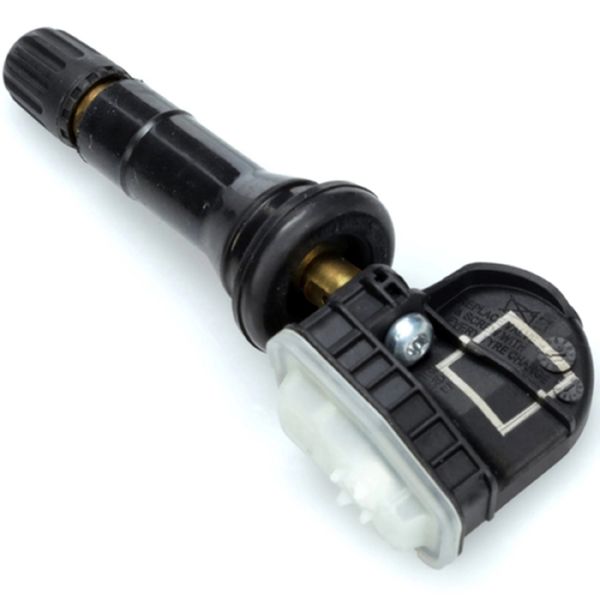
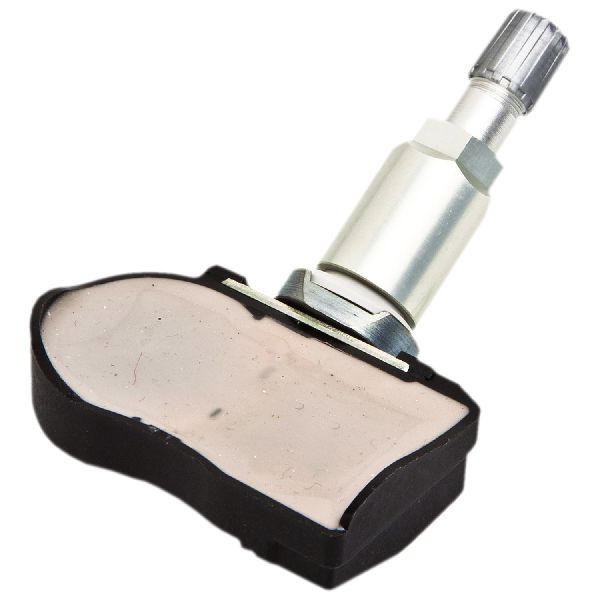
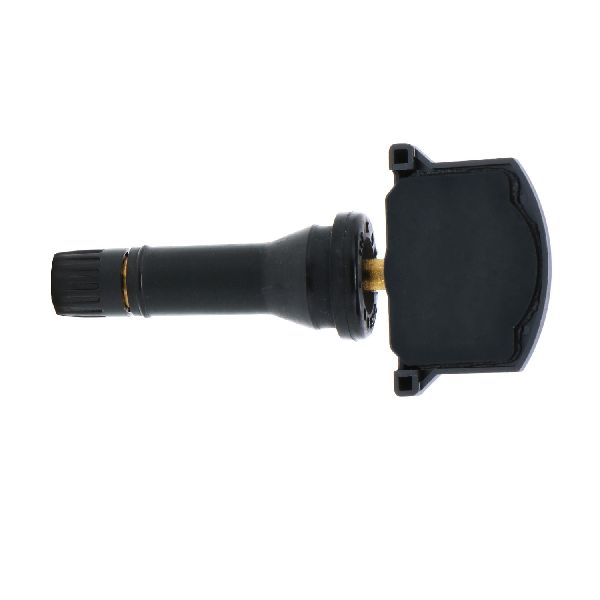
(OEM #84977973 (supercedes 84413365, 19332370, etc.))— Needed if a sensor's internal battery has died, causing a flashing TPMS light. The Spark uses 314.9 MHz sensors (RPO code XL7).
Trusted brands: ACDelco (OEM), Schrader, Standard Motor Products, Huf
OEM price range: $30-$40
Aftermarket price range: $20-$35 - TPMS Sensor Service Kit
(OEM #13598909)— Fixes common air leaks from a corroded or failed valve stem seal, which is a frequent cause of slow leaks that trigger C0775.
Trusted brands: ACDelco, Schrader, Continental
OEM price range: $10-$20
Aftermarket price range: $5-$15
Related Codes That Often Appear With This One
- B3055 — As documented in GM TSB #PIC5650M, this code can appear with C0775 on the 2016 Spark during a no-start or stall condition, pointing to a larger electrical or BCM issue, often caused by RFI.
- B3060 — Similar to B3055, this is a security system code mentioned in TSB #PIC5650M that can accompany C0775 in cases of a complex electrical fault.
- C0750, C0755, C0760, C0765 — These codes correspond to specific wheel locations (LF, RF, RR, LR). They may appear with C0775 if there's a sensor-specific fault, a dead battery, or a widespread communication issue like the one described in TSB PIC5650.
Technical Service Bulletins (TSBs) & Recalls
- Bulletin #PIC5650M (and revisions): Addresses a stall concern with the security light on, where technicians may find DTCs B3055, B3060, B3935, C0750, C0755, C0760, C0765, and/or C0775, pointing to a potential BCM or wiring fault, often caused by Radio Frequency Interference (RFI) from aftermarket devices.
Platform-Specific Known Issues
- TSB #PIC5650M highlights a specific and unusual scenario for the 2016 Spark where C0775 can be triggered as part of a larger electrical failure involving the anti-theft system and BCM, causing the engine to stall.
Hidden / Shadow Codes Worth Checking
- C0775 00: This specific symptom byte indicates that the Body Control Module (BCM) has not successfully completed a tire pressure sensor learn procedure, or the auto-learn function has failed. It is set when the BCM is virgin (new/unprogrammed) or when a relearn is started but not finished. (see via A professional scan tool capable of reading GM-specific chassis codes and symptom bytes, such as a GM GDS2/Tech2 or high-end aftermarket equivalent.)
Scan Tool Commands That Help
- GM GDS2/Tech2 or equivalent: TPMS Learn Mode Enable — This command manually puts the BCM into the relearn state, which is required after replacing a sensor or rotating tires to program the sensor IDs and their positions into the module. It is an alternative to the key fob method (holding lock/unlock) or using the DIC menus.
- Autel MaxiTPMS TS508 (or similar): OBD Relearn — Forcing a relearn via the OBD-II port can resolve issues where the standard manual or auto-learn procedures fail. The tool reads each sensor's ID and then writes them directly to the BCM via the diagnostic port, which can overcome communication or interference issues.
Wiring & Ground Locations
- G103 — Located in the engine compartment on the cowl, typically above the brake booster.. This is a primary ground location for the Body Control Module (BCM) and the Remote Control Door Lock Receiver (RCDLR), which doubles as the TPMS receiver. A poor connection here can cause a wide range of seemingly unrelated electrical issues, including the symptoms described in TSB PIC5650M (stalling, security lights) and TPMS communication failures.
- G303 — Located on the left (driver's side) B-pillar, behind the interior trim panel.. This is another critical interior ground point. While less exposed than engine bay grounds, a loose connection here can disrupt BCM and other interior module operations, potentially leading to TPMS faults.
- BCM Connector X2, Pin 2 — On the Body Control Module, which is typically located behind the driver's side of the dashboard.. This is a main ground pin for the BCM. Verifying a solid ground connection at this pin (Wire color: Black, Circuit: 850) is a key step when diagnosing complex electrical issues involving the BCM, such as the RFI/stalling concern from TSB PIC5650M. A GM service bulletin warns that removing a BCM ground while the module is powered can cause internal damage.
Real Owner Repair Stories
- Reddit user on r/chevyspark (2013-2022 Chevrolet Spark (discussion covers multiple years)) — TPMS light remained on after tire rotation. Shop either did not perform the relearn or failed to do so.
❌ Tried (didn't work) Relying on the tire shop to perform the relearn procedure (was inconsistent)., Driving the car hoping for an automatic relearn (on models without this feature or when it fails)., One user reported buying a faulty, cheap relearn tool that did not work and had to be exchanged.
✅ What actually fixed it The owner purchased an inexpensive TPMS relearn tool (specifically mentioning the VXDAS EL-50448) from an online retailer for about $10 and successfully performed the relearn procedure themselves. This resolved the light and ensured the tire pressure display was accurate. - Multiple forums (Ford, Honda, general auto) (Various makes/models, including Chevrolet) — Intermittent or persistent TPMS malfunction light, often appearing after 20-30 minutes of highway driving. No low pressure was found.
❌ Tried (didn't work) Replacing TPMS sensors., Performing relearn procedures repeatedly.
✅ What actually fixed it The root cause was discovered to be a cheap, poorly-shielded USB phone charger plugged into a 12V power outlet. The charger was emitting Radio Frequency Interference (RFI) that disrupted the signal between the TPMS sensors and the vehicle's receiver module. Unplugging the charger immediately resolved the issue, and replacing it with a higher-quality, better-shielded charger prevented it from recurring.
OEM Part Supersession History
19332370, 19331874, 84413365, 86780669→84977973— Standard part consolidation and minor revisions by the manufacturer (GM/ACDelco).
Heads up: The key specification is the frequency. The 2016-2022 Spark uses 314.9 MHz sensors (RPO XL7). Using a 433 MHz sensor, common on other GM or Spark EV models, will not work.
Model Year Variations Within This Range
- 2016-2022: While the Spark received a facelift for the 2019 model year, the TPMS system itself remained consistent. All models in this range use the same 314.9 MHz sensors (RPO XL7) and follow the same relearn procedures. There are no significant variations in causes or fixes related to the model year within this generation.
We Have This Part in Stock


The information in this article is provided for general reference and educational purposes only. Vehicle specifications, procedures, and part compatibility can vary by production date, trim level, and region. Always consult your vehicle's factory service manual and verify part numbers before purchasing or performing repairs. Safety-critical components such as airbags, seat belts, and braking systems should be installed by a qualified professional.
- Chevrolet SPARK:
- 🛍️ Shop This Part
- What's Unique About the 2016-2022 Chevrolet SPARK
- Diagnostic Flowchart
- Symptoms You May Notice
- Most Likely Causes
- Rare But Worth Checking
- Diagnosis Steps
- Parts You'll Likely Need
- Related Codes That Often Appear With This One
- Technical Service Bulletins (TSBs) & Recalls
- Platform-Specific Known Issues
- Hidden / Shadow Codes Worth Checking
- Scan Tool Commands That Help
- Wiring & Ground Locations
- Real Owner Repair Stories
- OEM Part Supersession History
- Model Year Variations Within This Range
- 🎟️ Get 5% Off