

C0775 on 2011-2018 Chevrolet Cruze: TPMS Relearn Failure Causes & Fixes
Code C0775 on a Chevy Cruze means the Tire Pressure Monitoring System (TPMS) sensor relearn procedure has failed. This is most often caused by a dead battery in one of the sensors, using the wrong frequency sensor for your car's model year (315 MHz vs 433 MHz), or an unprogrammed universal sensor. A successful relearn with a TPMS tool will fix it; otherwise, the faulty sensor ($25-$75) must be replaced by a tire shop.
- C0775 means the TPMS relearn process failed, it is not a fault with a specific sensor, but a failure of the system to learn the sensors.
- The most likely cause is a dead battery in one of the original TPMS sensors, preventing it from communicating during the relearn.
- Verify your Cruze's model year before buying parts: 2011-2016 Limited use 315 MHz sensors, while 2016-2018 use 433 MHz sensors.
- A TPMS activation tool (like the EL-50448) is highly recommended for a successful relearn; the method of letting air out of tires is less reliable.
- Sensor replacement requires a tire shop, but the relearn procedure can be done at home in minutes with the correct tool.
What's Unique About the 2011-2018 Chevrolet CRUZE

The 2011-2018 Cruze spans two generations with two different TPMS sensor frequencies, a common trap for this repair. First-generation models (2011-2016 Limited) use 315 MHz sensors, while the second-generation (2016-2018) uses 433 MHz sensors; installing the wrong type guarantees a relearn failure and a C0775 code. Uniquely, this code is also cited in GM Technical Service Bulletin #PIC5650M alongside anti-theft codes for a no-start condition, as severe radio frequency interference can disrupt both the TPMS and immobilizer systems, which share a receiver module.
Diagnostic Flowchart

Tap your situation to follow the diagnostic path that matches what you're seeing on this vehicle.
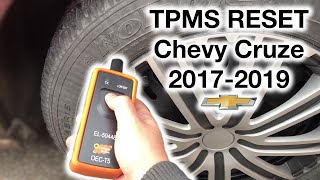
Generation note: The 2011-2018 year range covers two generations of the Chevrolet Cruze, which use different TPMS hardware: - First Generation (2011-2015 & 2016 "Limited" model): Uses a 315 MHz frequency TPMS sensor. - Second Generation (2016-2018): Uses a 433 MHz frequency TPMS sensor. 🎬 Watch this walkthrough for resetting sensors on 2017-2019 models. Using the incorrect frequency sensor for your vehicle's generation is a primary cause of this code.
Symptoms You May Notice
- "Service Tire Monitor System" message on the Driver Information Center (DIC) 🎬 Watch: How to fix the Service Tire Monitor System message.
- TPMS warning light is illuminated or flashing
- Tire pressure readings on the DIC show dashes (---) instead of numbers
- In rare cases of severe RF interference, may be present with a security light and a no-start condition (per TSB PIC5650M)
- Replacing the Body Control Module (BCM) before verifying that all individual TPMS sensors are functional and of the correct frequency.
- Replacing a working TPMS sensor when the relearn procedure simply timed out or was performed incorrectly.
- Assuming a new aftermarket sensor is 'dead on arrival' when it actually just needs to be programmed to the vehicle's frequency before the relearn procedure can work.
Most Likely Causes

- Dead or Faulty TPMS Sensor 🔴 High Probability TPMS sensor batteries have a finite lifespan of 7-10 years, placing the entire 2011-2018 range at or near the end of their expected service life.
How to confirm: During the relearn procedure, the faulty sensor will fail to trigger the horn chirp. A TPMS diagnostic tool can also be used to attempt to read the sensor directly; no response indicates a dead or faulty sensor.
Typical fix: Replace the faulty TPMS sensor. This requires dismounting the tire. After replacement, the relearn procedure must be performed.
Est. part cost: $25-$75 - Failed TPMS Relearn Procedure 🟡 Medium Probability The procedure is timed; the first sensor must be learned within two minutes, and all four within five minutes. Exceeding this limit cancels the process and sets C0775. Also, the parking brake must be engaged on some models for the relearn menu to become active.
How to confirm: The 'TIRE LEARNING ACTIVE' message disappears from the DIC without all four tires being successfully learned, or the relearn option is not available in the DIC menu.
Typical fix: Re-initiate and correctly perform the TPMS relearn procedure using a TPMS activation tool, ensuring the parking brake is set.
Est. part cost: $0 - Incorrect Frequency TPMS Sensor Installed 🟡 Medium Probability The generational split (315 MHz vs. 433 MHz) makes it easy to install the wrong part after a tire change or sensor replacement.
How to confirm: Use a TPMS tool to read the frequency of the installed sensors or check the part number against OEM specifications for the vehicle's specific year.
Typical fix: Replace the incorrect sensor with one of the correct frequency for the vehicle's model year.
Est. part cost: $25-$75 - Programmable/Universal Sensor Not Programmed 🟡 Medium Probability Many aftermarket sensors (like those from Dorman or Autel) are multi-frequency and must be 'programmed' or 'cloned' to the vehicle's specific frequency and protocol using an advanced TPMS tool *before* they are installed in the wheel. A simple relearn tool cannot do this programming.
How to confirm: A user on Reddit reported this exact issue: after installing new sensors from a parts store, their basic EL-50448 relearn tool failed to activate any sensor. The cause was that the universal sensors needed to be programmed first.
Typical fix: Take the vehicle to a tire shop that has an advanced TPMS tool (like an Autel MaxiTPMS or Bartec) to have the sensors programmed to the correct vehicle protocol. Then, perform the standard relearn procedure.
Est. part cost: $0 if programming is all that's needed, otherwise cost of correct sensors. - Radio Frequency (RF) Interference ⚪ Low Probability The TPMS and keyless entry systems operate on radio frequencies that can be disrupted by other strong signals.
How to confirm: The relearn procedure fails in one location but succeeds when the vehicle is moved to a different area away from potential sources of RF noise (like power lines, radio towers, or even some aftermarket chargers).
Typical fix: Move the vehicle to a location with less RF interference and attempt the relearn procedure again.
Est. part cost: $0
Rare But Worth Checking
- Faulty Remote Control Door Lock Receiver (RCDLR): The RCDLR is the module that receives signals from both the TPMS sensors and the key fobs. If you are also experiencing issues with your keyless entry, this module could be the cause. TSB #16-NA-396 for the platform-mate Buick Verano identifies this as a known failure point. A temporary fix can sometimes be achieved by disconnecting the car's battery for 15-30 minutes to reset the module.
- Faulty Body Control Module (BCM): A BCM failure is very rare but can prevent the relearn procedure from initiating or completing. This should only be considered after all sensors and the RCDLR have been ruled out.
Diagnosis Steps
- Manually check and adjust all four tires to the pressure listed on the driver's door jamb sticker.
- Obtain a TPMS relearn/activation tool (such as the GM EL-50448 or equivalent). Note that some aftermarket sensors may require a more powerful, professional-grade tool to activate.
- Engage the parking brake. This is required on some models for the relearn option to appear.
- Put the vehicle into the TPMS learn mode using the Driver Information Center (DIC) controls. The horn will chirp twice to confirm.
- Starting with the driver's side front tire, place the tool against the tire sidewall near the valve stem and press the button.
- Wait for a single horn chirp. This confirms the sensor is learned. If the horn does not chirp within about 15-30 seconds, that sensor is likely faulty, the wrong frequency, or an unprogrammed universal sensor.
- Proceed in order: passenger front, passenger rear, driver's rear, waiting for the horn chirp at each wheel.
- After the final sensor is learned, the horn will chirp twice to signal the end of the procedure. The C0775 code should clear.
- If one sensor consistently fails to learn, it is the cause of the problem and must be replaced (or programmed, if universal).
- If all sensors fail to learn, suspect a faulty tool, significant RF interference, unprogrammed universal sensors, or a problem with the vehicle's RCDLR module.
- Alternative Method (No Tool): Some owners have success by first over-inflating all tires (e.g., to 50 PSI), initiating the relearn mode, and then deflating each tire in sequence by 10-15 PSI until the horn chirps. This method is less reliable and requires re-inflating tires to the correct pressure afterward. 🎬 See how to relearn TPMS sensors without using a tool.
Parts You'll Likely Need

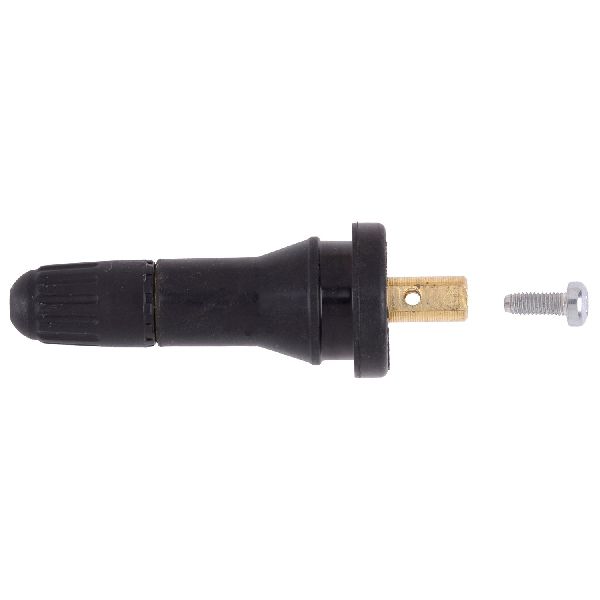
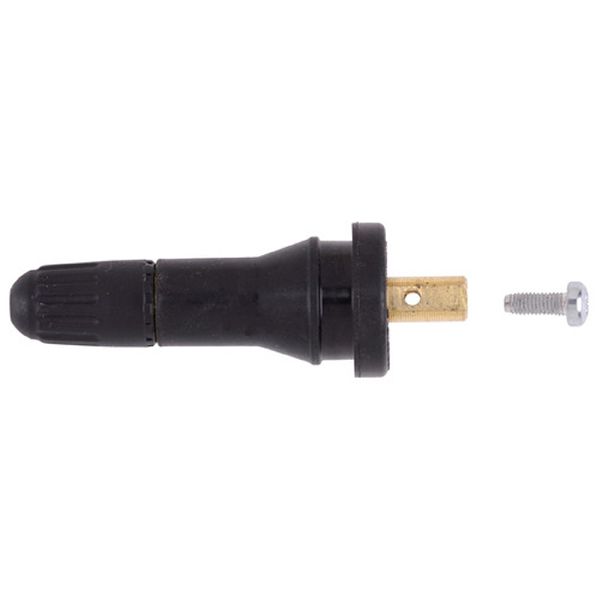
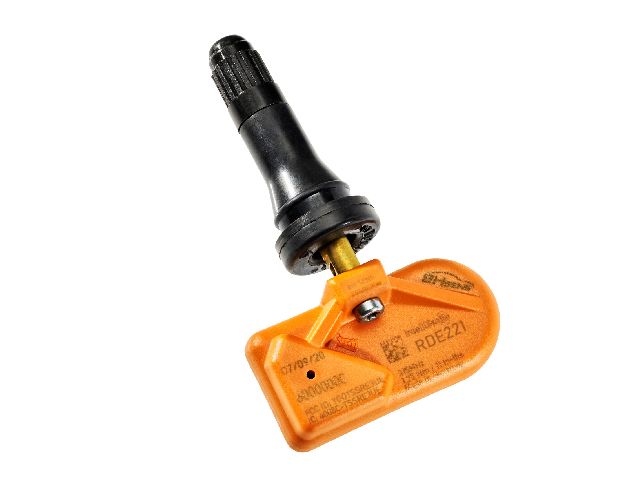
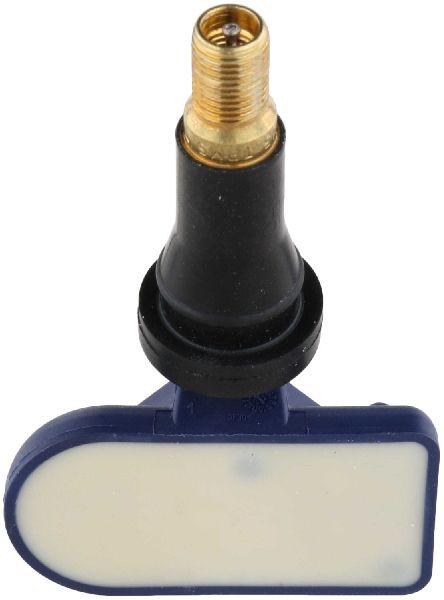
- TPMS Sensor (315 MHz)
(OEM #13598786 (supersedes 13581558))— For 2011-2015 & 2016 'Limited' models. The internal battery dies, causing the relearn procedure to fail. Note: Part number 13598787, cited in some sources, is often incorrectly associated and is typically a 433 MHz sensor.
Trusted brands: ACDelco (OE), Schrader, Denso, Dorman 974-009
OEM price range: $45-$70
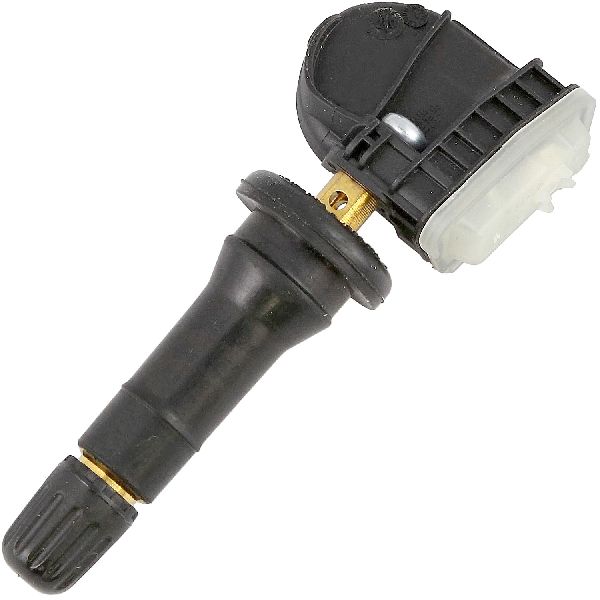
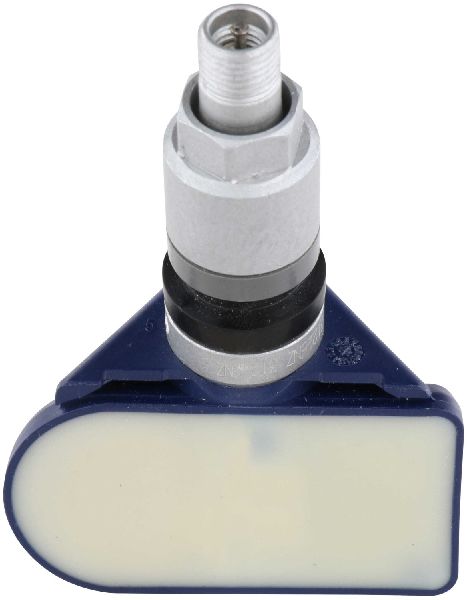
Aftermarket price range: $25-$45 - TPMS Sensor (433 MHz)
(OEM #13516165 or 13540602)— For 2016-2018 models. The internal battery dies, or the wrong frequency (315 MHz) sensor was installed. This part has many superseded numbers, including 13598773 and 22853740.
Trusted brands: ACDelco (OE), Schrader, Autel, Dorman 974-510
OEM price range: $40-$65
Aftermarket price range: $25-$45 - Remote Control Door Lock Receiver (RCDLR)
(OEM #20803735)— This module receives signals from both TPMS sensors and key fobs. A failure can cause both systems to stop working and prevent TPMS relearn. This part requires dealer programming after installation.
Trusted brands: ACDelco (OE), Dorman
OEM price range: $190-$250
Aftermarket price range: $100-$180
Related Codes That Often Appear With This One
- C0750 — Fault in Left Front TPMS Sensor. This may be the root cause for the C0775 relearn failure.
- C0755 — Fault in Right Front TPMS Sensor. This may be the root cause for the C0775 relearn failure.
- C0760 — Fault in Left Rear TPMS Sensor. This may be the root cause for the C0775 relearn failure.
- C0765 — Fault in Right Rear TPMS Sensor. This may be the root cause for the C0775 relearn failure.
- B3935 — Transponder Authentication Error. According to TSB PIC5650M, severe RF interference can disrupt both the TPMS and anti-theft systems, causing these codes to appear together.
Technical Service Bulletins (TSBs) & Recalls
- GM #PIC5650M: Addresses a no-start condition with security light and various DTCs including C0775, often caused by RF interference.
- GM #16-NA-396: (For platform-mate Buick Verano) Notes internal RCDLR module issues causing loss of communication with TPMS sensors and key fobs, a known failure pattern.
Platform-Specific Known Issues
- Technical Service Bulletin PIC5650M notes that C0775 can appear with anti-theft codes during a no-start condition, pointing to a shared vulnerability to Radio Frequency interference.
- The mid-generation switch from 315 MHz to 433 MHz sensors in 2016 is a very common source of error, as both parts may be listed for the '2016' model year, requiring owners to distinguish between the 'Limited' (old body style) and the new generation.
Hidden / Shadow Codes Worth Checking
- :29 – Too Few Pulses: This is a symptom descriptor seen on dealer scan tools alongside a sensor-specific code (like C0755). It indicates the RCDLR is not receiving the expected number of data transmissions from the sensor, pointing towards a sensor or receiver issue. (see via GM GDS2 or Tech2 dealer-level scan tool.)
Scan Tool Commands That Help
- GDS2 / Tech2: Tire Pressure Indicator Sensor Learn — This command initiates the vehicle's relearn mode from the scan tool, as an alternative to using the DIC controls. This is the first step in the diagnostic procedure if manual initiation fails.
- GDS2 / Tech2: BCM Programming/Setup — Required after replacing the Body Control Module (BCM). The new module must be configured to the vehicle's specific options and VIN.
- GDS2 / Tech2: RCDLR Programming/Setup — Required after replacing the Remote Control Door Lock Receiver (RCDLR). The new module must be programmed to recognize the vehicle's existing key fobs and TPMS sensors.
Wiring & Ground Locations
- Body Control Module (BCM) — Located behind the driver's side kick panel, near the driver's footwell and adjacent to the interior fuse box.. The BCM is the central module that processes the TPMS data from the RCDLR and sets code C0775. A poor connection or a fault in this module can be a rare cause of the code.
- Remote Control Door Lock Receiver (RCDLR) — Location varies by model year and trim. On some Gen 1 Cruze models, it is integrated into the OnStar/anti-theft module located behind the plastic cover of the rearview mirror. On other GM platforms, it is found in the trunk behind the trim panels. Technicians should verify the location for the specific vehicle.. This is the primary receiver for all TPMS signals. A fault, poor connection, or bad ground at this module is a key cause of C0775, especially if key fob issues are also present.
- Negative Battery Ground Cable/Stud — The main ground cable runs from the negative battery terminal to a stud on the vehicle's chassis/strut tower.. The factory negative battery cable on the Cruze is a known failure point, causing a weak ground connection. This can lead to numerous, seemingly unrelated electrical faults, including communication errors with the BCM and RCDLR, which could trigger a C0775 code.
- G100 / G114 Engine Bay Grounds — These are primary ground points located in the engine bay, typically on the engine block or firewall.. While not directly connected to the TPMS system, these grounds are critical for the overall health of the vehicle's electrical system. Corrosion or looseness at these points can introduce electrical noise and voltage drops that can disrupt sensitive modules like the BCM.
Real Owner Repair Stories
- Reddit user on r/cruze (2017 Chevrolet Cruze) — The TPMS relearn procedure was failing for all sensors, including known-good ones.
❌ Tried (didn't work) Using a standard EL-50448 relearn tool that had worked previously., Replacing the battery in the relearn tool.
✅ What actually fixed it The owner had installed new aftermarket sensors from an auto parts store (O'Reilly). These were identified as programmable 'EZ-sensor' types. The basic relearn tool could not activate them because they first needed to be programmed to the vehicle's specific protocol using a professional, advanced TPMS tool. The fix was to have a shop program the sensors before the standard relearn procedure could be completed.
OEM Part Supersession History
15287331, 15782376, 15807816, 15857831, 15946938, 25771044, 25808837, 25852909, 25855007, 25896497, 92201608→20803735— Component revisions and consolidation of part numbers over time for the RCDLR module.
Heads up: This part requires programming by a dealer or a shop with a GM scan tool. It is critical to order the correct RCDLR based on the vehicle's frequency (315 MHz for Gen 1) and options.
Model Year Variations Within This Range
- 2016-2018 (Gen 2): The method to initiate the TPMS relearn mode differs slightly between the Base Level and Uplevel Driver Information Centers (DIC). On Base models, the trip odometer reset stem is used to navigate and select the relearn option. On Uplevel models, the steering wheel controls (thumbwheel and Set/Reset button) are used.
Helpful Videos
We Have This Part in Stock

The information in this article is provided for general reference and educational purposes only. Vehicle specifications, procedures, and part compatibility can vary by production date, trim level, and region. Always consult your vehicle's factory service manual and verify part numbers before purchasing or performing repairs. Safety-critical components such as airbags, seat belts, and braking systems should be installed by a qualified professional.
- Chevrolet CRUZE:
- 🎬 Helpful Videos
- 🛍️ Shop This Part
- What's Unique About the 2011-2018 Chevrolet CRUZE
- Diagnostic Flowchart
- Symptoms You May Notice
- Most Likely Causes
- Rare But Worth Checking
- Diagnosis Steps
- Parts You'll Likely Need
- Related Codes That Often Appear With This One
- Technical Service Bulletins (TSBs) & Recalls
- Platform-Specific Known Issues
- Hidden / Shadow Codes Worth Checking
- Scan Tool Commands That Help
- Wiring & Ground Locations
- Real Owner Repair Stories
- OEM Part Supersession History
- Model Year Variations Within This Range
- 🎟️ Get 5% Off