

C0775 on 2019-2025 Cadillac XT4: TPMS Fault, Causes, and Stall Concern Fixes
Code C0775 on a Cadillac XT4 means the Tire Pressure Monitoring System (TPMS) sensors need to be relearned. If it appears alone, a simple relearn procedure is the fix. However, if it appears with an engine stall and security light, it points to a complex electrical issue documented in GM TSB #PIC5650M, which is often caused by Radio Frequency Interference (RFI) from aftermarket devices like phone chargers. Removing these devices should be the first step.
- C0775 means the TPMS sensors need to be relearned by the car's computer.
- If you recently rotated tires or had tire service, a simple relearn procedure will likely fix the issue.
- **Crucially**, if this code appears with an engine stall or security light, the cause is likely Radio Frequency Interference (RFI) from an aftermarket device plugged into a USB or 12V port. Remove all such devices before seeking professional help.
- A flashing TPMS light usually indicates a system fault (like a dead sensor or this code), while a solid light means one or more tires are actually low on air.
What's Unique About the 2019-2025 Cadillac XT4
For most GM vehicles, C0775 is a straightforward TPMS issue. However, on the 2019-2025 Cadillac XT4 and its platform mates (like the GMC Terrain), General Motors issued Technical Service Bulletin #PIC5650M. This TSB links C0775—along with security codes—to a severe engine stall and security light concern. The bulletin clarifies that the vehicle's modules are highly sensitive to Radio Frequency Interference (RFI) from common aftermarket devices like USB chargers, dash cams, and even some LED lights. This interference can 'jam' the signals between the key fob, TPMS sensors, and the Remote Control Door Lock Receiver (RCDLR), causing the BCM to trigger a cascade of faults, including the stall. Therefore, C0775 on an XT4 with these other symptoms is an indicator of a complex communication breakdown, not just a simple tire problem.
Diagnostic Flowchart
Tap your situation to follow the diagnostic path that matches what you're seeing on this vehicle.
Symptoms You May Notice
- TPMS warning light is flashing or stays on solid.
- "Service Tire Monitor System" message on the Driver Information Center (DIC).
- Tire pressures show as dashes (--) on the DIC.
- Engine may stall or fail to start (per TSB #PIC5650M).
- Security warning light illuminates on the instrument cluster (per TSB #PIC5650M).
- "No Fob Detected" message may appear intermittently.
- Poor keyless entry (RKE) remote range.
- Replacing the BCM or TPMS sensors before ruling out Radio Frequency Interference (RFI) from aftermarket accessories, as warned against in TSB #PIC5650M.
- Replacing TPMS sensors when the only issue is that a relearn procedure was not performed after a tire rotation.
Most Likely Causes
- Radio Frequency Interference (RFI) from Aftermarket Devices 🔴 High Probability As identified in TSB #PIC5650M, the vehicle's keyless entry and security systems are sensitive to RFI from devices plugged into the 12V/USB ports. Common culprits include phone chargers, dash cams, USB power banks, and aftermarket LED lighting.
How to confirm: Unplug and remove ALL aftermarket electronic devices from the vehicle. Clear the codes and see if the problem disappears. If the stall and codes do not return, RFI was the cause.
Typical fix: Remove the offending device. If a charger is needed, use a high-quality, certified one, as cheaper adapters are a common source of interference.
Est. part cost: $0 - Incomplete or Failed TPMS Relearn Procedure 🟡 Medium Probability This occurs any time tires are rotated or sensors are replaced without successfully completing the relearn process.
How to confirm: Perform the TPMS relearn procedure using the vehicle's DIC or a TPMS activation tool. If the procedure completes successfully and the code clears, this was the cause.
Typical fix: Correctly perform the TPMS sensor relearn procedure.
Est. part cost: $0-$20 (for a basic relearn tool if needed) - Faulty Body Control Module (BCM) or Disrupted Communication ⚪ Low Probability While less common than RFI, an actual internal BCM fault or a wiring issue can cause these symptoms. The BCM may also require a software update, as reported by some owners experiencing similar electrical issues.
How to confirm: This requires professional diagnosis after RFI has been completely ruled out. A technician will scan all modules for codes, check for software updates, and inspect wiring harnesses and ground connections related to the BCM and RCDLR.
Typical fix: Requires professional diagnosis. The fix may involve reprogramming or, in rare cases, replacing the BCM. This should only be done after confirming the module is faulty and not just disrupted by RFI.
Est. part cost: $100-$1200 (for diagnosis and potential BCM replacement/programming) - Dead or Faulty TPMS Sensor ⚪ Low Probability TPMS sensor batteries have a finite life of 5-7 years. Vehicles in this year range are approaching the age where battery failure is possible.
How to confirm: A professional TPMS tool can be used to check the battery status and signal output of each individual sensor. If a sensor does not respond during the relearn process, it has likely failed.
Typical fix: Replace the faulty TPMS sensor and perform the relearn procedure.
Est. part cost: $40-$90 per sensor
Diagnosis Steps
- Crucial First Step (per TSB #PIC5650M): Unplug and remove ALL aftermarket electronic devices from the vehicle. This includes phone chargers, dash cams, USB hubs, aftermarket LED bulbs, and any device in the 12V power outlets. These are the most common cause of the stall/security/TPMS issue.
- After removing devices, clear the DTCs with a scanner and drive the vehicle to see if the symptoms or codes return. If they do not, one of the removed devices was the cause.
- If codes return, check the pressure in all four tires with a quality gauge and adjust to the specification on the driver's door jamb sticker.
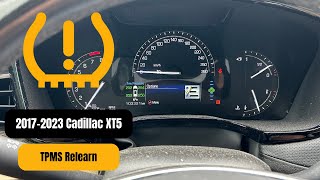
- Attempt the TPMS relearn procedure. This can be initiated through the Driver Information Center (DIC) menu. Follow the on-screen prompts, which require activating each sensor in sequence (LF, RF, RR, LR) using a TPMS tool until the horn chirps for each.
- If the relearn procedure fails or the code returns immediately (and RFI is ruled out), scan all vehicle modules (BCM, ECM, etc.) with a professional-grade OBD-II scanner.
- If codes B3055, B3060, B3935 are present along with a stall or security light, and RFI has been ruled out, diagnosis must follow the advanced steps in GM TSB #PIC5650M, which may involve checking wiring and module integrity. This requires professional service.
- If only TPMS codes are present and the relearn fails, use a dedicated TPMS tool to test the battery and function of each individual tire sensor. Replace any sensor that fails the test.
- After replacing any necessary parts, perform the TPMS relearn procedure again.
Parts You'll Likely Need
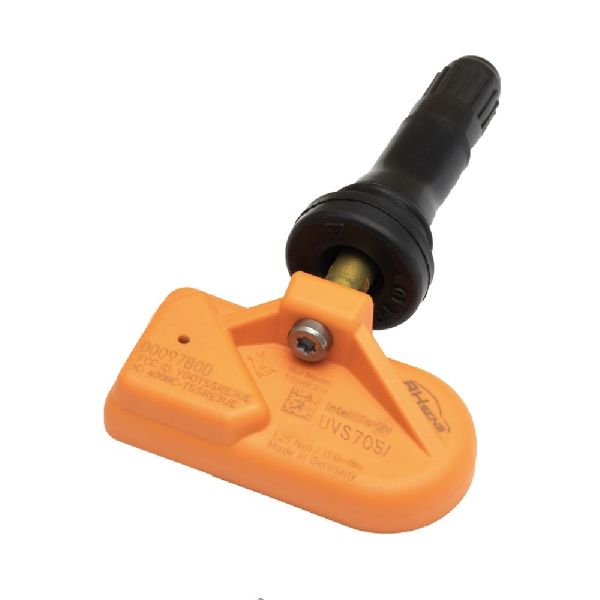
- Tire Pressure Monitoring System (TPMS) Sensor
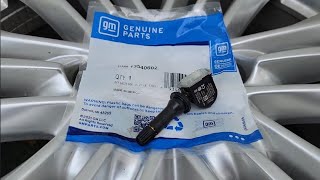
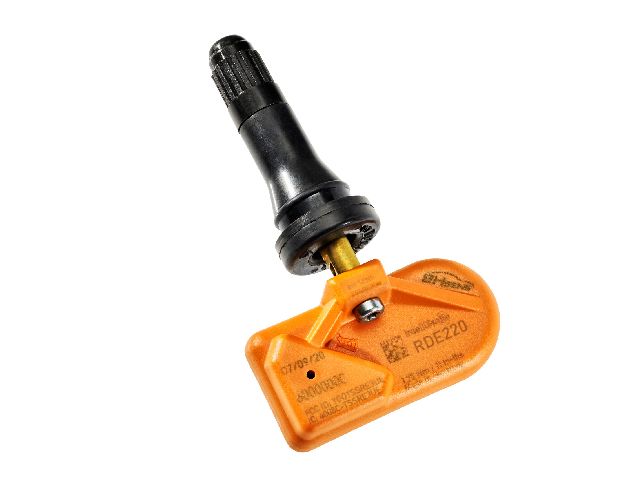
(OEM #13516165)— The sensor's internal battery may have died, or the sensor itself may have failed, preventing the relearn procedure from completing. Note: Part numbers are frequently superseded; always verify with a dealer using your VIN.
Trusted brands: ACDelco (GM Genuine), Schrader, Continental
OEM price range: $60-$100
Aftermarket price range: $40-$70 - TPMS Relearn Tool — Required to activate the sensors in the correct order to complete the relearn procedure quickly and without deflating the tires. Many simple, affordable versions are available for GM vehicles.
Trusted brands: ATEQ, VXDAS
OEM price range: $15-$100
Aftermarket price range: $15-$50 - Remote Control Door Lock Receiver (RCDLR) — In rare cases where RFI is ruled out and multiple TPMS/key fob codes persist, the RCDLR module itself may have failed. It is the central receiver for both TPMS and key fob signals. Replacement is a last resort after all other diagnostics.
Trusted brands: ACDelco (GM Genuine)
OEM price range: $50-$80
Aftermarket price range: $40-$70
Related Codes That Often Appear With This One
- C0750, C0755, C0760, C0765 — These are the specific codes for the Left Front, Right Front, Left Rear, and Right Rear TPMS sensors, respectively. They often appear with C0775 when the system loses all sensor IDs, often due to RFI or a failed relearn.
- B3055, B3060, B3935 — These are security and key-recognition codes. According to TSB #PIC5650M, their presence with C0775 indicates the more severe electrical fault, often triggered by RFI, that can cause a stall.
Technical Service Bulletins (TSBs) & Recalls
- PIC5650M: Addresses a stall concern with the security light on, which may set DTCs B3055, B3060, B3935, C0750, C0755, C0760, C0765, and/or C0775. Crucially, it identifies Radio Frequency Interference (RFI) from aftermarket devices as a primary cause and advises ruling this out before replacing parts.
Platform-Specific Known Issues
- TSB #PIC5650M documents a condition where a stall and security light are accompanied by a cluster of DTCs, including C0775. The primary cause identified is Radio Frequency Interference (RFI) from aftermarket electronics jamming the vehicle's communication systems.
- Some owners have reported widespread electrical issues, including TPMS warnings and check engine lights, following an over-the-air or dealer-performed software update. In one documented case for a 2024 XT4, this was resolved by the dealer as a software malfunction.
Mechanic-Grade Diagnostic Values
- Voltage Drop on RCDLR Power and Ground Circuits — expected: Less than 0.100V (100mV) between the battery post and the respective pin at the module connector.. Failure: A voltage drop greater than ~0.3V indicates high resistance in the circuit, which can cause the module to malfunction even if direct voltage readings seem acceptable. A scan tool may show low voltage (e.g., 11.9V when the battery is at 12.6V), pointing to this issue.
Scan Tool Commands That Help
- GDS2 (GM Dealer Tool) or equivalent: TPMS Learn Mode — This function in the Body Control Module (BCM) or Remote Control Door Lock Receiver (RCDLR) menu is used to command the vehicle to enter the sensor pairing sequence. It is the dealer-equivalent method of initiating the relearn process that can also be started from the DIC.
- GDS2 (GM Dealer Tool) or equivalent: Module Setup/Programming — If the RCDLR or BCM is replaced, it must be programmed to the vehicle. A new module will not function until this procedure is completed using the Techline Connect (TLC) software, which downloads the correct calibration for the vehicle's VIN.
Wiring & Ground Locations
- Remote Control Door Lock Receiver (RCDLR) — The RCDLR is the central component for receiving TPMS and key fob signals. While its exact location on the XT4 requires a service manual, on similar GM SUVs it is often located in the rear of the vehicle, behind interior trim panels, to be close to its antenna.. This module is the direct receiver for all TPMS signals. A loose coax cable connection at the RCDLR is a primary cause of losing all sensor signals at once, leading to C0775 and related codes.
- RCDLR Antenna & Amplifier — On many GM SUVs, the RCDLR antenna is integrated into the right rear quarter glass, with a small amplifier module connected to it. A coaxial cable runs from the amplifier to the RCDLR module.. A disconnected coax cable at the amplifier or a bad connection between the amplifier and the glass antenna can cause poor reception, leading to intermittent or total loss of TPMS signals, especially from the front tires.
- Body Control Module (BCM) — The BCM in the Cadillac XT4 is integrated with the interior fuse box, located on the driver's side of the instrument panel, behind a removable trim cover.. The BCM processes the data from the RCDLR and sets the C0775 code. It is the 'brain' for the system. A GM service bulletin warns technicians to always disconnect the negative battery cable before removing any BCM ground connections to prevent internal damage to the module.
- G2xx/G3xx Series Grounds — GM uses a standardized naming convention for grounds (G1xx for engine bay, G2xx for front cabin, G3xx for rear cabin). The specific grounds for the BCM and RCDLR on an XT4 would be identified in the factory service manual, likely under the dash (G2xx) and in the rear cargo area (G3xx).. A poor ground connection for the BCM or RCDLR can cause a wide range of unpredictable electrical issues, including communication loss, module malfunction, and the setting of codes like C0775.
Real Owner Repair Stories
- Carly Community Forum (2022 Cadillac XT4 Diesel, 20,675 km) — Radio reception issues, infotainment error messages, audio system cutting out completely. An error related to the antenna was stored in memory.
❌ Tried (didn't work) Initial scanning pointed to an antenna issue, but the owner sought confirmation before replacing parts.
✅ What actually fixed it A workshop confirmed the antenna was defective and replaced it, which resolved all symptoms. The total cost was around €255. - Carly Community Forum (2023 Cadillac XT4 Gasoline, 69,960 km) — Sporadic error messages, driving mode going haywire, audio and navigation cutting out, and the entire system shutting down or becoming unresponsive.
❌ Tried (didn't work) The owner was experiencing multiple, seemingly unrelated electronic failures.
✅ What actually fixed it Another user suggested the cause was a defective cable connection to the BUS system. The owner took it to a professional mechanic who inspected and repaired the connections, which resolved the problem.
OEM Part Supersession History
13516165 (from Pass 2), 13598771, 22853741, 23445327, and others→13540600— This is a common GM TPMS sensor used across many models and years. Part numbers are frequently consolidated and updated over time.
Heads up: While many part numbers are superseded to 13540600, it is always critical to verify the correct part for a specific VIN with a dealer, as frequency (315 MHz vs 433 MHz) and design can vary.
Model Year Variations Within This Range
- 2019-2020: A recall was issued for 2019-2020 XT4s with Surround Vision for an issue where the video processing module (VPM) could lose communication, causing camera image loss. 2020 models received a software update, while 2019 models required a complete VPM replacement. While not directly related to C0775, this highlights software/hardware differences in early model years.
Helpful Videos
We Have This Part in Stock

The information in this article is provided for general reference and educational purposes only. Vehicle specifications, procedures, and part compatibility can vary by production date, trim level, and region. Always consult your vehicle's factory service manual and verify part numbers before purchasing or performing repairs. Safety-critical components such as airbags, seat belts, and braking systems should be installed by a qualified professional.
- Cadillac XT4:
- 🎬 Helpful Videos
- 🛍️ Shop This Part
- What's Unique About the 2019-2025 Cadillac XT4
- Diagnostic Flowchart
- Symptoms You May Notice
- Most Likely Causes
- Diagnosis Steps
- Parts You'll Likely Need
- Related Codes That Often Appear With This One
- Technical Service Bulletins (TSBs) & Recalls
- Platform-Specific Known Issues
- Mechanic-Grade Diagnostic Values
- Scan Tool Commands That Help
- Wiring & Ground Locations
- Real Owner Repair Stories
- OEM Part Supersession History
- Model Year Variations Within This Range
- 🎟️ Get 5% Off