

C0775 on 2010-2016 Cadillac SRX: Meaning, Causes, and Fixes
Code C0775 on a 2010-2016 Cadillac SRX means the Tire Pressure Monitoring System (TPMS) has failed its learning procedure. This usually happens after replacing a sensor, rotating tires without relearning their positions, or if a TPMS sensor's battery has died. The most common fix is to perform the TPMS relearn procedure; if that fails, you likely need to replace one or more TPMS sensors.
- C0775 means your SRX has failed to learn the position of its tire pressure sensors.
- The first step is to always try the TPMS relearn procedure using the dashboard menu.
- If the relearn fails on one specific tire, that sensor's battery is likely dead and the sensor needs to be replaced.
- If your SRX is over 7-8 years old and has one failed sensor, consider replacing all four to save on future labor costs, as the others will likely fail soon.
- You can perform the relearn without special tools by letting air out of the tires, but a simple TPMS activation tool is inexpensive and makes the job much easier.
What's Unique About the 2010-2016 Cadillac SRX
The 2010-2016 SRX, like most GM vehicles of this era, uses a straightforward TPMS that is highly dependent on a successful relearn procedure after tire rotations or sensor replacement. The system's receiver is the Remote Control Door Lock Receiver (RCDLR), which also handles key fob functions. This integration is highlighted in TSBs where TPMS codes, including C0775, appear alongside security system and even stalling issues, suggesting a deeper electrical problem with the RCDLR module in some cases. TSB 16-NA-061 specifically notes that a poor or disconnected antenna connection for the RCDLR can cause TPMS issues, starting with the sensors farthest from the receiver (like the left front). A disconnected coax cable at the RCDLR can cause a total loss of TPMS and key fob signal.
Diagnostic Flowchart
Tap your situation to follow the diagnostic path that matches what you're seeing on this vehicle.
Symptoms You May Notice
- TPMS warning light is illuminated on the dashboard (may flash for about a minute, then stay solid)
- "Service Tire Monitor System" message on the Driver Information Center (DIC)
- Tire pressure readings on the DIC show dashes (--) instead of numbers
- Inability to complete the TPMS relearn procedure
- Key fob has poor range or is inoperative (if the RCDLR is the root cause)
- Replacing the Body Control Module (BCM) when the issue is with a single sensor or the RCDLR.
- Assuming all TPMS sensors are bad when only one has failed, leading to unnecessary expense.
- Replacing sensors when the actual problem is a disconnected RCDLR antenna coax cable.
Most Likely Causes
- Failed or Incomplete TPMS Relearn Procedure 🔴 High Probability The relearn procedure is required after every tire rotation or sensor replacement. If it's interrupted, times out, or performed incorrectly, code C0775 will set. The system will time out after about two minutes if a sensor isn't learned in sequence.
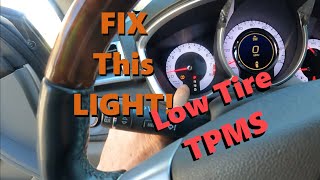
How to confirm: Attempt the TPMS relearn procedure as outlined in the owner's manual or diagnostic steps below. 🎬 Watch: Step-by-step guide to the TPMS relearn and clearing codes. If the procedure fails to complete for one or more wheels, this is the likely issue.
Typical fix: Correctly perform the TPMS relearn procedure using the vehicle's DIC and either a TPMS activation tool or by letting air out of each tire in sequence.
Est. part cost: $0-$25 (for a basic activation tool) - Dead or Failing TPMS Sensor Battery 🔴 High Probability TPMS sensor batteries have a finite lifespan, typically 7-10 years, though some sources state 5-12 years. Vehicles in the 2010-2016 range are now at an age where original sensor batteries are commonly failing. The battery is a non-replaceable, sealed part of the sensor.
How to confirm: Use a TPMS diagnostic tool to attempt to read the sensor's data. If the tool cannot get a signal from a specific sensor, or if it shows a 'low battery' status, the sensor has failed. If the relearn process consistently fails on one specific wheel, that sensor is the primary suspect.
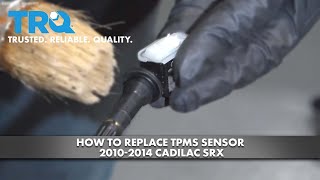
Typical fix: Replace the faulty TPMS sensor. The tire must be dismounted from the wheel to access the sensor. 🎬 See this walkthrough on how to replace a TPMS sensor. It is often recommended to replace all four sensors at once if the vehicle is over 7 years old, as the others are likely to fail soon.
Est. part cost: $30-$70 per sensor (aftermarket), $60-$100 per sensor (OEM) - Incorrect or Incompatible TPMS Sensor 🟡 Medium Probability Using a universal sensor that hasn't been properly programmed for a GM vehicle, or using a sensor with the wrong frequency will prevent the relearn process from completing. Most SRX models use 315 MHz, but some may use 433 MHz. Using the wrong frequency will not work.
How to confirm: Verify the part number of the installed sensor. If it's a programmable sensor, confirm with the installer that it was programmed correctly for a 2010-2016 SRX before installation. A TPMS tool can often identify the frequency and protocol of the sensor.
Typical fix: Replace the incorrect sensor with a compatible pre-programmed (direct-fit) sensor or a correctly programmed universal sensor. Brands like Schrader are considered OEM-equivalent.
Est. part cost: $30-$70 per sensor
Rare But Worth Checking
- Faulty Remote Control Door Lock Receiver (RCDLR): The RCDLR acts as the receiver for the TPMS signals. A fault in this module can prevent it from learning any sensors. This is rare, but more likely if you also experience issues with your key fobs or see security-related trouble codes like B3055, as mentioned in TSB #PIC5650M. TSB #16-NA-061 also points to a disconnected coax antenna cable at the RCDLR as a cause for TPMS and key fob issues. In some cases, the RCDLR can lose its memory and require reprogramming with a scan tool to set the tire type and pressure.
- Radio Frequency (RF) Interference: Aftermarket electronic devices like phone chargers, dash cams, or even some types of metallic window tint can interfere with the 315 MHz or 433 MHz signals from the TPMS sensors, preventing the RCDLR from receiving them properly. This can cause intermittent issues or a complete failure to learn sensors.
Diagnosis Steps
- Check Tire Pressures: Manually verify that all tires are inflated to the pressure listed on the driver's door jamb sticker. Over-inflating slightly (e.g., to 37 PSI) before a manual relearn can make the process quicker.
- Initiate TPMS Relearn Mode: With the ignition ON (engine off), use the menu buttons on the center console to navigate to the tire pressure screen in the Driver Information Center (DIC). Press and hold the set/clear button (or the center of the dial) until the horn chirps twice and the DIC displays 'Tire Learning Active'.
- Activate Sensors in Sequence: The vehicle will indicate which tire to learn first (always the driver's front) by lighting up the corresponding turn signal lamp.
- Use a TPMS Tool (Recommended): Hold a TPMS activation tool against the tire sidewall near the valve stem and press the button. The vehicle's horn will chirp once the sensor is learned. Proceed to the next tire in the sequence indicated by the turn signals: Driver Front -> Passenger Front -> Passenger Rear -> Driver Rear.
- Manual Activation (No Tool): If you don't have a tool, let air out of the tire for 5-10 seconds until the horn chirps. This forces the sensor to transmit. Repeat for all four tires in sequence. Be prepared to re-inflate your tires afterward.
- Confirm Completion: After the last sensor (driver's rear) is learned, the horn will chirp twice to indicate the procedure is complete. The DIC will show the new pressure readings.
- Check for Failure: If the horn does not chirp for a specific tire, that sensor is likely dead, the wrong type, or there is RF interference. The relearn mode will time out after about two minutes if a sensor isn't learned. If it fails, you must restart the process from the beginning.
- Scan for Other Codes: If the relearn process fails repeatedly with known good sensors, scan all modules for other codes. Codes related to the RCDLR (like B3055) or a disconnected RCDLR antenna (C0750, C0755, etc.) may indicate a deeper issue.
Parts You'll Likely Need
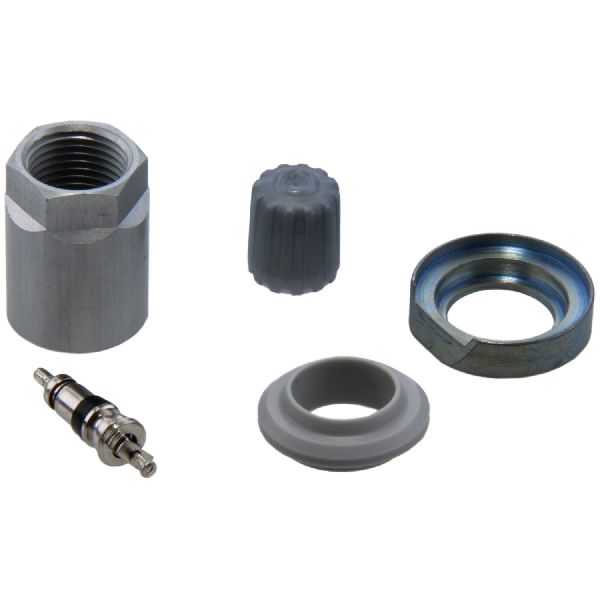
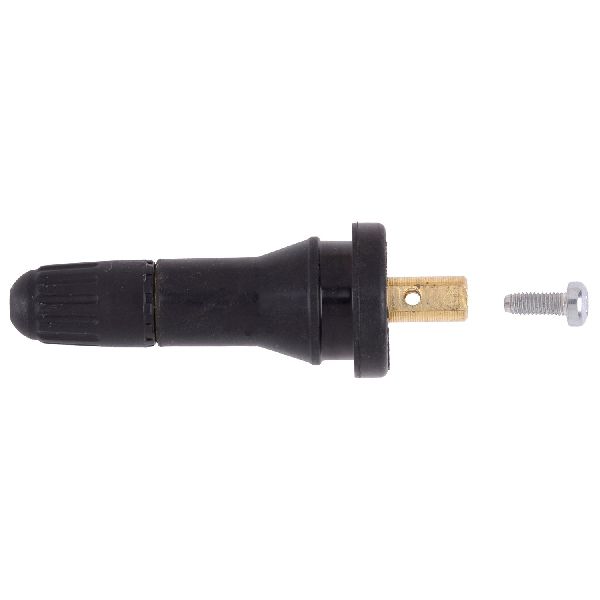
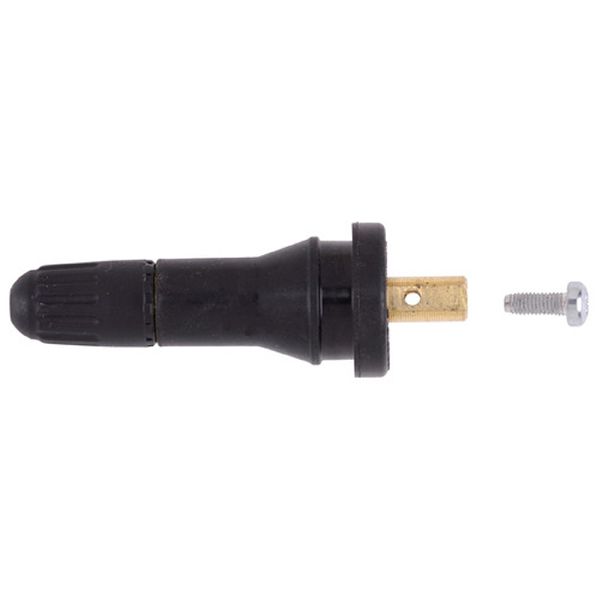
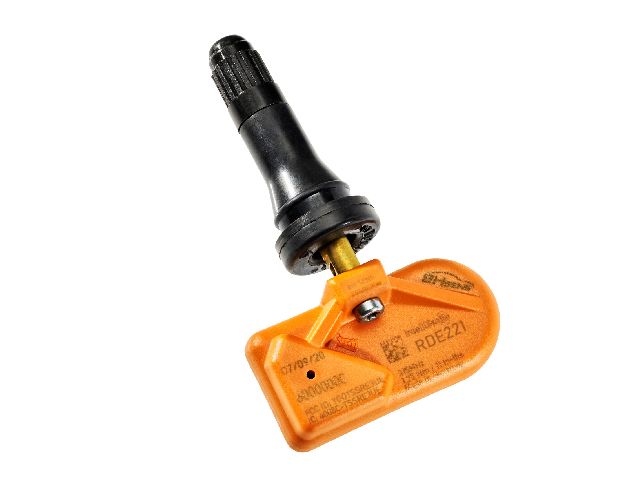
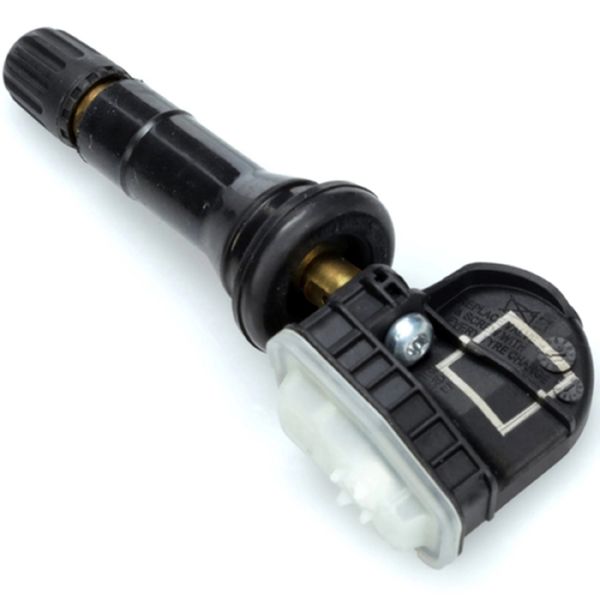
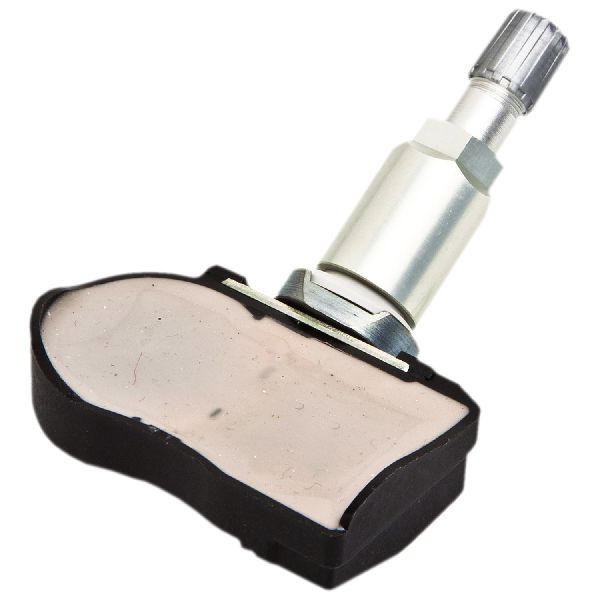
- Tire Pressure Monitoring System (TPMS) Sensor
(OEM #13598773)— This is the most common failure point. The internal battery dies, or the sensor is damaged, preventing it from transmitting its ID and pressure data during the relearn process. This part number is superseded by GM part #13540602.
Trusted brands: ACDelco (OEM), Schrader, Dorman, Continental, Bosch
OEM price range: $60-$100
Aftermarket price range: $30-$70 - TPMS Activation/Relearn Tool — While not strictly required (you can let air out of the tires), this tool makes the relearn process much faster and easier, and it can help diagnose if a sensor is transmitting a signal at all. Some newer GM vehicles may require a tool if the deflation method doesn't work.
Trusted brands: ATEQ, Autel
OEM price range: $15-$150
Related Codes That Often Appear With This One
- C0750 — Specific code for a fault with the Left Front TPMS sensor.
- C0755 — Specific code for a fault with the Right Front TPMS sensor.
- C0760 — Specific code for a fault with the Left Rear TPMS sensor.
- C0765 — Specific code for a fault with the Right Rear TPMS sensor.
- B3055 — A key-related security code. Its appearance with C0775 could point to a fault in the RCDLR module, which handles both TPMS and keyless entry functions, as noted in TSB #PIC5650M.
Technical Service Bulletins (TSBs) & Recalls
- PIC5650M: Mentions that C0775 can appear with a group of other security and TPMS codes (B3055, B3060, C0750-C0765) in relation to a stall concern, pointing to a potential complex electrical issue involving the RCDLR.
- 16-NA-061: Details how a 'Service Tire Monitor System' message and codes C0750, C0755, C0760, or C0765 can be caused by a poor or disconnected antenna connection for the RCDLR. It explains that the farther the disconnect is from the RCDLR module, the fewer symptoms will be present. A full disconnect at the module itself will cause all TPMS sensors and key fobs to stop working.
- PI1283: Although for Middle East-only 2013 SRX models, this bulletin addresses flashing TPMS lights and codes C0750/C0755 caused by RF interference. The fix was a new, updated RCDLR (part #13583333), indicating that the receiver module itself can be a point of failure for signal reception.
Platform-Specific Known Issues
- Forgetting Learned Sensors After Ignition Cycle: A few owners on forums for related GM vehicles have reported an issue where the TPMS relearn procedure completes successfully, but the sensors are 'forgotten' (DIC shows dashes) as soon as the vehicle is turned off and on again. One confirmed solution was that the RCDLR had lost its configuration and needed to be reprogrammed with a bidirectional scan tool to set the tire type and recommended pressures.
- Auto-Relearn After Driving: In some instances, after a successful manual relearn procedure, the TPMS warning light may remain on. Driving the vehicle for a few miles (e.g., 3 miles) may be required for the system to fully calibrate and extinguish the light.
Mechanic-Grade Diagnostic Values
- RCDLR Power Supply Voltage — expected: ~12.6V (Battery Voltage). Failure: Low or no voltage suggests a blown fuse, wiring issue, or problem with the supply circuit.
- RCDLR Ground Circuit Resistance — expected: Less than 0.5 Ohms. Failure: High resistance indicates a poor ground connection, which can cause intermittent or total failure of the RCDLR.
Scan Tool Commands That Help
- GDS2/Tech2: RCDLR Module Setup / Programming — This is required after replacing the RCDLR module to program the vehicle's VIN and security information into the new module.
- GDS2/Tech2: Tire Type/Pressure Selection — If the RCDLR loses its memory or is replaced, this function must be used to set the correct tire type and placard pressure values in the module's memory.
- GDS2/Tech2: TPM Sensor Learn — This command initiates the TPMS relearn procedure from the scan tool, as an alternative to using the DIC or key fob methods.
- GDS2/Tech2: All Indicators ON/OFF — This is a bidirectional control to test the instrument panel cluster's TPMS warning light itself. If the light doesn't turn on and off with this command, the instrument cluster may be faulty.
Wiring & Ground Locations
- Remote Control Door Lock Receiver (RCDLR) — The RCDLR is the primary receiver for TPMS signals. While its exact location can vary slightly, it is typically found behind the instrument panel or in the center console area.. This module receives all TPMS and key fob signals. A failure of the module itself, its power, its ground, or its antenna connection will prevent sensor learning and set C0775.
- RCDLR Antenna System — The antenna system consists of the RCDLR, a coax cable, an antenna amplifier module, and the antenna itself, which is often integrated into the right rear quarter glass.. A disconnection at any point in this chain (at the RCDLR, at the amplifier, or at the glass) can cause poor or no signal reception, leading to C0775 and individual sensor codes. The closer the disconnection is to the RCDLR, the more severe the symptoms.
- Body Control Module (BCM) — Located behind the instrument panel, often on the passenger side near the center console.. The BCM is the central computer that processes the information from the RCDLR and sets the C0775 code. While less likely to be the cause than a sensor or RCDLR issue, a BCM failure or programming corruption can lead to this code.
- Rear Fuse Panel — Located in the rear cargo area, accessible via a small door.. This panel may contain fuses related to the RCDLR or BCM. Water intrusion from clogged sunroof drains is a known issue on the SRX, which can flood the spare tire well and potentially damage modules or wiring in this area.
Real Owner Repair Stories
- YouTube user DIYNORTHCAROLINIAN (2010-2016 Cadillac SRX) — Power liftgate was inoperative.
❌ Tried (didn't work) Checking fuses, relays, performing a theft system reset, disconnecting the battery.
✅ What actually fixed it The root cause was water intrusion into the spare tire well due to clogged sunroof drain lines. This water submerged and corroded the power liftgate control module, requiring its replacement. While this story is not directly about C0775, it documents a common SRX failure pattern (clogged drains causing water damage to rear-mounted electronics) that could plausibly affect the RCDLR antenna amplifier or related wiring, leading to TPMS issues.
OEM Part Supersession History
13598773→13540602— Standard part evolution and consolidation.
Heads up: Part number 13540602 replaces a long list of previous numbers, including 13581561, 13589256, and 22853740, among others. It is listed as compatible with GM vehicles from 2010-2023+. Some listings describe it as a 433MHz sensor, so it is critical to verify the required frequency for the specific vehicle before purchasing, as both 315MHz and 433MHz may have been used during this generation.
Model Year Variations Within This Range
- 2010-2016: While most SRX models in this range use 315 MHz TPMS sensors, some may have been equipped with 433 MHz sensors. This is especially noted as a possibility for 2015 models in the Pass 2 data. Aftermarket programmable sensors that can handle both frequencies are available, but if using direct-fit sensors, verifying the correct frequency with a TPMS tool or by VIN is crucial.
- 2010-2016: The procedure to enter relearn mode can vary. The primary method is via the Driver Information Center (DIC) menu. An alternative method on many GM vehicles involves turning the key to ON and holding the lock/unlock buttons on the key fob until the horn chirps. This provides a backup if the DIC controls are not functioning.
Helpful Videos

We Have This Part in Stock

The information in this article is provided for general reference and educational purposes only. Vehicle specifications, procedures, and part compatibility can vary by production date, trim level, and region. Always consult your vehicle's factory service manual and verify part numbers before purchasing or performing repairs. Safety-critical components such as airbags, seat belts, and braking systems should be installed by a qualified professional.
- Cadillac SRX:
- 🎬 Helpful Videos
- 🛍️ Shop This Part
- What's Unique About the 2010-2016 Cadillac SRX
- Diagnostic Flowchart
- Symptoms You May Notice
- Most Likely Causes
- Rare But Worth Checking
- Diagnosis Steps
- Parts You'll Likely Need
- Related Codes That Often Appear With This One
- Technical Service Bulletins (TSBs) & Recalls
- Platform-Specific Known Issues
- Mechanic-Grade Diagnostic Values
- Scan Tool Commands That Help
- Wiring & Ground Locations
- Real Owner Repair Stories
- OEM Part Supersession History
- Model Year Variations Within This Range
- 🎟️ Get 5% Off