

OBD-II Code C0775: Tire Pressure Monitoring System Malfunction
The Ultimate 2026 Guide to Diagnosing and Fixing C0775
- Code C0775 indicates a TPMS system fault—usually a failed relearn procedure—and triggers a warning light that flashes for 60-90 seconds before turning solid.
- Attempt a manual TPMS relearn using a $15 activation tool before spending money on replacement parts or diagnostic fees.
- Unplug all aftermarket 12V accessories like phone chargers and dash cams, as they emit radio frequency interference that blocks the 315 MHz or 433 MHz TPMS signals.
- Replace all four TPMS sensors simultaneously if your vehicle is over 7 years old, as the internal non-replaceable batteries have a maximum lifespan of 5 to 10 years.
- Do not ignore this code; driving with a disabled TPMS increases the risk of an undetected flat tire, leading to blowouts that cause upwards of $2,000 in suspension and body damage.
What Does C0775 Mean?

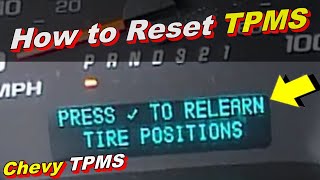
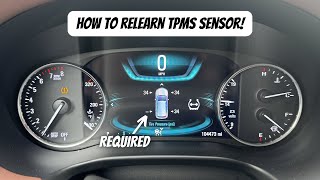
Code C0775 indicates the vehicle's computer (usually the Body Control Module or Remote Control Door Lock Receiver) lost communication with the Tire Pressure Monitoring System (TPMS). On General Motors vehicles, this specifically means the sensor relearn procedure failed, timed out, or was never completed. 🎬 See how to perform a GM TPMS relearn procedure. For other manufacturers, it points to a lost signal from a specific sensor. Until fixed, the vehicle cannot monitor tire pressures or warn you of dangerous underinflation.
Technical definition: The SAE/ISO definition for C0775 is 'Low Tire Pressure System Sensors Not Learned'. This triggers when the control module fails to validate the unique 32-bit ID of one or more sensors during a relearn attempt, halting the communication process.
Can I Drive With C0775?
Yes, But With Caution. Yes, but your vehicle's primary safety system for detecting low tire pressure is disabled. This increases the risk of a sudden tire blowout at highway speeds. A blowout destroys the tire and wheel, causing upwards of $2,000 in damage to the fender, suspension, and brake lines. Manually check your tire pressures with a gauge before driving until the system is repaired.
Common Causes

- TPMS relearn procedure not performed or failed (Very Common) — After rotating tires, replacing a sensor, or disconnecting the battery, the system must learn the new sensor positions. Skipping this step, or having it time out, triggers code C0775 immediately.
- Dead TPMS sensor battery (Very Common) — The non-replaceable lithium-ion battery inside the sensor dies after 5-10 years. Without power, the sensor stops transmitting its 315 MHz or 433 MHz signal, preventing the relearn procedure from completing.
- Radio Frequency (RF) Interference (Common) — Cheap aftermarket electronics plugged into 12V outlets (phone chargers, dash cams, FM transmitters) emit RF noise that jams the TPMS sensor signals. GM TSB PIC5650M specifically cites this as a primary cause for C0775.
- Incorrect TPMS sensor installed (Less Common) — Using a sensor with the wrong frequency (315 MHz vs. 433 MHz) or an unprogrammed universal aftermarket sensor prevents module communication.
- Faulty Remote Control Door Lock Receiver (RCDLR) or Antenna (Rare) — The RCDLR module receives signals from both TPMS sensors and key fobs. A failed module or a disconnected antenna coax cable (cited in GM TSB 16-NA-061) blocks all sensor data, triggering C0775 and reducing key fob range.
- Corroded wiring or connectors (Rare) — Road salt and moisture corrode the wiring harness leading to the TPMS control module, severing the power, ground, or LIN bus communication lines.
Symptoms

- TPMS warning light flashes for 60 seconds, then stays solid — This sequence specifically indicates a TPMS system communication fault, not just low tire pressure.
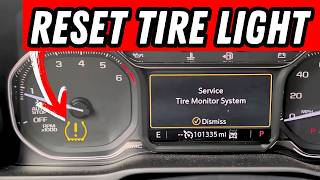
- "Service Tire Monitor System" message — A text warning appears on the driver information center (DIC), explicitly requiring system service. 🎬 Watch: How to fix the Service Tire Monitor System error.
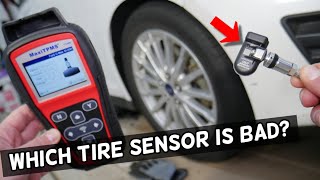
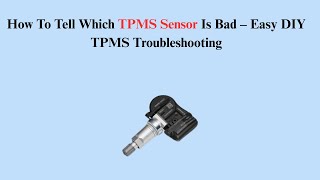
- Inability to complete the relearn procedure — During a manual relearn, the horn fails to chirp when activating a specific wheel, proving the system cannot detect that sensor. 🎬 Watch this easy DIY guide to find the bad sensor.
- Incorrect or missing tire pressure data — The dashboard tire pressure display shows dashes ('--') or a frozen number for one or more wheels.
Diagnostic Flowchart
Tap your situation to follow the diagnostic path that matches what you're seeing on this code.
Common Fixes & Costs
- Perform TPMS relearn procedure — Parts: $0-$20, Labor: $0-$50, ~0.5 hr book time (DIY)
- Replace a single TPMS sensor — Parts: $40-$80, Labor: $25-$50, ~0.8 hr book time (Professional)
- Replace all four TPMS sensors — Parts: $150-$300, Labor: $100-$200, ~2.5 hr book time (Professional)
- Replace the RCDLR/TPMS control module — Parts: $150-$350, Labor: $100-$200, ~1.5 hr book time (Professional)
- Repair damaged wiring or connector — Parts: $5-$20, Labor: $100-$250, ~2.0 hr book time (Professional)
Used vs. New Parts: Buying Guide
When a used part is worth it: Never. TPMS sensors contain a non-replaceable battery with a finite lifespan of 5-10 years. A used sensor has an unknown remaining battery life and fails shortly after installation, forcing you to pay for labor twice.
Donor quality checklist:
- Do not buy used TPMS sensors.
Decision logic:
- If Your vehicle is more than 7 years old → Buy four new OEM or high-quality aftermarket sensors. The original batteries are dead.
- If The cost of a new sensor is less than the labor cost to install it → Buy new. The risk of a used sensor failing and requiring repeat labor is not worth the small initial savings.
- If You are buying a complete used wheel and tire set → Treat the included sensors as a bonus, but be prepared to replace them immediately.
Warranty tradeoff: Used parts: No warranty. Aftermarket new: 1-2 year warranty. OEM new: 1-year warranty.
Worst-case if a used part fails: $130. If a used sensor fails after installation, you pay for the labor to dismount, remount, and balance the tire again, plus the cost of another sensor.
What Happens If You Wait — Timeline
- Immediate: Code C0775 sets. The TPMS warning light flashes for 60 seconds at startup, then stays solid. The system is completely disabled. (MPG impact: 0%% · Added cost: $0)
- 1-6 months: An actual low tire pressure condition goes unnoticed. Driving on an underinflated tire reduces fuel economy and causes accelerated, uneven tread wear. (MPG impact: 1-5% (due to undetected low pressure)% · Added cost: $50-$150 in wasted fuel and reduced tire life.)
- 6-12 months: Continued driving on an underinflated tire destroys the tire's internal structure and sidewall, requiring premature replacement. (MPG impact: 5-10% (due to undetected low pressure)% · Added cost: $200-$400 for a single new tire, mounting, and balancing.)
- In case of sudden failure: Undetected low pressure causes a sudden tire blowout at highway speeds, leading to loss of vehicle control and catastrophic damage. (MPG impact: N/A% · Added cost: $2,000-$10,000+ in collateral damage to the wheel, fender, and suspension.)
Cost of Not Fixing It
- Immediate: No warning for low tire pressure. This increases the risk of a tire blowout, causing loss of vehicle control. (Added cost: $0)
- Weeks to Months: Driving on an underinflated tire causes uneven tire wear, leading to premature tire replacement and reduced fuel economy. (Added cost: $200-$1000+)
- In case of tire failure: A tire blowout at highway speeds causes catastrophic damage to the wheel, fender, brake lines, and suspension components. (Added cost: $2,000-$10,000+)
Diagnosis Steps
- Check Tire Pressures Manually
Use a quality gauge to check all four tires cold. Inflate them to the pressure listed on the driver's door jamb sticker. This eliminates actual low pressure as a variable.
Tools: Tire pressure gauge, Air compressor (Beginner) - Read the Code and Note All DTCs
Confirm C0775 is the active code. If specific sensor codes (like C0750, C0755) or communication U-codes are present, diagnose those first, as they pinpoint the exact failure causing the C0775.
Tools: OBD-II scanner (Beginner) - Attempt the Manual TPMS Relearn Procedure
Enter 'learn mode' via the dashboard menu or key fob. Use a TPMS activation tool at each tire (LF, RF, RR, LR) until the horn chirps. If it succeeds, the repair is complete. If it fails on one wheel, that sensor is dead. If it fails on all wheels, proceed to step 4.
Tools: TPMS relearn tool (e.g., EL-50448) (Beginner) - Isolate Radio Frequency Interference (RFI)
Unplug all aftermarket accessories (phone chargers, dash cams, FM transmitters). Remove the vehicle key from any other key fobs. Attempt the relearn procedure again. RFI blocks the sensor signals from reaching the module.
Tools: None (Beginner) - Test Individual TPMS Sensors
Use a specialized TPMS scan tool to trigger each sensor. The tool displays battery status, pressure, and temperature. A sensor battery voltage below 2.5V or a failure to respond confirms the sensor is dead and requires replacement.
Tools: TPMS activation/scan tool (Intermediate) - PRO TIP: Check Module Communication with a Scan Tool
Access the live data stream for the TPMS/RCDLR module using an advanced scanner. Look for PIDs displaying pressure and a 32-bit ID for each sensor. If the module is online but shows zero data for all sensors, suspect an antenna failure or severe RFI.
Tools: Advanced diagnostic scan tool (Professional) - Inspect Wiring and Antenna at the RCDLR Module
Locate the RCDLR module (often under the rear deck or headliner). Inspect the wiring harness for chafed wires or corroded pins. Verify the antenna coax cable is securely plugged in.
Tools: Flashlight, Trim removal tools (Advanced) - PRO TIP: Check Module Power and Ground
Back-probe the RCDLR module connector. Verify 12V+ on the power supply pin and less than 0.1V on the ground pin. A loss of power or ground disables the module entirely.
Tools: Multimeter, Wiring diagram (Advanced)
When This Code Triggers (Freeze-Frame Conditions)
- Vehicle State: Ignition ON, Engine OFF (Code sets when the relearn procedure is initiated but not completed. The module is active, but the engine isn't running.)
- Time in Relearn Mode: > 2 minutes (On GM vehicles, the relearn mode times out after 2 minutes if the first sensor isn't learned, setting code C0775.)
- Vehicle Speed: 0 mph (The fault is logged during the stationary relearn process, not while driving.)
- Module Voltage: 11.5-12.5V (System requires adequate battery voltage to power the RCDLR/BCM and receive sensor signals.)
Related Codes
- C0750, C0755, C0760, C0765 — These are specific fault codes for the Left Front, Right Front, Left Rear, and Right Rear sensors. If present alongside C0775, they identify the exact dead sensor preventing the relearn.
- C0773 — This is a similar fault (low sensor signal) specifically for the Left Rear tire. The diagnostic process is identical.
- U-codes (e.g., U0126, U0140) — Communication codes indicate a network problem on the vehicle's data bus. Diagnose U-codes FIRST, as they prevent the TPMS module from operating, causing C0775 as a secondary symptom.
- B-codes (e.g., B3935) — Security-related Body codes appear with C0775 if the root cause is RF interference or a faulty RCDLR, as this module handles both TPMS and keyless entry functions.
Climate & Environmental Factors
- Cold Weather: Low temperatures reduce the chemical activity inside the sensor's battery, lowering its voltage. This causes a weak sensor to temporarily stop transmitting, triggering a fault.
- Hot Weather: Sustained high temperatures accelerate the chemical reactions inside the battery, permanently shortening its overall lifespan.
- Humidity and Road Salt: Moisture and salt cause galvanic corrosion between the aluminum sensor body and a brass valve core. This seizes the valve core, destroys the sensor housing, and corrodes module wiring.
How to Talk to a Mechanic About This Code
Say this: "I have a C0775 code and a 'Service Tire Monitor System' light. I've already checked for aftermarket device interference. Please start by attempting a TPMS relearn procedure. If that fails, use a TPMS tool to test each sensor's battery before recommending part replacements."
This directs the technician to follow a logical, low-cost diagnostic path, preventing them from immediately quoting a full set of expensive sensors. It shows you expect them to prove a part is bad before replacing it.
Avoid saying:
- 'My TPMS light is on, can you fix it?'
- 'My tire light is flashing, I think I need new sensors.'
- 'Just replace whichever sensor is bad.'
Questions to ask before authorizing the repair:
- Did the relearn procedure fail on all wheels or just one specific wheel?
- Can you show me the reading from your TPMS tool that proves the sensor battery is dead?
- If the relearn failed on all wheels, did you check for TSBs related to the RCDLR module or its antenna?
- Does your quote include a new service kit, mounting, and balancing?
Where to Take It: Dealer vs Independent vs Chain
- Dealer:
Recommended only if simpler fixes at other shops fail or if the vehicle is under warranty.
Best for: Vehicles under bumper-to-bumper warranty., Complex cases where key fob issues are present, requiring RCDLR module programming.
Downsides: Highest labor rates., Quick to recommend replacing all four sensors as a package deal. (Typical cost: +50% vs. baseline) - Independent Shop:
Best fit. A good independent mechanic provides cost-effective diagnosis and repair of C0775.
Best for: Most out-of-warranty C0775 cases., Diagnosing a single bad sensor., Performing a relearn procedure for a reasonable fee.
Downsides: Ensure they have a modern TPMS tool that reads sensor battery life. (Typical cost: +0% vs. baseline) - Chain Shop:
Acceptable for a straightforward sensor replacement. A dedicated tire shop is better than a general repair chain.
Best for: Replacing a single known-bad sensor., Purchasing new tires, with explicit instructions to perform the relearn.
Downsides: Technician skill varies dramatically., High potential for upselling a full set of four sensors regardless of the actual cause. (Typical cost: -10% vs. baseline)
When to Walk Away From the Repair
If the estimated repair cost for the TPMS system exceeds 20% of your car's private-party value, and the car has other significant issues, consider selling it as-is. However, a functioning TPMS is a key safety feature worth fixing.
- Car worth $4000, fix is $850: Walk away. The repair cost is over 20% of the car's value. Sell the car 'as-is' with the disclosed TPMS issue.
- Car worth $12000, fix is $450: Fix it. The repair cost is well under 5% of the vehicle's value and is necessary for safety.
- Car worth $2500, fix is $130: Fix it. This is a reasonable cost to restore a critical safety system, even on a low-value car.
What Scan Tool You Need for This Code

Minimum: A basic OBD-II scanner to read the C-prefix code, plus a dedicated TPMS activation/relearn tool (like the EL-50448). A simple code reader alone is not enough.
A $20 OBD-II reader only confirms the C0775 code. It cannot activate sensors, read their battery level, or command the vehicle to enter relearn mode.
Budget: BlueDriver Pro + Generic TPMS Relearn Tool (~$120) — BlueDriver reads and clears the C0775 chassis code. A separate $15 relearn tool activates the sensors to complete the relearn procedure.
Mid-range: Autel MaxiTPMS TS508 (~$229) — A dedicated TPMS tool. It activates all sensors, reads battery levels, provides on-screen relearn procedures, and writes new sensor IDs to the vehicle via OBD-II.
Professional: Autel MaxiCOM MK808BT / XTOOL D7 (~$400-600) — Full bidirectional scan tools. They offer complete TPMS service functions plus the ability to diagnose the RCDLR/BCM module, view live data, and perform programming.
Rent vs buy: Auto parts stores do not rent specialized TPMS tools. Buying a $15 relearn tool is a smart investment. For a one-time sensor replacement, pay a shop to perform the service.
How to Clear the Code After You Fix It
- Successfully complete the TPMS relearn procedure.
- Use an OBD-II scan tool to clear the C0775 code from the BCM or RCDLR module.
- Drive the vehicle for 15 minutes at speeds above 30 mph to ensure the system is stable.
Drive cycle (~20 minutes): After clearing the code, drive for 15-20 minutes consistently above 30 mph. This allows the TPMS module to confirm it is receiving stable signals from all four learned sensors.
Readiness monitors affected: Not applicable. TPMS is a body control system and does not have emissions-related readiness monitors.
Watch out for:
- Clearing the code with a scanner without performing a successful relearn causes the code to return immediately.
- Forgetting to clear the code after a successful relearn leaves the light on until the system self-verifies.
- Not driving the vehicle long enough after the repair for the system to self-verify.
Will This Fail Emissions / State Inspection?
No — by itself this code doesn't fail OBD inspection (but it can keep readiness monitors from setting, which causes a separate fail).
- California: An illuminated TPMS warning light is cause for a safety inspection failure. A functioning TPMS is required.
- New York: A TPMS light does not cause an automatic failure in NYS, as it is not listed as a specific failure item. However, inspectors fail it under general safety guidelines.
- Texas: A functioning TPMS is not required for the Texas annual safety inspection. An illuminated TPMS light does not cause a failure.
Most Commonly Affected Vehicles
- Chevrolet Silverado (2007-2020) — Extremely common. C0775 is the primary code for a failed relearn. 2019 models are a transition year and use either 315 MHz or 433 MHz sensors; frequency must be verified.
- GMC Sierra, Yukon (2007-2020) — Shares the same TPMS system (RCDLR) and procedures as the Chevrolet Silverado. C0775 is the default code for an incomplete learn sequence.
- Ford F-150 (2015-2018) — C0775 is triggered by a faulty sensor preventing a successful relearn. The relearn procedure involves a sequence of ignition cycles and pressing the hazard button.
- Jeep Wrangler, Grand Cherokee (2010-2018) — Some models require driving for 20 minutes for the system to auto-relearn, while others require an OBD relearn with a scan tool.
- Hyundai Elantra (2011-2016) — Older models require a scan tool to perform an OBD relearn to register new sensors. Later models feature an auto-relearn system that syncs after driving.
- Nissan Titan (2004-2019) — These trucks use both 315MHz and 433MHz sensors depending on the year and wheel type. An OBD relearn is required after sensor replacement.
- Kia Sorento (2011-2020) — Some models have a physical TPMS reset button under the dashboard. If a new sensor isn't detected, an OBD relearn with a scan tool is required.
Manufacturer-Specific Notes
- General Motors (Chevrolet, GMC, Cadillac, Buick): For 2007+ GM vehicles, C0775 specifically means 'Low Tire Pressure Sensors Not Learned'. It sets when the relearn mode times out. TSB #PIC5650M warns that RF interference from aftermarket chargers is a primary cause.
- Ford: Many Fords use a 'hazard switch' method to enter relearn mode. After a specific sequence of ignition turns and brake pedal presses, the horn sounds, and you press the hazard button to enter learn mode.
- Hyundai/Kia: Newer models feature an 'auto-relearn' system that detects new sensors after driving for 20 minutes above 20 mph. Older models require an OBD relearn with a scan tool.
- Toyota/Lexus: Toyota systems require an OBD-II scan tool to write new sensor IDs to the TPMS module. The physical 'TPMS Reset' button under the dash initializes pressure changes, but does not learn new sensors.
Real Owner Stories
2015 Chevrolet Silverado - $940 Dealer Quote Avoided
The 'Service Tire Monitor System' warning appeared. A dealership quoted $940 to replace all four TPMS sensors.
What they tried:
- Sought a second opinion online regarding the C0775 code.
- Purchased a $15 EL-50448 relearn tool.
Outcome: The owner performed a manual relearn procedure in their driveway in under two minutes. The horn chirped at all four wheels, the code cleared, and the light turned off. The sensors were perfectly fine; the system had simply lost its memory.
Lesson: Never accept a massive quote for four new sensors without first attempting a $15 manual relearn. Dealerships often quote worst-case scenarios.
2018 Chevrolet Equinox - C0775 with Poor Key Fob Range
The vehicle displayed code C0775, and the key fobs only worked when standing directly next to the driver's door.
What they tried:
- Attempted a TPMS relearn, which failed on all four wheels.
Outcome: Following GM TSB 16-NA-061, the owner inspected the RCDLR antenna near the rear window. The coax cable was loose. Reconnecting it instantly restored key fob range and allowed the TPMS relearn to complete successfully.
Lesson: When C0775 pairs with poor key fob performance, the shared RCDLR module or its antenna is the culprit. Check the antenna connections before replacing expensive modules.
2011 Silverado - C0775 Caused by a Phone Charger
Code C0775 appeared alongside intermittent security lights. The TPMS relearn timed out repeatedly.
What they tried:
- Replaced one TPMS sensor, but the relearn still failed.
Outcome: The owner unplugged a cheap gas-station phone charger from the 12V outlet. The charger was emitting Radio Frequency Interference (RFI) that jammed the 315 MHz TPMS signal (documented in GM TSB #PIC5650M). With the charger removed, the relearn worked perfectly.
Lesson: Unplug ALL aftermarket 12V accessories (chargers, dash cams, LED lights) before diagnosing a TPMS communication failure. RFI is a highly common, zero-cost fix.
How to Prevent This Code From Triggering
- Replace TPMS service kits during tire replacement (Every time a tire is dismounted from a wheel) — The service kit contains a new valve core, cap, nut, and rubber seal. Replacing these prevents air leaks and galvanic corrosion that destroys the sensor housing.
- Use high-quality OEM TPMS sensors (At time of replacement) — OEM sensors use superior lithium thionyl chloride batteries, ensuring a 7-10 year lifespan compared to cheap aftermarket alternatives that fail in 2-3 years.
- Check tire pressure manually once a month (Monthly) — The TPMS light only activates after a dangerous 25% pressure loss. Manual checks ensure optimal pressure for fuel economy and safety.
- Avoid low-quality aftermarket 12V accessories (Daily habit) — Cheap phone chargers and dash cams emit radio frequency noise that jams the TPMS receiver, causing communication errors and code C0775.
Frequently Asked Questions
Why did the C0775 code appear right after I got new tires?
The tire shop failed to perform the TPMS relearn procedure. The vehicle's computer is still looking for the sensors in their old positions and sets a fault when it cannot find them. Return to the shop and request they complete the relearn.
Can I fix C0775 myself?
Yes, if the issue is a failed relearn. You can perform the manual relearn procedure using an inexpensive $15 activation tool. If a sensor battery is dead, you must take the wheel to a tire shop for dismounting and replacement.
What is the most common mistake when diagnosing C0775?
The biggest mistake is buying new TPMS sensors before attempting a relearn procedure or checking for radio frequency interference. The problem is usually a procedural error or a jammed signal, not a hardware failure.
How much does it cost to fix code C0775?
Fixing it yourself with a relearn tool costs under $20. Having a shop replace a single dead sensor costs between $65 and $130 including parts and labor. Replacing all four sensors ranges from $250 to $500.
Will my TPMS light go off if I just add air?
No. Code C0775 indicates a system communication fault, not low tire pressure. Adding air does not fix a dead sensor battery or a failed relearn procedure.
Can I use a cheaper 'universal' TPMS sensor?
Yes, but universal sensors require programming with a specialized TPMS tool before installation to mimic your vehicle's specific protocol. An unprogrammed universal sensor will not communicate with the vehicle and will trigger C0775.
What is a TPMS relearn tool and do I need one?
It is a small handheld device that emits a low-frequency signal to wake up TPMS sensors during the relearn process. For GM and Ford vehicles, a $15 relearn tool is the fastest way to sync the sensors to the control module.
Does the spare tire have a TPMS sensor?
Vehicles with a full-size matching spare tire often include a fifth TPMS sensor that requires syncing. Vehicles with a temporary 'donut' spare do not have a sensor in the spare wheel.
Key Takeaways
- Code C0775 indicates a TPMS system fault—usually a failed relearn procedure—and triggers a warning light that flashes for 60-90 seconds before turning solid.
- Attempt a manual TPMS relearn using a $15 activation tool before spending money on replacement parts or diagnostic fees.
- Unplug all aftermarket 12V accessories like phone chargers and dash cams, as they emit radio frequency interference that blocks the 315 MHz or 433 MHz TPMS signals.
- Replace all four TPMS sensors simultaneously if your vehicle is over 7 years old, as the internal non-replaceable batteries have a maximum lifespan of 5 to 10 years.
- Do not ignore this code; driving with a disabled TPMS increases the risk of an undetected flat tire, leading to blowouts that cause upwards of $2,000 in suspension and body damage.
Helpful Videos




The information in this article is provided for general reference and educational purposes only. Vehicle specifications, procedures, and part compatibility can vary by production date, trim level, and region. Always consult your vehicle's factory service manual and verify part numbers before purchasing or performing repairs. Safety-critical components such as airbags, seat belts, and braking systems should be installed by a qualified professional.
- 🎬 Helpful Videos
- What Does C0775 Mean?
- Can I Drive With C0775?
- Common Causes
- Symptoms
- Diagnostic Flowchart
- Common Fixes & Costs
- Used vs. New Parts: Buying Guide
- What Happens If You Wait — Timeline
- Cost of Not Fixing It
- Diagnosis Steps
- When This Code Triggers (Freeze-Frame Conditions)
- Related Codes
- Climate & Environmental Factors
- How to Talk to a Mechanic About This Code
- Where to Take It: Dealer vs Independent vs Chain
- When to Walk Away From the Repair
- What Scan Tool You Need for This Code
- How to Clear the Code After You Fix It
- Will This Fail Emissions / State Inspection?
- Most Commonly Affected Vehicles
- Manufacturer-Specific Notes
- Real Owner Stories
- 2015 Chevrolet Silverado - $940 Dealer Quote Avoided
- 2018 Chevrolet Equinox - C0775 with Poor Key Fob Range
- 2011 Silverado - C0775 Caused by a Phone Charger
- How to Prevent This Code From Triggering
- Frequently Asked Questions
- Why did the C0775 code appear right after I got new tires?
- Can I fix C0775 myself?
- What is the most common mistake when diagnosing C0775?
- How much does it cost to fix code C0775?
- Will my TPMS light go off if I just add air?
- Can I use a cheaper 'universal' TPMS sensor?
- What is a TPMS relearn tool and do I need one?
- Does the spare tire have a TPMS sensor?
- Key Takeaways
- 🎟️ Get 5% Off