

C0765 on 2007-2014 GMC Yukon XL: Right Rear TPMS Fault Causes and Fixes
Code C0765 on a 2007-2014 GMC Yukon XL means there's a problem with the right rear tire pressure sensor. Most often, the sensor's battery has died and it needs to be replaced. If your key fobs also stopped working at the same time, the issue is likely the Remote Control Door Lock Receiver (RCDLR) module, which controls both systems.
- C0765 points to a fault with the right rear TPMS sensor.
- The most likely cause is a dead battery in the sensor itself, which requires replacing the sensor.
- **Crucially, check if your key fobs work.** If they stopped working at the same time the TPMS light came on, the problem is almost certainly the Remote Control Door Lock Receiver (RCDLR) module, not the sensor.
- Replacing a sensor requires a tire shop to dismount the tire. Afterward, a simple 'relearn' procedure is needed, which you can do yourself via the dashboard controls.
- Replacing the RCDLR module requires programming by a dealer or a well-equipped shop.
What's Unique About the 2007-2014 Gmc YUKON XL
On this generation of GMC Yukon XL (GMT900 platform), the Tire Pressure Monitoring System (TPMS) and the keyless entry system are both managed by the same module: the Remote Control Door Lock Receiver (RCDLR). This shared architecture means a failure of the RCDLR module can simultaneously cause TPMS codes like C0765 and a complete loss of key fob functionality. It's a widely reported issue on owner forums. It's crucial to check your key fobs' operation when diagnosing this code to avoid mistakenly replacing a good tire sensor when the module is the actual culprit.
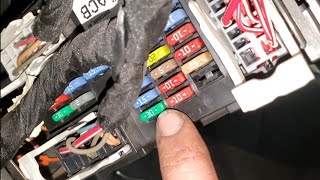
🎬 Watch: Diagnosing a failed RCDLR module and keyless entry issues.Diagnostic Flowchart
Tap your situation to follow the diagnostic path that matches what you're seeing on this vehicle.
Symptoms You May Notice
- "Service Tire Monitor System" message on the Driver Information Center (DIC).
- TPMS warning light on the dashboard first flashes for approximately one minute, then stays on solid.
- The pressure reading for the right rear tire is displayed as dashes ("--") on the DIC.
- Key fobs do not work for locking/unlocking or remote start (this points to a faulty RCDLR module).
- In some cases, a failing RCDLR can cause a "No Remote Detected" message and prevent the vehicle from starting.
- Replacing the TPMS sensor when the key fobs are also dead. If both systems fail at once, the common component is the RCDLR module, not the individual sensor.
- Replacing the BCM (Body Control Module). While the BCM receives data from the RCDLR, the RCDLR itself is the component that directly processes the RF signals from the fobs and sensors. The issue is almost always with the sensor or the RCDLR.
Most Likely Causes
- Failed Right Rear TPMS Sensor 🔴 High Probability The internal batteries in TPMS sensors have a finite lifespan, typically lasting 5-10 years. For vehicles in this year range, battery failure is a very common maintenance item. A low battery condition in the sensor is a specific trigger for this code.
How to confirm: If only the C0765 code is present and your key fobs work correctly, the sensor is the most likely cause. A tire shop or a DIYer with a TPMS diagnostic tool (like a J-46079 or equivalent) can attempt to activate the sensor. If it doesn't respond or shows a low battery status on a scan tool, it has failed.
Typical fix: Replace the TPMS sensor in the right rear tire. The tire must be unmounted from the wheel to access the sensor. After replacement, a TPMS relearn procedure must be performed to register the new sensor ID with the RCDLR.
Est. part cost: $25-$75 - Failed Remote Control Door Lock Receiver (RCDLR) 🟡 Medium Probability This module is known to fail internally, causing a loss of all RF functions it controls. GM has issued technical service bulletins (like 16-NA-396) for this exact issue on multiple vehicles, where an internal RCDLR fault causes TPMS codes and key fob inoperability.
How to confirm: The strongest indicator is the simultaneous failure of the TPMS system (setting codes like C0750, C0755, C0760, C0765) and all key fobs. A professional scan tool can attempt to communicate with the RCDLR; a lack of response or specific internal fault codes would confirm the diagnosis.
Typical fix: Replace the RCDLR module. It is located behind the trim in the driver-side rear cargo area (D-pillar), near the liftgate hinge. The new module MUST be programmed to the vehicle using a dealership-level scan tool (SPS - Service Programming System). Owners on forums warn against using non-OEM parts or incorrect part numbers, as it can cause programming issues.
Est. part cost: $60-$120 - Wiring or Antenna Connection Issue ⚪ Low Probability While less common, connections can become loose or corroded over time. GM TSBs PIT5446 and 16-NA-061 specifically call out poor or disconnected antenna connections to the RCDLR as a cause for these symptoms.
How to confirm: Visually inspect the RCDLR module and its coaxial antenna connections in the rear driver-side D-pillar. TSB 16-NA-061 notes that a disconnected coax at the RCDLR will kill all TPMS and fob signals, while a disconnect further away at the antenna amplifier may only cause intermittent issues with sensors farther from the module.
Typical fix: Securely reconnect any loose connectors or repair damaged sections of the wiring harness or antenna cable.
Est. part cost: $0-$20
Rare But Worth Checking
- Radio Frequency (RF) Interference: Aftermarket electronic devices plugged into the vehicle's power outlets (like phone chargers, dash cams, or CB radios) can sometimes emit RF interference that blocks the signal from the TPMS sensors. TSB PIC5650M also points to this possibility. Before replacing parts, try unplugging all aftermarket accessories and driving the vehicle to see if the system resets.
Diagnosis Steps
- Check Key Fob Function: Test all functions (lock, unlock, remote start) of your key fobs. If they are dead along with the TPMS warning, the RCDLR module is the primary suspect. 🎬 Try this first: How to change your key fob battery.
- Scan for All Codes: Use an OBD-II scanner capable of reading Chassis (C) and Body (B) codes from the RCDLR and BCM. Note if other TPMS codes (C0750, C0755, C0760) or security codes are present.
- Isolate the Sensor: If key fobs work, the issue is likely the sensor itself. You can confirm this by trying to perform the TPMS relearn procedure. If the process fails when it gets to the right rear wheel, the sensor is bad.
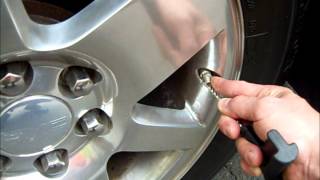
- Initiate TPMS Relearn Mode: On your Yukon, turn the key to 'ON,' use the DIC controls (vehicle information button) to navigate to the tire pressure screen, then press and hold the set/reset button (with a checkmark icon) until the horn chirps twice and 'TIRE LEARNING ACTIVE' displays on the DIC. 🎬 See a walkthrough of the TPMS relearn procedure.
- Perform Relearn: Starting with the left front tire, use a TPMS activation tool to trigger the sensor (the horn will chirp once). The vehicle's turn signals will indicate which tire to do next (LF, RF, RR, LR). Alternatively, you can rapidly let air out of the tire for 5-10 seconds until the horn chirps.
- Confirm Diagnosis: If the horn chirps for the first three tires but the procedure times out or fails at the right rear, you have confirmed the C0765 is due to a bad sensor. If the relearn process won't even start, or fails on the first tire, it may point back to the RCDLR.
- Inspect RCDLR Wiring: If the RCDLR is suspected, remove the driver-side D-pillar trim in the rear cargo area to access the module. Visually inspect the module, its main connector, and its coaxial antenna connection for any obvious damage, corrosion, or loose connections before ordering a replacement part.
Parts You'll Likely Need
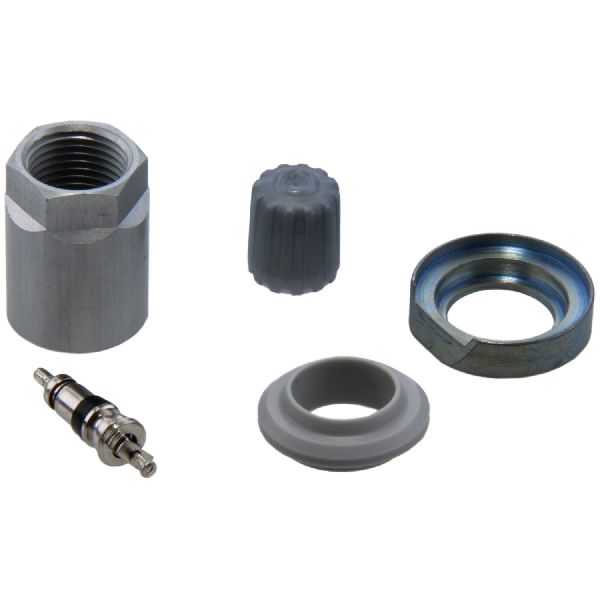
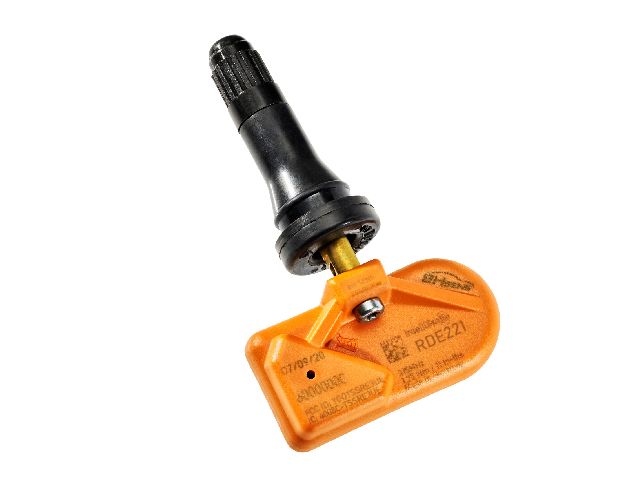
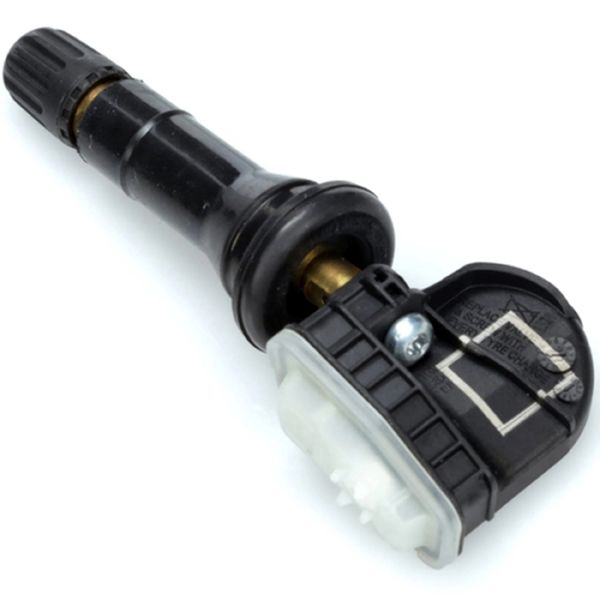
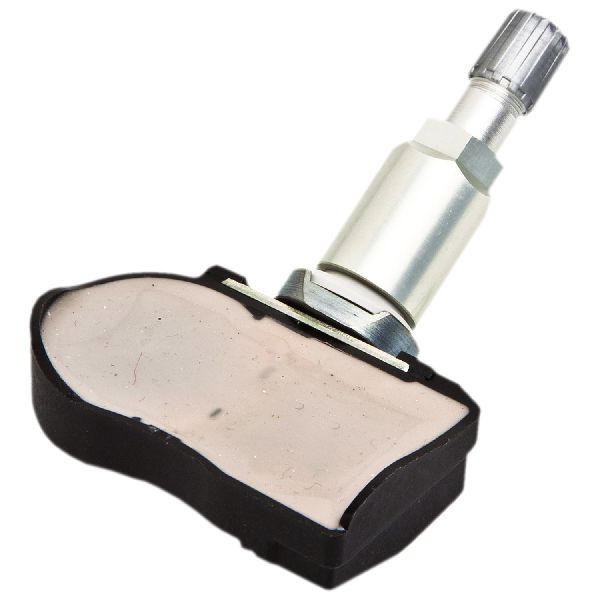
- Tire Pressure Monitoring System (TPMS) Sensor
(OEM #13598773)— This is the most common failure point. The internal battery dies, requiring replacement of the entire sensor unit. The original part number may have been 25920615, which is superseded by 13598773 or similar.
Trusted brands: ACDelco, Schrader
OEM price range: $40-$70
Aftermarket price range: $25-$50 - Remote Control Door Lock Receiver (RCDLR)
(OEM #25938511, 25882862, 25821056)— This module is the second most likely cause, especially if key fobs have also failed. It processes signals for both TPMS and keyless entry. Part numbers have been superseded multiple times; it is critical to verify the correct part for your specific year.
Trusted brands: ACDelco (GM Genuine)
OEM price range: $60-$120
Aftermarket price range: $40-$80
Related Codes That Often Appear With This One
- C0750 — This code indicates a fault with the Left Front TPMS sensor. It can appear with C0765 if multiple sensors fail around the same time due to age or if the RCDLR module fails.
- C0755 — This code indicates a fault with the Right Front TPMS sensor.
- C0760 — This code indicates a fault with the Left Rear TPMS sensor.
- B3055, B3060, B3935 — These are security and key-related codes. Their presence alongside C0765 strongly points towards a failing RCDLR module, as mentioned in TSB PIC5650M.
Technical Service Bulletins (TSBs) & Recalls
- PIC5650M: Mentions that C0765 can be found along with various security codes (B3055, B3060, B3935) during a no-start or start-stall condition, which points to a potential RCDLR issue affecting the immobilizer system.
- 16-NA-396: Describes the exact symptom of TPMS codes (including C0765) appearing with key fob failure, identifying the cause as an internal RCDLR failure. It recommends replacing the RCDLR module. The principle is directly applicable to the Yukon.
- 16-NA-061: Details how a disconnected RCDLR antenna or coax cable can cause TPMS codes and key fob issues, providing a diagnostic path before replacing the module itself.
Platform-Specific Known Issues
- RCDLR Module Location: On the Yukon XL, the RCDLR module is consistently reported by owners to be located in the rear driver's side D-pillar, behind the plastic trim panel and sometimes tucked under the rear speaker.
- RCDLR Programming is Required: A new RCDLR module is not plug-and-play. It must be programmed to the vehicle's BCM using GM's Service Programming System (SPS), which typically requires a trip to a dealer or a well-equipped independent shop. Owners report paying around $190 for this service.
Mechanic-Grade Diagnostic Values
- TPMS Sensor Activation Check — expected: A TPMS tool (like a J-46079) should display the sensor's 8-digit ID, pressure reading, and at least 1/4 signal strength.. Failure: If the tool cannot get a response or any of the expected parameters are missing, the sensor has failed.
- Scan Tool RCDLR Data List — expected: The scan tool should show a 'Normal' or 'OK' status for each sensor's battery.. Failure: If the scan tool data list indicates a 'Low Battery' condition for the right rear sensor, the sensor must be replaced. This DTC may set without illuminating the main TPMS warning light.
- Scan Tool Sensor Mode Parameter — expected: While driving above 25 mph (40 km/h), the sensor mode should change to 'Rolling'.. Failure: If the sensor mode does not change from 'Stationary' or 'Learn' to 'Rolling', the sensor is faulty.
Hidden / Shadow Codes Worth Checking
- Symptom Code :29: This sub-code means 'Too Few Pulses' and indicates the RCDLR is not receiving the expected number of signal transmissions from the TPMS sensor. When seen with C0750, C0755, C0760, or C0765, GM TSB #16-NA-396 points to an internal RCDLR failure as the root cause. (see via GM Tech 2 or GDS2 diagnostic scan tool, visible in the BCM data.)
Scan Tool Commands That Help
- GM Tech 2 / GDS2: RCDLR Module Setup — This function is required after replacing the RCDLR. It configures the new module to the vehicle's specific options before programming keys or TPMS sensors.
- GM Tech 2 / GDS2: Tire Type/Pressure Programming — In rare cases, the RCDLR can lose its memory for tire type (e.g., P-Metric) and placard pressure. This function, found under RCDLR special functions, allows a technician to rewrite this data, which can resolve issues where sensors are 'forgotten' after every key cycle.
- GM Tech 2 / GDS2: TPMS Learn Mode with Simulated Sensors — A diagnostic step to isolate the RCDLR. The scan tool can command the RCDLR to learn four *simulated* sensor IDs. If the RCDLR successfully learns the simulated sensors, but fails to learn the actual sensors in the wheels, it confirms the problem is with the sensors or RF interference, not the receiver module. If it fails to learn the simulated sensors, the RCDLR is faulty.
Wiring & Ground Locations
- RCDLR Module — Located in the rear driver's side D-pillar, behind the plastic trim panel, often near the rear speaker or liftgate hinge.. This is the central component for this fault. Access is required for replacement or to check its main electrical connector and coaxial antenna connection.
- RCDLR Antenna Amplifier — On later models, this is a separate module attached to the right rear quarter glass, connected to the RCDLR by a coax cable.. A disconnected coax cable at the amplifier can cause intermittent reception of sensors farther away, while a good signal from the closest (right rear) sensor remains. A disconnect at the RCDLR itself will typically cause all sensors to fail simultaneously.
- G401 / G402 — These are the primary rear body ground points. G401 is located on the left rear frame rail, and G402 is on the right rear frame rail, near the bumper.. The RCDLR and its associated systems rely on a solid chassis ground. A corroded or loose rear ground point can cause a variety of difficult-to-diagnose electronic issues in the rear of the vehicle, including RCDLR malfunction.
Real Owner Repair Stories
- Tahoe Yukon Forum (2007-2014 era GM SUV) — After installing new Schrader multi-frequency sensors, the TPMS would learn correctly and display pressures on the DIC. However, after turning the truck off and on again, all tire pressures would show as dashes ("--"). Key fobs worked correctly.
❌ Tried (didn't work) Re-learning the sensors multiple times using a standard relearn tool. The process would complete successfully each time but the fix was not permanent.
✅ What actually fixed it The RCDLR had lost its memory for tire configuration. Using a bi-directional scanner (Launch), the owner accessed the RCDLR special functions and re-wrote the tire type to 'P-metric' and the placard pressure to 36 PSI. This restored the module's memory, and it retained the sensor IDs permanently. - Tahoe Yukon Forum (2007 Yukon XL Denali) — Simultaneous failure of TPMS system and key fobs.
❌ Tried (didn't work) The owner suspected the RCDLR and was preparing to replace it.
✅ What actually fixed it The owner replaced the RCDLR module. A critical piece of advice from another forum member was to NOT use an 'upgraded' or superseded part number and to find an exact match for the original. The new module required programming by a dealership for $190 to restore function.
OEM Part Supersession History
25821056, 25882862→25938511— Standard part evolution and consolidation by GM.
Heads up: While 25938511 is the official replacement for earlier part numbers, some owners have reported programming issues when using a superseded part number instead of an exact match for the one originally installed in their vehicle. It is highly recommended to verify the number on the original module before ordering.25920615 (and others)→13598773— Part consolidation and design updates for TPMS sensors.
Heads up: The key factor is the frequency, which must be 315 MHz for North American Yukon XLs of this era. Using a 433 MHz sensor will not work. Also, early 2007 models often used metal clamp-in style valve stems, while later models used rubber snap-in stems; the sensors themselves are often interchangeable if removed from the stem.
Model Year Variations Within This Range
- 2007-2009 (approx.): Early models in this generation were more likely to be equipped with TPMS sensors that have metal, clamp-in style valve stems.
- 2010-2014 (approx.): Later models more commonly used TPMS sensors with integrated rubber, snap-in style valve stems. While the mounting method is different, the electronic sensor component itself often remains compatible as long as the frequency is 315 MHz.
Helpful Videos
We Have This Part in Stock


The information in this article is provided for general reference and educational purposes only. Vehicle specifications, procedures, and part compatibility can vary by production date, trim level, and region. Always consult your vehicle's factory service manual and verify part numbers before purchasing or performing repairs. Safety-critical components such as airbags, seat belts, and braking systems should be installed by a qualified professional.
- Gmc YUKON XL:
- 🎬 Helpful Videos
- 🛍️ Shop This Part
- What's Unique About the 2007-2014 Gmc YUKON XL
- Diagnostic Flowchart
- Symptoms You May Notice
- Most Likely Causes
- Rare But Worth Checking
- Diagnosis Steps
- Parts You'll Likely Need
- Related Codes That Often Appear With This One
- Technical Service Bulletins (TSBs) & Recalls
- Platform-Specific Known Issues
- Mechanic-Grade Diagnostic Values
- Hidden / Shadow Codes Worth Checking
- Scan Tool Commands That Help
- Wiring & Ground Locations
- Real Owner Repair Stories
- OEM Part Supersession History
- Model Year Variations Within This Range
- 🎟️ Get 5% Off