

C0765 on 2007-2014 GMC Yukon: Right Rear TPMS Fault Causes and Fixes
Code C0765 on a 2007-2014 GMC Yukon means the Right Rear Tire Pressure Monitoring System (TPMS) sensor is not communicating. The most common cause is a dead sensor battery, requiring sensor replacement and a relearn procedure. Expect to pay $30-$75 for the sensor and have a tire shop install it.
- C0765 means the right rear tire pressure sensor isn't sending a signal.
- The most likely cause is a dead battery in the sensor, which is a common issue for vehicles of this age.
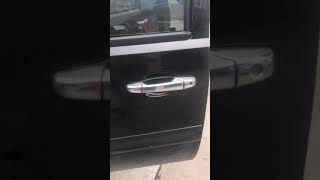
- If your key fob also stopped working, the problem is more likely the Remote Control Door Lock Receiver (RCDLR) module or its fuse.
- Replacing the sensor requires a tire shop to dismount the tire. Afterward, a TPMS relearn procedure is mandatory.
- Always check the simple things first: verify tire pressure manually and check the 'DSM' fuse in the cabin fuse box if key fobs are also dead.
What's Unique About the 2007-2014 Gmc YUKON
On this generation of GMC Yukon (GMT900 platform), the TPMS sensors and the key fobs both communicate with a single module called the Remote Control Door Lock Receiver (RCDLR). While a dead sensor battery is the most common cause for C0765, a failing RCDLR module can also cause this code, often accompanied by codes for other sensors (C0750, C0755, C0760) and simultaneous key fob failure. The RCDLR is located behind the driver-side rear interior trim panel, near the D-pillar speaker. Some early models in this generation also had software glitches where the RCDLR would fail to 'wake up', which could be temporarily fixed by pulling and reinstalling its fuse (often labeled 'DSM' or related to the Body Control Module in the fuse panel).
Diagnostic Flowchart
Tap your situation to follow the diagnostic path that matches what you're seeing on this vehicle.
Symptoms You May Notice
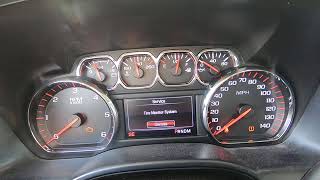
- "Service Tire Monitor System" message on the Driver Information Center (DIC).
- TPMS warning light flashes for approximately one minute and then stays on solid after starting the vehicle.
- Right rear tire pressure displays as "--" on the DIC.
- In cases of RCDLR failure, key fobs may not work for lock/unlock or remote start.
- Inability to complete the TPMS relearn procedure for the right rear wheel.
- Replacing the Body Control Module (BCM) when the RCDLR is the actual faulty component.
- Replacing a TPMS sensor when the actual fault is with the RCDLR module (especially if key fobs are also inoperative).
- Assuming the sensor is bad after a tire rotation without performing the TPMS relearn procedure. 🎬 Watch: How to relearn tire positions on a 2007 Yukon. The code C0765 is tied to the vehicle's *expected* right rear position, which may now be physically located on a different corner of the car.
Most Likely Causes
- Dead TPMS Sensor Battery 🔴 High Probability TPMS sensor batteries have a finite lifespan, typically 7-10 years. Vehicles in the 2007-2014 range are now at an age where battery failure is the most common reason for a sensor to stop transmitting. The battery is internal to the sensor and cannot be replaced separately.
How to confirm: Use a TPMS activation tool to attempt to read the sensor. If the tool gets no response after several attempts, the battery is dead or the sensor has failed. A professional scan tool can also read the sensor battery status directly from the RCDLR data list.
Typical fix: Replace the right rear TPMS sensor. This requires dismounting the tire from the wheel. The new sensor must then be programmed to the vehicle using a TPMS relearn procedure.
Est. part cost: $30 - $75 - Failed Remote Control Door Lock Receiver (RCDLR) ⚪ Low Probability This module processes signals from all TPMS sensors and key fobs. Internal electronic failure or software glitches can cause it to stop receiving signals from one or all sensors.
How to confirm: This is a likely cause if key fobs stop working at the same time the TPMS light comes on, and/or multiple TPMS codes (C0750, C0755, C0760, C0765) are present. A temporary fix of pulling the 'DSM' fuse can sometimes restore function, pointing to a module issue. A scan tool can also be used to check for communication with the RCDLR itself.
Typical fix: Replace the RCDLR module, which is located behind the driver-side rear interior D-pillar trim panel. The new module must be programmed by a dealer or a well-equipped independent shop with a tool like a Tech 2 or GDS2.
Est. part cost: $50 - $120 - Damaged TPMS Sensor ⚪ Low Probability
How to confirm: This usually occurs during a tire change or from a significant pothole impact. Visual inspection during tire dismounting can confirm physical damage like a cracked housing.
Typical fix: Replace the damaged TPMS sensor and perform the relearn procedure.
Est. part cost: $30 - $75
Rare But Worth Checking
- RCDLR Antenna Connection Issue: As noted in GM TSB 16-NA-061 (for a later model year, but the principle is relevant), a loose coaxial cable connection at the RCDLR module or the antenna can cause intermittent loss of signal from the TPMS sensors. Since the right rear sensor is closest to the RCDLR, this is less likely to be the sole cause for C0765, but it's worth checking the connection at the module before replacing it.
- Wiring Harness Damage: In some cases, the wiring providing power to the RCDLR module can become damaged, often in the flexible boot between the driver's door and the body. One owner on the Tahoe Yukon Forum reported this exact issue, where a new power wire had to be run to the module to restore function.
- Incorrect Sensor Installed: Using a TPMS sensor that operates on the wrong frequency or is an incompatible aftermarket brand can prevent it from communicating with the RCDLR, leading to code C0765. GM vehicles on this platform use a 315 MHz frequency.
Diagnosis Steps
- Verify tire pressure in all four tires with a quality manual gauge. Ensure they are inflated to the pressure listed on the driver's door jamb sticker.
- Check if the key fobs are working correctly. If they are not, suspect a problem with the RCDLR module or its power/fuse.
- If key fobs are working, the issue is likely isolated to the sensor. Use a TPMS activation tool to try and 'wake up' or read the right rear sensor. If it does not respond, the sensor has failed.
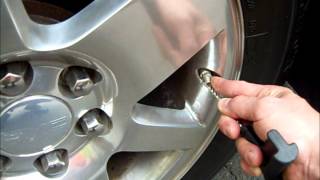
- If the sensor responds to the tool, attempt the TPMS relearn procedure. For 2007 models, this is often done via the DIC buttons. For 2008-2014, it may involve holding the trip odometer reset stem. Some methods require letting air out of the tires, while others only need a TPMS tool. 🎬 Watch: A guide to relearning sensors on GM vehicles.
- If the relearn procedure fails specifically for the right rear sensor, the sensor needs to be replaced.
- If multiple TPMS codes are present and/or key fobs are inoperative, locate the fuse for the RCDLR. This is often labeled 'DSM' in the interior fuse panel located on the side of the dashboard. Check if the fuse is good. Try pulling and reinstalling it to reset the module.
- If the fuse reset works temporarily, the RCDLR may have a software issue or be failing. If it doesn't work, inspect the wiring and antenna connections to the RCDLR (located behind the driver-side rear D-pillar trim) before condemning the module.
Parts You'll Likely Need
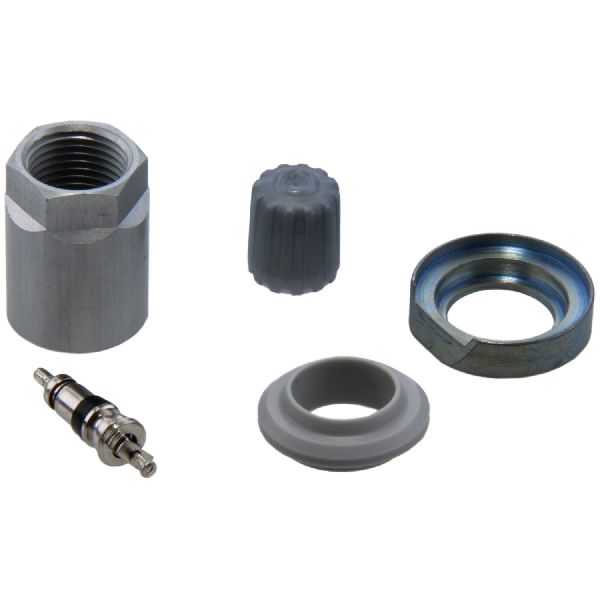
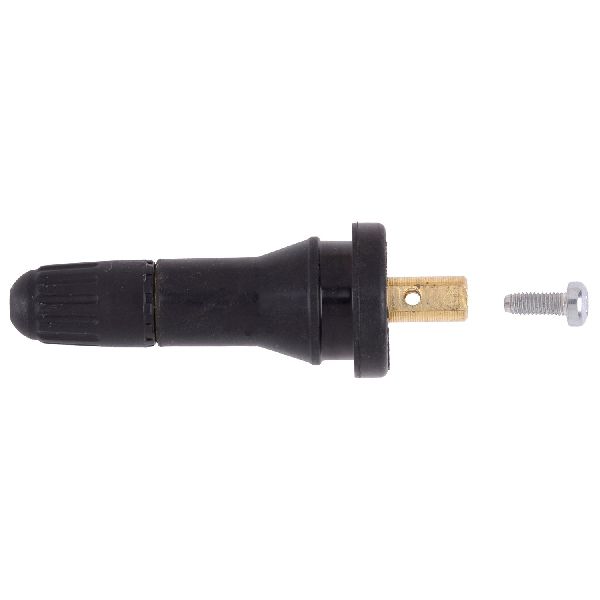
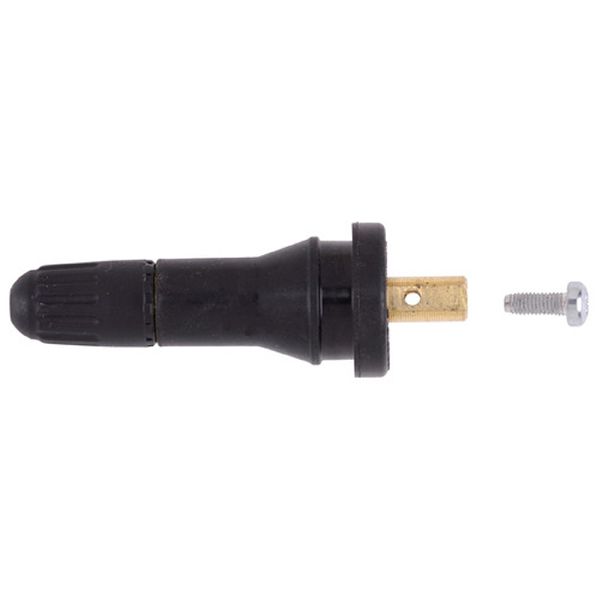
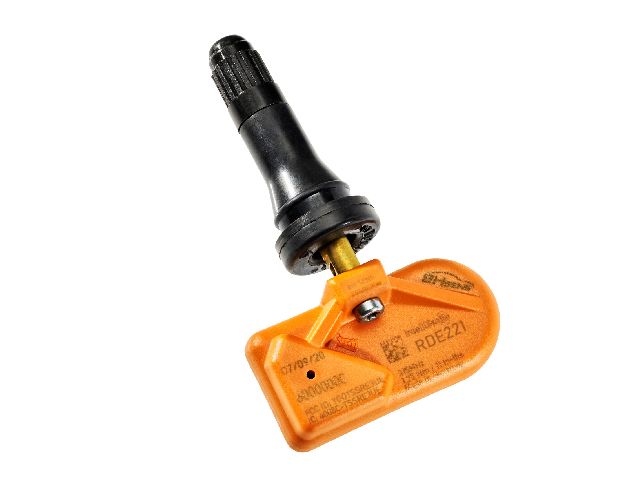
- Tire Pressure Monitoring System (TPMS) Sensor
(OEM #13598773)— This is the most common failure point. The internal battery dies, causing the sensor to stop transmitting, which sets code C0765. This part number has superseded older numbers like 13586335 and 22853741.
Trusted brands: ACDelco (OEM), Schrader, Dorman, Huf
OEM price range: $50-$80
Aftermarket price range: $30-$50 - Remote Control Door Lock Receiver (RCDLR) — This module is the second most likely cause, especially if key fobs fail simultaneously. Part number varies by year and specific options. Replacement requires programming.
Trusted brands: ACDelco (OEM)
OEM price range: $50-$120
Related Codes That Often Appear With This One
- C0750 — Indicates a fault with the Left Front TPMS sensor. If seen with C0765 and other TPMS codes, it points towards a central receiver (RCDLR) issue rather than multiple individual sensor failures.
- C0755 — Indicates a fault with the Right Front TPMS sensor. Its presence alongside C0765 strengthens the diagnosis of a faulty RCDLR.
- C0760 — Indicates a fault with the Left Rear TPMS sensor. When all four sensor codes appear together, the RCDLR is the primary suspect.
- B3055 / B3060 — These are key-related codes. The provided TSB #PIC5650M groups them with C0765, suggesting a complex electrical issue possibly involving the RCDLR, which also handles key fob communication and is tied into the vehicle security system.
Technical Service Bulletins (TSBs) & Recalls
- PIC5650M: Mentions C0765 in a group of codes (B3055, B3060, etc.) related to no-start or security light issues, highlighting a potential link between the RCDLR system and the vehicle's immobilizer.
- 16-NA-396: While for later models, this TSB is highly relevant as it addresses simultaneous failure of key fobs and TPMS (including code C0765) due to an internal RCDLR failure, instructing technicians to replace the module.
- 16-NA-061: Also for later models, this bulletin details how a disconnected RCDLR antenna or coax cable can cause loss of signal from TPMS sensors, which is a plausible, though rare, cause on GMT900s.
Platform-Specific Known Issues
- A known issue on early GMT900 trucks involved the Remote Control Door Lock Receiver (RCDLR) entering a 'sleep' mode and not waking up, causing both TPMS and key fob functions to fail. A temporary fix is to pull the 'DSM' fuse to reset the module. This is widely discussed in owner forums.
- The RCDLR module, which receives both TPMS and key fob signals, is a known failure point that can cause C0765 and other related codes. Its location behind the driver's side rear interior trim makes it susceptible to moisture or wiring issues over time.
Mechanic-Grade Diagnostic Values
- RCDLR Power Supply Voltage — expected: Battery Positive Voltage (typically 12.0-14.5V). Failure: 0V or significantly low voltage indicates a power supply issue (fuse, wiring).
- RCDLR Ground Circuit — expected: Less than 1.0 Ohm of resistance to a known good chassis ground.. Failure: High or infinite resistance indicates a bad ground connection (e.g., at G402).
- TPMS Sensor Signal Strength (via Scan Tool) — expected: At least 1/4 graph signal strength displayed on a TPMS tool like the EL-46079/J-46079.. Failure: No signal or very weak signal suggests a dead sensor battery, a damaged sensor, or significant interference.
Hidden / Shadow Codes Worth Checking
- C0765 with sub-code '0x29': Indicates 'Too Few Pulses' from the right rear sensor, pointing specifically to a transmission failure rather than a simple low voltage or internal malfunction. (see via A dealer-level scan tool like a GM Tech 2 or GDS2, or some high-end bidirectional aftermarket scanners.)
- C0765 with sub-code '0x03': Indicates 'Voltage Below Threshold', which often points directly to a failing internal battery within the TPMS sensor itself. (see via A dealer-level scan tool like a GM Tech 2 or GDS2, or some high-end bidirectional aftermarket scanners.)
Scan Tool Commands That Help
- GM Tech 2 / GDS2 or equivalent: TPMS Sensor Learn — This function is required after replacing a TPMS sensor or the RCDLR to make the vehicle recognize the new sensor IDs and their positions.
- GM Tech 2 / GDS2 or equivalent: RCDLR Data Display — Use this to view live data from the RCDLR, including individual sensor IDs, pressures, and crucially, the 'Sensor Battery Status' for each sensor to confirm a dead battery without dismounting the tire.
- GM Tech 2 / GDS2 or equivalent: Simulate Sensor Transmissions — Using a tool like the J-46079 in simulate mode, a technician can send fake sensor signals to the RCDLR. If the RCDLR receives the simulated signals correctly but not the actual sensor signals, it helps isolate the fault to the sensor itself. If it fails to receive the simulated signals, the RCDLR or its wiring is suspect.
- High-end Bi-directional Scanner (e.g., Launch): RCDLR Configuration/Reset Functions — In rare cases, the RCDLR can lose its configuration (e.g., tire type, placard pressure). This function allows a technician to rewrite this data, which can resolve issues where sensors learn but are forgotten after an ignition cycle.
Wiring & Ground Locations
- RCDLR — Behind the driver-side rear interior trim panel, near the D-pillar. On short wheelbase models, it's in the right rear of the passenger compartment.. This is the receiver for the TPMS signal. All power, ground, and antenna connections must be secure for it to function.
- DSM Fuse — In the instrument panel fuse block, located at the end of the dashboard on the driver's side.. This fuse often provides power to the RCDLR. Pulling and reinstalling it can reset a non-responsive module.
- G402 — On the right 'D' pillar.. This is a primary ground location for components in the rear of the vehicle, including potentially the RCDLR on some configurations. A poor ground here can cause intermittent electronic issues.
- G300 — Under the left side of the vehicle, on the second body mount.. This is a major body ground. While not directly for the RCDLR, a corroded G300 can cause widespread, difficult-to-diagnose electronic problems that could mimic module failure.
- RCDLR Connector Pin 8 (BK) — Pin 8 on the main connector for the Remote Control Door Lock Receiver.. This is the primary ground wire for the module. It should have continuity to chassis ground.
- RCDLR Connector Pin 17 (RD/WH) — Pin 17 on the main connector for the Remote Control Door Lock Receiver.. This is the Battery Positive Voltage wire. It should have constant power. Loss of this voltage will cause the module to fail completely.
Real Owner Repair Stories
- Tahoe Yukon Forum (2007-2014 GMT900 Platform Vehicle) — TPMS light on, can successfully program sensors using relearn procedure, and pressures display correctly on the DIC. However, as soon as the ignition is cycled off and on, all tire pressures show as "--" again.
❌ Tried (didn't work) Replacing TPMS sensors, Repeating the relearn procedure multiple times
✅ What actually fixed it The RCDLR module had lost its memory for tire type and placard pressure. Using a bidirectional scanner (a Launch model was mentioned), the user accessed the RCDLR's configuration/reset functions and rewrote the tire type (P-metric) and suggested pressure. After this, the learned sensor data was retained through ignition cycles.
OEM Part Supersession History
13586335, 22853741, 13581561→13598773— Consolidation of part numbers and potential minor revisions for reliability.
Heads up: While most GM vehicles in this era use 315 MHz sensors, some export or specific models might use 433 MHz. Installing the wrong frequency sensor will cause it to fail to learn. Always verify the required frequency for the specific vehicle.
Model Year Variations Within This Range
- 2007-2008 (early models): The TPMS relearn procedure is often initiated through the Driver Information Center (DIC) buttons without needing a special tool, relying on letting air out of each tire until the horn chirps.
- 2008-2014 (later models): The relearn procedure is often initiated by holding the trip odometer reset stem or through the DIC, but typically requires a TPMS activation tool (like J-46079) to trigger each sensor, rather than deflating the tire.
Helpful Videos
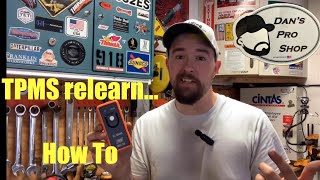
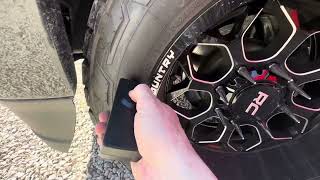
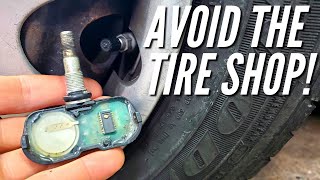
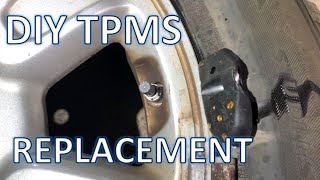
We Have This Part in Stock


The information in this article is provided for general reference and educational purposes only. Vehicle specifications, procedures, and part compatibility can vary by production date, trim level, and region. Always consult your vehicle's factory service manual and verify part numbers before purchasing or performing repairs. Safety-critical components such as airbags, seat belts, and braking systems should be installed by a qualified professional.
- Gmc YUKON:
- 🎬 Helpful Videos
- 🛍️ Shop This Part
- What's Unique About the 2007-2014 Gmc YUKON
- Diagnostic Flowchart
- Symptoms You May Notice
- Most Likely Causes
- Rare But Worth Checking
- Diagnosis Steps
- Parts You'll Likely Need
- Related Codes That Often Appear With This One
- Technical Service Bulletins (TSBs) & Recalls
- Platform-Specific Known Issues
- Mechanic-Grade Diagnostic Values
- Hidden / Shadow Codes Worth Checking
- Scan Tool Commands That Help
- Wiring & Ground Locations
- Real Owner Repair Stories
- OEM Part Supersession History
- Model Year Variations Within This Range
- 🎟️ Get 5% Off