

C0765 on 2015-2022 GMC Canyon: Right Rear TPMS Fault or Module Failure?
Code C0765 points to a fault with the right rear tire pressure sensor. However, on this GMC Canyon and its twin, the Chevy Colorado, it's frequently caused by a failing Remote Control Door Lock Receiver (RCDLR) module, especially if your key fob has also stopped working. If the fob works, the tire sensor is the likely culprit. TSB 16-NA-396 confirms this pattern.
- Before buying any parts for a C0765 code, check your key fob. If it's not working, the problem is almost certainly the RCDLR module, not the tire sensor.
- If your key fob works perfectly, the right rear TPMS sensor is the most likely cause, usually due to a dead battery.
- Replacing the RCDLR module requires special tools to program it to your vehicle; this is not a simple DIY job.
- Driving with this code is possible, but you lose the safety benefit of the TPMS system and may risk a no-start condition if the RCDLR is failing.
What's Unique About the 2015-2022 Gmc CANYON
On many GM vehicles from this era, including the GMC Canyon and its twin the Chevrolet Colorado, the TPMS sensors and the key fobs both communicate with a single module: the Remote Control Door Lock Receiver (RCDLR). A common failure point is the RCDLR itself, which can cause simultaneous loss of key fob functions and set TPMS codes like C0765. GM has issued technical service bulletins (TSBs) acknowledging that when TPMS codes appear with key fob issues or a "No Remote Detected" message, the RCDLR module is the most likely cause, not the tire sensor.
Diagnostic Flowchart
Tap your situation to follow the diagnostic path that matches what you're seeing on this vehicle.
Symptoms You May Notice
- Tire Pressure Monitoring System (TPMS) warning light is illuminated
- "Service Tire Monitor System" message on the Driver Information Center (DIC)
- Pressure reading for the right rear tire shows as "--" on the DIC.
- Key fob intermittently or completely fails to lock/unlock the doors.
- "No Remote Detected" message on the DIC, preventing push-button start.
- Vehicle may stall after starting or fail to start, with the security light on. [⭐ MANUFACTURER TSB — highest authority]
- Replacing the TPMS sensor when the RCDLR is the actual fault. This is a common mistake if the technician doesn't check for key fob issues or related TSBs. The new sensor will not fix the problem, and the code will return.
Most Likely Causes
- Failed Remote Control Door Lock Receiver (RCDLR) 🔴 High Probability This is a well-documented failure point on many GM platforms. The RCDLR is the shared receiver for both TPMS and key fob signals, making it a single point of failure for both systems. TSB 16-NA-396 was issued specifically to address this internal module failure.
How to confirm: Check for simultaneous failure of key fob functions (lock, unlock, remote start). If the key fob is also inoperative, the RCDLR is the primary suspect. A professional scan tool may show C0765 with a symptom code of ':29' (Too Few Pulses), which strongly indicates a faulty RCDLR as per TSB 16-NA-396. The module is typically located behind the rear interior trim panels, similar to other GM trucks where it is found in the D-pillar.
Typical fix: Replace the RCDLR module and program the new module to the vehicle using GM-specific software. This is not a plug-and-play part.
Est. part cost: $50-$150 - Dead TPMS Sensor Battery 🟡 Medium Probability TPMS sensor batteries are not rechargeable and have a finite lifespan, typically 7-10 years. Vehicles in the 2015-2022 range are now old enough for these batteries to begin failing.
How to confirm: If key fob functions are normal, the sensor is the likely issue. A tire shop can use a TPMS activation tool to check if the 315 MHz sensor is transmitting. If it does not respond, the internal battery is dead.
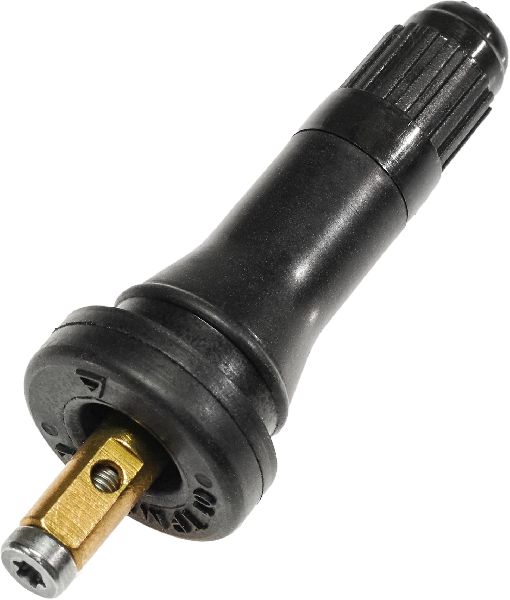
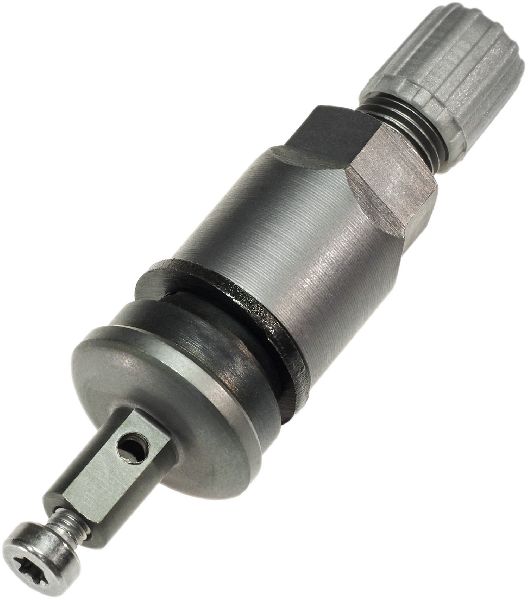
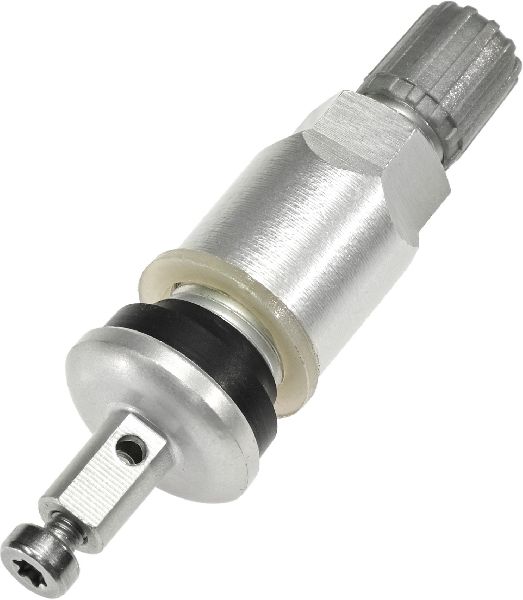
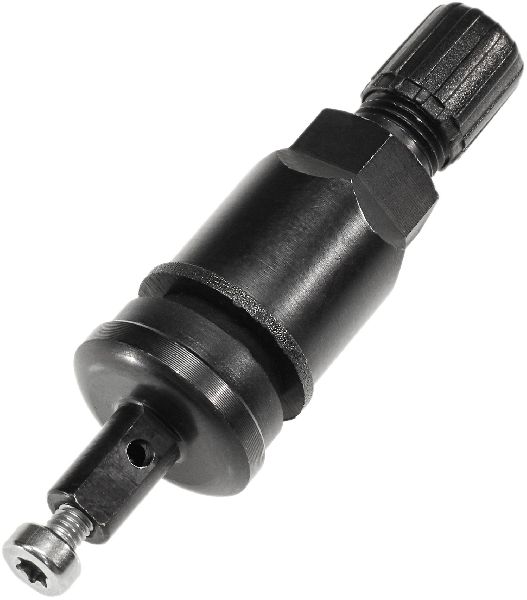
Typical fix: Replace the right rear TPMS sensor. The new sensor must be 'relearned' to the vehicle. It is best practice to replace the service kits (seals and nuts) on all four sensors when replacing one or getting new tires.
Est. part cost: $25-$75
Rare But Worth Checking
- Damaged TPMS Sensor: The sensor, located inside the tire, can be damaged during tire mounting/dismounting or by a significant pothole impact.
- Radio Frequency (RF) Interference: Aftermarket electronic devices like dash cams, phone chargers, or metallic window tint can sometimes interfere with the low-power signals from the TPMS sensor to the RCDLR.
- Corroded TPMS Service Kit: In areas with road salt, the aluminum retaining nut and valve stem of the sensor can corrode, causing a slow air leak that triggers the TPMS light, even if the sensor is electronically functional. This is a leak issue, not a sensor communication issue, but can be a related problem.
Diagnosis Steps
- Verify the symptoms. Is the TPMS light on? Does the key fob work for locking, unlocking, and remote start?
- If the key fob does NOT work, the RCDLR is the primary suspect. A professional scan for codes (including symptom codes like :29) is recommended to confirm. Proceed with diagnosing the RCDLR module.
- If the key fob works perfectly, the issue is almost certainly isolated to the right rear tire. Proceed to the next step.
- Use a TPMS activation tool (such as a VXDAS OEC-T5 or similar) to attempt to read the sensor's data (ID, pressure, temperature, battery status). If the tool cannot get a response, the sensor has failed (likely a dead battery) and must be replaced.
- If the tool can read the sensor, but the code persists, attempt a TPMS relearn procedure. This can be initiated from the Driver Information Center (DIC).
- To perform the relearn, navigate to the tire pressure screen on the DIC and hold the select/check button until the horn chirps twice and 'Tire Learning Active' is displayed.
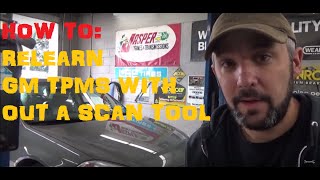
- Use the activation tool at each tire in sequence: Left Front, Right Front, Right Rear, then Left Rear. The horn will chirp once at each successful scan. After the final tire, the horn will chirp twice to confirm the process is complete. 🎬 See this walkthrough for the full TPMS relearn procedure
- If the relearn process fails repeatedly for the right rear sensor, but works for others, this confirms a faulty sensor. If the relearn process fails to initiate or complete for any tire, this may point back to the RCDLR.
- After any repair (sensor or RCDLR replacement), perform the TPMS relearn procedure and clear the codes.
Parts You'll Likely Need
- Remote Control Door Lock Receiver (RCDLR)
(OEM #13595511)— This is the most likely cause if key fob functions have also failed along with the TPMS light. Part number is from TSB 16-NA-396; always confirm with a dealer as numbers can be superseded.
Trusted brands: ACDelco, GM Genuine Parts
OEM price range: $70-$150
Aftermarket price range: $50-$100 - Tire Pressure Monitoring System Sensor (TPMS)
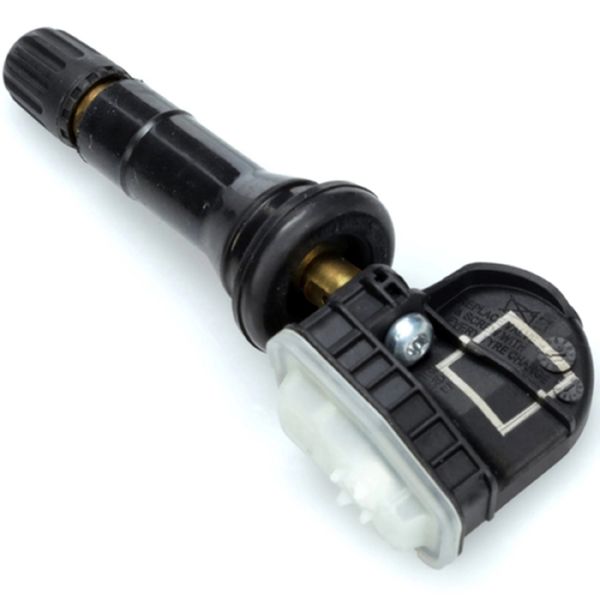
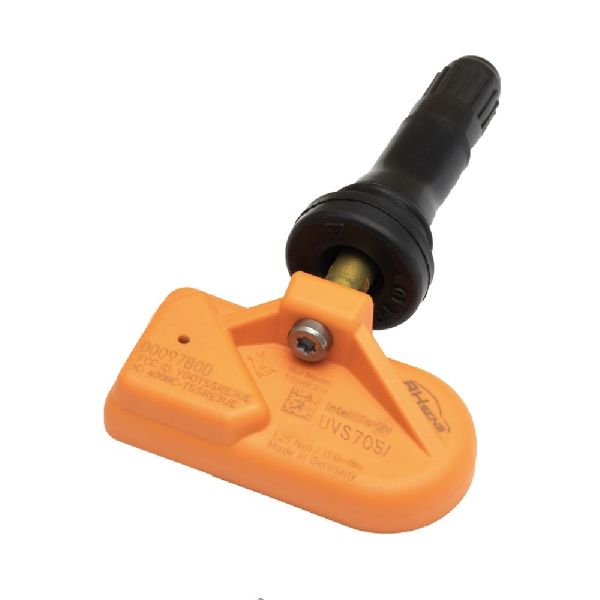
(OEM #84977973)— This is the fix if the sensor's internal battery has died or the sensor itself has failed. This is the likely cause if key fob functions are normal. Operates at 315 MHz. This part number supersedes previous versions like 19332370.
Trusted brands: ACDelco, Schrader, Continental, Huf
OEM price range: $40-$75
Aftermarket price range: $25-$50
Related Codes That Often Appear With This One
- C0750, C0755, C0760 — These are the corresponding codes for the other three wheels (Left Front, Right Front, Left Rear). If all four codes appear together, it is extremely likely that the RCDLR module has failed, not all four sensors simultaneously.
- B3055, B3060, B3935 — These are security and key-related codes that may appear alongside C0765 when the RCDLR is failing, leading to the no-start or stall conditions mentioned in TSB PIC5650M. [⭐ MANUFACTURER TSB — highest authority]
Technical Service Bulletins (TSBs) & Recalls
- PIC5650M: Mentions C0765 in a group of codes related to a no-start or start/stall condition with the security light on, pointing to a potential RCDLR/security system failure. [⭐ MANUFACTURER TSB — highest authority]
- 16-NA-396: Details intermittent key fob operation and TPMS codes (including C0765 with symptom code :29) being caused by an internal failure of the Remote Control Door Lock Receiver (RCDLR). The prescribed fix is to replace the module.
Platform-Specific Known Issues
- The 2015-2022 GMC Canyon and its twin, the Chevrolet Colorado, are included in GM's documentation regarding RCDLR failures that manifest as TPMS codes. TSB 16-NA-396 specifically addresses this widespread issue, which also affects many other Chevrolet, Buick, and Cadillac models from the same period.
Hidden / Shadow Codes Worth Checking
- C0765 :29: Too Few Pulses. This symptom code strongly points to an internal failure of the Remote Control Door Lock Receiver (RCDLR) and is specifically mentioned in TSB 16-NA-396. (see via GM GDS2, Tech2, or equivalent professional scan tool capable of reading manufacturer-specific symptom bytes.)
- C0765 :08: Signal Invalid. This can be set due to radio frequency (RF) interference or an internal sensor fault, rather than a complete lack of signal. (see via GM GDS2, Tech2, or equivalent professional scan tool.)
- C0765 :03: Low Voltage. This typically indicates the TPMS sensor's internal battery is failing. (see via GM GDS2, Tech2, or equivalent professional scan tool.)
- C0765 :00: General Fault / No Signal. This is set when the RCDLR does not receive any transmission from the sensor for a set period (e.g., 18 minutes) while the vehicle is moving above 25 mph, often due to a completely dead sensor battery. (see via GM GDS2, Tech2, or equivalent professional scan tool.)
Scan Tool Commands That Help
- GDS2: Module Diagnostics -> Remote Control Door Lock Receiver -> Configuration/Reset Functions -> Program/Replace Key Fobs — This function is required after replacing the RCDLR to program existing and new key fobs to the new module. The vehicle will not recognize the fobs until this is done.
- GDS2: Module Diagnostics -> Remote Control Door Lock Receiver -> Configuration/Reset Functions -> Erase All Key Fobs — Used to wipe all programmed key fobs from the RCDLR's memory. This is a necessary security step when a customer has lost a key fob, or as a first step before reprogramming all fobs if programming issues occur.
Wiring & Ground Locations
- RCDLR Module — Behind the rear interior trim panel, most likely in the driver's or passenger's side D-pillar (the rearmost roof support pillar).. This is the physical location of the receiver module that is the most common cause of code C0765 when key fob issues are also present. Physical access is required for inspection and replacement.
- RCDLR Antenna System — Consists of a coax cable from the RCDLR, an antenna amplifier module, and the antenna itself integrated into the right rear window glass.. Per TSB 16-NA-061, a disconnection of the coax cable at either the RCDLR or the amplifier module can cause TPMS codes and mimic a failed RCDLR. Inspecting these connections is a critical diagnostic step before replacing the module.
- Ground G402 (Probable) — On similar GM trucks, grounds in the '400' series are located from the rear seats back. G402 is specifically noted as being mounted to the right D-pillar behind the trim panel for certain options.. Given its location in the same area as the RCDLR and its antenna, G402 is the most likely ground point for this system. A poor ground here could cause intermittent RCDLR operation, leading to C0765 and key fob issues.
Real Owner Repair Stories
- Tahoe Yukon Forum (2015+ GM SUV (similar platform)) — Simultaneous TPMS codes and key fob failure.
❌ Tried (didn't work) Replacing the Remote Control Door Lock Receiver (RCDLR) module.
✅ What actually fixed it The owner found broken power wiring leading to the RCDLR module inside the flexible wiring boot between the driver's side door and the body. Repairing the broken wire restored power to the module and resolved all symptoms.
OEM Part Supersession History
13595511→13540045— Standard part revision by the manufacturer.
Heads up: While the new part number is the official replacement, always verify compatibility with a dealer using the vehicle's VIN before purchasing.
Model Year Variations Within This Range
- 2015-2022: These second-generation GMC Canyon models use a 315 MHz frequency for their TPMS sensors.
- 2023+: The third-generation GMC Canyon, starting in model year 2023, switched to a 433 MHz frequency for its TPMS sensors. Sensors from the second generation are not compatible with the third generation and vice-versa.
Helpful Videos
![[HOW TO] Reset Tire Pressure Monitoring Sensors (TPMS) on 2015-2022 on GM Vehicles (Colorado/Canyon)](https://img.youtube.com/vi/Z-GOeyDAkfs/mqdefault.jpg)
We Have This Part in Stock

The information in this article is provided for general reference and educational purposes only. Vehicle specifications, procedures, and part compatibility can vary by production date, trim level, and region. Always consult your vehicle's factory service manual and verify part numbers before purchasing or performing repairs. Safety-critical components such as airbags, seat belts, and braking systems should be installed by a qualified professional.
- Gmc CANYON:
- 🎬 Helpful Videos
- 🛍️ Shop This Part
- What's Unique About the 2015-2022 Gmc CANYON
- Diagnostic Flowchart
- Symptoms You May Notice
- Most Likely Causes
- Rare But Worth Checking
- Diagnosis Steps
- Parts You'll Likely Need
- Related Codes That Often Appear With This One
- Technical Service Bulletins (TSBs) & Recalls
- Platform-Specific Known Issues
- Hidden / Shadow Codes Worth Checking
- Scan Tool Commands That Help
- Wiring & Ground Locations
- Real Owner Repair Stories
- OEM Part Supersession History
- Model Year Variations Within This Range
- 🎟️ Get 5% Off