

C0765 on 2017-2021 Chevrolet Bolt EV: Right Rear TPMS Fault Causes & Fixes
On a 2017-2021 Bolt EV, code C0765 usually means the right rear tire pressure sensor has failed or its battery is dead. However, if your key fobs also stop working, the problem is likely a faulty Remote Control Door Lock Receiver (RCDLR), a known issue documented in TSB #16-NA-396. This module handles both TPMS and key fob signals, and its failure is a common weak point on many GM vehicles of this era.
- Code C0765 points to the right rear TPMS sensor on your 2017-2021 Bolt EV.
- Before buying any parts, check if your key fobs are working. If they are not, the problem is almost certainly the Remote Control Door Lock Receiver (RCDLR), not the tire sensor.
- If your key fobs work perfectly, the right rear TPMS sensor has likely failed due to an expired battery.
- Replacing the RCDLR requires programming by a dealer or a well-equipped independent shop.
- Replacing a TPMS sensor requires a tire shop to dismount the tire, and the new sensor must be 'relearned' to the car.
What's Unique About the 2017-2021 Chevrolet BOLT EV
On the Chevrolet Bolt EV, the Tire Pressure Monitoring System (TPMS) and the keyless entry system are both managed by a single module: the Remote Control Door Lock Receiver (RCDLR). Because of this shared component, a TPMS fault code like C0765 can be the first sign of a failing RCDLR, which will also cause key fob issues. This is a well-documented issue for this platform and other GM vehicles from the same era, as detailed in TSB 16-NA-396. The RCDLR module is located in the rear of the vehicle, making it the central receiver for signals originating from the wheels and the key fob.
Diagnostic Flowchart
Tap your situation to follow the diagnostic path that matches what you're seeing on this vehicle.
Symptoms You May Notice
- Tire pressure monitor (TPMS) warning light is illuminated or flashing on the dashboard.
- Key fob functions are inoperative (lock, unlock, remote start, panic).
- "No Remote Detected" message on the Driver Information Center (DIC).
- Inability to start the vehicle without placing the key fob in the center console pocket/transmitter pocket.
- Security light may be illuminated.
- Passive entry system (door handle button) not responding.
- Replacing the TPMS sensor when the RCDLR is the actual cause. If the key fobs are also not working, the problem is almost certainly the RCDLR module, not the sensor. Replacing the sensor will not fix the issue.
- Replacing the 12V battery. While a failing 12V battery can cause a host of strange electronic issues on an EV, the combination of TPMS codes and key fob failure is specifically linked to the RCDLR in GM service bulletins.
Most Likely Causes
- Faulty Remote Control Door Lock Receiver (RCDLR) 🔴 High Probability This is a known failure point on many GM vehicles of this era, including the Bolt EV, as documented in TSB #16-NA-396. The module handles both TPMS and key fob signals, and internal failures are common, leading to a loss of communication with both systems.
How to confirm: The most telling sign is the simultaneous failure of the TPMS system (often with multiple codes like C0750, C0755, C0760, C0765) and all key fob functions. A scan tool may show symptom code :29 (Too Few Pulses) associated with the DTCs, which directly points to an internal RCDLR failure according to GM service bulletins.
Typical fix: Replace the RCDLR module and program the new module to the vehicle. This programming is required to sync the module with the vehicle's immobilizer and key fobs.
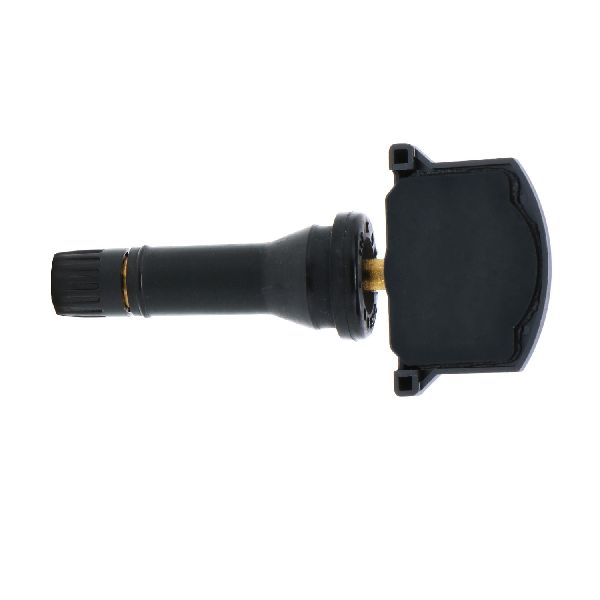
Est. part cost: $40-$70 - Failed Right Rear TPMS Sensor 🟡 Medium Probability TPMS sensors are powered by small, non-rechargeable batteries that have a finite lifespan, typically 5-10 years. As the 2017-2021 Bolt EV fleet ages, sensor battery failure is becoming more common. The sensors for the 2017-2021 Bolt EV operate on a 315 MHz frequency.
How to confirm: If key fob functions are working normally and only code C0765 is present, the sensor is the likely culprit. A TPMS diagnostic tool can be used to check the sensor's battery status and signal output directly at the wheel. If the tool cannot read the sensor, it has failed.
Typical fix: Replace the TPMS sensor in the right rear tire. The new sensor must then be registered to the vehicle 🎬 See this walkthrough on how to learn TPMS sensors using a TPMS relearn procedure, which can be done with a specific relearn tool (like the EL-50448) or by a tire shop. 🎬 Watch: How to use a relearn tool on your Bolt EV
Est. part cost: $25-$70
Rare But Worth Checking
- Dead Key Fob Battery: While it won't directly cause a C0765 code, a weak or dead key fob battery (typically a CR2032) can cause similar symptoms like 'No Remote Detected' and failure of passive entry/start, leading to confusion. Always check the simple things first. 🎬 Watch: How to replace your key fob battery
- Wiring or Connection Issue: A loose connection or damaged wire at the RCDLR module could cause intermittent communication issues, though this is less common than outright module or sensor failure.
- Radio Frequency Interference (RFI): GM TSB #PIC5650M notes that aftermarket electronics like dash cams or phone chargers can sometimes interfere with the key fob signal, causing 'No Remote Detected' messages and codes like B3935. While less likely to cause a persistent C0765, it can mimic RCDLR failure symptoms.
Diagnosis Steps
- Check for accompanying symptoms. Do the key fobs work? If not, the RCDLR is the primary suspect.
- If key fobs work, focus on the right rear TPMS sensor. Check the tire pressure manually to rule out an actual low-pressure situation.
- Use a TPMS diagnostic tool to attempt to read the right rear sensor. Check its reported battery life, pressure, and temperature. If the tool cannot get a reading, the sensor has failed.
- If the sensor reads fine with the tool but the code persists, or if multiple TPMS codes are present with key fob issues, the diagnosis points toward the RCDLR.
- Scan the vehicle with an advanced OBD-II scanner capable of reading manufacturer-specific codes and data. Look for codes C0750, C0755, C0760, and C0765, and note if they have a symptom code of ':29' (Too Few Pulses), which strongly indicates an RCDLR failure per TSB #16-NA-396.
- As a temporary measure, try a battery disconnect and reconnect to reset the RCDLR, which may restore function temporarily as suggested in an early version of the TSB (PIC6227).
- Inspect the wiring and connector for the RCDLR module for any visible damage or corrosion. The module is typically located in the rear of the vehicle.
- If the RCDLR is suspected, replacement and programming by a qualified technician is the final step.
Parts You'll Likely Need
- Remote Control Door Lock Receiver (RCDLR)
(OEM #13597910)— This is the most common cause when C0765 is accompanied by key fob failure, as documented in GM TSB #16-NA-396. This part number supersedes previous versions like 13510984 and 13583332.
Trusted brands: ACDelco, GM Genuine
OEM price range: $40-$70
Aftermarket price range: $30-$60 - Tire Pressure Monitoring System (TPMS) Sensor
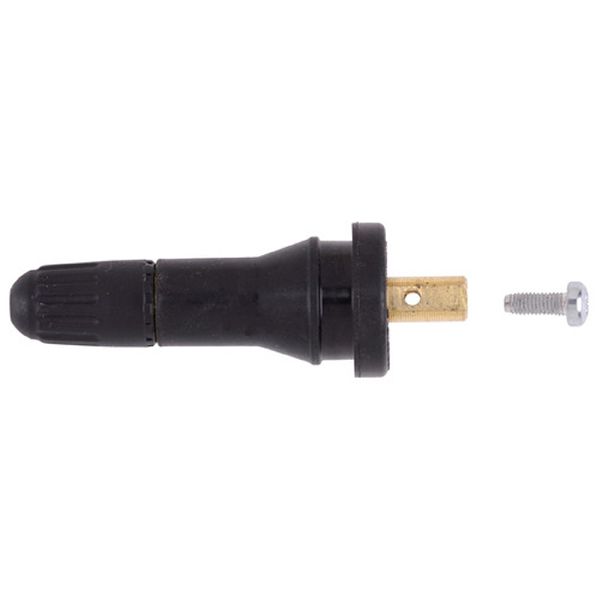
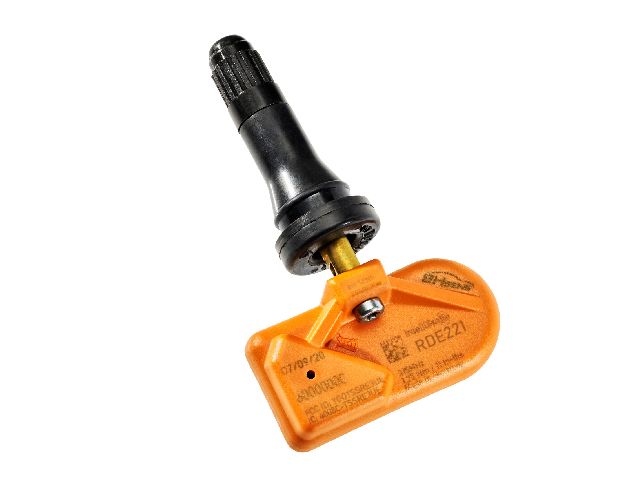
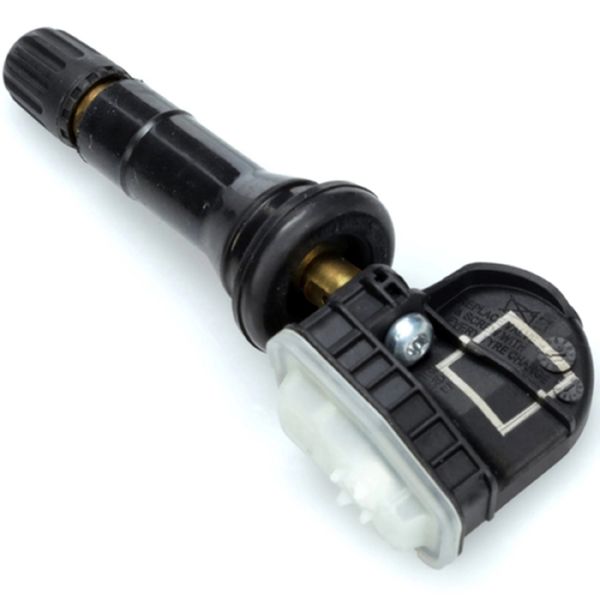
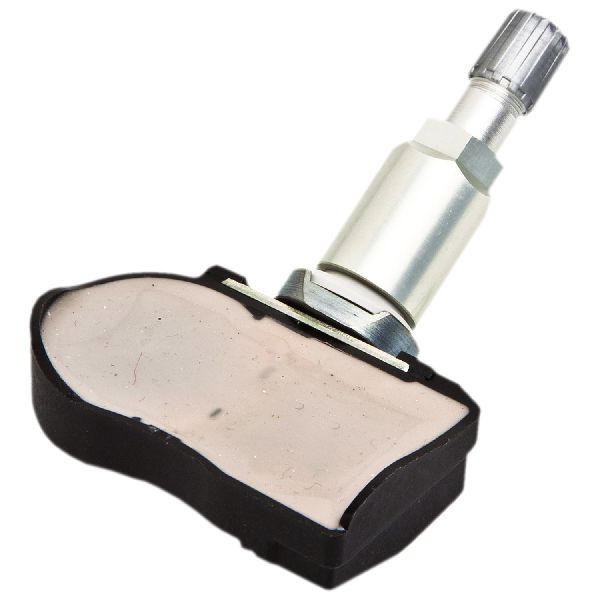
(OEM #13540604)— This is the likely fix if only C0765 is present and key fobs work correctly. The sensor's internal battery has a limited lifespan. Note that 2017-2021 models use a 315 MHz sensor.
Trusted brands: Schrader, ACDelco, Dorman, Bosch, VDO
OEM price range: $40-$70
Aftermarket price range: $25-$50
Related Codes That Often Appear With This One
- C0750 — This code is for the Left Front TPMS sensor. It often appears with C0765 when the RCDLR module fails, as the module loses communication with multiple or all sensors at once.
- C0755 — This code is for the Right Front TPMS sensor and commonly appears alongside C0765 during an RCDLR failure.
- C0760 — This code is for the Left Rear TPMS sensor. Seeing all four TPMS codes (C0750, C0755, C0760, C0765) together strongly points to a faulty RCDLR.
- B3055, B3060, B3935 — These are key and immobilizer-related codes that can appear with TPMS codes when there are broader communication issues involving the RCDLR and vehicle security systems, as noted in TSB #PIC5650M.
Technical Service Bulletins (TSBs) & Recalls
- 16-NA-396: Addresses intermittent key fob operation and TPMS light with codes C0750, C0755, C0760, and C0765, pointing to an internal failure of the Remote Control Door Lock Receiver. Instructs technicians to replace the module.
- PIC5650M: Lists C0765 among other codes that may be present with a no-start or start-stall concern involving the vehicle's security system, often related to Radio Frequency Interference.
- PIC6227: An earlier bulletin that described the same symptoms (TPMS and key fob failure) and suggested a battery disconnect/reconnect could temporarily restore function before a permanent fix was developed.
Platform-Specific Known Issues
- TSB #16-NA-396 directly addresses a condition where an internal failure in the Remote Control Door Lock Receiver (RCDLR) causes the TPMS light to illuminate with codes C0750, C0755, C0760, and/or C0765, along with intermittent or total loss of key fob functions. It specifically mentions looking for symptom code ':29' (Too Few Pulses).
- The RCDLR module (P/N 13597910) is a widely used part across many GM models from the 2010s, making this failure a common occurrence not just for the Bolt EV but for vehicles like the Cruze, Verano, and Encore as well.
Hidden / Shadow Codes Worth Checking
- Symptom Code :29: This sub-code, which accompanies the main DTC (e.g., C0765:29), translates to 'Too Few Pulses'. GM Technical Service Bulletin #16-NA-396 explicitly states that this symptom code points directly to an internal failure of the Remote Control Door Lock Receiver (RCDLR) module. It confirms the module is not receiving the expected number of radio frequency transmissions from the TPMS sensor. (see via A professional-grade scan tool capable of reading manufacturer-specific codes, such as the GM GDS2/Tech2 or equivalent.)
Scan Tool Commands That Help
- GM GDS2 (Global Diagnostic System 2): Module Diagnostics -> Remote Control Door Lock Receiver -> Configuration/Reset Functions — This function is required after physically replacing the RCDLR module. It is used to program the new module to the vehicle, which allows it to communicate with the vehicle's specific key fobs and TPMS sensors. Without this step, the new module will not function.
- ACDelco TDS (Technical Delivery System): Service Programming System (SPS) — This is the software suite used by GM dealers and independent shops (via subscription) to program new modules like the RCDLR. For advanced DIYers, a subscription can be purchased per-VIN, allowing them to use a compatible J2534 interface (like a VXDIAG VCX Nano) to perform dealer-level programming.
- DIC (Driver Information Center) + TPMS Relearn Tool (e.g., EL-50448): TPMS Relearn Mode — After replacing a TPMS sensor or rotating tires, this procedure is used to teach the RCDLR the new position of each sensor. It is initiated via the vehicle's DIC menu and requires a simple, low-cost tool to activate each sensor in sequence (LF, RF, RR, LR).
Wiring & Ground Locations
- Remote Control Door Lock Receiver (RCDLR) Module — On similar GM platforms like the Buick Verano, the RCDLR is located behind the rear passenger side C-pillar trim panel. This location is highly probable for the Bolt EV as it provides good reception for the rear tire sensors and is consistent with GM's design practices for this component.. This is the physical component that needs to be accessed and replaced when C0765 is present with key fob failures. Knowing its location is critical for the repair.
Real Owner Repair Stories
- VXdiagshop.com Blog / User Review (2017 Chevrolet Bolt EV) — Infotainment system frozen on the 'Bolt EV' logo screen. While not a C0765 code, the repair process is identical for any module replacement requiring programming.
❌ Tried (didn't work) A dealer quoted $2400 for the repair. The owner opted for a DIY approach.
✅ What actually fixed it The owner purchased a used radio module on eBay for $85. After installing it, the system had incorrect options (like heated seats the car didn't have). The final fix was purchasing a VXDIAG VCX Nano GM scanner ($109) and a two-year GM programming subscription for the VIN ($45). Using this setup, the owner successfully reprogrammed the module, restoring full and correct functionality. This demonstrates that a skilled DIYer can replace and program modules like the RCDLR for a fraction of the dealer cost.
When the Usual Fixes Don't Work
- While the overwhelming evidence points to replacing the RCDLR module when TPMS codes appear with key fob failure, there is a notable edge case. A separate GM service bulletin (16-NA-061, concerning other models but relevant in principle) highlights that a loose coaxial antenna connection at the RCDLR can produce symptoms identical to a complete module failure. Before committing to a costly module replacement and programming, a technician should first physically inspect the RCDLR and ensure its antenna cable is securely fastened, as this could be a much simpler and cheaper fix.
OEM Part Supersession History
13583332, 13510984→13597910— The original parts were prone to internal failure. The superseding part number is the updated and more reliable version.
Heads up: No incompatibility is noted. 13597910 is the correct service replacement for the earlier parts across all applicable GM models.
Helpful Videos
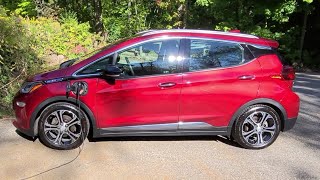
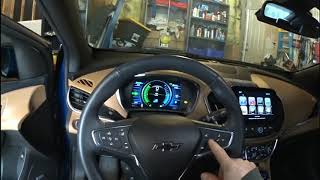
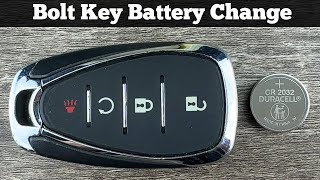
We Have This Part in Stock
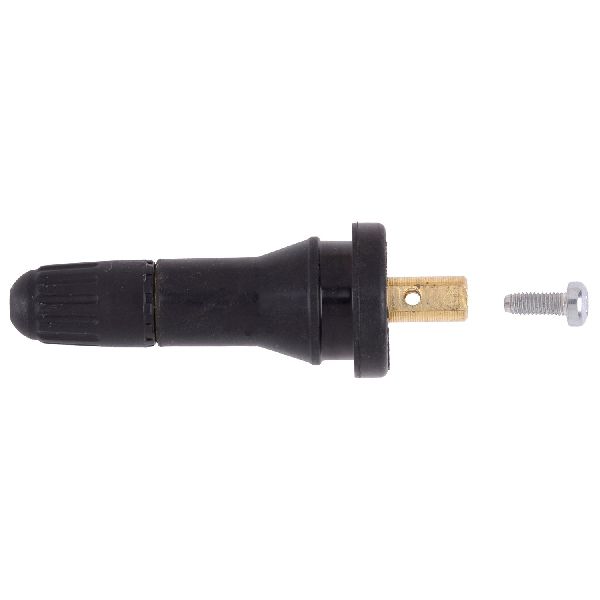

The information in this article is provided for general reference and educational purposes only. Vehicle specifications, procedures, and part compatibility can vary by production date, trim level, and region. Always consult your vehicle's factory service manual and verify part numbers before purchasing or performing repairs. Safety-critical components such as airbags, seat belts, and braking systems should be installed by a qualified professional.
- Chevrolet BOLT EV:
- 🎬 Helpful Videos
- 🛍️ Shop This Part
- What's Unique About the 2017-2021 Chevrolet BOLT EV
- Diagnostic Flowchart
- Symptoms You May Notice
- Most Likely Causes
- Rare But Worth Checking
- Diagnosis Steps
- Parts You'll Likely Need
- Related Codes That Often Appear With This One
- Technical Service Bulletins (TSBs) & Recalls
- Platform-Specific Known Issues
- Hidden / Shadow Codes Worth Checking
- Scan Tool Commands That Help
- Wiring & Ground Locations
- Real Owner Repair Stories
- When the Usual Fixes Don't Work
- OEM Part Supersession History
- 🎟️ Get 5% Off