

C0765 Cadillac CTS: Right Rear TPMS Fault Causes & Fixes (2007-2014)
On the 2007-2014 Cadillac CTS, code C0765 points to a problem with the right rear tire pressure (TPMS) sensor. If your key fob also stops working, the true culprit is likely a failed Remote Control Door Lock Receiver (RCDLR) module. If only the TPMS light is on, the sensor itself has probably failed, often due to a dead battery.
- C0765 means the car isn't receiving a signal from the right rear TPMS sensor.
- Before buying parts, check your key fob. If it's dead along with the TPMS light being on, the RCDLR module is the likely problem, not the sensor.
- If the key fob works fine, the TPMS sensor in the right rear tire has likely failed, usually due to a dead battery.
- Replacing the RCDLR module requires professional programming.
What's Unique About the 2007-2014 Cadillac CTS
On this generation of Cadillac CTS and many other GM vehicles, a single module—the Remote Control Door Lock Receiver (RCDLR)—is responsible for receiving signals from both the tire pressure sensors and the key fobs. This shared design creates a unique diagnostic challenge. A well-documented internal failure in the RCDLR can simultaneously disable the TPMS system and the keyless entry/start functions, leading to seemingly unrelated symptoms like a TPMS light and a "No Remote Detected" message on the DIC. This often causes owners to mistakenly blame the TPMS sensor when the receiver module is the actual root cause, a scenario detailed in GM TSB 16-NA-396.
Diagnostic Flowchart
Tap your situation to follow the diagnostic path that matches what you're seeing on this vehicle.
Generation note: This guide covers the end of the first-generation CTS (2007), the entire second generation (2008-2013), and the first year of the third generation (2014). The direct TPMS architecture and the use of a dual-function RCDLR module are common across these models, making the diagnosis and causes consistent.
Symptoms You May Notice
- Tire pressure monitor system (TPMS) warning light is illuminated on the instrument cluster, sometimes flashing for one minute before staying solid.
- Driver Information Center (DIC) displays a "Service Tire Monitor System" message.
- The pressure reading for the right rear tire shows as dashes ("--") on the DIC.
- If the RCDLR module is the cause, you will also experience key fob failure (no lock/unlock/remote start), a "No Remote Detected" message, and a potential no-crank/no-start condition.
- Replacing the TPMS sensor when the key fob is also inoperative. If both systems fail at the same time, the RCDLR module is the most likely cause, not the sensor.
- Replacing the key fob battery when the RCDLR has failed. While a dead fob battery is a common issue, it will not cause a TPMS warning light.
Most Likely Causes
- Failed Right Rear TPMS Sensor 🔴 High Probability TPMS sensor batteries have a finite lifespan, typically 5-10 years. Given the age of this CTS generation, battery failure is very common. The sensors are also vulnerable to physical damage or corrosion of the valve stem, especially in areas with road salt.
How to confirm: Use a TPMS activation tool to try and read the sensor. If the tool cannot get a reading after several attempts (sometimes requiring wheel rotation), the sensor is almost certainly dead. A professional scan tool may also show the sensor's battery status as 'Low'. If key fobs work perfectly, the sensor is the primary suspect.
Typical fix: Replace the right rear TPMS sensor and perform the TPMS relearn procedure. This can be done through the DIC menu, often by letting air out of each tire in sequence until the horn chirps, or with a TPMS tool.
Est. part cost: $30-$90 - Failed Remote Control Door Lock Receiver (RCDLR) 🟡 Medium Probability This is a documented failure point on many GM vehicles from this era, as detailed in TSB 16-NA-396. An internal fault in the module causes it to stop processing RF signals correctly from both TPMS sensors and key fobs.
How to confirm: The most telling symptom is the simultaneous failure of the TPMS and all key fobs. A professional scan tool may show C0765 with a specific symptom code of ':29 – Too Few Pulses', which strongly points to the RCDLR. The RCDLR is typically located in the rear of the vehicle, often behind a C-pillar trim panel or near the rear window.
Typical fix: Replace the RCDLR module. The new module must be programmed to the vehicle using a dealer-level scan tool (GM MDI) and the Service Programming System (SPS).
Est. part cost: $40-$120
Rare But Worth Checking
- Radio Frequency (RF) Interference: Aftermarket electronic devices like dash cams, phone chargers, or metallic window tint can sometimes emit RF noise that interferes with the RCDLR's ability to receive signals from the TPMS sensors. TSBs for similar GM models also point to poor antenna connections or disconnected coax cables at the RCDLR as a potential cause.
- Body Control Module (BCM) Issues: While less common for an isolated C0765 code, a faulty BCM can cause a wide range of communication issues. The BCM is the central hub that receives data from the RCDLR. On the CTS, the BCM is located on the driver's side, above the pedals. This is usually suspected only if many other unrelated electrical issues are present.
Diagnosis Steps
- Verify the primary symptom: Is the TPMS light on with a 'Service Tire Monitor System' message?
- Test all key fob functions (lock, unlock, remote start, passive entry). If the key fobs are also dead or working intermittently, the RCDLR is the primary suspect. 🎬 See how a faulty RCDLR affects both keyless entry and TPMS.
- If key fobs work normally, the issue is likely isolated to the right rear TPMS sensor or its signal.
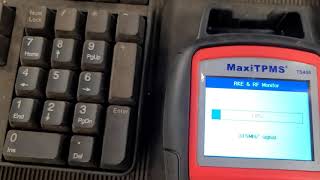
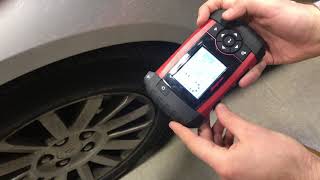
- Use a TPMS activation tool to attempt to read the signal from the right rear sensor. If it fails to respond after several attempts, the sensor needs to be replaced.
- If the sensor responds to the tool but the code remains, attempt a TPMS relearn procedure. On many GM vehicles, this is initiated through the DIC menu or by holding the lock and unlock buttons on the fob until the horn chirps, then activating each sensor starting with the left front. 🎬 Watch: How to perform a manual TPMS relearn on a CTS.
- If symptoms point to the RCDLR, use a professional scan tool to check for communication with the module and look for C0765 with symptom code ':29'.
- Inspect for any obvious sources of RF interference near the RCDLR module's location (often in the headliner or behind the rear C-pillar trim).
- Check for related TSBs. TSB 16-NA-396 is key for RCDLR failure, while others like 16-NA-061 describe identical symptoms caused by disconnected coax cables or antennas for the RCDLR, which is a valuable diagnostic path.
Parts You'll Likely Need
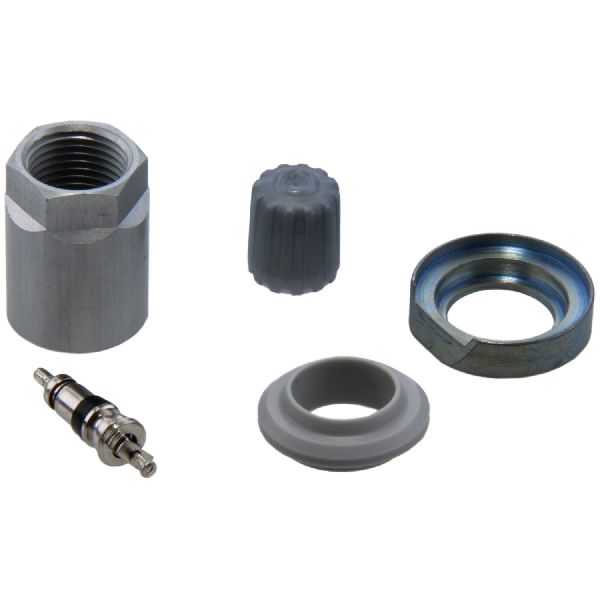
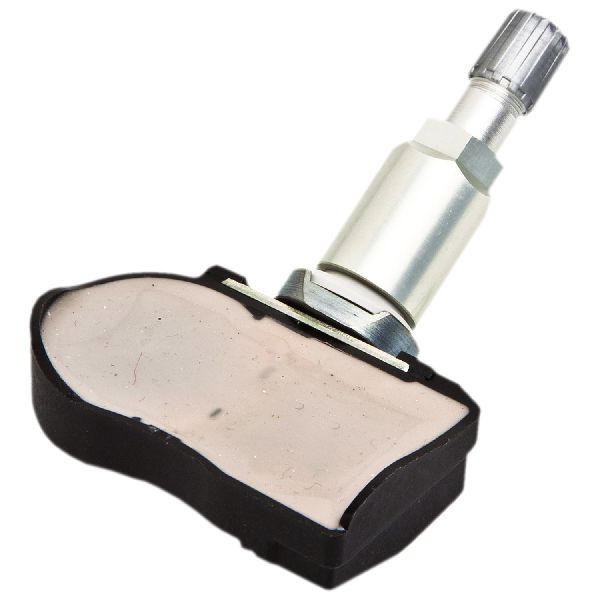
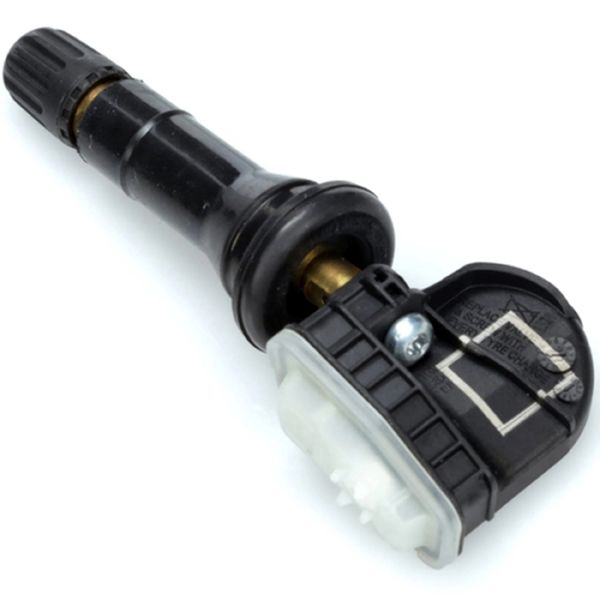
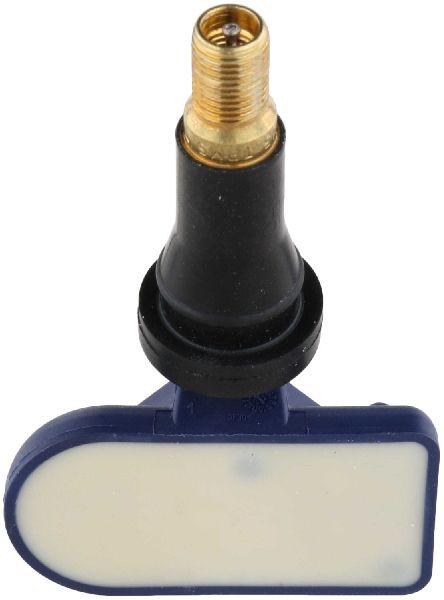
- Tire Pressure Monitoring System Sensor
(OEM #13586335, 20925924)— This is the most common failure point, usually due to an expired internal battery (5-10 year life). The sensor is a self-contained unit that must be replaced entirely.
Trusted brands: ACDelco, Schrader, Dorman, VDO
OEM price range: $60-$90
Aftermarket price range: $30-$50 - Remote Control Door Lock Receiver (RCDLR)
(OEM #13597910 (supersedes 13510984, 13583332))— This module fails internally, causing it to lose communication with both TPMS sensors and key fobs. TSB 16-NA-396 identifies this as a common issue on GM vehicles. Part number 13597910 is a common replacement.
Trusted brands: ACDelco (OEM)
OEM price range: $70-$120
Aftermarket price range: $40-$80
Related Codes That Often Appear With This One
- C0750, C0755, C0760 — These are the codes for the other three tire pressure sensors (Left Front, Right Front, Left Rear). If the RCDLR fails, it's possible for multiple or all sensor codes to appear at once.
- B3055, B3060, B3935 — These are security and key-related codes. They may appear alongside C0765 if there is a broader communication failure involving the BCM, RCDLR, or immobilizer system, as noted in TSB #PIC5650M.
Technical Service Bulletins (TSBs) & Recalls
- PIC5650M: Mentions C0765 in a group of codes related to no-crank/start-stall issues, pointing to a possible module communication problem.
- 16-NA-396: The most relevant TSB. It directly links TPMS codes C0750-C0765 with symptom code ':29 – Too Few Pulses' to an internal failure of the Remote Control Door Lock Receiver, which also causes key fob inoperability.
- PIC5392B: A TSB for 2013 CTS models with delayed passive entry door unlocking, which was resolved by reprogramming the RCDLR, showing the module can have various software-related issues.
- 16-NA-061: While for other GM SUVs, this bulletin describes identical symptoms (TPMS codes, no fob detection) caused by disconnected coax cables or antennas for the RCDLR, which is a valuable diagnostic path if the RCDLR module itself is not faulty.
Platform-Specific Known Issues
- The primary vehicle-specific issue is the dual-function RCDLR module that processes both TPMS and keyless entry signals. Its failure is a well-documented problem that presents as a TPMS fault, often misleading the diagnosis.
- A user on CorvetteForum with an '08 model experienced code C0765, highlighting that this issue is common across GM's performance platforms of the era. The fix was a new sensor and a relearn procedure.
Hidden / Shadow Codes Worth Checking
- C0765 :29: Too Few Pulses. This symptom code is explicitly mentioned in TSB 16-NA-396 and strongly indicates an internal failure of the RCDLR module. It means the receiver is not getting the expected number of RF transmissions from the sensor. (see via GM Tech 2, GDS2, or equivalent professional scan tool capable of reading manufacturer symptom bytes.)
- C0765 :03: Low Voltage. This symptom code points to a voltage issue in the sensor circuit, which is most often the sensor's own internal battery dying. (see via Professional scan tool capable of reading manufacturer symptom bytes.)
- C0765 :39: Internal Malfunction. This is a more general failure code for the sensor itself, indicating an internal fault beyond just a weak battery or signal transmission issue. (see via Professional scan tool capable of reading manufacturer symptom bytes.)
Scan Tool Commands That Help
- GDS2 (GM Diagnostic Software): Module Diagnostics > Remote Control Door Lock Receiver > Configuration/Reset Functions > Add or Replace Key Fobs — This function is required after replacing the RCDLR module to program the existing (or new) key fobs to the new module so they can communicate with the vehicle.
- GDS2 (GM Diagnostic Software): Module Diagnostics > Remote Control Door Lock Receiver > Data Display — Use this to view live data from the RCDLR, including the battery status of individual TPMS sensors, which can help confirm a dead sensor battery before replacement.
- EL-52545 (TPMS and RF Tool): Signal Detection Screen — This special tool is used at the dealer level to read the VIN information embedded in a key fob's RF signal. This helps verify that the fob being diagnosed belongs to the vehicle being serviced, a required step for certain warranty claims.
Wiring & Ground Locations
- RCDLR Module — For CTS sedans, it is located in the middle of the right 'C' pillar. For the CTS wagon, it is in the right rear of the roof area.. Physical access is required to test the module's connections or to replace it. Its location in the rear makes it susceptible to signal loss from the front tires, especially if the antenna connection is compromised.
- RCDLR Antenna System — The system is comprised of the RCDLR, a coax cable, an antenna amplifier, and the antenna itself which is integrated into the right rear glass.. A disconnected coax cable at the RCDLR or at the antenna amplifier is a known cause of TPMS codes and key fob issues, per TSB 16-NA-061. Checking these connections is a critical step before replacing the RCDLR module.
- G103 — Located at the left rear of the engine compartment on the cowl, above the brake booster.. On some models, this is the primary ground for the BCM and the Remote Door Lock Receiver. A poor connection here can cause intermittent communication issues for the entire TPMS and keyless entry system.
- G402 — Located behind the left side of the rear seat.. On 2014 CTS Coupe models, wiring diagrams show this as the ground location for the RCDLR. A loose or corroded ground here would directly impact the module's operation.
OEM Part Supersession History
13510984, 13583332→13597910— Standard part evolution for improved reliability or manufacturing changes.
Model Year Variations Within This Range
- 2008-2014: The physical location of the RCDLR module varies by body style. On the sedan, it is in the right 'C' pillar, while on the wagon, it is in the right rear of the roof.
- 2007-2014: The specific ground point used by the RCDLR may vary. Some service documents point to G103 on the cowl as the relevant ground for the receiver, while later model wiring diagrams (e.g., 2014 Coupe) show the ground at G402 behind the rear seat. Verifying the correct diagram for the specific year and model is important.
Helpful Videos
We Have This Part in Stock


The information in this article is provided for general reference and educational purposes only. Vehicle specifications, procedures, and part compatibility can vary by production date, trim level, and region. Always consult your vehicle's factory service manual and verify part numbers before purchasing or performing repairs. Safety-critical components such as airbags, seat belts, and braking systems should be installed by a qualified professional.
- Cadillac CTS:
- 🎬 Helpful Videos
- 🛍️ Shop This Part
- What's Unique About the 2007-2014 Cadillac CTS
- Diagnostic Flowchart
- Symptoms You May Notice
- Most Likely Causes
- Rare But Worth Checking
- Diagnosis Steps
- Parts You'll Likely Need
- Related Codes That Often Appear With This One
- Technical Service Bulletins (TSBs) & Recalls
- Platform-Specific Known Issues
- Hidden / Shadow Codes Worth Checking
- Scan Tool Commands That Help
- Wiring & Ground Locations
- OEM Part Supersession History
- Model Year Variations Within This Range
- 🎟️ Get 5% Off