

OBD-II Code C0765: Tire Pressure Sensor Signal Fault
What C0765 means, why it triggers, and how to fix it
- Test your key fob from 20 feet away before buying parts; if it fails alongside the TPMS light, the Remote Control Door Lock Receiver (RCDLR) is the culprit, not the tire sensor.
- Do not replace a TPMS sensor if your key fob is dead, as this $75-$220 repair will not fix the underlying RCDLR module failure.
- Check your scanner for symptom byte ':29' alongside code C0765, which GM TSB 16-NA-396 explicitly identifies as an internal RCDLR failure requiring module replacement.
- Replacing the RCDLR module requires professional GM GDS2/SPS software to program the new part to your vehicle's VIN, making this a $200-$400 shop repair rather than a DIY job.
What Does C0765 Mean?

C0765 is a manufacturer-specific code, primarily used by General Motors, indicating the vehicle's computer lost communication with the right rear tire pressure sensor. While it points to the right rear sensor, the most critical clue is your key fob. If your key fob also stopped working, the central receiver module (RCDLR) failed, not the tire sensor.
Technical definition: The vehicle's control module, typically the Remote Control Door Lock Receiver (RCDLR) or Body Control Module (BCM), failed to receive a valid signal from the right rear tire pressure monitoring (TPM) sensor for over 18 minutes while driving above 25 mph. This results from a dead sensor battery, radio frequency interference, or an internal fault in the receiver module.
Can I Drive With C0765?
Yes, But With Caution. Yes, you can drive, but your Tire Pressure Monitoring System (TPMS) is disabled. You will not get a warning for a low tire, increasing the risk of a blowout. Check your tire pressures manually. If a failing RCDLR module is the cause, you risk a 'No Remote Detected' no-start condition, which strands you without warning.
Common Causes

- Failed Remote Control Door Lock Receiver (RCDLR) Module (Very Common) — This is the most frequent cause on GM vehicles. The RCDLR processes signals from both the TPMS sensors and the key fobs. When it fails internally, both systems stop working simultaneously. GM Technical Service Bulletin #16-NA-396 🎬 Watch: Diagnosing a failed RCDLR module on a GM truck documents this exact failure.
- Dead TPMS Sensor Battery (Common) — TPMS sensors have a sealed internal 3-volt lithium-ion battery with a 5-10 year lifespan. When the battery dies, the entire sensor unit requires replacement. This is the definitive cause if C0765 appears alone and your key fobs work perfectly.
- Damaged or Clogged TPMS Sensor (Less Common) — Potholes, curb strikes, or careless tire mounting physically break the sensor inside the tire. Additionally, using non-GM-approved liquid tire sealant clogs the pressure sensing port, forcing a sensor replacement.
- RCDLR Antenna or Wiring Issue (Less Common) — A loose or corroded coaxial antenna cable at the RCDLR module causes intermittent signal loss. This is a known issue on GM trucks and SUVs, documented in TSBs PIT5446A and 16-NA-061.
- Radio Frequency (RF) Interference (Uncommon) — Cheap aftermarket electronics, such as LED lights, dash cams, or USB phone chargers, emit RF interference that jams the 315MHz or 433MHz signal used by the TPMS and key fob systems.
- RCDLR Software Corruption / Low Voltage (Rare) — A failing car battery causes low voltage drops during startup, which corrupts the RCDLR programming. TSB 08-03-16-001B notes that some models lose RCDLR memory after a battery replacement, requiring a dealer reprogram.
Symptoms

- TPMS Warning Light On or Flashing — The TPMS light flashes for 60 seconds at startup and then stays solid. The Driver Information Center (DIC) displays 'Service Tire Monitor System' and shows dashes (--) instead of tire pressures.
- Key Fob Not Working — The remote functions (lock, unlock, remote start, panic) become completely inoperative or suffer severely reduced range. This confirms a failed RCDLR module.
- "No Remote Detected" Message — Push-to-start vehicles display this message and refuse to start unless you place the fob in the emergency transmitter pocket.
Diagnostic Flowchart

Tap your situation to follow the diagnostic path that matches what you're seeing on this code.
Common Fixes & Costs
- Replace Remote Control Door Lock Receiver (RCDLR) Module — Parts: $40-$120, Labor: $150-$250, ~1.5 hr book time (Professional)
- Replace Failed TPMS Sensor — Parts: $25-$70, Labor: $50-$150, ~0.8 hr book time (Intermediate)
- Reprogram RCDLR Module — Parts: $0, Labor: $100-$200, ~1 hr book time (Professional)
- Repair RCDLR Wiring/Antenna Connection — Parts: $5-$50, Labor: $150-$300, ~1.5 hr book time (Intermediate)
- Remove Source of RF Interference — Parts: $0, Labor: $0, ~0.5 hr book time (Beginner)
Used vs. New Parts: Buying Guide
When a used part is worth it: Buying a used TPMS sensor is never recommended due to its finite 5-10 year battery life. A used RCDLR module from a low-mileage vehicle is cost-effective but still requires professional programming.
Donor-vehicle mileage cap: roughly under 60000 miles for the part to have meaningful remaining life.
Donor quality checklist:
- For an RCDLR, match the part number exactly.
- Ensure the donor vehicle was not scrapped due to flood or fire damage.
- Avoid buying used TPMS sensors entirely.
Decision logic:
- If The part is a TPMS sensor → Always buy new. The battery is non-replaceable and has a limited lifespan.
- If The part is an RCDLR module and budget is the primary concern → A used part is acceptable, but factor in the mandatory programming cost.
- If You want a warranty and peace of mind → Buy a new OEM or high-quality aftermarket RCDLR. The part cost is low and the warranty protects against premature failure.
Warranty tradeoff: Used RCDLR modules typically have a 30-90 day warranty. New aftermarket parts carry a 1-year to limited lifetime warranty. New OEM parts installed by a dealer include a 12-month/12,000-mile warranty.
Worst-case if a used part fails: $200-$400 if a used RCDLR fails after the warranty period, as you must pay for programming labor again.
What Happens If You Wait — Timeline
- Immediate: TPMS light flashes then stays solid. DIC shows 'Service Tire Monitor System'. You lose low-tire warnings for the right rear wheel. (MPG impact: 0%% · Added cost: $0)
- 1 week - 3 months: If the RCDLR is failing, key fob range progressively worsens. The 'No Remote Detected' message appears intermittently when starting the car. (MPG impact: 0-2% (if a slow leak goes unnoticed)% · Added cost: $150-$400 (Cost of a new tire if a slow leak leads to sidewall destruction).)
- 3-6 months: The RCDLR module fails completely. Key fobs stop working. The vehicle intermittently fails to start, requiring the fob to be placed in the transmitter pocket. (MPG impact: 0%% · Added cost: $150-$250 (Cost of a tow when the 'No Remote Detected' issue leaves you stranded).)
- 6+ months: A 'No Remote Detected' no-start condition becomes permanent. A high-speed blowout from an undetected low tire causes loss of control and suspension damage. (MPG impact: N/A% · Added cost: $500-$2500+)
Cost of Not Fixing It
- Immediate: No warning for a low tire, increasing the risk of a tire blowout, loss of control, and accidents. Reduced fuel economy and uneven tire wear occur if a tire is actually low. (Added cost: Negligible)
- 1-6 months: If the RCDLR module is the cause, you risk a sudden 'No Remote Detected' no-start condition, requiring a tow. A tire blowout from an undetected slow leak destroys the tire. (Added cost: $150-$1500+)
- 6+ months: Continued risk of being stranded due to RCDLR failure. A high-speed blowout causes significant body damage, suspension failure, or a serious accident. (Added cost: $500-$2500+)
Diagnosis Steps
- Test Your Key Fob
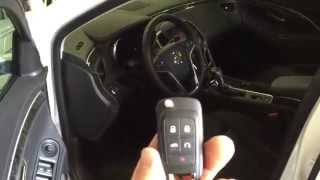
Stand 20 feet from your car and try to lock and unlock the doors. If the key fob fails, the RCDLR module is the culprit, not the tire sensor. If the fob works normally, proceed to the next steps.
Tools: Your key fob (Beginner) - Read All Trouble Codes & Symptom Bytes
Use an OBD-II scanner that reads Chassis (C) and Body (B) codes. Multiple TPMS codes (C0750, C0755, C0760) confirm a central RCDLR failure. Check symptom bytes: ':29' (Too Few Pulses) confirms an RCDLR fault, while ':03' (Low Voltage) or ':39' (Internal Malfunction) points to the sensor.
Tools: Professional OBD-II Scanner (Intermediate) - Use a TPMS Diagnostic Tool
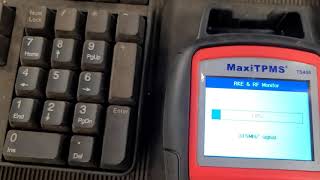
If your key fob works and only C0765 is present, use a TPMS tool to activate the sensor. If the tool gets no response or reads 'Low Battery', the sensor failed and requires replacement.
Tools: TPMS diagnostic/activation tool (Intermediate) - Check for RF Interference
If the problem is intermittent, unplug all aftermarket 12V accessories (phone chargers, dash cams, LED lights) and drive. These devices cause radio frequency interference that blocks sensor signals.
Tools: None (Beginner) - Inspect RCDLR Antenna Connection
On trucks and SUVs, visually inspect the coaxial cable connection at the RCDLR module (often behind a rear interior trim panel or above the headliner) to ensure it is secure, per TSB 16-NA-061.
Tools: Trim removal tools (Intermediate) - Check RCDLR Power and Ground
Back-probe the RCDLR connector with a multimeter. Verify 12.0-14.5V on the power wire and less than 0.1V drop on the ground circuit. Readings outside these ranges indicate a wiring or fuse issue.
Tools: Multimeter, vehicle wiring diagram (Advanced) - Professional Diagnosis and Programming
Replacing the RCDLR requires programming the new module to the vehicle using a GM Tech 2 or GDS2 scan tool and the Service Programming System (SPS). A shop must perform this step to complete the repair.
Tools: Professional diagnostic scan tool (e.g., GM GDS2) (Professional)
When This Code Triggers (Freeze-Frame Conditions)
- Vehicle Speed: 25-65 mph (The code sets when the vehicle is in motion, as sensors must rotate to transmit data. The fault logs after driving continuously above 25 mph for several minutes.)
- Time Since Ignition On: > 10 minutes (The module must fail to receive the sensor's signal for a predetermined period before setting the code, preventing false codes from brief signal interruptions.)
- System Voltage: 11.5-14.5V (A low system voltage (below 11V) at the time of the fault indicates a weak vehicle battery is contributing to the electronic module malfunction.)
Related Codes
- C0750, C0755, C0760 — These are the codes for the other three TPMS sensors. If they appear alongside C0765, the central RCDLR module failed. It is highly unlikely all four sensors fail independently at once.
- B3105 — Indicates a keyless entry transmitter signal malfunction. Seeing B3105 with C0765 is a definitive sign that the RCDLR module is the root cause, not the tire sensor.
- B3055 — A key-related security code. When the RCDLR fails, it disrupts communication with the key's transponder, logging B3055 alongside TPMS codes and causing a no-start condition.
- U0140 — Lost Communication With Body Control Module (BCM). Appears if the RCDLR fails in a way that disrupts the serial data line, indicating a broader communication network issue.
Climate & Environmental Factors
- Cold Weather: Extreme cold slows the chemical reaction inside the TPMS sensor's lithium-ion battery, causing a voltage drop. This weakens the transmission signal, triggering an intermittent C0765 code that disappears once the tires warm up.
- High Humidity: High humidity accelerates corrosion on wiring connectors, including the RCDLR power, ground, or antenna connections. This increases resistance and causes intermittent signal loss.
How to Talk to a Mechanic About This Code
Say this: "I have a TPMS light on and my key fobs stopped working. The code is C0765. I suspect the RCDLR module based on GM TSB 16-NA-396. I need a diagnostic to confirm if the issue is the module or the sensor, and I need to know if you have the equipment to program a new RCDLR module."
Mentioning the key fob symptom and the specific TSB directs the technician to the RCDLR module and prevents a simple, incorrect sensor replacement. Asking about programming capability upfront saves you a wasted trip.
Avoid saying:
- 'My tire light is on, can you fix it?'
- 'Just replace the right rear tire sensor.'
- 'Whatever you think is best.'
Questions to ask before authorizing the repair:
- How did you determine it was the RCDLR module versus the sensor? Did you find other TPMS or Body codes?
- If you are replacing the RCDLR, is the cost of programming the new module included in the labor estimate?
- If you believe it's just the sensor, how did you rule out the RCDLR, given that my key fob is acting up?
- What is the warranty on the new part and the labor for this specific repair?
Where to Take It: Dealer vs Independent vs Chain
- Dealer:
Safest, most reliable option. The required module programming makes the dealer a strong choice if you want a one-stop, guaranteed fix.
Best for: Vehicles under warranty., Guaranteed access to GM-specific programming tools (GDS2/SPS) required for RCDLR replacement., Technicians most familiar with TSBs like #16-NA-396.
Downsides: Highest labor rates., Less willing to install customer-supplied parts. (Typical cost: +50% vs. baseline) - Independent Shop:
Best value IF you vet the shop first. You must call and ask, 'Can you program a new RCDLR module for a Chevy/GMC?' If they can, they are an excellent alternative to the dealer.
Best for: Out-of-warranty vehicles where cost is a major factor., Simple, confirmed TPMS sensor replacements.
Downsides: MUST verify they have GM-specific diagnostic and programming software (e.g., Autel MaxiSys, GDS2) before you go., Quality and expertise vary widely. (Typical cost: +0% vs. baseline) - Chain Shop:
AVOID for initial diagnosis. These shops are a primary source of the 'replaced sensor but light came back' problem. Only use them if you have already confirmed the fault is a sensor.
Best for: Selling you new tires., Replacing a single, confirmed-bad TPMS sensor when your key fobs work perfectly.
Downsides: Very unlikely to have the tools or expertise to diagnose or replace the RCDLR module., High likelihood of misdiagnosing the RCDLR failure as a bad sensor. (Typical cost: -10% vs. baseline)
When to Walk Away From the Repair
If the estimated repair cost exceeds 40-50% of the car's private-party value, consider selling or trading in the vehicle instead of repairing it.
- Car worth $8000, fix is $400: Fix it. This repair cost is well below the threshold and solves a major usability and safety issue.
- Car worth $4000, fix is $400: Fix it. The cost is only 10% of the car's value and restores key functionality (keyless entry) and safety (TPMS).
- Car worth $2000, fix is $400: Borderline. The repair is 20% of the car's value. If the car needs other work, consider selling 'as-is'.
What Scan Tool You Need for This Code
Minimum: A scanner that reads manufacturer-specific Chassis (C) and Body (B) trouble codes for your vehicle's brand. A basic code reader that only shows Powertrain (P) codes will show 'No Codes Found'.
A $20 scanner cannot see the C0765 code or related Body (B) codes like B3105 (key fob). It also cannot read the critical 'symptom bytes' GM uses to differentiate a sensor failure from a module failure.
Budget: BlueDriver Pro (~$90) — Reads and clears enhanced codes like ABS, Airbag, and TPMS for GM vehicles. It allows you to see the C0765 code and any related B-codes, essential for the initial diagnosis.
Mid-range: Foxwell NT510 Elite / NT710 (GM-specific) (~$180) — Offers OE-level diagnostics for GM, including reading symptom bytes (like the critical ':29' for RCDLR failure). It provides bidirectional controls to test components.
Professional: Autel MaxiCOM MK808 / MX900 (~$450-600) — Provides full bidirectional control, all-system scanning, and advanced service functions. It provides the professional-level diagnostics needed to be 100% certain of the failure before sending it for programming.
Rent vs buy: Most parts store loaner tools are basic readers that cannot see the Chassis or Body codes required to diagnose C0765. Buying a budget pick like the BlueDriver is a worthwhile investment.
How to Clear the Code After You Fix It
- Use an OBD-II scan tool to clear the Chassis (C) codes.
- Perform the TPMS sensor relearn procedure as specified in the owner's manual.
- Drive the vehicle for at least 15 minutes at speeds above 30 mph to allow the system to verify the repair.
Drive cycle (~15 minutes): Drive the vehicle for 15 minutes at a steady speed above 30 mph. This allows the RCDLR to receive signals from all sensors and confirm the system is functional. The TPMS light will extinguish.
Readiness monitors affected: Not Applicable
Watch out for:
- Clearing the code with a scanner will not fix the issue; the light returns until the faulty component is replaced and programmed.
- Forgetting to perform the TPMS relearn procedure after replacing a sensor prevents the system from recognizing the new part.
- Disconnecting the battery does not clear this code from the module's memory.
Will This Fail Emissions / State Inspection?
No — by itself this code doesn't fail OBD inspection (but it can keep readiness monitors from setting, which causes a separate fail).
- California: A TPMS light will NOT cause a failure of the California smog inspection, which only checks emissions-related components.
- New York: A malfunctioning TPMS system (flashing light) is a cause for failure in the NYS safety inspection.
- Texas: A TPMS warning light is NOT a cause for failure in the Texas state safety inspection.
Most Commonly Affected Vehicles
- Chevrolet Equinox (2010-2022) — Extremely common for the RCDLR module to fail, causing C0765 and key fob inoperability. Covered in TSB #16-NA-396. The RCDLR is typically located behind the passenger side C-pillar trim.
- GMC Acadia (2007-2022) — Prone to both RCDLR failure and individual sensor failure. 2007-2016 models generally use 315 MHz, while 2017-2022 models use 433 MHz.
- Chevrolet Malibu (2007-2022) — RCDLR failure is a primary cause. TSB 08-03-16-001B notes that 2008 models lose RCDLR programming after a battery change.
- Chevrolet Cruze (2011-2018) — The RCDLR module is a known weak point, leading to simultaneous TPMS and key fob failure, as documented in TSB 16-NA-396.
- Chevrolet Volt (2011-2018) — C0765 combined with key fob failure is a definitive indicator of a failed RCDLR module, per TSB 16-NA-396.
- Buick Enclave / Verano / LaCrosse (2012-2017) — These models share the GM RCDLR architecture and are susceptible to the exact same failure mode where the TPMS light and key fob issues appear together.
- GMC Yukon / Yukon XL / Chevrolet Suburban / Tahoe (2015-2022) — These models suffer from issues with the RCDLR antenna and its wiring, as noted in TSB PIT5446A and 16-NA-061. The RCDLR is located above the rear cargo area headliner.
Manufacturer-Specific Notes
- General Motors (Chevrolet, GMC, Buick, Cadillac): The Remote Control Door Lock Receiver (RCDLR) is the shared receiver for both TPMS and key fob signals. An internal failure of this module is the most common cause for C0765.
- General Motors: TSB #16-NA-396 instructs technicians that when TPMS codes appear with key fob issues and a ':29' symptom byte, the cause is an internal RCDLR failure requiring module replacement.
- General Motors: A professional scan tool reads symptom bytes. Code C0765 with symptom ':29' (Too Few Pulses) points to RCDLR failure. Symptom ':03' (Low Voltage) or ':39' (Internal Malfunction) points to the sensor.
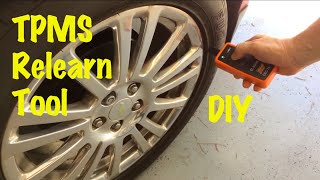
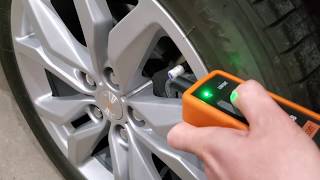
- General Motors: Many GM vehicles require a specific TPMS relearn tool (e.g., EL-50448) to register new sensors. The old method of letting air out of the tires does not work on these models.
Real Owner Stories
2016 Chevy Malibu with 85,000 miles - The Classic Misdiagnosis
The TPMS light came on with code C0765. The owner took it to a local tire shop.
What they tried:
- The tire shop assumed the sensor was bad and replaced the right rear TPMS sensor for $120. The light returned the next day.
- The owner noticed the key fob only worked when standing right next to the car.
- Took the car to a dealership, which diagnosed a failed RCDLR module.
Outcome: The dealership replaced and programmed a new RCDLR module for $450. This permanently fixed both the TPMS light and the key fob problem. The initial sensor replacement was unnecessary.
Lesson: If your key fob acts up, the problem is the RCDLR module, not the tire sensor. Test your fob from 20 feet away before paying for a sensor replacement.
2017 GMC Sierra at 100,000 miles - The Intermittent 'Easy' Fix
TPMS light and 'Service Tire Monitor System' message appeared randomly. Key fobs worked fine. C0765 was stored.
What they tried:
- The owner noticed the problem worsened after car washes or heavy rain.
- Following TSB 16-NA-061, he located the RCDLR module behind the rear seat trim panel.
Outcome: The owner found the coaxial antenna cable for the RCDLR was slightly loose. He disconnected it, cleaned the contacts, and re-seated it firmly. The C0765 code never returned. Total cost: $0.
Lesson: For intermittent issues where the key fob still works, check the RCDLR antenna connection before replacing parts, especially on GM trucks and SUVs.
2014 Chevy Equinox with 115,000 miles - The Inevitable RCDLR Failure
TPMS light came on, and within a day, both key fobs completely died. Codes C0750, C0755, C0760, and C0765 were all present.
What they tried:
- The owner purchased an OEM ACDelco RCDLR module online for $70.
- He called independent shops until he found one with GM programming software.
Outcome: The shop installed the supplied part and programmed it to the vehicle for $250 in labor. The $320 total repair fixed all issues.
Lesson: When all TPMS codes appear at once and key fobs die, it is a textbook RCDLR failure. Save money by finding an independent shop with GM Service Programming System (SPS) software.
How to Prevent This Code From Triggering
- Replace all four TPMS sensors when buying new tires on a vehicle older than 7 years. (Every 7-10 years or with new tires) — Sensor batteries have a 5-10 year lifespan. Replacing them all at once during a tire change saves future labor costs, as they fail around the same time.
- Avoid cheap, unshielded 12V aftermarket electronics. (Always) — Low-quality USB chargers, dash cams, and LED bulbs emit Radio Frequency (RF) interference that jams the 315MHz/433MHz signals from TPMS sensors and key fobs.
- Maintain a healthy vehicle battery. (Ongoing) — A weak battery causes low voltage during startup, triggering glitches and communication errors in sensitive electronic modules like the RCDLR.
Frequently Asked Questions
Why did my key fob stop working at the same time as my TPMS light came on?
Both systems use the same receiver module, called the Remote Control Door Lock Receiver (RCDLR). When this module fails, it stops receiving signals from both the tire sensors and the key fob. This is a highly documented failure on many GM vehicles.
I replaced the TPMS sensor but the code C0765 came back. What's wrong?
You likely misdiagnosed a failed RCDLR module as a bad tire sensor. If your key fob is also malfunctioning, the RCDLR is the culprit and must be replaced.
Can I just replace the battery in the TPMS sensor?
No, the batteries are sealed inside the sensor unit and are not replaceable. You must replace the entire sensor when its battery dies, which typically occurs after 5-10 years.
I replaced the RCDLR module myself, why isn't it working?
A new RCDLR module is not plug-and-play and requires professional programming to communicate with your vehicle's computers. You must take the vehicle to a dealership or equipped independent shop to program the module to your specific VIN.
Why is my TPMS light flashing?
A TPMS light that flashes for 60-90 seconds upon startup and then stays solid indicates a system fault, such as a dead sensor or bad module. A light that simply turns on and stays solid means one or more tires are under-inflated.
What is a TPMS relearn procedure?
A relearn procedure tells the vehicle's computer the unique ID and position of each TPMS sensor. It is required after replacing a sensor or rotating the tires. Many GM vehicles require a specific $15-$50 activation tool to complete this process.
How much does it cost to fix code C0765?
Replacing a single TPMS sensor costs between $75 and $220 for parts and labor. Replacing and programming a failed RCDLR module costs between $200 and $400.
Can a weak car battery cause TPMS problems?
Yes, a failing car battery causes low voltage drops that confuse sensitive electronics like the RCDLR. This triggers false trouble codes and communication errors.
Key Takeaways
- Test your key fob from 20 feet away before buying parts; if it fails alongside the TPMS light, the Remote Control Door Lock Receiver (RCDLR) is the culprit, not the tire sensor.
- Do not replace a TPMS sensor if your key fob is dead, as this $75-$220 repair will not fix the underlying RCDLR module failure.
- Check your scanner for symptom byte ':29' alongside code C0765, which GM TSB 16-NA-396 explicitly identifies as an internal RCDLR failure requiring module replacement.
- Replacing the RCDLR module requires professional GM GDS2/SPS software to program the new part to your vehicle's VIN, making this a $200-$400 shop repair rather than a DIY job.
Helpful Videos

The information in this article is provided for general reference and educational purposes only. Vehicle specifications, procedures, and part compatibility can vary by production date, trim level, and region. Always consult your vehicle's factory service manual and verify part numbers before purchasing or performing repairs. Safety-critical components such as airbags, seat belts, and braking systems should be installed by a qualified professional.
- 🎬 Helpful Videos
- What Does C0765 Mean?
- Can I Drive With C0765?
- Common Causes
- Symptoms
- Diagnostic Flowchart
- Common Fixes & Costs
- Used vs. New Parts: Buying Guide
- What Happens If You Wait — Timeline
- Cost of Not Fixing It
- Diagnosis Steps
- When This Code Triggers (Freeze-Frame Conditions)
- Related Codes
- Climate & Environmental Factors
- How to Talk to a Mechanic About This Code
- Where to Take It: Dealer vs Independent vs Chain
- When to Walk Away From the Repair
- What Scan Tool You Need for This Code
- How to Clear the Code After You Fix It
- Will This Fail Emissions / State Inspection?
- Most Commonly Affected Vehicles
- Manufacturer-Specific Notes
- Real Owner Stories
- 2016 Chevy Malibu with 85,000 miles - The Classic Misdiagnosis
- 2017 GMC Sierra at 100,000 miles - The Intermittent 'Easy' Fix
- 2014 Chevy Equinox with 115,000 miles - The Inevitable RCDLR Failure
- How to Prevent This Code From Triggering
- Frequently Asked Questions
- Why did my key fob stop working at the same time as my TPMS light came on?
- I replaced the TPMS sensor but the code C0765 came back. What's wrong?
- Can I just replace the battery in the TPMS sensor?
- I replaced the RCDLR module myself, why isn't it working?
- Why is my TPMS light flashing?
- What is a TPMS relearn procedure?
- How much does it cost to fix code C0765?
- Can a weak car battery cause TPMS problems?
- Key Takeaways
- 🎟️ Get 5% Off