

C0760 on 2007-2014 GMC Acadia: Left Rear TPMS Fault Causes and Fixes
Code C0760 on a 2007-2014 GMC Acadia means the Left Rear Tire Pressure Monitoring System (TPMS) sensor has failed. The most common cause is a dead battery inside the sensor, which has a 5-10 year lifespan. The second most likely cause, especially if key fobs are also failing, is a faulty Remote Control Door Lock Receiver (RCDLR) module. Expect to pay a tire shop $75-$150 to replace a single sensor and relearn the system.
- C0760 means the sensor in your left rear tire has failed, most likely due to an expired battery.
- A flashing TPMS light means 'Service System,' while a solid light means 'Add Air.' Do not confuse the two.
- If your key fobs are also acting up, the problem is likely the Remote Control Door Lock Receiver (RCDLR) module, not the tire sensor.
- Repair requires special tools to change the sensor and relearn it to the car, making it a job for a tire shop.
- The correct replacement sensor for a 2007-2014 Acadia operates on a 315 MHz frequency.
What's Unique About the 2007-2014 Gmc ACADIA
On the first-generation GMC Acadia and its GM Lambda platform mates (Buick Enclave, Saturn Outlook, Chevrolet Traverse), the Tire Pressure Monitoring System (TPMS) is integrated into the Remote Control Door Lock Receiver (RCDLR). This single module manages signals from both the TPMS sensors and the key fobs. A failing RCDLR is a known issue and can cause TPMS codes like C0760 to appear along with seemingly unrelated issues like intermittent key fob operation or even a no-start condition with the security light on, as noted in GM Technical Service Bulletin #PIC5650M. The RCDLR is typically located in the rear of the vehicle, often behind the passenger side C-pillar or in the headliner near the liftgate, making the rear sensors more susceptible to signal loss if the module or its antenna connection is failing.
Diagnostic Flowchart
Tap your situation to follow the diagnostic path that matches what you're seeing on this vehicle.
Generation note: The 2007-2014 range covers the first generation of the GMC Acadia. A significant facelift occurred in 2013, but the underlying TPMS architecture (315 MHz sensors reporting to the RCDLR) and the common causes for code C0760 remained consistent across these years.
Symptoms You May Notice
- "Service Tire Monitor System" message on the Driver Information Center (DIC).
- TPMS warning light flashes for approximately 60 seconds at startup, then stays on solid.
- The pressure reading for the left rear tire shows dashes (---) on the DIC.
- Inability to complete the TPMS relearn procedure for the left rear wheel.
- If the RCDLR module is the root cause, you may also experience intermittent or completely non-functional key fobs (lock/unlock/remote start), often with significantly reduced range.
- If the RCDLR is failing, you may see multiple TPMS codes (C0750, C0755, C0765) logged simultaneously.
- Replacing the tire when the issue is the sensor inside it.
- Assuming the tire pressure is fine because the light is flashing, not solid. A flashing light indicates a system fault, not necessarily incorrect tire pressure.
- Replacing a single TPMS sensor when the RCDLR is faulty. If key fob issues are also present, the RCDLR should be the primary suspect.
Most Likely Causes
- Dead TPMS Sensor Battery 🔴 High Probability TPMS sensors contain non-replaceable batteries with a finite lifespan of 5-10 years. Vehicles in the 2007-2014 range are at or beyond the typical life expectancy of the original sensors, making battery failure the most common cause.
How to confirm: Use a TPMS diagnostic tool to attempt to read the sensor. If the tool cannot get a signal or shows a 'low battery' or 'replace sensor' status, the sensor has failed. A scan tool may also show a low battery condition in the RCDLR data list.
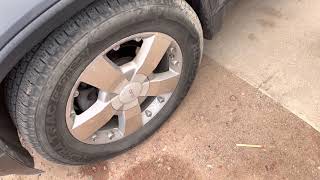
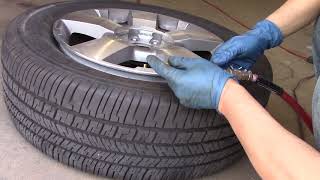
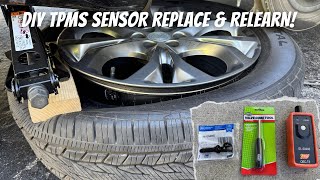
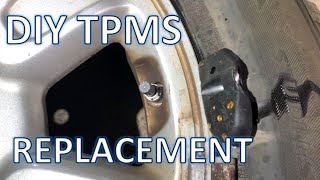
Typical fix: Replace the left rear TPMS sensor. The tire must be dismounted from the wheel to access it. 🎬 Watch: How to replace a TPMS sensor without a tire machine. A new sensor must then be programmed to the vehicle using a TPMS relearn procedure. 🎬 See this walkthrough of the GMC Acadia sensor relearning process.
Est. part cost: $25-$75 - Faulty Remote Control Door Lock Receiver (RCDLR) 🟡 Medium Probability The RCDLR on this platform is a known failure point, causing multiple TPMS codes and key fob issues simultaneously. GM has issued multiple TSBs (PIC5650 series, 16-NA-396) related to this module's failure and its susceptibility to radio frequency interference.
How to confirm: This is the likely cause if you have multiple TPMS codes (C0750, C0755, C0760, C0765) and/or your key fobs are not working reliably. A temporary fix can sometimes be achieved by disconnecting the car's battery for 15 minutes to reset the module. A professional scan tool can check for communication errors with the RCDLR.
Typical fix: Replace the RCDLR module. This part is typically located in the headliner or behind an interior trim panel in the rear of the vehicle. After replacement, it must be programmed to the vehicle using a dealer-level scan tool.
Est. part cost: $80-$200 - Damaged TPMS Sensor or Valve Stem ⚪ Low Probability Corrosion from road salt can damage the aluminum valve stem and its seals, causing leaks or sensor failure. The sensor can also be physically damaged during tire installation or by hitting a pothole.
How to confirm: Visually inspect the valve stem for corrosion, cracks, or damage. A tire shop can check for leaks around the valve stem using a soap and water solution. This is a common issue noted by owners.
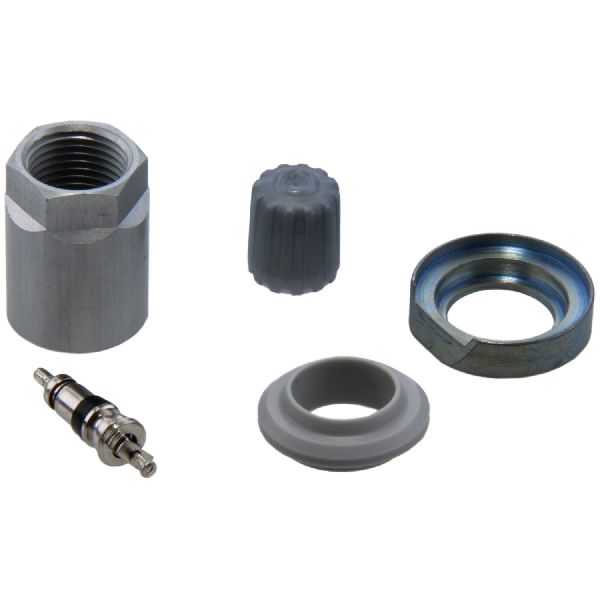
Typical fix: Replace the damaged sensor and/or the valve stem service kit.
Est. part cost: $10-$75 - RCDLR Antenna Connection Fault ⚪ Low Probability As detailed in TSB 16-NA-061, the coaxial antenna cable for the RCDLR can become disconnected at the module, at the antenna amplifier, or at the window grid antenna itself. This can cause intermittent signal loss from the sensors.
How to confirm: If TPMS codes are intermittent and key fob range is poor, inspect the RCDLR antenna connections. A disconnected coax at the RCDLR will cause all sensors to drop out and key fobs to fail. A disconnect further away at the amplifier may only cause the furthest sensors (like the front tires) to drop out intermittently.
Typical fix: Inspect and securely reconnect the RCDLR antenna coaxial cable at all connection points (module, amplifier, glass).
Est. part cost: $0
Rare But Worth Checking
- Radio Frequency Interference (RFI):
Diagnosis Steps
- Verify the symptom: Confirm the TPMS light flashes for about a minute on startup before staying solid. This distinguishes a system fault from low pressure. 🎬 Watch: How to reset and clear the TPMS warning light.
- Check Tire Pressures: Manually check the pressure in all four tires to rule out an actual low-pressure condition. Inflate to the specification on the driver's door jamb sticker.
- Scan for Codes: Use an OBD-II scanner to confirm C0760 is the primary code. Note any other TPMS (C0750, C0755, C0765) or Body Control Module (BCM) codes like B3055. A professional scanner may reveal symptom bytes like :29 (Too Few Pulses) or :39 (Internal Malfunction) which provide more detail.
- Check for RFI: Remove all aftermarket electronic devices (phone chargers, dash cams, etc.) from the vehicle, clear codes, and drive to see if the fault returns.
- Test the Sensor: Use a dedicated TPMS tool to attempt to activate and read the left rear sensor. The tool can confirm if the sensor is transmitting and check its battery status.
- Test the other sensors: Quickly check the other three sensors. If multiple sensors are not responding, suspect the RCDLR module or its antenna connection.
- Inspect for Damage: Visually inspect the valve stem for corrosion or physical damage.
- Diagnose RCDLR: If the sensor tests good but the code won't clear, or if key fob issues are present and multiple TPMS codes are stored, further diagnosis of the Remote Control Door Lock Receiver (RCDLR) and its wiring/antenna is necessary.
Parts You'll Likely Need
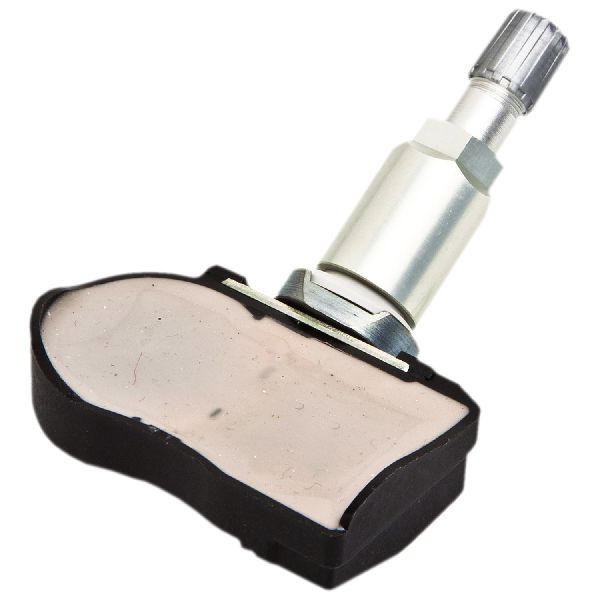
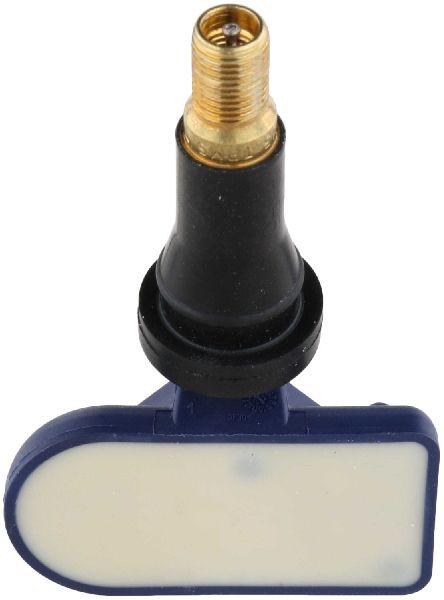
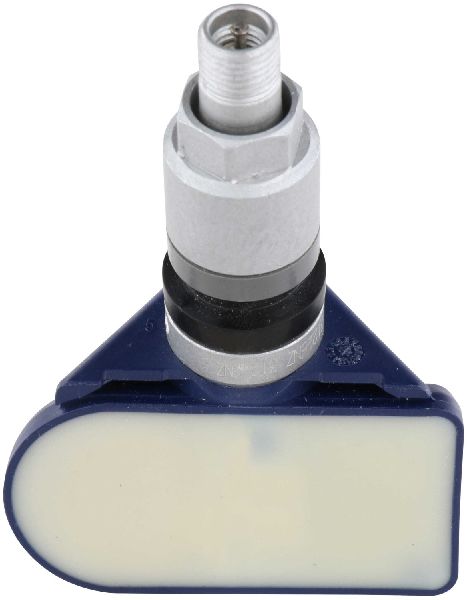
- TPMS Sensor
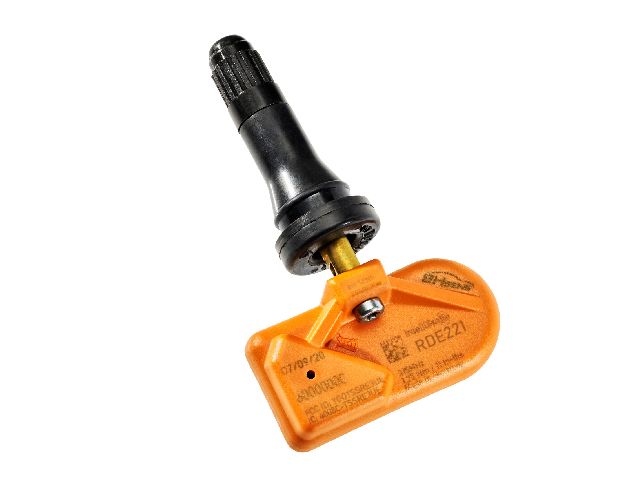
(OEM #13586335)— This is the most common failure. The internal battery dies, requiring replacement of the entire sensor unit. For the 2007-2014 Acadia, a 315 MHz sensor is required. This part number may be superseded by 13598771 or 13540600.
Trusted brands: ACDelco, Schrader, Continental, Dorman
OEM price range: $50-$90
Aftermarket price range: $25-$50 - Remote Control Door Lock Receiver (RCDLR)
(OEM #20803735)— This module is the second most likely cause, especially if key fob problems or multiple TPMS codes are present. It acts as the receiver for both the TPMS sensors and key fobs.
Trusted brands: ACDelco (GM Genuine), Dorman
OEM price range: $80-$200
Aftermarket price range: $60-$150
Related Codes That Often Appear With This One
- C0750 — Indicates a fault with the Left Front TPMS sensor. Seeing multiple TPMS codes together strongly suggests a problem with the central receiver (RCDLR) rather than individual sensors.
- C0755 — Indicates a fault with the Right Front TPMS sensor. Seeing multiple TPMS codes together strongly suggests a problem with the central receiver (RCDLR).
- C0765 — Indicates a fault with the Right Rear TPMS sensor. Seeing multiple TPMS codes together strongly suggests a problem with the central receiver (RCDLR).
- B3055 — A key-related immobilizer code. Its presence with C0760 points directly to a faulty RCDLR module or significant RF interference, which controls both systems, as mentioned in TSB PIC5650M.
Technical Service Bulletins (TSBs) & Recalls
- PIC5650M: Notes that C0760 can be found with security-related codes (B3055, B3060) during no-start or start/stall conditions, suggesting a module-level issue or radio frequency interference.
- 16-NA-061: Details how a disconnected RCDLR antenna can cause TPMS codes and poor key fob range, and provides diagnostic steps for checking the antenna connections.
Platform-Specific Known Issues
- A known issue exists where the Remote Control Door Lock Receiver (RCDLR) fails, causing simultaneous TPMS faults and key fob inactivity.
- Per TSB PIC5650M, TPMS codes including C0760 can appear during a no-start or stall condition, pointing towards a fault in the security/receiver module rather than the tire sensor itself.
- Per TSB 16-NA-061, a disconnected coaxial antenna cable for the RCDLR can lead to intermittent or total loss of TPMS and key fob signals.
Mechanic-Grade Diagnostic Values
- TPMS Sensor Transmission — expected: A dedicated TPMS tool should be able to activate the sensor and receive a data packet containing pressure, temperature, and battery status.. Failure: The tool shows 'No Signal', 'Low Battery', or fails to activate the sensor after 3 attempts. The scan tool data parameter for the sensor does not change from 'Wake' to 'Drive' mode when driving over 25 mph.
- RCDLR Function — expected: The module should respond to key fob commands (lock/unlock) from a normal distance and receive signals from all four TPMS sensors.. Failure: Multiple TPMS codes (C0750, C0755, C0760, C0765) are present simultaneously, and/or key fobs only work at very close range or not at all. A battery pull may temporarily restore function.
Hidden / Shadow Codes Worth Checking
- C0760 :29: Too Few Pulses. This indicates the RCDLR is receiving a signal, but the data packet is incomplete or corrupt. This points toward a weak sensor battery, radio frequency interference, or a fault in the RCDLR's receiver, rather than a completely dead sensor. (see via GM GDS2 (Global Diagnostic System 2) or equivalent professional scan tool.)
- C0760 :03: Low Voltage. This specifically points to a low battery condition within the TPMS sensor itself. (see via GM GDS2 or equivalent professional scan tool.)
- C0760 :39: Internal Malfunction. This indicates the sensor has an internal fault beyond just a low battery and must be replaced. (see via GM GDS2 or equivalent professional scan tool.)
Scan Tool Commands That Help
- GDS2 / Tech2 / Professional Scan Tool: TPM Learn Mode — This command is used to put the vehicle into the relearn state required to program new or repositioned TPMS sensors. It is an alternative to using the key fob or DIC method and is required after replacing a sensor or the RCDLR module.
- GDS2 / Tech2: RCDLR Data List — To check the reported battery status of each individual TPMS sensor as received by the RCDLR. This can confirm a 'low battery' condition before dismounting a tire.
Wiring & Ground Locations
- RCDLR Module — Typically located in the headliner toward the rear of the vehicle, or behind the rear passenger-side interior quarter trim panel.. This is the receiver for the left rear TPMS sensor signal. Its location in the rear makes it susceptible to water intrusion from a leaking liftgate seal or rear window, which can cause corrosion and failure.
- G401 — Near the base of the left 'D' pillar (the rearmost pillar).. This is a primary ground point for various rear body electronics. A loose or corroded G401 can cause intermittent issues with modules located in the rear of the vehicle, including the RCDLR.
- G303 — Near the base of the left 'B' pillar (behind the driver's seat belt).. This is another ground point for body control systems. While less likely to be the primary cause for a rear-mounted module, poor grounding here can contribute to overall vehicle electronic noise and intermittent data communication issues.
Real Owner Repair Stories
- acadiaforum.net user (2008 GMC Acadia) — Service Tire Monitor System message on DIC, TPMS light on, dashes for all four tire pressures, key fobs not working.
❌ Tried (didn't work) Replaced all four TPMS sensors., Performed TPMS relearn procedure multiple times., Checked for Radio Frequency Interference.
✅ What actually fixed it The problem was ultimately resolved by replacing the Remote Control Door Lock Receiver (RCDLR) module located in the rear headliner. After the new module was installed and programmed by the dealer, the key fobs started working immediately and the new TPMS sensors were able to be learned successfully.
OEM Part Supersession History
13586335→13598771, 13540600, 22853741, among others.— Standard part number consolidation and minor revisions by the manufacturer (Schrader) and GM.
Heads up: All listed supersessions are direct replacements and should be compatible. The critical factor is ensuring the sensor operates at 315 MHz for this vehicle generation.
Model Year Variations Within This Range
- 2007-2014: While a facelift occurred for the 2013 model year which changed the exterior and interior appearance, the underlying TPMS system architecture, including the use of the RCDLR and the 315 MHz sensor frequency, remained the same throughout the first generation.
Helpful Videos
We Have This Part in Stock


The information in this article is provided for general reference and educational purposes only. Vehicle specifications, procedures, and part compatibility can vary by production date, trim level, and region. Always consult your vehicle's factory service manual and verify part numbers before purchasing or performing repairs. Safety-critical components such as airbags, seat belts, and braking systems should be installed by a qualified professional.
- Gmc ACADIA:
- 🎬 Helpful Videos
- 🛍️ Shop This Part
- What's Unique About the 2007-2014 Gmc ACADIA
- Diagnostic Flowchart
- Symptoms You May Notice
- Most Likely Causes
- Rare But Worth Checking
- Diagnosis Steps
- Parts You'll Likely Need
- Related Codes That Often Appear With This One
- Technical Service Bulletins (TSBs) & Recalls
- Platform-Specific Known Issues
- Mechanic-Grade Diagnostic Values
- Hidden / Shadow Codes Worth Checking
- Scan Tool Commands That Help
- Wiring & Ground Locations
- Real Owner Repair Stories
- OEM Part Supersession History
- Model Year Variations Within This Range
- 🎟️ Get 5% Off