

C0760 on 2015-2022 Chevrolet Suburban: Left Rear TPMS Fault Causes & Fixes
On a 2015-2022 Suburban, code C0760 indicates a signal loss from the left rear tire pressure sensor. Before replacing the sensor, inspect the Remote Control Door Lock Receiver (RCDLR) antenna and its coaxial cable, as a disconnected or damaged cable is a very common cause documented in GM Technical Service Bulletins (TSB) PIT5446A and 16-NA-061. This issue often presents with poor key fob range as well.
- C0760 means the signal from the left rear TPMS sensor is not being received.
- Before buying a new sensor, always check the RCDLR antenna cable connections in the right rear of the vehicle, as this is a common, documented failure point.
- If your key fob range is also poor, the RCDLR antenna system is the most likely cause.
- Ensure you purchase the correct frequency TPMS sensor for your vehicle's year (315 MHz for 2015-2020, 433 MHz for 2021-2022).
- Replacing the sensor requires a tire machine and a TPMS relearn procedure.
What's Unique About the 2015-2022 Chevrolet SUBURBAN
On this generation of Suburban and its platform mates (Tahoe, Yukon, Escalade), the Tire Pressure Monitoring System (TPMS) and the Remote Keyless Entry (RKE) system share a single receiver module (the RCDLR) and its antenna. The RCDLR is typically located in the right rear of the vehicle, behind the C-pillar trim panel. GM has issued service bulletins (like PIT5446A and 16-NA-061) specifically because the coaxial antenna cable for this module is prone to becoming disconnected or damaged at one of three points: the RCDLR module itself, the antenna amplifier, or the antenna grid on the right rear quarter glass. This means a TPMS code like C0760 is frequently caused by this antenna issue, not a failed sensor, and will almost always be accompanied by poor key fob range.
Diagnostic Flowchart
Tap your situation to follow the diagnostic path that matches what you're seeing on this vehicle.
Generation note: This range covers two Suburban generations: the 11th (2015-2020, K2XX platform) and the 12th (2021-2022, T1XX platform). The underlying issue with the RCDLR antenna system is well-documented for the 2015-2018 models in TSBs, but the shared RCDLR/TPMS architecture principle applies across the range. A key difference is the TPMS sensor frequency: 2015-2020 models use 315 MHz (RPO code XL7), while 2021-2022 models use 433 MHz (RPO code XL8) for the new Global B electrical architecture.
Symptoms You May Notice
- "Service Tire Monitor System" message on the Driver Information Center (DIC).
- The TPMS warning light flashes for 60-90 seconds at startup and then stays on solid.
- Tire pressure reading for the left rear tire shows dashes (--) on the DIC.
- Poor or inoperative key fob range (for locking, unlocking, or remote start).
- "No Fob Detected" message when trying to start the vehicle.
- In rare cases, a no-start or start-and-stall condition, as noted in TSB PIC5650M.
- Immediately replacing the TPMS sensor without first inspecting the RCDLR antenna cable. The antenna issue is a well-documented problem and a more likely cause, especially if key fob issues are also present.
Most Likely Causes
- Disconnected or Damaged RCDLR Antenna Coaxial Cable 🔴 High Probability As documented in GM TSB PIT5446A and 16-NA-061, the coaxial cable connecting the RCDLR module to its antenna can become disconnected at the module, at the antenna amplifier near the right rear quarter glass, or at the glass antenna itself. This is a very common failure point.
How to confirm: Visually inspect the three connection points of the RCDLR antenna system. The RCDLR module is located behind the trim panel on the right rear C-pillar. 🎬 Watch: How to safely remove the C-pillar trim panels. The antenna amplifier is near the top of the right rear quarter glass, and the cable connects to a terminal on the glass itself. Check for a secure connection at all three points. TSB 16-NA-061 notes that a disconnect at the RCDLR will cause all sensors to drop out, while a disconnect at the amplifier may only cause the furthest sensors (like the left rear) to drop out.
Typical fix: Securely reconnect the coaxial cable. 🎬 See this walkthrough of the antenna cable repair process. If the cable or its connectors are damaged, the cable will need to be replaced. In some cases, the solder joint on the glass antenna terminal can fail and may need to be re-soldered.
Est. part cost: $50-$100 for a replacement cable if needed. - Failed Left Rear TPMS Sensor 🟡 Medium Probability The non-replaceable battery inside the sensor has a lifespan of 5-10 years. Vehicles from the beginning of this year range (2015-2016) are now at an age where battery failure is common. The sensor can also be damaged during tire service.
How to confirm: Use a TPMS diagnostic tool to attempt to activate the sensor. If the tool cannot get a reading from the left rear sensor but can from the others (especially after verifying the RCDLR antenna is connected), the sensor has likely failed. A scan tool may also show a 'sensor low battery' status in the RCDLR data list.
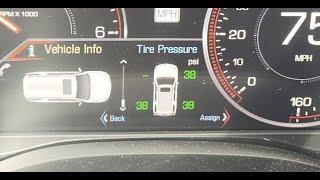
Typical fix: Replace the left rear TPMS sensor and perform the TPMS relearn procedure. 🎬 Watch: Step-by-step guide to the TPMS relearn procedure. This requires dismounting the tire from the wheel.
Est. part cost: $25-$75 for an aftermarket sensor, $60-$120 for an OEM sensor. - Failed Remote Control Door Lock Receiver (RCDLR) ⚪ Low Probability GM TSB 16-NA-396 notes that internal RCDLR failures can cause multiple TPMS codes and key fob issues simultaneously across many GM models. This is less common than the antenna cable issue but is the next logical step if the antenna is secure and a new sensor doesn't solve the problem.
How to confirm: If the antenna cable is secure and a new, known-good TPMS sensor cannot be learned to the vehicle using a proper scan tool, the RCDLR is the likely culprit. Advanced diagnostics with a scan tool are required to confirm.
Typical fix: Replace the RCDLR module and program it to the vehicle using dealership-level software.
Est. part cost: $80-$150
Rare But Worth Checking
- Body Control Module (BCM) Fuse or Internal Fault: The BCM powers and communicates with the RCDLR. While rare, a blown BCM fuse or an internal BCM issue can cause this code. In some models, a blown fuse for the heated seats (DSM fuse) can also cut power to the RCDLR, causing it to fail. Check relevant BCM/DSM fuses before replacing expensive modules.
- Radio Frequency (RF) Interference: Aftermarket electronic devices like dash cams, phone chargers, or CB radios can sometimes emit RF interference that blocks the signal from the TPMS sensor. Try unplugging all aftermarket accessories to see if the signal returns.
Diagnosis Steps
- Verify the symptom: Check the DIC for the "Service Tire Monitor System" message and confirm the left rear tire pressure reads as dashes.
- Check for other codes: Use a capable OBD-II scanner to check for other TPMS codes (C0750, C0755, C0765) or key fob/security codes (B-codes).
- Test Key Fob Range: Stand 20-30 feet from the vehicle and test the lock/unlock functions. If the range is very poor or non-existent, this points strongly to the RCDLR antenna system.
- Inspect RCDLR Antenna System: Following TSB 16-NA-061, access the right rear of the vehicle's cargo area. Remove the C-pillar and any necessary side trim to locate the RCDLR module and its black coaxial antenna cable. Inspect the three main connection points for looseness or damage: at the RCDLR module, at the antenna amplifier (near the top of the quarter glass), and the solder joint on the quarter glass antenna grid itself.
- Reconnect and Retest: If a connection is loose, reconnect it securely. Clear the codes and test drive the vehicle above 25 mph for a few minutes to see if the code returns. Also, re-test key fob range.
- Test Sensor with TPMS Tool: If connections are secure, use a dedicated TPMS tool to try and trigger the left rear sensor. If it doesn't respond, the sensor battery is likely dead or the sensor has failed.
- Replace Failed Component: If the antenna cable was disconnected, reconnect it. If the sensor failed the test, replace it. If both of those are good, the RCDLR module is the next most likely point of failure and requires replacement and programming.
Parts You'll Likely Need
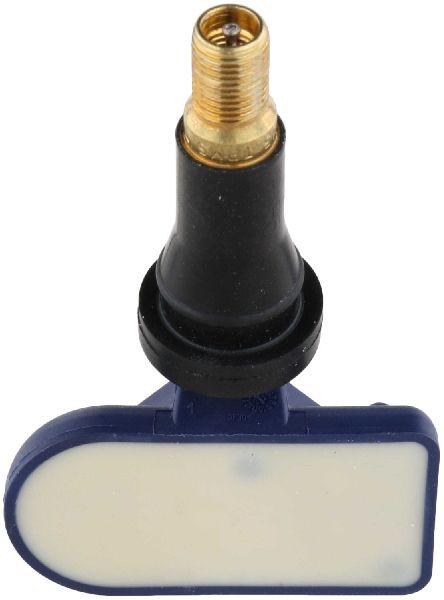
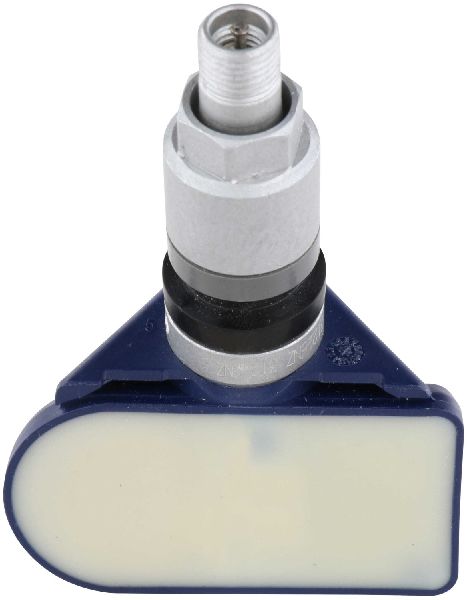
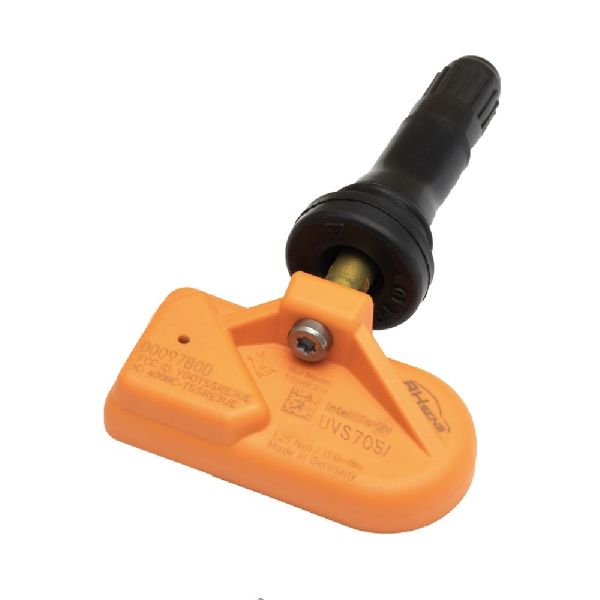
- Tire Pressure Monitoring System (TPMS) Sensor (315 MHz)
(OEM #13598771, 13581558, 22853741)— For 2015-2020 models. The sensor's internal battery dies after 5-10 years, making it a common failure item.
Trusted brands: ACDelco, Schrader, Dorman, VDO
OEM price range: $60-$120
Aftermarket price range: $25-$75 - Tire Pressure Monitoring System (TPMS) Sensor (433 MHz)
(OEM #13533166, 13542523)— For 2021-2022+ models with the Global B architecture. Battery failure is the primary reason for replacement.
Trusted brands: ACDelco, Schrader, Bosch, Huf
OEM price range: $50-$100
Aftermarket price range: $20-$60 - Remote Control Door Lock Receiver (RCDLR) Antenna Cable
(OEM #84238350)— This cable is a known weak point on these vehicles and is often found disconnected or damaged, causing TPMS and key fob issues.
Trusted brands: GM Genuine Parts
OEM price range: $50-$100 - Remote Control Door Lock Receiver (RCDLR)
(OEM #13595511)— If the antenna and sensor are confirmed good, the receiver module itself can fail internally, as noted in TSB 16-NA-396. Requires programming upon replacement.
Trusted brands: GM Genuine Parts
OEM price range: $80-$150
Related Codes That Often Appear With This One
- C0750, C0755, C0765 — These are the codes for the other three tire pressure sensors (LF, RF, RR). If they appear with C0760, it strongly suggests a problem with the shared RCDLR module or its antenna, rather than four simultaneously failed sensors.
- B3055, B3060, B3935 — These codes relate to the vehicle immobilizer and key security system. Their presence alongside C0760 points to a broader issue with the RCDLR or BCM affecting both TPMS and vehicle security, as mentioned in TSB PIC5650M.
Technical Service Bulletins (TSBs) & Recalls
- PIC5650M: Lists C0760 among codes related to no-start or start/stall conditions tied to the vehicle security system.
- PIT5446A: Identifies C0760 as a potential result of a disconnected RCDLR antenna system, causing TPMS and key fob range issues.
- 16-NA-061: An updated and more detailed version of PIT5446A, covering more model years and providing clearer diagnostic examples based on which part of the antenna system is disconnected.
- 16-NA-396: Details the procedure for replacing the RCDLR module itself when it fails internally, causing TPMS and key fob problems.
Platform-Specific Known Issues
- TSB 16-NA-061 & PIT5446A: The Primary Culprit: These two related Technical Service Bulletins are the most important documents for this code on this vehicle. They explicitly detail the common failure of the RCDLR antenna coaxial cable becoming disconnected at one of three points in the right rear of the vehicle. TSB 16-NA-061 provides excellent diagnostic logic: if the disconnect is far from the receiver (at the glass), only minor key fob range issues may occur. If it's at the amplifier, the furthest TPMS sensors (like the left rear) will drop out. If it's at the RCDLR module itself, all TPMS and most key fob functions will fail. This makes inspecting these connections the absolute first step in diagnosis, before buying any parts.
Mechanic-Grade Diagnostic Values
- RCDLR Antenna Coaxial Cable Continuity — expected: Near 0 ohms resistance between the center pin at both ends, and near 0 ohms between the outer shield at both ends. Infinite resistance (open circuit) between the center pin and the outer shield.. Failure: High resistance or an open circuit on either the center pin or shield indicates a broken cable. Any continuity between the center pin and shield indicates a short circuit.
Hidden / Shadow Codes Worth Checking
- C0760 03: Left Rear Tire Pressure Sensor Low Voltage. This indicates the sensor's battery is failing or has failed. (see via GM GDS2 or a professional scan tool capable of reading GM-specific symptom bytes.)
- C0760 08: Left Rear Low Tire Pressure Sensor Signal Invalid. This means the RCDLR is receiving a signal, but the data is corrupted or doesn't make sense. This can point to RF interference or an internal sensor fault. (see via GM GDS2 or a professional scan tool capable of reading GM-specific symptom bytes.)
- C0760 29: Left Rear Tire Pressure Sensor Too Few Pulses. The RCDLR is seeing an incomplete data packet from the sensor. This is a strong indicator of a weak battery, significant RF interference, or a fault in the RCDLR's receiver circuitry. (see via GM GDS2 or a professional scan tool capable of reading GM-specific symptom bytes.)
- C0760 39: Left Rear Tire Pressure Sensor Internal Malfunction. The sensor is broadcasting a message indicating it has a fault within its own circuitry. (see via GM GDS2 or a professional scan tool capable of reading GM-specific symptom bytes.)
Scan Tool Commands That Help
- GDS2 (GM Dealer Tool): Module Diagnostics -> RCDLR -> Data Display — To view live data from the RCDLR, including the status of each TPMS sensor (e.g., 'Active', 'Low Battery') and the number of received transmissions. This helps determine if the RCDLR is seeing the sensor at all.
- GDS2 (GM Dealer Tool): Module Diagnostics -> RCDLR -> Configuration/Reset Functions -> Add/Replace Key Fobs — This function is used to program new or existing key fobs to the RCDLR module. It's necessary after replacing the RCDLR or adding new keys.
- GDS2 (GM Dealer Tool): Vehicle Diagnostics -> BCM -> Special Functions -> Tire Pressure Learn — After replacing a TPMS sensor or rotating tires, this function initiates the relearn procedure so the BCM can identify each sensor's new position.
Wiring & Ground Locations
- RCDLR Module — Located behind the right side trim panel in the rear cargo area, typically attached to the C-pillar or D-pillar structure.. This is the central receiver for both TPMS and key fob signals. All diagnostic paths lead to or from this module. The coaxial antenna cable connection here is a primary failure point.
- RCDLR Antenna Amplifier — Located near the top of the right rear quarter glass, under the headliner or upper trim.. This module amplifies the RF signal from the glass antenna before sending it to the RCDLR. A disconnected coax cable at this point is a common cause of TPMS codes for sensors furthest from the receiver, like the left rear.
- RCDLR Power/Data Connector (X3) — The main electrical connector plugged into the RCDLR module.. Testing for power and ground at this connector is essential if the module appears dead. A typical pinout includes a battery positive voltage wire (often Red/something), a ground wire (Black), and a serial data line for communication with the BCM.
- Ground Point (G402 or similar) — The RCDLR is grounded via its wiring harness to a chassis ground point. On many GM SUVs, a key rear body ground is G402, located in the rear of the vehicle, often near the taillight harness or fuel pump area. Another common ground point is G304 on the right C-pillar.. A corroded or loose ground at this location can cause intermittent or total failure of the RCDLR, leading to TPMS and key fob issues that mimic a failed module.
Real Owner Repair Stories
- gm-trucks.com forum user (2016 Chevrolet Suburban) — Service Tire Monitor System light was on, no pressure reading for the left rear tire, and very poor key fob range. The owner had to be right next to the truck for the fob to work.
❌ Tried (didn't work) Replacing the battery in the key fob., Attempting to relearn the TPMS sensors.
✅ What actually fixed it Following advice related to TSB 16-NA-061, the owner removed the right rear interior trim panel and found the coaxial antenna cable had become completely disconnected from the RCDLR module. After securely plugging the cable back in, both the TPMS system and the key fob range returned to normal operation immediately.
Model Year Variations Within This Range
- 2015-2020 (K2XX Platform): These models use a 315 MHz TPMS system (RPO XL7). The RCDLR antenna system and its associated problems described in TSB 16-NA-061 are most well-documented for this generation, specifically 2015-2018 models.
- 2021-2022 (T1XX Platform): These models use a 433 MHz TPMS system (RPO XL8) as part of the new Vehicle Intelligence Platform (Global B electrical architecture). While the principle of a shared receiver for TPMS and RKE remains, the physical part numbers for the sensors and potentially the RCDLR module are different. The antenna design and location may also differ from the previous generation.
Helpful Videos

Used OEM Parts in Stock
New Aftermarket Parts Available

The information in this article is provided for general reference and educational purposes only. Vehicle specifications, procedures, and part compatibility can vary by production date, trim level, and region. Always consult your vehicle's factory service manual and verify part numbers before purchasing or performing repairs. Safety-critical components such as airbags, seat belts, and braking systems should be installed by a qualified professional.
- Chevrolet SUBURBAN:
- 🎬 Helpful Videos
- 🛍️ Shop This Part
- What's Unique About the 2015-2022 Chevrolet SUBURBAN
- Diagnostic Flowchart
- Symptoms You May Notice
- Most Likely Causes
- Rare But Worth Checking
- Diagnosis Steps
- Parts You'll Likely Need
- Related Codes That Often Appear With This One
- Technical Service Bulletins (TSBs) & Recalls
- Platform-Specific Known Issues
- Mechanic-Grade Diagnostic Values
- Hidden / Shadow Codes Worth Checking
- Scan Tool Commands That Help
- Wiring & Ground Locations
- Real Owner Repair Stories
- Model Year Variations Within This Range
- 🎟️ Get 5% Off