

C0760 on 2007-2014 Chevrolet Silverado 3500: Left Rear TPMS Fault Causes and Fixes
Code C0760 on a 2007-2014 Silverado 3500 indicates a fault with the left rear Tire Pressure Monitoring System (TPMS) sensor. The most common cause is a dead battery inside the sensor, which requires replacing the entire sensor unit and performing a relearn procedure. If key fobs are also malfunctioning, the Remote Control Door Lock Receiver (RCDLR) is the next most likely culprit.
- C0760 specifically points to a problem with the left rear tire pressure sensor.
- The most likely cause on a 2007-2014 Silverado is a dead battery in the original sensor.
- The fix involves replacing the sensor, which requires dismounting the tire, and then performing a TPMS relearn procedure.
- While the code itself is minor, if it appears with starting or security issues, it could be a symptom of a larger electrical problem as noted in TSB PIC5650M.
- It's cost-effective to replace all four TPMS sensors at once, especially if you are already replacing the tires.
What's Unique About the 2007-2014 Chevrolet SILVERADO 3500
For the GMT900 platform Silverado, code C0760 is a straightforward TPMS issue. However, it is uniquely mentioned in Technical Service Bulletin #PIC5650M in a list of codes associated with a no-start or stalling condition. While the code itself only points to the TPMS sensor, its appearance alongside security-related codes (like B3055) can indicate a more complex underlying electrical problem, such as a failing Body Control Module (BCM) or a wiring harness issue that is affecting multiple systems simultaneously.
Diagnostic Flowchart
Tap your situation to follow the diagnostic path that matches what you're seeing on this vehicle.
Generation note: This year range covers the GMT900 platform. The 2007 model year was a transition; this guide applies to the 'New Body Style' (NBS) trucks introduced in late 2006. The Heavy Duty (3500) models remained on the GMT900 platform through the 2014 model year.
Symptoms You May Notice
- TPMS warning light illuminated on the instrument cluster.
- "Service Tire Monitor System" message displayed on the Driver Information Center (DIC).
- The tire pressure reading for the left rear tire shows as dashes (--) on the DIC.
- The TPMS relearn procedure may fail to complete, specifically when it gets to the left rear tire.
- In rare cases involving RCDLR failure, key fob functions (lock/unlock/remote start) may be intermittent or inoperative at the same time.
- Replacing the Body Control Module (BCM) when only the C0760 code is present. The issue is almost always the sensor itself.
- Assuming a tire rotation is the cause without attempting a relearn procedure first.
- Replacing a TPMS sensor when the actual fault is the RCDLR, especially when key fob problems are also present.
Most Likely Causes
- Dead TPMS Sensor Battery 🔴 High Probability TPMS sensors contain a small, non-replaceable battery with a finite lifespan of 5-10 years. Vehicles in the 2007-2014 range are at or beyond the typical life expectancy of the original sensors.
How to confirm: Use a TPMS diagnostic tool to attempt to activate the sensor. If the tool cannot get a reading (ID, pressure, temperature) or explicitly shows a low battery status, the battery is dead. A professional scan tool can also read the battery status directly from the RCDLR data list.
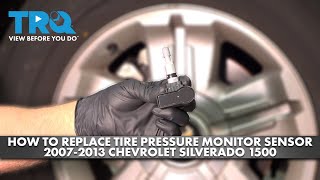
Typical fix: Replace the left rear TPMS sensor. 🎬 Watch: Step-by-step guide to replacing your TPMS sensors. It is often recommended to replace all four sensors at the same time, as they are of the same age and the others are likely to fail soon. This requires dismounting the tire from the wheel.
Est. part cost: $35-$105 per sensor - Damaged TPMS Sensor 🟡 Medium Probability Sensors can be physically damaged during tire changes if the technician is not careful, or from impacts like hitting a large pothole or curb. The valve stem can also corrode and break.
How to confirm: Visual inspection after dismounting the tire. The sensor housing may be cracked or broken. Like a dead battery, a damaged sensor will also fail to respond to a TPMS diagnostic tool.
Typical fix: Replace the damaged TPMS sensor and perform the relearn procedure.
Est. part cost: $35-$105 - Failed Relearn Procedure ⚪ Low Probability After rotating tires or replacing a sensor, a relearn procedure is required to tell the truck the new position of each sensor. If this procedure is not performed correctly or fails, the system may set a code.
How to confirm: Attempt the TPMS relearn procedure as outlined in the owner's manual. For these trucks, it typically involves putting the vehicle in learn mode via the DIC or key fob, then letting air out of each tire in sequence (starting LF) until the horn chirps. If the procedure fails at the left rear wheel, it confirms a problem with that sensor or its signal.
Typical fix: Perform the relearn procedure correctly. If it still fails, the sensor itself is likely faulty. Some aftermarket activation tools can be finicky; one owner noted they had to move the tool around the valve stem area to get it to register.
Est. part cost: $0
Rare But Worth Checking
- Faulty Remote Control Door Lock Receiver (RCDLR): The RCDLR is the module that receives the radio signals from all TPMS sensors and key fobs. TSBs for similar GM vehicles (16-NA-061, 16-NA-396) indicate the RCDLR can fail internally or have its antenna connection come loose, causing it to lose communication with one or more sensors. A critical clue is if you are experiencing key fob issues (poor range, intermittent operation) along with the TPMS code. Before replacement, check the RCDLR antenna connections, which are often located near the right rear of the vehicle.
- Faulty Body Control Module (BCM): As suggested by TSB #PIC5650M, a faulty BCM can cause a variety of seemingly unrelated codes, including TPMS codes. This is an unlikely cause for an isolated C0760 but should be considered if you have multiple other electrical issues or codes present, especially no-start or security-related codes.
- Radio Frequency (RF) Interference: Service diagnostic aids mention that strong RF interference from aftermarket devices like phone chargers, dash cams, CB radios, or even metallic window tint can occasionally block the RCDLR from receiving the sensor's signal. If the problem started after installing a new electronic device, try unplugging it and driving to see if the code clears.
Diagnosis Steps
- Verify the TPMS warning light is on and check for codes with an OBD-II scanner capable of reading Chassis (C-codes). Note any symptom bytes like '00' or '08'.
- Check the tire pressure display in the Driver Information Center (DIC). Confirm that the Left Rear (LR) position is blank or shows dashes.
- If key fob functions are also poor or inoperative, investigate the RCDLR and its antenna connection as a primary suspect before blaming the sensor.
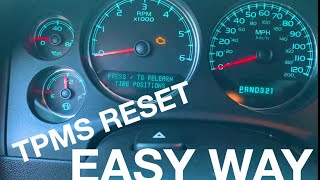
- Attempt the TPMS relearn procedure. With the key ON and engine OFF, either use the DIC menu or hold the lock/unlock buttons on the key fob until the horn chirps twice. Then, starting with the Left Front tire, 🎬 See how to perform the TPMS relearn procedure yourself. use a TPMS tool or let air out of the tire until the horn chirps once. Proceed in order: LF, RF, RR, LR.
- If the horn fails to chirp for the LR tire but worked for the others, the LR sensor is almost certainly bad.
- Use a dedicated TPMS activation tool to try and read the sensor directly. If the tool gets no response or shows a low battery, the sensor needs to be replaced.
- If a new, known-good sensor cannot be learned by the vehicle, inspect the wiring and consider the Remote Control Door Lock Receiver (RCDLR) as the next possible point of failure.
Parts You'll Likely Need
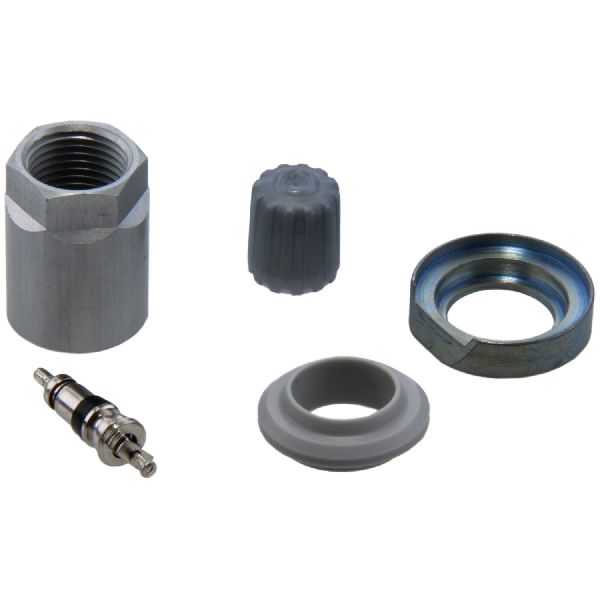
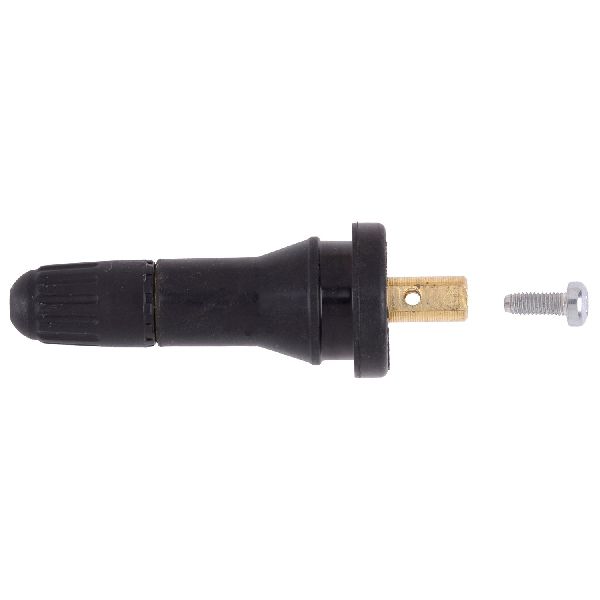
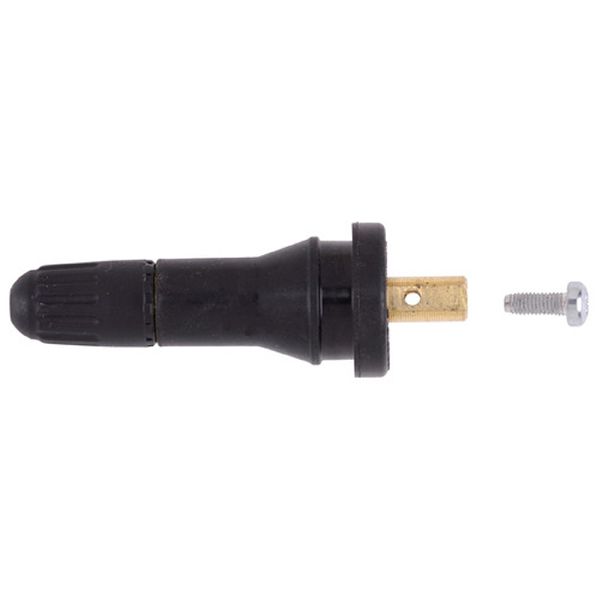
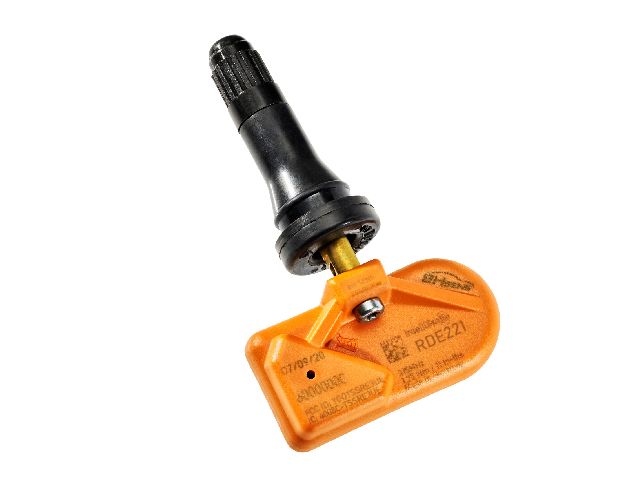
- Tire Pressure Monitoring System (TPMS) Sensor
(OEM #13598771)— This is the component that fails, usually due to its internal battery expiring after 5-10 years of service.
Trusted brands: ACDelco, Dorman, Standard Motor Products, Schrader
OEM price range: $60-$105
Aftermarket price range: $35-$70
Related Codes That Often Appear With This One
- C0750, C0755, C0765 — These codes correspond to the other three tire pressure sensors (LF, RF, RR). It is common for the sensor batteries to fail around the same time, triggering multiple codes.
- B3055, B3060 — According to TSB #PIC5650M, these vehicle security codes can appear with C0760 during a no-start or stall condition, suggesting a wider electrical fault potentially related to the BCM or wiring.
Technical Service Bulletins (TSBs) & Recalls
- PIC5650M: Notes that C0760 can appear with security and starting-related codes (B3055, B3060, etc.) during a no-start or stall condition, potentially indicating a wider electrical issue.
- 16-NA-061 / PIT5446: While for slightly later models, this TSB details how TPMS codes (C0750, C0755, C0760, C0765) can be caused by a disconnected antenna for the RCDLR, which also affects key fob range.
- 16-NA-396: Describes intermittent key fob and TPMS issues (including C0760) caused by an internal failure of the RCDLR, recommending module replacement.
Platform-Specific Known Issues
- Some Silverado 3500 HD models with a Gross Vehicle Weight Rating (GVWR) over 10,000 lbs may have been exempt from the federal TPMS mandate and might not be equipped with the system from the factory.
- Per TSB #PIC5650M, this code can be triggered as part of a larger electrical issue causing no-start or stalling problems, which is highly unusual for a simple TPMS fault and may point to the BCM.
- A user on a Reddit forum with a 2013 Silverado reported a failing sensor that was reading an incorrect low pressure (26 psi) when the actual pressure was 60 psi, indicating an internal sensor fault rather than a simple dead battery.
Mechanic-Grade Diagnostic Values
- RCDLR Power Supply Voltage — expected: Battery Positive Voltage (typically 12.0-12.6V with key on). Failure: 0V or significantly low voltage at the RCDLR power wire (Red/White wire on the main connector) indicates a wiring or fuse issue.
- RCDLR Ground Connection — expected: Near 0V potential to chassis ground.. Failure: Voltage reading greater than 0.1V indicates a poor ground connection.
Hidden / Shadow Codes Worth Checking
- C0760 00: Indicates a general failure, such as the sensor not transmitting for over 18 minutes or a low battery condition. (see via Professional scan tool like the GM Tech 2 or GDS2 that can read symptom bytes.)
- C0760 08: Indicates the RCDLR is receiving an invalid or malformed signal from the sensor. (see via Professional scan tool like the GM Tech 2 or GDS2.)
- C0760 29: Symptom code :29 translates to "Too Few Pulses." This means the RCDLR is getting an incomplete data packet from the sensor. It often points towards an internal RCDLR failure rather than a completely dead sensor. (see via GM GDS2 (Global Diagnostic System 2) or equivalent professional scan tool.)
Scan Tool Commands That Help
- GM Tech 2 / GDS2: RCDLR Data Display — To view live data from the RCDLR, including individual sensor IDs, pressures, temperatures, and the 'Pressure Sensor Mode' (e.g., Park vs. Drive/Rolling). This helps confirm if the module is receiving any data at all from the suspect sensor.
- GM Tech 2 / GDS2: Special Functions > TPMS Learn Mode — To command the vehicle to enter learn mode without using the key fob or DIC. This is a required step after replacing a sensor or the RCDLR.
- GM Tech 2 / GDS2: Module Programming > RCDLR — This function is required when replacing the RCDLR module. The new module must be programmed to the vehicle's VIN and configuration to function correctly.
Wiring & Ground Locations
- RCDLR Module — Located in the driver's side rear D-pillar. Access requires opening the rear hatch and removing the upper and side interior trim panels.. This is the receiver for all TPMS and key fob signals. A loose connector, damaged wire, internal failure, or water damage to this module is a primary cause of C0760, especially if key fobs also malfunction.
- RCDLR Power Fuse — In the instrument panel fuse block (inside the cabin), often labeled 'DSM' (Driver Seat Module) or similar. It is typically a 10-amp fuse.. This fuse supplies power to the RCDLR. If it's blown, the module will be completely offline, causing all TPMS codes and inoperative key fobs.
- RCDLR Antenna — The antenna is often integrated into the right rear quarter glass, connected by a coax cable to an amplifier, which then runs to the RCDLR module.. A disconnected coax cable at the RCDLR, amplifier, or glass antenna can cause weak or no signal reception, leading to intermittent or constant TPMS codes. TSB 16-NA-061 specifically calls for checking these connections.
- G303 / G304 — G303 is on the left side B-pillar behind the trim panel. G304 is on the right side B-pillar behind the trim panel.. These are primary chassis ground points in the rear of the cabin. A corroded or loose ground here can cause a variety of intermittent electrical issues for modules located in the rear of the vehicle, including the RCDLR.
- RCDLR Connector — The main harness connector at the RCDLR module itself.. The power supply is a Red/White wire and the ground is a Black wire. Verifying power and ground directly at this connector is the definitive test to determine if the module is faulty or if there is a problem in the vehicle's wiring harness.
Real Owner Repair Stories
- YouTube user 'Silverado 2008 CanBus No Start' (2008 Chevrolet Silverado Crew Cab) — No start condition, strange DIC messages, and various electrical issues. The owner also recalled his son noticing water dripping inside the cabin near the rear pillar a few months prior.
❌ Tried (didn't work) The owner initially suspected a wiring issue in the driver's side door harness and checked it without finding a fault.
✅ What actually fixed it The root cause was a leaking third brake light gasket, which allowed water to run down the C-pillar and onto the RCDLR module, causing corrosion and failure. Although the module itself didn't look corroded upon removal, replacing it and sealing the third brake light resolved the issues. The RCDLR was found on the driver's side rear C-pillar. - YouTube user 'Raymond Beachy' (2011 Chevrolet Silverado) — Key fobs would not work. The scan tool showed no communication with the Remote Control Door Lock Receiver (RCDLR).
❌ Tried (didn't work) Initially misdiagnosed as a bad RCDLR module. A new module was ordered but the problem persisted.
✅ What actually fixed it Upon testing the RCDLR connector, there was no power on the Red/White wire. The technician found a break in the power wire located in the wiring harness that runs along the driver's side door sill. Repairing the broken wire restored power to the RCDLR and fixed the problem.
When the Usual Fixes Don't Work
- In one case involving a user with codes for all four sensors (C0750, C0755, C0760, C0765) with a 'Too Few Pulses' symptom, the owner replaced all four sensors and used a relearn tool. The relearn procedure appeared to complete successfully (with all horn chirps), but the DIC still showed blank pressures. This indicates a scenario where the common fix (replacing sensors) did not work, and the underlying cause was likely the RCDLR or significant RF interference, despite the system seemingly learning the new sensors.
OEM Part Supersession History
13586335, 22854866, 25920615→13598771— Standard part consolidation and design updates by the manufacturer.
Heads up: While many part numbers are listed as interchangeable, always verify the correct 315 MHz frequency for this vehicle generation. GM part number 13540600 is listed as a replacement for 13598771 by some vendors.
Model Year Variations Within This Range
- 2007-2010: The TPMS relearn procedure can typically be done without a special tool by using the DIC/key fob to enter learn mode and then letting air out of each tire in sequence.
- 2011-2014: Starting in 2011, many GM trucks require a TPMS activation tool to trigger the sensors during the relearn procedure. The air-out method may no longer work reliably or at all.
Helpful Videos
We Have This Part in Stock


The information in this article is provided for general reference and educational purposes only. Vehicle specifications, procedures, and part compatibility can vary by production date, trim level, and region. Always consult your vehicle's factory service manual and verify part numbers before purchasing or performing repairs. Safety-critical components such as airbags, seat belts, and braking systems should be installed by a qualified professional.
- Chevrolet SILVERADO 3500:
- 🎬 Helpful Videos
- 🛍️ Shop This Part
- What's Unique About the 2007-2014 Chevrolet SILVERADO 3500
- Diagnostic Flowchart
- Symptoms You May Notice
- Most Likely Causes
- Rare But Worth Checking
- Diagnosis Steps
- Parts You'll Likely Need
- Related Codes That Often Appear With This One
- Technical Service Bulletins (TSBs) & Recalls
- Platform-Specific Known Issues
- Mechanic-Grade Diagnostic Values
- Hidden / Shadow Codes Worth Checking
- Scan Tool Commands That Help
- Wiring & Ground Locations
- Real Owner Repair Stories
- When the Usual Fixes Don't Work
- OEM Part Supersession History
- Model Year Variations Within This Range
- 🎟️ Get 5% Off