

C0760 on 2015-2022 Chevrolet Express 2500: Left Rear TPMS Fault Causes and Fixes
Code C0760 on a Chevy Express 2500 means there's a fault with the left rear tire pressure sensor. The most common cause is a dead battery in the sensor, which requires replacing the entire sensor unit. This is a straightforward fix for any tire shop, typically costing between $80 and $175.
- C0760 points to a problem with the left rear TPMS sensor, most often a dead battery.
- A flashing TPMS light that becomes solid indicates a system fault, not necessarily low tire pressure.
- Replacing the sensor is the most common fix and requires a relearn procedure, which is best done with an inexpensive TPMS activation tool.
- If key fob problems occur at the same time, the RCDLR module or its antenna wiring is the likely culprit, not the sensor itself.
What's Unique About the 2015-2022 Chevrolet EXPRESS 2500
The Chevrolet Express has used a similar TPMS for many years, making it a well-understood system. While a C0760 code is almost always a simple sensor failure, a GM Technical Service Bulletin (TSB) for the Express van platform notes that this TPMS code can, in rare cases, appear alongside serious security-related codes and a no-start or stalling condition. This points to a less common but possible underlying electrical or module communication problem that can affect multiple, seemingly unrelated systems, often caused by Radio Frequency Interference (RFI) from aftermarket electronics.
Diagnostic Flowchart
Tap your situation to follow the diagnostic path that matches what you're seeing on this vehicle.
Symptoms You May Notice
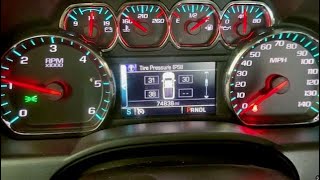
- "Service Tire Monitor System" message on the Driver Information Center (DIC).
- TPMS warning light flashes for about a minute at startup, then stays on solid.
- The pressure reading for the left rear tire shows as dashes "--" on the DIC.
- Inability to complete the TPMS relearn procedure.
- In very rare cases associated with a broader electrical issue, this code may appear with a no-start or stalling condition and a security light, as noted in TSB PIC5650M.
- If the RCDLR module is the root cause, you may also experience poor range or total failure of the key fobs.
- Replacing the Body Control Module (BCM) when only a single TPMS sensor has failed. Always start with the simplest component—the sensor itself.
- Assuming the tire is low when the TPMS light is on. A flashing light that turns solid indicates a system fault, not low pressure.
- Replacing the sensor when the actual fault is a disconnected RCDLR antenna coax cable, especially if multiple TPMS codes are present or key fob range is poor.
- Installing a programmable/universal aftermarket sensor without programming it to the vehicle's specific protocol *before* installation. This is a separate step from the vehicle's relearn procedure.
Most Likely Causes
- Dead TPMS Sensor Battery 🔴 High Probability TPMS sensors contain a small, non-replaceable battery with a finite lifespan, typically 5-10 years. Vehicles in the 2015-2022 range are now old enough for original sensor batteries to be failing.
How to confirm: A professional TPMS diagnostic tool can check the battery status of the sensor. If the tool cannot get any reading from the sensor, the battery is almost certainly dead. A dealer-level scan tool may show a specific symptom code like C0760 03 (Low Voltage).
Typical fix: Replace the left rear TPMS sensor. 🎬 See this clever trick to replace the sensor without removing the wheel. The new sensor must then be programmed to the vehicle using a relearn procedure, which often requires a specific TPMS activation tool for GM vehicles.
Est. part cost: $25-$75 - Damaged TPMS Sensor 🟡 Medium Probability Sensors are located inside the tire and can be damaged during tire mounting/dismounting, or from hitting large potholes or curbs. Using unapproved tire sealants can also clog and damage the sensor.
How to confirm: Visual inspection of the sensor after dismounting the tire. If a TPMS tool cannot activate a sensor that is known to have a good battery, it is likely damaged. A dealer-level scan tool may show symptom code C0760 39 (Internal Malfunction).
Typical fix: Replace the damaged TPMS sensor and perform the relearn procedure.
Est. part cost: $25-$75 - Failed TPMS Relearn Procedure ⚪ Low Probability This can happen after tire rotation if the relearn procedure was not performed or was done incorrectly. The vehicle's computer thinks the sensor is still in its old position, leading to a location mismatch.
How to confirm: Perform the TPMS relearn procedure using the DIC and a TPMS activation tool. If the code clears and the system functions correctly afterward, this was the cause.
Typical fix: Perform the TPMS relearn procedure. For these vans, this typically involves initiating the relearn mode via the Driver Information Center (DIC) buttons and then using a TPMS tool to activate each sensor in sequence (LF, RF, RR, LR). The older method of letting air out of the tires is often unreliable on newer models.
Est. part cost: $0 (if you own a relearn tool, which can be purchased for under $15)
Rare But Worth Checking
- Faulty Remote Control Door Lock Receiver (RCDLR): The RCDLR is the module that receives signals from both the key fobs and the TPMS sensors. A failure in this module can cause both systems to stop working. If you are experiencing key fob issues (poor range, intermittent function) along with TPMS codes, the RCDLR is a strong suspect. TSB #16-NA-396 and PIT5446 address this issue, often pointing to a faulty module or a disconnected coax antenna cable leading to it.
- General Electrical/BCM Fault or RFI: As mentioned in TSB #PIC5650M, code C0760 can appear with immobilizer codes (like B3055) and a no-start condition. This often points to a wider problem like Radio Frequency Interference (RFI) from aftermarket devices like phone chargers, LED lights, or toll passes, which can 'jam' the signals from the TPMS sensor and key fob. Before replacing modules, all aftermarket electronics should be disconnected to see if the problem resolves.
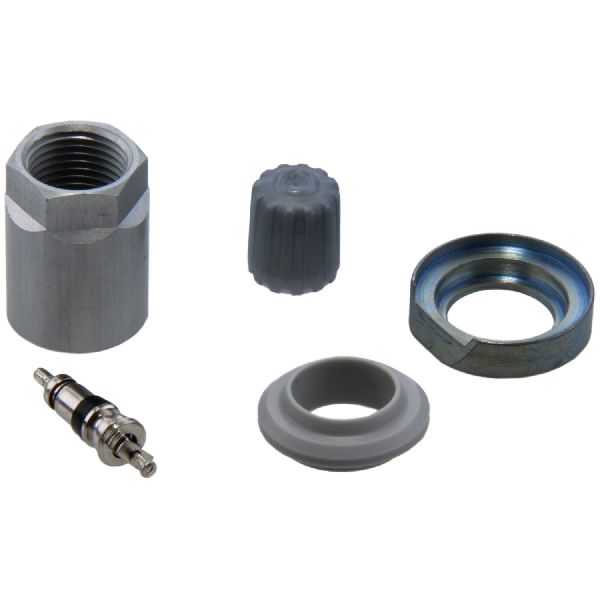
- Corroded or Failed TPMS Valve Stem Service Kit: Sometimes the electronic sensor itself is fine, but the valve stem assembly (grommet, nut, core) has corroded or failed, causing an air leak. This triggers a low-pressure warning, but if the leak is slow, it can be confused with a sensor fault. It's recommended to replace the service kits whenever new tires are installed to prevent this.
Diagnosis Steps
- Verify tire pressures manually with a quality gauge to rule out an actual low tire.
- Note the behavior of the TPMS light: a flashing light for ~60 seconds followed by a solid light indicates a system fault.
- Use a TPMS diagnostic tool to attempt to read the left rear sensor's data (ID, pressure, temperature, battery status).
- If the tool cannot get a response from the sensor, the sensor has failed (likely a dead battery) and needs replacement.
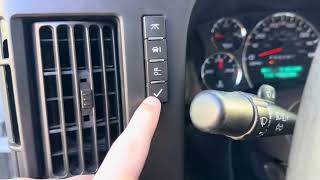
- If the tool can read the sensor, but the vehicle won't recognize it, attempt the TPMS relearn procedure. On the Express, this is done by navigating to the 'Relearn Tire Positions' screen in the DIC, pressing the checkmark button to get two horn chirps, and then using a TPMS activation tool at each wheel in sequence (LF-RF-RR-LR). 🎬 Watch: A step-by-step tutorial on the Chevy Express relearn procedure.
- If the relearn procedure fails or if other codes (especially for key fobs or security) are present, investigate the Remote Control Door Lock Receiver (RCDLR) and its wiring/antenna connection. TSBs suggest checking for a disconnected coax cable at the receiver or antenna amplifier.
- If a no-start condition is present with security codes, refer to TSB PIC5650M and diagnose for a broader electrical system failure or RFI from aftermarket accessories.
Parts You'll Likely Need
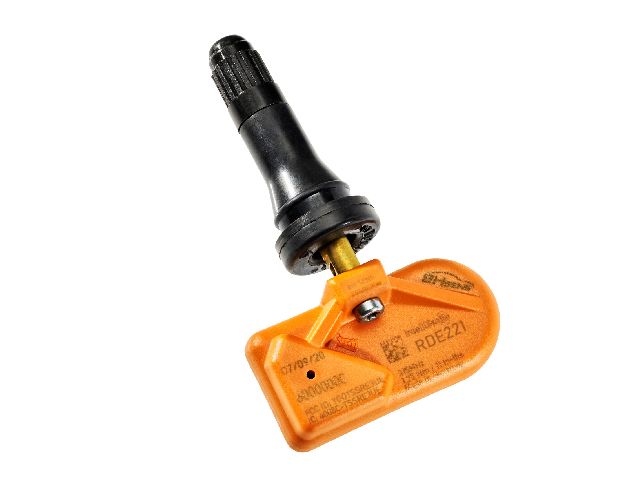
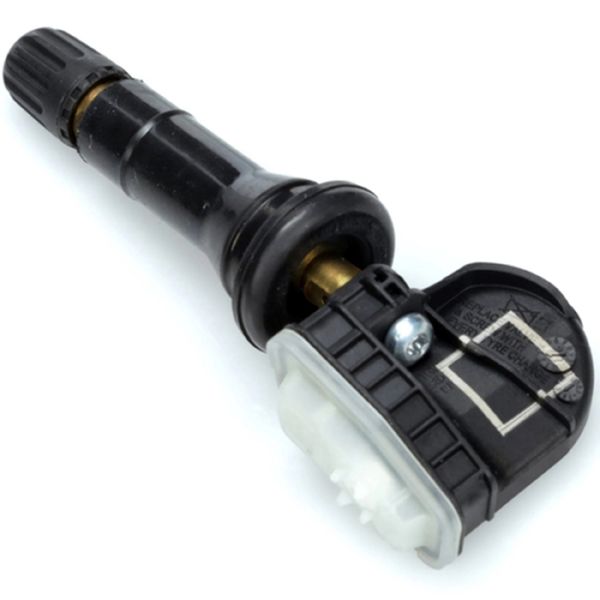
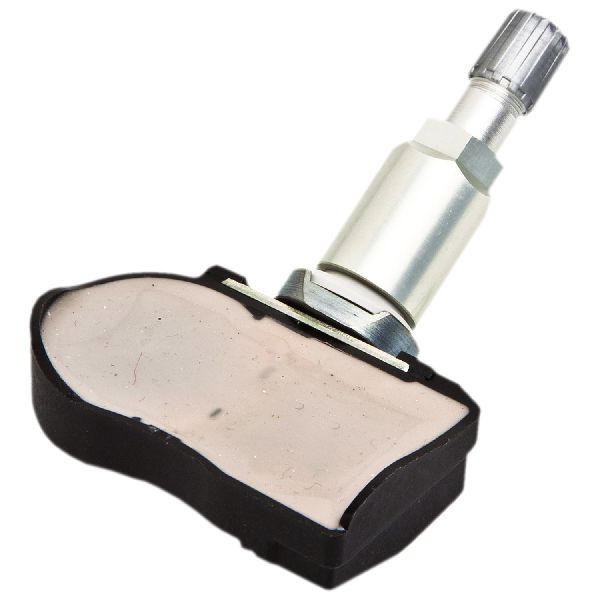
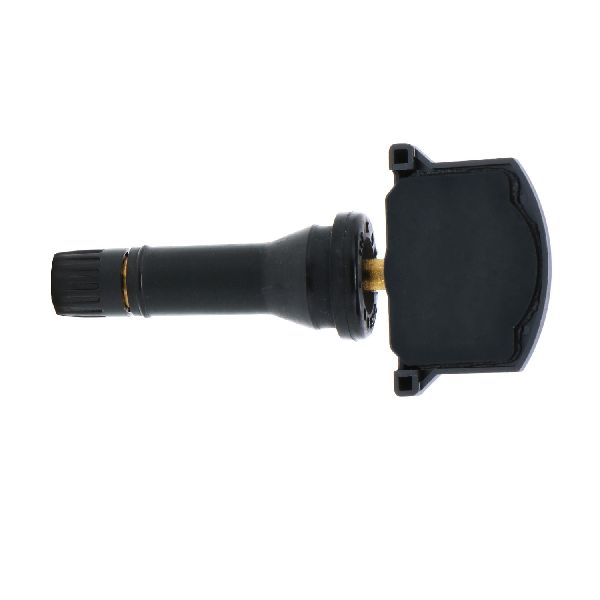
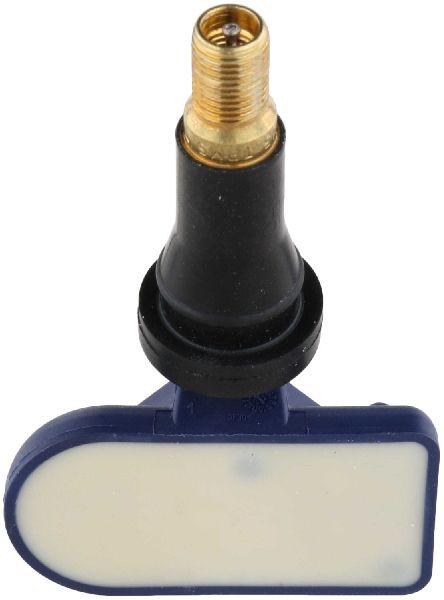
- Tire Pressure Monitoring System (TPMS) Sensor
(OEM #13598771)— This is the component that fails most often, usually due to its internal battery reaching the end of its 5-10 year life. This part number is widely used across GM vehicles and operates at 315 MHz. It has been superseded by part number 13540600. Many other numbers like 13516164, 22854866, and 20923680 are also listed as compatible interchanges.
Trusted brands: ACDelco (OEM), Schrader (Often the OEM manufacturer), Standard Motor Products, Huf, Continental
OEM price range: $45-$75
Aftermarket price range: $25-$50 - TPMS Relearn Tool
(OEM #EL-50448)— For most GM vehicles from this era, including the Express, a simple activation tool is required to make the vehicle learn the new sensor's ID after installation or tire rotation. Inexpensive clones of the EL-50448 are widely available online.
Trusted brands: VXDAS, JDIAG, OEC-T5
OEM price range: $60-$90
Aftermarket price range: $10-$20
Related Codes That Often Appear With This One
- C0750, C0755, C0765 — These codes correspond to the other three TPMS sensors (Left Front, Right Front, Right Rear). If multiple codes appear at once, it could indicate that all sensor batteries are dying around the same time, or it could point more strongly to a faulty RCDLR module or its antenna connection.
- B3055, B3060 — According to TSB PIC5650M, these security/immobilizer codes can appear with C0760 in the event of a complex electrical fault or significant RFI leading to a no-start or stall condition.
Technical Service Bulletins (TSBs) & Recalls
- PIC5650M (and its revisions PIC5650C, J, K): Notes that C0760 can appear with security-related codes and no-start or stall conditions, suggesting a potential for broader electrical issues, specifically pointing to Radio Frequency Interference (RFI) from aftermarket accessories.
- 16-NA-396: Details how an internal failure of the Remote Control Door Lock Receiver (RCDLR) can cause TPMS codes (including C0760 with symptom code 29) along with intermittent key fob operation.
- 16-NA-061 / PIT5446: Explains that TPMS codes and poor key fob range can be caused by a disconnected coax antenna cable leading to the RCDLR, and provides diagnostic steps to check the connections before replacing the module.
Platform-Specific Known Issues
- TSB #PIC5650M documents an issue where codes C0750, C0755, C0760, C0765 can be set along with security codes (B3055, B3060) during a no-start or stall condition, pointing to Radio Frequency Interference from aftermarket devices like phone chargers or LED lights.
- A fleet owner on chevroletforum.com noted constant TPMS malfunctions across a fleet of ten Express 3500 vans, highlighting the frequency of sensor failures and the frustration with relearn procedures, which often require a dedicated tool.
- A user on Reddit with an '08 Express detailed a
Mechanic-Grade Diagnostic Values
- TPMS Sensor Signal Strength — expected: On a TPMS tool like the J-46079, the signal strength graph should display at least 1/4 of the bar.. Failure: A signal strength below 1/4 graph or no signal at all indicates a weak or dead sensor battery, or significant RF interference.
- Scan Tool 'Pressure Sensor Mode' Data — expected: The parameter should change from 'Wake' or 'Park' to 'Drive' or 'Rolling' when the vehicle is driven above 25 mph.. Failure: If the sensor mode for the left rear wheel does not change while driving, the sensor's internal roll switch has likely failed.
Hidden / Shadow Codes Worth Checking
- C0760 03: Left Rear Tire Pressure Sensor Low Voltage. This specifically indicates the sensor's internal battery is failing. (see via GM GDS2 (Global Diagnostic System 2) or equivalent professional scan tool that can read manufacturer-specific symptom codes.)
- C0760 29: Left Rear Tire Pressure Sensor Too Few Pulses. This means the RCDLR is receiving an incomplete or corrupted data packet, often due to a weak battery or RF interference. (see via GM GDS2 (Global Diagnostic System 2) or equivalent professional scan tool.)
- C0760 39: Left Rear Tire Pressure Sensor Internal Malfunction. This indicates the sensor has an internal fault beyond just a low battery. (see via GM GDS2 (Global Diagnostic System 2) or equivalent professional scan tool.)
Scan Tool Commands That Help
- GM GDS2 / Tech2: RCDLR Data Display — Use this to view live data from the RCDLR, including individual sensor IDs, pressures, and the 'Pressure Sensor Mode' to see if a specific sensor is failing to transition from park to drive mode correctly.
- GM GDS2 / Tech2: TPMS Learn Mode — This command forces the RCDLR into learn mode, which is necessary after replacing a sensor. It's an alternative to using the DIC buttons or key fob method to initiate the process.
- GM GDS2 / Tech2: RCDLR Module Programming — This is required *only* when replacing the RCDLR module itself. The new module must be programmed to the vehicle using GM's Service Programming System (SPS/SPS2).
Wiring & Ground Locations
- RCDLR Module — On GM vans like the Express/Savana, the RCDLR is typically located behind an interior trim panel, often in the driver's side rear D-pillar (the pillar behind the rear side doors).. This is the receiver for the TPMS signal. A loose power, ground, or antenna connection at this module is a primary cause for C0760, especially if key fob issues are also present.
- RCDLR Antenna — A coaxial cable runs from the RCDLR module, sometimes to an amplifier, and then to an antenna element. On many GM trucks and vans, this antenna is integrated into the right rear quarter glass.. A disconnected coax cable at either the RCDLR or the antenna amplifier can cause intermittent loss of signal from the sensors farthest away, leading to codes like C0760.
- G103 / G303 — G103 is a major body ground located on the cowl, above the brake booster. G303 is a body ground located on the left side B-pillar behind the trim panel.. The RCDLR and BCM rely on clean body grounds. While many grounds exist, G103 is specifically listed as a ground for the RCDLR on some GM platforms. A corroded or loose ground here can cause a variety of strange electrical issues, including TPMS faults.
Real Owner Repair Stories
- CorvetteForum user (GM Vehicle (C6 Corvette, uses similar Schrader sensors)) — TPMS sensor failure.
❌ Tried (didn't work) Installed Dorman brand programmable sensors which failed within 2 months.
✅ What actually fixed it The user found that sticking with OEM GM/Schrader sensors that are pre-programmed for the vehicle, rather than universal 'programmable' sensors, provided much better reliability and avoided programming-related issues. - General shop knowledge from multiple sources (Any GM vehicle, including Express vans) — TPMS light on, code C0760, unable to complete relearn procedure after installing a new aftermarket sensor.
❌ Tried (didn't work) Attempting the vehicle's relearn procedure multiple times., Replacing the new sensor with another identical aftermarket one.
✅ What actually fixed it The root cause was the use of a 'programmable' or 'universal' aftermarket sensor that was not programmed for the specific GM protocol *before* being installed in the wheel. The shop had to dismount the tire again, program the blank sensor using a dedicated TPMS tool, and only then could the vehicle's standard relearn procedure be completed successfully.
OEM Part Supersession History
13598771→13540600— Standard part number update by GM. Both are 315 MHz sensors manufactured by Schrader for GM.
Heads up: No incompatibility is noted; 13540600 is the direct replacement for 13598771. Many other part numbers like 20923680 and 22853741 are also listed as compatible interchanges.
Helpful Videos
We Have This Part in Stock

The information in this article is provided for general reference and educational purposes only. Vehicle specifications, procedures, and part compatibility can vary by production date, trim level, and region. Always consult your vehicle's factory service manual and verify part numbers before purchasing or performing repairs. Safety-critical components such as airbags, seat belts, and braking systems should be installed by a qualified professional.
- Chevrolet EXPRESS 2500:
- 🎬 Helpful Videos
- 🛍️ Shop This Part
- What's Unique About the 2015-2022 Chevrolet EXPRESS 2500
- Diagnostic Flowchart
- Symptoms You May Notice
- Most Likely Causes
- Rare But Worth Checking
- Diagnosis Steps
- Parts You'll Likely Need
- Related Codes That Often Appear With This One
- Technical Service Bulletins (TSBs) & Recalls
- Platform-Specific Known Issues
- Mechanic-Grade Diagnostic Values
- Hidden / Shadow Codes Worth Checking
- Scan Tool Commands That Help
- Wiring & Ground Locations
- Real Owner Repair Stories
- OEM Part Supersession History
- 🎟️ Get 5% Off