

C0760 on 2011-2018 Chevrolet Camaro: TPMS and Key Fob Faults Explained
On a 2011-2018 Camaro, C0760 points to a fault with the left rear tire pressure sensor. If it's the only code, the sensor battery is likely dead. If your key fob is also failing and you have other TPMS codes (C0750, C0755, C0765), the problem is almost certainly the Remote Control Door Lock Receiver (RCDLR) module, a well-documented failure addressed in GM TSB #16-NA-396.
- C0760 means there's a problem with the left rear tire pressure sensor signal.
- First, check your symptoms: If ONLY the TPMS light is on, you likely need a new sensor for that wheel.
- If the TPMS light is on AND your key fob doesn't work, you almost certainly need a new Remote Control Door Lock Receiver (RCDLR) module, per GM TSB #16-NA-396.
- Replacing the RCDLR requires professional programming; it is not a simple plug-and-play part.
- Before replacing any parts, remove all aftermarket phone chargers and electronics to rule out Radio Frequency Interference (RFI).
What's Unique About the 2011-2018 Chevrolet CAMARO
What's unique to the Camaro and other GM vehicles of this era is the integration of the Tire Pressure Monitoring System (TPMS) and the Remote Keyless Entry (RKE) system into a single module: the Remote Control Door Lock Receiver (RCDLR). This design means a single internal failure in the RCDLR can cause seemingly unrelated symptoms, like the TPMS light illuminating and the key fobs becoming completely inoperative. This often leads to confusion, as owners may suspect a bad key fob battery or a faulty tire sensor when the root cause is the central receiver module, an issue addressed in GM Technical Service Bulletin #16-NA-396.
🎬 Watch: Diagnosing the RCDLR failure on a similar GM system.Diagnostic Flowchart
Tap your situation to follow the diagnostic path that matches what you're seeing on this vehicle.
Generation note: This issue affects both the 5th generation (2011-2015) and 6th generation (2016-2018) Camaro. TSB #16-NA-396, which addresses the common RCDLR failure, explicitly lists models from both generations, indicating a similar system design and failure mode across the year range. The 5th gen uses a traditional switchblade key, 🎬 See how to reprogram tire sensors on a 5th Gen Camaro. while the 6th gen uses a keyless fob with push-button start, but both rely on the RCDLR for TPMS and remote functions. The location of the RCDLR module differs: it's typically under the dash on the 5th gen and in the trunk on the 6th gen.
Symptoms You May Notice
- Service Tire Monitor System message on the Driver Information Center (DIC)
- TPMS warning light is on or flashing
- Key fob functions are inoperative (lock, unlock, remote start, trunk release)
- "No Remote Detected" message on the DIC
- No-start or start-and-stall condition, often with the security light on (when seen with other codes like B3055) [TSB #PIC5650M]
- Tire pressure reading for the left rear tire shows as dashes "--" on the DIC
- Replacing the key fob battery when the RCDLR is at fault. While a good first step, if TPMS codes are also present, the issue is likely the car's receiver, not the fob's transmitter.
- Replacing only the left rear TPMS sensor when all four TPMS codes are present. If all sensors fail to report simultaneously, the problem is with the common receiver (RCDLR), not all four individual sensors.
- Replacing the RCDLR module without checking for a simple disconnected antenna coax cable first.
Most Likely Causes
- Internal Failure of the Remote Control Door Lock Receiver (RCDLR) 🔴 High Probability This is a well-documented failure on this platform, as cited in TSB #16-NA-396. The module handles both TPMS and key fob signals, and an internal fault can disrupt both functions. Owners on Camaro6.com have confirmed this exact failure mode.
How to confirm: Check for multiple TPMS codes (C0750, C0755, C0760, C0765) with a symptom code of ":29 – Too Few Pulses". Also, confirm that key fob functions are intermittent or completely dead. If both symptoms are present, the RCDLR is the prime suspect.
Typical fix: Replace the Remote Control Door Lock Receiver module and have it programmed to the vehicle by a dealer or a qualified shop with a GM Tech 2 or equivalent scan tool. A user on a Chevrolet forum confirmed that after a DIY replacement, the TPMS worked but the key fobs were dead until dealer programming.
Est. part cost: $70-$150 - Dead or Failing Left Rear TPMS Sensor Battery 🔴 High Probability TPMS sensor batteries have a finite lifespan, typically 5-10 years. Vehicles in the 2011-2018 range are now at an age where battery failure is very common. The battery is sealed inside the unit and cannot be officially replaced, requiring a new sensor.
How to confirm: This is the most likely cause if C0760 appears by itself, without other TPMS codes or key fob issues. Use a TPMS activation tool to try and 'wake' the sensor. If the tool cannot get a response from the left rear sensor but can from the others, the sensor is bad.
Typical fix: Replace the left rear TPMS sensor. This requires breaking the tire bead to access the sensor. The new sensor must then be programmed to the vehicle using a TPMS relearn procedure.
Est. part cost: $25-$80 - Radio Frequency Interference (RFI) ⚪ Low Probability As noted in TSB #PIC5650M and multiple owner forums, aftermarket electronic devices (especially cheap phone chargers, dash cams, and wireless phone mounts) can emit RFI that disrupts the 315 MHz or 433 MHz signals used by the TPMS sensors and key fobs. Low-quality chargers often lack proper shielding and filtering, creating a field of electronic 'noise'.
How to confirm: Unplug all aftermarket devices from the 12V outlets and USB ports. Remove any non-factory electronics from the car. Clear the codes and drive to see if the code returns. If it does not, one of the removed devices was the cause. One owner found a Nintendo Switch charger was the culprit.
Typical fix: Remove or replace the offending electronic device with a high-quality, well-shielded alternative.
Est. part cost: $0
Rare But Worth Checking
- Damaged TPMS Sensor: The sensor can be physically damaged during tire installation or by road debris. This is less common than battery failure but should be considered if the tire was recently serviced.
- Wiring issue at the RCDLR: A loose connection or damaged wire at the RCDLR harness could cause intermittent signal loss. A Camaro5 owner reported their issue was ultimately a bad connector under the dash after multiple dealer visits. This is much rarer than an internal module failure.
- Loose RCDLR Antenna Connection: According to GM bulletin PIT5446A, the coax cable for the RCDLR antenna can become disconnected at the module, at the antenna amplifier, or at the antenna itself (often in the rear glass). A full disconnect at the RCDLR can cause all sensors to stop reporting, while a disconnect farther away might only affect the sensors farthest from the receiver.
Diagnosis Steps
- Scan for all DTCs in all modules. Note if C0760 is alone or present with C0750, C0755, and C0765.
- Test all key fob functions (lock, unlock, remote start). Note if they are inoperative or have reduced range.
- If multiple TPMS codes and key fob issues are present, the RCDLR is the primary suspect per TSB #16-NA-396.
- Before replacing the RCDLR, inspect its wiring and antenna connections. The module is in the trunk on the left side (6th Gen) or under the dash (5th Gen). Check the coax antenna connection at the module and at the rear glass per bulletin PIT5446A.
- If only C0760 is present and key fobs work correctly, the left rear TPMS sensor is the primary suspect.
- Use a TPMS activation tool to test the left rear sensor. If it fails to respond while other sensors do, the sensor needs replacement.
- If the sensor responds to the tool but the code remains, perform the TPMS relearn procedure. On newer Camaros, this is done with the car running by navigating to the TPMS display in the DIC and holding the 'Select' button until the horn chirps, then following the on-screen prompts. 🎬 Watch: Step-by-step TPMS relearn for 2016-2022 Camaro models.
- If the relearn procedure fails at the left rear wheel, this confirms a bad or unprogrammed sensor.
- Unplug all aftermarket 12V accessories (phone chargers, etc.) to rule out Radio Frequency Interference (RFI) before replacing any parts.
Parts You'll Likely Need
- Remote Control Door Lock Receiver (RCDLR)
(OEM #13595511, 20803735)— This module is the central point of failure for simultaneous key fob and multi-sensor TPMS issues, as documented in TSB #16-NA-396. Part number 20803735 supersedes many older numbers like 25896497. TSB #16-NA-396 specifically calls for part 13595511. Always verify with a dealer using your VIN.
Trusted brands: ACDelco (GM Original Equipment)
OEM price range: $70-$150
Aftermarket price range: $50-$100 - Tire Pressure Monitoring System (TPMS) Sensor
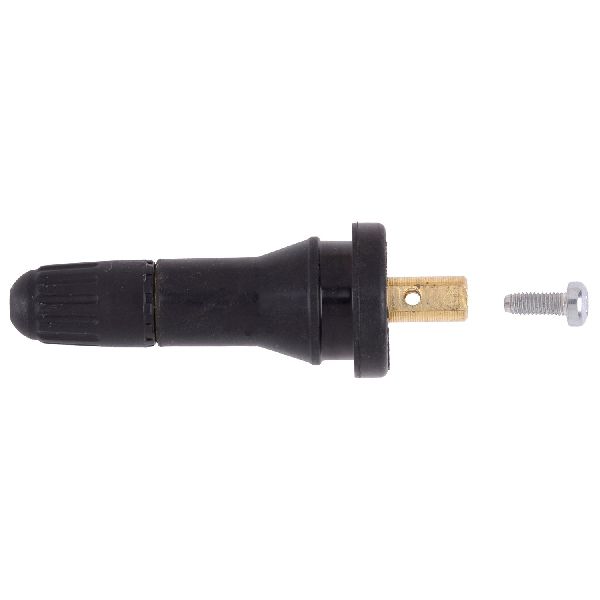
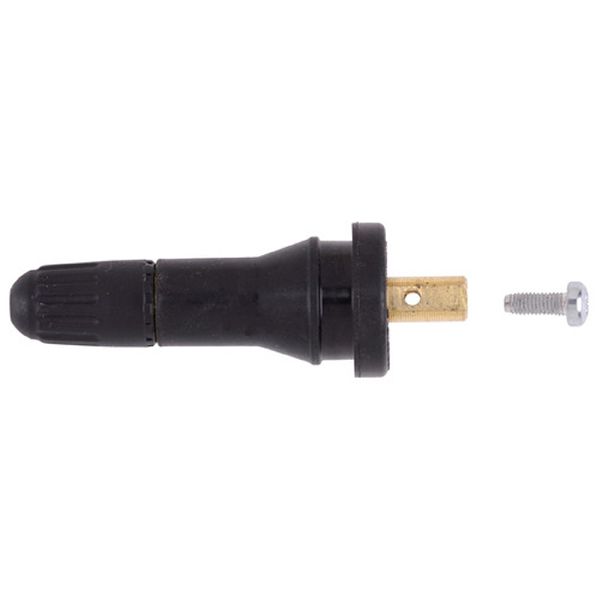
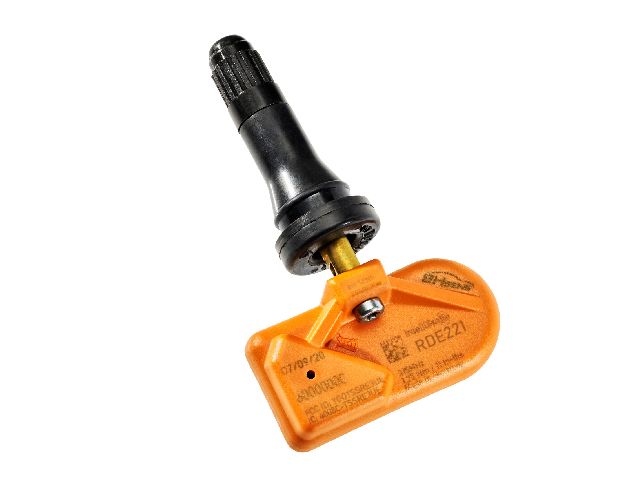
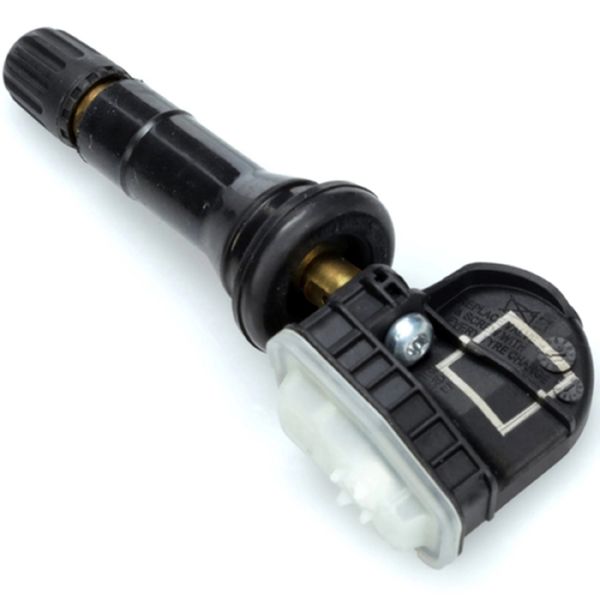
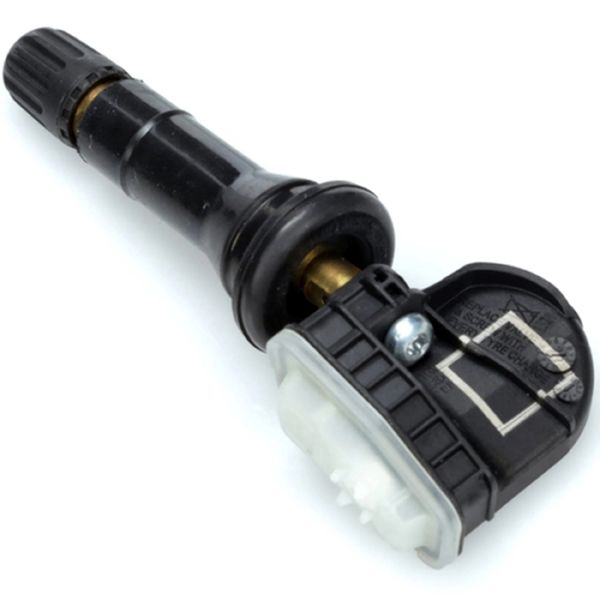
(OEM #13598787, 13540598)— This is the most common fix when C0760 appears alone. The internal battery dies after several years of service. Part number may vary by year and wheel option. It's crucial to get a pre-programmed sensor or have a universal one programmed before installation.
Related Codes That Often Appear With This One
- C0750 — Fault code for the Left Front TPMS sensor. When seen with C0760 and others, it strongly indicates a failure of the common RCDLR module.
- C0755 — Fault code for the Right Front TPMS sensor. When seen with C0760 and others, it strongly indicates a failure of the common RCDLR module.
- C0765 — Fault code for the Right Rear TPMS sensor. When seen with C0760 and others, it strongly indicates a failure of the common RCDLR module.
- B3055 — Relates to a problem with the key transponder. Can be set alongside TPMS codes during a no-start condition, pointing to a wider security/RCDLR system issue. [TSB #PIC5650M]
Technical Service Bulletins (TSBs) & Recalls
- 16-NA-396: Intermittent Operation of Key Fobs, Door Unlock Inoperative “No Remote Detected” Message with Possible TPM MIL. Links C0760 (and other TPMS codes) to a faulty Remote Control Door Lock Receiver (RCDLR).
- PIC5650M: Addresses no-start/stall concerns with security light and lists C0760 as one of several possible related trouble codes.
Platform-Specific Known Issues
- RCDLR Module Location Varies by Generation: On 5th generation Camaros (2010-2015), the RCDLR is often located under the dash. On 6th generation models (2016+), it is located in the trunk, typically behind the left-side trim panel near the wheel well. This location difference is critical for diagnosis and replacement.
- Owner Experience: Intermittent Failures and Dealer Frustration: Multiple forum threads detail how the RCDLR failure can be intermittent at first, making it hard to diagnose. One owner on Camaro5.com reported a dealer replacing the RCDLR, only for the problem to return in 5 miles. The dealer then incorrectly blamed the steel belts in the new tires before another user suggested a wiring issue was more likely. This highlights the importance of checking connections and considering the full TSB before replacing parts.
- Blank Aftermarket TPMS Sensors: Owners have discovered that some universal or aftermarket TPMS sensors are sold 'blank' and will not work out of the box. They must first be programmed for the specific vehicle using a separate TPMS programming tool before the standard in-car relearn procedure can be performed. A user on Camaro6.com ran into this exact issue with a HUF brand sensor.
Mechanic-Grade Diagnostic Values
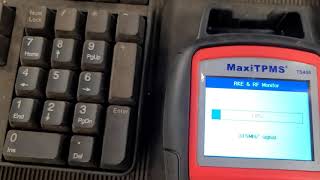
- TPMS Sensor Signal Strength — expected: A TPMS tool should display a 'good' signal strength. On some tools, this is shown as a graph, where anything more than 1/4 of the graph displayed is considered good.. Failure: The tool shows no response or a very weak/intermittent signal from the suspect sensor, while other sensors respond normally.
- Scan Tool 'Pressure Sensor Mode' Data Parameter — expected: The parameter should change from 'Wake' or 'Stationary' to 'Drive' or 'Rolling' when the vehicle is driven above 25 mph.. Failure: If the parameter for the suspect sensor does not change to 'Drive' or 'Rolling' mode after driving, the sensor itself is likely faulty.
Hidden / Shadow Codes Worth Checking
- C0760 with Symptom :29: The symptom code :29 translates to 'Too Few Pulses'. This indicates the RCDLR is receiving an incomplete or corrupt data packet from the sensor, pointing towards a weak sensor battery, RFI, or an internal RCDLR fault rather than a completely dead sensor. (see via GM GDS2 (Global Diagnostic System 2) or equivalent professional scan tool.)
- C0760 with Symptom :08: This symptom code can indicate a 'Bus Signal/Message Failure', which points to a communication problem on the vehicle's data network related to the sensor or module. (see via GM GDS2 (Global Diagnostic System 2) or equivalent professional scan tool.)
Scan Tool Commands That Help
- GDS2: Module Diagnostics -> Remote Control Door Lock Receiver -> Control Functions — This menu allows access to bidirectional controls and data display for the RCDLR, which is essential for diagnosing if the module is receiving signals and is operational.
- GDS2: Remote Control Door Lock Receiver -> Configure/Reset Functions -> Add/Replace Key Fobs — This specific function is required after replacing the RCDLR to program the existing (or new) key fobs to the new module. The vehicle will not recognize the fobs until this procedure is completed.
- TPMS Activation Tool: Simulate Sensor Transmission — Before replacing a suspect RCDLR, a technician can use a TPMS tool to send simulated sensor signals to the receiver. If the scan tool shows the RCDLR receives all four simulated signals correctly, it helps confirm the RCDLR is working and the fault lies with the actual tire sensor(s).
Wiring & Ground Locations
- RCDLR Module (6th Gen) — In the trunk, bolted to the left-hand rear wheel well area, often stacked with other modules like the fuel pump controller.. This is the physical component to inspect, test, and replace. Knowing its location in the trunk is critical for diagnosis.
- RCDLR Module (5th Gen) — Typically located under the dashboard, sometimes referred to as being above the radio.. The location differs from the 6th Gen, so technicians must look in the correct area based on the model year.
- RCDLR Antenna — The antenna system involves a coax cable from the RCDLR to an antenna amplifier module, which then connects to the antenna itself, often integrated into the rear glass.. A disconnected coax cable at the RCDLR, amplifier, or glass can cause identical symptoms to a failed RCDLR module and is a critical inspection point before replacing parts.
- G103 (5th Gen) — Located on the cowl in the left rear of the engine compartment, above the brake booster.. This is a shared ground point for the BCM and the Remote Door Lock Receiver. A poor connection here could cause communication issues for the RCDLR.
Real Owner Repair Stories
- CruzeTalk forum user (Chevrolet Cruze, a sister platform using the same RCDLR) (2014 Chevrolet Cruze) — All four TPMS codes (C0750, C0755, C0760, C0765) were present, 'Service Tire Monitor System' message was on, and key fobs worked only intermittently at very close range.
❌ Tried (didn't work) Replacing the TPMS sensors., Disconnecting the car battery to reset modules (this provided only a temporary fix).
✅ What actually fixed it The issue was resolved by replacing the Remote Control Door Lock Receiver (RCDLR) module.
OEM Part Supersession History
13595511→13540045— Part revision or manufacturer change.
Heads up: According to GM parts sites, 13540045 is the replacement for 13595511. Always verify with a dealer using the VIN before ordering.13509517→13595510— Part revision or manufacturer change.
Heads up: Part number 13595510 is listed for Camaro and operates on the 315MHz frequency. It replaces the older 13509517. Programming is required.
Model Year Variations Within This Range
- 2011-2015 (5th Gen): The RCDLR module is located under the dashboard area. The chassis is the Zeta platform, which is heavier and less rigid than the 6th Gen. The electrical system can be prone to grounding issues, and some owners add supplementary ground wires to improve stability.
- 2016-2018 (6th Gen): The RCDLR module is located in the trunk, on the left (driver's) side behind the trim panel near the wheel well. This model is on the lighter, stiffer Alpha platform and features a more modern interior and updated technology.
Helpful Videos
We Have This Part in Stock


The information in this article is provided for general reference and educational purposes only. Vehicle specifications, procedures, and part compatibility can vary by production date, trim level, and region. Always consult your vehicle's factory service manual and verify part numbers before purchasing or performing repairs. Safety-critical components such as airbags, seat belts, and braking systems should be installed by a qualified professional.
- Chevrolet CAMARO:
- 🎬 Helpful Videos
- 🛍️ Shop This Part
- What's Unique About the 2011-2018 Chevrolet CAMARO
- Diagnostic Flowchart
- Symptoms You May Notice
- Most Likely Causes
- Rare But Worth Checking
- Diagnosis Steps
- Parts You'll Likely Need
- Related Codes That Often Appear With This One
- Technical Service Bulletins (TSBs) & Recalls
- Platform-Specific Known Issues
- Mechanic-Grade Diagnostic Values
- Hidden / Shadow Codes Worth Checking
- Scan Tool Commands That Help
- Wiring & Ground Locations
- Real Owner Repair Stories
- OEM Part Supersession History
- Model Year Variations Within This Range
- 🎟️ Get 5% Off