

C0760 on 2007-2013 Chevrolet Avalanche: Left Rear TPMS Fault Explained
Code C0760 on a 2007-2013 Avalanche means there's a fault with the left rear Tire Pressure Monitoring System (TPMS) sensor. The most common cause is a dead battery inside the sensor, as they have a 7-10 year lifespan. The fix is to replace the sensor and perform a relearn procedure, which can be done with an inexpensive tool.
- C0760 means the left rear TPMS sensor has failed, most likely due to a dead internal battery.
- The vehicle is safe to drive, but you should manually check your tire pressures for safety.
- The fix is to replace the sensor, which requires removing the tire from the wheel.
- After replacement, a TPMS relearn procedure is mandatory. This can be done with an inexpensive special tool or by deflating the tires in sequence.
- Consider replacing all four TPMS sensors at once to save on future labor costs, as they all have a similar lifespan.
What's Unique About the 2007-2013 Chevrolet AVALANCHE
The 2007-2013 Avalanche is part of GM's GMT900 platform, and this generation of vehicles is now at an age where the original TPMS sensor batteries are reaching the end of their 7-10 year service life. Consequently, C0760 and related codes (C0750, C0755, C0765) are extremely common as these original sensors fail from age. While TSB PIC5650M and its revisions list C0760 alongside security-related codes causing a 'no-start' condition, the C0760 code itself is strictly for the TPMS and does not affect the engine's ability to start. The connection is the Remote Control Door Lock Receiver (RCDLR), which processes signals for both the TPMS and the keyless entry/security system on these trucks. A failing RCDLR or significant RF interference can cause both systems to malfunction simultaneously.
Diagnostic Flowchart
Tap your situation to follow the diagnostic path that matches what you're seeing on this vehicle.
Symptoms You May Notice
- "Service Tire Monitor System" message on the Driver Information Center (DIC).
- TPMS warning light on the instrument cluster (often flashes for about a minute, then stays on solid).
- The DIC displays dashes "--" instead of a pressure reading for the left rear tire.
- In some cases, reduced range or intermittent failure of the keyless entry (RKE) remote fobs, as they share the same RCDLR receiver.
- Replacing the wrong TPMS sensor due to a past tire rotation where the system was not relearned.
- Replacing the Body Control Module (BCM) or RCDLR when the issue is a simple sensor failure or RF interference.
- Assuming the code means the tire pressure is low. This code indicates a sensor *fault*, not necessarily low pressure. Always verify with a manual gauge.
Most Likely Causes
- Dead TPMS Sensor Battery 🔴 High Probability The original sensors have a non-replaceable battery with a finite lifespan, typically 7-10 years. Vehicles in this 2007-2013 year range are now old enough that battery failure is the most frequent cause. A low battery condition in the sensor is a direct trigger for this code.
How to confirm: Attempt the TPMS relearn procedure. If it fails to register the left rear sensor, the sensor is almost certainly bad. A professional tire shop or a scan tool can also be used to check if the sensor is transmitting a signal and to check for a 'low battery' status. A dealer-level scan tool may show a symptom code of :03 (Low Voltage).
Typical fix: Replace the left rear TPMS sensor. It is often recommended to replace all four sensors at the same time, as the others are likely near failure as well.
Est. part cost: $25-$60 per sensor - Damaged TPMS Sensor 🟡 Medium Probability Sensors can be easily damaged during tire mounting or dismounting if the technician is not careful. Corrosion of the valve stem, especially in regions with road salt, can also lead to failure.
How to confirm: Visual inspection after dismounting the tire from the wheel. The sensor may have visible cracks or damage. A diagnostic tool may also fail to read any signal from the sensor.
Typical fix: Replace the damaged TPMS sensor.
Est. part cost: $25-$60 - Failed TPMS Relearn Procedure ⚪ Low Probability This can happen after a tire rotation if the relearn procedure was not performed correctly or was skipped. The system thinks the sensor is in a different location, causing a mismatch.
How to confirm: Perform the TPMS relearn procedure. If the procedure completes successfully and the code clears, this was the issue. This is often the first and easiest diagnostic step.
Typical fix: Perform the TPMS relearn procedure using either a relearn tool (like the EL-50448) or the air-down method. 🎬 Watch: How to relearn TPMS sensors without using a tool
Est. part cost: $0 (or ~$15 for a relearn tool)
Rare But Worth Checking
- Remote Control Door Lock Receiver (RCDLR) Fault: The RCDLR acts as the receiver for the TPMS signals. While rare, a fault in this module can prevent it from receiving the sensor signal. This is more likely if you are also experiencing issues with your key fobs, such as poor range. Sometimes, simply pulling the fuse for the RCDLR (often labeled 'DSM') for a few moments can reset a 'sleeping' module and temporarily resolve the issue.
- Radio Frequency (RF) Interference: Strong RF signals from aftermarket electronics like dash cams, phone chargers, or even certain LED replacement bulbs can interfere with the TPMS signal. TSB PIC5650K specifically warns that aftermarket devices are a common cause of intermittent TPMS and key fob issues. If the problem is intermittent, try unplugging all aftermarket accessories to see if the code clears.
- RCDLR Antenna Connection Issue: As detailed in GM bulletin 16-NA-061, a poor or disconnected coax cable connection at the RCDLR module or its antenna amplifier can cause intermittent loss of signal from the sensors, particularly those farthest away (like the left front and left rear). This may also cause poor key fob range.
Diagnosis Steps
- Verify the code C0760 is present using an OBD-II scanner capable of reading Chassis (C) codes.
- Check the pressure of all tires with a reliable manual gauge to rule out an actual low tire.
- Attempt the TPMS relearn procedure. On the DIC, navigate to the tire pressure screen, press and hold the checkmark button to enter learn mode. Alternatively, some models allow you to enter learn mode by holding the lock/unlock buttons on the key fob.
- Use a TPMS activation tool (like an EL-50448) starting with the left front tire and moving clockwise. If the vehicle's horn does not chirp to confirm the left rear sensor, but does for other wheels, the sensor is bad.
- Alternatively, use the 'air-down' method: in learn mode, let air out of the tire (starting LF, then RF, RR, LR) until the horn chirps. If it never chirps for the left rear tire, the sensor has failed. Be prepared to re-inflate the tires afterward.
- If key fobs are also malfunctioning, investigate the Remote Control Door Lock Receiver (RCDLR). Try pulling the 'DSM' fuse in the instrument panel fuse box for 60 seconds to reset the module.
- Check for RF interference. Unplug all aftermarket 12V accessories (phone chargers, dash cams, etc.) and see if the TPMS signal returns.
- If the problem persists, inspect the RCDLR coaxial antenna connection, which is often located behind the rear passenger-side C-pillar trim, for looseness or damage.
Parts You'll Likely Need
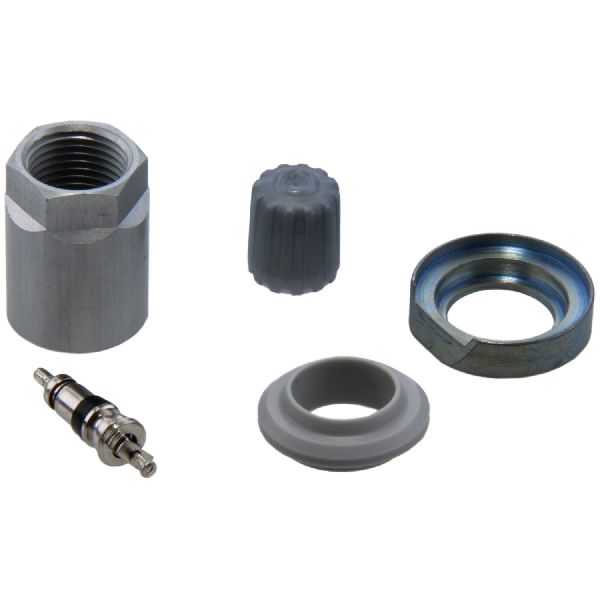
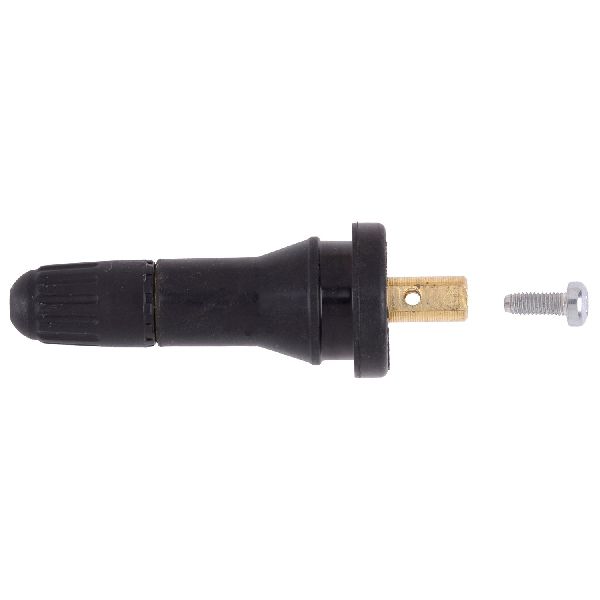
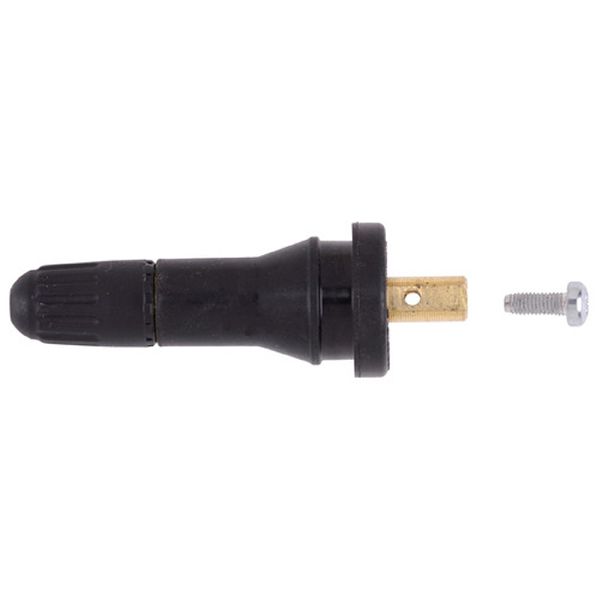
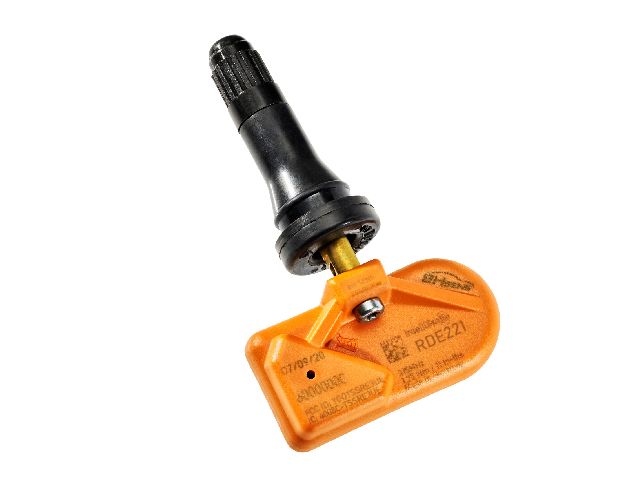
- Tire Pressure Monitoring System (TPMS) Sensor
(OEM #25920615)— This is the component that fails, usually due to an exhausted internal battery. It contains the sensor and transmitter in one 315MHz unit. Part number 25920615 is a common GM part for this era, which has been superseded by newer numbers like 13598773 and 13586335.
Trusted brands: ACDelco (GM OE), Schrader (Often the OEM supplier), Continental/VDO, Dorman
OEM price range: $50-$75
Aftermarket price range: $25-$50 - TPMS Relearn Tool
(OEM #EL-50448)— After installing a new sensor, this tool is required to activate it and teach the vehicle its new ID and position. It is a simple, one-button tool that is essential for most GM vehicles of this era. 🎬 Watch: Using the EL-50448 tool for a quick sensor relearn
Trusted brands: VXDAS, JDIAG, ATEQ
OEM price range: $10-$20
Aftermarket price range: $10-$20
Related Codes That Often Appear With This One
- C0750 — Fault in the Left Front TPMS sensor. It's common for multiple sensors to fail around the same time due to similar battery age.
- C0755 — Fault in the Right Front TPMS sensor. It's common for multiple sensors to fail around the same time due to similar battery age.
- C0765 — Fault in the Right Rear TPMS sensor. It's common for multiple sensors to fail around the same time due to similar battery age.
- B3055, B3060, B3935 — These are security and key-related codes. If seen with C0760, it strongly points towards a common cause like a faulty RCDLR module or significant RF interference, as these systems share the RCDLR.
Technical Service Bulletins (TSBs) & Recalls
- PIC5650M (and newer revisions): Mentions C0760 in a list of DTCs that may be found with a no-start or key fob/security concern. It clari
Platform-Specific Known Issues
- Owner Experience: Intermittent RCDLR Failure: Some owners on forums for the Tahoe (a platform mate) have reported that both their TPMS and key fobs stop working simultaneously. They found a temporary fix by pulling the fuse for the RCDLR, which is labeled 'DSM' in the fuse box on the left side of the instrument panel, waiting a minute, and reinstalling it. This 'reboots' the module. The permanent fix for this specific 'sleeping module' issue is a software update from a GM dealer.
- TSB PIC5650 Series: RF Interference: Multiple versions of this TSB (from PIC5650C to PIC5650K) repeatedly emphasize that intermittent TPMS codes (including C0760) and key fob issues are frequently caused by Radio Frequency Interference (RFI) from aftermarket devices. Before replacing expensive modules, it is critical to remove all non-factory chargers, LED lights, and other plugged-in electronics to see if the problem resolves.
Mechanic-Grade Diagnostic Values
- RCDLR Power Supply Voltage — expected: Battery Positive Voltage (12V+). Failure: 0V indicates a blown fuse (DSM 10A in IP fuse block) or a broken wire.
- RCDLR Ground Circuit Voltage Drop — expected: Less than 0.1V. Failure: Voltage significantly higher than 0.1V indicates a poor ground connection.
Hidden / Shadow Codes Worth Checking
- C0760 :03: Left Rear Tire Pressure Sensor Low Voltage. This is a specific indicator that the sensor's internal battery is failing. (see via GM Tech2 or GDS2 scan tool, or an advanced professional scanner capable of reading GM-specific symptom bytes.)
- C0760 :08: Left Rear Tire Pressure Sensor Signal Invalid. The RCDLR is receiving a signal, but the data is corrupt. This can point to RF interference or an internal sensor fault. (see via GM Tech2 or GDS2 scan tool, or an advanced professional scanner capable of reading GM-specific symptom bytes.)
- C0760 :29: Left Rear Tire Pressure Sensor Too Few Pulses. The RCDLR is receiving an incomplete data packet, often due to a weak battery or significant RF interference. (see via GM Tech2 or GDS2 scan tool, or an advanced professional scanner capable of reading GM-specific symptom bytes.)
Scan Tool Commands That Help
- Tech2 / GDS2: RCDLR Data Display — Use this to view the live status of each TPMS sensor, including its reported pressure, ID, and state (e.g., 'Active', 'Low Battery', 'Learn Mode', 'Drive Mode'). This is critical to see if the RCDLR is receiving any data at all from the suspect sensor.
- Tech2: RCDLR > Special Functions > Output Controls > Active Antenna / Console Antenna — This bidirectional control can be used to test the function of the RCDLR's antenna circuits. If the module is powered but not receiving signals, this test can help differentiate between an internal module failure and an external antenna or wiring problem.
- Tech2 / GDS2: RCDLR > Module Setup > Copy and Paste TPM Information — When replacing the RCDLR, this function must be used *before* removing the old module to extract sensor IDs and tire type info. This data is then pasted to the new module after installation, avoiding the need for a full relearn procedure.
Wiring & Ground Locations
- RCDLR Module — Behind the trim on the rear passenger-side C-pillar. On some GMT900 trucks it may be in the driver's side rear pillar.. This is the receiver for all TPMS and key fob signals. All diagnostic paths for multiple sensor failures or combined TPMS/key fob issues lead here.
- RCDLR Connector Pin 7 (Battery) — Pin 7 on the RCDLR connector, typically a Red/White wire.. This is the main power feed from the 10A 'DSM' fuse. A break in this wire will cause the module to lose communication, setting codes for all sensors and disabling key fobs.
- RCDLR Connector Pin 8 (Ground) — Pin 8 on the RCDLR connector, typically a Black/White wire.. This is the module's ground connection. A poor ground here can cause intermittent reception, strange behavior, or complete failure. The wire connects to a chassis ground point, likely G401 or G402 on the rear frame rails.
- G401 / G402 — G401 is on the left rear frame rail; G402 is on the right rear frame rail, behind the rear tire.. These are the main chassis ground points for the rear of the vehicle. The RCDLR's ground wire ultimately connects to one of these points. Corrosion here can cause a host of rear-body electrical issues, including RCDLR failure.
Real Owner Repair Stories
- Tahoe Yukon Forum user (2009 Chevrolet Tahoe) — Key fob range became very short, and the TPMS warning light came on.
❌ Tried (didn't work) Pulling the 'DSM' fuse to reset the module., Unplugging the RCDLR module to 'reboot' it.
✅ What actually fixed it Replaced the RCDLR module with a used part from a 2011 Impala (Part # started with 2038####, newer than the original 15857831). After installing the replacement module, the TPMS pressures displayed correctly and the key fobs could be reprogrammed and worked from a normal distance. - gm-trucks.com forum user, referenced in TSB (2016 Chevrolet Suburban) — Service Tire Monitor System light on, dashes for left rear tire pressure, and very poor key fob range (had to be right next to the truck).
❌ Tried (didn't work) Replacing the key fob battery., Attempting to relearn the TPMS sensors.
✅ What actually fixed it Following the advice in TSB 16-NA-061, the owner inspected the RCDLR antenna and its coaxial cable connections. Finding and reconnecting a loose coax cable restored full function to both the TPMS and the key fobs.
OEM Part Supersession History
25920615→13586335, 13598773, 20923680, 13540600— Standard part evolution and consolidation by GM.
Heads up: All sensors for this platform operate at 315MHz. Ensure any replacement, regardless of part number, is the correct frequency.
Model Year Variations Within This Range
- 2011-2013: Owner-facing key fob programming may have been removed. While earlier models often allowed owners to program new remotes themselves, later models may require a dealer or locksmith with a scan tool to program new or replacement key fobs to the RCDLR.
Helpful Videos
We Have This Part in Stock


The information in this article is provided for general reference and educational purposes only. Vehicle specifications, procedures, and part compatibility can vary by production date, trim level, and region. Always consult your vehicle's factory service manual and verify part numbers before purchasing or performing repairs. Safety-critical components such as airbags, seat belts, and braking systems should be installed by a qualified professional.
- Chevrolet AVALANCHE:
- 🎬 Helpful Videos
- 🛍️ Shop This Part
- What's Unique About the 2007-2013 Chevrolet AVALANCHE
- Diagnostic Flowchart
- Symptoms You May Notice
- Most Likely Causes
- Rare But Worth Checking
- Diagnosis Steps
- Parts You'll Likely Need
- Related Codes That Often Appear With This One
- Technical Service Bulletins (TSBs) & Recalls
- Platform-Specific Known Issues
- Mechanic-Grade Diagnostic Values
- Hidden / Shadow Codes Worth Checking
- Scan Tool Commands That Help
- Wiring & Ground Locations
- Real Owner Repair Stories
- OEM Part Supersession History
- Model Year Variations Within This Range
- 🎟️ Get 5% Off