

C0760 on 2007-2014 Cadillac Escalade ESV: Left Rear TPMS Fault Causes and Fixes
Code C0760 on a 2007-2014 Escalade ESV means the Left Rear Tire Pressure Monitoring System (TPMS) sensor is not communicating with the vehicle. The most common cause is a dead sensor battery, which requires sensor replacement. This typically costs $50-$150 per sensor at a tire shop.
- C0760 points specifically to a problem with the left rear TPMS sensor.
- The most probable cause is a dead battery in the sensor, which has a typical lifespan of 5-10 years.
- Before replacing parts, unplug all aftermarket accessories (phone chargers, etc.) to rule out Radio Frequency Interference, a known issue on these vehicles per TSB PIC5650M.
- Replacing the sensor requires tire removal equipment, so it's a common job for a tire shop, costing around $50-$150.
- If key fob issues are also present, investigate the RCDLR and its antenna connection as a possible root cause.
What's Unique About the 2007-2014 Cadillac ESCALADE ESV
On this generation of Escalade (GMT900 platform), the TPMS sensors communicate with the Remote Control Door Lock Receiver (RCDLR), the same module that handles your key fobs. This shared function is important because a failing RCDLR or its antenna connection can cause both TPMS codes and key fob problems simultaneously. Additionally, as noted in TSB PIC5650M, these TPMS codes can appear alongside security and no-start issues, often due to radio frequency interference from aftermarket electronics like phone chargers or LED lights, which can jam the 315 MHz signals the RCDLR needs to receive.
Diagnostic Flowchart
Tap your situation to follow the diagnostic path that matches what you're seeing on this vehicle.
Symptoms You May Notice
- TPMS warning light is on (may flash for about a minute at startup and then stay solid).
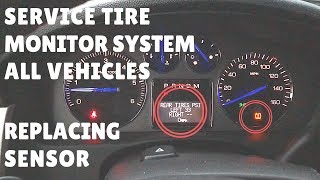
- "Service Tire Monitor System" message on the Driver Information Center (DIC).
- The DIC shows dashes (---) instead of a pressure reading for the left rear tire.
- Inability to complete the TPMS relearn procedure; the process will stall and fail when it gets to the left rear tire.
- Replacing the Body Control Module (BCM) when the issue is with the RCDLR or a simple sensor.
- Assuming the tire pressure is correct without checking manually with a gauge.
- Replacing the sensor when only the valve stem service kit is needed to fix a leak.
- Replacing sensors when the actual issue is a disconnected RCDLR antenna coax cable.
Most Likely Causes
- Dead TPMS Sensor Battery 🔴 High Probability TPMS sensor batteries have a finite lifespan, typically 5-10 years. Vehicles in this 2007-2014 range are now old enough that their original sensor batteries are failing due to age.
How to confirm: Use a TPMS diagnostic tool to attempt to activate the sensor. If the tool cannot get a response, the sensor is dead. A scan tool can also directly read the sensor battery status from the RCDLR data list; a 'low battery' status confirms the need for replacement.
Typical fix: Replace the left rear TPMS sensor. 🎬 Watch: A step-by-step guide to replacing the sensor on your Escalade. This requires breaking the tire bead from the wheel, 🎬 Check out this clever shop vac trick to replace sensors easily. so it's typically done at a tire shop. A TPMS relearn procedure must be performed afterward.
Est. part cost: $25-$75 - Failed TPMS Sensor 🟡 Medium Probability Sensors can be damaged during tire changes, from hitting potholes, or fail due to age and exposure to the elements.
How to confirm: Diagnosis is the same as for a dead battery. If the sensor doesn't respond to a TPMS tool, it has failed. The sensor may also transmit incorrect data, which can be seen with a scan tool.
Typical fix: Replace the left rear TPMS sensor and perform the TPMS relearn procedure.
Est. part cost: $25-$75 - Corroded or Leaking Valve Stem ⚪ Low Probability The metal valve stem assembly can corrode over time, especially in regions that use road salt, causing slow air leaks. While this may not directly cause C0760, it often leads to sensor replacement, and service kits are recommended during any TPMS service.
How to confirm: Spray soapy water around the base of the valve stem and look for bubbles, which indicate a leak.
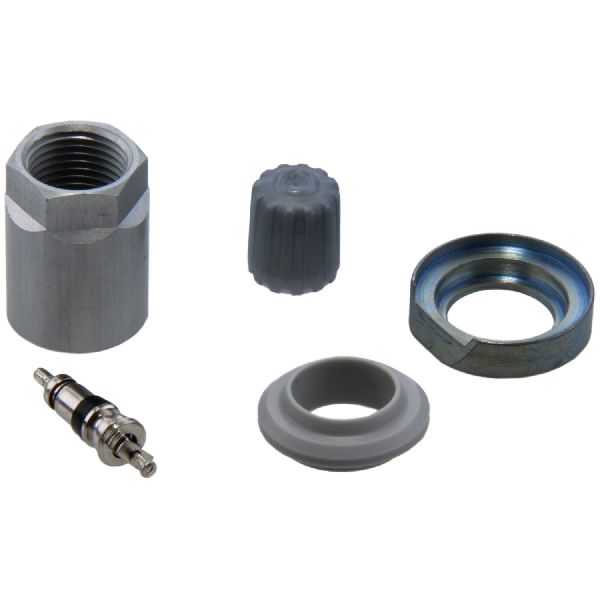
Typical fix: Replace the TPMS service kit (valve stem, core, nut, and seals) rather than the entire sensor. This is often done when replacing tires or the sensor itself.
Est. part cost: $5-$15
Rare But Worth Checking
- Radio Frequency Interference (RFI): As detailed in TSB PIC5650M, aftermarket devices like phone chargers, dash cams, or cheap LED lighting can emit radio frequencies that jam the 315 MHz signal from the TPMS sensor to the RCDLR. This can also cause key fob and no-start issues. Unplug all aftermarket accessories and see if the code clears.
- Faulty Remote Control Door Lock Receiver (RCDLR): If you are also experiencing issues with your key fobs (poor range, 'No Remote Detected' message), the RCDLR module itself may be faulty. TSB 16-NA-061 also notes that a disconnected coax cable to the RCDLR antenna (located in the right rear quarter glass) can cause these exact symptoms, sometimes affecting the sensors farthest from the receiver first.
- Incorrectly Positioned Sensors After Tire Rotation: If a tire rotation was recently performed but the TPMS relearn procedure was skipped, the system may report a fault for the left rear, when the problematic sensor is actually at a different corner of the vehicle. A user on Tahoe Yukon Forum experienced this, where the DIC had front and rear pressures mixed up. Performing a relearn will correctly assign each sensor's position.
Diagnosis Steps
- Verify the symptom: Check the Driver Information Center (DIC) for the "Service Tire Monitor System" message and confirm that the left rear tire pressure reads '---'.
- Check for RFI: Unplug all aftermarket 12V accessories (phone chargers, dash cams, etc.) and remove any non-factory LED lights. TSB PIC5650M specifically calls these out as a major source of interference. Drive the vehicle to see if the system resets.
- Attempt TPMS Relearn: Follow the vehicle's specific relearn procedure. On these models, you can typically enter learn mode via the DIC or by holding the lock/unlock buttons on the key fob until the horn chirps. Then, let air out of each tire in sequence (starting with LF) until the horn chirps 🎬 See how to perform this DIY TPMS reset without special tools. for each one. If the process fails when it gets to the left rear tire, the sensor is the primary suspect.
- Use a TPMS Tool: A tire shop or a well-equipped DIYer can use a TPMS activation tool to directly query the sensor. If the sensor does not respond or shows a low battery status, it has failed and needs replacement.
- Inspect Valve Stem: If the sensor responds but you have a slow leak, spray the valve stem with soapy water to check for corrosion-related leaks.
- Check RCDLR Function and Antenna: If you also have key fob problems, the RCDLR module or its antenna connection should be professionally diagnosed as the potential cause, per TSB 16-NA-061.
Parts You'll Likely Need
- Tire Pressure Monitoring System (TPMS) Sensor
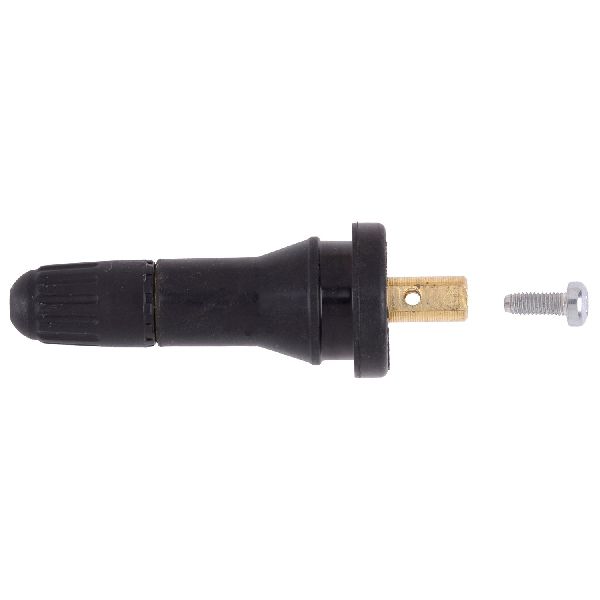
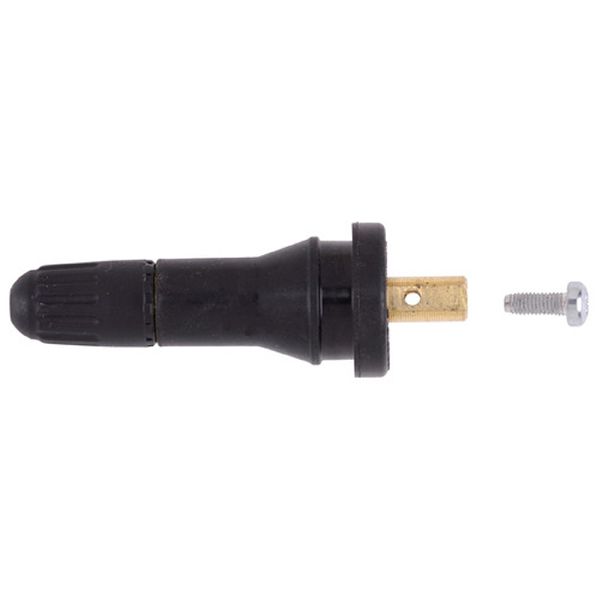
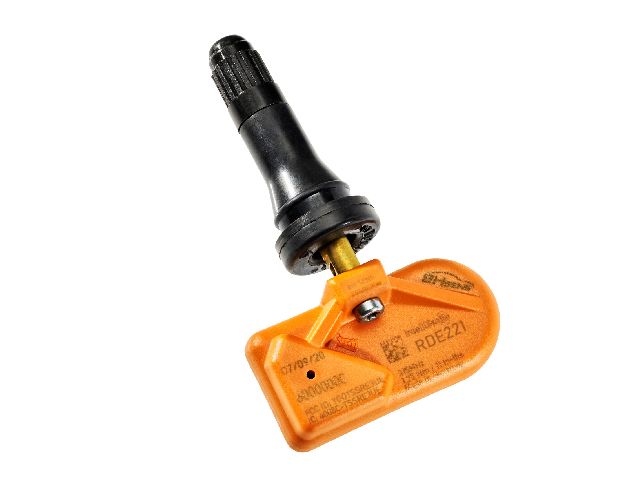
(OEM #13598771)— This is the most common failure point. The internal battery is not serviceable, so the entire sensor must be replaced when it dies. The original part number was 13586335, which has been superseded by 13598771. Ensure the replacement is the correct 315 MHz frequency for this vehicle.
Trusted brands: ACDelco, Schrader, Continental, Standard Motor Products
OEM price range: $50-$90
Aftermarket price range: $25-$60
Related Codes That Often Appear With This One
- C0750, C0755, C0765 — These are the corresponding TPMS fault codes for the other three wheels (LF, RF, RR). If multiple codes appear at once, it points towards a central issue like a faulty RCDLR, its antenna connection, or significant RFI.
- B3055, B3060, B3935 — These are security and key-related codes. According to TSB PIC5650M, they can appear with TPMS codes during a no-start or start/stall condition, often caused by Radio Frequency Interference from aftermarket devices.
Technical Service Bulletins (TSBs) & Recalls
- PIC5650M: Discusses intermittent no-start/stall conditions with security light and DTCs including C0760, B3055, B3060, etc., pointing to Radio Frequency Interference from aftermarket devices as a likely cause.
- 16-NA-061 / PIT5446: Details how a disconnected RCDLR antenna coax cable can cause TPMS codes (C0750, C0755, C0760, C0765) and key fob issues.
Platform-Specific Known Issues
- TSB PIC5650M highlights a scenario where C0760 can appear with security codes (like B3055) and cause a no-start or stalling condition. The root cause is identified as Radio Frequency Interference from aftermarket electronics jamming the vehicle's receivers.
- TSB 16-NA-061 (and its predecessor PIT5446) points to a disconnected coaxial antenna cable for the RCDLR module as a cause for TPMS codes and poor key fob range. The disconnect can happen at the module, at the antenna amplifier, or at the antenna itself in the right rear quarter glass.
Mechanic-Grade Diagnostic Values
- RCDLR Power Supply Voltage — expected: 12V DC. Failure: No voltage indicates a blown fuse (DSM 10A fuse in IP fuse box) or wiring issue.
- RCDLR Ground Circuit — expected: Near 0 Ohms to chassis ground.. Failure: High resistance indicates a poor connection at ground stud G302.
Hidden / Shadow Codes Worth Checking
- C0760 08: Left Rear Low Tire Pressure Sensor Signal Invalid. This sub-code indicates the RCDLR is receiving a signal, but the data is corrupt or incomplete. This points more toward RFI or an internal sensor fault rather than a completely dead battery. (see via GM GDS2 (Global Diagnostic System 2) or an equivalent professional-grade scan tool.)
Scan Tool Commands That Help
- GDS2: Module Diagnostics > RCDLR > Data Display > Tire Pressure Sensor Data — Use this to view live data from each TPMS sensor, including pressure, learned state, and battery status (if available). This can confirm if the RCDLR is receiving any signal at all from the left rear sensor.
- GDS2: Module Diagnostics > RCDLR > Configuration/Reset Functions — This menu is used after replacing the RCDLR module itself to program the new module to the vehicle and learn the existing TPMS sensor and key fob IDs.
Wiring & Ground Locations
- RCDLR (Remote Control Door Lock Receiver) — Located in the driver's side rear quarter panel (D-pillar area), behind the interior trim panel, near the rear hatch.. This module is the central receiver for all TPMS sensor signals. A fault in the module, its power, ground, or antenna connection is a primary cause for TPMS codes, especially if key fob issues are also present.
- RCDLR Antenna — The antenna is integrated into the right rear quarter glass, connected by a coax cable and amplifier to the RCDLR.. A disconnected coax cable at the RCDLR, amplifier, or glass antenna will cause poor or no reception from the TPMS sensors, particularly those farthest away like the left front and left rear.
- G302 (Ground) — Located on the front passenger side door sill, under the trim/scuff plate.. This is the primary ground point for the RCDLR module. A corroded or loose connection here can cause intermittent or total failure of the RCDLR, leading to TPMS and keyless entry faults.
- RCDLR Connector — At the RCDLR module in the driver's side D-pillar.. Pin testing is required to confirm power and ground. The RD/WH (Red/White) wire should have +12V from the DSM 10A fuse, and the BK/WH (Black/White) wire is the ground that runs to G302.
Real Owner Repair Stories
- Tahoe Yukon Forum user (2009 Cadillac Escalade) — Keyless entry and TPMS system inoperative.
❌ Tried (didn't work) Not specified, but the user identified the RCDLR as the failed component.
✅ What actually fixed it The user sourced a replacement RCDLR module from a 2011 Impala at a pull-a-part yard for $5.00. They noted that as long as the part number was a newer revision (e.g., 2038xxxx or 25xxxxxx instead of the original 15857831), it was compatible. After plugging in the replacement module, it entered programming mode and resolved the issue. - CorvetteForum user (2000 Corvette (similar GM RFA/RCDLR system)) — TPMS errors for rear tires (C2110, C2115) and key fob would not sync.
❌ Tried (didn't work) Checking fuses., Attempting key fob relearn procedure., Testing the key fob at a parts store (it worked)., Using a TPMS tool to check sensor batteries.
✅ What actually fixed it Replacing the receiver module (RFA, the predecessor to the RCDLR) located in the driver's side rear of the vehicle fixed both the TPMS and key fob issues simultaneously.
OEM Part Supersession History
13586335→13598771, 13540600— Standard part evolution and supplier changes.
Heads up: The original part number 13586335 is widely cross-referenced and has been replaced by several numbers, including 13598771. It is critical to ensure the replacement sensor operates at 315 MHz, as this is required for all 2007-2014 North American models.
Helpful Videos
We Have This Part in Stock


The information in this article is provided for general reference and educational purposes only. Vehicle specifications, procedures, and part compatibility can vary by production date, trim level, and region. Always consult your vehicle's factory service manual and verify part numbers before purchasing or performing repairs. Safety-critical components such as airbags, seat belts, and braking systems should be installed by a qualified professional.
- Cadillac ESCALADE ESV:
- 🎬 Helpful Videos
- 🛍️ Shop This Part
- What's Unique About the 2007-2014 Cadillac ESCALADE ESV
- Diagnostic Flowchart
- Symptoms You May Notice
- Most Likely Causes
- Rare But Worth Checking
- Diagnosis Steps
- Parts You'll Likely Need
- Related Codes That Often Appear With This One
- Technical Service Bulletins (TSBs) & Recalls
- Platform-Specific Known Issues
- Mechanic-Grade Diagnostic Values
- Hidden / Shadow Codes Worth Checking
- Scan Tool Commands That Help
- Wiring & Ground Locations
- Real Owner Repair Stories
- OEM Part Supersession History
- 🎟️ Get 5% Off