

OBD-II Code C0760: Left Rear Tire Pressure Sensor Fault
What C0760 means, why it triggers, and how to fix it
- Code C0760 is a GM-specific fault indicating a lost signal from the left rear tire pressure sensor, most commonly caused by a dead internal sensor battery after 5 to 10 years.
- A TPMS light that flashes for 60 seconds before turning solid confirms a system fault like C0760, whereas an immediately solid light indicates actual low tire pressure.
- If your key fob stops working simultaneously with the C0760 code, the Remote Control Door Lock Receiver (RCDLR) module has failed, requiring a $260–$770 replacement and programming.
- Professional scan tools reveal critical 2-digit symptom bytes: 'C0760 03' confirms a dead sensor battery, while 'C0760 29' pinpoints an internal RCDLR module failure.
- Unplugging aftermarket 12V accessories like phone chargers or dash cams instantly fixes C0760 if Radio Frequency Interference (RFI) is jamming the sensor signal.
What Does C0760 Mean?

Code C0760 means the main computer lost communication with the left rear tire pressure sensor. The system cannot read the pressure for that tire, triggering a warning light to indicate a system fault rather than low air pressure.
Technical definition: The official GM definition for C0760 is "Left Rear Low Tire Pressure Sensor". The Remote Control Door Lock Receiver (RCDLR) or Body Control Module (BCM) failed to receive a valid transmission from the left rear sensor for 5 to 18 minutes while driving above 25 mph. This code is exclusive to GM brands (Chevrolet, GMC, Cadillac, Buick).
Can I Drive With C0760?
Yes, But With Caution. You can drive the vehicle, but the tire pressure monitoring system (TPMS) is disabled, meaning you will not be warned about a dangerously low tire. This significantly increases the risk of a sudden tire failure or blowout, which causes a loss of vehicle control. Manually check your tire pressures with a gauge before driving and regularly thereafter until the system is fixed. Ignoring this leads to accelerated and uneven tire wear, forcing a premature tire replacement costing $150-$400.
Common Causes

- Dead TPMS Sensor Battery (Very Common) — The internal sensor battery lasts 5-10 years and cannot be replaced separately. This is the most common cause on vehicles over 5 years old.
- Faulty Remote Control Door Lock Receiver (RCDLR) Module (Very Common) — This module receives signals from both TPMS sensors and key fobs. It is a high-failure part on many GM vehicles, causing C0760 and dead key fobs simultaneously (GM TSB 16-NA-396).
- Disconnected or Damaged RCDLR Antenna (Common) — The coaxial antenna wire in a rear pillar or glass often disconnects or breaks. This prevents the module from receiving signals from the farthest wheels (TSBs PIT5446A and 16-NA-061).
- Radio Frequency Interference (RFI) (Less Common) — Aftermarket USB chargers, dash cams, or LED bulbs emit radio signals that block the sensor's 315 MHz or 433 MHz transmission.
- Failed TPMS Relearn Procedure (Uncommon) — Skipping the mandatory 'relearn' procedure after a tire rotation causes the system to look for the sensor in the wrong location.
- Incorrect or Incompatible TPMS Sensor (Uncommon) — Installing a sensor with the wrong frequency (e.g., 315 MHz vs. 433 MHz) or an unprogrammed universal sensor prevents communication.
- Damaged TPMS Sensor (Rare) — Pothole impacts, road debris, or careless tire mounting physically breaks the sensor.
- Use of Aftermarket Tire Sealant (Rare) — Emergency sealants like Fix-a-Flat clog the sensor's pressure port, causing it to fail.
Symptoms

- TPMS Light Flashes, Then Stays On — The dashboard TPMS light flashes for 60 seconds on startup, then turns solid, indicating a system fault.
- "Service Tire Monitor System" Message — This warning appears on the Driver Information Center (DIC). 🎬 Watch: How to fix the Service Tire Monitor System message.
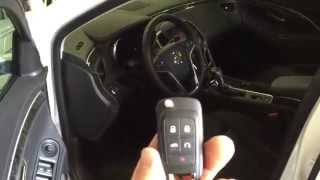
- Key Fob Stops Working — The key fob fails to lock, unlock, or remote start the vehicle, pointing directly to a bad RCDLR module. 🎬 Watch: Diagnosing a failed RCDLR module and keyless entry issues.
- Tire Pressure Reads Dashes — The DIC displays "---" for the left rear tire instead of a numerical pressure.
- Inability to Enter TPMS Relearn Mode — The vehicle fails to chirp the horn and enter TPMS relearn mode, confirming an RCDLR failure.
Diagnostic Flowchart
Tap your situation to follow the diagnostic path that matches what you're seeing on this code.
Common Fixes & Costs

- Replace Left Rear TPMS Sensor
— Parts: $25-$85 (Aftermarket) / $50-$130 (OEM), Labor: $75-$150, ~0.8 hr book time
(Professional)
Chevrolet Cruze (2011-2015): OEM
Chevrolet Camaro (2011-2015): OEM
Chevrolet Volt (2011-2015, Gen 1): OEM - Replace Remote Control Door Lock Receiver (RCDLR)
— Parts: $60-$150 (Aftermarket) / $80-$220 (OEM), Labor: $200-$550, ~2.5 hr book time
(Professional)
Chevrolet Cruze (2011-2015): OEM
Chevrolet Camaro (2011-2015): OEM
Chevrolet Volt (2011-2015, Gen 1): OEM - Reconnect or Repair RCDLR Antenna Cable — Parts: $0-$100, Labor: $100-$400, ~1.5 hr book time (Intermediate)
- Remove Source of Radio Frequency Interference — Parts: $0, Labor: $0, ~0.1 hr book time (DIY)
- Reprogram/Relearn TPMS System — Parts: $0, Labor: $25-$75, ~0.2 hr book time (DIY)
DIY vs Professional
- Replace Left Rear TPMS Sensor — Beginner:
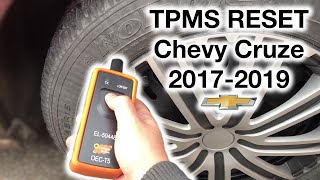
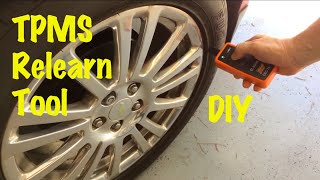
Tools: ['Jack and jack stands', 'Lug wrench', 'Tire bead breaker (manual or machine)', 'Valve core removal tool', 'Torque wrench', 'TPMS relearn tool (e.g., EL-50448 for GM)'] - Replace Remote Control Door Lock Receiver (RCDLR) — Beginner:
Tools: ['Trim removal tools', 'Socket set', 'GM GDS2/MDI diagnostic interface', 'Active GM SPS (Service Programming System) subscription'] - Reconnect RCDLR Antenna Cable — Beginner:
Tools: ['Trim removal tools', 'Socket set', 'Flashlight'] - Remove RFI Sources — Beginner:
Tools: ['None'] - Reprogram/Relearn TPMS System — Beginner:
Tools: ['TPMS relearn tool (e.g., EL-50448, approx. $20-$50)']
Used vs. New Parts: Buying Guide
When a used part is worth it: Buying used parts is generally not recommended. A used TPMS sensor should never be purchased, as its battery life is unknown. A used RCDLR module from a low-mileage vehicle is a cost-saving option only if you have a confirmed method to reprogram it.
Donor-vehicle mileage cap: roughly under 60000 miles for the part to have meaningful remaining life.
Donor quality checklist:
- For an RCDLR, verify the donor vehicle was not flood-damaged.
- Match the part number exactly; superseded numbers carry a risk.
- Ensure the salvage yard offers at least a 30-day warranty.
Decision logic:
- If The failed part is a TPMS sensor → Always buy new. The cost of labor to install a used sensor that could fail in months is not worth the small savings on the part.
- If The failed part is the RCDLR and a new OEM part is over $200 → A used part is a viable option, but you MUST first confirm that your mechanic or a dealer has the tools and is willing to attempt to reprogram a used module to your vehicle.
- If A Dorman or other 'plug-and-play' aftermarket RCDLR is available → This is often the best choice, balancing cost and avoiding the high risk and cost of programming an OEM or used module.
Warranty tradeoff: Used parts typically have a 30-90 day warranty at best. New aftermarket parts often carry a 1-year to limited lifetime warranty. New OEM parts have a 1-year warranty.
Worst-case if a used part fails: $300-$600 if a used RCDLR cannot be programmed after installation, requiring repeat labor and the purchase of a new part.
What Happens If You Wait — Timeline
- 0-1 month (Fault Occurs): The TPMS light flashes for 60 seconds and then stays on. 'Service Tire Monitor System' message appears. The system is now disabled, and you will not be warned of low pressure in the left rear tire. (MPG impact: 0% (from the fault itself)% · Added cost: $0)
- 1-3 months (Driving Unmonitored): The tire develops a slow leak and pressure drops, but you are not alerted. The tire runs underinflated, causing increased rolling resistance and the outer edges of the tread to wear down faster. (MPG impact: 1-3% decrease% · Added cost: $20-60 in wasted fuel.)
- 3-6 months (Accelerated Wear): Sustained driving on the underinflated tire causes significant, uneven wear, ruining the tire. The tire now needs to be replaced prematurely. Handling and braking performance are compromised. (MPG impact: 3-5% decrease% · Added cost: $150-$400 for a new tire, plus continued fuel waste.)
- 6+ months (Catastrophic Failure Risk): The excessive flexing and heat buildup from severe underinflation causes the tire's internal structure to fail, leading to a sudden blowout at speed. This causes a loss of vehicle control and an accident, with potential damage to the wheel, fender, and suspension components. (MPG impact: 5%+ decrease% · Added cost: $500-$3000+ for accident-related repairs (new tire, wheel, bodywork, suspension parts).)
Cost of Not Fixing It
- 0-1 month: No direct cost, but a significant safety risk. You will not be alerted to a low tire, increasing the risk of a flat or blowout. Annoyance from the persistent dashboard warning light. (Added cost: $0)
- 1-6 months: Increased tire wear. If the tire is actually low and goes unnoticed, it wears unevenly and prematurely, requiring replacement sooner. This also results in slightly reduced fuel economy. (Added cost: $150-$400 (for a new tire))
- 6+ months: Catastrophic tire failure (blowout). A blowout at speed causes loss of control, leading to an accident. Damage extends beyond the tire to the wheel, fender, and suspension components. (Added cost: $500-$2500+ (for tire, wheel, and potential body/suspension damage))
Diagnosis Steps
- Check Tire Pressures Manually
Check all four tires with a gauge and inflate to the door jamb sticker pressure to rule out actual low pressure.
Tools: Tire pressure gauge (Beginner) - Test Key Fob Functions
Stand 20 feet away and test all fob functions. Dead fobs plus a TPMS code confirm an RCDLR failure.
Tools: Vehicle key fob (Beginner) - Remove RFI Sources
Unplug all aftermarket accessories (phone chargers, dash cams) from 12V outlets to eliminate RFI. Clear the code and test drive.
Tools: None (Beginner) - Scan for All Trouble Codes
Scan for Body (B) and Chassis (C) codes. Multiple TPMS codes (C0750, C0755, C0765) or security codes (B3055) indicate a central RCDLR failure.
Tools: OBD-II Scanner (Body/Chassis capable) (Intermediate) - Test the TPMS Sensor
Use a TPMS activation tool to trigger the left rear sensor. No response confirms a dead sensor battery.
Tools: TPMS activation tool (Intermediate) - Attempt a TPMS Relearn Procedure
Initiate TPMS relearn mode. Failure at the left rear wheel confirms a bad sensor; failure to enter the mode entirely indicates a bad RCDLR.
Tools: TPMS relearn tool or scan tool (Intermediate) - Read Symptom Byte with Pro Scanner (Pro Tip)
Read the 2-digit symptom byte with a pro scanner. 'C0760 03' means low sensor voltage; 'C0760 29' means 'Too Few Pulses' (internal RCDLR failure).
Tools: Professional diagnostic scan tool (Advanced) - Inspect RCDLR Antenna Circuit (Pro Tip)
Inspect the coaxial antenna cable running from the RCDLR to the rear glass for disconnections or corrosion (TSB 16-NA-061).
Tools: Trim removal tools, flashlight (Advanced) - Check RCDLR Power and Ground (Pro Tip)
Back-probe the RCDLR connector. Verify 12.6V on the power wire and near 0V on the ground wire to rule out wiring issues.
Tools: Multimeter, vehicle-specific wiring diagram (Advanced) - Analyze TPMS Live Data (Pro Tip)
Monitor TPMS live data. The 'Pressure Sensor Mode' must change from 'Stationary' to 'Rolling' above 25 mph. Compare scanner pressure to a manual gauge.
Tools: Professional diagnostic scan tool (Advanced)
When This Code Triggers (Freeze-Frame Conditions)
- Vehicle Speed: > 25 mph (The system requires the vehicle to be moving to check in; the fault is logged after 5-20 minutes of driving above this speed without receiving a signal.)
- Ignition Status: Run (The vehicle must be on and have completed its initial system checks.)
- RCDLR/BCM Status: Active/Monitoring (The receiver module is actively listening for sensor transmissions.)
- Time Since Key-On: 5-20 minutes (The code sets after the module fails to receive a valid transmission from the sensor for a predetermined amount of time.)
Related Codes
- C0750 — Fault code for the Left Front TPMS sensor. If C0750 appears with C0760, the problem is almost certainly a central issue like the RCDLR module, its antenna, or RFI.
- C0755 — Fault code for the Right Front TPMS sensor. A combination of C0760 and C0755 strongly suggests a systemic problem. TSB 16-NA-396 notes multiple TPMS codes indicate RCDLR failure.
- C0765 — Fault code for the Right Rear TPMS sensor. If all four sensor codes (C0750, C0755, C0760, C0765) appear at once, the RCDLR module is the cause, not four bad sensors.
- B3055 / B3935 — Security codes related to the ignition key and transponder circuit. Appearing alongside TPMS codes is a critical diagnostic clue pointing directly to a failing RCDLR module (TSB PIC5650M).
Climate & Environmental Factors
- Cold Weather: Cold temperatures significantly reduce the chemical efficiency of the lithium-ion batteries inside TPMS sensors. A sensor with a weak battery functions correctly in warm weather but fails to transmit when the temperature drops.
- High Temperatures / Hot Climates: Prolonged exposure to high heat accelerates the permanent degradation of the battery's lifespan. Vehicles operated in hot climates experience a shorter overall TPMS sensor life (5-7 years) compared to temperate regions (7-10 years).
- High Humidity / Moisture: Humidity accelerates corrosion on the valve stem and internal electronics if the sensor's seal is compromised. Moisture also affects the RCDLR module or its antenna connections if exposed to cabin water leaks.
How to Talk to a Mechanic About This Code
Say this: "I have a C0760 code on my GM vehicle. If my key fobs are also not working, please diagnose the RCDLR module and its antenna first. If the fobs work fine, test the left rear sensor for a dead battery before quoting a replacement."
This immediately signals to the shop that you understand the two primary, very different failure modes for this code. It directs them to the most likely cause based on key fob symptoms, preventing them from selling you a TPMS sensor when the real issue is the central receiver module, or vice-versa.
Avoid saying:
- 'Just fix the TPMS light'
- 'My tire light is on, can you look at it?' (too vague — invites upsell)
- 'Whatever you think is best'
Questions to ask before authorizing the repair:
- If you're recommending a sensor: Did you test it with a TPMS tool and confirm it has no output or a dead battery?
- If you're recommending the RCDLR module: What specific tests led you to this conclusion? Did you check for other TPMS or security codes? Does your estimate include the cost of programming the new module to my vehicle?
- If you're recommending all four sensors: Is there evidence the other three are failing, or is this purely preventive maintenance?
- Did you check for a disconnected RCDLR antenna cable first, per the GM service bulletins?
Where to Take It: Dealer vs Independent vs Chain
- Dealer:
A strong choice if the RCDLR module needs replacement, as they have guaranteed access to programming tools. Overkill and overpriced for a simple sensor replacement.
Best for: Vehicles under warranty, Complex RCDLR module replacement and programming
Downsides: Highest labor rate (1.5-2x vs independent), May replace module without first checking for simpler antenna connection issues. (Typical cost: +50% vs. baseline) - Independent Shop:
Best overall fit. An experienced independent tech is familiar with this common GM issue and handles both sensor or RCDLR replacement, often at a much lower cost than the dealer.
Best for: Out-of-warranty vehicles, Diagnosing the root cause (sensor vs. RCDLR), Cost-effective repairs
Downsides: Quality and equipment vary; ensure they have GM-compatible scan tools and module programming capabilities before you commit. (Typical cost: +0% vs. baseline) - Chain Shop:
Use a tire chain shop ONLY if you are certain the problem is a single dead sensor. AVOID for any other symptoms (key fob issues, multiple TPMS codes) as they cannot fix the root cause.
Best for: Simple, single TPMS sensor replacement (if key fobs are working perfectly)
Downsides: Technicians are unlikely to be equipped or trained to diagnose or replace an RCDLR module. High risk of misdiagnosis if the problem is anything other than a dead sensor. (Typical cost: -10% vs. baseline)
When to Walk Away From the Repair
If the estimated repair cost exceeds 40-50% of the car's Kelley Blue Book (KBB) private-party value, you should pause and consider alternatives like selling the car as-is or trading it in.
- Car worth $4000, fix is $650: Fix it. A $650 RCDLR replacement represents about 16% of the car's value, well below the threshold.
- Car worth $2000, fix is $650: Borderline. The repair is 33% of the car's value. If the car has other pending issues, it may be time to walk away.
- Car worth $1500, fix is $650: Walk away. The repair cost is ~43% of the vehicle's value. It is not economically sensible.
What Scan Tool You Need for This Code

Minimum: A scanner that can read GM-specific Chassis (C) codes. Basic $20 scanners that only read Powertrain (P) codes will NOT see C0760.
The cheapest code readers will not display Chassis codes, making them useless for this problem. You need a tool that can at least see the 'C' code to begin diagnosis.
Budget: Innova 1000 / ANCEL AD410 (~$99) — Reads and clears GM-specific Chassis (C) codes, confirming the C0760 fault. This is the minimum needed for DIY diagnosis. It will not read advanced symptom bytes or program modules.
Mid-range: Foxwell NT510 Elite with GM Software (~$180) — Reads C-codes and displays the GM-specific symptom bytes (e.g., 'C0760 03' for dead battery) that pinpoint the problem. Can also initiate the TPMS relearn procedure.
Professional: Autel MaxiCOM MK808 / MK906BT (~$500-1200) — Provides full, professional-level diagnostics. It reads symptom bytes, views live RCDLR data, and has the bidirectional capability to program a new RCDLR module to the vehicle.
Rent vs buy: Auto parts store loaner tools are often basic models that cannot reliably read Chassis codes, making them a gamble for C0760. If you plan to do your own repairs, buying a budget pick that reads C-codes is a worthwhile investment. For the required RCDLR programming, you need a pro-level tool or a trip to a shop.
How to Clear the Code After You Fix It
- Use an OBD-II scan tool capable of reading Chassis codes to clear the fault.
- Perform the TPMS relearn procedure to program the new sensor ID to the vehicle.
- Drive the vehicle for 10-15 minutes at speeds above 30 MPH to confirm the light stays off.
Drive cycle (~20 minutes): After clearing the code and performing a relearn, drive the vehicle for at least 15-20 minutes at speeds consistently above 25 mph. This allows the RCDLR module enough time to receive signals from all sensors and confirm the fault is corrected. A history DTC clears on its own after 100 consecutive drive cycles without a fault.
Watch out for:
- Clearing the code with a scanner without fixing the root cause results in the code returning as soon as the drive cycle requirements are met.
- Forgetting to perform the TPMS relearn procedure after replacing a sensor prevents the fix from working.
- Disconnecting the battery does not clear a C-code from the BCM or RCDLR memory and is not a valid repair step.
Will This Fail Emissions / State Inspection?
No — by itself this code doesn't fail OBD inspection (but it can keep readiness monitors from setting, which causes a separate fail).
- California: A TPMS light will NOT cause a failure of the emissions-related smog check. However, the light being on is a sign of a faulty safety system.
- New York: An illuminated TPMS warning light causes a vehicle to fail the annual safety inspection.
- Texas: The TPMS system is checked as part of the annual safety inspection. An illuminated warning light is a cause for failure.
Most Commonly Affected Vehicles
- Chevrolet Cruze (2011-2018) — Extremely prone to RCDLR module failure, causing this code along with key fob issues (GM TSB 16-NA-396). The RCDLR is located behind a rear C-pillar trim panel.
- Chevrolet Camaro (2011-2018) — Frequently experiences simultaneous TPMS and key fob failure due to a faulty RCDLR module. The module is under the dash on 5th Gen (2010-2015) and in the trunk on 6th Gen (2016+).
- Chevrolet Volt (2011-2018) — Known for RCDLR failure causing C0760 and requiring the key fob to be placed in the console slot to start the car. Gen 1 (2011-2015) uses 315 MHz sensors; Gen 2 (2016-2019) uses 433 MHz.
- Buick Verano (2012-2017) — Shares the same platform and RCDLR failure issues as the Chevrolet Cruze. Commonly exhibits C0760 with other TPMS codes and key fob failure per TSB 16-NA-396.
- GMC Sierra (2007-2014) — A dead sensor battery is the primary cause due to age. RCDLR failure is a known secondary issue, especially if key fob range is poor (TSB PI1085).
- Cadillac XTS (2013-2019) — Often presents with multiple TPMS codes and keyless entry problems, pointing to RCDLR failure (TSB 16-NA-396). Models use 315 MHz or 433 MHz sensors; VIN verification is required.
- GMC Acadia (2007-2014) — Aging TPMS sensor batteries (315 MHz) are the primary cause. RCDLR failure is a common secondary cause, often appearing with multiple TPMS codes and key fob issues.
- Chevrolet Equinox (2015-2022) — Frequently experiences RCDLR failure. The module is typically in the right rear C-pillar on 2nd Gen (2015-2017) and above the headliner near the liftgate on 3rd Gen (2018-2022).
- Cadillac Escalade (2007-2014) — A dead sensor battery is the most common cause due to vehicle age. RCDLR failure or a disconnected RCDLR antenna also presents with 'No Remote Detected' messages.
- Chevrolet Suburban / Tahoe (2015-2022) — Particularly susceptible to a disconnected RCDLR antenna cable, which mimics a failed sensor or module (TSBs PIT5446A and 16-NA-061). 2015-2020 models use 315 MHz; 2021-2022 models use 433 MHz.
Manufacturer-Specific Notes
- General Motors: The TPMS receiver is integrated into the Remote Control Door Lock Receiver (RCDLR). A single module failure causes both TPMS codes and key fob problems simultaneously (TSB 16-NA-396).
- General Motors: On many trucks and SUVs, the coaxial antenna cable for the RCDLR disconnects where it plugs into the module or antenna amplifier, perfectly mimicking a failed module or sensor (TSBs PIT5446A and 16-NA-061).
- General Motors: A TPMS fault code like C0760 links to a no-start or start-and-stall condition with the security light on because the RCDLR is part of the vehicle's immobilizer system (TSB PIC5650M).
- General Motors: Different vehicle generations use different TPMS sensor frequencies. The Chevy Volt switched from 315 MHz to 433 MHz between Gen 1 and Gen 2. Using the wrong frequency sensor results in a fault code.
- General Motors: While TSB 16-NA-396 addresses a known defect with the RCDLR module, it is not a recall. Post-warranty repairs are at the owner's expense.
Real Owner Stories
2014 Chevrolet Cruze at 110k miles - The Classic RCDLR Failure
The 'Service Tire Monitor System' message appeared, and all four tire pressure readings showed dashes. At the same time, both key fobs stopped working completely.
What they tried:
- Initially suspected the car battery, but it tested good.
- A shop quoted over $700 to replace all four TPMS sensors, which the owner correctly suspected was a misdiagnosis.
Outcome: Owner found GM TSB 16-NA-396 online. An independent shop replaced the Remote Control Door Lock Receiver (RCDLR) module (Part 13504447) located in the rear C-pillar. The total cost was ~$450 for the part and labor, including programming the new module. This fixed both the TPMS and key fob issues.
Lesson: If TPMS codes appear at the exact same time your key fobs stop working, the RCDLR module is the prime suspect. Do not let a shop replace the sensors without addressing the RCDLR first.
2017 GMC Acadia at 104k miles - Simple (but annoying) Sensor Failure
The TPMS light started flashing on startup, then stayed on. The DIC showed the 'Service Tire Monitor System' message, and the left rear tire pressure reading was missing. Key fobs worked perfectly.
What they tried:
- Owner used a basic TPMS relearn tool (like an EL-50448) to try and reset the system. The procedure worked for the first three tires but repeatedly failed at the left rear wheel, confirming the issue was isolated to that corner.
Outcome: Owner took the vehicle to a tire shop. They confirmed the left rear sensor's battery was dead. They replaced the single TPMS sensor (315 MHz), mounted and balanced the tire, and performed the relearn. The total cost was approximately $125. The light has stayed off.
Lesson: When only one sensor fails and the key fobs are working, the fix is usually a straightforward sensor replacement. A simple relearn tool helps confirm which sensor is bad before going to the shop.
2018 GMC Terrain - The Radio Interference Wild Goose Chase
Intermittent 'Service Tire Monitor System' light and 'No Remote Detected' messages. Sometimes the car would be difficult to start. The dealer could not replicate the issue.
What they tried:
- Dealer checked the car battery and TPMS sensors, found no issues.
- Owner suspected a failing RCDLR module, but was hesitant due to the cost and intermittent nature of the problem.
Outcome: Following advice from GM TSB PIC5650, the owner unplugged a cheap, aftermarket dual-USB charger from the 12V power outlet. The TPMS and key fob problems immediately and permanently disappeared. The charger was creating radio frequency interference (RFI) that jammed the RCDLR's receiver.
Lesson: Before replacing any expensive parts for intermittent TPMS or key fob issues, always perform the free and easy step of unplugging ALL aftermarket electronic accessories (phone chargers, dash cams, LED lights) to rule out RFI.
How to Prevent This Code From Triggering
- Replace all TPMS sensors at once when buying new tires on an older vehicle (Every 7-10 years or with a new set of tires on a 7+ year old car) — The sensor batteries have a similar 5-10 year lifespan. Replacing them all when the tires are already off the wheels saves significant future labor costs and prevents having to fix them one by one as they fail.
- Use high-quality, shielded aftermarket electronics (When purchasing any 12V/USB device) — Cheap, unshielded phone chargers and dash cams are a primary source of Radio Frequency Interference (RFI) that jams the TPMS and key fob receiver. Spending a little more on quality accessories prevents costly diagnostic headaches.
- Manually check tire pressure monthly (Once per month) — A TPMS fault light disables your only warning system. Regular manual checks with a gauge ensure you are never unknowingly driving on a dangerously low tire, preventing blowouts and uneven wear.
- Inspect valve stems during car washes (Periodically) — Visually checking for corrosion, cracks, or damage on the TPMS sensor's valve stem provides an early warning of a failing seal or physical damage before it leads to a complete sensor failure or air leak.
- Request a TPMS relearn after every tire rotation (Every tire rotation service) — Ensures the vehicle knows the correct position of each sensor, so if a problem like C0760 occurs, it correctly reports the left rear tire and not a tire that was moved from a different corner.
Frequently Asked Questions
What is the most common misdiagnosis for C0760?
The most common mistake is immediately replacing the TPMS sensor without checking for other symptoms. If the key fob is also malfunctioning, the problem is almost certainly the RCDLR module, not the sensor. Replacing all four sensors when multiple codes appear is another error, as this usually indicates a central RCDLR or antenna fault.
My scanner showed a symptom code like C0760-03 or C0760-29. What does that mean?
These two-digit codes on a professional scan tool provide critical diagnostic details. '03' means Low Voltage, confirming a dead sensor battery. '29' means Too Few Pulses, which GM bulletin 16-NA-396 links to an internal RCDLR module failure.
Can I just ignore the C0760 code?
You can, but it is unsafe. Your vehicle cannot warn you if your left rear tire is dangerously low on air, increasing your risk of a flat tire or a blowout.
Why did my key fob stop working when the TPMS light came on?
On GM vehicles, the same computer module (the RCDLR) receives radio signals for both the tire sensors and the key fobs. When this module fails, both systems stop working simultaneously.
Can I replace the TPMS sensor battery myself?
No, the battery is permanently sealed inside the sensor unit. The entire sensor must be replaced when the battery dies.
Do I need to replace all four TPMS sensors at once?
You do not have to, but it is recommended if the vehicle is over 7 years old. The batteries in all sensors have a similar lifespan, so if one fails, the others will likely follow soon. Replacing them all at once saves money on future labor costs.
What is a TPMS relearn procedure?
After a new sensor is installed or tires are rotated, a relearn procedure teaches the vehicle's computer the unique ID of each sensor and its position. This is done with a special TPMS tool and ensures the system monitors the correct tire.
Can a tire rotation cause the C0760 code?
Yes, if the TPMS relearn procedure was skipped after the rotation. The vehicle's computer still looks for the left rear sensor's ID in that location, but that sensor is now on a different corner. Performing the relearn procedure fixes this.
Can I fix C0760 without any tools?
It is very unlikely unless the cause is radio interference, which you fix by unplugging the offending device. Some GM vehicles allow a tool-free relearn by letting air out of the tires in sequence. However, a dead sensor or bad RCDLR requires special tools and professional programming.
Key Takeaways
- Code C0760 is a GM-specific fault indicating a lost signal from the left rear tire pressure sensor, most commonly caused by a dead internal sensor battery after 5 to 10 years.
- A TPMS light that flashes for 60 seconds before turning solid confirms a system fault like C0760, whereas an immediately solid light indicates actual low tire pressure.
- If your key fob stops working simultaneously with the C0760 code, the Remote Control Door Lock Receiver (RCDLR) module has failed, requiring a $260–$770 replacement and programming.
- Professional scan tools reveal critical 2-digit symptom bytes: 'C0760 03' confirms a dead sensor battery, while 'C0760 29' pinpoints an internal RCDLR module failure.
- Unplugging aftermarket 12V accessories like phone chargers or dash cams instantly fixes C0760 if Radio Frequency Interference (RFI) is jamming the sensor signal.
Helpful Videos
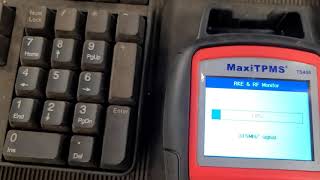

The information in this article is provided for general reference and educational purposes only. Vehicle specifications, procedures, and part compatibility can vary by production date, trim level, and region. Always consult your vehicle's factory service manual and verify part numbers before purchasing or performing repairs. Safety-critical components such as airbags, seat belts, and braking systems should be installed by a qualified professional.
- 🎬 Helpful Videos
- What Does C0760 Mean?
- Can I Drive With C0760?
- Common Causes
- Symptoms
- Diagnostic Flowchart
- Common Fixes & Costs
- DIY vs Professional
- Used vs. New Parts: Buying Guide
- What Happens If You Wait — Timeline
- Cost of Not Fixing It
- Diagnosis Steps
- When This Code Triggers (Freeze-Frame Conditions)
- Related Codes
- Climate & Environmental Factors
- How to Talk to a Mechanic About This Code
- Where to Take It: Dealer vs Independent vs Chain
- When to Walk Away From the Repair
- What Scan Tool You Need for This Code
- How to Clear the Code After You Fix It
- Will This Fail Emissions / State Inspection?
- Most Commonly Affected Vehicles
- Manufacturer-Specific Notes
- Real Owner Stories
- 2014 Chevrolet Cruze at 110k miles - The Classic RCDLR Failure
- 2017 GMC Acadia at 104k miles - Simple (but annoying) Sensor Failure
- 2018 GMC Terrain - The Radio Interference Wild Goose Chase
- How to Prevent This Code From Triggering
- Frequently Asked Questions
- What is the most common misdiagnosis for C0760?
- My scanner showed a symptom code like C0760-03 or C0760-29. What does that mean?
- Can I just ignore the C0760 code?
- Why did my key fob stop working when the TPMS light came on?
- Can I replace the TPMS sensor battery myself?
- Do I need to replace all four TPMS sensors at once?
- What is a TPMS relearn procedure?
- Can a tire rotation cause the C0760 code?
- Can I fix C0760 without any tools?
- Key Takeaways
- 🎟️ Get 5% Off