

C0755 on 2007-2014 GMC Yukon XL: TPMS Sensor and RCDLR Fault Guide
Code C0755 on a 2007-2014 GMC Yukon XL indicates a problem with the right front tire pressure (TPMS) sensor. The most common cause is a dead battery in the sensor itself, which is expected after 5-10 years. A replacement sensor costs about $25-$60 for an aftermarket part or $70-$120 for OEM. If key fob issues occur simultaneously, the fault is likely the Remote Control Door Lock Receiver (RCDLR) module.
- C0755 means your Yukon XL's right front TPMS sensor has a problem, most likely a dead battery.
- Since the sensor is over 5-10 years old, replacing it is the most probable fix.
- If your key fob is also acting up, the problem might be the central RCDLR module, not the sensor.
- Before replacing parts, remove any aftermarket phone chargers or LED lights to rule out radio interference.
- A tire shop or a DIYer with a TPMS tool is needed to perform the repair and relearn procedure.
What's Unique About the 2007-2014 Gmc YUKON XL
On the GMT900 platform, which includes the 2007-2014 Yukon XL, the TPMS sensors, key fobs (for remote entry), and the vehicle's anti-theft immobilizer all communicate via radio frequency to a single module: the Remote Control Door Lock Receiver (RCDLR). Because of this shared module, it's a well-documented issue for a C0755 code to appear alongside key fob issues or even no-start/security light problems, as documented in GM Technical Service Bulletin #PIC5650M. This consolidation means a failure of the RCDLR or its wiring can simultaneously disable the TPMS and keyless entry, a common point of confusion that leads to misdiagnosis.
Diagnostic Flowchart
Tap your situation to follow the diagnostic path that matches what you're seeing on this vehicle.
Symptoms You May Notice
- Flashing TPMS warning light on the dashboard, which then stays on solid.
- "Service Tire Monitor System" message on the Driver Information Center (DIC).
- Pressure reading for the right front tire shows dashes (--) on the DIC.
- Simultaneous failure or intermittent operation of the keyless entry remotes (fobs).
- Significantly reduced range for the key fobs.
- Rarely, may be accompanied by a security light and a no-start or start-and-stall condition (as noted in TSB PIC5650M).
- Replacing only the TPMS sensor when the actual fault lies with the RCDLR module, especially if key fob issues are also present.
- Replacing the RCDLR module when the actual fault is a broken power or ground wire leading to it.
Most Likely Causes
- Dead TPMS Sensor Battery 🔴 High Probability TPMS sensor batteries have a finite lifespan of 5-10 years. Vehicles in this 2007-2014 range are now at an age where original sensor batteries are expected to fail. A low battery condition is a common reason for the RCDLR to set this DTC.
How to confirm: Use a TPMS diagnostic tool to attempt to 'wake up' or read the sensor. If the tool cannot get a response from the right front sensor, the sensor has failed, likely due to a dead battery. A scan tool can also read the sensor battery status directly from the RCDLR data list.
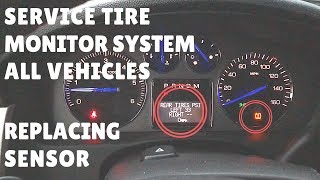
Typical fix: Replace the right front TPMS sensor and perform the TPMS relearn procedure. 🎬 Watch: A step-by-step guide to replacing the tire pressure sensor. It is often recommended to replace all four sensors at once if they are original, as the others are likely near the end of their service life.
Est. part cost: $25-$120 - Faulty Remote Control Door Lock Receiver (RCDLR) 🟡 Medium Probability This module processes signals from both TPMS sensors and key fobs. Its failure can cause a variety of radio-frequency-related issues and is a known pattern on this platform, often causing multiple TPMS codes and key fob failure at the same time.
How to confirm: The strongest indicator is the simultaneous failure of both the TPMS (often multiple sensors) and key fobs. A professional scan tool can check for communication with the RCDLR. If there is no communication, check for power (Red/White wire) and ground (Black/White wire) at the module's connector before condemning the part. The module is located behind the driver's side rear D-pillar trim, above the wheel well.
Typical fix: Replace the RCDLR module. The new module must be programmed to the vehicle with a dealer-level scan tool (like a Tech 2 or equivalent with SPS software) to learn the key fobs and vehicle configuration.
Est. part cost: $80-$150 - Radio Frequency Interference (RFI) ⚪ Low Probability As noted in TSB PIC5650M, aftermarket electronics like phone chargers, LED lights, and dash cams can emit RFI that jams the 315 MHz or 125 kHz signals used by the TPMS sensors or key fobs.
How to confirm: If the problem is intermittent, remove all aftermarket plug-in devices from the vehicle's power outlets and turn off any aftermarket lighting. If the issue resolves, reintroduce devices one by one to identify the source of the interference.
Typical fix: Remove or replace the aftermarket device that is causing the interference.
Est. part cost: $0 - Poor RCDLR Antenna Connection ⚪ Low Probability GM issued TSB 16-NA-061 for newer models describing loose coaxial cable connections to the RCDLR or its antenna amplifier, which can cause identical symptoms. While for a later generation, the principle applies. A loose connection can cause intermittent loss of signal from the sensors, especially those furthest from the receiver.
How to confirm: Inspect the coaxial cable connections at the RCDLR module (in the D-pillar) and the antenna amplifier (often near the right rear quarter glass). A loose connection can cause intermittent loss of signal from the sensors.
Typical fix: Securely reconnect the loose coaxial cable.
Est. part cost: $0
Rare But Worth Checking
- Damaged Sensor: The sensor can be physically damaged during tire service or by a pothole. This is less common than battery failure but possible.
- Broken Power Wire to RCDLR: In rare cases, the power wire to the RCDLR module can become broken or corroded, often in the wiring harness passing through the driver's side door jamb or along the floor sill. One owner on Tahoe Yukon Forum reported this exact issue, where a new RCDLR did not solve the problem until a broken power wire was found and repaired. This can be diagnosed by checking for 12V power at the RCDLR connector.
Diagnosis Steps
- Confirm the symptoms. Check for a "Service Tire Monitor System" message and see which tire position shows '--' on the DIC. Note if key fobs are also inoperative. 🎬 See how to relearn tire pressure sensors without using tools.
- If only the C0755 code is present and key fobs work perfectly, use a TPMS diagnostic tool to try and activate the right front sensor. If it does not respond, the sensor has failed (usually a dead battery) and needs replacement.
- If the sensor responds to the tool but the code persists, or if the problem is intermittent, remove all aftermarket electronic devices (phone chargers, LED lights) to rule out Radio Frequency Interference (RFI) as described in TSB PIC5650M.
- Scan the vehicle for other DTCs. If codes for multiple TPMS sensors (C0750, C0760, C0765) or security-related B-codes (like B3055) are present, the RCDLR module is the primary suspect.
- Gain access to the RCDLR module located behind the driver's side rear D-pillar trim panel. Visually inspect its wiring and antenna connections for damage or loose connections.
- Using a multimeter, check for 12V power (typically a Red/White wire) and a good ground (typically a Black/White wire) at the RCDLR electrical connector. If power or ground is missing, trace the wiring to find the break. 🎬 Check out this video to find the keyless entry fuse. A common failure point is the harness in the driver's door sill or jamb.
- If wiring and connections are good and multiple RF systems are failing, the RCDLR module itself has likely failed and requires replacement and programming with a GM-specific scan tool.
Parts You'll Likely Need
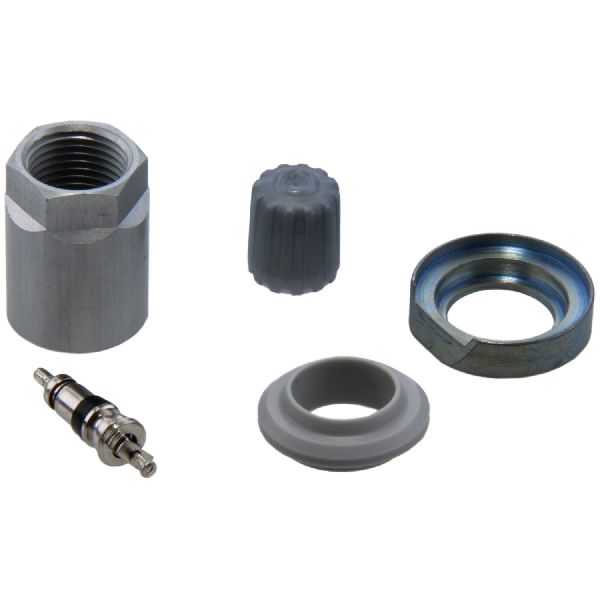
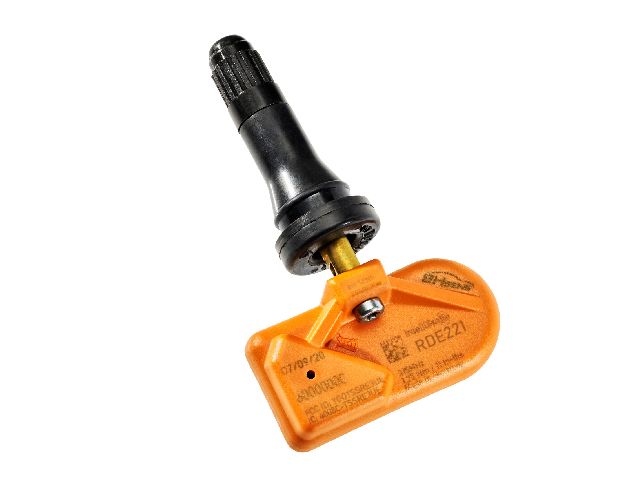
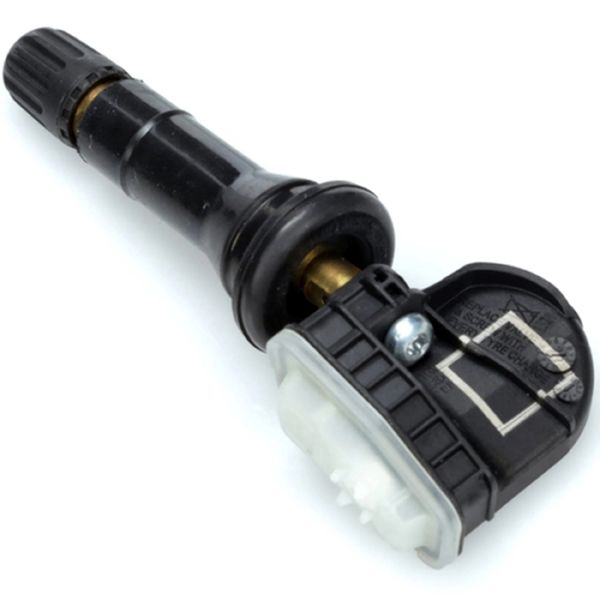
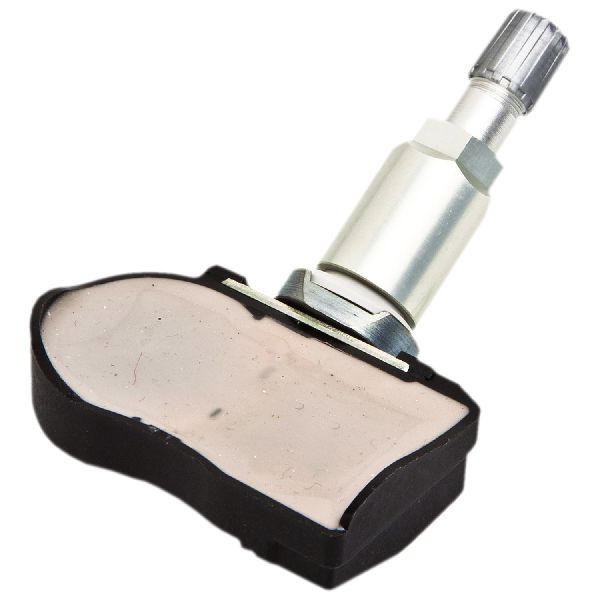
- Tire Pressure Monitoring System (TPMS) Sensor
(OEM #13586335)— This is the most common failure point due to battery life. The original battery dies, requiring the whole sensor to be replaced. Interchangeable part numbers include 13598771, 13598772, 25920615, and 15922396.
Trusted brands: ACDelco, Schrader, Continental, CDWTPS
OEM price range: $70-$120
Aftermarket price range: $25-$60 - Remote Control Door Lock Receiver (RCDLR)
(OEM #25974390)— This module can fail, causing TPMS codes, key fob issues, and sometimes security problems. It's the next most likely cause if a new sensor doesn't fix the issue or if multiple RF systems fail at once. This part may be superseded by newer numbers like 23444628.
Trusted brands: ACDelco
OEM price range: $80-$150
Aftermarket price range: $60-$100
Related Codes That Often Appear With This One
- C0750 — Indicates a fault with the Left Front TPMS sensor. Seeing multiple TPMS codes at once (C0750, C0755, C0760, C0765) strongly points towards a central receiver (RCDLR) or antenna issue rather than multiple simultaneous sensor failures.
- C0760 — Indicates a fault with the Left Rear TPMS sensor. Seeing multiple TPMS codes at once can point towards a central receiver (RCDLR) issue.
- C0765 — Indicates a fault with the Right Rear TPMS sensor. Seeing multiple TPMS codes at once can point towards a central receiver (RCDLR) issue.
- B3055 — This is a security system code for 'Key Not Present'. As noted in TSB PIC5650M, it can be set along with TPMS codes due to RFI or a faulty RCDLR, which handles both systems.
Technical Service Bulletins (TSBs) & Recalls
- PIC5650M: Addresses intermittent no-crank/no-start, security lights, poor key fob range, and TPMS messages with codes including C0755. Points to RFI from aftermarket accessories as a primary cause.
- 16-NA-061: While for 2015-2018 models, it details issues with the RCDLR antenna coax cable becoming disconnected, causing identical symptoms (dashes for tire pressures, poor key fob range) relevant to the GMT900 design.
- PIT5446: (Mentioned in Pass 1, details are similar to 16-NA-061) Addresses loose coax cable connections to the RCDLR or antenna amplifier.
- 01-00-89-010S: A general bulletin to guide technicians on diagnosing intermittent issues, which specifically recommends checking for aftermarket devices per PIC5650 when RF-related problems are reported.
Platform-Specific Known Issues
- GM Technical Service Bulletin PIC5650M directly links TPMS codes like C0755 with security/no-start issues and attributes the cause to either Radio Frequency Interference from aftermarket devices or a fault in the shared radio frequency receiver.
Mechanic-Grade Diagnostic Values
- RCDLR Power Supply Voltage — expected: ~12.6V (Battery Voltage) at the Red/White wire on the module connector.. Failure: Low or no voltage indicates a blown fuse (DSM fuse in IP fuse block), broken wire, or issue with the supply circuit.
- RCDLR Ground Circuit Resistance — expected: Less than 0.5 Ohms between the Black/White wire on the module connector and a known-good chassis ground.. Failure: High resistance indicates a corroded, loose, or broken ground connection at G401 or G402.
Hidden / Shadow Codes Worth Checking
- C0755 with Symptom :29: The symptom code :29 stands for 'Too Few Pulses', which indicates the RCDLR is not receiving the expected number of data transmissions from the TPMS sensor. TSB 16-NA-396 links this specific symptom code directly to internal failure of the RCDLR module. (see via A professional scan tool like the GM Tech 2 or a high-end aftermarket scanner capable of reading manufacturer-specific symptom bytes.)
Scan Tool Commands That Help
- GM Tech 2: RCDLR Module Setup / Programming — After replacing the RCDLR module, this function is required to integrate the new module with the vehicle's VIN and security system. The specific path is often 'Replace and Reprogram ECU'.
- GM Tech 2: Theft Deterrent System Relearn — This must be performed after RCDLR replacement to sync the anti-theft system. It can be a 10 or 30-minute procedure initiated by the scan tool.
- GM Tech 2: TPM Sensor Learn — After replacing the RCDLR or any TPMS sensor, this procedure is used to teach the new sensor IDs and their positions to the module.
- GM Tech 2: RCDLR Data Display — To diagnose the issue, a technician can view live data from the RCDLR to see if it is receiving signals from the key fobs and TPMS sensors. The path is typically: Vehicle Control Systems > Computer/Integrating Systems > Special Functions > Remote Control Door Lock Receiver.
Wiring & Ground Locations
- RCDLR Fuse — In the instrument panel fuse block (driver's side of the dash), labeled 'DSM'.. This fuse provides power to the RCDLR. A known temporary fix for an unresponsive module is to pull and reinstall this fuse to force a reboot.
- G401 / G402 — Located in the rear of the vehicle, on the body or frame near the rear lighting area. G402 is specifically noted as being on the left rear corner of the frame.. These are the primary chassis ground points for components in the rear of the vehicle, including the RCDLR. A poor connection here can cause intermittent RCDLR failure and associated codes.
- RCDLR Connector — At the RCDLR module, located behind the driver's side (left) D-pillar trim panel, above the rear wheel well.. This is the primary connection point for testing power (Red/White wire) and ground (Black/White wire) directly at the module to rule out wiring faults.
Real Owner Repair Stories
- Tahoe Yukon Forum user (2007 Chevrolet Tahoe) — Keyless entry and TPMS system both stopped working simultaneously.
❌ Tried (didn't work) Initial diagnosis was confusing.
✅ What actually fixed it The user found a TSB describing a software issue where the RCDLR goes to sleep and doesn't wake up. Pulling the 'DSM' fuse from the instrument panel fuse box for a few seconds and reinstalling it reset the module and restored all functions. This is a temporary fix; the permanent fix is a software update from the dealer. - Tahoe Yukon Forum user 'Limo Guy' (2009 Cadillac Escalade ESV (GMT900 platform)) — Key fob and TPMS system inoperative.
❌ Tried (didn't work) Unplugging the original RCDLR to try and reset it.
✅ What actually fixed it The user sourced a used RCDLR from a 2011 Impala at a pull-a-part yard for $5.00. He confirmed the replacement part had a similar part number format (starting with 20 or 25 instead of the original 15). After installing the used module, he was able to enter programming mode and successfully program his remotes and get the TPMS working again without needing a dealer.
OEM Part Supersession History
13586335 (TPMS Sensor)→13540600— Standard part evolution and consolidation.
Heads up: The original part number is widely referenced and cross-compatible with many aftermarket versions. The new part is the current official GM replacement.25974390 (RCDLR)→23444628 (and others)— Part update to address internal failures and software issues.
Heads up: A forum user specifically warned against buying an "upgraded part number that says it works," as they had trouble getting it programmed, suggesting potential compatibility issues. It is critical to verify the correct part number for the specific vehicle's VIN before ordering.
Model Year Variations Within This Range
- 2007-2009 (approx.): Early models in this range often came with metal, clamp-in style TPMS sensors. Later models and most aftermarket replacements use a rubber, snap-in valve stem style. While electronically compatible (both 315MHz), the physical mounting method is different, which is relevant during tire service.
Helpful Videos

We Have This Part in Stock


The information in this article is provided for general reference and educational purposes only. Vehicle specifications, procedures, and part compatibility can vary by production date, trim level, and region. Always consult your vehicle's factory service manual and verify part numbers before purchasing or performing repairs. Safety-critical components such as airbags, seat belts, and braking systems should be installed by a qualified professional.
- Gmc YUKON XL:
- 🎬 Helpful Videos
- 🛍️ Shop This Part
- What's Unique About the 2007-2014 Gmc YUKON XL
- Diagnostic Flowchart
- Symptoms You May Notice
- Most Likely Causes
- Rare But Worth Checking
- Diagnosis Steps
- Parts You'll Likely Need
- Related Codes That Often Appear With This One
- Technical Service Bulletins (TSBs) & Recalls
- Platform-Specific Known Issues
- Mechanic-Grade Diagnostic Values
- Hidden / Shadow Codes Worth Checking
- Scan Tool Commands That Help
- Wiring & Ground Locations
- Real Owner Repair Stories
- OEM Part Supersession History
- Model Year Variations Within This Range
- 🎟️ Get 5% Off