

C0755 on 2007-2014 Chevrolet Silverado 1500: Right Front TPMS Fault Guide
Code C0755 means the Right Front Tire Pressure Monitoring System (TPMS) sensor has failed. This is almost always due to the sensor's internal battery dying after 7-10 years. The fix is to replace the sensor and perform a relearn procedure. Expect to pay $25-$75 for the part and about one hour of labor if done at a shop. It's highly recommended to replace all four sensors at once.
- C0755 points directly to a problem with the Right Front TPMS sensor.
- The most common cause is a dead internal battery in the sensor, which is a normal wear item.
- This code will also disable your StabiliTrak and traction control systems as a safety measure; fixing the TPMS sensor will resolve these warnings as well.
- The 2007-2013 models use a different sensor than the 2014 model. Ensure you buy the correct part for your year.
- Replacement requires a tire shop's equipment, but a simple relearn procedure can be attempted first with an inexpensive tool.
What's Unique About the 2007-2014 Chevrolet SILVERADO 1500

On these Silverado trucks and their platform mates, a TPMS fault like C0755 often triggers a secondary, more alarming message: "Service StabiliTrak" or "Traction Control Off". This is a designed safety precaution by GM. The StabiliTrak system relies on accurate data from all parts of the chassis, including wheel speed sensors, steering angle, and throttle position. When it can't confirm the status of a tire via the TPMS, it disables itself as a failsafe. Owners are often confused by the StabiliTrak message, but in many cases, the root cause is simply a failed TPMS sensor.
Diagnostic Flowchart

Tap your situation to follow the diagnostic path that matches what you're seeing on this vehicle.
Generation note: This year range covers two Silverado generations with different TPMS sensors: - 2007-2013 (GMT900): Uses a 315 MHz sensor, such as ACDelco OE part #13598771 (which supersedes #13586335 and others). - 2014 (K2XX): Uses a different 315 MHz sensor, such as ACDelco OE part #13598772. Ensure you purchase the correct part for your specific model year, as they are not interchangeable.
Symptoms You May Notice
- "Service Tire Monitor System" message on the Driver Information Center (DIC).
- TPMS warning light on the dashboard (often flashes for one minute, then stays solid).
- Pressure reading for the right front tire shows dashes ("--") on the DIC.
- "Service StabiliTrak" and/or "Traction Control Off" messages on the DIC.
- In some cases, the remote start feature may be disabled when a TPMS fault is active.
- Replacing StabiliTrak system components (like wheel speed or steering angle sensors) when the warning is actually a secondary symptom of the TPMS fault.
- Assuming the tire is low on air when the TPMS light is on. A flashing light that turns solid indicates a system fault, not low pressure.
- Replacing the BCM or RCDLR before confirming the sensor itself is functional and that there is no RF interference.
Most Likely Causes

- TPMS Sensor Internal Battery Failure 🔴 High Probability The non-replaceable lithium-ion batteries inside the sensors have a finite lifespan, typically lasting 7-10 years. Vehicles in this age range are at the end of that expected life, making battery failure the most common cause.
How to confirm: Use a TPMS diagnostic tool (like an Autel or Bartec) to attempt to 'wake up' or read the sensor. If the tool cannot get a response from the right front sensor but can read the other three, the sensor has failed. Tire shops can perform this test quickly.
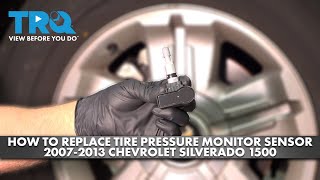
Typical fix: Replace the right front TPMS sensor. It is often recommended to replace all four sensors at once if they are original, as the others are likely to fail soon. After replacement, a TPMS relearn procedure is required.
Est. part cost: $25-$75 - Damaged TPMS Sensor 🟡 Medium Probability Sensors can be physically broken during tire installation or by a significant pothole or curb impact. The use of unapproved tire sealants can also clog the sensor's pressure port.
How to confirm: Visual inspection after dismounting the tire may reveal physical damage to the sensor body or valve stem. This is often discovered during a tire change or repair.
Typical fix: Replace the damaged TPMS sensor.
Est. part cost: $25-$75 - Loss of Synchronization / Relearn Needed ⚪ Low Probability This can occur after a tire rotation if a relearn procedure was not performed, or due to a random communication glitch. Some owners report this happening immediately after a tire rotation.
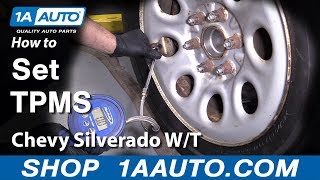
How to confirm: Attempt a TPMS relearn procedure. For many 2007-2014 models, this can be done without a special tool by letting air out of each tire in sequence after putting the truck in learn mode. However, a dedicated, inexpensive relearn tool (like the EL-50448) is more reliable and often required. If the procedure completes successfully and the code clears, this was the issue.
Typical fix: Perform the TPMS relearn procedure.
Est. part cost: $0-$15 (for a basic relearn tool)
Rare But Worth Checking
- Faulty Remote Control Door Lock Receiver (RCDLR): The RCDLR is the module that receives the RF signals from all TPMS sensors and key fobs. A fault in this module can prevent it from receiving the signal from one or more sensors. This is uncommon, but possible if a new sensor and relearn procedure do not fix the issue. If key fob issues are also present, the RCDLR is a stronger suspect.
- Body Control Module (BCM) or Wiring Issue: A problem with the BCM or the wiring between it and the RCDLR could cause this code. TSB #PIC5650M links TPMS codes with no-start conditions, suggesting a deeper electrical or communication bus issue (like a bad ground) could be the cause in very rare instances.
- Radio Frequency (RF) Interference: Aftermarket electronic devices like dash cams, phone chargers, or LED lighting can sometimes emit RF interference that disrupts the TPMS signal. TSB #PIC5650G specifically mentions asking customers about aftermarket devices when diagnosing intermittent no-start or TPMS issues.
Diagnosis Steps
- Verify code C0755 is present using an OBD-II scanner capable of reading Chassis (C) codes.
- Check the DIC for "Service Tire Monitor System" and "Service StabiliTrak" messages.
- Use a TPMS activation tool (e.g., EL-50448 or similar) to test the right front sensor. Point the tool at the tire's sidewall near the valve stem and press the activate button.
- If the tool fails to get a reading from the right front sensor but reads the other three, the sensor has failed and must be replaced.
- If the tool *does* get a reading, the issue may be a communication problem. Attempt a full TPMS relearn procedure.
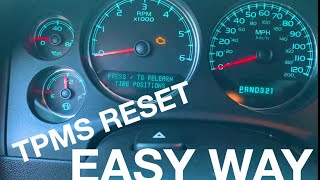
- To perform a relearn, put the vehicle in learn mode. This is often done via the DIC menu or by holding the lock/unlock buttons on the key fob until the horn chirps. Then, activate each sensor with the tool in sequence (LF, RF, RR, LR). The horn will chirp for each successful sensor registration. 🎬 Watch this quick guide to performing a tire pressure relearn.
- If the relearn fails specifically at the right front position, this confirms a faulty sensor.
- If the relearn completes but the code returns, investigate for RF interference from aftermarket accessories. If none is found, further diagnosis of the RCDLR, BCM, and associated wiring may be needed.
Parts You'll Likely Need
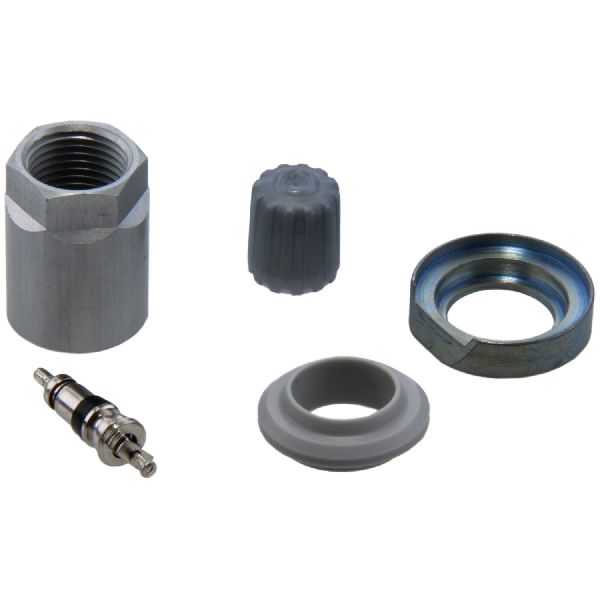
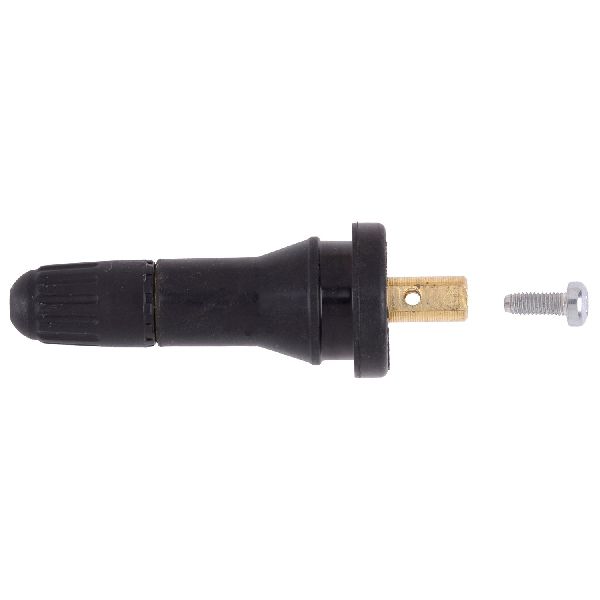
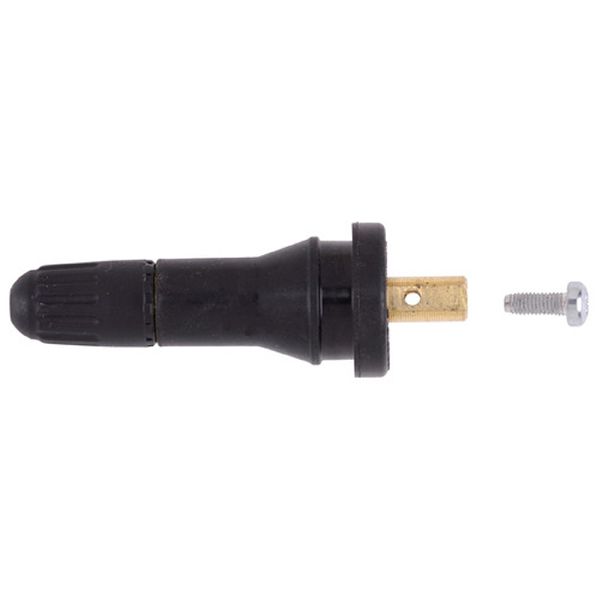
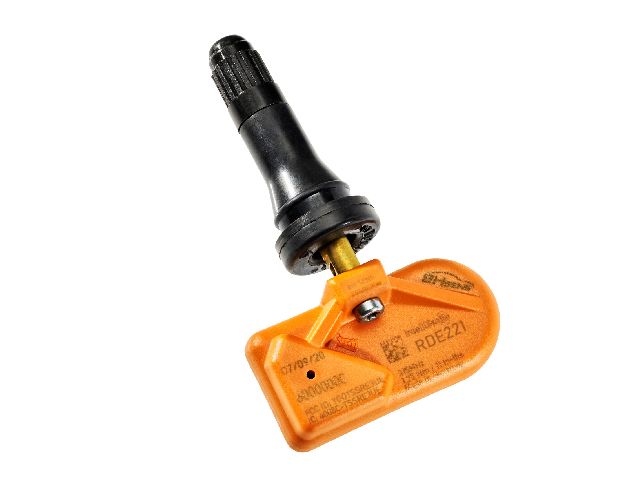
- Tire Pressure Monitoring System (TPMS) Sensor (2007-2013)
(OEM #13598771)— This is the correct 315 MHz sensor for the GMT900 generation. It is the most common failure point for code C0755 on these model years due to battery life. This part number supersedes 13586335, 25920615, and others.
Trusted brands: ACDelco, Schrader, Dorman, Standard Motor Products, Denso
OEM price range: $50-$75
Aftermarket price range: $25-$50 - Tire Pressure Monitoring System (TPMS) Sensor (2014)
(OEM #13598772)— This is the correct 315 MHz sensor for the new K2XX generation starting in 2014. It is the most common failure point for code C0755 on this model year due to battery life or malfunction.
Trusted brands: ACDelco, Schrader, Denso, VDO
OEM price range: $55-$80
Aftermarket price range: $30-$55 - TPMS Relearn Tool
(OEM #EL-50448)— While some models allow a relearn by deflating tires, this inexpensive tool makes the process faster and more reliable, and is required for many GM vehicles.
Trusted brands: VXDAS, JDIAG, Autel
OEM price range: $10-$20
Aftermarket price range: $10-$20
Related Codes That Often Appear With This One
- C0750 — This code is for the Left Front TPMS sensor. Seeing multiple TPMS codes at once often indicates the sensor batteries are failing due to age.
- C0760 — This code is for the Left Rear TPMS sensor. It's common to see multiple TPMS codes appear around the same time.
- C0765 — This code is for the Right Rear TPMS sensor. When one sensor battery dies, the others are often not far behind.
- U0073 — Control Module Communication Bus 'A' Off. This code can appear with StabiliTrak warnings and may indicate a broader communication issue on the truck's network, which could be a root cause or a related symptom.
Technical Service Bulletins (TSBs) & Recalls
- PIC5650M: Mentions that codes C0750, C0755, C0760, C0765 can be found in relation to a no crank, no start, or start/stall concern, suggesting a potential link to broader electrical module issues in rare cases. It advises checking for aftermarket RF devices.
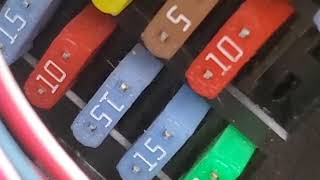
- PIC6047A: Although for other GM models, this TSB notes that if a TPMS relearn fails, temporarily removing the fuse for the OnStar module (VCIM) may allow the relearn to complete, indicating potential RF interference from the OnStar unit itself.
Platform-Specific Known Issues
- A known issue on this platform is the disabling of the StabiliTrak system when a TPMS fault occurs. This is a designed feature, not a separate problem.
- The 2014 model year is a transition between the GMT900 and K2XX platforms, requiring careful parts verification.
Mechanic-Grade Diagnostic Values
- RCDLR Power Supply Voltage — expected: ~12.6V (Battery Voltage). Failure: Low or no voltage at the Red/White wire on the module connector.
- TPMS Sensor Transmission Frequency — expected: 315 MHz. Failure: No signal detected by a TPMS tool.
Hidden / Shadow Codes Worth Checking
- C0755 03: Right Front Tire Pressure Sensor Low Voltage. This symptom byte points directly to a sensor with a dying battery. (see via A professional scan tool (like a GM Tech 2 or GDS2) that can read BCM symptom codes.)
- C0755 29: Right Front Tire Pressure Sensor Too Few Pulses. This can indicate a faulty RCDLR module rather than an individual sensor failure, especially if seen with other TPMS codes. (see via A professional scan tool (like a GM Tech 2 or GDS2) that can read BCM symptom codes.)
Scan Tool Commands That Help
- GM Tech 2 / GDS2: Special Functions > TPMS Learn — To initiate the vehicle's relearn mode from the scan tool instead of using the key fob or DIC. This is the professional method for programming new sensor IDs to the BCM/RCDLR after replacement.
- GM Tech 2 / GDS2: Module Diagnostics > RCDLR > Data Display — To view live data from the RCDLR, including the last received signal strength and ID from each TPMS sensor. This helps confirm if the module is receiving any signal at all from the suspect sensor, differentiating a dead sensor from a module reception issue.
- GM Tech 2 / GDS2: BCM > Special Functions > TPMS Options — On some GM platforms, this menu allows a technician to enable or disable the entire TPMS system. This can be used for diagnostics or if the vehicle is equipped with wheels without sensors (e.g., for off-road use), though disabling it is not recommended for street use.
Wiring & Ground Locations
- RCDLR Module — For Crew Cab and Extended Cab models, it is located behind the rear driver's side C-pillar trim panel. On Regular Cab models, it's found on the top rear of the passenger compartment, above the rear window.. This is the receiver for all TPMS signals. A loose antenna connection, failed module, or loss of power/ground at this location will cause TPMS codes.
- RCDLR Fuse — In the instrument panel fuse block (driver's side of the dash), often labeled 'DSM' (Driver Seat Module) or integrated with ECM/BCM fuses.. This fuse provides the operating power to the RCDLR. If blown, the RCDLR will be dead, causing a loss of communication with all TPMS sensors and key fobs.
- G103 / G104 — Grounds located on the cylinder heads. G103 is on the front of the passenger side cylinder head, and G104 is on the rear of the driver's side cylinder head.. These are critical engine and chassis grounds. A loose or corroded ground at these points can introduce electrical noise and voltage drops that affect various modules, including the BCM and RCDLR, leading to phantom codes.
- G303 / G304 — Located on the B-pillars behind the trim panels (G303 on the left, G304 on the right).. These grounds serve components in the middle of the cabin. A poor connection here can cause intermittent issues with modules located in the rear of the cab, like the RCDLR.
Real Owner Repair Stories
- Wires 2 Wrenches on YouTube (2008 Chevrolet Silverado) — Multiple CAN bus communication issues, DIC messages wacked out, no-start condition, TPMS warnings.
❌ Tried (didn't work) Replacing the aftermarket radio.
✅ What actually fixed it The root cause was water intrusion into the RCDLR module, caused by a leaking aftermarket third brake light gasket. The owner disassembled the RCDLR, cleaned corrosion off the circuit board with a brass brush and electronic cleaner, re-soldered some joints, and sealed the third brake light with silicone to prevent future leaks. This restored communication and resolved the codes. - Reddit user in r/gmcsierra (2017 GMC Sierra 1500 SLT (K2XX Platform, similar RCDLR logic)) — TPMS light on, multiple TPMS codes (C0750, C0755, C0765, C0760) and a BCM communication code (U0422).
❌ Tried (didn't work) Rotating tires, clearing codes.
✅ What actually fixed it The user's scan tool data showed multiple sensors with 'voltage below threshold' and one with 'too few pulses'. This pattern, with nearly all sensors failing simultaneously, strongly points to a faulty RCDLR module being unable to receive signals, rather than four individual sensor batteries dying at the exact same moment. The final fix is replacing the RCDLR.
When the Usual Fixes Don't Work
- While replacing the single failed sensor is the most direct fix, owners should be aware of cases where multiple TPMS codes (C0750, C0755, C0760, C0765) appear simultaneously. In these instances, the root cause is less likely to be four sensor batteries failing at the same time and more likely to be a central system failure. The primary suspect becomes the Remote Control Door Lock Receiver (RCDLR), its power, its ground, or its antenna connection. Diagnosing a single C0755 code should always start with the sensor, but diagnosing all four codes at once should start with the RCDLR.
OEM Part Supersession History
13586335, 25920615, 13581558→13598771— Consolidation of part numbers and potential minor revisions to the sensor design for the GMT900 platform.
Heads up: While these part numbers are for the 2007-2013 generation, they are not compatible with 2014+ K2XX trucks, which require part number 13598772.
Model Year Variations Within This Range
- 2007-2011 (approx.): Some earlier models in this range are more likely to allow the TPMS relearn procedure to be completed by deflating the tires, without needing a dedicated tool.
- 2012-2014 (approx.): Later models are more likely to require a dedicated TPMS activation tool (like the EL-50448) to complete the relearn procedure. The tire deflation method may not work reliably or at all.
Helpful Videos
We Have This Part in Stock


The information in this article is provided for general reference and educational purposes only. Vehicle specifications, procedures, and part compatibility can vary by production date, trim level, and region. Always consult your vehicle's factory service manual and verify part numbers before purchasing or performing repairs. Safety-critical components such as airbags, seat belts, and braking systems should be installed by a qualified professional.
- Chevrolet SILVERADO 1500:
- 🎬 Helpful Videos
- 🛍️ Shop This Part
- What's Unique About the 2007-2014 Chevrolet SILVERADO 1500
- Diagnostic Flowchart
- Symptoms You May Notice
- Most Likely Causes
- Rare But Worth Checking
- Diagnosis Steps
- Parts You'll Likely Need
- Related Codes That Often Appear With This One
- Technical Service Bulletins (TSBs) & Recalls
- Platform-Specific Known Issues
- Mechanic-Grade Diagnostic Values
- Hidden / Shadow Codes Worth Checking
- Scan Tool Commands That Help
- Wiring & Ground Locations
- Real Owner Repair Stories
- When the Usual Fixes Don't Work
- OEM Part Supersession History
- Model Year Variations Within This Range
- 🎟️ Get 5% Off