

C0755 on 2007-2014 Chevrolet Impala: Right Front TPMS Fault Causes & Fixes
Code C0755 on a Chevy Impala almost always means the Tire Pressure Monitoring System (TPMS) sensor in the right front wheel has failed, usually due to a dead battery. The fix is to replace the sensor, which costs about $20-$60 for the part, plus tire dismounting/mounting and system relearning. In some cases, especially if key fob issues are also present, the fault may lie with the Remote Control Door Lock Receiver (RCDLR).
- C0755 means the right front TPMS sensor has failed, not that your tire pressure is low.
- The most likely cause on a 2007-2014 Impala is the sensor's internal battery dying from age.
- You can drive the vehicle, but you should check your tire pressures manually with a gauge until it's fixed.
- Repair requires replacing the sensor inside the tire and using a special tool to relearn the system, making it a job for a tire shop or experienced DIYer with the right equipment.
What's Unique About the 2007-2014 Chevrolet IMPALA
The 2007-2014 Impala uses a straightforward direct TPMS system with 315 MHz sensors. What's notable is the dual role of the Remote Control Door Lock Receiver (RCDLR), which processes signals from both the key fobs and the TPMS sensors. A failing RCDLR can sometimes cause TPMS codes for multiple wheels along with key fob issues, as noted in GM service bulletin #07-08-52-001C, which specifically applies to 2006-2007 Impalas. While a single code like C0755 usually points to the sensor, if you also have poor key fob range, it's worth investigating the RCDLR.
Diagnostic Flowchart
Tap your situation to follow the diagnostic path that matches what you're seeing on this vehicle.
Generation note: This code applies to the ninth generation (2006-2013) and the fleet-only 'Limited' version of the ninth generation sold in 2014. The function and common failures of the TPMS system are consistent across these W-body platform models. The primary relearn procedure may vary slightly depending on whether the car has a Driver Information Center (DIC) with menu buttons, but both DIC and key-fob initiated methods are available. The 10th generation Impala (2014-2020) uses a different procedure that often requires a TPMS tool.
Symptoms You May Notice
- Flashing, then solid, TPMS warning light on the instrument cluster.
- "Service Tire Monitor System" message on the Driver Information Center (DIC).
- The tire pressure reading for the right front tire shows as dashes (--) on the DIC.
- Poor or inoperative key fob range (if the RCDLR is the underlying cause).
- Replacing the Body Control Module (BCM). The BCM is rarely the cause of a single-wheel TPMS fault code; the sensor or RCDLR are far more likely culprits.
- Replacing the wrong sensor. Always confirm the code (C0755 = Right Front) before replacing parts. If tires were rotated without a relearn, the sensor for the right front position might physically be at another corner of the car. Performing the relearn procedure first can help identify which physical tire is having the issue.
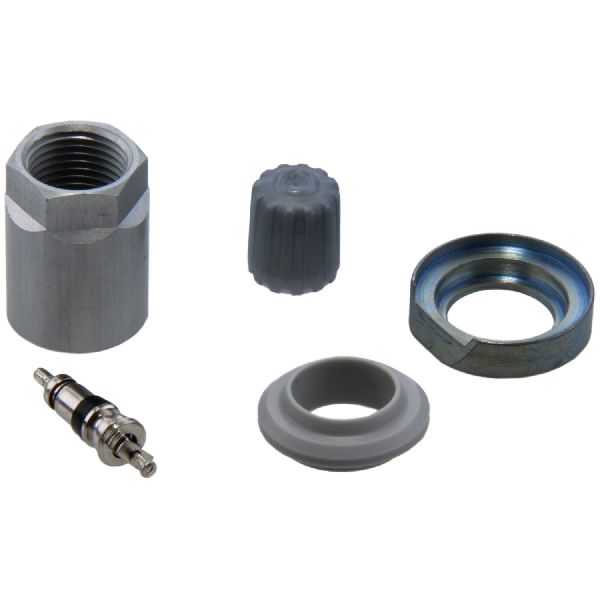
- Assuming the sensor is bad when the valve stem is just leaking. Corrosion can cause leaks around the valve stem seal, which can be fixed with an inexpensive TPMS service kit instead of a whole new sensor.
Most Likely Causes
- Dead TPMS Sensor Battery 🔴 High Probability TPMS sensors use sealed, non-replaceable batteries with a finite lifespan, typically 7-10 years. Vehicles in this year range are at or beyond the expected battery life for the original sensors, making this the most common reason for failure.
How to confirm: A professional TPMS tool can attempt to activate the sensor. If the tool cannot get a response, or if it reads a 'low battery' status, the sensor has failed. If the other three sensors respond during a relearn procedure but the right front does not, the sensor is bad.
Typical fix: Replace the right front TPMS sensor and perform the TPMS relearn procedure.
Est. part cost: $20-$60 - Damaged TPMS Sensor 🟡 Medium Probability Sensors can be physically damaged during tire service (mounting/dismounting), by hitting a large pothole, or from corrosion of the valve stem, especially in regions that use road salt.
How to confirm: Visual inspection of the sensor after the tire is dismounted. Look for cracks in the plastic housing or a broken/corroded metal valve stem.
Typical fix: Replace the damaged TPMS sensor and perform the relearn procedure.
Est. part cost: $20-$60 - Failed TPMS Relearn Procedure ⚪ Low Probability If tires were recently rotated or replaced and the relearn procedure was not performed correctly (or at all), the BCM will not know the sensor's new position, potentially logging a fault. The procedure can sometimes time out or fail if not done quickly.
How to confirm: Attempt to perform the TPMS relearn procedure using the key fob method or DIC menu. If it fails repeatedly for the right front wheel while succeeding on others, it points to a bad sensor. If it fails for all wheels, there may be an issue with the RCDLR or interference.
Typical fix: Perform the correct TPMS relearn procedure. No parts are needed if the sensor is good.
Est. part cost: $0
Rare But Worth Checking
- Faulty Remote Control Door Lock Receiver (RCDLR): While rare for a single code, a failing RCDLR can cause intermittent TPMS issues. This is more likely if you are also experiencing problems with your key fobs (poor range, no response) and have codes for multiple wheel sensors (e.g., C0750, C0760, C0765). TSB #07-08-52-001C specifically addresses this issue on 2006-2007 Impalas, recommending replacement of the RCDLR and its antenna.
- Radio Frequency (RF) Interference: Strong RF signals from aftermarket electronics like dash cams, phone chargers, or CB radios can sometimes interfere with the 315 MHz TPMS signal. GM has noted this in service information (see PIC5650), advising technicians to check for aftermarket devices plugged into the vehicle that could cause intermittent electrical complaints.
Diagnosis Steps
- Verify the code with an OBD-II scanner capable of reading Chassis (C) codes.
- Check the tire pressure display on the DIC. Confirm that the Right Front (RF) position is showing dashes (--) or 0 PSI.
- Attempt the TPMS relearn procedure. For most 9th-gen Impalas, this involves turning the key to 'ON', then either using the DIC menu to select 'RELEARN TIRE POSITIONS' or pressing and holding the lock and unlock buttons on the key fob until the horn chirps twice.
- The car signals the starting tire (usually left front) by illuminating that corner's turn signal.
- Start with the left front tire. Use a TPMS activation tool (like an EL-50448) to trigger the sensor, or let air out of the tire for 10-30 seconds until the horn chirps once.
- The vehicle will direct you to the right front tire next. Attempt to activate the sensor. If the horn does not chirp after several attempts while the other sensors do, the right front sensor is almost certainly faulty.
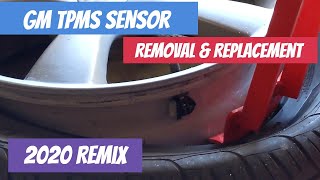
- If the sensor is confirmed bad, have the tire dismounted and replace the sensor. It is often 🎬 Watch this professional walkthrough on GM TPMS sensor replacement and programming. recommended to replace all four sensors if they are original, as their batteries are likely near the end of their life.
- Install the new sensor, reinflate the tire to the pressure on the door placard, and perform the relearn procedure again to program the new sensor ID to the vehicle's memory.
Parts You'll Likely Need
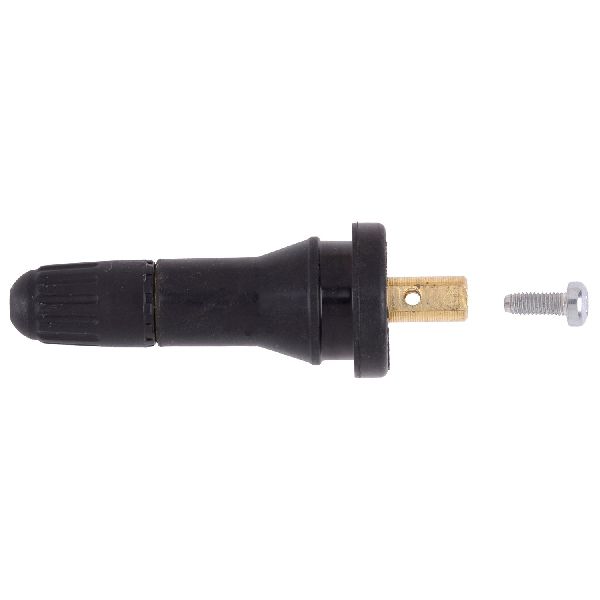
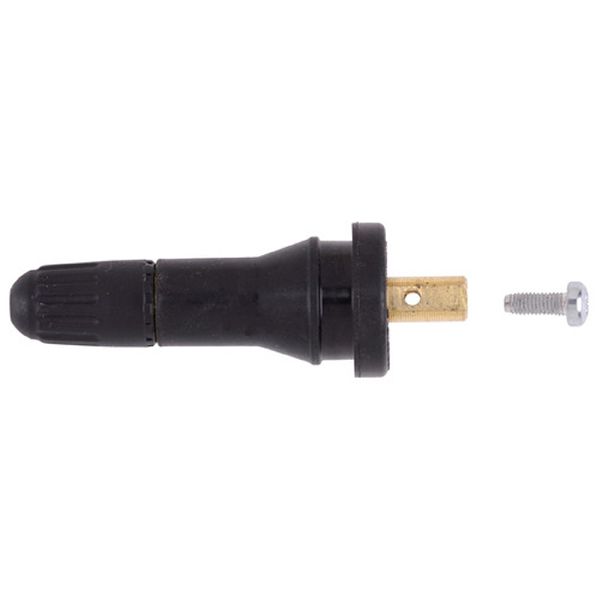
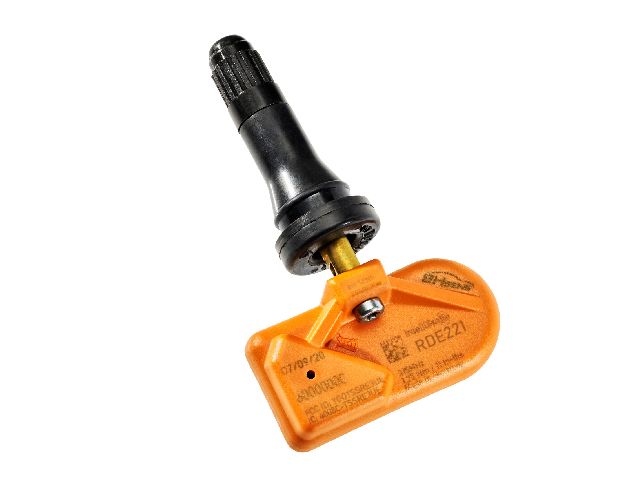
- Tire Pressure Monitoring System (TPMS) Sensor
(OEM #13586335)— This is the component that fails, usually due to battery depletion, causing code C0755. This part number is widely used across many GM vehicles. It has been superseded by newer part numbers like 13598771 and 13540600.
Trusted brands: ACDelco (OEM), Schrader (Often the OE manufacturer), Continental/VDO, Dorman, Standard Motor Products
OEM price range: $40-$70
Aftermarket price range: $20-$50 - TPMS Relearn Tool
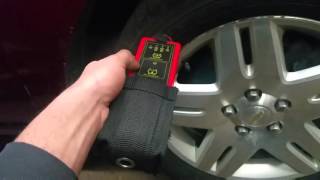
(OEM #EL-50448)— While not always required (air-down method can work), this tool makes the relearn process much faster and more reliable. It is essential for many newer GM vehicles and highly recommended for this one. 🎬 See how to use the EL-50448 tool for a faster reset.
Trusted brands: VXDAS, JDIAG, Autel
OEM price range: $10-$20
Aftermarket price range: $10-$20
Related Codes That Often Appear With This One
- C0750 — Left Front Tire Pressure Sensor fault. Often appears if multiple sensors fail around the same time due to age or if the RCDLR is failing.
- C0760 — Left Rear Tire Pressure Sensor fault. Often appears if multiple sensors fail around the same time due to age or if the RCDLR is failing.
- C0765 — Right Rear Tire Pressure Sensor fault. Often appears if multiple sensors fail around the same time due to age or if the RCDLR is failing.
- B3055 / B3060 — These are security/immobilizer codes. In the provided NHTSA TSB #PIC5650M, these codes were seen alongside TPMS codes, possibly indicating a broader BCM or communication network issue, though this is not typical for a standard C0755 fault.
Technical Service Bulletins (TSBs) & Recalls
- PIC5650M - Mentions C0755 along with security codes in a no-start scenario, highlighting potential for complex electrical faults.
- 07-08-52-001C - For 2006-2007 Impalas, addresses 'Service Tire Monitor System' message combined with poor key fob range, pointing to a faulty RCDLR module and antenna.
- 16-NA-396 - While for newer models, it reinforces the principle that a faulty RCDLR can cause TPMS codes C0750, C0755, C0760, and C0765 simultaneously.
Platform-Specific Known Issues
- The provided NHTSA TSB #PIC5650M mentions C0755 in the context of a no-start or security light issue. While the primary definition of C0755 is a TPMS fault, this bulletin suggests that in complex electrical failure scenarios involving the BCM, multiple seemingly unrelated codes can appear together.
- An owner complaint (NHTSA ODI #10897387) also lists C0755 among a large cluster of unrelated airbag and body codes, further showing it can be part of a wider electrical issue rather than an isolated TPMS problem.
Mechanic-Grade Diagnostic Values
- RCDLR Power Supply Voltage — expected: 12 Volts (Battery Positive Voltage). Failure: Voltage significantly below 12V or 0V indicates a power supply issue to the module.
- RCDLR Ground Circuit — expected: Near 0 Ohms resistance to chassis ground.. Failure: High resistance (OL) on the ground pin indicates a bad ground connection, a common source of electrical issues.
Hidden / Shadow Codes Worth Checking
- C0755 03: Indicates 'Low Voltage' from the sensor, directly pointing to a dying internal battery. (see via GM Tech 2, GDS2, or a high-end professional scan tool capable of reading manufacturer-specific symptom bytes.)
- C0755 29: Indicates 'Too Few Pulses' were received from the sensor. This can point to an intermittent sensor or, in some cases, a failing RCDLR as noted in GM TSBs for other models. (see via GM Tech 2, GDS2, or a high-end professional scan tool capable of reading manufacturer-specific symptom bytes.)
- C0755 39: Indicates an 'Internal Malfunction' within the TPMS sensor itself, confirming the sensor needs replacement. (see via GM Tech 2, GDS2, or a high-end professional scan tool capable of reading manufacturer-specific symptom bytes.)
Scan Tool Commands That Help
- GM Tech 2 / GDS2: Body > Remote Control Door Lock Receiver > Special Functions > TPMS Learn Mode — To manually initiate the TPMS relearn procedure from the scan tool, which is an alternative to the key fob or DIC method. This is useful if the vehicle's buttons are not working.
- GM Tech 2 / GDS2: Body > Remote Control Door Lock Receiver > Data Display > Tire Pressure Sensor Data — To view live data from each TPMS sensor, including pressure, sensor ID, and battery status (often shown as 'Normal' or 'Replace'). This is the most direct way to confirm a dead sensor battery without dismounting the tire.
Wiring & Ground Locations
- RCDLR (Remote Control Door Lock Receiver) — On 2006-2013 Impalas, the RCDLR is located behind the rear seat back, on the driver's side, near the top. Access typically requires removing the rear seat.. This module receives the signal from the TPMS sensor. A loose connection, damaged wiring, or internal failure of this module can cause code C0755, often along with key fob issues.
- G301 — Located below the driver's door opening, toward the rear of the left 'A' pillar.. This is a primary ground point for the RCDLR. A corroded or loose G301 can cause intermittent RCDLR operation, leading to TPMS and key fob problems.
- RCDLR Connector Pin 11 (ORN/BLK) — At the 26-pin connector for the RCDLR.. This is the Battery Positive Voltage wire. It should have constant 12V power. A lack of power here points to a fuse or wiring issue upstream of the module.
- RCDLR Connector Pin 12 (BLK/WHT) — At the 26-pin connector for the RCDLR.. This is the ground wire. It should have continuity to chassis ground (like G301). A bad ground is a common cause of module malfunction.
Real Owner Repair Stories
- Edmunds Car Forums user 'mars57' (2006/2007 Chevrolet Impala 3LT) — Simultaneous problem with the Tire Pressure Monitoring system and very poor key fob range.
❌ Tried (didn't work) The dealer initially replaced the receiver and re-grounded the dash, which worked for a week before the key fob range issue returned.
✅ What actually fixed it The dealer replaced the RCDLR a second time, concluding the first replacement part was also defective. The second new receiver permanently fixed both the TPMS and key fob range issues. - Snap-on Diagnostics Product Forums user (2007 Chevrolet Impala) — Poor range of the key FOB and TPMS issues.
❌ Tried (didn't work) Not specified, but the problem involved both systems.
✅ What actually fixed it The technician replaced the Remote Control Door Lock Receiver (RCDLR) and flashed it. This immediately fixed the key fob range, and the TPMS system was then able to successfully complete the relearn procedure.
When the Usual Fixes Don't Work
- In a significant number of documented cases for this platform, the root cause of TPMS codes, including C0755, was not the TPMS sensor itself but a failing Remote Control Door Lock Receiver (RCDLR). Owners reported that after replacing the specified sensor with no success, replacing the RCDLR resolved the issue, especially when accompanied by poor key fob range. One owner on an Edmunds forum went through two RCDLR replacements before the problem was solved, indicating even replacement parts can be faulty. This pattern suggests that if both TPMS and key fob issues are present, diagnosing the RCDLR first can save the cost and effort of unnecessarily replacing a TPMS sensor and dismounting a tire.
OEM Part Supersession History
13586335→13598771, 13540600, 13598772, 13528566— Standard part evolution, consolidation, and minor design updates by GM across multiple vehicle platforms.
Heads up: While these parts are generally cross-compatible for the 2007-2014 Impala, always verify fitment with a VIN. All operate on the required 315 MHz frequency for this generation.
Model Year Variations Within This Range
- 2006-2007: These early 9th generation models were specifically targeted by TSB #PIC3764J and later #07-08-52-001C for poor RKE range and TPMS issues, which recommended checking the RCDLR antenna coax ground and potentially replacing the RCDLR and antenna.
- 2012-2014: Some owner reports and mechanic experiences suggest that from 2011 or 2012 onward, the 'air down' method for TPMS relearn became less reliable or non-functional, making a TPMS activation tool (like the EL-50448) effectively mandatory, whereas it was more optional on earlier years.
Helpful Videos
We Have This Part in Stock


The information in this article is provided for general reference and educational purposes only. Vehicle specifications, procedures, and part compatibility can vary by production date, trim level, and region. Always consult your vehicle's factory service manual and verify part numbers before purchasing or performing repairs. Safety-critical components such as airbags, seat belts, and braking systems should be installed by a qualified professional.
- Chevrolet IMPALA:
- 🎬 Helpful Videos
- 🛍️ Shop This Part
- What's Unique About the 2007-2014 Chevrolet IMPALA
- Diagnostic Flowchart
- Symptoms You May Notice
- Most Likely Causes
- Rare But Worth Checking
- Diagnosis Steps
- Parts You'll Likely Need
- Related Codes That Often Appear With This One
- Technical Service Bulletins (TSBs) & Recalls
- Platform-Specific Known Issues
- Mechanic-Grade Diagnostic Values
- Hidden / Shadow Codes Worth Checking
- Scan Tool Commands That Help
- Wiring & Ground Locations
- Real Owner Repair Stories
- When the Usual Fixes Don't Work
- OEM Part Supersession History
- Model Year Variations Within This Range
- 🎟️ Get 5% Off