

C0755 on 2007-2013 Chevrolet Avalanche: TPMS Fault Causes and Fixes
Code C0755 on a 2007-2013 Avalanche almost always means the right front tire pressure sensor has failed, usually due to a dead internal battery. The sensor's battery has a lifespan of 7-10 years, aligning with the age of these vehicles. Expect to pay $25-$70 for a new sensor and have it installed and programmed during a tire service.
- C0755 means the right front TPMS sensor needs to be replaced, most likely due to a dead battery.
- The TPMS warning light will flash for a minute then stay on, and the DIC will show a 'Service Tire Monitor System' message.
- While you can drive with this code, your vehicle will not warn you if the right front tire loses pressure.
- It is cost-effective to replace all four TPMS sensors at once if the vehicle is over 7 years old.
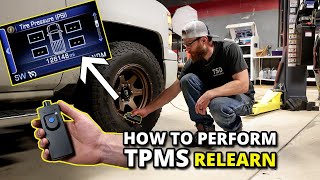
- A TPMS relearn tool (around $15) is required to program the new sensor to the truck after installation.
What's Unique About the 2007-2013 Chevrolet AVALANCHE
For the 2007-2013 Avalanche (and its GMT900 platform mates like the Silverado, Sierra, Tahoe, and Suburban), the TPMS is a straightforward system using 315 MHz sensors. The most common failure point is simply the sensor's internal battery dying after 7-10 years of service, which is very common for vehicles in this age range. While the fix is typically simple, an official GM Technical Service Bulletin (PIC5650 series) has linked this code to rare instances of no-start or stalling issues, suggesting it can sometimes be a symptom of a larger electrical or module communication problem caused by Radio Frequency Interference (RFI).
Diagnostic Flowchart
Tap your situation to follow the diagnostic path that matches what you're seeing on this vehicle.
Symptoms You May Notice
- "Service Tire Monitor System" message on the Driver Information Center (DIC).
- TPMS warning light flashes for about a minute and then stays on solid.
- The DIC shows dashes (--) for the right front tire pressure reading.
- In rare cases associated with other codes (like B3055), may be present during a no-crank or stalling condition, often related to RF interference. [Bulletin #PIC5650M]
- Replacing the Body Control Module (BCM) when only C0755 is present. An isolated TPMS code is almost never a bad BCM.
- Replacing the Remote Control Door Lock Receiver (RCDLR), which receives the TPMS signal. This is a possible but very uncommon point of failure compared to the sensor itself.
- Assuming the tire is low when the TPMS light is on. A flashing light that turns solid indicates a system fault, not low pressure.
Most Likely Causes
- Dead TPMS Sensor Battery 🔴 High Probability The sensors contain non-replaceable batteries with a finite lifespan of approximately 7-10 years. Vehicles in the 2007-2013 range are now at or beyond this age, making battery failure the most likely cause. Owners on forums frequently report this as the reason for replacement on trucks of this vintage.
How to confirm: Use a TPMS diagnostic tool to attempt to 'wake up' or read the sensor. If the tool cannot get a response, and the sensor is the original, the battery is almost certainly dead. A professional scan tool can also read the sensor battery status directly from the BCM data list.
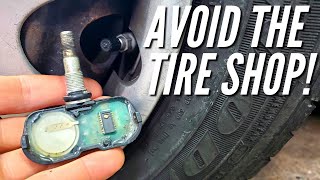
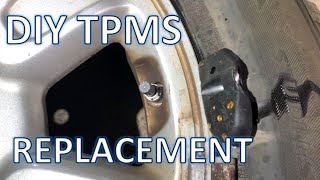
Typical fix: Replace the right front TPMS sensor. It's often recommended to replace all four sensors at the same time, as the others are likely near the end of their service life. After replacement, a TPMS relearn procedure must be performed.
Est. part cost: $25-$70 per sensor - Damaged TPMS Sensor 🟡 Medium Probability Sensors can be easily damaged during tire changes if the technician is not careful to position the tire machine head correctly relative to the sensor body. They can also be broken by hitting a large pothole or curb.
How to confirm: Visual inspection of the sensor after dismounting the tire from the wheel. Look for cracks in the plastic housing or a broken valve stem. This was confirmed as the cause in a forum thread where a user could not complete the relearn procedure until the broken sensor was found.
Typical fix: Replace the damaged TPMS sensor and perform the relearn procedure.
Est. part cost: $25-$70 - Radio Frequency (RF) Interference ⚪ Low Probability Aftermarket electronic devices like phone chargers, dash cams, LED lighting, or even toll passes can sometimes emit RF noise that interferes with the 315 MHz signal from the TPMS sensor. TSB PIC5650 specifically calls out this issue as a cause for intermittent TPMS and other module communication problems.
How to confirm: Turn off and unplug all aftermarket electronic devices in the cabin (especially those plugged into the 12V outlets). Drive the vehicle above 25 MPH to see if the system starts reading the sensor again. If the fault clears, one of the devices is the cause.
Typical fix: Remove or relocate the interfering device. Ensure any added electronics are high-quality and properly shielded.
Est. part cost: $0
Rare But Worth Checking
- Body Control Module (BCM) or Receiver Fault: A GM Technical Service Bulletin (PIC5650 series) notes that C0755 can appear with other security-related codes (like B3055) during a no-start or stalling condition. In this specific scenario, the TPMS code is likely a symptom of a failing BCM, a bad ground, or a broader network communication issue, often triggered by RFI. The TPMS signals are processed by the Remote Control Door Lock Receiver (RCDLR), which can also be a point of failure, sometimes linked to water intrusion or connection issues.
- Use of Unapproved Tire Sealant: Some emergency tire sealants can clog the pressure port on the TPMS sensor, causing it to malfunction. If sealant was recently used, the sensor will need to be cleaned or, more likely, replaced as the sealant can permanently damage the delicate sensing element.
- Faulty Aftermarket Sensor: In some owner accounts, newly installed aftermarket sensors were either dead on arrival or failed shortly after installation. This can be due to old stock with depleted batteries or poor manufacturing quality. One owner went through three sensors before getting a good one. It is recommended to test a new sensor with a TPMS tool *before* mounting the tire.
Diagnosis Steps
- Verify the code with an OBD-II scanner capable of reading C-codes (Chassis codes). Note any specific sub-codes like 'Low Voltage' or 'Internal Malfunction'.
- Check the tire pressure display on the Driver Information Center (DIC). Confirm that the Right Front position is showing '--' or an incorrect reading.
- Use a dedicated TPMS tool (like an ATEQ VT-series or similar) to try and activate the right front sensor. If the tool gets no response, the sensor is bad, most likely due to a dead battery.
- If the sensor responds to the tool, attempt the TPMS relearn procedure. For the Avalanche, this typically involves putting the ignition to 'ON', using the DIC to enter 'Tire Learning' mode, and then using a TPMS tool to activate each sensor in sequence (LF, RF, RR, LR), waiting for a horn chirp at each wheel. If it fails to relearn, the sensor's transmitter may be faulty.
- If other seemingly unrelated codes are present (especially for security or communication) or the issue is intermittent, investigate potential Radio Frequency Interference from aftermarket accessories as suggested by TSB PIC5650. Unplug all non-factory devices and re-test.
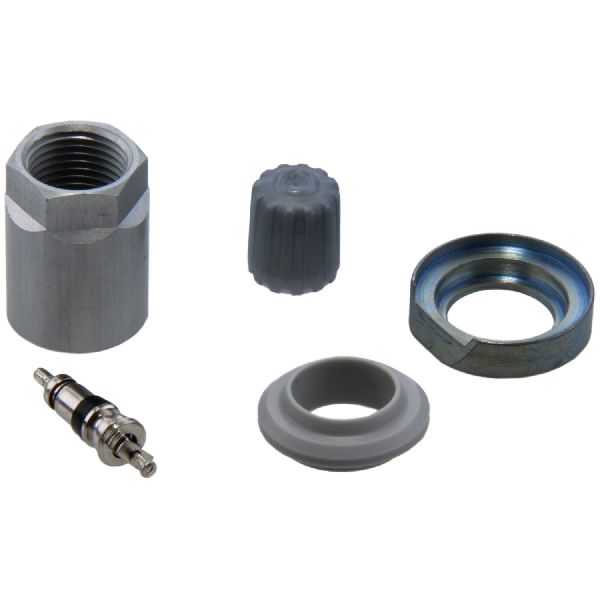
- If the sensor is confirmed bad, have the tire dismounted from the wheel to replace the sensor. It is best practice to use a new valve stem service kit or replace the entire valve stem assembly.
- After installing a new sensor, perform the full TPMS relearn procedure to program the new sensor ID to the vehicle's BCM/RCDLR.
Parts You'll Likely Need
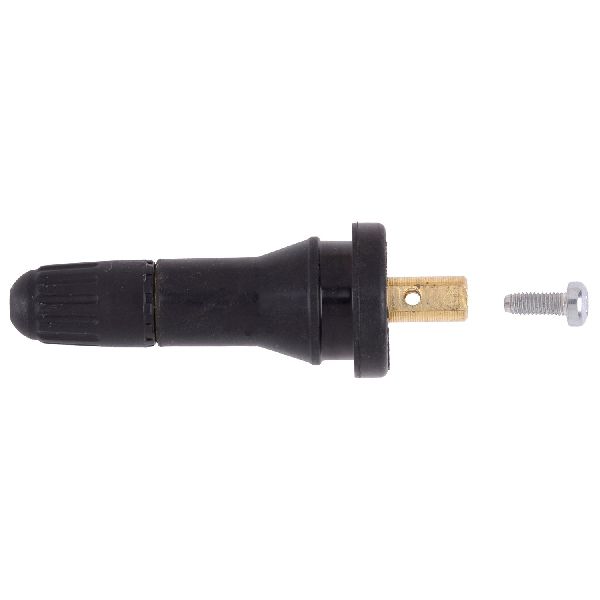
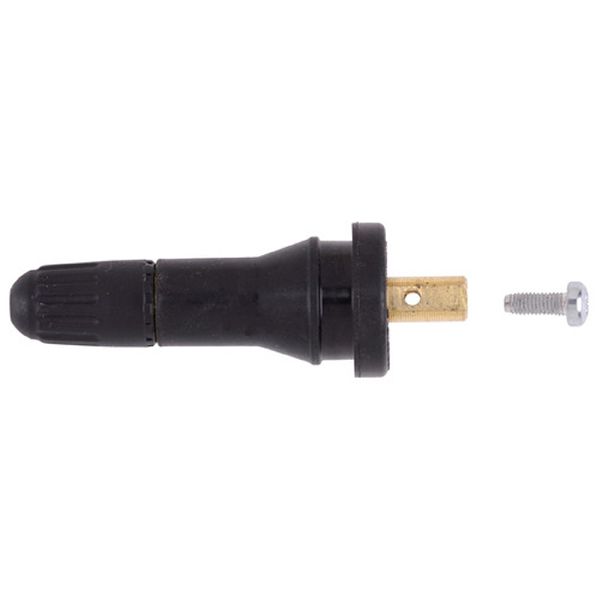
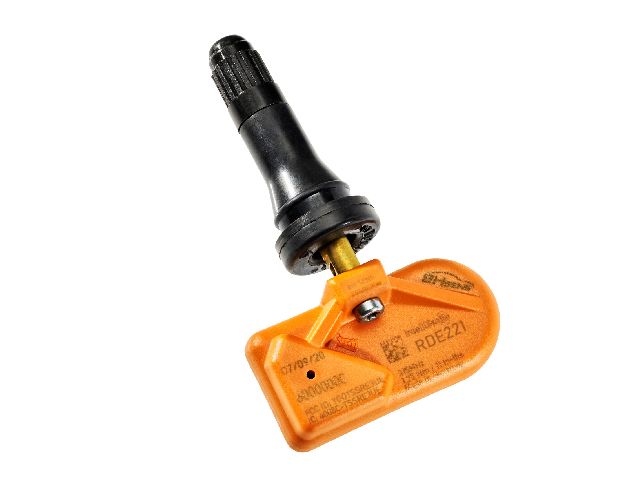
- Tire Pressure Monitoring System (TPMS) Sensor
(OEM #13598771 (supersedes 13586335, 13581558, 22854866, among others))— This is the component that fails, usually due to its internal battery dying after 7-10 years. It's a self-contained 315 MHz unit that transmits pressure and temperature data to the RCDLR.
Trusted brands: ACDelco (GM OE), Schrader (often the OEM supplier), Dorman, Standard Motor Products, Huf
OEM price range: $45-$75
Aftermarket price range: $25-$60 - TPMS Relearn Tool
(OEM #EL-50448 (or equivalent))— After replacing a sensor on this platform, the vehicle must be taught the new sensor's unique ID. A simple, inexpensive relearn tool is required to trigger each sensor in sequence while the vehicle is in its relearn mode. Some older methods of letting air out of the tire may not work reliably.
Trusted brands: ATEQ, VXDAS, JDIAG, OEC-T5
OEM price range: $10-$25
Aftermarket price range: $10-$25
Related Codes That Often Appear With This One
- C0750 — Indicates a fault with the Left Front TPMS sensor. Often appears if multiple sensors are failing from age.
- C0760 — Indicates a fault with the Left Rear TPMS sensor. Often appears if multiple sensors are failing from age.
- C0765 — Indicates a fault with the Right Rear TPMS sensor. Often appears if multiple sensors are failing from age.
- B3055 — As per TSB PIC5650, this security code related to the key can appear alongside TPMS codes in rare cases of a no-start condition, pointing to a wider module or RFI issue.
Technical Service Bulletins (TSBs) & Recalls
- PIC5650M: Mentions C0755 in a list of DTCs that may be found with a no crank/no start/stall concern and a security light, suggesting a potential link to a larger electrical issue in rare cases.
- PIC5650C/J/K: Later revisions of the bulletin that heavily emphasize Radio Frequency Interference (RFI) from aftermarket accessories as the primary cause for the combined TPMS/security/no-start issues.
Platform-Specific Known Issues
- TSB #PIC5650M: Documents a rare condition where TPMS codes, including C0755, can be present during a no-crank, no-start, or stalling event accompanied by a security light. This points to a potential BCM or network communication failure rather than a simple sensor issue. [Bulletin #PIC5650M]
- TSB PIC5650 Series (C, J, K): The root cause for the intermittent no-start/TPMS fault condition is often Radio Frequency Interference (RFI) from aftermarket devices like phone chargers, LED lights, or even non-vehicle items on the keychain. The bulletin advises thorough inspection for these devices as a primary diagnostic step when multiple, seemingly unrelated codes are present with the TPMS fault.
Mechanic-Grade Diagnostic Values
- TPMS Sensor Battery Status — expected: OK. Failure: A 'Low' or 'Fail' status indicates the sensor needs replacement.
- TPMS Sensor Rolling Count — expected: Above 50%. Failure: A low percentage suggests the sensor is not transmitting consistently, which could be due to a weak battery or RF interference.
Hidden / Shadow Codes Worth Checking
- C0755 03: Right Front Tire Pressure Sensor Low Voltage. This is the most common sub-code and directly points to a dying internal battery in the sensor. (see via GM-specific scan tool (Tech 2, GDS2) or high-end professional scanner.)
- C0755 29: Right Front Tire Pressure Sensor Too Few Pulses. The RCDLR is not receiving the expected number of data packets from the sensor, which can be caused by RF interference or a failing transmitter. (see via GM-specific scan tool (Tech 2, GDS2) or high-end professional scanner.)
- C0755 39: Right Front Tire Pressure Sensor Internal Malfunction. The sensor has failed an internal self-check and is definitively bad. (see via GM-specific scan tool (Tech 2, GDS2) or high-end professional scanner.)
Scan Tool Commands That Help
- GM Tech 2 / GDS2: BCM Data Display -> TPMS Data — Use this to view live data for each sensor, including pressure, temperature, battery status, and rolling count, to confirm which sensor is faulting and why.
- GM Tech 2 / GDS2: Special Functions -> TPMS Learn — This function initiates the vehicle's relearn mode from the scan tool, as an alternative to using the DIC or key fob method. It is required after sensor replacement.
- GM Tech 2 / GDS2: Module Diagnosis -> RCDLR — If multiple TPMS sensors are faulting or key fob issues are also present, use this to check for communication DTCs with the Remote Control Door Lock Receiver itself.
Wiring & Ground Locations
- RCDLR (Remote Control Door Lock Receiver) — On SUV-style trucks like the Avalanche and Tahoe, the RCDLR is typically located in the rear of the vehicle, behind the trim panel in the driver's side D-pillar (near the rear hatch).. The RCDLR is the module that receives the 315 MHz signals from all TPMS sensors and the key fobs. A failure in this module, its wiring, or its ground can cause codes for one or all sensors.
- RCDLR Fuse — In the underhood fuse block. For a 2014 Silverado (similar generation), it is listed as fuse F53. The specific fuse number should be verified for the exact year of Avalanche.. A blown fuse will cut power to the RCDLR, causing a loss of communication with all TPMS sensors and key fobs, setting multiple codes.
- G303 / G304 — G303 is on the left (driver's) side B-pillar behind the trim. G304 is in the corresponding location on the right (passenger) side B-pillar.. These are major interior body grounds. While not directly for the RCDLR, a poor connection at these points can introduce electrical noise and intermittent issues with various interior modules, including the BCM which processes the RCDLR data.
Real Owner Repair Stories
- Tahoe Yukon Forum user 'Joseph Garcia' (2007 GMC Yukon XL Denali) — TPMS light on, multiple TPMS codes present. Key fobs were also not working correctly.
❌ Tried (didn't work) Attempting the standard TPMS relearn procedure. The process would not even start or learn the first (left front) sensor.
✅ What actually fixed it The user suspected a faulty RCDLR module due to the combined TPMS and key fob issues. However, the actual root cause was a single failed right rear wheel sensor. Replacing only that one sensor allowed the relearn procedure to complete successfully and resolved all issues. - Reddit user on r/Silverado (Unknown year, GMT900 platform) — After a tire rotation at a dealership, none of the TPMS sensors were reading on the DIC.
❌ Tried (didn't work) The dealership attempted and failed to reprogram the sensors for the new positions.
✅ What actually fixed it The user took the truck to a different tire shop (Big-O), which successfully reprogrammed the sensors for free. This indicates the dealership technician likely performed the relearn procedure incorrectly or their tool was incompatible, erasing all sensor IDs from the BCM without successfully learning the new ones.
OEM Part Supersession History
13581558, 13586335, 22854866, 20922900→13598771— Consolidation of part numbers and potential minor revisions to the sensor design or internal components.
Heads up: The GM OE sensor 13598771 is pre-programmed and only requires a vehicle relearn procedure. Aftermarket 'programmable' or 'universal' sensors must first be programmed with a TPMS tool to mimic the GM protocol *before* the vehicle relearn procedure is attempted. Failure to do this initial programming is a common cause of failure.
Model Year Variations Within This Range
- 2007-2013: While the core TPMS system (315 MHz direct sensors reporting to an RCDLR) remained consistent, the method to initiate the relearn procedure can vary slightly. Some models rely on the Driver Information Center (DIC) buttons, while others use the trip odometer reset stem or the lock/unlock buttons on the key fob to enter learning mode.
Helpful Videos
We Have This Part in Stock


The information in this article is provided for general reference and educational purposes only. Vehicle specifications, procedures, and part compatibility can vary by production date, trim level, and region. Always consult your vehicle's factory service manual and verify part numbers before purchasing or performing repairs. Safety-critical components such as airbags, seat belts, and braking systems should be installed by a qualified professional.
- Chevrolet AVALANCHE:
- 🎬 Helpful Videos
- 🛍️ Shop This Part
- What's Unique About the 2007-2013 Chevrolet AVALANCHE
- Diagnostic Flowchart
- Symptoms You May Notice
- Most Likely Causes
- Rare But Worth Checking
- Diagnosis Steps
- Parts You'll Likely Need
- Related Codes That Often Appear With This One
- Technical Service Bulletins (TSBs) & Recalls
- Platform-Specific Known Issues
- Mechanic-Grade Diagnostic Values
- Hidden / Shadow Codes Worth Checking
- Scan Tool Commands That Help
- Wiring & Ground Locations
- Real Owner Repair Stories
- OEM Part Supersession History
- Model Year Variations Within This Range
- 🎟️ Get 5% Off