

C0755 on 2013-2019 Cadillac XTS: Right Front TPMS and RCDLR Faults Explained
Code C0755 on a 2013-2019 Cadillac XTS indicates a problem with the Right Front Tire Pressure Monitoring System (TPMS) sensor. This is most often a dead sensor battery. If multiple TPMS codes appear together (C0750, C0760, C0765) and key fob functions are also failing, the issue is likely the Remote Control Door Lock Receiver (RCDLR) module, which processes signals for both the TPMS and key fobs.
- C0755 points to a fault with the right front TPMS sensor.
- The most common cause is a dead battery in the sensor, which is a normal wear item.
- If you also have problems with your key fob or codes for other tires, the Remote Control Door Lock Receiver (RCDLR) is a likely suspect.
- Replacement of either the sensor or the RCDLR requires specialized tools for programming and relearning.
- Do not ignore a flashing TPMS light, as it means the system cannot warn you of a genuinely low tire.
What's Unique About the 2013-2019 Cadillac XTS
On the Cadillac XTS and similar GM platforms (like the Buick LaCrosse and Chevrolet Impala), the Tire Pressure Monitoring System (TPMS) and the keyless entry system are uniquely integrated. The signals from all four tire pressure sensors are received and processed by the Remote Control Door Lock Receiver (RCDLR), the same module that handles key fob commands. This design means that a failing RCDLR can cause seemingly unrelated symptoms, such as the key fob not working and multiple TPMS codes (including C0755) appearing simultaneously, as noted in manufacturer Technical Service Bulletins. Bulletin #16-NA-396 specifically calls out replacing the RCDLR when these combined symptoms occur. The RCDLR is typically located in the rear of the vehicle, often behind the trim in the D-pillar on the driver's side.
Diagnostic Flowchart
Tap your situation to follow the diagnostic path that matches what you're seeing on this vehicle.
Symptoms You May Notice
- TPMS warning light flashing for approximately one minute after startup, then staying on solid.
- Driver Information Center (DIC) displays a "Service Tire Monitor System" message.
- Pressure reading for the right front tire shows dashes (--) on the DIC.
- Key fob functions (lock, unlock, remote start) are inoperative or have very short range (if RCDLR is the cause).
- No crank, no start, or a start-and-stall condition with the security light on (if RCDLR is the cause).
- "No Remote Detected" message on the DIC (if RCDLR is the cause).
- Replacing only one TPMS sensor when the RCDLR is faulty. If all four TPMS codes are present, the receiver module is a more likely culprit than all four sensors failing simultaneously.
- Ignoring key fob issues. Owners may not realize that inoperative key fobs and TPMS warnings are linked through the RCDLR. If both symptoms are present, diagnosis should focus on the shared module.
- Replacing the RCDLR without checking its antenna connections first. A loose coax cable can mimic a failed module and is a simpler fix.
Most Likely Causes
- Failed Right Front TPMS Sensor 🔴 High Probability TPMS sensors contain a non-replaceable lithium battery that typically lasts 5-10 years. As the 2013-2019 XTS fleet ages, battery failure is the most common reason for a sensor to stop transmitting.
How to confirm: Use a TPMS activation tool to try and read the sensor. If the tool cannot get a response (no pressure, temperature, or battery status), the sensor has failed. If the other three sensors respond, it further isolates the fault to the single sensor.
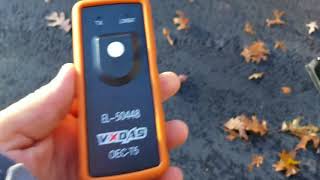
Typical fix: Replace the right front TPMS sensor and perform the TPMS relearn procedure. 🎬 See a quick demonstration of the TPMS reset tool in action. The sensor operates at 315 MHz.
Est. part cost: $35-$75 - Faulty Remote Control Door Lock Receiver (RCDLR) 🟡 Medium Probability As documented in TSB #16-NA-396, internal issues within the RCDLR can prevent it from processing signals from the TPMS sensors. This is especially likely if codes for multiple sensors (C0750, C0755, C0760, C0765) are present at the same time along with key fob problems.
How to confirm: Diagnose by ruling out the sensors first. If all four TPMS sensors are non-responsive and key fob functions are also inoperative, the RCDLR is the primary suspect. A professional scan tool can check for communication with the RCDLR. TSB #16-NA-396 directly recommends replacing the RCDLR for this condition.
Typical fix: Replace the RCDLR module. This requires programming by a dealer or a qualified shop with access to GM's service programming system (SPS).
Est. part cost: $80-$150
Rare But Worth Checking
- Radio Frequency (RF) Interference: Aftermarket electronic devices like dash cams, phone chargers (especially USB chargers), or aftermarket LED lighting can sometimes interfere with the 315 MHz signal from the TPMS sensor to the RCDLR. TSB PIC5650K specifically advises checking for and unplugging all aftermarket accessories to see if the signal returns before replacing parts.
- Weak Vehicle Battery: A weak 12V vehicle battery can cause a wide range of electronic issues, including malfunctions in the BCM and RCDLR that can trigger erroneous trouble codes. A user on the ScannerDanner forum with a 2013 XTS reported numerous random codes, including all four TPMS codes, that started occurring before an old battery was replaced. If your battery is over four years old, it's worth testing it.
- RCDLR Antenna Connection: TSB #16-NA-061 describes how a poor or disconnected coaxial antenna connection for the RCDLR can cause intermittent TPMS and key fob issues. Depending on where the disconnect occurs (at the RCDLR, the antenna amplifier, or the glass antenna), symptoms can range from slightly reduced key fob range to all TPMS sensors dropping out. This should be inspected before replacing the RCDLR module itself.
Diagnosis Steps
- Verify the code: Use an OBD-II scanner to confirm C0755 is present. Note any other codes, especially other TPMS (C0750, C0760, C0765) or security (B-series) codes.
- Check the DIC: Observe the tire pressure display on the Driver Information Center. If only the right front tire is showing dashes, a single sensor failure is likely.
- Attempt Sensor Activation: Use a TPMS tool to try and 'wake up' the right front sensor. Point the tool at the valve stem and trigger it. If it fails to read the sensor's ID, pressure, and battery status, the sensor is the most likely cause.
- Test Other Sensors: Use the TPMS tool on the other three wheels. If they all respond correctly, it further isolates the problem to the single right front sensor.
- Evaluate for RCDLR Failure: If multiple or all four TPMS sensors fail to respond, and especially if key fob functions are also faulty, suspect the RCDLR module per TSB #16-NA-396.
- Check for RF Interference: As per TSB PIC5650K, unplug all aftermarket 12V accessories (phone chargers, dash cams, LED lights) and remove any RFID cards or fobs from the vehicle, then re-test.
- Inspect RCDLR Connections: Before replacing the RCDLR, inspect the coaxial antenna connections at the module, antenna amplifier, and rear glass antenna as detailed in TSB #16-NA-061.
- Perform Relearn Procedure: After replacing a sensor, the vehicle must be put into 'TPMS Learn Mode' and the new sensor ID must be registered to the right front position using a TPMS tool.
- Program New Module: If the RCDLR is replaced, it must be programmed using the GM Service Programming System (SPS) to function correctly with the vehicle's security system and key fobs.
Parts You'll Likely Need
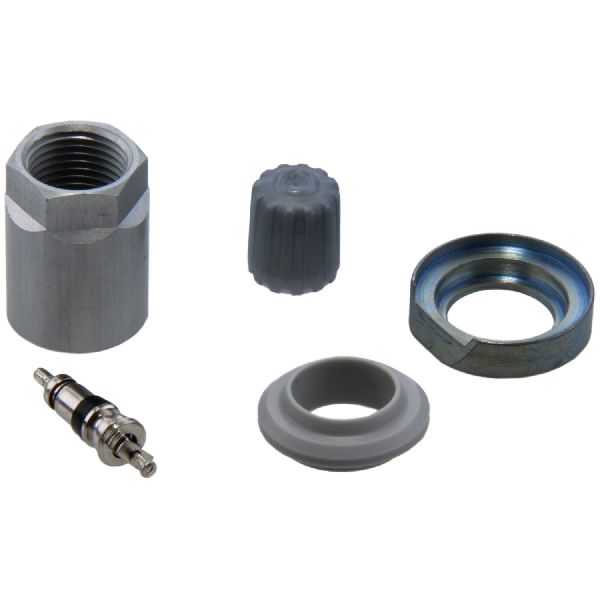
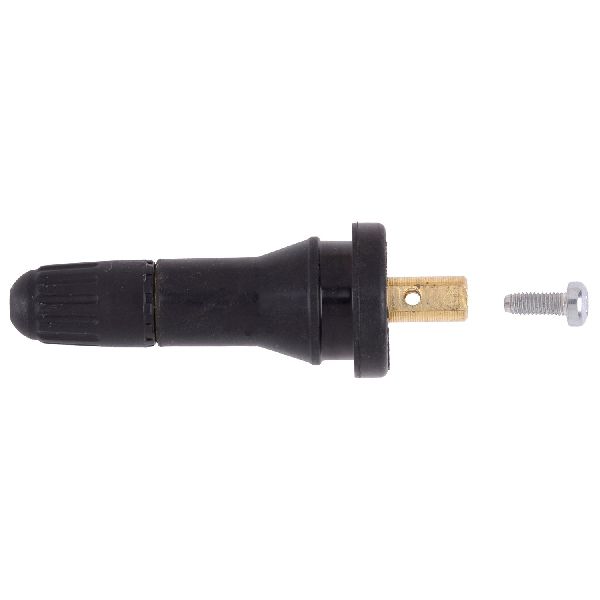
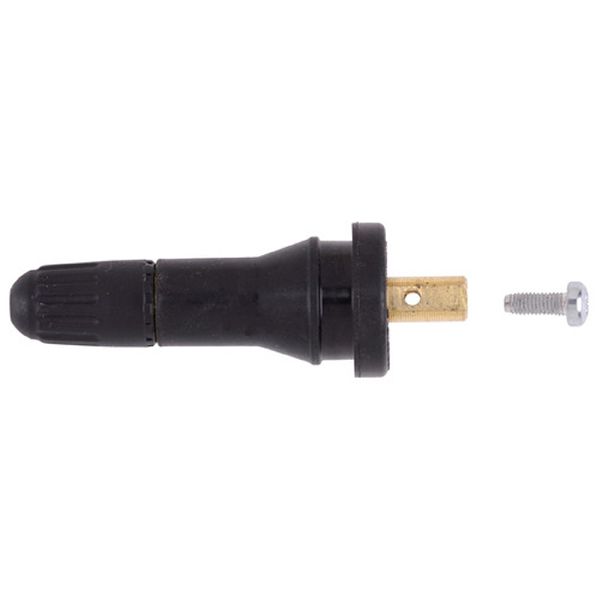
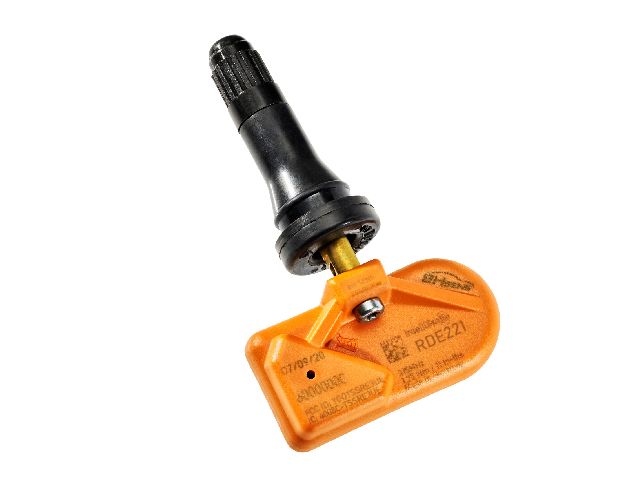
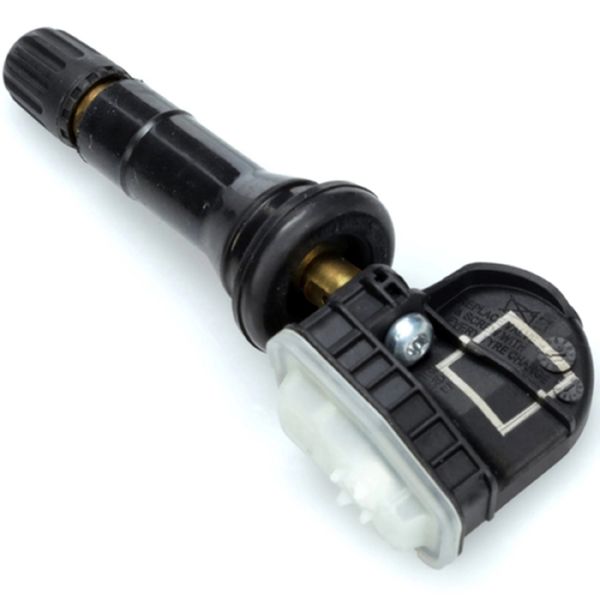
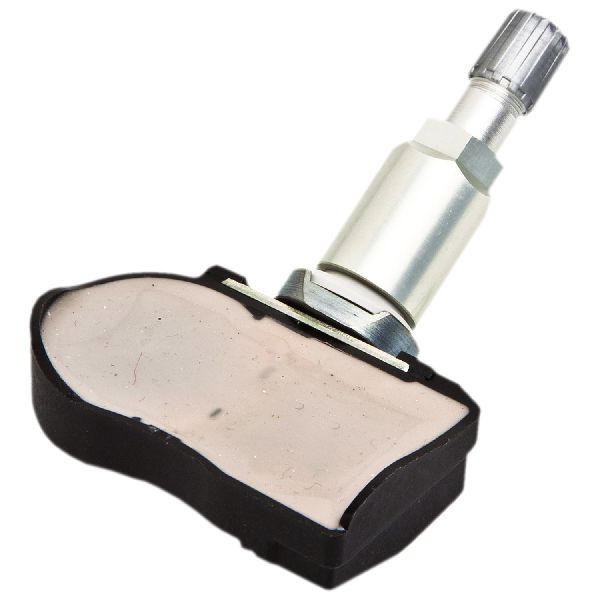
- Tire Pressure Monitoring System (TPMS) Sensor
(OEM #13540601)— This is the most common failure point. The internal battery dies, causing the sensor to stop transmitting data. This part operates at 315 MHz.
Trusted brands: ACDelco (GM Genuine), Schrader, Continental/VDO, Standard Motor Products, Dorman
OEM price range: $55-$75
Aftermarket price range: $35-$60 - Remote Control Door Lock Receiver (RCDLR)
(OEM #13595511)— This module is the second most likely cause, especially if multiple TPMS codes are present or if key fob issues exist. It receives signals from all TPMS sensors. TSB #16-NA-396 specifies this part number for replacement.
Trusted brands: ACDelco (GM Genuine)
OEM price range: $80-$150
Aftermarket price range: N/A
Related Codes That Often Appear With This One
- C0750 — This code is for the Left Front TPMS sensor. Seeing it with C0755 and other TPMS codes points towards a central receiver (RCDLR) issue rather than individual sensor failures.
- C0760 — This code is for the Left Rear TPMS sensor. Its presence alongside C0755 strengthens the diagnosis of a faulty RCDLR.
- C0765 — This code is for the Right Rear TPMS sensor. When all four sensor codes (C0750, C0755, C0760, C0765) appear together, it is a strong indicator of an RCDLR failure as described in TSB #16-NA-396.
- B3055 — This code relates to the vehicle immobilizer system (Key Not Detected). It can be triggered along with C0755 if the RCDLR or BCM is malfunctioning, leading to a no-start condition as described in TSB PIC5650C.
Technical Service Bulletins (TSBs) & Recalls
- 16-NA-396: Notes that inoperative key fobs and multiple TPMS codes (C0750, C0755, C0760, C0765) with symptom code :29 can be caused by an internal failure of the Remote Control Door Lock Receiver (RCDLR).
- PIC5650M: Links C0755 with other codes to a no-crank, no-start, or start/stall condition related to the vehicle's security system.
Platform-Specific Known Issues
- RCDLR Antenna Connection Faults: Per TSB #16-NA-061, the XTS (along with the ATS and CTS) can suffer from poor or disconnected coaxial antenna connections leading to the RCDLR. This can cause intermittent or total loss of signal from the TPMS sensors and key fobs, mimicking a failed RCDLR module. The bulletin advises checking the connections at the RCDLR itself, the antenna amplifier, and the rear glass antenna before replacing any parts.
Mechanic-Grade Diagnostic Values
- TPMS Sensor Transmission — expected: The sensor should transmit a signal when activated with a TPMS tool or when vehicle speed exceeds 25 MPH (40 km/h).. Failure: The BCM sets the DTC if a sensor does not transmit for 18 minutes or if the battery is low.
Hidden / Shadow Codes Worth Checking
- Symptom Code 03: Voltage Below Threshold. This sub-code indicates the sensor is failing due to a low voltage condition, which is almost always a failing internal battery. (see via A professional GM scan tool like a Tech 2 or GDS2 can display symptom codes (also called symptom bytes) along with the main DTC.)
- Symptom Code 29: Too Few Pulses. This indicates a failure in the frequency or pulse width modulated signal from the sensor, as noted in TSB #16-NA-396. (see via Visible on a professional GM scan tool when viewing DTC details for the BCM.)
Scan Tool Commands That Help
- GDS2 (GM Diagnostic Software): Module Diagnostics > Remote Control Door Lock Receiver > Configuration/Reset Functions > Add/Replace Key Fobs — This function is used to program new key fobs after replacing the RCDLR.
- GDS2 (GM Diagnostic Software): RCDLR Setup — This setup procedure must be performed after installing a new RCDLR to integrate it with the vehicle's other systems.
- GDS2 / Tech2: Theft Deterrent System Learn — After replacing and setting up the RCDLR, the theft deterrent system must be relearned using the 10 or 30-minute procedure to allow the vehicle to start.
- TPMS Relearn Tool (e.g., Autel, VXDIAG, EL-50448): TPMS Relearn Procedure — After replacing a TPMS sensor or the RCDLR, the vehicle must be put into learn mode, and each sensor must be activated with the tool in sequence (LF, RF, RR, LR) to register their positions.
Wiring & Ground Locations
- G401 — Left side of the luggage compartment (trunk).. This is a primary ground point for several rear-body electronic modules. A poor connection at G401 could potentially affect the RCDLR, which is located in the rear of the vehicle, causing intermittent communication issues.
- RCDLR Coax Antenna — The RCDLR antenna system consists of the RCDLR module, a coax cable, an antenna amplifier, and the antenna itself embedded in the right rear glass.. TSB #16-NA-061 specifically notes that a disconnect at any of these three points (module, amplifier, or glass) can cause loss of signal from TPMS sensors and set C0755, often with other TPMS codes.
- G305 — Base of the left kick panel.. This is a ground point for the Body Control Module (BCM). Since the BCM receives and interprets the signals from the RCDLR, a bad ground here could cause a variety of strange electrical issues, including false TPMS codes.
Real Owner Repair Stories
- ScannerDanner Forum (2013 Cadillac XTS) — A long list of random codes from all modules, including C0755 (RF), C0760 (LR), and C0765 (RR) for the TPMS system. Also experienced random misfires and low fuel rail pressure codes.
❌ Tried (didn't work) Replacing spark plugs and coils did not resolve the widespread electronic issues.
✅ What actually fixed it The owner suspected the original 2013 battery was the cause. After replacing the old battery, the random code occurrences were hoped to be resolved, implying the weak battery was the root cause of the electronic chaos.
OEM Part Supersession History
13595511→13540045— Part has been updated or replaced by the manufacturer.
Heads up: The new part number 13540045 should be a direct replacement for the original RCDLR.
Helpful Videos
![[2013-2020 XTS] Cadillac CUE Complete HD Module Removal *Easy Method* 20 mins](https://img.youtube.com/vi/fTJDA_RQvi0/mqdefault.jpg)
![[2013-2020 XTS] Cadillac CUE Complete HD Module Removal *Easy Method* 20 mins](https://img.youtube.com/vi/1QqqbI6ce2k/mqdefault.jpg)
We Have This Part in Stock

The information in this article is provided for general reference and educational purposes only. Vehicle specifications, procedures, and part compatibility can vary by production date, trim level, and region. Always consult your vehicle's factory service manual and verify part numbers before purchasing or performing repairs. Safety-critical components such as airbags, seat belts, and braking systems should be installed by a qualified professional.
- Cadillac XTS:
- 🎬 Helpful Videos
- 🛍️ Shop This Part
- What's Unique About the 2013-2019 Cadillac XTS
- Diagnostic Flowchart
- Symptoms You May Notice
- Most Likely Causes
- Rare But Worth Checking
- Diagnosis Steps
- Parts You'll Likely Need
- Related Codes That Often Appear With This One
- Technical Service Bulletins (TSBs) & Recalls
- Platform-Specific Known Issues
- Mechanic-Grade Diagnostic Values
- Hidden / Shadow Codes Worth Checking
- Scan Tool Commands That Help
- Wiring & Ground Locations
- Real Owner Repair Stories
- OEM Part Supersession History
- 🎟️ Get 5% Off