

C0755 on 2019-2025 Cadillac XT4: Right Front TPMS and Security System Guide
Code C0755 on a Cadillac XT4 indicates a fault with the Right Front Tire Pressure Monitor Sensor (TPMS). This is most often caused by a dead sensor battery. While a TPMS fault seems minor, a GM Technical Service Bulletin links it to serious no-start or stalling issues, so it should be addressed promptly.
- C0755 means the Right Front TPMS sensor has failed, most likely due to a dead battery.
- On the XT4, this is a serious code because it can cause the engine to not start or to stall unexpectedly due to a shared receiver with the security system.
- The most common fix is to replace the faulty TPMS sensor, which requires tire removal and special programming tools.
- Before expensive repairs, rule out radio frequency interference from aftermarket electronics inside the car, as highlighted by GM TSB PIC5650M.
- This repair is not DIY-friendly for most, as it requires tire dismounting and a TPMS programming tool.
What's Unique About the 2019-2025 Cadillac XT4
What's unique about the Cadillac XT4 and related GM platforms is the documented link between a simple tire pressure sensor fault and the vehicle's immobilizer system. While C0755 is just a TPMS code on many vehicles, on the XT4 it can trigger severe security-related symptoms like a no-start or stall. This is highlighted in TSB #PIC5650M, which warns that multiple security and TPMS codes (including C0755) can appear together due to a complex system interaction. This is often triggered by radio frequency interference (RFI) from aftermarket devices like phone chargers or even toll passes, which can jam the signals received by the Remote Control Door Lock Receiver (RCDLR). Another TSB, #16-NA-396, also notes that an internal fault in the RCDLR itself can cause these simultaneous TPMS and key fob issues. TSB 16-NA-061 further explains that a disconnected or faulty RCDLR antenna or coax cable can also cause these symptoms, with more severe issues (like a no-start) occurring the closer the disconnection is to the RCDLR module itself.
Diagnostic Flowchart
Tap your situation to follow the diagnostic path that matches what you're seeing on this vehicle.
Symptoms You May Notice
- "Service Tire Monitor System" message on the driver information center (DIC)
- TPMS warning light is flashing or stays on solid
- Inaccurate or missing tire pressure reading for the right front tire (may show as "--")
- Intermittent no-crank or no-start condition
- Engine stalls after starting
- Security warning light illuminated on the instrument cluster
- "No Remote Detected" message 🎬 Watch: How to start your XT4 with a dead key fobon the DIC
- Poor key fob range
- Replacing the car battery without testing it first. While low system voltage can cause many electrical issues, C0755 specifically points to a sensor fault.
- Replacing the starter or ignition switch for a no-start symptom without first scanning for codes. The TSB clearly links this TPMS code to the security system disabling the start command.
- Assuming a new sensor is bad when the relearn procedure was not performed correctly. The vehicle must be put into 'Tire Learning Active' mode for the BCM to recognize the new sensor's ID.
Most Likely Causes
- Dead TPMS Sensor Battery 🔴 High Probability TPMS sensors use internal, non-rechargeable batteries with a finite lifespan of 5-10 years. Vehicles from the 2019 model year are now reaching the age where battery failure is common. The BCM will set the code when the sensor's low battery condition is detected or it stops transmitting for a set period (e.g., 18 minutes).
How to confirm: A professional TPMS diagnostic tool can be used to scan the sensor. If the tool cannot get a reading or shows a low battery status from the right front sensor, the sensor has likely failed.
Typical fix: Replace the right front TPMS sensor. The tire must be dismounted to access it, and a new sensor must be programmed to the vehicle using a TPMS tool and the vehicle's relearn procedure.
Est. part cost: $40-$90 - Failed TPMS Sensor 🟡 Medium Probability
How to confirm: The sensor may have failed due to physical damage from hitting a pothole, corrosion, or from internal electronic failure. A TPMS tool will fail to read the sensor, confirming it needs replacement.
Typical fix: Replace the right front TPMS sensor and perform the TPMS relearn procedure.
Est. part cost: $40-$90 - Radio Frequency (RF) Interference ⚪ Low Probability As noted in TSB PIC5650M, the vehicle's security and TPMS systems can be sensitive to external RF signals from devices like aftermarket chargers, dash cams, LED lights, or even RFID-blocking wallets. These devices can 'jam' the 315 MHz or 433 MHz frequencies used by the TPMS and key fob systems.
How to confirm: Remove all non-essential electronic devices from the vehicle (especially anything plugged into the 12V or USB ports) and see if the symptoms, particularly the no-start issue, disappear.
Typical fix: Identify and remove the source of the interference from the vehicle.
Est. part cost: $0
Rare But Worth Checking
- Body Control Module (BCM) or Remote Control Door Lock Receiver (RCDLR) Fault: If multiple TPMS sensors and security codes are present simultaneously, and RFI has been ruled out, the issue may lie with the RCDLR, which receives the signals. TSB 16-NA-396 specifically addresses replacing the RCDLR for this type of widespread failure.
- Improperly Programmed Sensor: If the sensor was recently replaced and the code persists, it may not have been programmed or 'relearned' to the vehicle correctly. Some aftermarket sensors also have compatibility issues and fail to activate.
- Disconnected RCDLR Antenna or Coax Cable: TSB 16-NA-061 points out that the antenna system for the RCDLR can become disconnected at the module, at the antenna amplifier, or at the antenna itself (in the rear glass). A disconnected coax cable at the RCDLR is the most severe, likely causing all TPMS sensors and key fobs to fail.
Diagnosis Steps
- Verify the tire pressure in the right front tire is correct using a reliable gauge.
- Use a professional TPMS diagnostic tool to attempt to activate and read the right front sensor. If it does not respond or shows a low battery, the sensor has failed and needs replacement.
- If you are experiencing the no-start/stall symptoms mentioned in TSB #PIC5650M, scan all vehicle modules for other codes, especially in the BCM and RCDLR.
- Check for and remove any potential sources of Radio Frequency Interference (RFI), such as aftermarket phone chargers, dash cams, toll passes, or aftermarket LED lighting.
- If the sensor is new or responds to the tool, attempt the TPMS relearn procedure as outlined in the owner's manual or service information. This typically involves putting the vehicle in learn mode and using a tool to activate each sensor in sequence. On many GM vehicles, this can also be done without a tool by letting air out of each tire in sequence until the horn chirps.
- If the relearn procedure fails for the right front wheel, the sensor is faulty or incompatible.
- If multiple TPMS and security codes are present and RFI has been ruled out, inspect the RCDLR antenna and coax cable connections for looseness or damage, per TSB 16-NA-061. If connections are secure, the issue may be with the Remote Control Door Lock Receiver (RCDLR) or the Body Control Module (BCM), which requires advanced diagnostics.
Parts You'll Likely Need
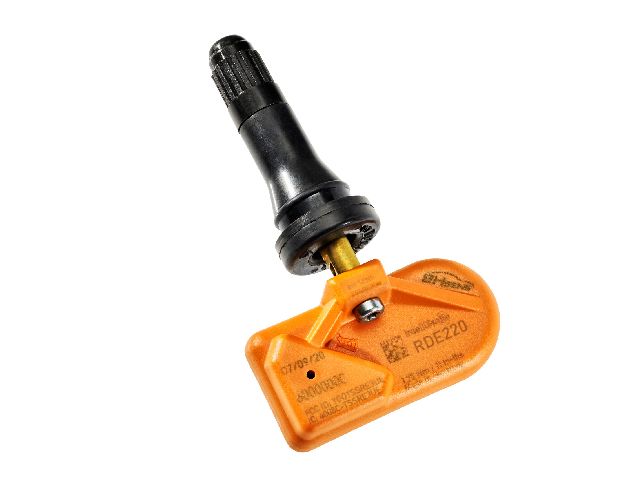
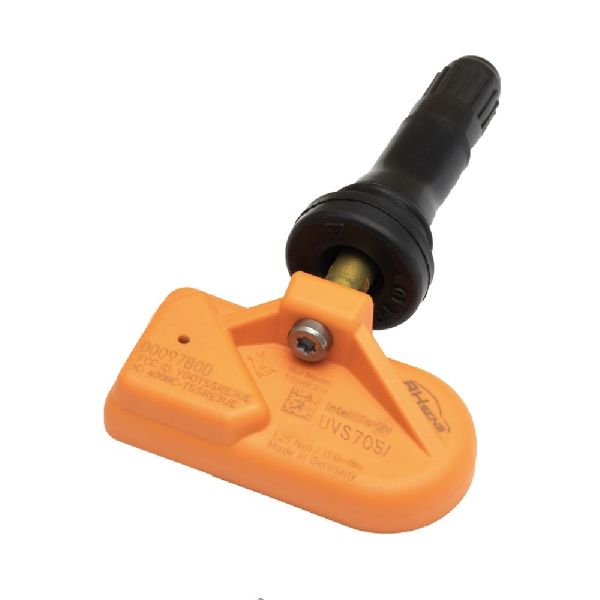
- Tire Pressure Monitor Sensor (TPMS)
(OEM #13516165, 13598773, 84961888)— This is the direct cause of the code. The internal battery dies or the sensor itself fails, requiring replacement. Part number 13598773 is a widely used 433MHz sensor for many GM vehicles. For the 2019-2021 XT4, part 84961888 is also specified. For 2019-2023 models, 13516165 is listed as the OE sensor. Always verify the correct part for your specific VIN.
Trusted brands: ACDelco, GM Genuine Parts, Schrader, VDO, Bosch
OEM price range: $45-$90
Aftermarket price range: $30-$70
Related Codes That Often Appear With This One
- C0750 — This is the code for the Left Front TPMS sensor. Seeing them together may indicate a systemic issue (like RFI or a bad RCDLR) or that multiple sensor batteries are failing around the same time.
- C0760 — This is the code for the Right Rear TPMS sensor.
- C0765 — This is the code for the Left Rear TPMS sensor.
- B3055 — This security code for 'Key Not Detected' is listed in TSB #PIC5650M as appearing with TPMS codes during a no-start event, indicating the BCM is faulting across multiple systems due to RF interference or a module fault.
- B3935 — This security code for 'Transponder Authentication Error' is also cited in TSB #PIC5650M as being related to the no-start condition that can accompany C0755.
Technical Service Bulletins (TSBs) & Recalls
- PIC5650M (and its revisions like PIC5650K): Addresses a no crank, no start, or start stall concern with the security light coming on, which can be accompanied by DTCs C0755, B3055, B3935, and others. It strongly points to Radio Frequency Interference (RFI) from aftermarket devices as a primary cause.
- 16-NA-396: Addresses intermittent operation of key fobs and TPMS, which can set codes C0750, C0755, C0760, and C0765. It suggests that an internal fault in the Remote Control Door Lock Receiver (RCDLR) may be the cause and recommends its replacement.
- 16-NA-061: Details how a poor or disconnected RCDLR antenna connection can cause TPMS and key fob issues. It provides a diagnostic path to check the coax cable and antenna amplifier connections before replacing modules.
Platform-Specific Known Issues
- The most significant issue for this platform is the one documented in TSB #PIC5650M, where a fault in the TPMS system (like C0755) can be misinterpreted by the vehicle's security system, leading to a no-start or stalling condition.
- The XT4 uses a 433 MHz frequency TPMS sensor for models before the 2022 Global B electrical architecture update. Using the wrong frequency sensor will result in failure to program.
Mechanic-Grade Diagnostic Values
- RCDLR Module Voltage via Scan Tool — expected: Should be close to battery voltage (e.g., 12.4V+ with engine off, 13.1V+ with engine running).. Failure: A reading significantly lower than battery voltage (e.g., 11.89V when battery is 12.4V) indicates a voltage drop in the power or ground circuit to the module, which can cause intermittent TPMS and key fob detection issues.
- Voltage Drop Test on RCDLR Power/Ground — expected: Less than 0.1V drop.. Failure: A voltage drop greater than a few tenths of a volt (e.g., 0.31V) between the battery post and the corresponding pin at the RCDLR connector indicates high resistance in the wiring or connections.
Hidden / Shadow Codes Worth Checking
- C0755 02: Right Front Tire Pressure Sensor - Transmits Too Few Pulses. This indicates the sensor is not transmitting frequently enough, often due to a dying battery or internal fault. (see via GM GDS2 or equivalent professional scan tool that can read manufacturer-specific symptom bytes.)
- C0755 05: Right Front Tire Pressure Sensor - Low Voltage. This specifically points to the sensor's internal battery being weak. (see via GM GDS2 or equivalent professional scan tool that can read manufacturer-specific symptom bytes.)
- C0755 0F: Right Front Tire Pressure Sensor - Erratic Signal. This suggests the sensor is transmitting corrupted or inconsistent data, possibly due to an internal failure or strong RF interference. (see via GM GDS2 or equivalent professional scan tool that can read manufacturer-specific symptom bytes.)
Scan Tool Commands That Help
- GDS2 (GM): TPMS Learn Mode — This function in the Body Control Module (BCM) or Remote Control Door Lock Receiver (RCDLR) menu is used to initiate the vehicle's relearn process after replacing a sensor or rotating tires. It commands the vehicle to listen for sensor activations.
- GDS2 (GM): TPMS Data Display — This live data list shows the ID, pressure, temperature, and rolling count for each learned sensor. A rolling count that is not increasing for one wheel while driving indicates that sensor is not transmitting correctly.
- GDS2 (GM): Module Diagnostics > RCDLR > DTC Information — Used to check for specific DTCs and symptom bytes stored within the RCDLR itself, which is the first module to receive the TPMS signal. This can help differentiate between a sensor issue and a receiver/module issue.
Wiring & Ground Locations
- RCDLR (Remote Control Door Lock Receiver) — On the Cadillac XT4 and similar platforms, the RCDLR is typically located behind the rear quarter trim panel, often on the right (passenger) side of the vehicle.. This module receives the radio frequency signals from all four TPMS sensors and the key fobs. A fault in the module, its wiring, its ground, or its antenna connection can cause C0755 and other related codes.
- BCM (Body Control Module) — On most modern GM vehicles, the BCM is located inside the cabin, behind a lower dashboard panel, often near the interior fuse block on the driver's side.. The BCM receives the processed TPMS data from the RCDLR and is the module that ultimately sets the C0755 trouble code. It also controls the security system, which is why a TPMS fault can lead to a no-start condition.
- RCDLR Antenna — The antenna is often integrated into the right rear quarter glass, connected to an antenna amplifier module. A coax cable runs from the amplifier to the RCDLR module.. A disconnected or damaged antenna, amplifier, or coax cable will prevent the RCDLR from receiving signals from the TPMS sensors, especially those furthest away (like the right front), leading to code C0755.
Real Owner Repair Stories
- CorvetteForum user (Chevrolet Corvette (similar GM RCDLR system)) — Intermittent "No Fob Detected" message, TPMS issues, fobs only work in glovebox slot. Symptoms would sometimes disappear after a battery disconnect but return.
❌ Tried (didn't work) Replacing key fob batteries, Replacing vehicle battery, Resoldering RCDLR header pins, Cleaning RCDLR connector pins with Deoxit, Cleaning BCM and RCDLR ground points
✅ What actually fixed it The root cause was a voltage drop to the RCDLR. Using a scan tool, the user saw the RCDLR voltage was only 11.89V while the battery was at 12.4V. This pointed to high resistance in the power feed circuit to the module, causing it to malfunction intermittently. The fix involves performing a voltage drop test on the power and ground circuits to pinpoint and repair the source of the high resistance.
OEM Part Supersession History
13516165→13540603— Standard part evolution and consolidation by GM.
Heads up: 13516165 is a 433MHz sensor. It has also been cross-referenced and superseded by other numbers like 13522955 and 13598773, which are also 433MHz. Ensure the replacement is the correct frequency for the vehicle.13598773→N/A (Still a current, widely used part number)— N/A
Heads up: This is a very common 433MHz sensor used across many GM models. It is often listed as an alternative or interchange for 13516165.Unknown→84961888— Part specified for 2020-2021 Cadillac XT4 models.
Heads up: This is also a 433MHz sensor. It's critical to verify by VIN, as some parts catalogs specify this number for 2020-2021 models specifically, while others list 13516165 for the whole range.
Model Year Variations Within This Range
- 2022-2025: Starting around the 2022 model year, many GM vehicles, including potentially the XT4, began transitioning to the Vehicle Intelligence Platform (VIP), also known as Global B electrical architecture. While the TPMS frequency (433MHz) may remain the same, the sensor part numbers and the modules they communicate with (BCM/RCDLR) can be different and are not backward compatible. Always verify part numbers against the vehicle's VIN for these later model years.
Helpful Videos

We Have This Part in Stock

The information in this article is provided for general reference and educational purposes only. Vehicle specifications, procedures, and part compatibility can vary by production date, trim level, and region. Always consult your vehicle's factory service manual and verify part numbers before purchasing or performing repairs. Safety-critical components such as airbags, seat belts, and braking systems should be installed by a qualified professional.
- Cadillac XT4:
- 🎬 Helpful Videos
- 🛍️ Shop This Part
- What's Unique About the 2019-2025 Cadillac XT4
- Diagnostic Flowchart
- Symptoms You May Notice
- Most Likely Causes
- Rare But Worth Checking
- Diagnosis Steps
- Parts You'll Likely Need
- Related Codes That Often Appear With This One
- Technical Service Bulletins (TSBs) & Recalls
- Platform-Specific Known Issues
- Mechanic-Grade Diagnostic Values
- Hidden / Shadow Codes Worth Checking
- Scan Tool Commands That Help
- Wiring & Ground Locations
- Real Owner Repair Stories
- OEM Part Supersession History
- Model Year Variations Within This Range
- 🎟️ Get 5% Off