

C0755 on 2007-2014 Buick LaCrosse: Right Front TPMS Fault Causes and Fixes
On a 2007-2014 Buick LaCrosse, code C0755 almost always means the battery inside the right front tire pressure sensor has died. Replacing the sensor and performing a relearn procedure is the typical fix. However, if key fob issues are also present, the fault is likely the Remote Control Door Lock Receiver (RCDLR). In some cases, this code can be linked to a no-start condition.
- C0755 points to a problem with the right front TPMS sensor.
- The most likely cause is a dead sensor battery, requiring sensor replacement.
- If you also have key fob problems or multiple TPMS codes, the Remote Control Door Lock Receiver (RCDLR) is a strong suspect.
- Be aware of the TSB-documented link between this code and potential no-start conditions.
- Sensor replacement requires tire dismounting and a relearn procedure, making it a job for a tire shop or experienced DIYer with the right tools.
What's Unique About the 2007-2014 Buick LACROSSE
For this era of Buick LaCrosse and its platform mates, the TPMS sensors communicate with the Remote Control Door Lock Receiver (RCDLR), the same module that handles your key fobs. A unique and critical issue, documented in GM Technical Service Bulletins PIC5650M and PIC5604C, links this and other TPMS codes (C0750, C0760, C0765) to a potential no-crank or no-start condition, often accompanied by a security light or a "No Fob Detected" message. This means that what appears to be a simple tire sensor issue could, in fact, be a failure of the RCDLR module, preventing the vehicle from starting.
Diagnostic Flowchart
Tap your situation to follow the diagnostic path that matches what you're seeing on this vehicle.
Generation note: The 2007-2014 range covers the end of the first generation (2007-2009) and the beginning of the second generation (2010-2014) LaCrosse. While the underlying TPMS technology is similar, part numbers for sensors and modules may differ. The fundamental cause—a failed sensor or a faulty RCDLR module—is common to both generations and their Epsilon platform mates.
Symptoms You May Notice
- "Service Tire Monitor System" message on the Driver Information Center (DIC).
- The TPMS warning light flashing for about a minute and then staying on solid.
- Tire pressure reading for the right front tire shows dashes (--) on the DIC.
- Poor or non-functional keyless entry remote range.
- In rare cases, a no-crank, no-start, or stalling condition with the security light illuminated, as noted in TSB PIC5650M.
- "No Fob Detected" message on the DIC, even with the key fob inside the vehicle.
- Replacing the Body Control Module (BCM) when the fault lies with the much cheaper TPMS sensor or the RCDLR.
- Assuming the tire itself is faulty without checking the TPMS system first.
- Replacing only the TPMS sensor when the true cause is a failing RCDLR, leading to the problem reoccurring.
Most Likely Causes
- Dead Battery in Right Front TPMS Sensor 🔴 High Probability TPMS sensors use sealed, non-replaceable batteries with a finite lifespan, typically 5-10 years. Vehicles in this year range are at or beyond the expected life of the original sensors.
How to confirm: Use a TPMS diagnostic tool (like an EL-50448) to attempt to 'wake' or read the sensor. If the tool gets no response from the right front sensor but reads the others, the sensor's battery is almost certainly dead.
Typical fix: Replace the right front TPMS sensor. The tire must be dismounted to access it. A TPMS relearn procedure must be performed after installation. It is often recommended to replace all four sensors if they are original.
Est. part cost: $25-$75 - Faulty Remote Control Door Lock Receiver (RCDLR) 🟡 Medium Probability The RCDLR processes signals from both the TPMS sensors and key fobs. A failure in this module can disrupt communication and set TPMS codes for one or more wheels, often accompanied by poor key fob performance. This is a known issue documented in GM TSBs PIC5604C and PIC5650M.
How to confirm: If multiple TPMS codes (e.g., C0750, C0755, C0760, C0765) are present, and you also experience intermittent or non-working key fobs, the RCDLR is the likely suspect. A professional scan tool can check for communication errors with the module.
Typical fix: Replace the RCDLR module. This part requires programming to the vehicle with a dealership-level scan tool. The module is typically located behind the rear passenger side C-pillar trim or on the rear package shelf.
Est. part cost: $70-$180 - Damaged TPMS Sensor ⚪ Low Probability
How to confirm: This is usually discovered during a tire change or after a significant pothole impact. Visual inspection after dismounting the tire will confirm physical damage.
Typical fix: Replace the damaged TPMS sensor and perform the relearn procedure.
Est. part cost: $25-$75
Rare But Worth Checking
- Radio Frequency (RF) Interference: Cheap, aftermarket electronic devices plugged into the car's power outlets (like phone chargers or dash cams) can sometimes emit RF noise that interferes with the 315 MHz TPMS signals. Before replacing parts, try unplugging all aftermarket accessories and driving the vehicle to see if the code clears.
- Disconnected RCDLR Antenna Coax Cable: A technical bulletin for other GM vehicles notes that a disconnected coax cable at the RCDLR or antenna amplifier can cause loss of signal from the furthest sensors, leading to codes like C0755 and dashes on the DIC. This would also cause poor key fob range.
Diagnosis Steps
- Check the tire pressure in all four tires with a reliable gauge to rule out an actual low-pressure situation.
- Assess key fob functionality. Do the lock/unlock functions work correctly from a normal distance? If not, the RCDLR is a strong suspect.
- Use a TPMS diagnostic tool to scan the right front sensor. If the tool receives no data (ID, pressure, temperature), the sensor has failed and needs replacement.
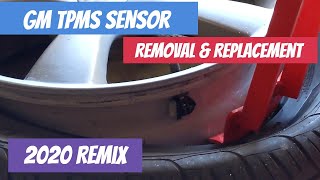
- If the sensor transmits data but the car won't learn it, attempt a TPMS relearn procedure. For many GM vehicles, this involves putting the car in learn mode via the DIC and using a TPMS tool to activate each sensor in sequence (LF, RF, RR, LR). 🎬 See this walkthrough of the GM TPMS relearn procedure
- If the relearn procedure fails for multiple sensors or if key fob issues are confirmed, inspect the Remote Control Door Lock Receiver (RCDLR). It is typically located on the rear package shelf (1st gen) or behind the trim on the rear passenger side C-pillar (2nd gen).
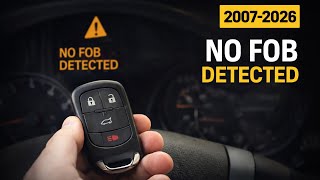
- If a no-start condition occurs with a "No Fob Detected" message, try placing the key fob in the dedicated transmitter pocket, which is located inside the center console storage area, often under a removable cupholder insert. This may allow the car to start and be driven to a repair shop. 🎬 Watch: How to fix a 'No Fob Detected' no-start condition
- If the RCDLR is suspected, professional diagnosis is required. Replacement involves installing the new module and programming it to the vehicle's BCM and existing key fobs with a dealership scan tool like a Tech 2 or GDS2.
Parts You'll Likely Need
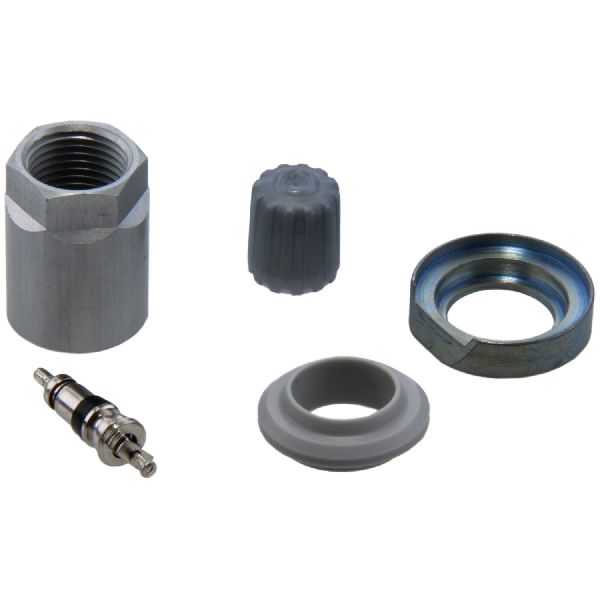
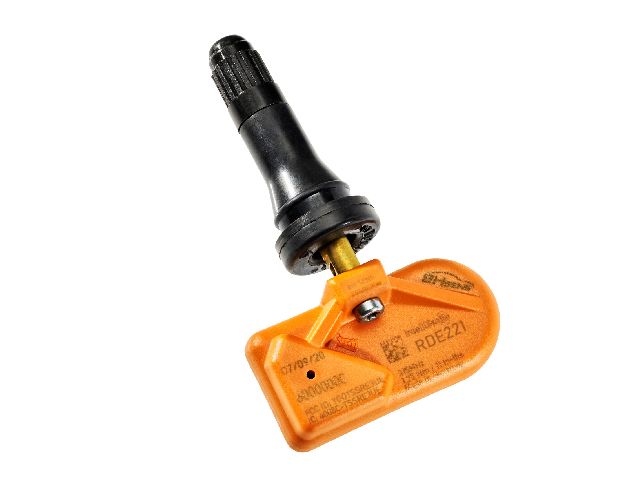
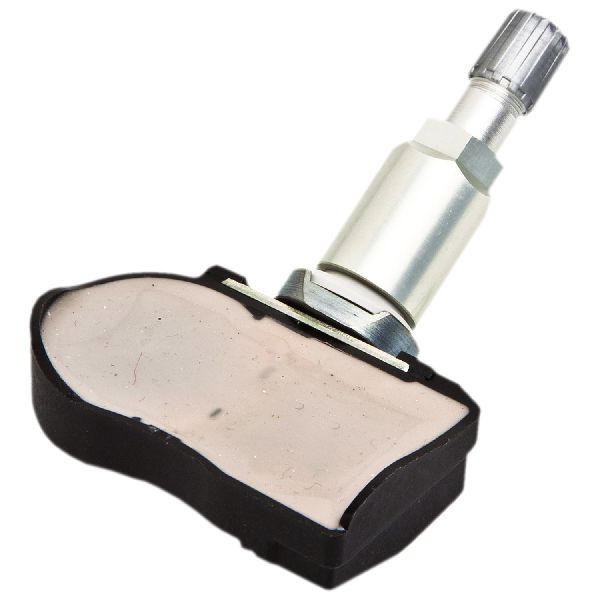
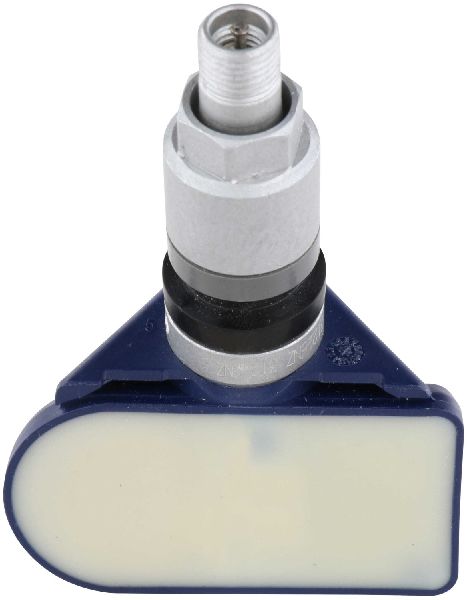
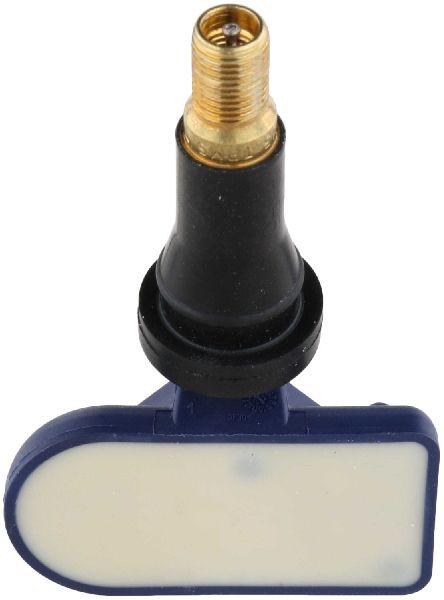
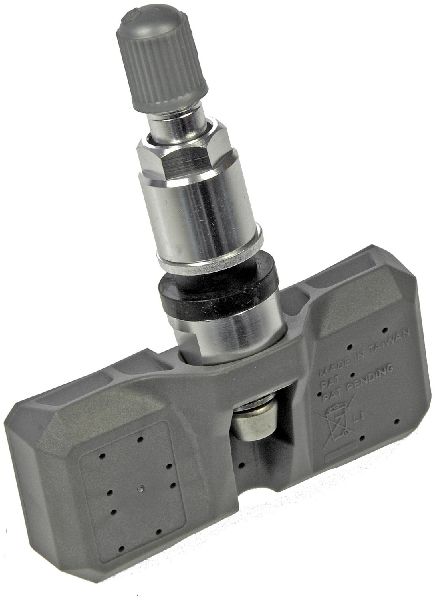
- Tire Pressure Monitoring System (TPMS) Sensor
(OEM #13598772 (supersedes 13586335, 25920615))— This is the most common failure point. The internal battery dies after 5-10 years, causing the sensor to stop transmitting.
Trusted brands: ACDelco, Schrader
OEM price range: $40-$75
Aftermarket price range: $25-$50 - Remote Control Door Lock Receiver (RCDLR)
(OEM #13503205 or 20803735 (verify by VIN))— This module receives the TPMS and key fob signals. It can fail and cause one or more TPMS codes, and is often implicated when key fob or vehicle starting issues are also present.
Trusted brands: ACDelco, General Motors
OEM price range: $70-$180
Aftermarket price range: $50-$100
Related Codes That Often Appear With This One
- C0750 — This code is for the Left Front TPMS sensor. If both appear, it could indicate two failed sensors or, more likely, a problem with the RCDLR that receives the signals.
- C0760 — This code is for the Left Rear TPMS sensor. Seeing multiple TPMS codes together points towards a systemic issue like a failing RCDLR.
- C0765 — This code is for the Right Rear TPMS sensor. A full set of TPMS codes (C0750, C0755, C0760, C0765) strongly suggests an issue with the receiver module, not four simultaneously failed sensors.
- B3055 — This is a key-related immobilizer code. Its appearance with C0755 is a major clue that the fault may be in the RCDLR, which handles both TPMS and security functions, and can cause a no-start condition.
Technical Service Bulletins (TSBs) & Recalls
- PIC5650M: Notes that a no-crank, no-start, or stall condition with the security light on may be accompanied by DTCs B3055, B3060, B3935, C0750, C0755, C0760, C0765, and/or C0775.
- PIC5604C: Addresses poor remote transmitter range and/or TPMS indicator on (with codes C0750, C0755, C0760, C0765). Recommends replacing the RCDLR module if remote range is confirmed to be poor.
Platform-Specific Known Issues
- A documented issue per TSB PIC5650M shows that TPMS codes, including C0755, can be associated with a no-crank, no-start, or stalling condition due to a fault in the modules that handle both TPMS and vehicle security.
- TSB PIC5604C specifically addresses complaints of poor remote transmitter range and TPMS indicators being on, advising replacement of the RCDLR module if range is poor.
Hidden / Shadow Codes Worth Checking
- C0755 with symptom byte 03: Indicates 'Right Front Tire Pressure Sensor Low Voltage'. This points directly to a sensor that is not transmitting a strong enough signal, often due to a dying battery. (see via A professional scan tool (like a GM Tech 2 or GDS2) that can read Body Control Module (BCM) data with symptom codes.)
- C0755 with symptom byte 29: Indicates 'Right Front Tire Pressure Sensor Too Few Pulses'. This is often seen when multiple TPMS codes are set simultaneously and is a strong indicator of a faulty RCDLR module rather than individual sensor failures. (see via A professional scan tool (like a GM Tech 2 or GDS2) that can read Body Control Module (BCM) data with symptom codes.)
Scan Tool Commands That Help
- GM Tech 2 / GDS2: Module Setup > RCDLR Replacement — This function is required after physically replacing the Remote Control Door Lock Receiver (RCDLR). It programs the new module to the vehicle's BCM and security system.
- GM Tech 2 / GDS2: Special Functions > TPM Sensor Learn — Used to force the vehicle into the TPMS relearn mode. This is an alternative to using the DIC or key fob method and is necessary if those methods fail. It guides the technician to activate each sensor in the correct sequence.
- GM Tech 2 / GDS2: Data Display > BCM > TPMS Data — Allows a technician to view live data from the TPMS system, including individual sensor IDs, pressure, temperature, and crucially, the sensor battery status (OK/Low). This can confirm a dead sensor battery without needing a separate TPMS tool.
Wiring & Ground Locations
- RCDLR Module — For 1st Gen (2007-2009), it is located on the right side of the rear package shelf. For 2nd Gen (2010-2014), it is on the left side of the rear window shelf, often behind the C-pillar trim.. This is the central receiving unit for all TPMS signals. Physical access is required for replacement, and checking its connections (power, ground, antenna) is a key diagnostic step if multiple sensors are not reporting.
- RCDLR Connector X1 — This is the main electrical connector at the RCDLR module.. Probing specific pins on this connector is necessary for advanced diagnostics. For example, checking for battery voltage on the OG (Orange) wire and verifying a good ground on the BK (Black) wire confirms the module is receiving power. The D-GN (Dark Green) wire is for the GMLAN Low Speed Serial Data bus.
Real Owner Repair Stories
- Reddit r/Cartalk user (2011 Buick LaCrosse) — Service Tire Monitor System message appeared after swapping from winter tires (on their own wheels) to all-season tires (on a separate set of wheels). All four TPMS codes were present: C0750, C0755, C0760, and C0765. No tire pressures were displayed on the DIC.
❌ Tried (didn't work) Initially, the user was unsure of the cause.
✅ What actually fixed it The issue was resolved by performing a TPMS relearn procedure. Because the vehicle has positional sensors, it must be taught the new locations of the sensor IDs after every tire rotation or wheel swap.
OEM Part Supersession History
13586335, 25920615, 13581558, 20922900→13598772— Consolidation of part numbers and potential minor revisions for reliability.
Heads up: While many part numbers have been used, 13598772 is the most current direct replacement for the 315 MHz snap-in rubber stem sensor used on this vehicle range. Aftermarket universal sensors will require programming before installation, whereas the OEM ACDelco part is pre-programmed but requires a vehicle relearn procedure.
Model Year Variations Within This Range
- 2007-2009 (First Generation): The RCDLR is located on the right side of the rear package shelf. The relearn procedure is typically initiated by pressing the Lock and Unlock buttons on the key fob simultaneously.
- 2010-2014 (Second Generation): The RCDLR is located on the left side of the rear window shelf. The relearn procedure is typically initiated through the Driver Information Center (DIC) menu. Also, key fob programming for this generation requires special equipment and cannot be done by the owner.
Helpful Videos

We Have This Part in Stock

The information in this article is provided for general reference and educational purposes only. Vehicle specifications, procedures, and part compatibility can vary by production date, trim level, and region. Always consult your vehicle's factory service manual and verify part numbers before purchasing or performing repairs. Safety-critical components such as airbags, seat belts, and braking systems should be installed by a qualified professional.
- Buick LACROSSE:
- 🎬 Helpful Videos
- 🛍️ Shop This Part
- What's Unique About the 2007-2014 Buick LACROSSE
- Diagnostic Flowchart
- Symptoms You May Notice
- Most Likely Causes
- Rare But Worth Checking
- Diagnosis Steps
- Parts You'll Likely Need
- Related Codes That Often Appear With This One
- Technical Service Bulletins (TSBs) & Recalls
- Platform-Specific Known Issues
- Hidden / Shadow Codes Worth Checking
- Scan Tool Commands That Help
- Wiring & Ground Locations
- Real Owner Repair Stories
- OEM Part Supersession History
- Model Year Variations Within This Range
- 🎟️ Get 5% Off