

C0755 on 2008-2015 Buick Enclave: Left Rear TPMS Fault Causes and Fixes
On a 2008-2015 Buick Enclave, code C0755 almost always means the battery in the left rear Tire Pressure Monitoring System (TPMS) sensor has died. Given the vehicle's age, this is the most likely failure. Replacing the sensor costs about $30-$60 for an aftermarket part and requires a tire shop to install. If key fobs also stop working, the issue is likely the Remote Control Door Lock Receiver (RCDLR) module, which requires professional programming.
- C0755 points to a problem with the left rear TPMS sensor.
- The most likely cause on a 2008-2015 Enclave is a dead sensor battery due to age.
- Replacing the sensor requires dismounting the tire, so it's a job for a tire shop or an advanced DIYer with the right equipment.
- It's cost-effective to replace all four TPMS sensors at once, especially if they are original to the vehicle.
- If key fob problems or starting issues occur with the TPMS light, the RCDLR module could be the culprit, which requires professional diagnosis and programming.
What's Unique About the 2008-2015 Buick ENCLAVE
For the first-generation Buick Enclave and its GM Lambda platform siblings (GMC Acadia, Chevy Traverse, Saturn Outlook), the Tire Pressure Monitoring System (TPMS) and the keyless entry system are both managed by the Remote Control Door Lock Receiver (RCDLR). A unique issue, highlighted in GM Technical Service Bulletin PIC5650M, shows that a fault within this module can sometimes cause a mix of seemingly unrelated trouble codes, including TPMS codes like C0755 and security-related codes that may lead to a no-start or stalling condition. While a bad sensor is the most common cause for C0755, a failure of the RCDLR is a notable, though less frequent, possibility.
Diagnostic Flowchart
Tap your situation to follow the diagnostic path that matches what you're seeing on this vehicle.
Symptoms You May Notice
- Flashing, then solid TPMS warning light on the dashboard.
- "Service Tire Monitor System" message on the Driver Information Center (DIC).
- The DIC shows dashes (---) instead of a pressure reading for the left rear tire.
- In rare cases involving a faulty RCDLR, may be accompanied by key fob issues (poor range, inoperative) or a no-start condition with the security light on.
- "No Fob Detected" message on the DIC, even with the key fob inside the vehicle.
- Replacing the Body Control Module (BCM) when the fault is with the RCDLR or the sensor itself.
- Assuming the tire is low on air when the flashing TPMS light indicates a system fault, not low pressure.
- Replacing a single TPMS sensor when the RCDLR is faulty, especially if key fob issues are also present.
Most Likely Causes
- Dead Battery in TPMS Sensor 🔴 High Probability TPMS sensor batteries have a finite lifespan, typically 5-10 years. Vehicles in the 2008-2015 range are at or beyond the age where original sensor batteries are expected to fail.
How to confirm: Use a TPMS diagnostic tool to attempt to activate the sensor. If the tool cannot get a reading or shows a 'low battery' status, the sensor has failed. A professional scan tool can also read the battery status data from the RCDLR.
Typical fix: Replace the left rear TPMS sensor. It is often recommended to replace all four sensors at the same time, as their batteries will likely fail around the same time. The new sensor must be programmed to the vehicle using a TPMS relearn procedure.
Est. part cost: $30-$60 per sensor - Faulty TPMS Sensor 🟡 Medium Probability Sensors can be damaged during tire service, from impacts like hitting a pothole, or fail electronically over time.
How to confirm: Even if a TPMS tool can activate the sensor, it may be sending corrupt data. If a new sensor can be learned to the vehicle successfully and the old one could not, the old sensor was faulty. The failure to complete the relearn procedure for that specific wheel points to a bad sensor.
Typical fix: Replace the failed TPMS sensor. The new sensor must be programmed to the vehicle using a TPMS relearn procedure.
Est. part cost: $30-$60 per sensor - Faulty Remote Control Door Lock Receiver (RCDLR) ⚪ Low Probability As noted in TSB PIC5650M, the RCDLR can fail and cause multiple TPMS and security-related codes simultaneously. The module is located in the rear of the vehicle, under the headliner trim, and can fail internally.
How to confirm: This is typically diagnosed when multiple TPMS sensors and/or key fobs stop working at the same time. A professional scan tool is needed to check for communication with the RCDLR and confirm an internal fault. If replacing the RCDLR, it must be 'married' to the car with GM software.
Typical fix: Replace the RCDLR module. This part must be programmed to the vehicle by a dealer or a qualified shop with GM-specific software (e.g., Tech 2, MDI with GDS2/SPS).
Est. part cost: $70-$180
Rare But Worth Checking
- Radio Frequency Interference (RFI):
- Disconnected RCDLR Antenna:
Diagnosis Steps
- Verify the code with an OBD-II scanner capable of reading Chassis (C) codes.
- Check for other related codes (other TPMS codes, B-codes for security/key fobs) to assess the likelihood of an RCDLR issue.
- Use a TPMS diagnostic tool to attempt to activate and read the left rear sensor. This is the quickest way to determine if the sensor is transmitting a signal and has battery life.
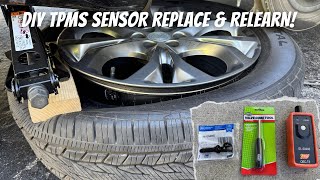
- If the tool cannot read the sensor, the sensor has failed (most likely a dead battery). Proceed with replacement. 🎬 See how to replace a sensor without a tire machine
- If the tool *can* read the sensor, but the code remains, attempt the TPMS relearn procedure. This can be done with a TPMS tool or, on some models, by initiating the learn mode via the DIC and then increasing/decreasing the tire pressure at each wheel in sequence (LF, RF, RR, LR) until the horn chirps for each. 🎬 Watch: How to perform the TPMS relearn without special tools
- If the relearn procedure fails for the left rear position, this confirms the sensor is faulty or incompatible.
- If the relearn procedure works but the code returns, or if multiple TPMS codes and key fob issues are present, suspect a faulty Remote Control Door Lock Receiver (RCDLR) or RFI.
- To test for RFI, remove all aftermarket chargers and electronics and re-test.
- Diagnosing a faulty RCDLR requires a professional scan tool to check for communication and internal module faults. Replacement requires programming by a professional.
Parts You'll Likely Need
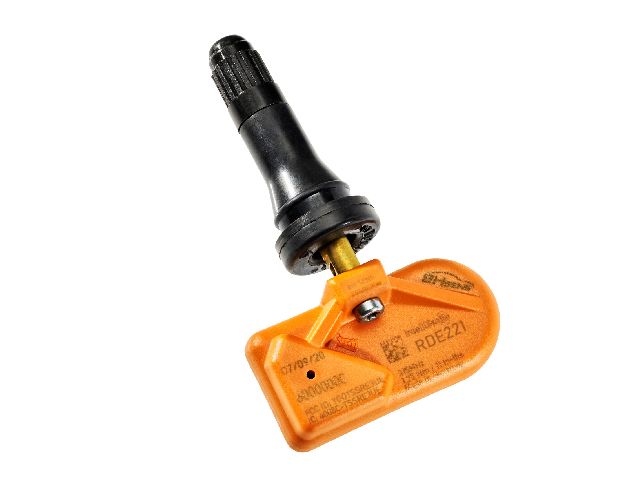
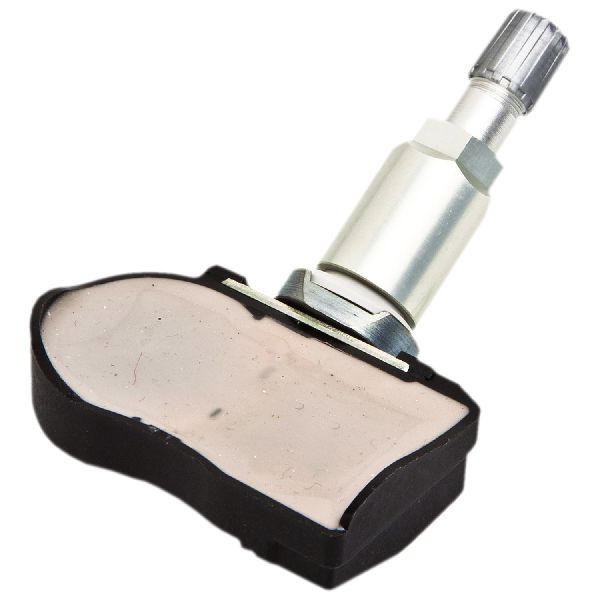
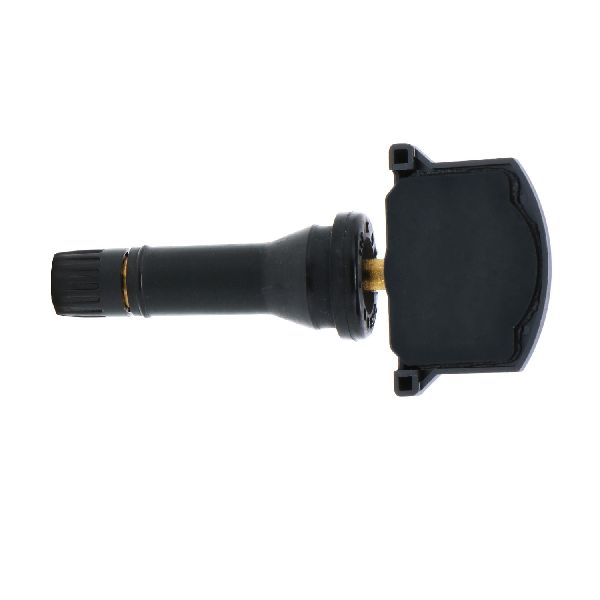
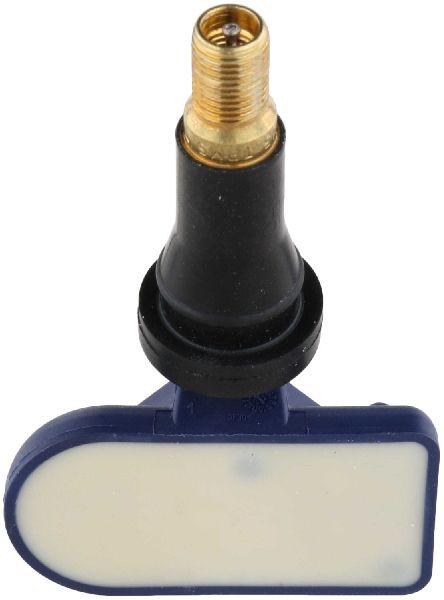
- Tire Pressure Monitoring System (TPMS) Sensor
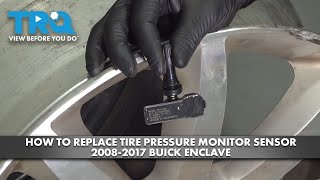
(OEM #13598772 (This part may be superseded by other numbers like 13586335, 20923680, or 13516165). Verify frequency is 315 MHz.)— This is the most common failure point. The internal, non-replaceable battery has a finite lifespan, and for this vehicle range, it is likely at its end-of-life. 🎬 Watch: Step-by-step TPMS sensor installation for the Buick Enclave
Trusted brands: ACDelco (OEM), Schrader (Often the OEM manufacturer), VDO/Continental, Denso, Huf
OEM price range: $50-$80
Aftermarket price range: $30-$60
Related Codes That Often Appear With This One
- C0750 — Indicates a fault with the Left Front TPMS sensor. It's common for multiple sensors to fail around the same time due to age.
- C0760 — Indicates a fault with the Right Front TPMS sensor. Seeing this with C0755 can point to either multiple aged sensors or a central receiver issue.
- C0765 — Indicates a fault with the Right Rear TPMS sensor. Seeing multiple TPMS codes increases the likelihood of a systemic issue like a failing RCDLR or RFI.
- B3055 — Relates to the vehicle immobilizer or key recognition system. Its presence with C0755 points towards a potential RCDLR failure, as cited in TSB PIC5650M.
Technical Service Bulletins (TSBs) & Recalls
- PIC5650M (and subsequent revisions like C, K): Addresses a no crank, no start, or start/stall concern with the security light on, which may be accompanied by DTCs B3055, C0750, C0755, C0760, C0765. It strongly points to checking for Radio Frequency Interference from aftermarket devices before replacing parts.
- 16-NA-061: Addresses 'Service Tire Monitor System' messages and TPMS codes caused by a poor or disconnected antenna connection for the RCDLR.
Platform-Specific Known Issues
- The manufacturer issued Technical Service Bulletin #PIC5650M for a potential no-crank or start-and-stall condition that can be accompanied by code C0755, among others, pointing to a complex issue with the Remote Control Door Lock Receiver (RCDLR) or Radio Frequency Interference.
- TSB 16-NA-061 also notes that TPMS codes can be set due to a simple disconnected antenna for the RCDLR module, which is a simpler fix to check before replacing the module itself.
Mechanic-Grade Diagnostic Values
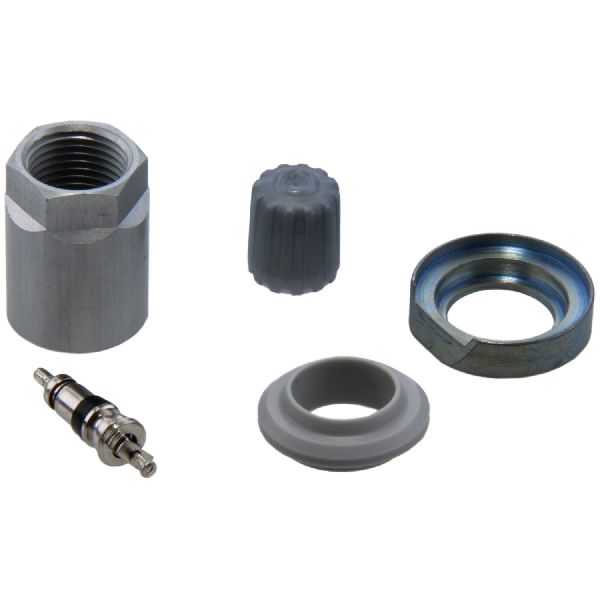
- TPMS Sensor Valve Stem Nut Torque — expected: Varies by sensor; Schrader programmable sensors often specify 11.5 in-lbs (1.3 Nm).. Failure: Incorrect torque can lead to air leaks or damage to the sensor or wheel.
- TPMS Sensor Valve Core Torque — expected: 3.5 in-lbs (0.4 Nm). Failure: An improperly torqued valve core can cause a slow air leak.
Scan Tool Commands That Help
- GDS2 / Tech 2: Module Setup / RCDLR Setup — This function must be performed after installing a new RCDLR to 'marry' the module to the vehicle's BCM and other systems. Failure to do so will result in non-functional key fobs and persistent TPMS codes even after programming.
- GDS2 / Tech 2: Theft Deterrent System Learn — Required after RCDLR replacement as part of the setup process. The RCDLR is part of the vehicle's immobilizer system. This can be a 10 or 30-minute procedure.
- GDS2 / Tech 2 or TPMS Tool: TPMS Learn Mode — Used to program the ID of new or repositioned TPMS sensors to the RCDLR. This is required after replacing a sensor or rotating tires.
Wiring & Ground Locations
- RCDLR (Remote Control Door Lock Receiver) — Mounted vertically behind the uppermost rear trim panel, near the top of the liftgate opening. It is not directly under the headliner but behind the plastic trim.. This module is the central receiver for all TPMS sensor signals and key fob commands. Its location is critical for inspection of its antenna connection and for replacement.
- G303 — Near the base of the left 'B' pillar, behind the trim panel.. This is a major body ground point. While not directly cited for the RCDLR in all diagrams, poor grounds in this area can cause a wide range of difficult-to-diagnose electronic issues on the low-speed GMLAN data bus, which the RCDLR uses.
- G401 — Near the base of the left 'D' pillar (rearmost pillar).. This ground is in the same vicinity as the RCDLR and its antenna. A corroded or loose G401 is a potential cause for poor RCDLR performance, leading to intermittent TPMS and key fob issues.
- RCDLR Antenna — The antenna is a coaxial cable that runs from the RCDLR module to an antenna amplifier and then to the rear liftgate glass.. A disconnected coaxial cable at any of these points will cause a loss of signal from the TPMS sensors, mimicking a failed sensor or a faulty RCDLR module. This is a key inspection point before replacing expensive modules.
Real Owner Repair Stories
- Reddit user m500sesp (2014 Buick Enclave) — Key fobs would not unlock doors after RCDLR replacement. TPMS issues were also present.
❌ Tried (didn't work) Replacing the RCDLR module., Using an Autel MaxiSys scan tool to program the new key fobs. The tool indicated the programming was successful, but the fobs remained non-functional.
✅ What actually fixed it The user discovered that a GM-specific software (like GDS2 or Tech2Win with an MDI/J2534 interface) is required to perform a 'module setup' or 'marry' the new RCDLR to the car's main computer. An aftermarket scan tool could not complete this critical step.
OEM Part Supersession History
Multiple older numbers including 13586335, 20923680, 25920615, 15922396→13598772 (common replacement)— Part consolidation and design updates by GM.
Heads up: While many numbers are interchangeable, it is critical to ensure the replacement sensor operates at 315 MHz for North American models. Using a 433 MHz sensor (common in other markets) will result in it failing to program to the vehicle.
Model Year Variations Within This Range
- 2008-2012 (approx.): These earlier models often allow for a TPMS relearn procedure without a special tool. The learn mode can be initiated through the DIC, and then each tire's pressure is decreased for several seconds in sequence (LF, RF, RR, LR) until the horn chirps, confirming each sensor's position.
- 2013-2015 (approx.): Following the 2013 model year refresh, many GM vehicles, including the Enclave, began to require a TPMS activation tool (like an EL-50448 or equivalent) to complete the relearn procedure. The air-pressure-change method was phased out and will not work on these later models.
Helpful Videos
We Have This Part in Stock


The information in this article is provided for general reference and educational purposes only. Vehicle specifications, procedures, and part compatibility can vary by production date, trim level, and region. Always consult your vehicle's factory service manual and verify part numbers before purchasing or performing repairs. Safety-critical components such as airbags, seat belts, and braking systems should be installed by a qualified professional.
- Buick ENCLAVE:
- 🎬 Helpful Videos
- 🛍️ Shop This Part
- What's Unique About the 2008-2015 Buick ENCLAVE
- Diagnostic Flowchart
- Symptoms You May Notice
- Most Likely Causes
- Rare But Worth Checking
- Diagnosis Steps
- Parts You'll Likely Need
- Related Codes That Often Appear With This One
- Technical Service Bulletins (TSBs) & Recalls
- Platform-Specific Known Issues
- Mechanic-Grade Diagnostic Values
- Scan Tool Commands That Help
- Wiring & Ground Locations
- Real Owner Repair Stories
- OEM Part Supersession History
- Model Year Variations Within This Range
- 🎟️ Get 5% Off