

C0750 on 2015-2022 GMC Sierra 1500: TPMS Fault, Causes, and Fixes
Code C0750 on a GMC Sierra means the left front tire pressure (TPMS) sensor is failing. This is usually due to a dead battery inside the sensor, requiring replacement. In some cases, it can be linked to a faulty Remote Control Door Lock Receiver (RCDLR) or radio interference from aftermarket accessories causing a no-start condition.
- C0750 points to a fault with the left front TPMS sensor.
- The most likely cause is a dead battery in the sensor, which has a 7-10 year lifespan.
- Before replacing the sensor, unplug all aftermarket phone chargers and accessories to rule out Radio Frequency Interference, which can cause this code and even a no-start condition.
- If your key fob also stopped working at the same time, the problem may be the central receiver module (RCDLR), not the sensor in the tire.
- After replacing a sensor, a TPMS relearn procedure is required.
What's Unique About the 2015-2022 Gmc SIERRA 1500

On this generation of GMC Sierra (K2XX and T1XX platforms), the TPMS sensors communicate with the same module that receives signals from your key fob—the Remote Control Door Lock Receiver (RCDLR). Because of this shared component, a simple TPMS sensor code like C0750 can sometimes be a symptom of a much stranger problem. Technical Service Bulletins (TSBs) like PIC5650M document that radio frequency interference (RFI) or a failing RCDLR can cause not only TPMS codes but also intermittent no-start conditions, security light illumination, and key fob failures. [⭐ MANUFACTURER TSB #PIC5650M]
Diagnostic Flowchart

Tap your situation to follow the diagnostic path that matches what you're seeing on this vehicle.
Generation note: This range covers the end of the third generation (K2XX, 2015-2018) and the start of the fourth generation (T1XX, 2019-2022). A key difference is the TPMS sensor frequency and part number. 2015-2018 models use 315 MHz sensors (ACDelco P/N: 13598771 or 13581558). 2019 and newer models switched to 433 MHz sensors (ACDelco P/N: 13528563). Always verify the correct frequency and part number for your specific model year before purchasing.
Symptoms You May Notice
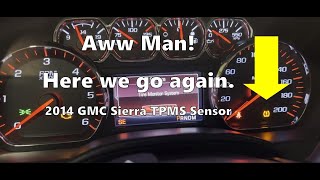
- "Service Tire Monitor System" message on the dashboard.
- TPMS warning light is illuminated (may flash for one minute then stay solid).
- Pressure reading for the left front tire shows dashes (--) or is incorrect.
- Intermittent no-crank or no-start condition (rare, but possible). [⭐ MANUFACTURER TSB #PIC5650M]
- Security/theft warning light illuminated on the dash (rare, but possible). [⭐ MANUFACTURER TSB #PIC5650M]
- Key fob not working or "No Remote Detected" message (if RCDLR is the cause).
- Inability to complete the TPMS relearn procedure for the left front wheel.
- Replacing the vehicle's main battery or starter when a no-start condition is present, without first checking for chassis codes like C0750 and considering the possibility of RFI or a failed RCDLR.
- Replacing only the C0750-flagged TPMS sensor when all four TPMS codes are present and key fobs are inoperative, which strongly indicates a central RCDLR failure.
Most Likely Causes

- Dead TPMS Sensor Battery 🔴 High Probability TPMS sensors contain a non-replaceable battery with a finite lifespan, typically 7-10 years. Vehicles from the 2015-2018 model years are now at an age where battery failure is very common.
How to confirm: Use a TPMS diagnostic tool to attempt to read the sensor. If the tool cannot get a signal, or if it shows a low battery status (a common feature on advanced tools), the sensor has failed. Another confirmation is if the manual relearn procedure fails specifically at the left front tire.
Typical fix: Replace the left front TPMS sensor and perform the TPMS relearn procedure. This is typically done at a tire shop during a tire mounting/balancing service. 🎬 Watch: How to replace and reprogram your TPMS sensors.
Est. part cost: $25-$75 - Radio Frequency Interference (RFI) 🟡 Medium Probability As noted in GM TSB PIC5650M, these trucks are sensitive to RFI from aftermarket devices like phone chargers (especially multi-port or fast chargers), dash cams, LED lighting, and even toll passes. [⭐ MANUFACTURER TSB #PIC5650M, 6] This interference can 'jam' the RCDLR, preventing it from receiving signals from both the TPMS sensors and the key fob.
How to confirm: Symptoms are often intermittent and hard to duplicate. If you have a no-start condition along with the C0750 code, unplug all aftermarket 12V and USB devices. If the problem disappears, one of those devices was the cause. [⭐ MANUFACTURER TSB #PIC5650M]
Typical fix: Identify and remove the source of the radio interference. No parts replacement is necessary. Replace low-quality aftermarket chargers with higher-quality, certified units.
Est. part cost: $0 - Failed Remote Control Door Lock Receiver (RCDLR) ⚪ Low Probability GM TSB 16-NA-396 documents that the RCDLR module itself can fail internally on many GM platforms, causing a loss of communication with all TPMS sensors and key fobs simultaneously. This is a known failure point.
How to confirm: Check for multiple TPMS codes (C0750, C0755, C0760, C0765) with a ":29 – Too Few Pulses" descriptor, and confirm that the key fob functions (lock/unlock/remote start) are also inoperative. If both systems fail at the same time, the RCDLR is the likely culprit. A temporary fix can sometimes be achieved by disconnecting and reconnecting the vehicle's battery.
Typical fix: Replace the RCDLR module. On the Sierra, this module is typically located behind the rear seat back on the driver's side. This part requires programming by a dealer or a well-equipped independent shop with the proper GM software (SPS).
Est. part cost: $40-$130
Rare But Worth Checking
- Damaged Sensor: The sensor can be physically damaged during tire installation or by a severe pothole impact. This is less common than battery failure but is a possibility.
- Incorrect Sensor Installed: If the tire was recently replaced, the shop may have installed a sensor with the wrong frequency (e.g., a 315 MHz sensor on a 2019+ truck that requires 433 MHz). The system will not be able to communicate with it, setting the code.
Diagnosis Steps
- Check for other codes. Scan all vehicle modules. If you see other TPMS codes (C0755, C0760, C0765) or security/key fob codes (B3055, etc.), it points towards a central issue (RCDLR or RFI). [10, ⭐ MANUFACTURER TSB #PIC5650M]
- Check for RFI. If symptoms are intermittent or include a no-start, unplug ALL aftermarket devices from USB and 12V outlets (chargers, dash cams, LED lights). Remove any non-OEM keys or access cards from the key ring. See if the problem resolves. [⭐ MANUFACTURER TSB #PIC5650M, 6]
- Test the Sensor. Use a TPMS diagnostic tool to try and activate the left front sensor. If it doesn't respond or shows a low battery, the sensor is bad and needs replacement.
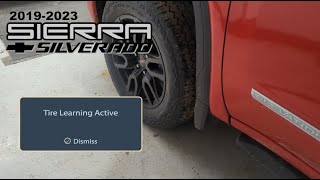
- Attempt a Relearn. If you don't have a TPMS tool, you can try the manual relearn procedure outlined in the owner's manual. If the relearn process fails to get a response from the left front wheel (no horn chirp), the sensor is confirmed bad. 🎬 Watch: Relearn the TPMS sensors on 2019 and newer models.
- Evaluate the RCDLR. If all four TPMS sensors are not responding AND your key fobs do not work, the RCDLR module is the most likely cause. The module is located behind the driver's side rear seat back.
- Replace Parts. Based on the diagnosis, replace the faulty TPMS sensor or the RCDLR module. Ensure the replacement sensor is the correct frequency for your model year (315 MHz for 2015-2018, 433 MHz for 2019+).
- Program/Relearn. After replacing a sensor, perform the TPMS relearn procedure. If the RCDLR was replaced, it must be programmed by a professional using GM's Service Programming System (SPS).
Parts You'll Likely Need
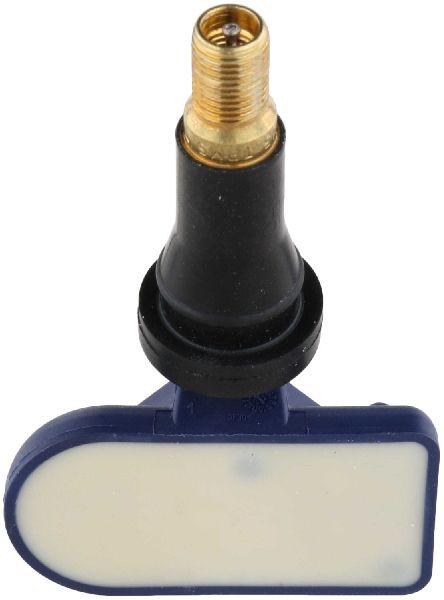
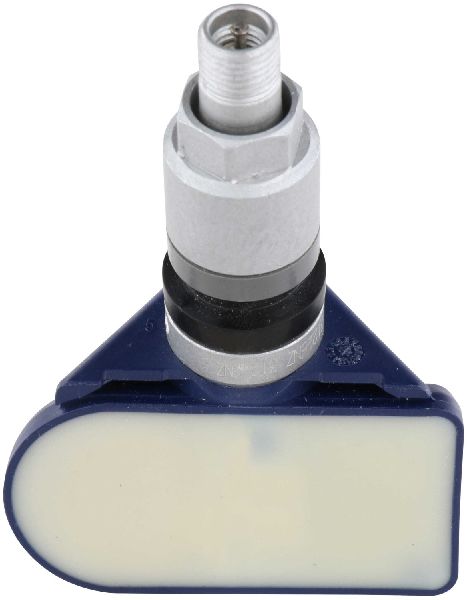
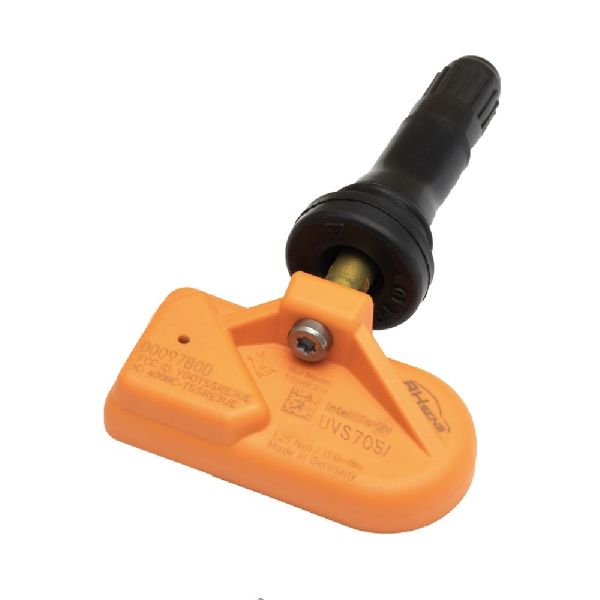
- Tire Pressure Monitoring System (TPMS) Sensor
(OEM #ACDelco 13598771 (315 MHz, 2015-2018) or ACDelco 13528563 (433 MHz, 2019-2022))— This is the most common cause of a single-wheel TPMS fault code, usually due to the internal battery dying after several years.
Trusted brands: ACDelco, Schrader, Huf, VDO
OEM price range: $50-$90
Aftermarket price range: $25-$50 - Remote Control Door Lock Receiver (RCDLR)
(OEM #Varies by year/options, e.g., 23445319, 13595511)— This module can fail internally, causing simultaneous failure of the TPMS and keyless entry systems. It's a less common but documented issue for this code.
Trusted brands: ACDelco
OEM price range: $40-$130
Related Codes That Often Appear With This One
- C0755, C0760, C0765 — These are the codes for the other three TPMS sensors (RF, LR, RR). If they appear together, it strongly points to a central issue like a failed RCDLR or widespread RFI, rather than four sensors all failing at once.
- B3055, B3060, B3935 — These are security and key-related codes. Their presence with C0750 is a key indicator of the intermittent no-start condition described in TSB PIC5650, often caused by Radio Frequency Interference. [⭐ MANUFACTURER TSB #PIC5650M]
Technical Service Bulletins (TSBs) & Recalls

- PIC5650M: Describes an intermittent no-crank/no-start condition with security light and TPMS codes (including C0750) caused by Radio Frequency Interference from devices like phone chargers and LED lights. [⭐ MANUFACTURER TSB #PIC5650M]
- 16-NA-396: Details an identical issue on other GM vehicles where TPMS codes (C0750, C0755, C0760, C0765) with a ':29' (Too Few Pulses) descriptor are caused by an internal RCDLR failure.
Platform-Specific Known Issues
- A known issue, documented in TSB PIC5650M, involves Radio Frequency Interference from aftermarket accessories causing intermittent no-start conditions along with TPMS and security codes. [⭐ MANUFACTURER TSB #PIC5650M]
- A separate known issue, documented in TSB 16-NA-396 for similar GM platforms, points to internal failure of the RCDLR module as a cause for simultaneous TPMS and key fob system failure.
Mechanic-Grade Diagnostic Values
- TPMS Sensor Battery Status — expected: OK / Good. Failure: A 'Low' or 'Replace' status reading from a dedicated TPMS tool.
- Scan Tool Parameter: Tire Pressure Sensor Rolling Count — expected: Above 50%. Failure: A value below 50% indicates a poor or intermittent signal from the sensor.
- Condition for DTC Set — expected: Vehicle speed must be greater than 40 km/h (25 mph) for the RCDLR to expect a 'rolling mode' signal.. Failure: If the sensor does not transmit for 18 minutes while driving above this speed, the code may set.
Hidden / Shadow Codes Worth Checking
- C0750 :29: Too Few Pulses. This is the most critical symptom byte. It means the RCDLR is not receiving the expected number of data packets from the sensor. It strongly points to an internal RCDLR failure or significant Radio Frequency Interference. (see via GM GDS2 or a high-end professional scan tool capable of reading manufacturer-specific symptom codes.)
- C0750 :03: Low Voltage. This indicates the RCDLR has specifically detected that the voltage from the TPMS sensor's internal battery is below the minimum threshold, directly pointing to a dying sensor battery. (see via GM GDS2 or a high-end professional scan tool.)
- C0750 :39: Internal Malfunction. This indicates the sensor itself has reported an internal error, separate from its battery voltage. This confirms the sensor needs replacement. (see via GM GDS2 or a high-end professional scan tool.)
- C0750 :08: Signal Invalid. The RCDLR is receiving a signal, but the data is corrupt or doesn't make sense. This can be caused by an incorrect sensor type or interference. (see via GM GDS2 or a high-end professional scan tool.)
Scan Tool Commands That Help
- GM GDS2 / High-End Scan Tool: TPMS Learn Mode — This function must be activated after replacing a TPMS sensor or rotating tires to make the RCDLR learn the new sensor IDs and their positions. It can also be initiated without a scan tool via the DIC or key fob.
- GM Service Programming System (SPS): Remote Control Door Lock Receiver Replacement — This programming function is mandatory after installing a new RCDLR module. It configures the new module to the vehicle's specific options and security information. This is not a DIY procedure.
- TPMS Activation Tool (e.g., EL-50448): Sensor Activation — During the TPMS Learn Mode, this handheld tool is aimed at each tire's sidewall to trigger the sensor, forcing it to transmit its ID to the RCDLR. This is faster and more reliable than the alternative method of deflating the tire.
Wiring & Ground Locations
- RCDLR Module — Located behind the rear seat back, typically on the driver's side for this vehicle generation.. This is the central receiver for all TPMS and key fob signals. All diagnostic paths for intermittent or multi-wheel TPMS faults lead to this module and its connections.
- RCDLR Connector — The main electrical connector at the RCDLR module.. Technicians must verify battery positive voltage, ground, and antenna connection at this connector before condemning the module. A loss of power or ground will cause a 'no communication' fault that mimics a failed module.
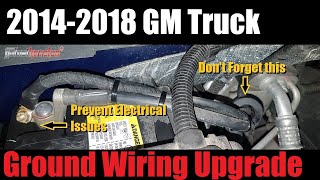
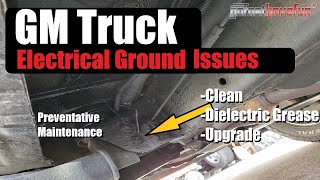
- K2XX (2015-2018) Chassis Grounds — Key locations include the negative battery cable's connection to the passenger side frame rail and a smaller ground wire to the engine block in the same area.. These grounds are known to corrode or loosen, causing a wide range of electrical issues including flickering lights, stalling, and no-start conditions that overlap with the symptoms of RFI or RCDLR failure. Cleaning these grounds is a critical diagnostic step.
- T1XX (2019-2022) Chassis Grounds G110 / G114 — These are specific ground points on the newer T1XX frame, and GM has issued engineering information (PIE0548) about potential looseness.. A loose connection at these points can cause unpredictable electrical faults. While not directly tied to C0750 in documentation, a bad ground can affect any module on the vehicle, including the RCDLR.
Real Owner Repair Stories
- Reddit user /u/peterelli in /r/gmcsierra (2017 GMC Sierra 1500 SLT, 181k miles) — Tire maintenance light on, right rear tire not reading. After a tire rotation, the same position (right rear) was still not reading.
❌ Tried (didn't work) Tire rotation, clearing codes.
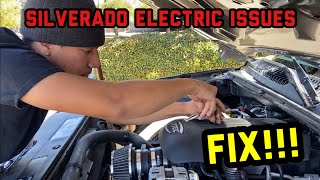
✅ What actually fixed it The user posted a detailed scan tool log showing multiple TPMS codes. C0750, C0755, and C0760 all had a symptom byte of ':03' (Low Voltage), while the problematic C0765 (Right Rear) had a symptom byte of ':29' (Too Few Pulses). This provides a real-world example of how different symptom bytes can appear simultaneously, pointing towards multiple aging sensor batteries and a communication failure on one wheel. The final fix was not posted, but the data strongly suggests replacing all four sensors is the correct repair. - YouTube video from channel 'Chevy-GMC Trucks & More' (2014-2018 Chevrolet Silverado (K2XX platform, same as Sierra)) — Flickering dash lights, truck shutting down at idle, voltage dropping below 14V, radio shutting down.
❌ Tried (didn't work) Initial diagnosis pointed towards alternator or battery issues.
✅ What actually fixed it The problem was a poor ground connection on the passenger side of the truck where the negative battery cable bolts to the frame and engine block. The contact points were corroded. Cleaning the ground connection points thoroughly resolved all the electrical issues. This is a critical fix for symptoms that could be misdiagnosed as a failing BCM or RCDLR.
When the Usual Fixes Don't Work
- In cases presenting with multiple TPMS codes, key fob issues, and no-start symptoms, the root cause is not always a failed RCDLR module or RFI. Technicians have documented instances where the actual cause was a poor chassis ground connection causing low voltage or voltage drops to multiple modules. Another documented case involved a complete lack of communication with the RCDLR, but the fix was not replacing the module; it was tracing the wiring to find that the power and ground supply *to* the module was missing, preventing it from turning on. This highlights the importance of testing power, ground, and antenna connections at the RCDLR before condemning the part.
OEM Part Supersession History
Various RCDLR PNs→Updated RCDLR PNs (e.g., 13583333 for other platforms)— GM has released updated RCDLR modules for other vehicles to specifically improve resistance to radio frequency interference that causes TPMS codes.
Heads up: While a part number for a different vehicle, this shows a pattern of GM improving these modules. Always use the part number specified for your vehicle's VIN, but be aware that a newer part may have internal improvements over the original.
Model Year Variations Within This Range

- 2015-2018 (K2XX Platform): Uses 315 MHz TPMS sensors. Prone to specific ground failures on the passenger side frame rail and engine block that can cause widespread electrical issues mimicking RCDLR failure.
- 2019-2022 (T1XX Platform): Switched to 433 MHz TPMS sensors. Has different known weak ground points, specifically G110 and G114, which are documented in GM Engineering Information PIE0548.
Helpful Videos
We Have This Part in Stock

The information in this article is provided for general reference and educational purposes only. Vehicle specifications, procedures, and part compatibility can vary by production date, trim level, and region. Always consult your vehicle's factory service manual and verify part numbers before purchasing or performing repairs. Safety-critical components such as airbags, seat belts, and braking systems should be installed by a qualified professional.
- Gmc SIERRA 1500:
- 🎬 Helpful Videos
- 🛍️ Shop This Part
- What's Unique About the 2015-2022 Gmc SIERRA 1500
- Diagnostic Flowchart
- Symptoms You May Notice
- Most Likely Causes
- Rare But Worth Checking
- Diagnosis Steps
- Parts You'll Likely Need
- Related Codes That Often Appear With This One
- Technical Service Bulletins (TSBs) & Recalls
- Platform-Specific Known Issues
- Mechanic-Grade Diagnostic Values
- Hidden / Shadow Codes Worth Checking
- Scan Tool Commands That Help
- Wiring & Ground Locations
- Real Owner Repair Stories
- When the Usual Fixes Don't Work
- OEM Part Supersession History
- Model Year Variations Within This Range
- 🎟️ Get 5% Off