

C0750 on 2012-2019 Chevrolet Sonic: TPMS Fault, No Start, and Key Fob Fixes
On a 2012-2019 Chevy Sonic, code C0750 with a no-start and dead key fob almost always points to a failed Remote Control Door Lock Receiver (RCDLR), not the tire sensor. This is a well-documented issue in GM TSB 16-NA-396. If only the TPMS light is on and the fob works, the left front tire sensor battery is likely dead. Replacing the RCDLR requires professional programming and is not a DIY job.
- If your Sonic won't start and the key fob is dead, C0750 points to the Remote Control Door Lock Receiver (RCDLR), not the tire sensor.
- If the car runs fine but the TPMS light is on with code C0750, the left front tire sensor battery is the most likely cause.
- Before any repairs for a no-crank condition, make sure your switchblade key is fully locked in the straight position.
- Replacing the RCDLR is not a DIY-friendly repair; it requires professional programming to work with your car's security system.
- Do not waste money on a new starter or battery for this issue until the RCDLR and key system have been properly diagnosed.
What's Unique About the 2012-2019 Chevrolet SONIC
The Chevrolet Sonic, and its platform mates like the Chevy Trax and Buick Encore, use a single module—the Remote Control Door Lock Receiver (RCDLR)—to process signals from both the key fobs and the TPMS sensors. A common internal failure in this RCDLR module creates a unique and confusing set of symptoms: the TPMS light illuminates with code C0750 (and often others), while the car's security system simultaneously fails to detect the key fob, resulting in a no-crank, no-start condition. This link is explicitly documented in GM Technical Service Bulletin 16-NA-396, making it a known platform-specific issue. Some owners on forums report the module literally melted internally.
Diagnostic Flowchart
Tap your situation to follow the diagnostic path that matches what you're seeing on this vehicle.
Symptoms You May Notice
- Security light illuminated on the dashboard.
- Intermittent or complete no-crank, no-start condition.
- "No Remote Detected" message on the Driver Information Center (DIC).
- Key fob does not lock or unlock doors.
- Remote start fails to operate.
- TPMS warning light is on.
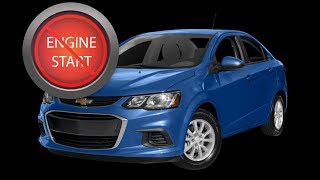
- Having to place the key fob in the center console pocket/cupholder to start the car. 🎬 Watch: How to start your Sonic with a dead key fob.
- Replacing only the TPMS sensor when the key fob is also dead. This will not fix the no-start condition caused by the RCDLR.
- Replacing the starter motor. A no-crank caused by the security system will not be resolved by a new starter.
- Replacing the vehicle's main battery without confirming it has failed. While a low battery can cause various electronic issues, the specific combination of C0750 and a dead fob strongly points to the RCDLR.
- Replacing the key fob battery. While a good first step for fob issues, it will not resolve the underlying RCDLR failure that also triggers the C0750 code.
Most Likely Causes
- Faulty Remote Control Door Lock Receiver (RCDLR) 🔴 High Probability This is a documented failure point on many GM platforms of this era, as noted in TSB 16-NA-396. The module handles both key fob and TPMS signals, and an internal fault (sometimes reported as overheating or melting) can disrupt both systems simultaneously.
How to confirm: Check for the hallmark combination of symptoms: C0750 (often with other C07xx codes), a non-functional key fob, and a no-start condition. If all are present, the RCDLR is the most likely cause. A temporary fix, like disconnecting the battery for 30 minutes, may restore function for a short time, further pointing to a failing module.
Typical fix: Replace the RCDLR module and have it professionally programmed to the vehicle and existing keys.
Est. part cost: $40-$80 - Dead Battery in Left Front TPMS Sensor 🟡 Medium Probability TPMS sensor batteries have a finite lifespan of 7-10 years. For vehicles in the 2012-2019 range, battery failure is becoming increasingly common.
How to confirm: This is the likely cause if C0750 is the *only* code present and the key fob and remote start functions normally. A tire shop or a technician with a TPMS tool can test the sensor's signal strength and battery status directly.
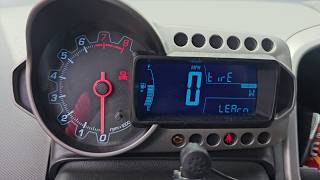
Typical fix: Replace the left front TPMS sensor and perform the TPMS relearn procedure. 🎬 See this quick walkthrough on resetting your TPMS sensors.
Est. part cost: $25-$60
Rare But Worth Checking
- Improperly Seated Switchblade Key: GM issued TSB PIT5030E for the 2012-2014 Sonic, noting that if the switchblade key is not fully locked in the straight position when inserted, it can cause an intermittent no-crank and may set DTC B3055. This is a simple check to perform before any repairs.
- Wiring Harness or Connector Issue: Damage or corrosion in the wiring leading to the RCDLR could mimic a module failure. TSB 16-NA-061 specifically addresses issues caused by a disconnected coax cable antenna for the RCDLR, which can cause loss of signal from TPMS sensors and reduced key fob range.
- Poor Ground Connection at G104 or G105: GM TSB #PIC5574A identified intermittent no-crank and communication code issues on the 2012 Sonic due to loose connections or improper crimps at ground G104, or paint/weld slag on the grounding surface for G105 (located under the battery tray). A bad ground can cause unpredictable behavior in modules like the RCDLR.
Diagnosis Steps
- Verify the symptoms. Is the TPMS light on? Does the car fail to crank? Does the key fob work for locking/unlocking?
- Check the switchblade key. If you have a folding key, ensure it is fully extended and locked straight before inserting it into the ignition.
- Test your spare key. If the spare key also fails to start the car and the fob functions don't work, it reinforces the likelihood of an RCDLR issue.
- Scan for codes. Use a scanner capable of reading Body (B) and Chassis (C) codes. Note if C0750 appears alone or with other TPMS codes (C0755, C0760, C0765) and/or B3055.
- If C0750 is present with a no-start and dead key fob, the RCDLR is the primary suspect. Professional diagnosis is recommended to confirm before replacement.
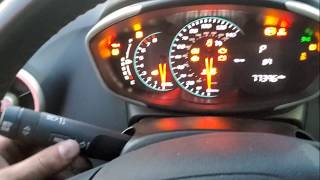
- If only C0750 is present and the car starts and runs fine, the left front TPMS sensor is the likely culprit. A tire shop can confirm its battery status. 🎬 Watch: How to perform a TPMS reset on GM vehicles.
- Inspect wiring to the RCDLR. The module is typically located high on the windshield, near the rearview mirror, and is accessed by removing trim pieces. Check for disconnected antenna coax cables per TSB 16-NA-061.
Parts You'll Likely Need
- Remote Control Door Lock Receiver (RCDLR)
(OEM #13587439)— This module is the most common cause of the combined TPMS and no-start/no-fob issue, as documented in GM service bulletins. This part number is confirmed by multiple OEM parts suppliers.
Trusted brands: ACDelco, GM Genuine
OEM price range: $40-$80
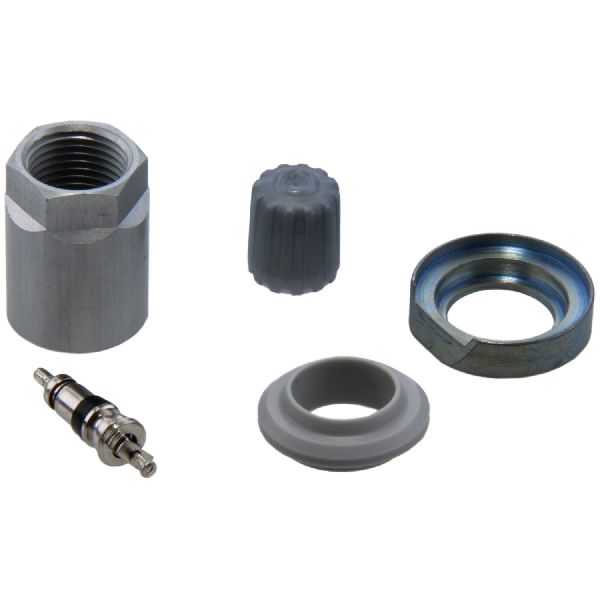
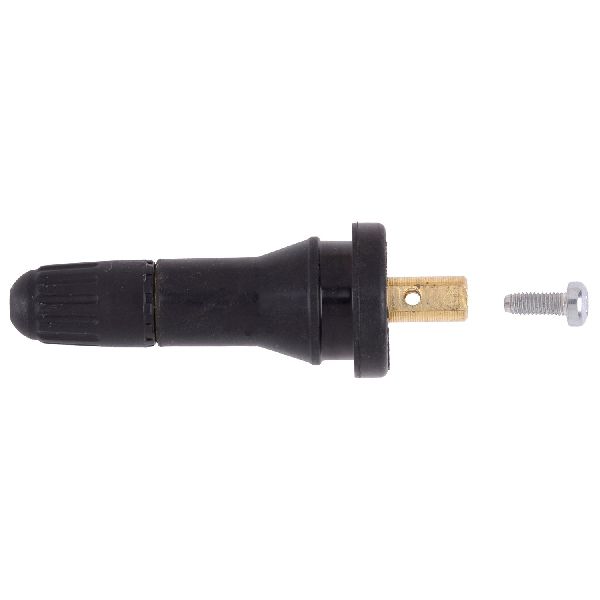
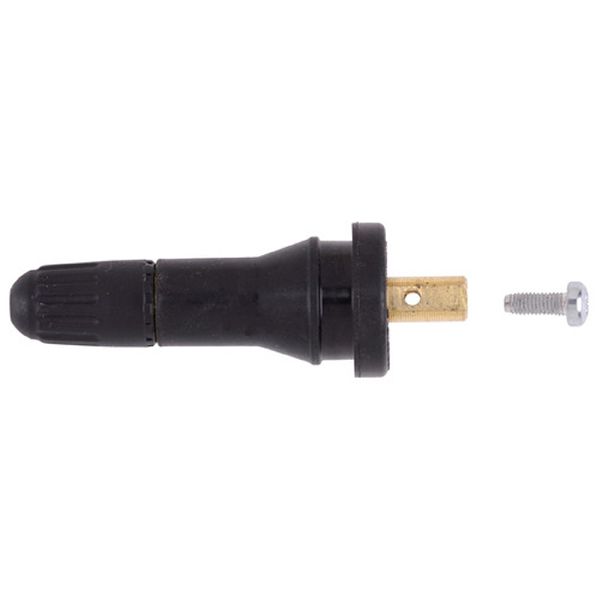
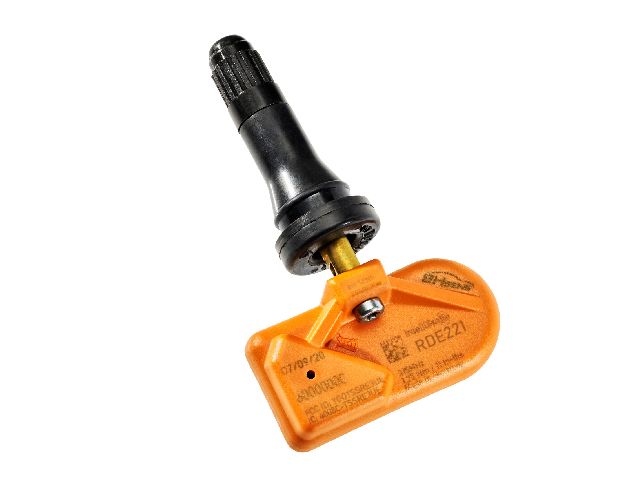
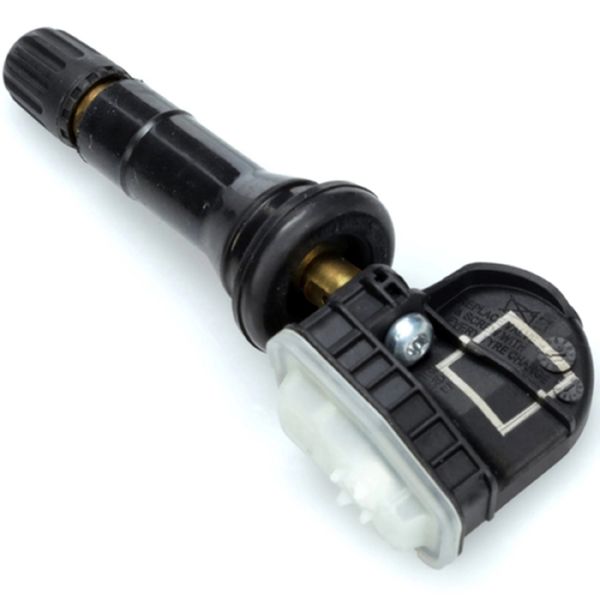
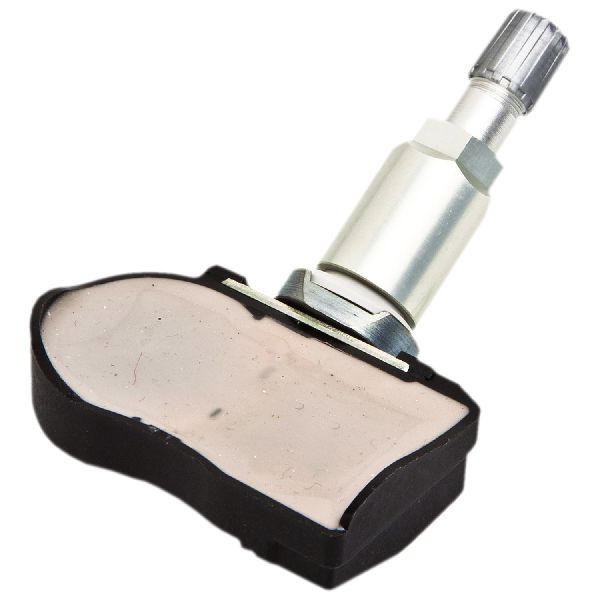
Aftermarket price range: $30-$60 - Tire Pressure Monitoring System (TPMS) Sensor — If the C0750 code appears without any starting or key fob issues, the sensor itself has likely failed, usually due to a dead battery.
Trusted brands: ACDelco, Schrader, Continental
OEM price range: $40-$70
Aftermarket price range: $25-$50
Related Codes That Often Appear With This One
- B3055 — This code means 'No Transponder Modulation,' indicating the anti-theft system cannot read the key. It is often set alongside C0750 when the RCDLR fails, as the RCDLR is responsible for communicating with the key.
- C0755, C0760, C0765 — These are the codes for the other three TPMS sensors (Right Front, Left Rear, Right Rear). When the RCDLR fails, it often loses communication with all sensors, causing multiple codes to appear at once.
Technical Service Bulletins (TSBs) & Recalls
- PIC5650M: Mentions intermittent no crank, no start, or start stall with security light and DTCs including B3055 and C0750.
- 16-NA-396: Links intermittent key fob operation, 'No Remote Detected' messages, and TPMS codes (C0750, C0755, etc. with symptom byte :29) to an internal failure of the Remote Control Door Lock Receiver (RCDLR).
- PIT5030E: Notes that an intermittent no-crank with DTC B3055 on the 2012-2014 Sonic can be caused by the switchblade key not being fully extended.
- 16-NA-061: Describes a potential cause for TPMS and RKE (Remote Keyless Entry) issues as a disconnected antenna coax cable leading to the RCDLR, which should be checked before module replacement.
- PIC5574A: Addresses intermittent no-crank/no-start with multiple communication codes on the 2012 Sonic, pointing to inspection of grounds G104 and G105.
Platform-Specific Known Issues
- A known issue, documented in TSB #PIC5650M, identifies an intermittent no-crank/no-start condition with the security light on, which can be accompanied by DTCs C0750 and B3055.
- TSB #16-NA-396 further clarifies that an internal failure of the RCDLR is a common cause for simultaneous TPMS codes (like C0750) and key fob/passive start system failure.
- A Reddit user on r/ChevySonic reported their 2019 Sonic had this issue, and the dealership found the RCDLR had 'literally overheated, melted and stopped working.'
- TSB #PIC5574A notes that early (2012) Sonics can suffer from intermittent no-starts due to poor ground connections at G104 and G105, which can cause widespread communication DTCs.
Hidden / Shadow Codes Worth Checking
- C0750:29: Too Few Pulses. This is the most common symptom byte when the RCDLR module fails internally, indicating it is not receiving the expected number of signal transmissions from the TPMS sensor. (see via A professional scan tool capable of reading GM-specific symptom bytes, such as a GM MDI with GDS2 software.)
- C0750:03: Left Front Tire Pressure Sensor Low Voltage / Voltage Below Threshold. This indicates a potential power issue with the sensor itself, most likely a dying internal battery. (see via A professional scan tool capable of reading GM-specific symptom bytes.)
- C0750:08: Left Front Low Tire Pressure Sensor Signal Invalid. This suggests the RCDLR is receiving a signal, but the data is corrupt or not in the expected format. (see via A professional scan tool capable of reading GM-specific symptom bytes.)
Scan Tool Commands That Help
- GDS2 (Global Diagnostic System 2): Module Diagnostics > Remote Control Door Lock Receiver > Configuration/Reset Functions > Add/Replace Key Fobs — This function is required after installing a new RCDLR to program the existing (or new) key fobs to the new module.
- GDS2 / Tech2: RCDLR Setup — This setup procedure must be performed after replacing the RCDLR to configure it for the specific vehicle options.
- GDS2 / Tech2: Theft Deterrent System Learn — After RCDLR replacement and setup, this procedure (either a 10-minute or 30-minute process) is necessary to sync the new module with the vehicle's anti-theft system.
- SPS (Service Programming System): Programming a new module calibration — A subscription to GM's online SPS is required to download the correct software and calibrations into the new RCDLR module, tying it to the vehicle's VIN.
Wiring & Ground Locations
- RCDLR (Remote Control Door Lock Receiver) — On most Sonics, the RCDLR module is located on the upper part of the windshield, concealed by the black plastic trim piece near the rearview mirror.. This is the central component that fails, causing C0750 along with no-start and key fob issues. Knowing its location is critical for inspection and replacement.
- G103 — Located on the cowl in the left rear of the engine compartment, above the brake booster.. This is a major ground point for multiple interior modules, including the Remote Door Lock Receiver. A poor connection here can cause erratic behavior or failure of the RCDLR.
- G105 — On the frame rail directly under the battery tray. The tray must be removed for access.. TSB PIC5574A specifically calls out this ground for inspection on 2012 Sonics with no-start conditions. Paint or weld slag on the stud can cause a poor ground, leading to communication DTCs.
- X50A — The underhood fuse block, located in the engine compartment.. This fuse block provides battery positive voltage to many vehicle systems. An internal open in the fuse block was identified as a rare cause of no-start in TSB PIC5574A.
Real Owner Repair Stories
- Reddit user u/Tahtman on r/ChevySonic (2017 Chevrolet Sonic Hatchback) — TPMS system slowly went out, followed by the remote keyless entry failing completely. Had to use the physical key, setting off the alarm to unlock the car.
❌ Tried (didn't work) Initially struggled to locate the module, looking under the dash and tearing up the headliner.
✅ What actually fixed it The issue was the RCDLR module (GM Part #13587439). Another user confirmed that on their 2012 model, the module was located next to the rearview mirror under the black plastic trim on the windshield.
OEM Part Supersession History
13506936→13587704— This is for the Body Control Module (BCM), not the RCDLR. The BCM is a related but separate component located under the driver's side dash. A failing BCM can also cause a wide range of electrical issues, including no-start conditions.
Heads up: When replacing a BCM, the VIN and vehicle configuration data are stored in an EEPROM chip. A used BCM cannot be reprogrammed with a dealer scan tool; the EEPROM chip must be physically swapped from the old board to the new one, or the new board must be virginized.
Model Year Variations Within This Range
- 2012-2016: These models use a traditional flip key. Onboard programming procedures exist for adding new keys without a scan tool, but RCDLR replacement still requires dealer tools.
- 2017-2020: These models often feature a keyless access system with push-button start. While a 30-minute manual procedure exists to program new smart keys, it requires one working key and will not work for programming a new RCDLR module.
Helpful Videos
We Have This Part in Stock

The information in this article is provided for general reference and educational purposes only. Vehicle specifications, procedures, and part compatibility can vary by production date, trim level, and region. Always consult your vehicle's factory service manual and verify part numbers before purchasing or performing repairs. Safety-critical components such as airbags, seat belts, and braking systems should be installed by a qualified professional.
- Chevrolet SONIC:
- 🎬 Helpful Videos
- 🛍️ Shop This Part
- What's Unique About the 2012-2019 Chevrolet SONIC
- Diagnostic Flowchart
- Symptoms You May Notice
- Most Likely Causes
- Rare But Worth Checking
- Diagnosis Steps
- Parts You'll Likely Need
- Related Codes That Often Appear With This One
- Technical Service Bulletins (TSBs) & Recalls
- Platform-Specific Known Issues
- Hidden / Shadow Codes Worth Checking
- Scan Tool Commands That Help
- Wiring & Ground Locations
- Real Owner Repair Stories
- OEM Part Supersession History
- Model Year Variations Within This Range
- 🎟️ Get 5% Off