

C0750 on 2007-2014 Chevrolet Impala: TPMS Fault Causes and Fixes
Code C0750 on a 2007-2014 Impala means the car has lost communication with the left front tire pressure sensor. This is most often due to a dead battery inside the sensor itself, which has a 7-10 year lifespan. Replacing the 315 MHz sensor and performing a TPMS relearn procedure is the typical fix.
- C0750 points directly to a problem with the left front tire pressure sensor.
- The most probable cause is a dead battery in the original sensor, which is an expected failure on a vehicle of this age.
- A TPMS activation tool is highly recommended for diagnosis to confirm if the sensor is truly dead before paying to have the tire unmounted.
- After replacing the sensor, a 'relearn' procedure is mandatory to make the car recognize the new sensor. This can be done via the dashboard buttons or key fob, but requires a tool to activate the sensors in sequence.
- While you can drive with this code, your TPMS system is inactive, so you must check tire pressures manually.
What's Unique About the 2007-2014 Chevrolet IMPALA
The 2007-2014 Impala spans the end of the 9th generation (2006-2013, and 2014-2016 as 'Limited' models) and the start of the 10th generation (2014-2020). While the C0750 code's meaning is consistent, the relearn procedure can vary. Some models use the Driver Information Center (DIC) buttons, while others rely on the key fob's lock/unlock buttons to enter learning mode. Unlike some other GM vehicles where a faulty RCDLR module often causes all TPMS sensors to fail simultaneously along with the key fobs, on the Impala, a single C0750 code is more commonly an isolated sensor failure. However, if key fob range is also poor, the RCDLR is a strong suspect. The location of the RCDLR module also differs by model year; early 9th gen models often have it under the driver's side dash near the A-pillar, while later models may have it under the rear package shelf.
Diagnostic Flowchart
Tap your situation to follow the diagnostic path that matches what you're seeing on this vehicle.
Generation note: This range covers the 9th generation (2007-2013) and the 10th generation (starting 2014). The 2014 model year is a split, with the older body style sold as the 'Impala Limited'. The fundamental cause (bad sensor) is the same, but the method to initiate the TPMS relearn procedure may differ. 9th gen models often use DIC buttons or the key fob method (holding lock/unlock). 10th gen models primarily use the DIC controls on the steering wheel. All sensors for this vehicle range operate on a 315 MHz frequency. The RCDLR module location also varies; on 2006-2007 models, it is often located behind the driver's side A-pillar trim or under the dash. For 2014 10th-gen models, it may be located behind the rear window trim.
Symptoms You May Notice
- "Service Tire Monitor System" message on the Driver Information Center (DIC).
- The TPMS warning light on the instrument cluster will flash for about a minute upon startup and then stay on solid.
- The tire pressure display for the left front tire will show dashes (--) instead of a pressure reading.
- Replacing the Body Control Module (BCM). The RCDLR is the primary module for TPMS on this platform, not the BCM.
- Replacing the wrong sensor. If tires were rotated without a relearn, the sensor that was originally on the left front could now be at another corner of the car. Always perform a relearn to confirm sensor locations before replacement.
Most Likely Causes
- Dead TPMS Sensor Battery 🔴 High Probability TPMS sensors use small, non-replaceable internal batteries that have a finite lifespan, typically 7-10 years. For this vehicle range, many original sensors are at or beyond their expected service life, making this the most common point of failure.
How to confirm: Use a TPMS activation tool to attempt to 'wake up' the sensor. If the tool cannot get a response (no ID, pressure, or temperature reading), the sensor is almost certainly dead. A scan tool may also show a 'low battery' status for the specific sensor. Before condemning the sensor, try activating it up to 3 times, as reception can be intermittent.
Typical fix: Replace the left front TPMS sensor. The tire must be unmounted from the wheel to access it. 🎬 Watch this walkthrough on how to replace the TPMS sensor. After installation, a TPMS relearn procedure must be performed.
Est. part cost: $25-$60 - Failed TPMS Relearn Procedure 🟡 Medium Probability After a tire rotation or sensor replacement, if the relearn procedure is not performed correctly, the RCDLR module won't know the new position of the sensor, causing it to flag a communication fault for the expected location (left front).
How to confirm: Attempt to perform the TPMS relearn procedure. If the procedure completes successfully and the code clears, this was the issue. If it fails repeatedly on the left front tire while succeeding on others, it points back to a bad sensor.
Typical fix: Perform the correct TPMS relearn procedure using either the DIC menu or the key fob method, and a TPMS activation tool to trigger each sensor in sequence. An alternative method without a tool involves letting air out of each tire in sequence until the horn chirps, though this is less reliable on newer models and requires re-inflation.
Est. part cost: $0
Rare But Worth Checking
- Faulty Remote Control Door Lock Receiver (RCDLR): While less common for a single code, it's a known GM issue. Check this if you also have problems with your key fobs (poor range, not working) or if multiple TPMS codes (C0750, C0755, C0760, C0765) appear together. GM TSB #16-NA-396 addresses this issue on other models, where a faulty RCDLR causes both TPMS and key fob failure. TSB #16-NA-061 also points to a disconnected RCDLR antenna coax cable as a possible cause for these symptoms. TSB #07-08-52-001C specifically addresses RCDLR internal faults on 2006-2007 Impalas.
- Radio Frequency (RF) Interference: Occasionally, aftermarket electronic devices plugged into the car (phone chargers, dash cams, etc.) can emit RF noise that interferes with the RCDLR's ability to receive the 315 MHz sensor signal. Before replacing parts, try unplugging all aftermarket accessories and driving the vehicle to see if the code clears.
Diagnosis Steps
- Verify the "Service Tire Monitor System" message is active and the TPMS light is on (flashing, then solid).
- Use an OBD-II scanner capable of reading Chassis (C) codes to confirm C0750 is present.
- Use a TPMS activation tool at the left front wheel. Point it at the tire sidewall near the valve stem and press the button.
- If the tool successfully reads the sensor's ID, pressure, and battery status, the sensor is likely good. The problem may be a failed relearn or a faulty RCDLR.
- If the tool fails to get any response from the sensor after 2-3 attempts, the sensor's battery is dead or the sensor has failed. It needs to be replaced.
- If the sensor responds to the tool, attempt the TPMS relearn procedure for your specific Impala model year. Warning: If using the key fob method, the doors will lock. Keep a window down or the fob in your pocket to avoid getting locked out.
- If the relearn procedure fails only at the left front wheel, this confirms the sensor is bad.
- If all sensors fail to respond and/or your key fobs are also not working or have poor range, investigate the RCDLR module and its antenna connection as the potential cause.
Parts You'll Likely Need
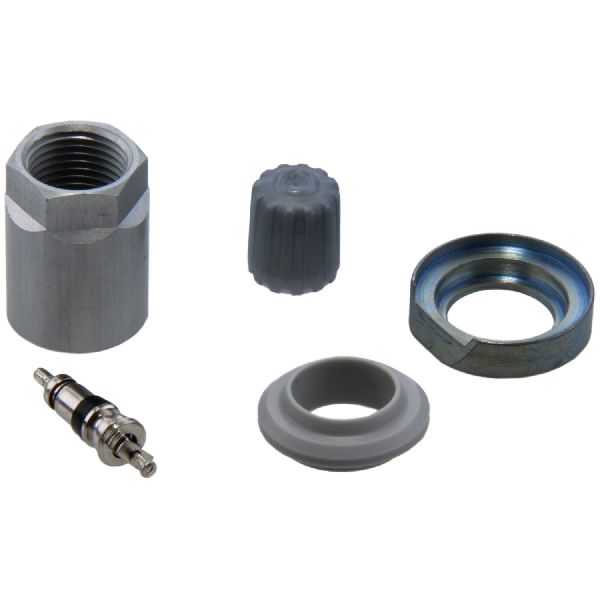
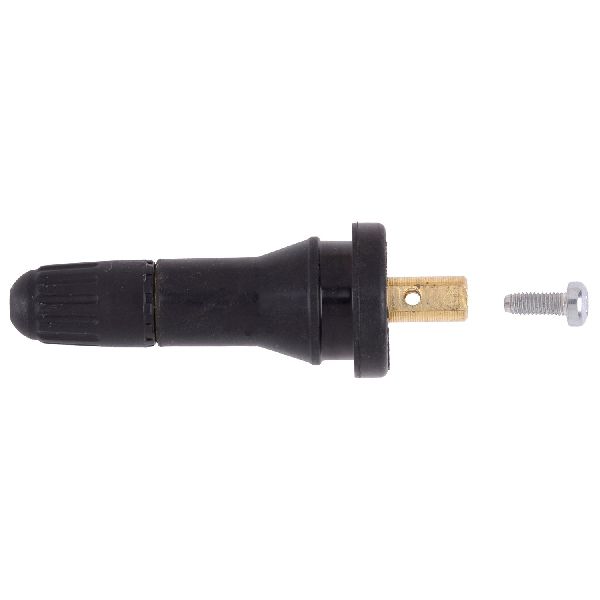
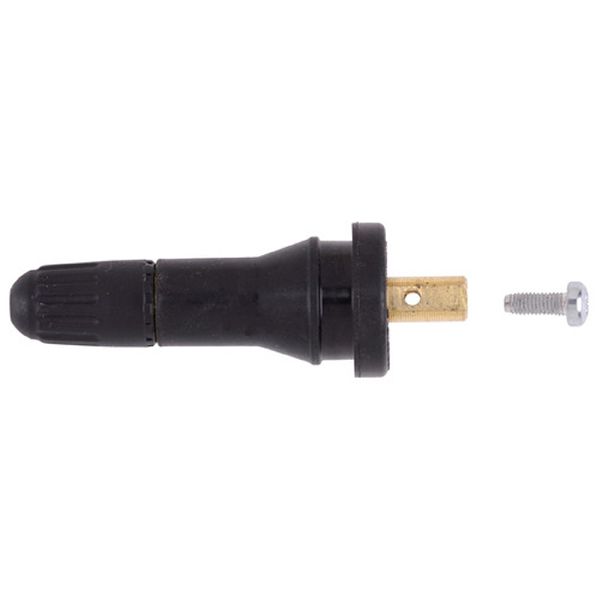
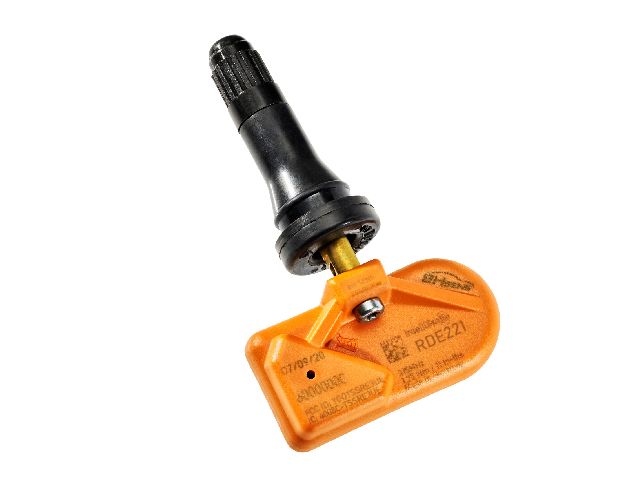
- Tire Pressure Monitor Sensor (TPMS)
(OEM #13598771)— The internal battery dies, causing a loss of signal. This is the most common reason for code C0750 on an aging vehicle.
Trusted brands: ACDelco (OEM), Schrader (often the OEM manufacturer), Standard Motor Products, Dorman
OEM price range: $40-$70
Aftermarket price range: $25-$50
Related Codes That Often Appear With This One
- C0755 — Fault with the Right Front TPMS sensor. Often appears for the same reason as C0750 (age, dead battery).
- C0760 — Fault with the Left Rear TPMS sensor. Often appears for the same reason as C0750 (age, dead battery).
- C0765 — Fault with the Right Rear TPMS sensor. Often appears for the same reason as C0750 (age, dead battery).
- B3055 — As cited in TSB #PIC5650M, this key-related security code can appear alongside TPMS codes in cases of broader electrical or module communication issues, sometimes leading to no-start conditions.
Technical Service Bulletins (TSBs) & Recalls
- PIC5650M: Mentions C0750 in a group of DTCs related to intermittent no crank/no start/stall conditions and the security light, suggesting a potential link between TPMS and vehicle security systems.
- 16-NA-396: Addresses intermittent loss of key fob functions and TPMS codes C0750, C0755, C0760, and C0765, pointing to an internal failure of the RCDLR module as the cause.
- 16-NA-061: Details how a poor or disconnected RCDLR antenna connection can cause "Service Tire Monitor" messages, dashes for tire pressures, and poor key fob range.
Platform-Specific Known Issues
- Intermittent No-Start Condition Link: The provided TSB #PIC5650M links C0750 with other security and starting-related codes (B3055, B3060, etc.) indicating that in some cases, this TPMS code can be part of a larger, intermittent electrical issue causing no-start or stalling problems. This is more severe than a simple sensor failure.
- Real-World Repair Story: An owner of a 2008 Impala on YouTube documented getting a C0750-related code for the right front tire. The DIC showed dashes for that tire's pressure. After confirming other tires would show a pressure drop on the DIC when deflated, he identified the bad sensor, replaced it himself by breaking the tire bead, and then successfully performed the key-fob relearn procedure with a low-cost activation tool.
Mechanic-Grade Diagnostic Values
- RCDLR Module Voltage (via Scan Tool) — expected: Should be close to battery voltage (e.g., 12.4V or higher).. Failure: A reading below 12.0V (e.g., 11.89V) can indicate a problem with the power feed or ground circuit to the module, causing intermittent operation even if the module itself is good.
- Voltage Drop Test on RCDLR Power/Ground — expected: Less than 1 volt.. Failure: A reading greater than 1 volt, or a fluctuating reading when wiggling connectors, indicates high resistance in the circuit that needs to be located and repaired.
Hidden / Shadow Codes Worth Checking
- C0750 03: Left Front Tire Pressure Sensor Low Voltage. This points specifically to a voltage issue, most commonly a dying internal battery. (see via GM Tech2, GDS2, or other professional-grade scan tools that can read manufacturer-specific DTC descriptors.)
- C0750 29: Left Front Tire Pressure Sensor Too Few Pulses. This indicates the RCDLR is not receiving the expected number of data transmissions from the sensor, pointing to a communication breakdown. (see via GM Tech2, GDS2, or other professional-grade scan tools that can read manufacturer-specific DTC descriptors.)
- C0750 39: Left Front Tire Pressure Sensor Internal Malfunction. This suggests the sensor itself has an internal fault beyond just a low battery. (see via GM Tech2, GDS2, or other professional-grade scan tools that can read manufacturer-specific DTC descriptors.)
Scan Tool Commands That Help
- Tech2 / GDS2: Module Setup: Tire Type/Pressure Selection — This function must be performed after replacing and reprogramming an RCDLR. The technician must select the correct tire type and pressure rating for the vehicle from a list. If this step is skipped, the RCDLR will not correctly learn or retain tire pressure information.
- Tech2 / GDS2: Special Functions: Tire Pressure Sensor Re-Learn — This is the dealer-level command to initiate the TPMS relearn procedure. It is used after sensor replacement or tire rotation to teach the RCDLR the new sensor positions. It requires a separate TPMS activation tool (like the J-46079 or EL-46079) to complete.
- Tech2 / GDS2: Data Display: Tire Pressure Sensor Mode — While driving the vehicle above 25 mph, a technician can monitor the live data for each sensor's 'Mode'. If a sensor fails to switch to 'Rolling' or 'Drive' mode, it confirms that sensor is not transmitting correctly.
Wiring & Ground Locations
- RCDLR (2006-2007) — Located on the driver's side, under the instrument panel closeout panel, near the A-pillar.. This is the receiver for the TPMS sensor signals. A loose connection, faulty module, or bad ground in this area can cause C0750 and other related codes.
- RCDLR (2008-2013) — Located under the rear package shelf, accessed through the trunk by removing trim panels.. The location change means diagnosis for later 9th-gen models must focus on the rear of the vehicle, including checking the antenna connection in that area.
- RCDLR (2014+ 10th Gen) — Located behind the right A-pillar or rear window trim.. This module receives the TPMS signals. Access requires removing interior trim panels to check the module and its antenna connection.
- G202 — Located on the left side of the dash.. This is a common ground point for multiple instrument panel components. A poor connection at G202 could potentially affect modules like the RCDLR, causing intermittent communication issues.
Real Owner Repair Stories
- CorvetteForum user (GM Vehicle with RCDLR (Corvette, but diagnosis is applicable)) — Intermittent 'No Fob Detected' message and TPMS issues. Fobs would sometimes work after a battery disconnect, but then fail again.
❌ Tried (didn't work) Replacing key fob batteries., Reflowing solder on RCDLR header pins., Cleaning RCDLR connector with Deoxit., Cleaning grounds G104 and G202.
✅ What actually fixed it The user performed a voltage drop test and found a poor connection within the underhood fuse box feeding the RCDLR. After disconnecting, cleaning, and reconnecting the main fuse box connectors, the voltage at the RCDLR connector stabilized at battery voltage, and the intermittent fob/TPMS issues were resolved. - YouTube user 'Chevy impala remote key fob issue' (2004 Chevrolet Impala (8th Gen, but similar RCDLR design)) — Key fob would only work intermittently and from very close range (1-10 feet).
❌ Tried (didn't work) Replacing key fob batteries.
✅ What actually fixed it The owner replaced the RCDLR module located under the dash fascia above the instrument cluster. The original module's circuit board was visibly degraded and crumbled when touched. After installing a used replacement module from eBay and having it programmed by a dealer, the key fob and TPMS system worked perfectly.
OEM Part Supersession History
13586335 / 13516164 / 22853741→13598771— Consolidation of part numbers and potential design updates.
Heads up: While these part numbers are generally interchangeable for the 315MHz system, some aftermarket sensors labeled as replacements may require specific programming tools. The OEM ACDelco 13598771 is typically pre-programmed and only requires a vehicle relearn procedure.13598771→13540600— Standard part number evolution by the manufacturer.
Model Year Variations Within This Range
- 2006-2007: TSB #07-08-52-001C specifically targets these years for RCDLR internal faults causing TPMS and key fob issues. The RCDLR is located in the driver's side dash area, and some base LS models may not have a coaxial antenna, using a simpler wire antenna instead.
- 2014-2020 (10th Gen): These models feature a 'transmitter pocket' in the center console. If the key fob battery is dead, placing the fob in this pocket allows the car to start, a feature not present in the 9th generation.
Helpful Videos
We Have This Part in Stock


The information in this article is provided for general reference and educational purposes only. Vehicle specifications, procedures, and part compatibility can vary by production date, trim level, and region. Always consult your vehicle's factory service manual and verify part numbers before purchasing or performing repairs. Safety-critical components such as airbags, seat belts, and braking systems should be installed by a qualified professional.
- Chevrolet IMPALA:
- 🎬 Helpful Videos
- 🛍️ Shop This Part
- What's Unique About the 2007-2014 Chevrolet IMPALA
- Diagnostic Flowchart
- Symptoms You May Notice
- Most Likely Causes
- Rare But Worth Checking
- Diagnosis Steps
- Parts You'll Likely Need
- Related Codes That Often Appear With This One
- Technical Service Bulletins (TSBs) & Recalls
- Platform-Specific Known Issues
- Mechanic-Grade Diagnostic Values
- Hidden / Shadow Codes Worth Checking
- Scan Tool Commands That Help
- Wiring & Ground Locations
- Real Owner Repair Stories
- OEM Part Supersession History
- Model Year Variations Within This Range
- 🎟️ Get 5% Off