

C0750 on 2015-2022 Cadillac Escalade: Causes and Fixes for TPMS Faults
Code C0750 on a 2015-2022 Escalade means the car has lost communication with the left front tire pressure sensor. The most common cause is a dead sensor battery, as they last 7-10 years. However, GM has issued multiple bulletins linking this code to a faulty Remote Control Door Lock Receiver (RCDLR) or its antenna circuit, which can also cause key fob and no-start issues.
- C0750 means the left front tire pressure sensor isn't communicating with the vehicle.
- The most common fix is replacing the TPMS sensor in the left front tire, especially on vehicles over 7 years old.
- Before replacing the sensor, check if your key fobs are working. If they are also malfunctioning, the problem is likely the Remote Control Door Lock Receiver (RCDLR), not the sensor.
- This code can, in some cases, be linked to serious starting and security system problems, so it should not be ignored.
- Replacing the RCDLR or TPMS sensor requires specialized tools for programming and relearning, making professional service advisable.
What's Unique About the 2015-2022 Cadillac ESCALADE
On most vehicles, this code points directly to a bad tire sensor. However, on the Escalade and its GM K2XX/T1XX platform mates (Tahoe, Suburban, Yukon), the issue is frequently more complex. The same module, the Remote Control Door Lock Receiver (RCDLR), processes signals from both the TPMS sensors and the key fobs. GM Technical Service Bulletins (TSBs) document that a failing RCDLR or a disconnected antenna circuit can cause TPMS codes like C0750, key fob problems, and even no-start conditions with the security light on (TSB #PIC5650M, #PIT5446A). This elevates a simple TPMS fault to a more critical potential issue.
Diagnostic Flowchart
Tap your situation to follow the diagnostic path that matches what you're seeing on this vehicle.
Generation note: This range covers the fourth generation (2015-2020, K2XX platform) and the start of the fifth generation (2021-2022, T1XX platform). While the underlying cause is often the same, the specific part numbers for TPMS sensors and the RCDLR module may differ. The diagnostic approach, focusing on the shared RCDLR architecture for TPMS and keyless entry, remains similar across these years.
Symptoms You May Notice
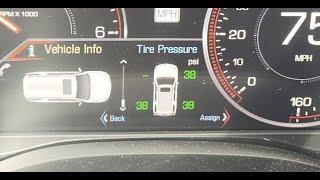
- Service Tire Monitor System message on the Driver Information Center (DIC)
- TPMS warning light is illuminated or flashing. A flashing light typically indicates a system fault, while a solid light indicates low pressure, but either can appear with this code.
- Tire pressure display shows dashes (--) for the left front tire
- "No Fob Detected" message (if RCDLR is the cause)
- Key fob has poor range or is inoperative (if RCDLR is the cause)
- Intermittent no-crank, no-start, or stalling with the security light on (as noted in TSB #PIC5650M)
- Replacing only the TPMS sensor when the key fobs are also malfunctioning. When both systems fail, the RCDLR module or its antenna circuit is the more likely culprit.
- Replacing the RCDLR module without first checking the antenna coax cable connections, which is a simpler fix noted in multiple TSBs.
Most Likely Causes
- Failed Left Front TPMS Sensor 🔴 High Probability TPMS sensors are powered by a non-rechargeable internal battery with a typical lifespan of 7-10 years. Vehicles from the 2015-2018 model years are now at high risk for battery failure.
How to confirm: Use a TPMS activation tool to try and read the sensor. If the tool cannot get a response from the left front sensor but can read the other three, the sensor has failed. A tire shop can perform this test quickly.
Typical fix: Replace the left front TPMS sensor and perform the TPMS relearn procedure. This can sometimes be done without tools by letting air out of the tires in sequence. 🎬 See how to perform a DIY TPMS reset without tools.
Est. part cost: $30-$70 - Faulty Remote Control Door Lock Receiver (RCDLR) 🟡 Medium Probability GM has documented internal failures of the RCDLR module across many platforms, causing simultaneous TPMS and keyless entry problems. TSB #16-NA-396 specifically calls out this failure mode and advises replacement.
How to confirm: Check for symptoms beyond just the C0750 code. If you also have codes for other TPMS sensors (C0755, C0760, C0765) and/or your key fobs are not working correctly, the RCDLR is the primary suspect. The RCDLR is located behind the interior trim panel in the driver's side rear quarter panel area.
Typical fix: Replace the RCDLR module. This part requires programming by a dealer or a properly equipped independent shop after installation.
Est. part cost: $80-$150 - RCDLR Antenna Circuit Fault ⚪ Low Probability TSB #PIT5446A and #16-NA-061 point to a poor or disconnected coax cable between the RCDLR and its antenna. The antenna is located in the rear quarter glass, and the cable can become disconnected at the module, the antenna amplifier, or the glass itself.
How to confirm: Inspect the coax cable connections at the RCDLR module (driver's side rear quarter panel) and the antenna amplifier near the rear glass. A disconnected cable can cause loss of signal from the sensors furthest away (like the left front). TSB #16-NA-061 notes that a disconnect at the amplifier may only affect the front sensors, while a disconnect at the RCDLR itself will cause all sensors to drop out.
Typical fix: Securely reconnect the coax cable or repair any damage to the wiring. This may require removing interior trim panels for access.
Est. part cost: $0-$50
Rare But Worth Checking
- Radio Frequency Interference (RFI): Aftermarket electronics like dash cams, phone chargers, or LED lighting can emit RF noise that jams the 315 MHz or 433 MHz signal between the TPMS sensor and the RCDLR. TSB #PIC5650M mentions this possibility. If the problem is intermittent, try unplugging all aftermarket devices to see if the code clears.
- Body Control Module (BCM) Fault: In rare instances, the BCM, which receives the data from the RCDLR, can be the source of the problem. This is unlikely and should only be considered after all other causes have been ruled out. A BCM replacement is costly and requires extensive programming.
- Damaged Wiring Harness: A user on a forum for the related GMC Yukon platform reported that their TPMS and key fob issues, which mimicked a bad RCDLR, were ultimately caused by a broken power wire in the flexible harness running between the driver's side door and the body.
Diagnosis Steps
- Check for other DTCs. If key fob, immobilizer, or other TPMS codes (C0755, etc.) are present, suspect the RCDLR system.
- If only C0750 is present, use a TPMS diagnostic tool to attempt to activate and read the left front sensor. This confirms if the sensor itself is transmitting.
- If the sensor does not respond to the tool, its battery is likely dead or the sensor is damaged. Replace the sensor.
- If the sensor responds to the tool but the car doesn't see it, or if multiple TPMS/key fob codes are present, the next step is to inspect the RCDLR antenna circuit.
- Access the RCDLR module behind the driver's side rear interior trim and inspect the coaxial antenna connection for tightness as per TSB #16-NA-061.
- Inspect the antenna amplifier connection near the rear quarter glass. 🎬 Watch: Step-by-step guide to repairing the TPMS antenna circuit.
- Unplug any aftermarket 12V accessories (phone chargers, dash cams) to rule out Radio Frequency Interference (RFI).
- If connections are good and RFI is not a factor, the RCDLR module itself is the likely point of failure and requires replacement and programming.
Parts You'll Likely Need
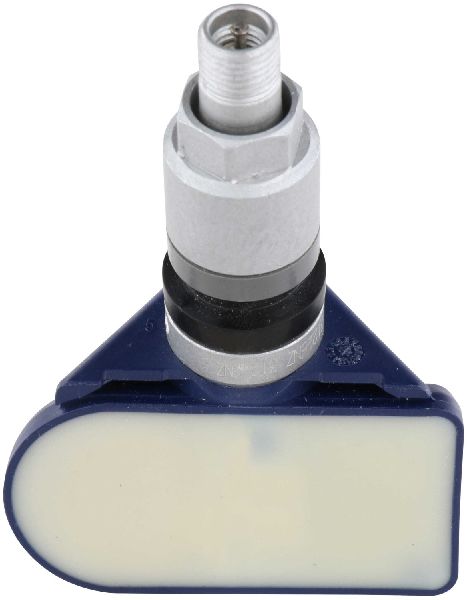
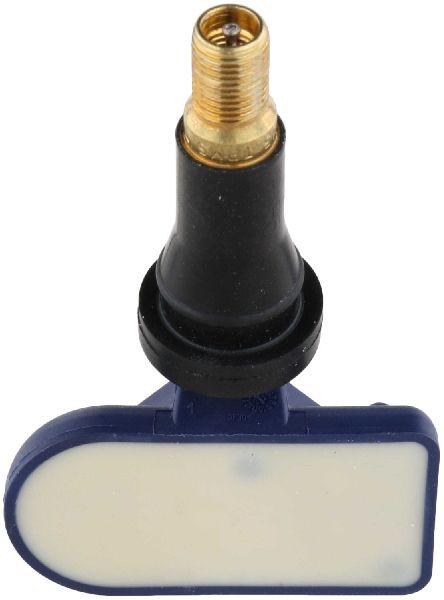
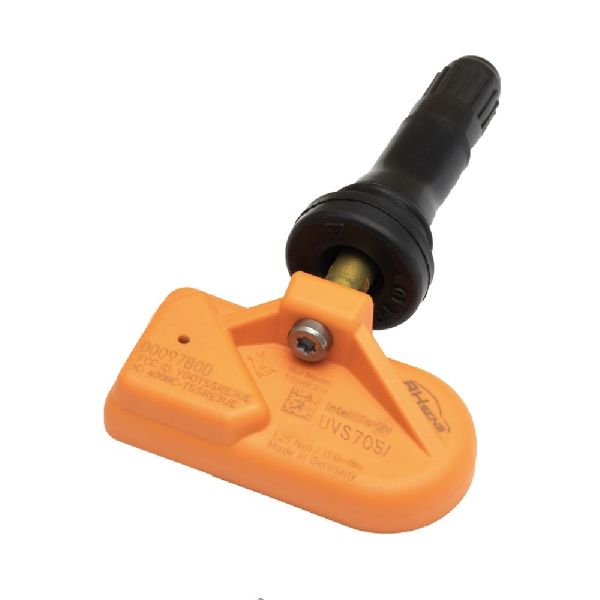
- Tire Pressure Monitoring System (TPMS) Sensor
(OEM #13598771)— This is the most common failure point due to the sensor's internal battery having a finite life. Part number 13598771 (433 MHz) is a common sensor for these vehicles, though it may be superseded by newer numbers like 13516164. Always verify by VIN.
Trusted brands: ACDelco (OEM), Schrader, Huf
OEM price range: $40-$70
Aftermarket price range: $25-$50 - Remote Control Door Lock Receiver (RCDLR)
(OEM #13595511)— This module is a known failure point, causing both TPMS and keyless entry issues as documented in TSB #16-NA-396. Part numbers are specific to year and frequency; 13595511 is cited in the TSB as a replacement part for an earlier version. Always confirm the correct part number with a dealer using your VIN.
Trusted brands: ACDelco (OEM)
OEM price range: $80-$150
Related Codes That Often Appear With This One
- C0755, C0760, C0765 — These are the codes for the other three TPMS sensors (Right Front, Left Rear, Right Rear). When all four appear together, it strongly suggests a problem with the common receiver (RCDLR) or its antenna, rather than four simultaneously failed sensors.
- B3055, B3060, B3935 — These are keyless entry and immobilizer codes. Their presence alongside C0750 points to a fault in the RCDLR or its wiring, as this module controls both systems. This is documented in TSB #PIC5650M.
Technical Service Bulletins (TSBs) & Recalls
- PIC5650M: Links TPMS codes to no-start/security light issues.
- PIT5446A: Points to RCDLR antenna inspection for TPMS codes.
- 16-NA-396: Details internal RCDLR failure causing TPMS and key fob issues.
- 16-NA-061: Details diagnosis of the RCDLR antenna circuit for TPMS and
Platform-Specific Known Issues
- TSB #PIC5650M: Documents an intermittent no-crank/no-start condition with the security light on, which can be accompanied by TPMS codes including C0750.
- TSB #PIT5446A: Instructs technicians to inspect the Remote Control Door Lock Receiver (RCDLR) antenna system when C0750 is found, suggesting a known issue with the antenna or its wiring.
- TSB #16-NA-061: Provides detailed diagnostics for when TPMS codes appear with key fob issues, pointing to the RCDLR antenna circuit as a likely cause. It explains how a disconnect in the coax cable can affect sensors differently based on their distance from the receiver.
- TSB #16-NA-396: Explicitly states that intermittent key fob operation and multiple TPMS codes can be caused by an internal failure of the RCDLR, recommending its replacement.
Mechanic-Grade Diagnostic Values
- TPMS Sensor Signal Frequency — expected: 433 MHz (for North American models in this year range). Failure: No signal detected by a TPMS tool, or an incorrect frequency if the wrong part was installed.
- RCDLR Module Power Supply — expected: 12-14 Volts at the power input pin (often a Red/White wire) with key-on.. Failure: Voltage below 12V or no voltage indicates a wiring or fuse issue upstream of the module.
Hidden / Shadow Codes Worth Checking
- C0750 with symptom byte :03: Indicates 'Left Front Tire Pressure Sensor Low Voltage' or 'voltage below threshold'. This points more specifically to a failing internal battery in the sensor itself. (see via GM GDS2 or a high-end professional scan tool capable of reading manufacturer-specific symptom bytes.)
- C0750 with symptom byte :08: Indicates 'Left Front Low Tire Pressure Sensor Signal Invalid'. This suggests the signal is being received but is corrupted or nonsensical. (see via GM GDS2 or a high-end professional scan tool.)
- C0750 with symptom byte :29: Indicates 'Too Few Pulses'. This symptom byte is specifically mentioned in TSB 16-NA-396 and is often seen when the RCDLR module itself is failing internally, rather than a sensor issue. (see via GM GDS2 or a high-end professional scan tool.)
Scan Tool Commands That Help
- GM GDS2: Module Diagnostics > Body Control Module > Identification — To verify the correct software and part numbers are programmed into the BCM after a module replacement.
- GM GDS2: Configure/Reset Functions > Remote Control Door Lock Receiver Setup — This function is required after replacing the RCDLR module to program it to the vehicle and learn the existing key fobs and TPMS sensor IDs.
- GM GDS2: Control Functions — To perform bidirectional tests on various BCM-controlled components (like lights, locks) to verify the BCM is functioning correctly, helping to isolate the fault to the RCDLR or sensor circuits.
- TPMS Relearn Tool (e.g., EL-50448) or DIC: Tire Pressure Sensor Learn Mode — After replacing a TPMS sensor or rotating tires, this procedure is used to teach the vehicle the new sensor ID and its position on the car. This can be initiated through the Driver Information Center (DIC) and completed with a tool or by letting air out of the tires in sequence.
Wiring & Ground Locations
- RCDLR (Remote Control Door Lock Receiver) — Located in the left rear quarter panel, behind the interior trim, near the D-pillar.. This is the central receiving module for all TPMS sensor signals. A loose coaxial antenna connection at this module is a common cause for all TPMS codes, including C0750.
- RCDLR Antenna Amplifier Module — Located near the right rear quarter glass, connected between the RCDLR coax cable and the in-glass antenna.. A loose connection here can cause intermittent loss of signal from the sensors furthest away, such as the left front (C0750) and left rear.
- RCDLR Antenna — Integrated into the right rear quarter glass.. A disconnect between the amplifier and the antenna itself can cause reduced key fob range and potentially intermittent TPMS issues.
- Emergency Start Transmitter Slot — Inside the center console storage compartment. You may need to lift a tray to see it.. If a faulty RCDLR causes a 'No Remote Detected' message, placing the key fob in this slot allows the vehicle to start via a low-frequency signal, bypassing the main RF system.
OEM Part Supersession History
13598771→13516164, 13540600— Standard part evolution and updates by the manufacturer.
Heads up: Part 13598771 is a 433 MHz sensor. While older GM vehicles used 315 MHz, vehicles in the 2015-2022 range almost exclusively use 433 MHz in North America. Using the wrong frequency will result in failure to learn.13595511→13540045— Updated part from the manufacturer, likely to address internal failure modes noted in TSBs.
Heads up: When replacing the RCDLR, it is critical to verify the part number against the vehicle's VIN. Different modules may be used based on vehicle options (e.g., passive entry). The replacement requires programming with GDS2.
Model Year Variations Within This Range
- 2015-2020 (K2XX Platform): The RCDLR is located in the left rear quarter panel. The antenna system consists of the module, a coax cable, an amplifier, and the in-glass antenna on the right side. This architecture is well-documented in TSBs like 16-NA-061.
- 2021-2022 (T1XX Platform): While the fundamental system (sensors reporting to a central receiver) is the same, the T1XX platform introduced GM's new Global B / Vehicle Intelligence Platform (VIP) electrical architecture. Part numbers for the RCDLR and sensor locations may differ from the K2XX generation. Diagnosis still involves isolating the sensor from the receiver, but module locations and software procedures in GDS2 may vary.
Helpful Videos

We Have This Part in Stock

The information in this article is provided for general reference and educational purposes only. Vehicle specifications, procedures, and part compatibility can vary by production date, trim level, and region. Always consult your vehicle's factory service manual and verify part numbers before purchasing or performing repairs. Safety-critical components such as airbags, seat belts, and braking systems should be installed by a qualified professional.
- Cadillac ESCALADE:
- 🎬 Helpful Videos
- 🛍️ Shop This Part
- What's Unique About the 2015-2022 Cadillac ESCALADE
- Diagnostic Flowchart
- Symptoms You May Notice
- Most Likely Causes
- Rare But Worth Checking
- Diagnosis Steps
- Parts You'll Likely Need
- Related Codes That Often Appear With This One
- Technical Service Bulletins (TSBs) & Recalls
- Platform-Specific Known Issues
- Mechanic-Grade Diagnostic Values
- Hidden / Shadow Codes Worth Checking
- Scan Tool Commands That Help
- Wiring & Ground Locations
- OEM Part Supersession History
- Model Year Variations Within This Range
- 🎟️ Get 5% Off