

C0750 on 2007-2014 Cadillac CTS: TPMS Fault, Causes, and No-Start Fixes
Code C0750 means the Left Front Tire Pressure (TPMS) sensor is not communicating. While it could be a dead sensor battery, on this CTS it's often a failing Remote Control Door Lock Receiver (RCDLR) which also causes key fob and starting issues. Check if your key fob works; if not, the RCDLR is the likely culprit. The RCDLR is located behind the driver's side rear seat.
- C0750 on your CTS means a problem with the Left Front TPMS sensor, but the cause may not be the sensor itself.
- Before buying any parts, check your key fob. If it's dead or has poor range, the RCDLR module is the most likely problem, not the tire sensor.
- This code can be linked to a serious no-start condition. Do not ignore it, as it could leave you stranded.
- Unplug all aftermarket phone chargers and accessories to rule out simple radio interference before proceeding with more complex diagnostics.
- Replacing the RCDLR module is not a DIY job for most people, as it requires expensive, specialized programming tools.
What's Unique About the 2007-2014 Cadillac CTS
What's unique and critical for CTS owners to understand is that C0750 is not just a simple tire light issue—it can be directly linked to a no-start or stalling condition. This happens because the module responsible for receiving the TPMS signal, the RCDLR, also handles the key fob signal for the immobilizer system. A failing RCDLR or significant radio interference can cause the car to not detect the key fob, triggering the security system and preventing the engine from starting, often with a "No Remote Detected" message on the dash. This connection is documented in GM Technical Service Bulletins.
Diagnostic Flowchart
Tap your situation to follow the diagnostic path that matches what you're seeing on this vehicle.
Generation note: This range covers the end of the first-generation CTS (2007) and the entire second generation (2008-2014). The underlying TPMS architecture, where sensors communicate with the RCDLR, and the associated potential for no-start issues are common to both generations within this period. However, part numbers for the TPMS sensors and RCDLR may differ between the 2007 and 2008+ models. The RCDLR is located on the rear package shelf for the 2007 model and behind the rear driver's side seat/C-pillar for 2008-2014 models.
Symptoms You May Notice
- Service Tire Monitor System message on the Driver Information Center (DIC)
- TPMS warning light is illuminated or flashing
- Dashes (--) shown for the left front tire pressure reading
- Key fob not working or has very poor range (for lock/unlock/remote start)
- "No Remote Detected" message on the DIC
- Intermittent no-crank / no-start condition
- Security light illuminated on the dashboard
- Passive entry system not responding to door handle touch
- Replacing the Body Control Module (BCM) when the issue is the RCDLR. While they communicate, the RCDLR is the specific receiver for these RF signals.
- Replacing only the TPMS sensor when the key fobs are also dead. This points to a central receiver problem (RCDLR), not the sensor itself.
Most Likely Causes
- Failed Remote Control Door Lock Receiver (RCDLR) 🔴 High Probability This module is a documented weak point on many GM platforms of this era. It handles multiple RF signals (315 MHz in North America) and is known to fail internally, causing a cascade of seemingly unrelated issues as confirmed in TSB 16-NA-396.
How to confirm: Check if the key fobs are also inoperative or have a severely limited range. If both TPMS and key fob functions are lost simultaneously, the RCDLR is the prime suspect.
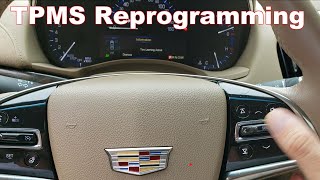
Typical fix: Replace the RCDLR module. This part MUST be programmed to the vehicle. A technician with a scan tool can sometimes use a 'Copy and Paste' procedure to transfer the existing TPMS sensor IDs from the old module to the new one before installation, simplifying the process. If not, a full relearn procedure is required. 🎬 Watch: How to perform a TPMS sensor relearn procedure
Est. part cost: $40-$150 - Failed Left Front TPMS Sensor 🟡 Medium Probability TPMS sensors contain a non-replaceable battery with a finite lifespan, typically 7-10 years. Vehicles in this year range are at or beyond the expected life of the original sensors.
How to confirm: If key fobs work perfectly, the sensor is more likely the cause. A professional TPMS tool can check the sensor's battery status and signal output directly. A scan tool may also show the sensor battery status as 'Low'.
Typical fix: Replace the TPMS sensor in the left front wheel. This requires breaking down the tire from the wheel. A TPMS relearn procedure must be performed afterward using a TPMS tool or the vehicle's built-in procedure.
Est. part cost: $30-$80 - Radio Frequency Interference (RFI) ⚪ Low Probability The RCDLR operates on a radio frequency (315 MHz) that can be easily 'jammed' by low-quality aftermarket electronics, a known issue highlighted in TSB PIC5650K.
How to confirm: Unplug all aftermarket devices (phone chargers, dash cams, USB power banks, etc.) from the vehicle's power outlets. Turn off any aftermarket lighting (especially LED bulbs in dome or license plate lights). Remove other RF-emitting devices from the car, such as toll passes or building access cards. If the symptoms disappear, one of the devices is causing interference.
Typical fix: Remove the offending aftermarket device from the vehicle.
Est. part cost: $0 - Poor RCDLR Antenna Connection ⚪ Low Probability
How to confirm: As described in TSB 16-NA-061, inspect the coaxial antenna cable connections at the RCDLR module and at the antenna amplifier, which is often located near the rear glass. A loose connection can cause intermittent signal loss. A technician can gently pull on the coax connector at the module; if it comes out, it was not seated properly.
Typical fix: Securely reconnect the coaxial cable. If the connector is damaged, it may need to be repaired or replaced.
Est. part cost: $0-$20
Diagnosis Steps
- Check for other symptoms: Do the key fobs work? Is there a 'No Remote Detected' message? If yes, suspect the RCDLR, its antenna, or RFI. If no, suspect the individual sensor.
- Check for RFI: Unplug ALL aftermarket 12V accessories (phone chargers, dash cams, USB hubs) and turn off any aftermarket LED lighting. Drive the vehicle to see if the code clears and symptoms resolve. TSB PIC5650K notes this is a very common cause of intermittent issues.
- Scan for Codes: Use a professional scan tool capable of reading GM-specific Chassis (C) and Body (B) codes to confirm C0750 and check for other related codes (C0755, C0760, C0765, B3055).
- Check Live TPMS Data: Use the scan tool to view live data from all four TPMS sensors. Check the battery status for the Left Front sensor. If it shows 'Low' or 'N/A', the sensor has likely failed.
- Locate and Inspect RCDLR: On 2008-2014 models, access the RCDLR behind the driver's side rear seat. Inspect the coaxial antenna cable for a secure connection and check the wiring harness for any visible damage. A loose antenna is a common and simple fix.
- Test TPMS Sensor: If only C0750 is present and the key fobs work, use a TPMS activation tool to attempt to trigger the left front sensor. If it fails to respond, it needs to be replaced.
- Test RCDLR Function: If the antenna connection is good, RFI has been ruled out, and symptoms point to a central failure (multiple TPMS codes and key fob issues), the RCDLR module has likely failed and requires replacement and programming.
Parts You'll Likely Need
- Remote Control Door Lock Receiver (RCDLR)
(OEM #Varies by year/options (e.g., 25974393, 13509517). Must be confirmed with VIN.)— This is the most common point of failure on this platform when C0750 is accompanied by key fob issues or no-start conditions.
Trusted brands: ACDelco, GM Genuine
OEM price range: $70-$150
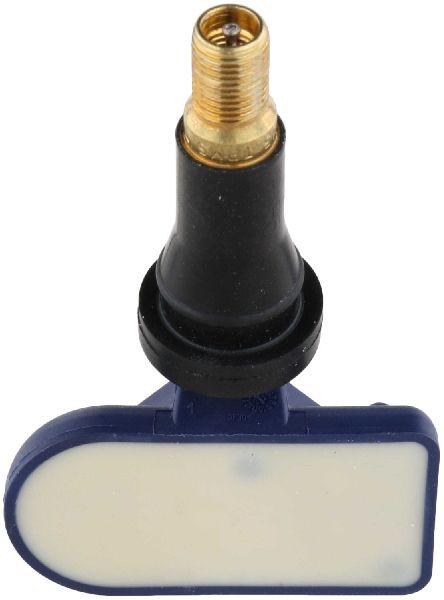
Aftermarket price range: $40-$100 - Tire Pressure Monitoring System (TPMS) Sensor
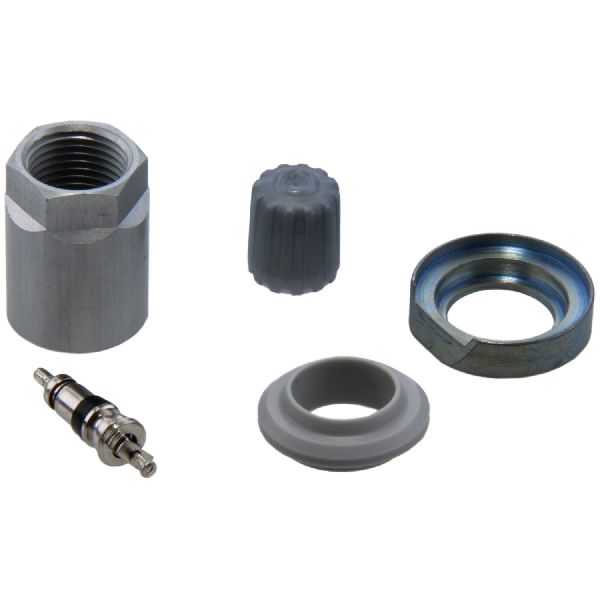
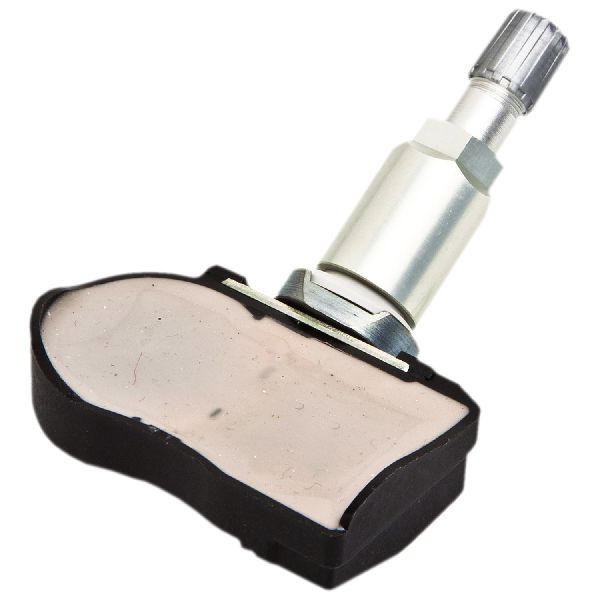
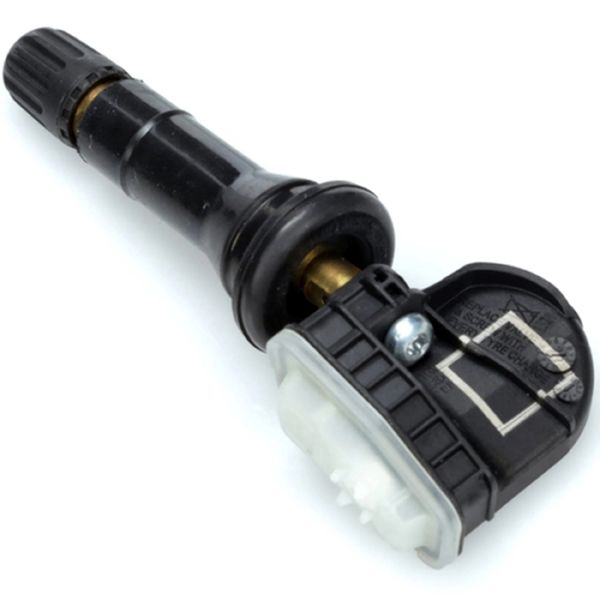
(OEM #2007: 25774006 | 2008-2014: 13586335 (or 13598771))— If only the C0750 code is present and key fobs work normally, the sensor itself has likely failed due to a dead battery. Ensure the correct part number is used for your model year.
Trusted brands: ACDelco, Schrader, Continental
OEM price range: $50-$80
Aftermarket price range: $30-$60
Related Codes That Often Appear With This One
- C0755 — This is the code for the Right Front TPMS sensor. Seeing multiple TPMS codes together (C0750, C0755, C0760, C0765) strongly suggests a central problem like the RCDLR, its antenna, or RFI, rather than all four sensors failing at once.
- C0760 — This is the code for the Left Rear TPMS sensor. Seeing multiple TPMS codes together points to a central receiver failure.
- C0765 — This is the code for the Right Rear TPMS sensor. Seeing all four codes together is a classic symptom of a failed RCDLR or a disconnected RCDLR antenna, as noted in TSB 16-NA-396.
- B3055 — This code relates to the vehicle immobilizer key. It can appear alongside C0750 when the RCDLR fails, as the module can't read the key's transponder signal, triggering a security fault.
Technical Service Bulletins (TSBs) & Recalls
- PIC5650M / PIC5650K: Details extensive causes of Radio Frequency Interference (RFI).
- 16-NA-396: Directly links internal RCDLR failure to TPMS codes and no-start conditions.
- 16-NA-061: Points to checking the RCDLR antenna connection as a possible fix.
- PI1283: A bulletin for the related Cadillac SRX describing the same RCDLR failure causing TPMS codes.
Platform-Specific Known Issues
- A failing RCDLR module is the primary vehicle-specific issue, causing both TPMS codes and no-start/security light problems, as documented in TSB 16-NA-396.
- The system is highly susceptible to Radio Frequency Interference from aftermarket electronics, which can mimic sensor or RCDLR failure.
- The location of the RCDLR behind the rear seat and C-pillar trim on 2nd-gen models makes it more labor-intensive to inspect or replace than on other vehicles.
Mechanic-Grade Diagnostic Values
- RCDLR Module Power — expected: Battery voltage (more than 12 volts but less than 16 volts) at the B+ terminal of the RCDLR connector.. Failure: No voltage or low voltage indicates a wiring or fuse issue upstream of the module.
Scan Tool Commands That Help
- GDS2: Module Diagnostics -> Remote Control Door Lock Receiver -> Configure/Reset Functions -> Add/Replace Key Fobs — This function is used to program new or existing key fobs to a new RCDLR module. It can also be used to test if the module is responsive.
- Tech2 / TIS2WEB: Service Programming System (SPS) -> Replace and Reprogram ECU — This is the required procedure for programming a replacement RCDLR module. It downloads the correct software and vehicle configuration to the new module.
- Tech2: RCDLR Setup — After replacing the RCDLR, this setup procedure must be performed, followed by the Theft Deterrent System learn and TPMS sensor learn procedures.
Wiring & Ground Locations
- G200 — Behind the left kick panel, near the driver's feet.. This is a major interior ground point. For some model years, wiring diagrams show this as a ground for the RCDLR. A poor connection here can cause intermittent RCDLR failure.
- G304 — On the rear package shelf, to the left of the subwoofer (on first-generation models).. This is a primary ground point for components in the rear of the vehicle, including the RCDLR on 2007 models. Corrosion or looseness can cause communication issues.
- G401 — At the right rear shock tower area.. This ground serves various components in the rear of the car. On second-generation models, it is in the vicinity of the RCDLR and its antenna, making it a relevant point to check for corrosion or damage.
- RCDLR Connector — At the RCDLR module itself.. A technician can check for Battery Positive Voltage (Pin 1), Low Speed LAN data (Pin 2), and Ground (Pin 4). Verifying these inputs is critical before condemning the module.
OEM Part Supersession History
13586335→13598771, 13540600— Standard part evolution and supplier changes.
Heads up: While 13598771 is a common replacement for 13586335, it is always critical to confirm the correct part number for the specific vehicle's VIN. Aftermarket programmable sensors are also available but require a TPMS tool for cloning or programming before installation.
Model Year Variations Within This Range
- 2007 (First Generation): The RCDLR is located on the rear package shelf. The primary ground to check is G304, also on the package shelf.
- 2008-2014 (Second Generation): The RCDLR is located behind the rear seat on the driver's side, near the C-pillar. Relevant grounds to inspect include G200 (left kick panel) and G401 (right rear shock tower area).
- Some models (2010/2011+): The TPMS relearn procedure may change from a pressure-based system (adding/releasing air) to requiring a dedicated TPMS activation tool (like an EL-50448) to trigger the sensors during the relearn mode.
Helpful Videos
We Have This Part in Stock


The information in this article is provided for general reference and educational purposes only. Vehicle specifications, procedures, and part compatibility can vary by production date, trim level, and region. Always consult your vehicle's factory service manual and verify part numbers before purchasing or performing repairs. Safety-critical components such as airbags, seat belts, and braking systems should be installed by a qualified professional.
- Cadillac CTS:
- 🎬 Helpful Videos
- 🛍️ Shop This Part
- What's Unique About the 2007-2014 Cadillac CTS
- Diagnostic Flowchart
- Symptoms You May Notice
- Most Likely Causes
- Diagnosis Steps
- Parts You'll Likely Need
- Related Codes That Often Appear With This One
- Technical Service Bulletins (TSBs) & Recalls
- Platform-Specific Known Issues
- Mechanic-Grade Diagnostic Values
- Scan Tool Commands That Help
- Wiring & Ground Locations
- OEM Part Supersession History
- Model Year Variations Within This Range
- 🎟️ Get 5% Off