

OBD-II Code C0750: Left Front Tire Pressure Sensor Fault
What C0750 means, why it triggers, and how to fix it
- Code C0750 indicates the vehicle's computer lost the wireless signal from the left front tire pressure sensor.
- A dead internal sensor battery is the primary cause, as these non-rechargeable batteries reliably fail after 5 to 10 years.
- If your key fob stops working simultaneously on a GM vehicle, the Remote Control Door Lock Receiver (RCDLR) module has failed, requiring a $300-$650 replacement.
- Unplug all aftermarket phone chargers and dash cams before replacing parts to rule out Radio Frequency Interference (RFI) blocking the 315 MHz or 433 MHz signal.
- Replacing a single TPMS sensor costs between $80 and $235, but replacing all four is recommended on vehicles over 7 years old to prevent repeat labor charges.
What Does C0750 Mean?

Trouble code C0750 means the Body Control Module (BCM) or a dedicated receiver lost communication with the left front tire pressure sensor. This sensor sends regular radio signals containing pressure and status data. When the computer stops receiving these signals, it disables the low-pressure warning for that specific tire.
Technical definition: C0750 is a manufacturer-specific Diagnostic Trouble Code (DTC), primarily used by General Motors, indicating the Body Control Module (BCM) or Remote Control Door Lock Receiver (RCDLR) detected a fault with the Left Front Tire Pressure Sensor. The fault triggers when the sensor stops transmitting, sends an invalid signal (symptom byte :08), suffers an internal malfunction (:39), or reports low battery voltage (:03) after the vehicle exceeds 25 mph.
Can I Drive With C0750?
Yes, But With Caution. Yes, the vehicle is drivable, but a critical safety system is disabled. You will not be warned if the left front tire becomes dangerously low, increasing the risk of a blowout. The NHTSA notes that tires lose up to 50% of their pressure before appearing visibly flat. Driving on a severely underinflated tire causes overheating, structural failure, and blowouts, which at highway speeds cause a complete loss of vehicle control. Manually check your tire pressure with a gauge immediately and repair the system promptly.
Common Causes

- Dead Battery in the TPMS Sensor (Very Common) — A dead non-rechargeable battery inside the TPMS sensor is the most common cause of C0750. These batteries last 5 to 10 years, making failure inevitable on older vehicles. A scan tool often reveals sub-code ':03 - Low Voltage'.
- Faulty Remote Control Door Lock Receiver (RCDLR) Module (Common) — On many General Motors vehicles, the RCDLR reads signals from both TPMS sensors and key fobs. Internal failure is common and triggers all four TPMS codes (C0750, C0755, C0760, C0765) simultaneously, while disabling key fobs. GM TSB #16-NA-396 addresses this specific failure.
- Internal TPMS Sensor Failure (Common) — The sensor's internal electronics fail from age, moisture, or vibration independently of the battery. A scan tool displays sub-code ':39 - Internal Malfunction' when this occurs.
- Failed or Incorrect TPMS Relearn Procedure (Less Common) — After rotating tires or replacing a sensor, the vehicle's computer requires a 'relearn' procedure to map each sensor ID to its new position. If skipped or failed, the system reports a fault for a position expecting a missing sensor. 🎬 Watch: How to perform a manual TPMS relearn without tools
- Radio Frequency Interference (RFI) (Less Common) — Aftermarket electronics like phone chargers, dash cams, or LED lights emit radio frequencies that jam the TPMS sensor signal. GM TSB #PIC5650M warns about this interference, noting the code disappears when the offending device is unplugged.
- Physical Damage to the TPMS Sensor (Rare) — Tire technicians easily break the valve-stem-mounted sensor during tire installation. Severe pothole impacts also destroy the sensor housing.
- Poor RCDLR or PDM Antenna Connection (Rare) — The receiver module relies on an external antenna. GM service bulletins (#16-NA-061, PIT5446A) note that a loose coaxial cable causes TPMS codes and poor key fob range, perfectly mimicking a dead module.
- Use of Improper Tire Sealant (Rare) — Liquid tire sealants clog the pressure sensing port on the TPMS sensor. This permanently blinds the sensor to pressure changes and requires immediate replacement. 🎬 See this walkthrough on how to replace a TPMS sensor
Symptoms

- TPMS Warning Light Flashes, Then Stays On — The dashboard TPMS warning light flashes for 60-90 seconds at startup, then remains solidly lit. This specific sequence indicates a system fault, not just low tire pressure.
- "Service Tire Monitor System" Message — A 'Service Tire Monitor System' warning appears on the Driver Information Center (DIC).
- No Pressure Reading for Left Front Tire — The tire pressure display shows a blank reading or dashes ("--") for the left front wheel.
- Key Fob Stops Working or Has Poor Range — If the RCDLR module fails, key fob lock, unlock, and remote start functions die or suffer severely reduced range simultaneously with the TPMS warning.
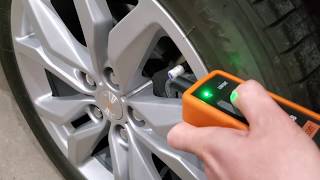
- Inability to Complete TPMS Relearn Procedure (also visible on scanner) — Manual or tool-based relearn procedures fail. The horn refuses to chirp 🎬 Watch: Using the EL-50448 tool for a GM TPMS relearn when activating the left front sensor, proving the receiver gets no signal.
Diagnostic Flowchart
Tap your situation to follow the diagnostic path that matches what you're seeing on this code.
Common Fixes & Costs
- Replace the Left Front TPMS Sensor — Parts: $30-$110, Labor: $50-$125, ~0.8 hr book time (Professional)
- Replace All Four TPMS Sensors — Parts: $120-$440, Labor: $120-$220, ~1.4 hr book time (Professional)
- Perform TPMS Relearn Procedure — Parts: $0, Labor: $25-$75, ~0.4 hr book time (DIY)
- Replace the Remote Control Door Lock Receiver (RCDLR) — Parts: $80-$150, Labor: $200-$500, ~2.5 hr book time (Professional)
- Inspect and Repair RCDLR/PDM Wiring or Antenna — Parts: $0-$20, Labor: $100-$300, ~1.5 hr book time (Intermediate)
DIY vs Professional
- Replace the Left Front TPMS Sensor — Beginner:
Tools: Tire changing machine, wheel balancer, valve core tool, torque wrench, TPMS relearn tool. - Replace the Remote Control Door Lock Receiver (RCDLR) — Beginner:
Tools: Interior trim removal tools, socket set, professional scan tool with programming/security capabilities (e.g., GM MDI with GDS2 subscription). - Perform TPMS Relearn Procedure — Beginner:
Tools: Owner's manual. Some GM vehicles require a simple TPMS relearn tool (approx. $15), while many others can be done via dashboard controls or by letting air out of the tires in sequence. - Inspect and Repair RCDLR/PDM Wiring or Antenna — Beginner:
Tools: Interior trim removal tools, digital multimeter, socket set.
Used vs. New Parts: Buying Guide
When a used part is worth it: Buying used TPMS sensors is never recommended due to their strict 5-10 year battery life. The labor cost to install a sensor far outweighs the parts savings. For the RCDLR module, a used part from a reputable auto recycler is cost-effective if a shop can program it.
Donor-vehicle mileage cap: roughly under 50000 miles for the part to have meaningful remaining life.
Donor quality checklist:
- For RCDLR modules, match the part number exactly; superseded numbers may or may not be compatible.
- Avoid buying used TPMS sensors entirely. Their remaining battery life is unknown and they are a wear item.
- Verify the return policy for any used electronic module in case it is faulty.
Decision logic:
- If The failed part is a TPMS sensor → Always buy new. The savings on a used sensor are negligible compared to the risk and repeated labor cost.
- If The failed part is the RCDLR module and the vehicle is over 10 years old → A used module is a reasonable choice if the part cost is significantly less than new and you have confirmed a shop can program it.
- If You are replacing one TPMS sensor on a vehicle over 7 years old → Strongly consider buying four new sensors and replacing them all at once to prevent repeat failures of the other original sensors.
Warranty tradeoff: Used parts typically have a 30-90 day warranty. Aftermarket new TPMS sensors often come with a 1-2 year warranty. OEM new parts carry a manufacturer's warranty, typically 1 year.
Worst-case if a used part fails: $150-$250 if a used TPMS sensor or RCDLR fails after the warranty period, requiring repeat labor for replacement and programming.
What Happens If You Wait — Timeline
- 0-1 month: The C0750 code sets, the TPMS light flashes then stays solid, and the display shows '--' for the left front tire. The safety warning system is disabled. (MPG impact: 0%% · Added cost: $0)
- 1-4 months: An undetected slow leak causes the tire to become underinflated by 5-10 PSI, increasing rolling resistance and accelerating uneven shoulder wear. (MPG impact: 1-3%% · Added cost: $20-$50 in wasted fuel, plus accelerated tire wear.)
- 4-8 months: Driving on a severely underinflated tire (>25% low) causes excessive heat buildup, permanently destroying the tire's internal sidewall structure. (MPG impact: 3-5%% · Added cost: $150-$400 (cost of a new tire + mounting, plus ongoing fuel waste).)
- 8+ months: The heat-damaged tire suffers a catastrophic high-speed blowout, causing loss of vehicle control, wheel rim destruction, and potential accidents. (MPG impact: N/A% · Added cost: $500-$5000+ (cost of tire, wheel, potential body/suspension repair, and accident-related expenses).)
Cost of Not Fixing It
- Immediate Risk: No warning for a dangerously underinflated left front tire, increasing the risk of a high-speed blowout and loss of control. (Added cost: $200-$2000+)
- 0-3 Months: An undetected slow leak causes accelerated, uneven tire wear and reduces fuel economy, requiring premature tire replacement. (Added cost: $150-$400)
- 3+ Months: Driving on a severely underinflated tire destroys the internal structure and damages the wheel rim, leading to blowout-induced accidents. (Added cost: $500-$7000+)
Diagnosis Steps
- Check Key Fob and Scan for Codes
Test the key fob first. If it fails alongside the TPMS light, the RCDLR module is the culprit. Scan for codes; finding C0755, C0760, and C0765 alongside C0750 confirms a central RCDLR failure rather than four simultaneously bad sensors.
Tools: OBD-II Scanner (Beginner) - Test the Sensor with a TPMS Tool
Use a dedicated TPMS diagnostic tool to activate the left front sensor. If the tool gets no response or shows a low battery status (under 3.0V), the sensor is dead and requires replacement.
Tools: TPMS Diagnostic Tool (Intermediate) - Attempt a TPMS Relearn Procedure
Perform the vehicle-specific TPMS relearn procedure. If you recently rotated tires, the system is likely confused about sensor locations, and a successful relearn resolves the code immediately.
Tools: TPMS Relearn Tool (or None, vehicle dependent) (Beginner) - Check for Radio Frequency Interference (RFI)
Unplug all aftermarket 12V accessories, especially phone chargers and dash cams. Clear the codes and drive. Per GM TSB #PIC5650M, these devices frequently jam TPMS signals.
Tools: None (Beginner) - Inspect RCDLR Antenna Connection (GM Vehicles)
On GM SUVs and trucks, locate the RCDLR antenna behind the right rear quarter panel trim. Per GM TSB #16-NA-061, ensure the coaxial cable is securely connected, as a loose wire triggers this code.
Tools: Trim removal tools (Intermediate) - Listen for RCDLR Relay Clicks (GM Pro Tip)
On push-button start GM vehicles, press the start button without touching the brake. Listen for multiple clicks from the RCDLR module. A single click indicates an internal transistor failure requiring module replacement.
Tools: None (Advanced) - Analyze Scan Tool Live Data and Symptom Bytes
Use a professional scan tool (like GM GDS2) to read symptom bytes. Byte ':03' confirms a low sensor battery, ':39' confirms internal sensor failure, and ':08' indicates an invalid signal.
Tools: Professional OBD-II Scan Tool (e.g., GM GDS2, Autel) (Advanced) - Perform Voltage Drop Test on RCDLR Circuit
Back-probe the RCDLR connector with the ignition on. Measure voltage drop between the battery positive and the module's main power pin (must be <0.5V). Repeat for the ground pin. High resistance indicates wiring faults.
Tools: Digital Multimeter (with back-probe pins) (Advanced) - Visually Inspect the Sensor
Dismount the tire from the wheel to visually inspect the sensor for cracks, corrosion, physical impact damage, or obstruction from liquid tire sealant.
Tools: Tire changing machine (Professional)
When This Code Triggers (Freeze-Frame Conditions)
- Vehicle Speed: > 25 mph (40 km/h) (The system requires the vehicle to exceed 25 mph for sensors to enter their primary transmission mode.)
- Time Since Ignition On: 5-20 minutes (The BCM sets the code if it receives no valid signal for a predetermined period (e.g., 18 minutes) while driving.)
- TPMS Sensor Mode: Drive/Rolling Mode (Sensors use centrifugal force to switch from stationary to rolling mode; the fault triggers when the sensor fails to transmit in this mode.)
- Ambient Temperature: < 40°F (4°C) (Cold temperatures drop the voltage of a weak sensor battery below the transmission threshold, triggering a fault that disappears as tires warm up.)
Related Codes
- C0755, C0760, C0765 — Codes for the other three tires. If all four set simultaneously with symptom byte ':29' (Too Few Pulses), the RCDLR module or its antenna has failed (TSB #16-NA-396).
- B3055 — A security code indicating an unrecognized key. Appearing alongside C0750, it confirms a broader RCDLR module failure or severe Radio Frequency Interference (RFI) causing a no-start condition.
- C0775 — 'TPMS System Learn Not Performed'. C0750 indicates a specific sensor signal fault, while C0775 means the entire system lost its sensor ID memory and requires a relearn procedure.
- U0140 — 'Lost Communication With Body Control Module'. C0750 reports to the BCM; U0140 indicates the BCM itself is failing or suffering a network wiring issue.
Climate & Environmental Factors
- Cold Weather: Cold temperatures slow the chemical reaction inside the sensor's lithium-ion battery, dropping its voltage output. This weakens the radio transmission, triggering a temporary C0750 code on cold mornings that disappears after driving warms the tires. This guarantees the battery is nearing the end of its life.
- High Humidity / Water Intrusion: Water leaks near the rear pillars or headliner cause corrosion on the pins of central modules like the RCDLR, leading to TPMS communication faults and key fob failures.
How to Talk to a Mechanic About This Code
Say this: "I have a C0750 code and a flashing TPMS light for the left front tire. If my key fob is also malfunctioning, please investigate the RCDLR module per GM TSB 16-NA-396. If the fob works perfectly, please use a TPMS tool to confirm the sensor has a dead battery before replacing it."
This directs the technician to perform a logical diagnosis (sensor vs. module) instead of blindly replacing the most obvious part, preventing expensive misdiagnoses.
Avoid saying:
- 'My tire light is on, can you fix it?'
- 'Just replace the bad sensor.'
- 'I think the battery is dead in the tire thingy.'
Questions to ask before authorizing the repair:
- Did you use a TPMS tool to test the sensor, and did it show a low battery or no signal?
- Have you checked for other TPMS codes (C0755, etc.) that point to the RCDLR module?
- What is the warranty on the part and labor?
- Does the quoted price include mounting, balancing, and the digital TPMS relearn procedure?
Where to Take It: Dealer vs Independent vs Chain
- Dealer:
Recommended only if an RCDLR module replacement and programming is required. Overkill for a simple sensor replacement.
Best for: Vehicles under warranty., Confirmed RCDLR module failure that requires manufacturer-specific programming., Complex electrical issues where TPMS is just one of several symptoms.
Downsides: Highest labor and parts costs, often 1.5-2x more than independent shops., May be quick to replace parts without thorough diagnosis of outside factors like RFI. (Typical cost: +50% vs. baseline) - Independent Shop:
Good fit. A reputable independent shop handles both sensor replacement and complex RCDLR diagnosis effectively for less than a dealer.
Best for: Out-of-warranty vehicles where cost is a factor., Diagnosing sensor vs. module issues, as they often have advanced diagnostic tools., Vehicles with known TSBs that a good independent shop will be aware of.
Downsides: Quality and diagnostic capabilities vary widely; ensure they have modern TPMS tools., May not have the specific tools to program a new RCDLR module for all makes/models. (Typical cost: +0% vs. baseline) - Chain Shop:
Best fit for simple sensor replacement. Most tire shops are experts at this specific task and are highly cost-effective.
Best for: Straightforward TPMS sensor replacement when you are certain the sensor is the only problem., Replacing all four sensors as preventive maintenance during a tire purchase.
Downsides: Technicians are often less experienced with complex electrical diagnosis (like a faulty RCDLR)., May lack the advanced scan tools to read manufacturer-specific symptom bytes or program modules. (Typical cost: -10% vs. baseline)
When to Walk Away From the Repair
If the estimated repair cost exceeds 40-50% of the car's private-party value, evaluate your options, especially if the vehicle has other pending issues.
- Car worth $8000, fix is $225: Fix it. This is a relatively inexpensive safety-related repair that is well below the threshold.
- Car worth $4000, fix is $650: Borderline, but likely fix it. This assumes an RCDLR module replacement. Since this can prevent the car from starting, it's a critical repair. Get a second opinion to confirm the diagnosis before proceeding.
- Car worth $2500, fix is $650: Walk away. The repair cost is a significant percentage of the car's value. This is a good candidate to sell as a 'mechanic special' or trade in.
What Scan Tool You Need for This Code

Minimum: A dedicated TPMS activation/diagnostic tool. A basic OBD-II code reader is not sufficient.
A standard $20 OBD-II reader will only show you the C0750 code. It cannot activate the sensor, read its internal battery status, check its signal strength, or perform the necessary relearn procedure after replacement. You will be guessing at the problem without a proper TPMS tool.
Budget: Autel MaxiTPMS TS401/TS408 (~$80) — Activates and reads sensor data (ID, pressure, temperature, battery status) to confirm failure. Guides manual relearns.
Mid-range: Autel MaxiTPMS TS508WF / Foxwell NT809TS (~$240) — Plugs into the OBD-II port to perform automated relearn procedures required by newer cars, reads TPMS codes, and programs aftermarket sensors.
Professional: Autel MaxiCOM MK808S-TS / MK900-TS (~$550-800) — Combines complete TPMS servicing with all-system OE-level diagnostics. Reads manufacturer-specific symptom bytes (:03, :29) and programs new RCDLR modules.
How to Clear the Code After You Fix It
- Use an OBD-II scan tool to clear the DTCs from the BCM.
- Perform the vehicle-specific TPMS relearn procedure to register the new sensor ID and its location.
- Drive the vehicle for 10-20 minutes at speeds over 25 mph to confirm the light stays off and the system is reading the new sensor.
Drive cycle (~20 minutes): After clearing the code and performing the relearn, drive the vehicle for 10-15 minutes consistently above 30 mph. This allows the BCM to verify multiple transmissions from the new sensor, turning the light off permanently.
Readiness monitors affected: Not Applicable
Watch out for:
- Forgetting the mandatory TPMS relearn procedure after replacing a sensor guarantees the code will not clear.
- Disconnecting the 12V battery will not clear a current C0750 fault code or relearn the system.
- Using a manual relearn procedure on a vehicle that strictly requires a digital TPMS relearn tool.
Will This Fail Emissions / State Inspection?
No — by itself this code doesn't fail OBD inspection (but it can keep readiness monitors from setting, which causes a separate fail).
- California: A TPMS light will not fail a California smog inspection, as it is a safety system, not an emissions component.
- New York: An illuminated TPMS warning light is grounds for an automatic safety inspection failure in New York.
- Texas: A TPMS light will not cause a failure on the Texas state safety inspection, which checks physical tread depth but not the electronic monitor.
Most Commonly Affected Vehicles
- Chevrolet Suburban / Tahoe (2007-2022) — Extremely common issue. On 2007-2014 models, this is often a dead sensor, but TSB PI1085A notes a faulty RCDLR (P/N 20863945) on 2012-2013 models. On 2015-2018 models, TSB #16-NA-061 points to a disconnected RCDLR antenna in the rear D-pillar as a primary cause before replacing parts.
- Chevrolet Equinox (2010-2017) — A known issue where C0750 is frequently caused by a failing RCDLR, which simultaneously disables the key fobs, as documented in TSB #16-NA-396.
- GMC Sierra / Yukon (2007-2022) — Shares electronics with Chevrolet trucks/SUVs, making it prone to identical TPMS sensor and RCDLR failures. For 2015+ models, check the RCDLR antenna connection per TSB #16-NA-061. Newer models (2021+) use sensor P/N 13542523.
- GMC Acadia (2007-2016) — Very prone to C0750 from either a dead sensor battery or a failed RCDLR module, which also affects key fobs and is accompanied by other TPMS codes.
- Chevrolet Cruze / Volt / Camaro (2011-2018) — GM Technical Service Bulletin #16-NA-396 specifically addresses RCDLR failure on these models, which causes C0750 and other TPMS codes along with key fob issues.
- Nissan Sentra (2010-2013) — On these models, C0750 is almost always due to a failed TPMS sensor. Part numbers vary (e.g., 40700-3AN0B, 40700-JA02B), so verifying the correct part for your vehicle's VIN is critical.
- BMW X3 (F25) and other models (2011-2017) — While BMW uses different code terminology, a very similar fault pattern exists. A failure of the RDC module (TPMS receiver), often due to water intrusion, causes a 'Tire Pressure Malfunction' message and all four tire readings to fail simultaneously.
- Subaru Forester / Crosstrek (2015-2019) — A unique quirk on many Subarus is that when a single TPMS sensor fails, the dashboard display stops showing the pressure for ALL four tires, showing dashes instead. This misleads technicians into thinking there is a larger system failure.
Manufacturer-Specific Notes

- General Motors (Chevrolet, GMC, Cadillac): If the key fob dies simultaneously with the TPMS light, the Remote Control Door Lock Receiver (RCDLR) module failed (TSB #16-NA-396). Always check for RFI (TSB #PIC5650M) and loose antennas (TSB #16-NA-061) before replacing it.
- General Motors (Older Trucks/SUVs, pre-2007): Older models use the Passenger Door Module (PDM) as the central TPMS receiver instead of a dedicated RCDLR.
- SAAB (under GM): Models like the 2010-2011 9-5 utilize specific symptom bytes for C0750 (:03 for Low Voltage, :39 for Internal Malfunction) to pinpoint exact sensor failures.
- General Motors (Recalls): Recall 18255 addressed RCDLRs with incorrect pressure calibrations on 2018 Express/Savana vans. Recall 15819 covered 2014-2016 vans shipped entirely without TPMS.
Real Owner Stories
2017 Chevy Volt at 60K miles - The Classic RCDLR Failure
Owner experienced a 'No Remote Detected' message, dead key fob, and TPMS light with C0750.
Outcome: The fix was replacing the RCDLR module per GM TSB #16-NA-396 and having it dealer-programmed. This resolved all symptoms.
Lesson: On a GM vehicle, if the TPMS light appears at the same time as key fob problems, the RCDLR module is the prime suspect, not the individual tire sensors. Check TSBs before buying parts.
2011 GMC Sierra at 181K miles - Misleading Codes
The TPMS light was on, and the Driver Information Center showed the right rear tire was not reading. Rotating the tires did not change the display.
Outcome: The shop replaced all four sensors due to high mileage and widespread battery failure. The ':29' code often points to a reception issue, but the low voltage codes confirmed the sensors were dying.
Lesson: Don't just focus on the tire that isn't displaying a pressure. Use a scan tool to check for codes on all four sensors. Multiple codes with different symptom bytes suggest widespread age-related failure.
2008 Chevy Equinox with Poor Key Fob Range
Key fob had terrible range and TPMS light was on with all four sensors not reporting.
Outcome: Instead of replacing the RCDLR module, the owner found the coaxial antenna cable unplugged. Reconnecting it instantly fixed both issues per TSB #16-NA-061.
Lesson: Before paying for an expensive module replacement ($200+ labor), perform a visual inspection. On GM SUVs, a loose RCDLR antenna connection perfectly mimics a failed module and is a free fix.
Corvette C6 After New Tires - Intermittent Fault
TPMS faulted intermittently after driving in heavy rain, accompanied by dead key fobs and codes C0750-C0765.
Outcome: The live data proved a central RCDLR communication issue aggravated by moisture, not bad sensors. The ultimate fix was diagnosing the central module.
Lesson: If a shop says 'no codes found,' ask if they checked the HISTORY codes. Intermittent faults clear from the 'current' list after a few drive cycles. Capturing live data during the fault is invaluable proof.
How to Prevent This Code From Triggering
- Proactively replace all TPMS sensors when buying new tires on a vehicle over 7 years old. (Once every 7-10 years) — The sensor batteries have a finite 5-10 year life. Since replacing a sensor requires dismounting the tire, doing all four at once during a tire change saves significant future labor costs and prevents repeat visits as each old sensor fails one by one.
- Inform the tire shop that the vehicle has TPMS before any tire service. (Every tire change or repair) — Alert the technician to use proper bead-breaking procedures to avoid physically crushing the sensor with the tire machine.
- Use high-quality, certified (FCC/CE) aftermarket electronics like phone chargers and dash cams. (Always) — Cheap electronics emit Radio Frequency Interference (RFI) that jams the 315 MHz or 433 MHz TPMS signals.
- Regularly inspect for and address water leaks into the cabin, especially near the rear pillars or headliner. (Annually or after heavy rain) — Water intrusion near the rear pillars corrodes the RCDLR module pins, causing TPMS and key fob failures.
- Avoid using unapproved liquid tire sealants. (When repairing a flat) — Aerosol flat-fixers clog the tiny air passage on the TPMS sensor, permanently blinding it to pressure changes.
Frequently Asked Questions
What's the difference between a solid and a flashing TPMS light?
A flashing TPMS light (60-90 seconds at startup, then solid) indicates a system fault like a dead sensor or module failure, setting a code like C0750. A solid, non-flashing light simply means a tire is underinflated.
Why did my key fob stop working when the TPMS light came on?
On many GM vehicles, the Remote Control Door Lock Receiver (RCDLR) communicates with both tire sensors and key fobs. When this module fails, both systems die simultaneously, as documented in GM TSB #16-NA-396.
Could my phone charger be causing the TPMS light?
Yes. Aftermarket electronics plugged into 12V outlets create Radio Frequency Interference (RFI) that blocks TPMS signals. GM TSB PIC5650M advises unplugging all devices to see if the light goes out before paying for repairs.
Can I replace just one TPMS sensor?
You can replace just the failed sensor. However, since all sensor batteries share a 5-10 year lifespan, mechanics recommend replacing all four simultaneously on vehicles over 7 years old to prevent repeat failures.
Will the C0750 code clear itself?
No. C0750 indicates a hard communication fault that requires physical repair and a scan tool reset. The light remains on until the dead sensor or faulty module is replaced and relearned.
Why did the C0750 code appear right after getting new tires?
The tire technician likely broke the sensor with the mounting machine. Alternatively, the shop forgot to perform the mandatory TPMS relearn procedure, causing the computer to lose the sensor's location.
What are common misdiagnosis mistakes for C0750?
A common GM mistake is replacing the TPMS sensor without checking if the key fob is also dead, which points to the RCDLR module instead. Another error is replacing a sensor but skipping the mandatory relearn procedure.
Key Takeaways
- Code C0750 indicates the vehicle's computer lost the wireless signal from the left front tire pressure sensor.
- A dead internal sensor battery is the primary cause, as these non-rechargeable batteries reliably fail after 5 to 10 years.
- If your key fob stops working simultaneously on a GM vehicle, the Remote Control Door Lock Receiver (RCDLR) module has failed, requiring a $300-$650 replacement.
- Unplug all aftermarket phone chargers and dash cams before replacing parts to rule out Radio Frequency Interference (RFI) blocking the 315 MHz or 433 MHz signal.
- Replacing a single TPMS sensor costs between $80 and $235, but replacing all four is recommended on vehicles over 7 years old to prevent repeat labor charges.
Helpful Videos

The information in this article is provided for general reference and educational purposes only. Vehicle specifications, procedures, and part compatibility can vary by production date, trim level, and region. Always consult your vehicle's factory service manual and verify part numbers before purchasing or performing repairs. Safety-critical components such as airbags, seat belts, and braking systems should be installed by a qualified professional.
- 🎬 Helpful Videos
- What Does C0750 Mean?
- Can I Drive With C0750?
- Common Causes
- Symptoms
- Diagnostic Flowchart
- Common Fixes & Costs
- DIY vs Professional
- Used vs. New Parts: Buying Guide
- What Happens If You Wait — Timeline
- Cost of Not Fixing It
- Diagnosis Steps
- When This Code Triggers (Freeze-Frame Conditions)
- Related Codes
- Climate & Environmental Factors
- How to Talk to a Mechanic About This Code
- Where to Take It: Dealer vs Independent vs Chain
- When to Walk Away From the Repair
- What Scan Tool You Need for This Code
- How to Clear the Code After You Fix It
- Will This Fail Emissions / State Inspection?
- Most Commonly Affected Vehicles
- Manufacturer-Specific Notes
- Real Owner Stories
- 2017 Chevy Volt at 60K miles - The Classic RCDLR Failure
- 2011 GMC Sierra at 181K miles - Misleading Codes
- 2008 Chevy Equinox with Poor Key Fob Range
- Corvette C6 After New Tires - Intermittent Fault
- How to Prevent This Code From Triggering
- Frequently Asked Questions
- What's the difference between a solid and a flashing TPMS light?
- Why did my key fob stop working when the TPMS light came on?
- Could my phone charger be causing the TPMS light?
- Can I replace just one TPMS sensor?
- Will the C0750 code clear itself?
- Why did the C0750 code appear right after getting new tires?
- What are common misdiagnosis mistakes for C0750?
- Key Takeaways
- 🎟️ Get 5% Off