

OBD-II Code C0713: Air Suspension Compressor Overheating - The Ultimate Guide
What C0713 means, why it triggers, and how to fix it for good
- Code C0713 triggers when the air suspension compressor exceeds its safe operating temperature (often 284°F), almost always because it ran longer than its standard 30-90 second cycle.
- Never replace a burned-out compressor without first performing a soapy water test on the rubber air springs, as a $400 leaking air bag is the root cause in over 80% of cases.
- Always swap the $15-$50 compressor relay before buying expensive parts; a relay with contacts welded shut forces the compressor to run continuously until it destroys itself.
- If you own a 2002-2014 GM SUV (Escalade, Tahoe, Yukon) with this code, inspect the compressor wiring harness near the rear driver's side wheel for chafing against the frame before replacing any hardware.
What Does C0713 Mean?
The C0713 code signifies your vehicle's Electronic Suspension Control Module (ESCM) detected a critical overheating condition in the air suspension compressor. This electric pump generates pressurized air for the air springs to control ride height. To prevent catastrophic failure or fire, the module disables the compressor. This stops ride height adjustments, causing the vehicle to sag and ride harshly.
Technical definition: Overheating of the compressor of the level control system. The ESCM sets this code when it detects the air suspension compressor temperature exceeds the calibrated threshold (often over 284°F/140°C). The module determines this via an internal temperature sensor or by calculating compressor run-time against expected temperature rise.
Can I Drive With C0713?
Yes, But With Caution. You can drive short distances, but it is not recommended. The disabled air suspension causes a harsh, bouncy ride and reduces vehicle stability during cornering. Continuous driving damages other expensive components; a sagging chassis alters alignment and ruins tires within weeks. If the vehicle sits very low, you risk bottoming out and destroying the undercarriage, exhaust, or subframe. Address the issue immediately to avoid compounding repair costs.
Common Causes
- Air leaks in the suspension system (Very Common) — Small cracks in the rubber air springs, lines, or O-rings cause a slow loss of pressure. This forces the compressor to run constantly to compensate, exceeding its duty cycle and causing it to overheat.
- Faulty compressor relay (Common) — The relay acts as an electrical switch. If its internal contacts weld together, it gets stuck in the 'on' position. This forces the compressor to run continuously until it overheats and burns out.
- Failing or worn-out air suspension compressor (Common) — Over time, the internal piston seals of the compressor wear out. A worn compressor is less efficient, meaning it must run longer and work harder to produce the required air pressure, generating excessive heat.
- Faulty or inaccurate ride height sensor (Common) — A malfunctioning ride height sensor sends incorrect data to the control module, falsely reporting the vehicle is at the wrong height. This prompts the compressor to run needlessly to 'correct' a non-existent issue.
- Electrical wiring issues (Less Common) — Damaged, shorted, or pinched wires leading to the compressor or its sensors cause erratic operation. This is a known issue on 2002-2014 GM SUVs where the harness chafes against the frame.
- Clogged compressor air filter or dryer (Less Common) — The compressor draws ambient air through a filter and a desiccant dryer. If these become clogged with dirt or saturated with moisture, the compressor is starved for air, forcing it to strain and overheat.
- Faulty air suspension compressor temperature sensor (Less Common) — The temperature sensor itself fails, sending a false overheating signal to the control module even when the compressor's temperature is normal.
Symptoms
- Vehicle suspension is sagging or lower than normal — One or more corners, or the entire rear/front of the vehicle, sits noticeably lower than its normal ride height, particularly after being parked overnight.
- Compressor runs constantly or very frequently — You hear the distinct buzzing or humming of the air compressor running for extended periods, or cycling on and off much more often than it used to.
- 'Compressor Cooling Down' or similar message — Vehicles like Ram and Mercedes-Benz explicitly display a message indicating the compressor is too hot and needs to cool down. This is a direct precursor to the C0713 code.
- Service Suspension System warning light is on — The dashboard displays a message such as 'Service Suspension System', 'Service Air Suspension', or 'Airmatic Malfunction'.
- Rough, bouncy, or stiff ride — With the compressor disabled, the suspension loses its ability to adapt. The vehicle rides harshly as if it has no suspension, or bounces excessively over bumps.
- Loud or unusual noises from the compressor — A failing compressor makes loud grinding, whining, or rattling sounds when it runs, indicating severe internal wear.
Diagnostic Flowchart
Tap your situation to follow the diagnostic path that matches what you're seeing on this code.
Common Fixes & Costs
- Replace leaking air springs (air bags) — Parts: $200 - $1,200 (per pair), Labor: $250 - $500, ~2.5 hr book time (Intermediate)
- Replace the air suspension compressor relay — Parts: $15 - $50, Labor: $10 - $50, ~0.2 hr book time (DIY)
- Replace the air suspension compressor and relay — Parts: $250 - $1,300+, Labor: $200 - $400, ~2 hr book time (Intermediate)
- Replace faulty ride height sensor(s) — Parts: $50 - $250 (per sensor), Labor: $100 - $200 (per sensor), ~1 hr book time (Intermediate)
- Repair faulty wiring or connectors — Parts: $10 - $50, Labor: $150 - $400, ~2.5 hr book time (Professional)
DIY vs Professional
- Replace Air Suspension Compressor Relay — Beginner: Yes
Tools: Owner's manual (to locate fuse box), fuse puller or small pliers. - Replace Leaking Air Springs — Beginner: No
Tools: Floor jack, jack stands, wheel chocks, socket set, wrenches, torque wrench, soapy water spray bottle. A scan tool is needed to depressurize the system. - Replace Air Suspension Compressor — Beginner: No
Tools: Floor jack, jack stands, socket set, wrenches, trim removal tools, torque wrench. - Repair Faulty Wiring — Beginner: No
Tools: Digital multimeter, wiring diagrams, wire strippers, soldering iron or quality crimp connectors, heat shrink tubing, electrical tape.
Used vs. New Parts: Buying Guide
When a used part is worth it: Buying used air suspension components is highly risky. A used part makes sense only if the vehicle is very old, the budget is extremely tight, and you accept the high probability of a much shorter lifespan.
Donor-vehicle mileage cap: roughly under 50000 miles for the part to have meaningful remaining life.
Donor quality checklist:
- Verify the donor vehicle's mileage; lower is always better.
- Avoid parts from a vehicle scrapped due to a faulty suspension system.
- Inspect rubber air springs for any signs of dry rot, cracking, or perishing.
- For compressors, ensure electrical connectors are clean and air fittings haven't been left open to contamination.
Decision logic:
- If The part is a rubber air spring or a mechanical compressor → Strongly favor buying new. The savings from a used part are lost to premature failure and paying for labor a second time.
- If Vehicle is >10 years old and repair cost exceeds 25% of vehicle value → A used part is a temporary solution, but a coil conversion kit is a more reliable long-term choice.
- If A new aftermarket part with a lifetime warranty is available → Buy the new aftermarket part. The warranty is more valuable than the small upfront savings of a used component.
Warranty tradeoff: Used parts typically have a 30-90 day warranty covering the part only. Quality new aftermarket parts (e.g., Arnott, Suncore) come with a 1-year to limited lifetime warranty. OEM parts have a 1-2 year warranty if installed by a dealer.
Worst-case if a used part fails: $400 - $800. If a used compressor or air spring fails after the short warranty period, you pay for a new part plus the full cost of labor to replace it again.
What Happens If You Wait — Timeline
- 0-1 month: A small, slow leak develops in an air spring or line. The vehicle sags slightly after being parked for 8-12 hours. The compressor runs for an extra 30-60 seconds in the morning to compensate. No warning lights yet. (MPG impact: 0%% · Added cost: $0)
- 1-3 months: The leak worsens. The vehicle sags noticeably within a few hours. The compressor runs frequently, and the driver gets a 'Compressor Cooling Down' message. Code C0713 is logged. The ride is harsh. (MPG impact: 0-2%% · Added cost: $50 (for a proper diagnosis if caught now))
- 3-6 months: The compressor is severely overworked and its internal seals are worn. It runs constantly until it overheats and shuts down completely. The vehicle is permanently sagged. Poor alignment causes visible, uneven tire wear. (MPG impact: 2-5%% · Added cost: $350 - $800 (for a new set of tires ruined by bad alignment))
- 6+ months: Catastrophic failure. The compressor is completely burned out. Driving on the bump stops damages shocks or control arm bushings. The repair requires replacing the original leaking part, the burned-out compressor, the stuck relay, AND any secondary damage. (MPG impact: 5-10%% · Added cost: $1500 - $4000+ (for compressor, air springs, and secondary component damage))
Cost of Not Fixing It
- 0-1 Month: A harsh, bouncy ride, reduced handling and stability, and a persistent 'Service Suspension' warning light. The compressor continues trying to compensate for leaks, leading to severe strain. (Added cost: Negligible)
- 1-6 Months: Complete burnout of the air suspension compressor. The car sags significantly, causing accelerated and uneven tire wear due to poor alignment. (Added cost: $300 - $800 (for a set of tires))
- 6+ Months: Catastrophic failure of the suspension system. Driving on a sagging chassis damages struts and control arm bushings. The vehicle bottoms out, causing damage to the undercarriage, oil pan, or subframe. (Added cost: $1500 - $5000+)
Diagnosis Steps
- Scan for Codes and Review Live Data
Use a professional-grade OBD-II scanner capable of reading chassis (C-codes). Record all codes. Look at live data for the ride height sensors, compressor run-time, and pressure sensor readings. A sensor showing erratic or fixed values is a strong clue.
Tools: Professional OBD-II Scan Tool (Intermediate) - Listen to the Air Compressor
Start the vehicle and listen for the air compressor. A healthy compressor runs for 30-90 seconds to trim the vehicle height and then shuts off. Continuous running points directly to a leak or a stuck relay.
Tools: Your ears (Beginner) - Spray for Air Leaks (The Soapy Water Test)
Fill a spray bottle with soap and water. With the system aired up, generously spray the rubber air springs (especially the folding creases), air line connections, and the valve block. The formation of bubbles confirms a leak.
Tools: Spray bottle, soapy water (Beginner) - Check the Compressor Relay
Locate the air suspension relay in the fuse box. Swap it with an identical relay from a non-critical system (like the horn). If the compressor stops running continuously, the original relay is stuck closed and must be replaced.
Tools: Owner's manual, fuse puller (Beginner) - Inspect Wiring and Intake
Visually inspect the wiring harness leading to the compressor for melting, chafing, or corrosion, paying special attention to where it pinches against the frame. Check the compressor's air intake filter for blockages.
Tools: Flashlight, inspection mirror (Intermediate) - Test the Compressor's Current Draw
Using a DC amp clamp around the compressor's main power wire, measure the amperage it draws while running. A healthy compressor draws 15-25 amps. A draw significantly above 30 amps indicates the compressor is working too hard due to internal wear or a restriction.
Tools: Digital multimeter with DC amp clamp (Advanced) - Analyze System Pressure with Live Data
Using a scan tool, monitor the air suspension pressure sensor PID. A healthy system builds pressure to approximately 140-170 PSI and shuts off. If pressure fails to build past 100 PSI while running, it indicates a major leak or a completely worn-out compressor.
Tools: Professional OBD-II Scan Tool (Advanced) - Test Ride Height Sensor Voltage
View the live voltage data from each ride height sensor. The voltage should change smoothly as you gently push down or lift up on the corresponding corner of the vehicle. A sensor with a fixed voltage (especially 0V or 5V) is faulty.
Tools: Professional OBD-II Scan Tool (Advanced) - Test Compressor Temperature Sensor Circuit
If the compressor doesn't feel hot but C0713 is set, disconnect the temperature sensor and measure its resistance with a multimeter. An open circuit (infinite resistance) or a short circuit (zero resistance) indicates a failed sensor.
Tools: Digital multimeter, vehicle-specific wiring diagram (Advanced)
When This Code Triggers (Freeze-Frame Conditions)
- Compressor Cumulative On-Time: > 120 seconds (The module sets the code when the compressor's total run time exceeds a calibrated threshold (e.g., 2 minutes) in a short period, indicating it is working too hard.)
- Compressor Temperature: > 280°F / 138°C (If equipped with a direct temperature sensor, the code triggers when the physical temperature of the compressor head surpasses the manufacturer's limit.)
- System Pressure Reading: < 100 PSI (while running) (The code sets if the compressor runs for an extended time but fails to build adequate pressure, implying a leak or worn-out compressor.)
Related Codes
- C0711 — C0711 indicates a fault in the air pressure sensor circuit. On GM vehicles, this is caused by the same wiring harness issue that leads to C0713. A faulty pressure sensor causes the compressor to run too long and overheat.
- C0660 — C0660 points to a fault in the level control exhaust valve circuit. If the exhaust valve is stuck closed, the system can't lower itself, but this is less likely to cause overheating than a leak.
- C0712 — C0712 indicates a fault in the compressor relay's control circuit. This is an electrical cause where C0713 is the thermal effect. If the relay is stuck on due to this fault, C0713 follows shortly after.
- C0696 — A GM-specific code for 'Pressure Sensor Circuit High'. TSB PIT4954D groups C0711 and C0696 as being caused by the same wiring chafe issue, which indirectly leads to compressor overheating (C0713).
Climate & Environmental Factors
- Cold Weather: Low temperatures cause the rubber in air springs and O-ring seals to harden and contract, turning minor leaks into significant ones. Moisture inside the system freezes, creating blockages in air lines or the compressor's dryer assembly, severely restricting airflow.
- High Humidity and Salt Air: The air dryer's desiccant material becomes saturated with moisture quickly in humid climates, allowing water into the system. This leads to internal corrosion of the compressor and valve block. Road salt accelerates the corrosion of metal air lines and electrical connectors.
- High Altitude: At higher altitudes, ambient air is less dense. The compressor runs longer to draw in the same mass of air and achieve the target system pressure, contributing to higher operating temperatures.
How to Talk to a Mechanic About This Code
Say this: "I have a C0713 code and my suspension is sagging, which means the compressor is overheating. Please start by performing a thorough leak test on the air springs and lines, and test the compressor relay. Do not quote me for a new compressor until we have confirmed there are no leaks and the relay is good."
This signals that you understand the common failure pattern for C0713 (leaks cause overheating) and directs the shop to perform a logical, cost-effective diagnosis. It prevents them from jumping to the most expensive repair.
Avoid saying:
- 'My 'Service Suspension' light is on, can you fix it?'
- 'The car is bouncy, just replace whatever is broken.'
- 'I think I need a new air compressor.'
Questions to ask before authorizing the repair:
- Did you perform a soapy water test, and can you show me where the leak is?
- If you are recommending a compressor replacement, what were the results of the leak test and the relay test?
- If I do need a new compressor, is the cost of a new relay included? I want to ensure it's replaced at the same time.
- What is the warranty on the proposed new parts and the labor?
- Will the system require a ride height calibration after this repair, and is that included in the estimate?
Where to Take It: Dealer vs Independent vs Chain
- Dealer:
A safe but expensive choice. Good for warranty work, but an independent shop is usually better value for out-of-warranty C0713 repairs.
Best for: Vehicles still under warranty., Complex electronic issues on newer German brands (Mercedes, Audi, Porsche)., When you've exhausted other options and suspect a very specific, manufacturer-known issue.
Downsides: Highest labor rates, often 1.5-2x more than independent shops., Quicker to replace entire assemblies rather than diagnose smaller components like relays or wiring. (Typical cost: +50% vs. baseline) - Independent Shop:
Best fit for most C0713 repairs. An experienced independent mechanic has seen this exact problem many times and will follow the logical diagnostic path (leak -> relay -> compressor), saving you money.
Best for: Out-of-warranty vehicles where cost is a factor., Common problems like C0713 on domestic trucks and SUVs (GM, Ram)., Building a long-term relationship with a mechanic you trust.
Downsides: Quality and expertise vary widely. Look for ASE certifications and good online reviews., May not have the very latest specialized tools for brand-new models or complex European systems. (Typical cost: +0% vs. baseline) - Chain Shop:
Avoid for C0713 diagnosis and repair. The likelihood of an incorrect diagnosis (e.g., selling you a compressor when you only need a relay) is high.
Best for: Simple, routine maintenance like oil changes, tires, and brake pads.
Downsides: Technician skill varies dramatically; not the place for complex suspension or electronic diagnostics., Business model encourages upselling unnecessary services. High risk of misdiagnosis for a nuanced code like C0713. (Typical cost: -10% vs. baseline)
When to Walk Away From the Repair
If the total estimated repair cost for the air suspension system exceeds 40-50% of the vehicle's private-party market value, seriously consider alternatives to a full repair.
- Car worth $6000, fix is $2500: Walk away or convert. The repair cost is too high relative to the car's value. A coil spring conversion kit is a much more economical and reliable long-term solution here.
- Car worth $20000, fix is $1500: Fix it. The repair cost is well below the threshold and is a worthwhile investment to maintain the vehicle's function and value.
- Car worth $3500, fix is $750: Borderline. This is a judgment call. If the rest of the vehicle is in excellent condition, the repair might be worth it. If it has other pending issues, consider a coil conversion or selling.
What Scan Tool You Need for This Code
Minimum: A scanner that reads and clears Chassis ('C') codes from the Suspension Control Module. A basic engine-only code reader will not see C0713.
A standard $20 code reader from a parts store typically only reads Powertrain ('P') codes from the engine computer. C0713 is a Chassis code stored in a separate module. Without the ability to access this module, you won't even know the code is there.
Budget: BlueDriver Pro (~$119) — Reads and clears chassis codes like C0713 on supported vehicles. It displays live data from the suspension sensors, which is crucial for seeing system pressure and ride height sensor values to help diagnose the root cause.
Mid-range: Foxwell NT510 Elite (~$180) — Offers bidirectional control. This allows you to command the compressor on/off, activate the exhaust solenoid, and run system tests directly from the tool. It also performs ride height calibration after a repair.
Professional: Autel MaxiCOM MK808 / MX808 (~$400-500) — Provides full, dealer-level diagnostics. Includes robust bidirectional controls for all system components and has dedicated 'Special Function' menus for suspension diagnostics, including guided procedures for level calibration.
Rent vs buy: Most auto parts stores offer a free loaner tool service. Ask specifically for a loaner tool that reads 'Chassis' or 'Suspension' codes. If you plan to do your own work, buying a midrange scanner with bidirectional control is a wise investment.
How to Clear the Code After You Fix It
- Ensure all repairs (e.g., fixing leaks, replacing compressor/relay) are complete.
- Reconnect the battery if it was disconnected for the repair.
- Use a professional-grade OBD-II scan tool to connect to the Suspension Control Module.
- Read and clear all fault codes from the module.
- Perform a system relearn or ride height calibration if components like sensors or the module itself were replaced.
Drive cycle (~20 minutes): After clearing the code, start the vehicle and let it idle for 2-3 minutes, allowing the compressor to run and pressurize the system. Drive the vehicle for 15-20 minutes, including a mix of city speeds and steady highway speeds (>25 mph). Listen to ensure the compressor cycles on and off normally. Park on a level surface and check that the vehicle maintains its proper ride height.
Readiness monitors affected: None
Watch out for:
- Clearing the code with a scanner without fixing the underlying leak or faulty relay causes the C0713 code to return immediately.
- Forgetting to replace the compressor relay when installing a new compressor is the primary cause of repeat failures.
- Failing to perform a ride height calibration after replacing sensors or air springs leads to incorrect operation and new fault codes.
Will This Fail Emissions / State Inspection?
No — by itself this code doesn't fail OBD inspection (but it can keep readiness monitors from setting, which causes a separate fail).
- California: A C0713 code will not cause a failure of the OBD-II emissions (smog) check, which primarily looks for powertrain (P-codes). However, if a general 'Check Engine' light is illuminated for any reason, it fails.
- New York: New York performs a safety inspection alongside the emissions test. A visibly sagging or damaged suspension fails the safety portion of the inspection.
- Texas: C0713 will not cause an emissions test failure. However, during the pre-2025 safety inspection, inspectors check steering and suspension, and a severely compromised system leads to failure.
Most Commonly Affected Vehicles
- Cadillac Escalade, Escalade ESV, Escalade EXT (2002-2014) — Models with Z55 Autoride are notorious for rear air spring leaks causing compressor burnout. The wiring harness to the compressor is a known weak point, often chafing against the frame (TSB PIT4954D).
- Chevrolet Tahoe, Suburban (2001-2014) — Prone to dry rot in the rear air springs, leading to leaks that overwork the compressor and trigger C0713.
- GMC Yukon, Yukon XL, Yukon Denali (2001-2014) — Identical suspension setup to Chevrolet and Cadillac counterparts. The C0713 code is a very common result of the system trying to compensate for leaking air springs.
- Ram 1500 (2013-2020) — The 4-corner air suspension is known for issues in cold weather, which causes moisture to freeze in the system. Leaks lead to the 'Air Suspension Cooling Down' message, a direct symptom of C0713.
- Land Rover Discovery 3/4, Range Rover Sport, Range Rover (L322) (2005-2016) — These systems frequently suffer from compressor overheating due to leaks, a clogged desiccant dryer, or simple compressor wear.
- Mercedes-Benz GL-Class (X164/X166), ML-Class (W164/W166), S-Class (W220/W221) (2006-2016) — The Airmatic system suffers from relay failures or leaks in the struts. The system displays a 'Compressor Cooling Down' message and logs codes like C155664 (filling time too long), leading to overheating.
Manufacturer-Specific Notes
- General Motors (Cadillac, Chevy, GMC): The most common cause is a chafed wiring harness. TSB #PIT4954D details how the compressor pressure sensor wiring gets pinched and shorts against the vehicle frame. Always inspect this wiring before replacing the expensive compressor assembly.
- Ram: FCA has issued warranty extensions for related components due to issues with water intrusion and electrical faults. After a repair, the system requires a reset procedure with a capable scan tool.
- Mercedes-Benz: A common failure sequence is a leaking air strut causing the compressor to run excessively, wearing out the compressor's piston ring. Replacing only the strut without checking the compressor's health leads to a repeat failure.
Real Owner Stories
2008 Cadillac Escalade at 130K miles with C0713
Owner noticed the rear of the vehicle was sagging after being parked overnight. The 'Service Suspension' light was on, and the compressor ran frequently while driving.
What they tried:
- A shop initially quoted $1,500 to replace the compressor.
- Owner performed a soapy water test and found significant bubbling from cracks in both rear air springs.
- Swapped the compressor relay with the horn relay as a test; the compressor's behavior didn't change, ruling out a stuck relay.
Outcome: Replaced both rear air springs with aftermarket parts for around $400. The original compressor was not damaged. After replacing the springs, the system held pressure, the compressor cycled normally, and the C0713 code did not return.
Lesson: Always perform the soapy water leak test before replacing the compressor. The compressor overheating is almost always a symptom of a leak, not the root cause.
2013 Ram 1500 at 85K miles with 'Compressor Cooling Down' message
In cold winter weather, the driver repeatedly saw the 'Air Suspension System Cooling Down' message. Eventually, the 'Service Air Suspension' light came on and code C0713 was stored.
What they tried:
- The dealer diagnosed a failed compressor and replaced it for $1,100.
- Two days later, the same 'Cooling Down' message and C0713 code returned.
- An independent shop found the compressor relay was stuck in the 'on' position, causing the new compressor to run constantly and overheat.
Outcome: The independent shop replaced the $30 compressor relay. The new compressor was saved from burnout by catching the relay issue in time.
Lesson: A faulty relay mimics a failed compressor. It is a cheap part that MUST be replaced whenever a new compressor is installed to avoid immediate repeat failure.
2007 GMC Yukon Denali at 160K miles with C0713 and C0711
Vehicle had an intermittent 'Service Suspension' light and a sagging rear end. Codes C0713 (Compressor Overheat) and C0711 (Pressure Sensor Circuit) were present.
What they tried:
- Owner replaced the rear air shocks, but the problem persisted.
- Owner replaced the entire compressor/dryer assembly, but the codes returned intermittently.
- Took it to a specialist aware of GM TSB #PIT4954D.
Outcome: The specialist inspected the wiring harness near the driver's side rear wheel. They found the harness had been pinched against the frame, chafing the wires and causing a short. Repairing the damaged wires ($250 in labor) resolved both codes permanently.
Lesson: On GM SUVs, always inspect the compressor wiring harness for chafing against the frame, especially if you see code C0711 alongside C0713. This simple inspection saves you from needlessly replacing over $1,000 in parts.
How to Prevent This Code From Triggering
- Periodically clean air springs and undercarriage (Every 6 months or after off-road use) — Washing away dirt, road salt, and grime from the rubber air springs prevents abrasion and corrosion. Debris trapped in the folds of the air spring wears holes in the rubber.
- Perform a visual inspection and soapy water test (Once per year) — Catching small leaks early prevents compressor burnout. A quick spray of soapy water on the air springs during a tire rotation reveals a slow leak before it becomes a major problem.
- Service the compressor's air dryer/desiccant (Every 2-4 years, depending on climate) — The desiccant beads in the air dryer become saturated with moisture over time, allowing water into the system and causing internal corrosion. Replacing the desiccant is cheaper than replacing a corroded valve block.
- Avoid overloading the vehicle (Daily habit) — Consistently exceeding the vehicle's payload capacity puts extra strain on the suspension system, forcing the compressor to work harder and maintain higher pressures.
Frequently Asked Questions
Can I just replace the compressor to fix code C0713?
No, this is the most common mistake. The C0713 code is a symptom of an underlying issue like an air leak or a stuck relay. Replacing the compressor without fixing the root cause guarantees the new unit will also overwork and fail prematurely.
What are the most common misdiagnosis mistakes for C0713?
The biggest mistake is immediately replacing the compressor without performing a soapy water leak test or checking the relay. Technicians must also inspect the wiring harness for damage, especially on GM vehicles prone to chafing. A simple $30 relay or wire repair often solves the problem.
How much does it cost to fix an air suspension system?
A single compressor replacement costs between $450 and $1,700, while replacing a pair of air springs ranges from $450 to $1,700 including labor. If leaking springs caused the compressor to burn out, a complete repair easily exceeds $2,000.
What does 'Compressor Cooling Down' mean on my dashboard?
This message warns that the air suspension compressor has run too long and reached a dangerous temperature. It is the system's final attempt to protect itself before logging a C0713 fault. This directly indicates a leak or restriction in the system.
Why is my car sagging in the back or front?
A sagging suspension means the air springs are no longer holding the required pressure. This happens because the springs have a physical leak or the compressor failed and cannot supply them with air.
Can I replace my air suspension with regular shocks and springs?
Yes, many companies sell conversion kits that replace complex air suspension components with traditional coil springs and struts. For older vehicles, this $400-$900 kit is a permanent, cost-effective solution to repeated air system failures.
Why does my air suspension act up in cold weather?
Cold temperatures harden the rubber in air springs and seals, worsening existing small leaks. Additionally, moisture inside the system freezes, creating blockages in the air lines or compressor dryer that restrict airflow and cause overheating.
Key Takeaways
- Code C0713 triggers when the air suspension compressor exceeds its safe operating temperature (often 284°F), almost always because it ran longer than its standard 30-90 second cycle.
- Never replace a burned-out compressor without first performing a soapy water test on the rubber air springs, as a $400 leaking air bag is the root cause in over 80% of cases.
- Always swap the $15-$50 compressor relay before buying expensive parts; a relay with contacts welded shut forces the compressor to run continuously until it destroys itself.
- If you own a 2002-2014 GM SUV (Escalade, Tahoe, Yukon) with this code, inspect the compressor wiring harness near the rear driver's side wheel for chafing against the frame before replacing any hardware.
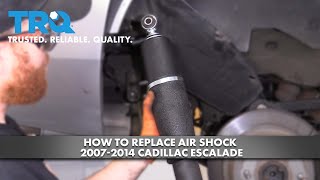
Helpful Videos


The information in this article is provided for general reference and educational purposes only. Vehicle specifications, procedures, and part compatibility can vary by production date, trim level, and region. Always consult your vehicle's factory service manual and verify part numbers before purchasing or performing repairs. Safety-critical components such as airbags, seat belts, and braking systems should be installed by a qualified professional.
- 🎬 Helpful Videos
- What Does C0713 Mean?
- Can I Drive With C0713?
- Common Causes
- Symptoms
- Diagnostic Flowchart
- Common Fixes & Costs
- DIY vs Professional
- Used vs. New Parts: Buying Guide
- What Happens If You Wait — Timeline
- Cost of Not Fixing It
- Diagnosis Steps
- When This Code Triggers (Freeze-Frame Conditions)
- Related Codes
- Climate & Environmental Factors
- How to Talk to a Mechanic About This Code
- Where to Take It: Dealer vs Independent vs Chain
- When to Walk Away From the Repair
- What Scan Tool You Need for This Code
- How to Clear the Code After You Fix It
- Will This Fail Emissions / State Inspection?
- Most Commonly Affected Vehicles
- Manufacturer-Specific Notes
- Real Owner Stories
- 2008 Cadillac Escalade at 130K miles with C0713
- 2013 Ram 1500 at 85K miles with 'Compressor Cooling Down' message
- 2007 GMC Yukon Denali at 160K miles with C0713 and C0711
- How to Prevent This Code From Triggering
- Frequently Asked Questions
- Can I just replace the compressor to fix code C0713?
- What are the most common misdiagnosis mistakes for C0713?
- How much does it cost to fix an air suspension system?
- What does 'Compressor Cooling Down' mean on my dashboard?
- Why is my car sagging in the back or front?
- Can I replace my air suspension with regular shocks and springs?
- Why does my air suspension act up in cold weather?
- Key Takeaways
- 🎟️ Get 5% Off