

C0711 on 2004-2011 GMC Yukon XL: Service Suspension System Causes and Fixes
On a 2004-2011 GMC Yukon XL, code C0711 almost always points to a problem with the rear air suspension. The most likely cause is a damaged wiring harness near the air compressor, followed by a failed air compressor assembly which contains the non-serviceable pressure sensor. Always inspect the wiring for chafing between the compressor and frame before replacing parts, as this is a well-documented issue.
- C0711 means there is an electrical problem with the rear air suspension's pressure sensor.
- Before buying any parts, you MUST inspect the wiring harness at the air compressor for damage, as this is the most common and cheapest fix.
- The 'Service Suspension System' light will be on and your rear suspension will not auto-level until this is fixed.
- If the wiring is good, the fix is usually to replace the entire air compressor assembly, as the sensor is built into it.
- Do not ignore this code, as a sagging rear suspension affects ride quality, safety, and can cause other parts to wear out faster.
What's Unique About the 2004-2011 Gmc YUKON XL
The GMT800 and GMT900 platforms, which include the 2004-2011 Yukon XL, are known for a specific wiring vulnerability with the air suspension system. GM issued a Technical Service Bulletin (TSB PIT4954D) highlighting that the wiring harness for the air pressure sensor is prone to chafing or getting pinched between the air compressor assembly and the vehicle's frame rail on the driver's side. This specific, well-documented issue is the most common cause of C0711 on these trucks and should be the first thing you check.
Diagnostic Flowchart
Tap your situation to follow the diagnostic path that matches what you're seeing on this vehicle.
Generation note: This year range covers two generations of the Yukon XL: the GMT800 (2004-2006) and GMT900 (2007-2011). The automatic leveling suspension system (RPO Z55) is similar on both, and the primary cause—wiring damage near the compressor—is a known issue across both generations, as documented in TSBs covering these models. The main difference is the shape of the electrical connector on the compressor; GMT800s typically use a round connector, while GMT900s use a square one.
Symptoms You May Notice
- "Service Suspension System" message on the Driver Information Center 🎬 See this walkthrough for diagnosing and repairing suspension error messages.(DIC)
- Rear of the vehicle sags or sits too low
- Bouncy or unstable ride, particularly from the rear
- Air compressor does not turn on
- Air compressor runs continuously without shutting off
- A buzzing or louder-than-usual noise from the rear of the vehicle when the compressor is running
- Replacing the air compressor without first checking the wiring. The TSB specifically advises repairing the wiring first, as it is a very common cause and a much cheaper fix.
- Replacing air shocks when the compressor or wiring is the actual fault. While leaking shocks can cause the compressor to burn out, they are not the direct cause of code C0711.
Most Likely Causes
- Chafed or Damaged Air Compressor Wiring 🔴 High Probability As noted in GM Technical Service Bulletin #PIT4954D, the wiring harness for the pressure sensor can be pinched or rub against the frame, causing a short to ground or an open circuit. This often happens where the harness is routed over the compressor bracket on the driver's side frame rail.
How to confirm: Visually inspect the wiring harness where it runs over and around the air compressor assembly. You will likely need to unbolt and lower the compressor to get a clear view of the wires pinched between the compressor and the frame. Look for bare copper or damaged insulation.
Typical fix: Repair the damaged section of the wire using butt connectors and heat shrink tubing. Reroute the harness to provide more clearance and secure it with zip ties to prevent it from being damaged again.
Est. part cost: $5-$20 - Failed Air Compressor Assembly 🟡 Medium Probability The pressure sensor is integrated into the compressor assembly and is not serviced separately. The entire unit can fail from age, moisture intrusion into the sensor, or the motor burning out from running too long due to air leaks in the shocks or lines.
How to confirm: If the wiring is confirmed to be intact, the sensor itself is the next likely culprit. Since it's part of the compressor, replacing the assembly is the standard repair. You can test the compressor motor by jumping the appropriate terminals on the compressor relay in the underhood fuse box. If the compressor runs but the code persists, the internal sensor is likely faulty. 🎬 Watch: Diagnosing common suspension codes on a similar GM platform.
Typical fix: Replace the entire air suspension compressor assembly. Aftermarket brands like Dorman and Arnott are popular alternatives to OEM.
Est. part cost: $200-$600 - Damaged Electrical Connector ⚪ Low Probability The main connector at the compressor is exposed to the elements (road salt, water) and can suffer from corrosion (green crust) or, in some cases, melted pins due to high resistance from a failing compressor motor.
How to confirm: Disconnect the main electrical plug at the compressor and inspect the terminals on both the harness side and the compressor side for green corrosion, bent pins, or signs of melting/overheating.
Typical fix: Clean the terminals if corrosion is light. If the connector or pins are melted or severely damaged, a new connector pigtail will need to be spliced in. Pigtails are available from GM and aftermarket suppliers.
Est. part cost: $25-$60
Rare But Worth Checking
- Failed Electronic Suspension Control (ESC) Module: This is rare. The module itself, located above the spare tire, can fail, but all other potential causes, especially wiring and the compressor assembly, should be thoroughly ruled out first. A failed module can sometimes cause a no-start condition.
- Failed Compressor Relay: A stuck or failed relay in the underhood fuse block can cause the compressor to run continuously or not at all. While this won't directly cause a C0711 (which is a sensor circuit fault), it can be a related symptom and is an easy and inexpensive part to swap for diagnosis.
Diagnosis Steps
- Read the trouble codes with a scan tool capable of accessing the chassis module to confirm C0711 is present.
- Listen for the air compressor at the rear of the vehicle when the ignition is turned on. Note if it runs, clicks, or does nothing.
- Raise and safely support the vehicle. Remove the spare tire to gain access to the compressor area.
- Locate the air compressor assembly, mounted to the frame rail on the driver's side, above where the spare tire sits.
- Following TSB #PIT4954D, carefully inspect the wiring harness going to the compressor. Pay close attention to where it might be pinched or rubbing against the frame or compressor bracket. Unbolt the compressor for a better view if necessary.
- If damage is found, repair the wires with butt connectors and heat shrink. Secure the harness away from sharp edges with zip ties.
- If no wiring damage is visible, disconnect the main electrical connector and inspect for corrosion or melted pins. Clean or replace the pigtail as needed.
- If wiring and connectors appear good, test the compressor relay (located in the underhood fuse box) by swapping it with a known good relay of the same type or by jumping the two thick-gauge wire terminals (usually 30 and 87) to send power directly to the compressor. If the compressor runs, the motor is likely good.
- If the wiring is good but the code persists after clearing, the air pressure sensor is the most likely cause. As this sensor is integrated, replacing the air compressor assembly is the required fix.
Parts You'll Likely Need
- Air Suspension Compressor Assembly
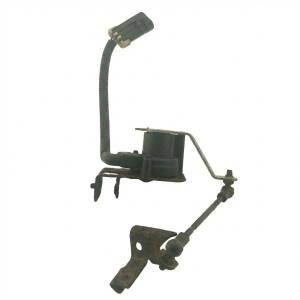
(OEM #15296756, 19299545 (GMT800, 2004-2006); 25978023, 19300045 (GMT900, 2007-2011))— This assembly contains the air pressure sensor that triggers code C0711. If the wiring is intact, the sensor itself has likely failed, requiring replacement of the entire unit.
Trusted brands: ACDelco (OEM), Arnott Industries, Dorman
OEM price range: $400-$600
Aftermarket price range: $200-$450 - Wire Repair Supplies (Butt Connectors, Heat Shrink) — Often, the only 'part' needed is supplies to fix the chafed wiring harness, which is the most common cause of this code.
OEM price range: $5-$20
Aftermarket price range: $5-$20 - Air Compressor Connector Pigtail
(OEM #ACDelco PT2311 (Varies by year/connector))— If the main electrical connector is corroded or melted, it must be replaced by splicing in a new pigtail.
Trusted brands: ACDelco, Dorman
OEM price range: $40-$60
Aftermarket price range: $25-$40
Related Codes That Often Appear With This One
- C0696 — This code, for 'Level Control Air Pressure Sensor Circuit High', often appears alongside or interchangeably with C0711 ('Circuit Low/Open') as they both relate to the same sensor circuit and are often triggered by the same wiring faults.
Technical Service Bulletins (TSBs) & Recalls
- Bulletin #PIT4954D: Addresses DTCs C0696 or C0711 caused by damaged wiring on the air compressor assembly, advising inspection and repair before component replacement. It covers models from 2001-2014.
Platform-Specific Known Issues
- A known issue documented in TSB #PIT4954D is the wiring to the automatic level control (ALC) pressure sensor shorting to ground where it gets pinched between the compressor assembly and the frame. The bulletin explicitly recommends inspecting and repairing this wiring before replacing the compressor.
- A user on Tahoe Yukon Forum with a 2011 model experienced code C0711 after replacing the suspension module and compressor. The issue persisted after a second compressor replacement, highlighting the importance of checking the wiring harness for continuity between the ESC module and the compressor connector as a final diagnostic step.
Mechanic-Grade Diagnostic Values
- 5-Volt Reference Circuit Voltage (GMT900) — expected: 4.75 - 5.25 Volts. Failure: A reading outside this range indicates a fault in the circuit or the Electronic Suspension Control Module (ESCM).
- Pressure Sensor Signal Voltage (GMT900) — expected: 0.5 - 4.75 Volts. Failure: A reading below 0.5V or above 4.75V will set the DTC. This indicates a short, open, or failed sensor.
- Low Reference Circuit Resistance to Ground (GMT900) — expected: Less than 2.0 Ohms. Failure: A reading higher than 2.0 Ohms indicates high resistance or an open in the ground circuit for the sensor.
- ALC Compressor Relay Coil Resistance — expected: ~82 Ohms. Failure: A significantly different reading or an open circuit (OL) indicates a failed relay coil.
Hidden / Shadow Codes Worth Checking
- C0711-00: The '00' is a symptom byte that means 'No Sub Type Information'. This indicates the main fault code description provides the complete failure information, and there are no more specific details available from the module. (see via A professional scan tool capable of reading GM-specific chassis codes and their symptom bytes.)
Scan Tool Commands That Help
- GM Tech 2 / GDS2 or equivalent professional scan tool: ALC (Automatic Level Control) Compressor Relay Command — Use this bidirectional control to manually command the compressor relay ON and OFF. This verifies the integrity of the control circuit from the ESCM, the relay itself, and the compressor motor, separating a control issue from a component failure.
- GM Tech 2 / GDS2 or equivalent professional scan tool: ALC Exhaust Solenoid Command — Use this command to manually activate the exhaust solenoid. You should hear a distinct click. This tests the solenoid and its control circuit, which is necessary for the system to lower the vehicle or release pressure.
- GM Tech 2 / GDS2 or equivalent professional scan tool: Live Data - Suspension Pressure Sensor Voltage/PSI — Monitor the live data stream for the pressure sensor while inspecting wiring. Wiggling the harness at the known chafe points may cause the voltage to fluctuate wildly or drop out if a wiring issue is present, helping to confirm an intermittent connection.
- GM Tech 2 / GDS2 or equivalent professional scan tool: Live Data - Ride Height Sensor Voltage/Position — While not directly related to C0711, observing the ride height sensor data is crucial for a complete system diagnosis to ensure the ESCM is receiving the correct inputs to make leveling decisions.
Wiring & Ground Locations
- Electronic Suspension Control Module (ESCM) — On the GMT900 platform (2007-2011), the module is located on a frame cross-brace above the spare tire, slightly to the driver's side of the vehicle's centerline.. This module is the brain of the system. It receives the signal from the pressure sensor and sets code C0711. All circuit testing ultimately originates or terminates at this module's connector.
- G400 — On the left rear body mount for a 2007 GMC Yukon Denali (GMT900).. This is a primary ground point for the rear of the vehicle. A corroded or loose G400 can cause intermittent and difficult-to-diagnose issues with the electronic suspension system.
- G303 / G304 — Located on the left (G303) and right (G304) side B-pillars, behind the trim panels on GMT900 trucks.. While not the primary ground for the ESCM, these are major chassis grounds in the rear half of the vehicle. Poor grounding here can affect overall module communication and performance.
- Compressor Harness Connector Pins (GMT900) — At the electrical connector for the air compressor assembly.. Service manuals specify testing at these pins: Terminal A is the 5-volt reference circuit, and Terminal F is the low reference (ground) circuit. Knowing these pin assignments allows for precise testing of the harness without having to access the module itself.
OEM Part Supersession History
N/A (Sensor was serviced separately)→Air Filter, Dryer, and Sensor Assembly— GM policy change to improve repair quality.
Heads up: According to TSB PIT4954C, the ALC pressure sensor is no longer serviced separately. Technicians are instructed to install the complete filter/dryer/sensor assembly instead of just the sensor, even if the rest of the components are functional.25978023→19300045 (ACDelco)— Part number update/revision.
Heads up: Part number 19300045 is a widely cited OEM replacement for GMT900 compressors. Many aftermarket brands cross-reference to this number. Always verify fitment by VIN, but these are generally interchangeable for the 2007-2011 generation.
Model Year Variations Within This Range
- 2007 (Mid-Year Changeover): The 2007 model year was a transition from the GMT800 to the GMT900 platform. GMT800 models were sold as 'Classic'. The platforms have different front-end styling and do not share suspension components. It is critical to correctly identify the platform before ordering parts.
- 2004-2006 (GMT800) vs. 2007-2011 (GMT900): The diagnostic procedure and specific test values are better documented for the GMT900 platform. For example, GMT900 service data provides specific voltage ranges (4.75-5.25V ref) and resistance targets (<2.0 Ohms), while GMT800 data is more general.
- 2004-2006 (GMT800): The Electronic Suspension Control module on many GMT800 trucks is located inside the vehicle, under the driver's side rear C-pillar trim panel, as opposed to outside on the frame like the GMT900s. This changes the diagnostic environment significantly (less exposure to elements, different access procedure).
Helpful Videos

We Have This Part in Stock


The information in this article is provided for general reference and educational purposes only. Vehicle specifications, procedures, and part compatibility can vary by production date, trim level, and region. Always consult your vehicle's factory service manual and verify part numbers before purchasing or performing repairs. Safety-critical components such as airbags, seat belts, and braking systems should be installed by a qualified professional.
- Gmc YUKON XL:
- 🎬 Helpful Videos
- 🛍️ Shop This Part
- What's Unique About the 2004-2011 Gmc YUKON XL
- Diagnostic Flowchart
- Symptoms You May Notice
- Most Likely Causes
- Rare But Worth Checking
- Diagnosis Steps
- Parts You'll Likely Need
- Related Codes That Often Appear With This One
- Technical Service Bulletins (TSBs) & Recalls
- Platform-Specific Known Issues
- Mechanic-Grade Diagnostic Values
- Hidden / Shadow Codes Worth Checking
- Scan Tool Commands That Help
- Wiring & Ground Locations
- OEM Part Supersession History
- Model Year Variations Within This Range
- 🎟️ Get 5% Off