

C0696 on 2001-2008 GMC Yukon: Autoride Suspension Fault Causes and Fixes
On a 2001-2008 GMC Yukon with Autoride suspension, code C0696 almost always points to damaged wiring for the air suspension compressor's pressure sensor. A thorough inspection and repair of the wiring harness where it gets pinched by the compressor bracket is the most common fix and should be done before replacing any parts. This is a well-documented issue covered by a GM Technical Service Bulletin.
- C0696 on a 2001-2008 Yukon with Autoride means there is an electrical fault in the air suspension's sensor circuit.
- Before buying any parts, ALWAYS inspect the wiring harness at the air compressor on the driver's side frame rail for damage. This is the most likely cause and a cheap fix.
- If the wiring is good, the next most likely causes are a failed compressor or leaking rear air shocks.
- This code is almost always seen with code C0711; they point to the same problem.
- Do not automatically replace the expensive compressor assembly; the problem is very often just a few damaged wires.
What's Unique About the 2001-2008 Gmc YUKON
The GMC Yukon of this era, particularly the Denali trim, was commonly equipped with the Z55 'Autoride' air suspension system. This code is specific to vehicles with that system. The air compressor and its associated sensors are mounted on the driver's side frame rail, where the wiring harness is highly susceptible to damage. This specific wiring vulnerability is so common that General Motors issued Technical Service Bulletin PIT4954D, which notes the cause is often the wiring being "pinched between the compressor assembly and frame." This issue is shared across all GM full-size SUVs of the era with this suspension option.
Diagnostic Flowchart
Tap your situation to follow the diagnostic path that matches what you're seeing on this vehicle.
Generation note: This range covers two Yukon generations: the GMT800 (2001-2006) and the GMT900 (2007-2008). Both offered the Autoride (RPO code Z55) air suspension system where this code appears. The fundamental cause, related to compressor wiring, is common to both generations. However, specific part numbers for compressors or sensors may differ slightly. The GMT900 introduced a more refined interior and a 6-speed transmission, but the core Autoride system and its vulnerabilities remained similar.
Symptoms You May Notice
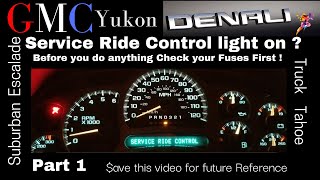
- "Service Suspension System" or "Service Ride Control" message on the Driver Information Center (DIC).
- Rear of the vehicle sags and does not raise when the vehicle is started.
- Air compressor does not turn on (most common with C0696 as the system is disabled).
- Air compressor runs continuously without shutting off (more common with air leaks, which can lead to other codes and eventual compressor failure).
- Harsh or bouncy ride quality.
- Compressor does not perform its brief self-test at startup. (Note: Per GM, the compressor only runs at startup if system pressure is below 10 psi, so not hearing it on every startup is normal).
- Replacing the entire air compressor assembly without first inspecting the wiring harness. TSB PIT4954D specifically warns, "Do NOT replace the complete air compressor assembly for this concern 🎬 Watch: Why you should check the wiring before buying parts.," as a simple wire repair is often the only thing needed.
Most Likely Causes
- Damaged Wiring to Air Compressor Pressure Sensor 🔴 High Probability The wiring harness is routed near the frame and compressor bracket, making it extremely vulnerable to chafing, corrosion, and breaking. The TSB specifically identifies the harness being "pinched between the compressor assembly and frame" as the primary culprit.
How to confirm: Visually inspect the entire wiring harness leading to the air compressor assembly on the driver-side frame rail. It is often necessary to unbolt the compressor from its bracket to access and inspect the section of the harness that runs between the bracket and the frame. Look for bare wires, pinch marks, and green-colored corrosion on the copper wire.
Typical fix: Repair the damaged section of the wire harness. This involves cutting out the bad section, splicing in new wire (soldering is recommended), and protecting the repair with heat shrink tubing. Ensure the harness is re-routed or secured with zip ties away from sharp edges to prevent a repeat failure.
Est. part cost: $5-$20 - Failed Air Suspension Compressor Assembly 🟡 Medium Probability Air leaks in the shocks cause the compressor to run excessively, leading to premature failure from burnout. It can also fail from age and exposure to the elements. This is often a secondary failure caused by leaking shocks.
How to confirm: If the wiring is intact, check the 'ALC' fuse and relay in the underhood fuse box. You can test the compressor directly by jumping the appropriate terminals on the relay socket to send power to the compressor. If it doesn't run, the motor has likely failed.
Typical fix: Replace the entire air compressor assembly. It's often sold as a unit that includes the dryer and pressure sensor. Aftermarket versions like the Dorman 949-099 claim to have improved thermal protection.
Est. part cost: $200-$500 - Leaking Rear Air Shocks 🟡 Medium Probability The rubber air bladders on the shocks degrade over time, developing cracks and leaks. This is a very common wear item and is often the root cause that leads to compressor burnout.
How to confirm: With the compressor running (or after it has run), spray the air shocks (especially the rubber bladders) and lines with a soapy water solution. Look for bubbles forming, which indicates a leak.
Typical fix: Replace the leaking air shocks, typically in pairs. This is often the root cause that leads to compressor burnout.
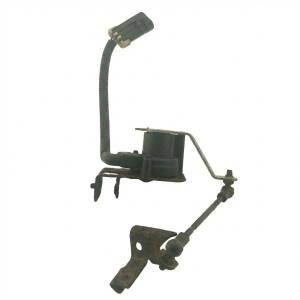
Est. part cost: $250-$600 for a pair - Faulty Ride Height Sensor ⚪ Low Probability The sensors are exposed to the elements, and their plastic or metal mechanical linkage arms can seize, break, or become disconnected.
How to confirm: Check the sensor and its linkage for physical damage. Use a scan tool to monitor the sensor's output data to see if it's reading correctly as the suspension is raised or lowered.
Typical fix: Replace the faulty ride height sensor and/or its linkage.
Est. part cost: $50-$150
Rare But Worth Checking
- Failed Electronic Suspension Control (ESC) Module: This is rare. The control module should only be suspected after all other components (wiring, compressor, sensors, shocks) have been thoroughly tested and confirmed to be working.
Diagnosis Steps
- Read the trouble codes from the Electronic Suspension Control (ESC) module to confirm C0696 and check for others like C0711. A code that returns immediately after clearing suggests a hard fault like a shorted wire.
- Check the fuses and relays related to the suspension system, typically labeled 'RTD' (Real Time Damping) or 'ALC' (Automatic Level Control) in the underhood fuse box.
- Lift and safely support the vehicle.
- Perform a detailed visual inspection of the wiring harness leading to the air compressor on the driver's side frame rail. Unbolt the compressor from its bracket to thoroughly inspect the harness section that is often pinched between the bracket and the frame. Look for chafing, pinch marks, or green corrosion.
- If wiring is damaged, repair it, clear codes, and re-test. This is the most likely fix.
- If wiring looks good, test the compressor. Command it on with a scan tool or by jumping the compressor relay. Listen to see if it runs.
- If the compressor runs but the vehicle doesn't lift, or if it runs constantly, spray the air shocks and lines with soapy water to check for leaks.
- If the compressor does not run when jumped, and its fuse is good, the compressor motor has likely failed.
- If wiring, the compressor, and shocks are all good, inspect the ride height sensors and their linkages for physical damage.
Parts You'll Likely Need
- Air Suspension Compressor Assembly
(OEM #23316154 (supersedes previous numbers))— This is the second most likely failure after wiring. The motor burns out from age or being overworked by leaks. It is typically replaced as a complete unit.
Trusted brands: ACDelco (GM Genuine), Dorman (e.g., 949-099), Arnott
OEM price range: $400-$600
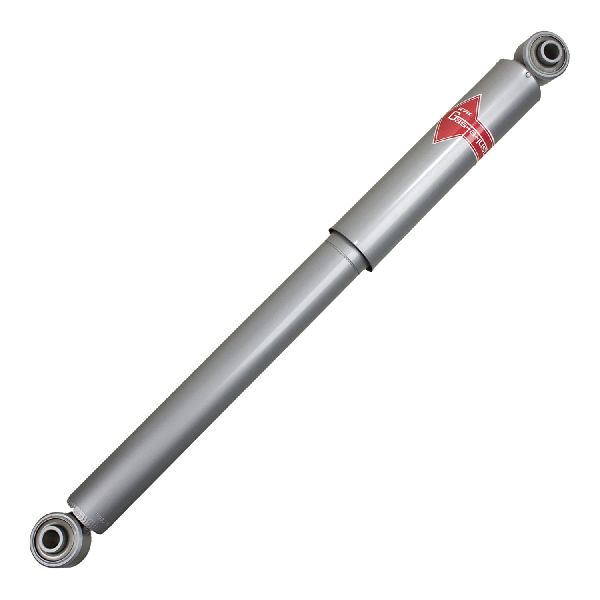
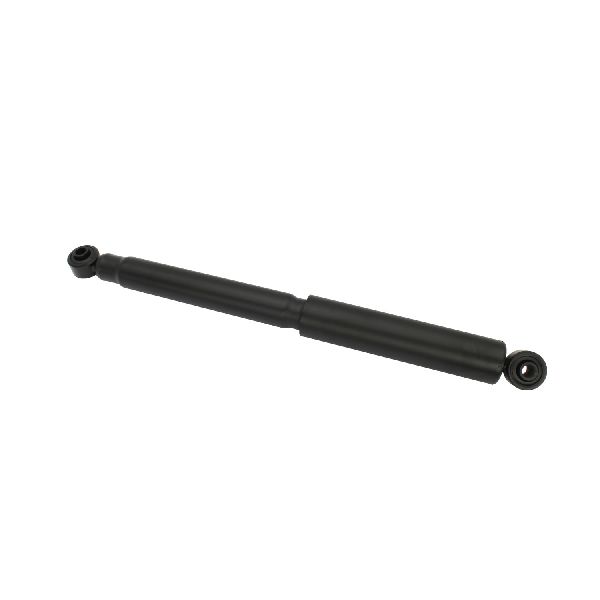
Aftermarket price range: $200-$450 - Rear Air Shock Absorber — The air bladders on the original shocks are prone to leaking, which causes the rear to sag and overworks the compressor. They are a common replacement item and the root cause of many compressor failures.
Trusted brands: ACDelco, Arnott, Suncore
OEM price range: $250-$350 per shock
Aftermarket price range: $125-$250 per shock - Compressor Wiring Pigtail / Splicing materials — If the wiring is damaged, you will need butt connectors or a soldering iron and heat shrink tubing to perform the repair. If the damage is very close to the connector, a replacement pigtail may be needed, though splicing is more common for this specific issue.
Trusted brands: ACDelco, Dorman
OEM price range: $30-$60
Aftermarket price range: $15-$40
Related Codes That Often Appear With This One
- C0711 — This code is for the ALC pressure sensor signal. GM Technical Service Bulletins list C0696 and C0711 together as being caused by the same wiring and sensor issues. C0711 can also be caused by an internal fault in the pressure sensor due to moisture intrusion.
Technical Service Bulletins (TSBs) & Recalls
- PIT4954D
Platform-Specific Known Issues
- A GM Technical Service Bulletin (PIT4954D and its predecessors) directly addresses code C0696. It identifies the primary cause as a short-to-ground in the wiring for the automatic level control pressure sensor.
- The bulletin explicitly states the wiring is often "pinched between the compressor assembly and frame."
- The bulletin warns service technicians: "Do NOT replace the complete air compressor assembly for this concern. Repair any damaged or shorted circuits..."
Mechanic-Grade Diagnostic Values
- ALC Pressure Sensor 5-Volt Reference Circuit — expected: 4.8-5.2 volts between the 5-volt reference circuit terminal and a known good ground.. Failure: Voltage outside this range indicates a problem with the circuit or the Electronic Suspension Control (ESC) module.
- ALC Pressure Sensor Signal Circuit — expected: 0.15-4.85 volts. The voltage should toggle within this range when tested with a scan tool.. Failure: Voltage outside this range indicates a fault in the sensor or wiring.
- ALC Pressure Sensor Low Reference Circuit — expected: Less than 1 ohm of resistance between the low reference circuit terminal and ground.. Failure: Resistance greater than 1 ohm indicates an open or high resistance in the ground circuit.
Scan Tool Commands That Help
- Tech 2 / GDS2: Compressor Relay/Motor Command — After checking fuses, this command directly tests the compressor motor and its circuit by bypassing the ESC module's logic. If the compressor runs with this command, the motor is good and the issue is likely with the control side (sensors, wiring, module).
- Tech 2 / GDS2: ALC Calibration — After replacing ride height sensors or the ESC module, this function is used to relearn the base ride height of the vehicle. Running this with an existing fault like C0696 can cause unpredictable results or fail.
- Tech 2 / GDS2: Damper Actuation Test — Used for testing the electronic dampers in the Z55 system. However, if a fault code like C0696 is active, the ESC module will often disable this function, preventing the test from running until the fault is cleared.
Wiring & Ground Locations
- G305 — Under the vehicle, to the rear of the left (driver's side) B-pillar, located at the third body mount on the frame.. This is a primary chassis ground point for components in the rear half of the vehicle. While the pressure sensor has a dedicated low-reference wire back to the module, poor grounding of the ESC module itself or related components can cause erratic behavior and voltage-related codes. Verifying this ground is clean and tight is a good practice when diagnosing any rear chassis electrical issue.
- ALC Compressor Connector — On the air compressor assembly, located on the driver's side frame rail, typically ahead of the rear wheel.. This connector contains the pins for the pressure sensor signal, 5V reference, and low reference (ground). The TSB-identified wire chafe point is in the harness leading to this connector. The pressure sensor itself has three terminals: 5-volt reference, low reference, and the signal circuit.
- Electronic Suspension Control (ESC) Module — Located above the spare tire, mounted to a chassis crossmember.. This is the brain of the system. All sensor inputs (ride height, pressure) are sent here, and it commands the compressor and dampers. A poor connection at this module can mimic a sensor or wiring failure.
Real Owner Repair Stories
- YouTube user 'lsx matt' (Cadillac Escalade (GMT900 platform, shared with Yukon)) — "Service Suspension System" message on the dash with code C0711 (often seen with C0696). The compressor would run briefly and shut off, but the vehicle would not level.
❌ Tried (didn't work) The owner suspected a leak initially, but the presence of the pressure sensor code pointed towards an electrical issue.
✅ What actually fixed it Upon removing the compressor assembly, the owner found the wiring harness was chafed and corroded exactly where the TSB indicates—pinched against the mounting bracket. The video clearly shows the damaged wires as the root cause of the code. The owner replaced the entire compressor assembly because it was old and corroded, but confirmed the code was caused by the wiring. - Tahoe Yukon Forum user (2008 Yukon Denali 6.2L AWD) — Multiple random codes including P0700 and U0073, 'Service Suspension' message, Stabilitrak off, erratic gauges, and limp mode. The issues would start after 5-10 minutes of driving.
❌ Tried (didn't work) Replaced battery, Cleaned multiple control module connections, Cleaned ground under driver's seat
✅ What actually fixed it The owner found the wiring harness that runs over the transmission was melted against the exhaust heat shield. Although no wires appeared fully broken, he re-wrapped them and secured the harness away from the shield. This resolved all the electrical issues, suggesting a short in this harness was causing network-wide communication problems, including the suspension system faults.
OEM Part Supersession History
15949881, 15296756, 20837299, 20930288, 25913289→22941806 (and others)— Standard part evolution, design updates, and consolidation of part numbers over the long production run of the GMT900 platform.
Heads up: An improved pressure sensor design was implemented in May 2012. Vehicles built before this date require a jumper harness to connect the updated sensor. This harness was included with the replacement air filter/dryer/sensor assembly (PN 22964558). When replacing the whole compressor on a pre-2012 vehicle, ensure the new assembly is compatible or that the necessary jumper harness is used.
Model Year Variations Within This Range
- 2001-2011: Vehicles built before May 2012 use an older style air pressure sensor. When replacing the sensor (or the filter/dryer assembly it's part of), a jumper harness (adapter) is required to fit the updated sensor design. This is a critical detail for ensuring compatibility when not replacing the entire compressor assembly.
Helpful Videos
Used OEM Parts in Stock


New Aftermarket Parts Available


The information in this article is provided for general reference and educational purposes only. Vehicle specifications, procedures, and part compatibility can vary by production date, trim level, and region. Always consult your vehicle's factory service manual and verify part numbers before purchasing or performing repairs. Safety-critical components such as airbags, seat belts, and braking systems should be installed by a qualified professional.
- Gmc YUKON:
- 🎬 Helpful Videos
- 🛍️ Shop This Part
- What's Unique About the 2001-2008 Gmc YUKON
- Diagnostic Flowchart
- Symptoms You May Notice
- Most Likely Causes
- Rare But Worth Checking
- Diagnosis Steps
- Parts You'll Likely Need
- Related Codes That Often Appear With This One
- Technical Service Bulletins (TSBs) & Recalls
- Platform-Specific Known Issues
- Mechanic-Grade Diagnostic Values
- Scan Tool Commands That Help
- Wiring & Ground Locations
- Real Owner Repair Stories
- OEM Part Supersession History
- Model Year Variations Within This Range
- 🎟️ Get 5% Off