

C0696 on 2003-2010 Cadillac Escalade ESV: Suspension System Fault Causes & Fixes
Code C0696 on a 2003-2010 Escalade ESV most often points to damaged wiring for the air suspension compressor. Before replacing any parts, thoroughly inspect the wiring harness near the compressor for chafing, corrosion, or breaks, a common issue highlighted in GM Technical Service Bulletins. The damage is often found where the harness is pinched between the compressor assembly and the vehicle's frame rail.
- C0696 means there is an electrical fault in the 5-volt reference circuit for the suspension sensors.
- The most probable cause is a damaged, pinched, or corroded wiring harness at the air suspension compressor.
- Always inspect the wiring thoroughly before replacing expensive components like the compressor or control module.
- If the wiring is good, the ALC pressure sensor (part of the dryer assembly) is the next most likely culprit.
- This is a known issue documented in GM Technical Service Bulletins.
What's Unique About the 2003-2010 Cadillac ESCALADE ESV
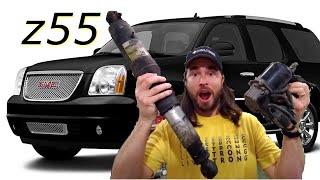
The Cadillac Escalade ESV of this era uses the GM Autoride (RPO Z55) air suspension system. The air compressor and its control wiring are typically mounted on the vehicle's frame rail, often on the driver's side. This location exposes the wiring harness to road debris, moisture, and salt, making it highly susceptible to physical damage and corrosion. A GM Technical Service Bulletin (TSB PIT4954D) specifically points to this wiring being pinched or shorted to ground as a primary cause for this code, often before any component itself has failed. This vulnerability is shared across the entire GMT800/900 SUV platform, including the Tahoe, Yukon, and Suburban.
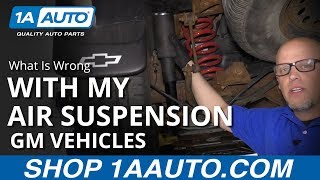
🎬 Watch: How to diagnose common air suspension problems on GM vehicles.Diagnostic Flowchart
Tap your situation to follow the diagnostic path that matches what you're seeing on this vehicle.
Generation note: This range covers two Escalade ESV generations: the second generation (GMT800, 2003-2006) and the third generation (GMT900, 2007-2010). While both use a similar Autoride air suspension concept, the specific components, wiring connectors, and compressor designs may differ. The TSB regarding wiring damage is applicable across these model years, indicating a persistent design vulnerability that extends to platform mates like the Tahoe and Yukon. The GMT900 platform (2007+) introduced rack and pinion steering and more modern interior features, but also brought Active Fuel Management (AFM) on some engines, which is a known reliability concern unrelated to this code.
Symptoms You May Notice
- "Service Suspension System" or "Service Ride Control" message on the Driver Information Center (DIC).
- Rear of the vehicle is sagging or sitting too low.
- Rear of the vehicle sits too high and provides a harsh ride.
- Air suspension compressor runs constantly or does not turn on at all.
- An audible buzz or rattle noise from the rear of the vehicle, which could be related to auxiliary lines contacting each other as noted in TSB PIT5496.
- Replacing the entire air suspension compressor assembly when only the wiring harness or the serviceable sensor/dryer assembly is faulty. The TSB specifically advises against replacing the whole compressor for this issue.
Most Likely Causes
- Damaged Air Compressor Wiring Harness 🔴 High Probability The harness is routed in an exposed location on the frame, making it vulnerable to being pinched, chafed by road debris, or corroded by salt and water. TSB PIT4954D explicitly states the wiring can be pinched between the compressor assembly and the frame.
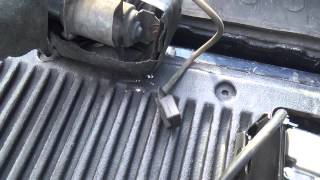
How to confirm: Visually inspect the entire wiring harness leading to the air suspension compressor assembly. Pay close attention to where the harness may contact the frame or other components. Look for green corrosion, bare wires, or physical damage. The TSB notes the compressor may need to be removed to find where the wiring is pinched. A YouTube video by 'Lsxmatt' shows this exact failure mode, with corroded and grounded wires on the sensor connector.
Typical fix: Repair the damaged section of the wire or replace the harness pigtail connector. Ensure the repaired harness is re-routed or protected to prevent future damage.
Est. part cost: $25-$75 for a pigtail connector. - Faulty Automatic Level Control (ALC) Pressure Sensor 🟡 Medium Probability This sensor is integrated with the compressor's dryer assembly and can fail internally, often due to moisture intrusion which causes an internal fault.
How to confirm: If the wiring is intact, the sensor itself is the next suspect. Diagnosis involves disconnecting sensors one by one to see if the 5V reference voltage returns to normal. A scan tool that can read chassis data is invaluable here.
Typical fix: Replace the air compressor filter, dryer, and sensor assembly. For vehicles built before May 2012, a jumper harness is required for the updated sensor design. GM explicitly states not to replace the entire compressor assembly for this sensor fault.
Est. part cost: $100-$200 for the sensor/dryer assembly. - Faulty Ride Height Position Sensor ⚪ Low Probability These sensors have plastic or metal linkages that can seize, break, or become disconnected, and the sensor itself can fail electrically, causing a short on the 5V reference circuit.
How to confirm: With the wiring harness disconnected from the compressor, check the 5V reference circuit for shorts. Disconnect each ride height sensor one at a time to see if the short clears. Visually inspect the sensor and its linkage for physical damage.
Typical fix: Replace the faulty ride height sensor and its linkage.
Est. part cost: $50-$150 per sensor.
Rare But Worth Checking
- Faulty Electronic Suspension Control (ESC) Module: This is rare. The module should only be replaced after all other possibilities, including wiring and all connected sensors, have been definitively ruled out. Corrosion at the module's connectors or a loose connector is a more likely issue than internal failure.
- Aftermarket Suspension Modifications: Incorrectly installed or adjusted aftermarket lowering/leveling kits can alter the geometry of the ride height sensors, causing persistent errors or unusual system behavior. TSB PIT5854D addresses issues caused by these modifications, which can lead to premature wear on suspension components.
Diagnosis Steps
- Read all DTCs from the Electronic Suspension Control (ESC) module using a capable scan tool (e.g., Tech2).
- Note the presence of C0696 and any other codes like C0711.
- Raise and safely support the vehicle.
- Locate the air suspension compressor, typically on the driver-side frame rail.
- Perform a thorough visual inspection of the wiring harness connected to the compressor. Look for chafing, pinching, breaks, or corrosion, especially where the harness is routed near the frame. You may need to unbolt and move the compressor to see where it pinches the wires against the frame.
- If damage is found, repair the wiring. Clear codes and re-test.
- If no wiring damage is visible, disconnect the main harness connector at the compressor (X317).
- Turn the ignition ON and check for 4.75-5.25 volts on the 5-volt reference wire (typically a Gray wire on Pin F of connector X317) and ground. If the voltage is now correct, the fault is likely in the compressor assembly (specifically the ALC sensor).
- If the voltage is still incorrect with the compressor disconnected, the short exists elsewhere on the 5V reference circuit. Reconnect the compressor and disconnect each ride height position sensor one by one until the voltage returns to normal to isolate the faulty component or its wiring.
- Inspect for any aftermarket suspension modifications, such as adjustable ride height sensor links, which could be improperly installed or adjusted.
- If all components are disconnected and the 5V reference circuit is still shorted, inspect the wiring back to the ESC module. If the wiring is good, the ESC module may be at fault, though this is rare.
Parts You'll Likely Need
- Suspension Self-Leveling Wiring Harness Connector
(OEM #PT3871)— This is the most common failure point due to its exposed location, as identified by GM TSBs. It is an 8-terminal multi-purpose connector pigtail used to repair the damaged harness end.
Trusted brands: ACDelco, Dorman
OEM price range: $50-$90
Aftermarket price range: $25-$50 - Air Compressor Filter, Dryer, and Sensor Assembly
(OEM #22964558)— If the wiring is good, the integrated pressure sensor is the next likely cause, often due to moisture intrusion. It is serviced as part of this assembly. Note that vehicles before May 2012 need this part number which includes a jumper harness for the updated sensor.
Trusted brands: ACDelco
OEM price range: $150-$250
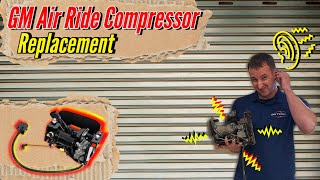
Aftermarket price range: $100-$180 - Air Suspension Compressor Assembly — This should only be replaced if the compressor motor itself has failed (e.g., from running constantly due to a leak) or if the integrated sensor/wiring has failed and a separate repair isn't feasible. Often misdiagnosed as the primary failure for code C0696.
Trusted brands: ACDelco, Arnott, Dorman
OEM price range: $400-$600
Aftermarket price range: $200-$450
Related Codes That Often Appear With This One
- C0711 — This code relates to the Automatic Level Control (ALC) system pressure. The same TSB, PIT4954D, lists both C0696 and C0711 as being caused by the same wiring and sensor issues, often due to moisture in the sensor or a shorted wire.
Technical Service Bulletins (TSBs) & Recalls
- PIT4954D (and later revisions): States that C0696 or C0711 can be caused by the wiring to the automatic level control (ALC) pressure sensor being shorted to ground or by an internal sensor fault due to moisture.
Platform-Specific Known Issues
- A GM Technical Service Bulletin (PIT4954D and its revisions like PIT4954C) directly addresses code C0696. It identifies the primary cause as the wiring to the automatic level control (ALC) pressure sensor being shorted to ground, often because it gets pinched between the air compressor assembly and the vehicle frame. The bulletin explicitly advises technicians to repair the wiring and NOT replace the entire compressor assembly for this specific fault.
Mechanic-Grade Diagnostic Values
- 5-Volt Reference Circuit Voltage — expected: 4.75 - 5.25 volts. Failure: Voltage below 4.75V or above 5.25V for more than 1 second.
- Ride Height Position Sensor Signal Voltage (Scan Tool) — expected: Varies between 0.35 - 4.75 volts while jouncing the vehicle.. Failure: Voltage is fixed, does not change, or shows spikes/dropouts.
- Air Compressor to Frame Nuts Torque — expected: 15 N.m or 11 lb ft. Failure: N/A
- Ride Height Sensor Mounting Bolt Torque — expected: 12 N.m or 106 lb in. Failure: N/A
Scan Tool Commands That Help
- GM Tech 2: ALC Exhaust Valve Test — To manually command the exhaust solenoid to release air, verifying its function and the integrity of its control circuit. Path: Chassis > Electronic Suspension Control > Special Functions > Automatic Level Control Test.
- GM Tech 2: Compressor Functional Test — To manually command the air compressor ON to check if the motor runs and builds pressure. This helps differentiate between a failed compressor motor and a control-side problem (relay, wiring, module).
- GM Tech 2: Diagnostic Counter Reset — After a repair, this function bypasses the need for multiple ignition cycles to confirm a fix, allowing a DTC to reset immediately if the fault is still present.
Wiring & Ground Locations
- X317 — The main 8-pin electrical connector at the air suspension compressor assembly.. This is the primary connector to test for the 5V reference signal (Pin F, Gray wire) and other inputs/outputs to the compressor's integrated sensors and solenoids. Damage is common here.
- G300 / G305 — On GMT900 models, G300 is under the vehicle at the driver door on a body mount. G305 is to the rear of the left B-pillar at the third body mount on the frame.. These are major body and frame grounds for the rear of the vehicle. A poor ground at these locations can cause a variety of electrical issues, including erratic sensor readings for the suspension system.
- Electronic Suspension Control (ESC) Module — On GMT900 models, it is located above the spare tire, mounted to a crossmember. Access often requires lowering or removing the spare tire.. This is the brain of the system. All sensor data, including the 5V reference circuit, originates from or is processed by this module. A loose connector here can cause a total loss of communication and function.
Real Owner Repair Stories
- YouTube channel 'Pine Hollow Auto Diagnostics' (GMC Denali (GMT900 platform, similar to Escalade)) — No communication with the suspension control module.
❌ Tried (didn't work) The vehicle was brought to the shop for programming a new module that another shop had installed.
✅ What actually fixed it The main electrical connector to the Electronic Suspension Control (ESC) module was found to be completely disconnected. Plugging the connector back in restored communication and function, and the original module was likely not faulty. - YouTube channel 'The Car Doctor Channel' (2004 Cadillac Escalade (GMT800 platform)) — Service Ride Control message, left rear position sensor circuit fault code.
❌ Tried (didn't work) Initial diagnosis pointed to the sensor.
✅ What actually fixed it Upon inspection, the wiring to the left rear position sensor was found to be corroded and broken. After repairing the bad section of wire, the scan tool showed proper voltage from the sensor. The compressor was also found to be faulty (separate issue) and was replaced, which fully resolved the suspension warnings.
OEM Part Supersession History
20982305, 22197161→22964558— Supersession to an improved sensor design.
Heads up: Part number 22964558 is for vehicles built *before* May 2012 and includes a required jumper harness to adapt the new sensor to the old vehicle harness. Vehicles built *after* May 2012 use part number 22941807 and do not need the jumper.
Model Year Variations Within This Range
- 2003-2006 (GMT800): These models use a 4-speed (4L60-E/4L65-E) transmission and generally have simpler electronics. The core Autoride (Z55) system principles are the same, but specific part numbers for sensors and the compressor may differ from the later generation.
- 2007-2010 (GMT900): These models feature a more refined chassis with rack-and-pinion steering and a 6-speed (6L80) transmission. The ESC module is located above the spare tire. The ALC pressure sensor design was updated mid-generation (May 2012), requiring a jumper harness for earlier models when replacing the sensor/dryer assembly.
Helpful Videos
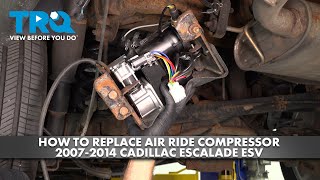
We Have This Part in Stock
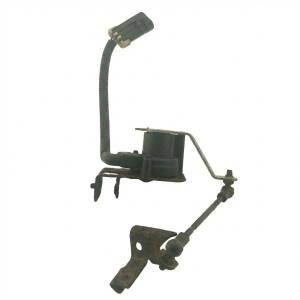


The information in this article is provided for general reference and educational purposes only. Vehicle specifications, procedures, and part compatibility can vary by production date, trim level, and region. Always consult your vehicle's factory service manual and verify part numbers before purchasing or performing repairs. Safety-critical components such as airbags, seat belts, and braking systems should be installed by a qualified professional.
- Cadillac ESCALADE ESV:
- 🎬 Helpful Videos
- 🛍️ Shop This Part
- What's Unique About the 2003-2010 Cadillac ESCALADE ESV
- Diagnostic Flowchart
- Symptoms You May Notice
- Most Likely Causes
- Rare But Worth Checking
- Diagnosis Steps
- Parts You'll Likely Need
- Related Codes That Often Appear With This One
- Technical Service Bulletins (TSBs) & Recalls
- Platform-Specific Known Issues
- Mechanic-Grade Diagnostic Values
- Scan Tool Commands That Help
- Wiring & Ground Locations
- Real Owner Repair Stories
- OEM Part Supersession History
- Model Year Variations Within This Range
- 🎟️ Get 5% Off